
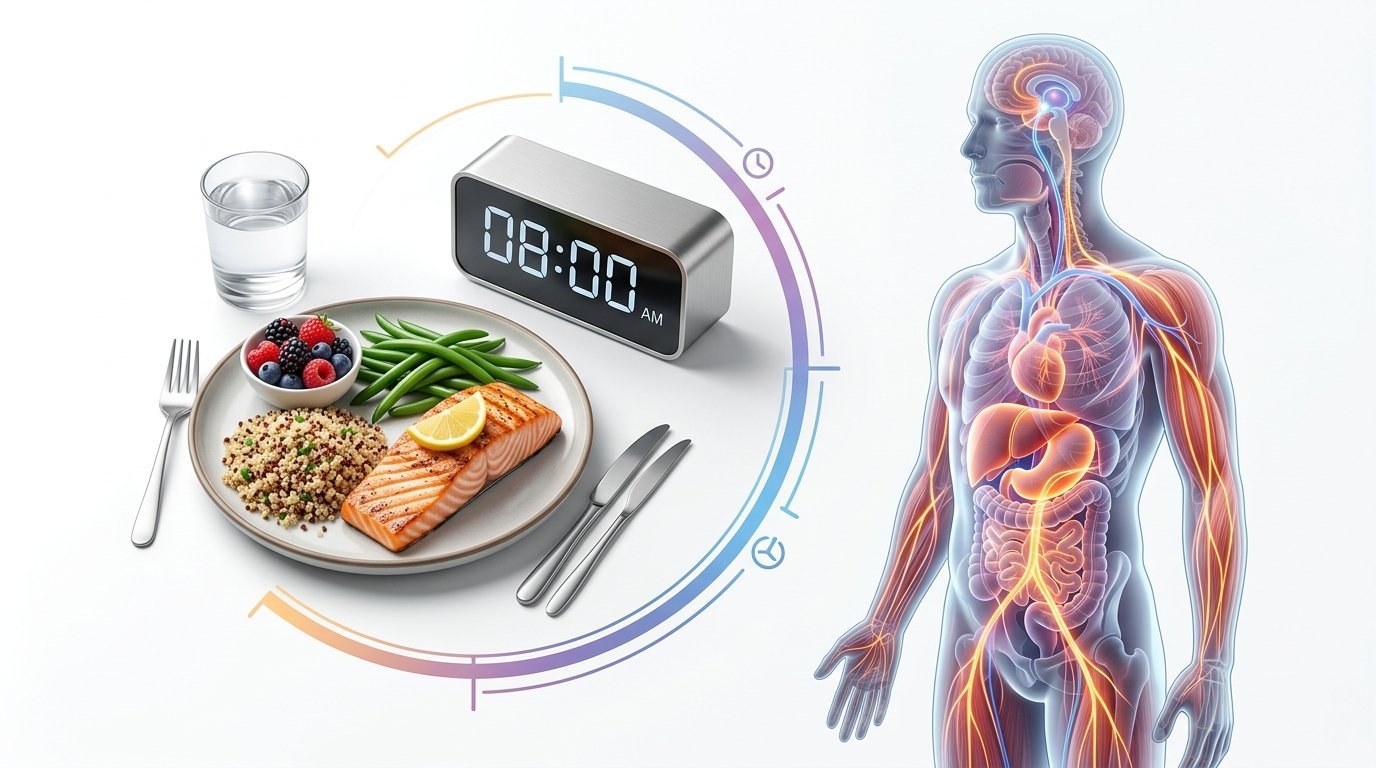
Does Meal Timing Affect Metabolism? What Science Really Says
You have probably heard advice like “eat every three hours,” “never skip breakfast,” or “don’t eat after 8 p.m.” These recommendations are often presented as guaranteed ways to speed up metabolism.
The truth is far more nuanced.
The relationship between Meal Timing and Metabolism has become an active area of nutrition research because scientists now understand that when we eat can influence certain metabolic processes. However, meal timing does not magically speed up or slow down metabolism on its own. Instead, it works alongside your body’s circadian rhythm, eating habits, activity level, and overall diet quality.
Research suggests that the timing of meals may affect glucose regulation, insulin sensitivity, appetite, and energy balance. These effects can influence metabolic health over time, but they are generally smaller than the impact of total calorie intake, food quality, and regular physical activity.
In this article, we’ll follow your body’s metabolism from morning until night, exploring what current research says about breakfast, late-night eating, meal frequency, and intermittent fasting while separating evidence from common myths.
Quick Answer
Meal Timing and Metabolism are connected because your body’s internal clock influences how it processes food throughout the day. Meal timing may affect glucose control, insulin sensitivity, appetite, and metabolic health, but it does not dramatically change the number of calories your body burns. Consistent healthy eating habits remain far more important than eating at a specific hour.
Does Meal Timing and Metabolism Really Work Together?
Imagine your metabolism as an orchestra rather than a single instrument.
Every organ, hormone, and metabolic process follows its own rhythm throughout the day. Your eating schedule becomes one of the signals that helps coordinate this system.
Understanding this relationship begins with your body’s internal clock.
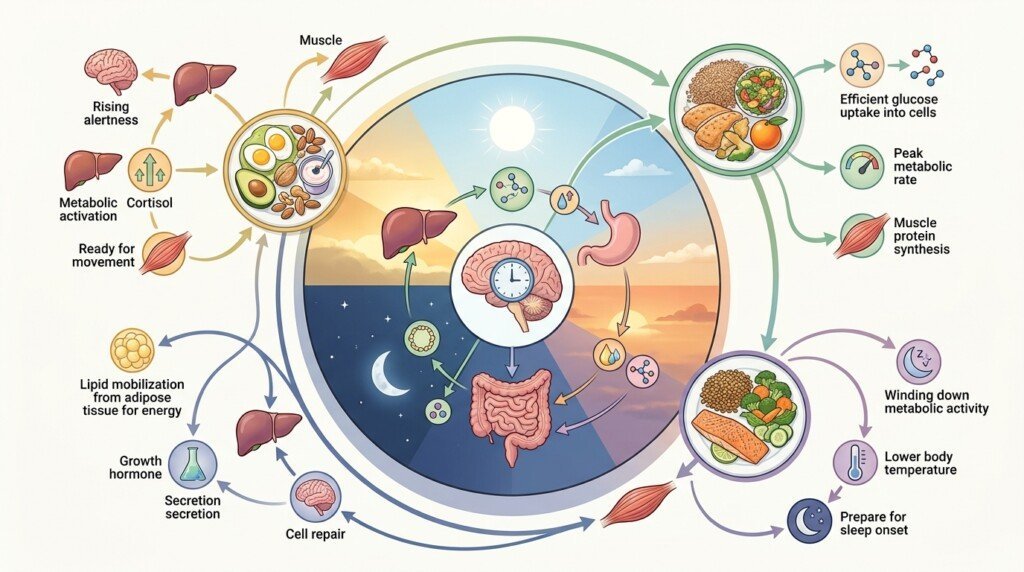
Morning: Why Does Your Body Respond Differently After Waking?
Within minutes of waking, your body begins preparing for the day ahead.
Hormones that regulate alertness, blood sugar, and energy availability naturally increase.
Your digestive system also becomes more responsive as your body anticipates food intake.
This is one reason researchers believe meal timing deserves attention.
Your metabolism is not identical at every hour of the day.

Your Internal Clock Never Stops Working
Nearly every cell in your body follows a biological timing system known as the circadian rhythm.
This internal clock helps regulate:
- Hormone production
- Body temperature
- Digestion
- Glucose regulation
- Appetite
- Sleep and wake cycles
- Energy expenditure
Rather than operating at one constant speed, your metabolism changes slightly throughout the day as these biological systems interact.
Meal Timing Provides Important Signals
When you eat, your digestive system receives information that helps coordinate metabolism.
These signals influence:
- Insulin release
- Nutrient processing
- Blood sugar regulation
- Digestive activity
Researchers continue studying how meal timing interacts with circadian rhythm to support overall metabolic health.
Readers interested in the broader physiology behind these processes may also enjoy Metabolism, which explains how the body converts food into usable energy.
Why Timing Matters More Than Many People Realize
Many people assume meal timing is only important for weight loss.
In reality, researchers are equally interested in its effects on metabolic health.
Studies suggest meal timing may influence:
- Blood glucose regulation
- Hunger signals
- Energy levels
- Insulin sensitivity
- Daily eating patterns
These factors may affect long-term health even when calorie intake remains similar.
That does not mean eating at the “perfect” time guarantees better metabolism.
Instead, consistent eating patterns appear to support healthy metabolic function.
Is Eating Breakfast Important for Metabolism?
Breakfast is probably the most debated meal of the day.
Some people believe skipping breakfast immediately slows metabolism.
Others argue breakfast makes little difference.
Current research suggests the answer lies somewhere in between.

The Biggest Breakfast Myth
A popular claim says breakfast “starts” your metabolism.
This idea is overly simplistic.
Your metabolism never completely stops while you sleep.
Even overnight, your body continues:
- Breathing
- Pumping blood
- Repairing tissues
- Regulating hormones
- Maintaining body temperature
Breakfast does not switch metabolism on because it was never switched off.
Why Breakfast May Still Matter
Although breakfast does not restart metabolism, it may influence how your body manages energy throughout the day.
Some studies suggest people who regularly eat breakfast experience:
- Better appetite regulation
- Improved energy levels
- More stable eating patterns
- Better glucose control
However, these findings are influenced by overall lifestyle habits rather than breakfast alone.
Does Skipping Breakfast Slow Metabolism?
This is one of the most common misconceptions.
Current evidence suggests occasionally skipping breakfast does not automatically reduce metabolic rate.
Instead, the body’s total daily energy balance remains far more important.
Individual Preferences Matter
Some people feel energetic after eating breakfast.
Others naturally prefer eating later.
Both approaches can fit within healthy eating patterns if overall nutrition remains balanced.
Readers looking for breakfast ideas rather than metabolism myths may find Best Breakfast for Weight Loss helpful for building satisfying morning meals.
Does Eating Late at Night Slow Metabolism?
Late-night eating has become one of nutrition’s most misunderstood topics.
Many people believe eating after a specific hour automatically causes weight gain.
The evidence is more complicated.
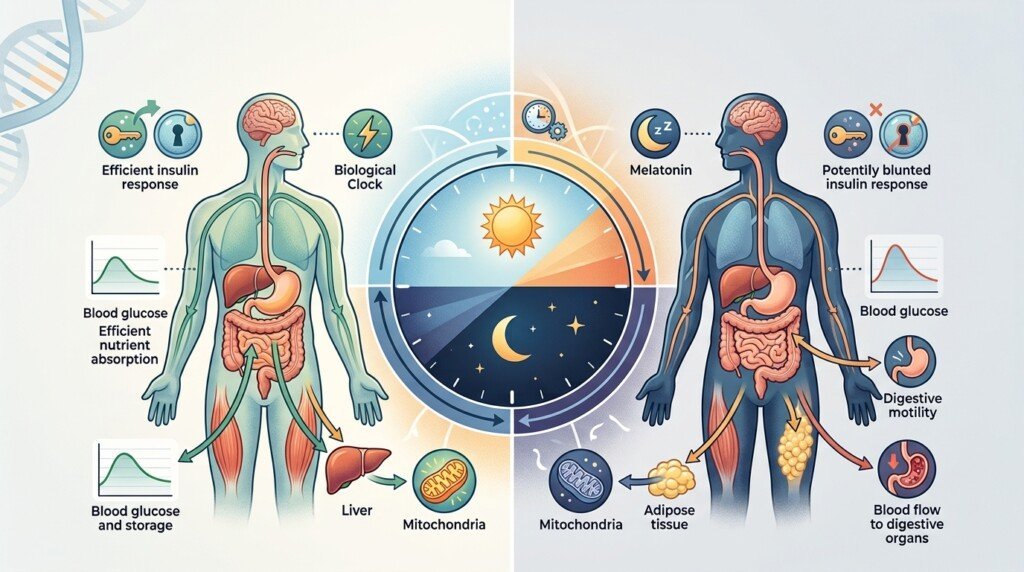
Your Body Clock Influences Food Processing
Research suggests the body may process nutrients differently later in the evening compared with earlier in the day.
Circadian rhythm affects:
- Insulin sensitivity
- Blood glucose control
- Digestive efficiency
- Hormone release
Because of these natural biological changes, meal timing may influence metabolic health beyond calorie intake alone.
Timing Is Only One Piece of the Puzzle
Eating late occasionally is unlikely to significantly change metabolism.
However, consistently consuming large meals close to bedtime may influence overall eating patterns and energy balance for some individuals.
The quality and quantity of food remain more important than the clock itself.
Consistency Matters More Than Perfection
Rather than worrying about a strict cutoff time, many nutrition researchers encourage maintaining a relatively consistent eating schedule that fits your lifestyle.
Long-term habits almost always matter more than isolated meals.
Readers focused on building lasting eating patterns may also benefit from Sustainable Weight Loss, which emphasizes consistency instead of rigid rules.
Evidence at a Glance
| Research Question | Current Evidence |
|---|---|
| Does meal timing influence metabolism? | Yes, to a modest extent. |
| Does circadian rhythm affect metabolism? | Yes. |
| Does breakfast restart metabolism? | No. |
| Does skipping breakfast automatically slow metabolism? | No. |
| Does late-night eating always cause weight gain? | No. Overall eating habits matter more. |
Is Meal Frequency Important for Calorie Burning?
For years, many people believed eating six small meals a day was the secret to a faster metabolism. Others argued that eating only two or three meals was healthier.
Modern research suggests the answer is much simpler.
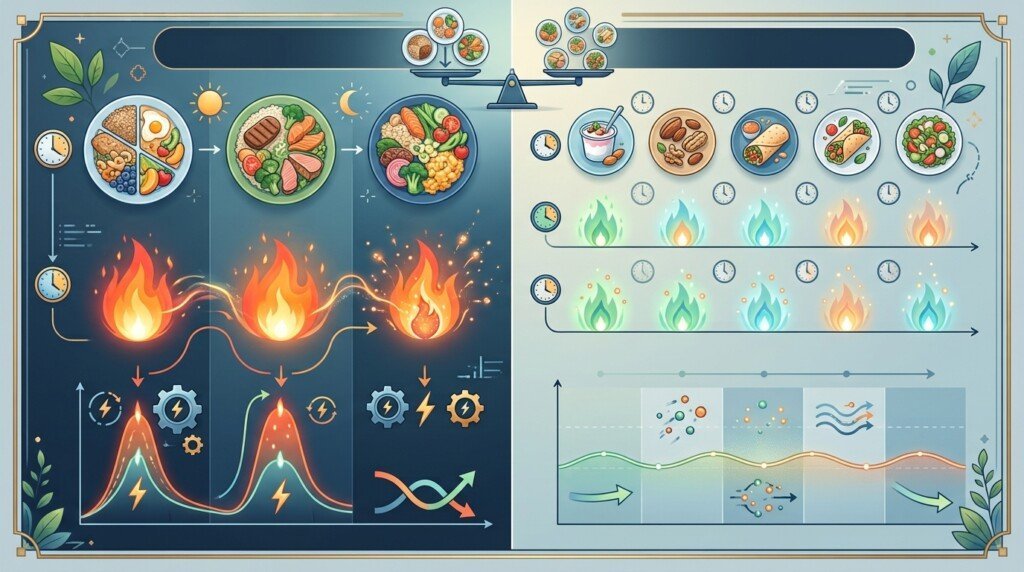
Does Eating More Often Increase Metabolism?
The body uses energy to digest, absorb, and process food. This is called the thermic effect of food (TEF).
Some people assume that eating more frequently creates a larger thermic effect.
Research shows this is not necessarily true.
If two people eat the same number of calories and similar foods, dividing those calories into three meals or six meals produces very similar total calorie expenditure over the course of a day.
In other words, meal frequency alone does not significantly speed up metabolism.
Why Some People Prefer More Frequent Meals
Although meal frequency does not dramatically change metabolic rate, it may influence other aspects of health.
Some people find smaller meals help them:
- Manage hunger.
- Maintain steady energy.
- Avoid overeating later.
- Improve meal consistency.
Others feel better eating fewer, larger meals.
Both approaches can work when overall nutrition supports long-term health.
Quality Still Matters More Than Frequency
Whether you eat three meals or six, metabolism responds much more to:
- Total calorie intake.
- Protein consumption.
- Food quality.
- Physical activity.
- Consistent eating habits.
Meal frequency should be chosen based on what is easiest to maintain rather than on myths about constantly “stoking the metabolic fire.”
Does Intermittent Fasting Affect Metabolism?
Intermittent fasting has become one of the most popular eating patterns worldwide.
It is also one of the most misunderstood.
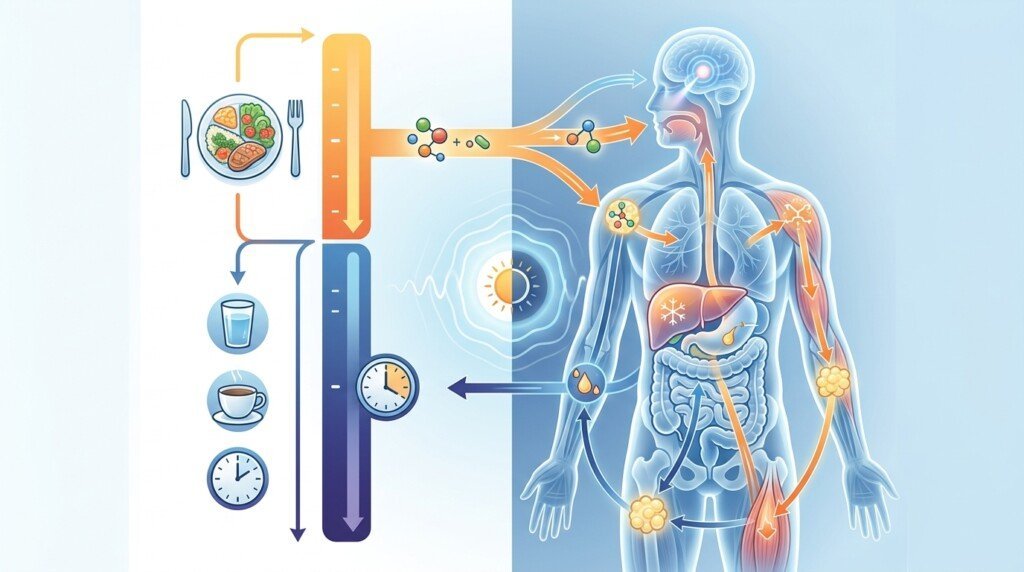
Fasting Does Not Instantly Slow Metabolism
A common misconception is that going several hours without food immediately causes metabolism to shut down.
Research does not support this belief.
During short periods without eating, the body continues producing energy by using stored carbohydrates and fat while maintaining essential physiological functions.
Why Intermittent Fasting Works for Some People
The success of intermittent fasting often comes from helping people create a consistent eating pattern rather than from dramatically changing metabolic rate.
Some individuals find fasting helps them:
- Simplify eating habits.
- Reduce unnecessary snacking.
- Improve appetite awareness.
- Maintain calorie balance.
Others find it difficult to sustain.
Neither approach is universally superior.
Metabolism Depends on the Whole Lifestyle
Intermittent fasting may fit well into a healthy lifestyle, but it is not a requirement for good metabolic health.
Readers interested in this eating pattern in greater depth can explore Intermittent Fasting Weight Loss Guide, which discusses fasting in far more detail.
What Does Research Say About Meal Timing?
Nutrition science has changed considerably over the past decade.
Instead of asking only “What should we eat?”, researchers now also ask “When do we eat?”
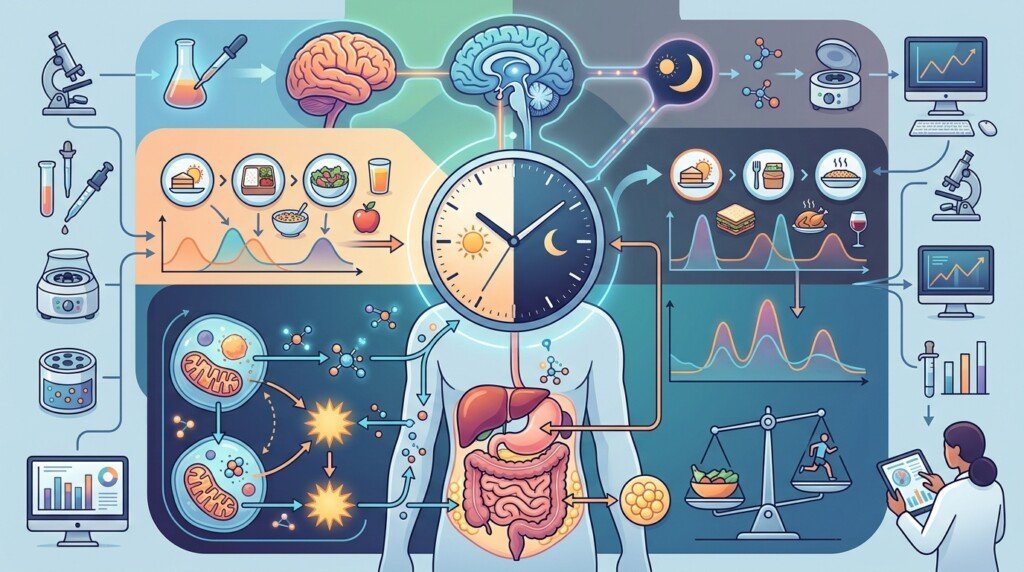
The Evidence Continues to Evolve
Current research suggests meal timing may influence:
- Glucose regulation.
- Insulin sensitivity.
- Appetite control.
- Circadian alignment.
- Overall metabolic health.
However, these effects are generally smaller than the influence of total dietary quality.
There Is No Universal Eating Schedule
One eating schedule does not work equally well for everyone.
Work schedules, family responsibilities, cultural habits, exercise routines, and individual preferences all influence when people eat.
The healthiest eating schedule is usually one that can be maintained consistently.
Healthy Habits Produce Better Results
Researchers consistently find that people benefit more from:
- Eating balanced meals.
- Meeting protein needs.
- Limiting highly processed foods.
- Staying physically active.
- Maintaining healthy body weight.
Meal timing supports these habits but does not replace them.
What Eating Habits Best Support Metabolic Health?
Rather than chasing the perfect eating schedule, focusing on sustainable daily habits provides greater long-term benefits.
Build Consistency
Regular eating patterns help many people maintain stable appetite and energy levels.
Consistency is generally more valuable than constantly changing eating schedules.
Prioritize Balanced Meals
Meals containing:
- Protein.
- Fiber.
- Healthy fats.
- Whole-food carbohydrates.
help support overall metabolic function better than relying on meal timing alone.
Listen to Your Lifestyle
The best eating schedule is one that fits naturally into your daily routine.
Healthy habits become effective only when they are sustainable.
Future readers interested in optimizing mornings may also enjoy Morning Routine to Boost Metabolism, while additional articles on Metabolism and Sleep and Metabolism and Hydration will explore how other daily habits influence metabolic health.
Meal Timing and Metabolism at a Glance
| Question | Answer |
|---|---|
| Does meal timing influence metabolism? | Yes, modestly. |
| Is breakfast required for a healthy metabolism? | No. |
| Does eating late automatically slow metabolism? | No. |
| Does eating more often increase calorie burning? | No. |
| Can intermittent fasting support metabolic health? | Yes, for some people. |
| Do consistent eating habits matter? | Yes. |
The easiest way to remember this topic is:
Meal timing influences how your body responds to food, but consistent healthy eating habits have a much greater impact on long-term metabolic health than the clock itself.

Frequently Asked Questions
1. Does eating late slow metabolism?
Not directly. Eating late occasionally does not automatically reduce metabolic rate, although consistent late-night overeating may affect overall energy balance.
2. Is breakfast necessary for metabolism?
No. Breakfast does not “start” metabolism because metabolism continues throughout the night. Whether breakfast is beneficial depends on individual preferences and overall eating habits.
3. Should you eat every three hours?
Current research does not show that eating every three hours significantly increases metabolism. Meal frequency should be based on what helps you maintain healthy eating habits.
4. Is intermittent fasting bad for metabolism?
For most healthy adults, short-term intermittent fasting does not appear to harm metabolism. Individual responses vary, and it may not suit everyone.
5. Does meal timing matter for weight loss?
Meal timing may influence appetite and eating behaviors, but overall calorie intake and dietary quality remain more important.
6. What is circadian nutrition?
Circadian nutrition studies how meal timing interacts with the body’s internal clock to influence metabolic health.
7. Does skipping meals damage metabolism?
Occasionally skipping a meal does not permanently damage metabolism. Long-term dietary patterns are much more important.
8. Is eating smaller meals better?
Not necessarily. Smaller meals work well for some people, while others prefer fewer, larger meals. Both approaches can support metabolic health.
9. Does metabolism slow after dinner?
Metabolism does not suddenly slow after a certain hour, although circadian rhythm may influence how the body processes nutrients later in the day.
10. What matters most for metabolic health?
Consistent healthy eating habits, balanced nutrition, regular physical activity, sufficient sleep, and maintaining a healthy body weight have the greatest influence on long-term metabolic health.
Final Thoughts
The relationship between Meal Timing and Metabolism is more complex than popular nutrition myths suggest. Research shows that meal timing can influence circadian rhythm, glucose regulation, insulin sensitivity, and appetite, but it does not dramatically increase or decrease the number of calories your body burns. Whether you prefer breakfast, intermittent fasting, or a traditional three-meal schedule, the overall quality of your diet and your long-term consistency matter far more than eating at a specific hour.
Instead of searching for the perfect eating schedule, focus on building habits that fit your lifestyle and are easy to maintain. A balanced diet, regular physical activity, appropriate protein intake, and consistent meal patterns provide a much stronger foundation for metabolic health than rigid timing rules. Meal timing can be a useful tool, but it works best when combined with the everyday habits that truly support long-term health and sustainable weight management.
Disclaimer:
This post may contain affiliate links. If you purchase through them, we may earn a small commission at no extra cost to you. Also, this content is for informational purposes only and does not substitute professional medical advice.
Fuel Your Body Right
Use our free Nutrition Toolkit to find your protein target, fasting window, and net carbs in minutes.
Open Free Tools →