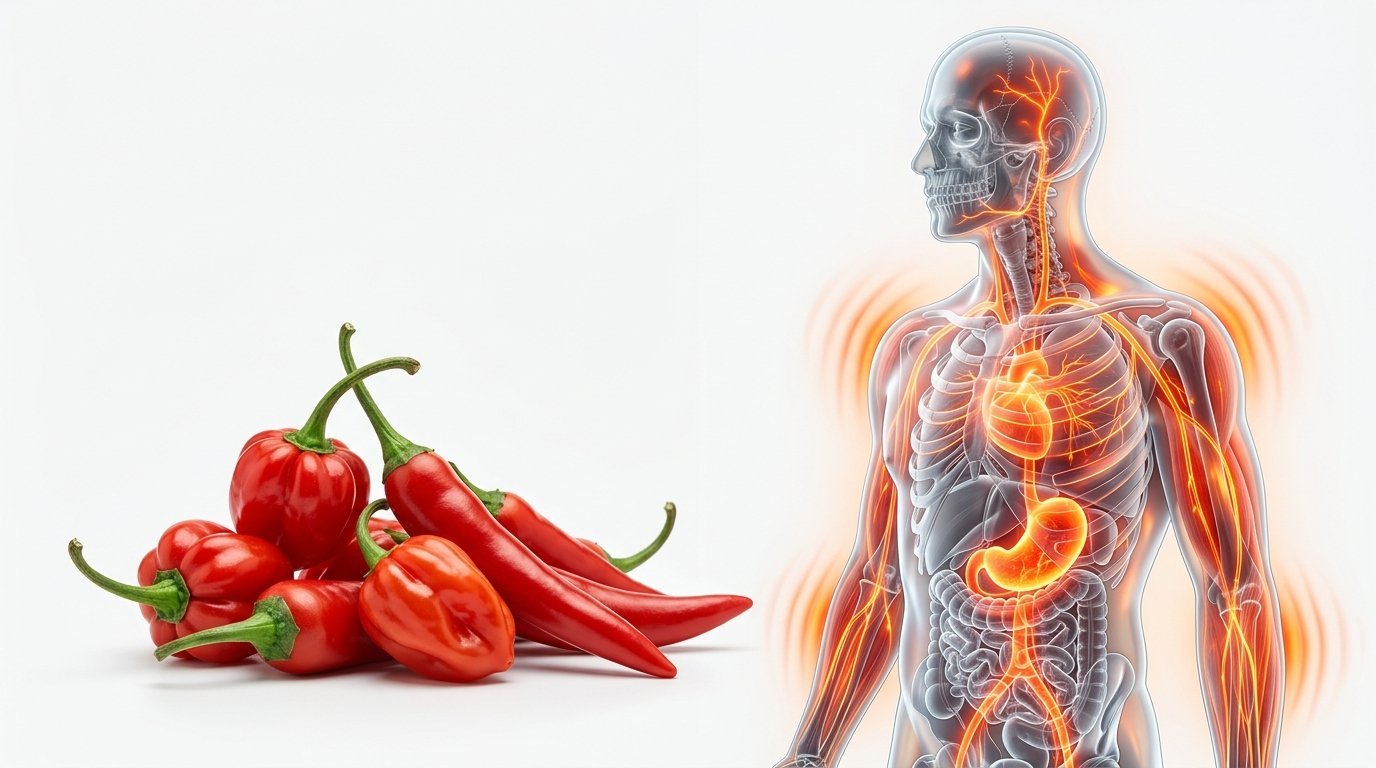
Can Capsaicin Boost Metabolism? What the Research Says About Spicy Foods
Spicy foods have long been associated with a faster metabolism. Whether it’s a bowl of chili, a sprinkle of cayenne pepper, or a hot sauce challenge, you’ve probably heard someone claim that the burning sensation means your body is burning more calories too.
There is some truth behind that idea, but the full story is far more interesting.
The connection between Capsaicin and Metabolism has been studied for decades because capsaicin, the natural compound that gives chili peppers their heat, appears to influence how the body produces heat and uses energy. Researchers have found that capsaicin activates specific receptors involved in temperature regulation, leading to a temporary increase in thermogenesis and, in some cases, a modest rise in calorie expenditure.
However, these effects are relatively small and should not be confused with dramatic fat-burning claims often seen online. Eating spicy foods alone will not create meaningful weight loss, but they may support an overall healthy lifestyle when combined with balanced nutrition and regular physical activity.
In this article, you’ll learn how capsaicin works inside the body, why TRPV1 receptors are important, what current research says about calorie burning, and where the real limitations begin.
Quick Answer
Capsaicin and Metabolism are connected because capsaicin activates TRPV1 receptors, which can temporarily increase thermogenesis and energy expenditure. Research suggests these effects are modest and may slightly support calorie burning and appetite regulation, but spicy foods alone are not enough to produce significant weight loss.
Does Capsaicin and Metabolism Really Have a Scientific Connection?
People often assume that if a food makes you feel hot, it must also be burning body fat.
That belief has some scientific basis, but it also leaves out important details.
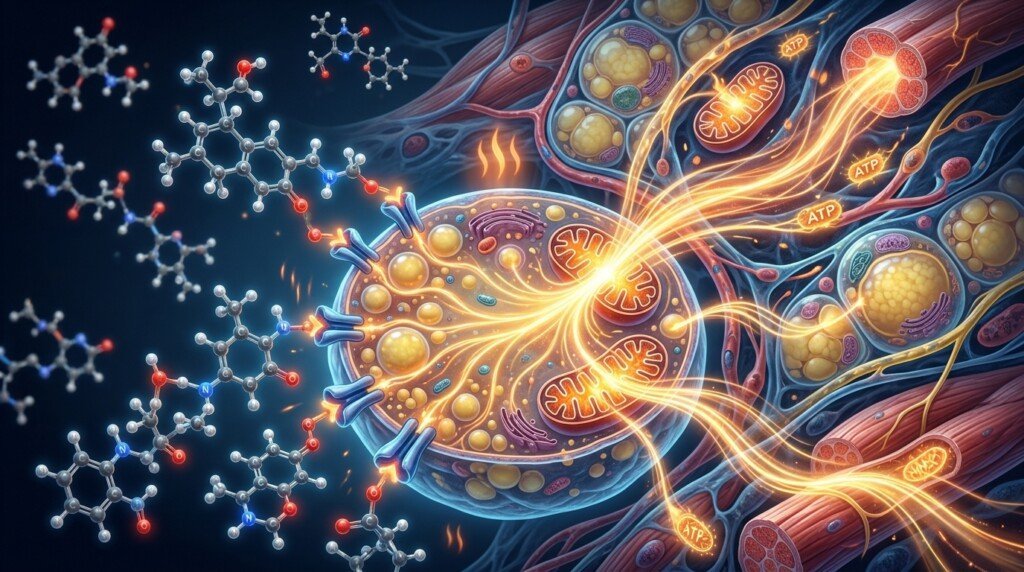
Myth: Eating spicy foods melts fat away.
This idea has become one of the most common nutrition myths.
Feeling warm after eating spicy food does not automatically mean large amounts of fat are being burned.
How Capsaicin Interacts With the Body
Capsaicin is the naturally occurring compound responsible for the heat in chili peppers.
Once consumed, it interacts with specialized nerve receptors called TRPV1 receptors.
These receptors normally respond to heat and physical temperature changes.
Capsaicin activates them even though no actual heat is present.
The brain interprets this stimulation as warmth, triggering several physiological responses.
These include:
- Increased heat production
- Mild activation of the nervous system
- Temporary increases in energy expenditure
- Changes in body temperature regulation
Reality
Research shows that capsaicin can influence metabolism, but the effect is considerably smaller than many advertisements suggest.
Instead of dramatically speeding up metabolism, capsaicin provides a temporary increase in calorie expenditure that is best viewed as supportive rather than transformative.
Readers interested in the broader process of calorie burning may also enjoy Metabolism, which explains the many systems involved in daily energy expenditure.
How Does Capsaicin Increase Thermogenesis?
The body’s ability to produce heat is known as thermogenesis.
Capsaicin has become one of the most studied food compounds because of its potential role in this process.
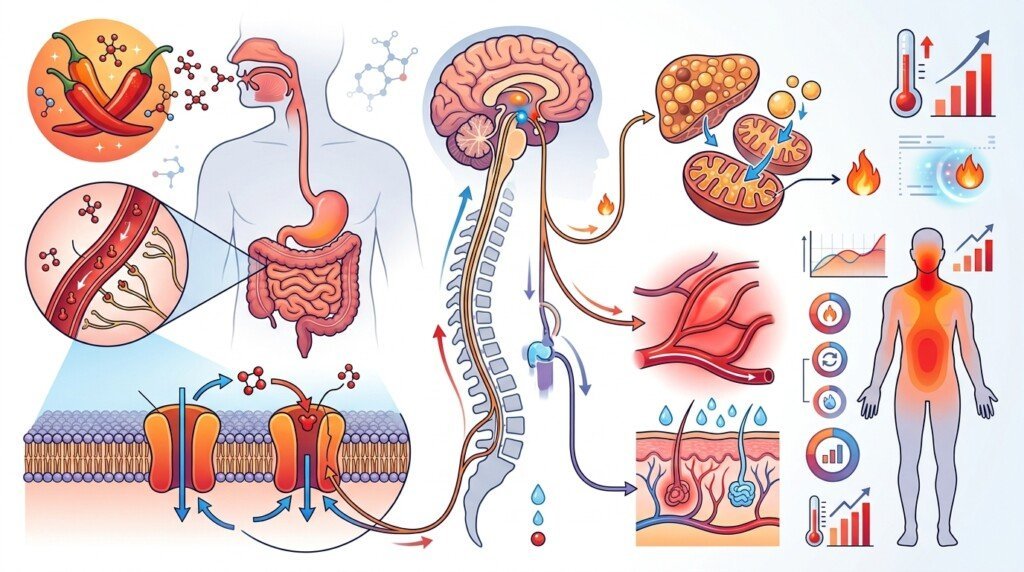
Understanding TRPV1 Activation
TRPV1 receptors act as sensors for heat.
Normally they respond when temperatures become very warm.
Capsaicin activates these same receptors without changing the surrounding temperature.
Once activated, the nervous system responds by increasing heat production.
Although the increase is relatively small, producing additional heat requires energy.
This is one reason calorie expenditure rises slightly after consuming spicy foods.
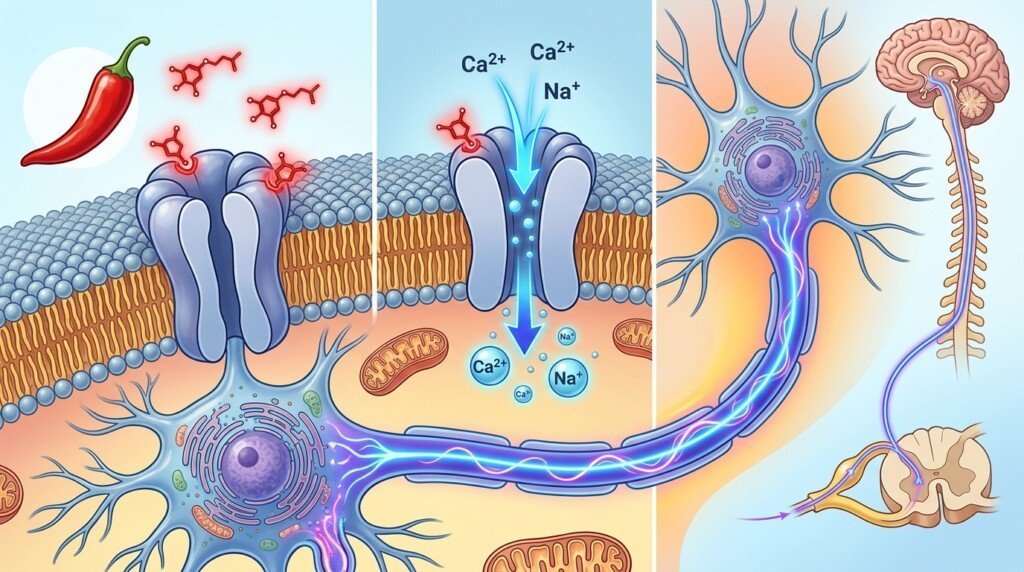
Why Heat Production Uses Energy
Every biological process requires fuel.
When thermogenesis increases, the body uses calories to generate heat.
This additional energy demand explains why researchers consider capsaicin a thermogenic compound.
Future readers interested in this topic in greater detail will find additional information in Thermogenesis, where the body’s natural heat-producing mechanisms are explored more thoroughly.
Brown Fat May Also Play a Role
Researchers are also studying whether capsaicin influences brown adipose tissue, commonly called brown fat.
Unlike white fat, which primarily stores energy, brown fat helps generate heat.
Some studies suggest capsaicin may activate brown fat under certain conditions, although more research is still needed.
Current evidence remains promising but not conclusive.
Can Spicy Foods Help Burn More Calories?
This is the question most people really want answered.
The scientific answer is yes, but with realistic expectations.
Myth: Eating spicy meals dramatically increases calorie burning.
Mechanism
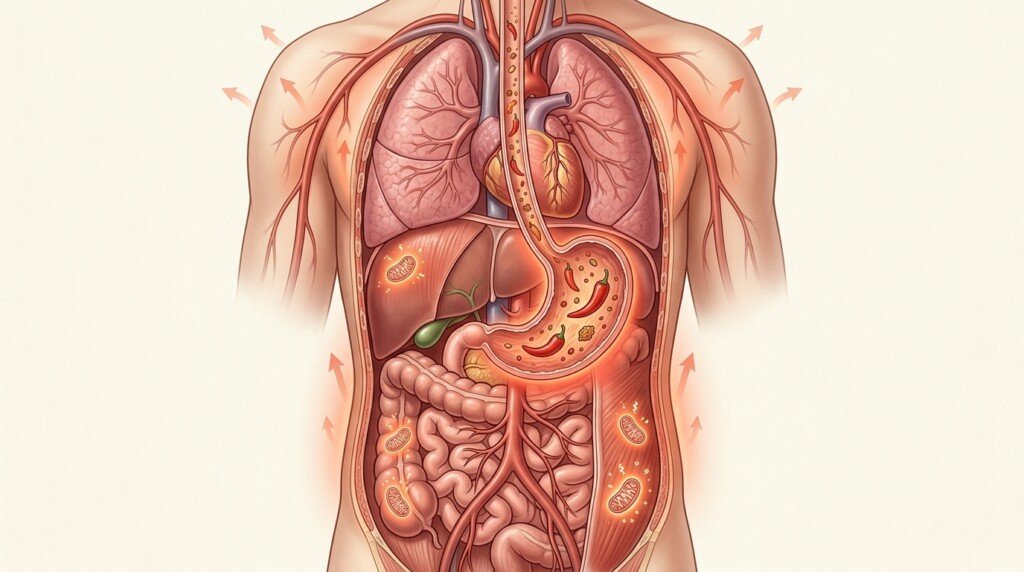
Capsaicin stimulates thermogenesis through TRPV1 activation.
This slightly increases energy expenditure for a limited period after eating.
The body uses additional energy while generating heat.
Some studies also suggest capsaicin may encourage greater fat oxidation during this time.
Reality
The increase in calorie burning is measurable, but generally modest.
Researchers consistently report that capsaicin contributes only a small increase in daily energy expenditure.
While interesting from a metabolic perspective, this alone is unlikely to produce noticeable weight loss.
Everyday Habits Matter More
Long-term metabolic health depends far more on:
- Regular physical activity
- Balanced nutrition
- Adequate protein intake
- Consistent movement
- Sustainable lifestyle habits
Capsaicin may complement these habits, but it cannot replace them.
Readers focused on building lasting eating habits may also benefit from High-Protein Foods That Burn Fat, which discusses another nutritional strategy associated with healthy metabolism.
Research at a Glance
| Research Question | Current Evidence |
|---|---|
| Does capsaicin affect metabolism? | Yes, modestly. |
| Does capsaicin increase thermogenesis? | Yes. |
| Does TRPV1 activation require energy? | Yes. |
| Can spicy foods dramatically increase calorie burning? | No. |
| Can capsaicin support healthy habits? | Yes. |
Does Capsaicin Reduce Appetite?
Another reason capsaicin receives attention in nutrition research is its possible effect on appetite.
Some studies suggest spicy foods may help people feel satisfied after eating, but the results are not consistent across all research.
Appetite and Metabolism Are Connected
Appetite influences metabolism indirectly.
If someone naturally eats fewer calories because they feel full sooner, maintaining a healthy weight may become easier over time.
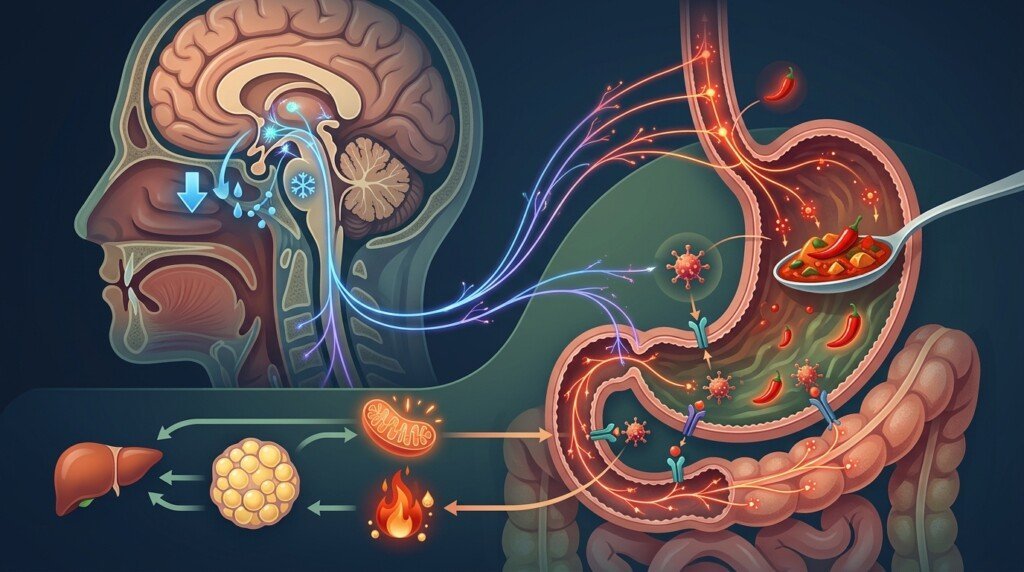
Researchers believe capsaicin may affect appetite by interacting with the nervous system and digestive hormones, although these effects are generally modest.
Individual Responses Vary
Not everyone reacts to spicy foods in the same way.
Some people report feeling full sooner after eating spicy meals.
Others notice little or no difference.
Tolerance to spicy foods, cultural eating habits, and genetics all appear to influence the response.
Capsaicin Is Not an Appetite Suppressant
Although capsaicin may slightly influence hunger in some individuals, it should not be considered a reliable appetite suppressant.
Healthy eating patterns remain far more important than relying on one ingredient.
How Much Capsaicin Is Needed to Affect Metabolism?
One of the biggest challenges in capsaicin research is determining the amount needed to produce measurable effects.
There Is No Universal Amount
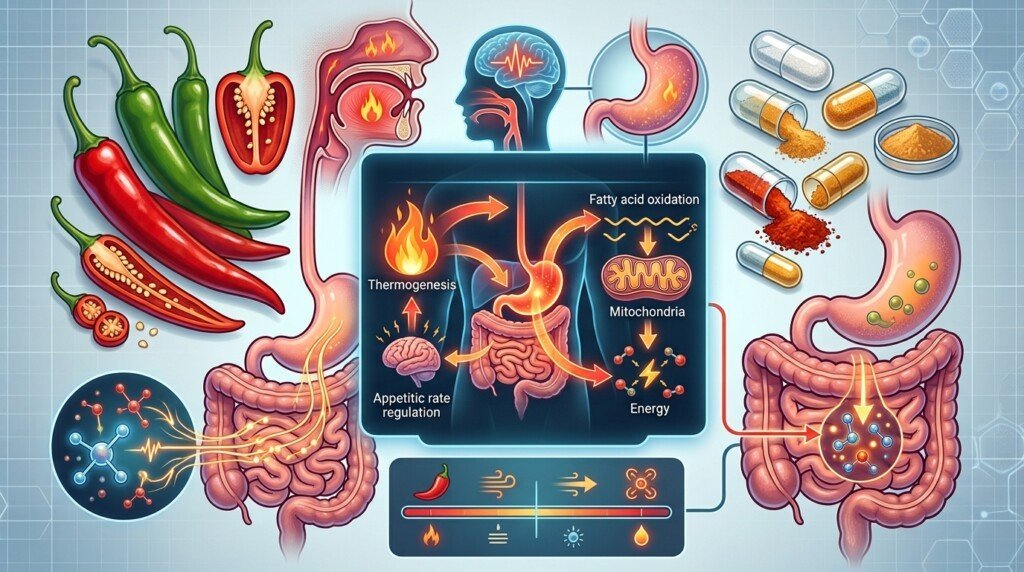
Scientific studies use different forms and amounts of capsaicin, making direct comparisons difficult.
Some investigate whole chili peppers.
Others use purified capsaicin or capsaicinoids.
Because of these differences, there is no single recommended amount for boosting metabolism.
More Heat Does Not Mean More Benefits
A common misconception is that eating the hottest peppers automatically produces the greatest metabolic effect.
Current evidence does not support this idea.
Extremely spicy foods may cause digestive discomfort without providing substantially greater metabolic benefits.
Consistency Matters More Than Intensity
If spicy foods are already part of your diet, enjoying them regularly in reasonable amounts is more practical than consuming extremely hot foods occasionally.
Healthy lifestyle habits remain the foundation of metabolic health.
Are Capsaicin Supplements More Effective Than Food?
Capsaicin supplements are widely marketed for weight management.
However, concentrated supplements should not automatically be considered superior to eating naturally spicy foods.
Supplements Deliver Concentrated Compounds
Unlike whole foods, supplements often contain concentrated capsaicinoids.
While this may sound beneficial, higher concentrations do not necessarily produce proportionally greater metabolic effects.
Research Remains Mixed
Some studies report small increases in energy expenditure with supplemental capsaicin.
Others show minimal or inconsistent benefits.
Researchers generally agree that any metabolic advantage remains relatively modest.
Safety Should Always Come First
Large amounts of concentrated capsaicin may increase the likelihood of:
- Digestive irritation.
- Stomach discomfort.
- Heartburn.
- Burning sensations.
Whole foods are generally better tolerated than concentrated products.
Who Should Avoid Large Amounts of Capsaicin?
Most healthy adults can enjoy spicy foods as part of a balanced diet.
However, large amounts of capsaicin may not be suitable for everyone.

People With Sensitive Digestion
Capsaicin may worsen symptoms for individuals who experience:
- Acid reflux.
- Frequent heartburn.
- Stomach irritation.
- Certain digestive disorders.
Reducing spicy food intake may improve comfort in these situations.
Individual Tolerance Varies
Some people comfortably enjoy very spicy meals every day.
Others experience discomfort after relatively small amounts.
There is no “ideal” spice level that applies to everyone.
Listen to Your Body
The healthiest amount of capsaicin is the amount your body tolerates comfortably.
Experiencing pain or digestive discomfort is not a sign that metabolism is working harder.
Capsaicin and Metabolism at a Glance
| Question | Answer |
|---|---|
| Does capsaicin affect metabolism? | Yes, modestly. |
| Does capsaicin increase thermogenesis? | Yes. |
| Does spicy food dramatically burn calories? | No. |
| Can capsaicin influence appetite? | Slightly, in some people. |
| Are supplements better than spicy foods? | Current evidence does not clearly support this. |
| Is capsaicin suitable for everyone? | No. Individual tolerance varies. |
The easiest way to remember this topic is:
Capsaicin may gently support metabolism through thermogenesis, but healthy daily habits remain the biggest driver of long-term metabolic health.

Frequently Asked Questions
1. Do spicy foods burn belly fat?
No. Spicy foods do not specifically target belly fat. Fat loss occurs throughout the body based on overall energy balance.
2. Is cayenne pepper good for metabolism?
Cayenne pepper contains capsaicin, which may slightly increase thermogenesis and energy expenditure, but the overall effect is modest.
3. Can you eat capsaicin every day?
Many healthy adults can enjoy spicy foods daily if they tolerate them well and they fit comfortably into a balanced diet.
4. Does capsaicin help with weight loss?
Capsaicin may provide a small metabolic advantage, but meaningful weight loss still depends on healthy eating habits and regular physical activity.
5. Does capsaicin permanently increase metabolism?
No. Its metabolic effects are temporary rather than permanent.
6. What is TRPV1?
TRPV1 is a heat-sensitive receptor activated by capsaicin. Its activation contributes to thermogenesis and temporary increases in energy expenditure.
7. Can spicy foods replace exercise?
No. Spicy foods may complement healthy habits, but they cannot replace regular physical activity.
8. Is eating hotter peppers always better?
No. Greater heat does not necessarily produce greater metabolic benefits.
9. Does capsaicin activate brown fat?
Some research suggests capsaicin may stimulate brown fat activity under certain conditions, although more studies are needed.
10. Is capsaicin safe for everyone?
No. People with digestive conditions or sensitivity to spicy foods may need to limit capsaicin intake.
Final Thoughts
The relationship between Capsaicin and Metabolism is supported by scientific research, but it is often overstated in popular nutrition advice. Capsaicin activates TRPV1 receptors, increases thermogenesis, and may slightly raise calorie expenditure while also influencing appetite in some individuals. These effects are measurable, yet they remain relatively modest and should not be mistaken for a shortcut to rapid fat loss. Spicy foods can certainly be part of a healthy eating pattern, but they cannot replace the long-term benefits of balanced nutrition, regular physical activity, and sustainable lifestyle habits.
The most valuable way to think about capsaicin is as one small piece of a much larger metabolic picture. Enjoying chili peppers or cayenne as part of nutritious meals may offer a slight metabolic advantage while adding flavor and variety to your diet. As this metabolism series continues, future articles on Cold Exposure and Metabolism and Meal Timing and Metabolism will explore additional lifestyle factors that influence how your body burns calories and regulates energy.
Disclaimer:
This post may contain affiliate links. If you purchase through them, we may earn a small commission at no extra cost to you. Also, this content is for informational purposes only and does not substitute professional medical advice.
Fuel Your Body Right
Use our free Nutrition Toolkit to find your protein target, fasting window, and net carbs in minutes.
Open Free Tools →