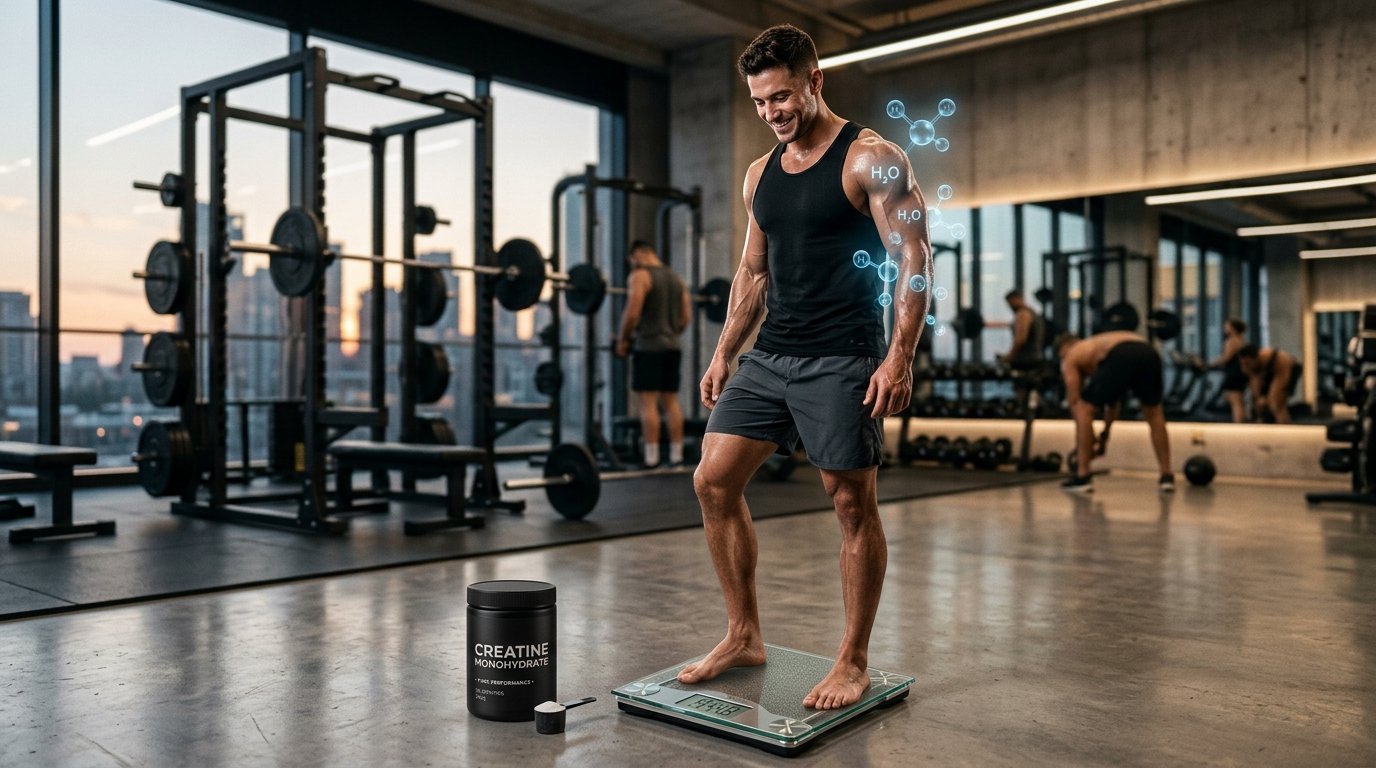
Does Creatine Cause Water Retention? Weight Gain vs Fat Gain Explained
If you’ve been thinking about taking creatine, you’ve probably heard the warning: “It makes you gain water weight.”
For many people trying to lose fat, that single statement is enough to create hesitation. After working hard to see the number on the scale move downward, the idea of gaining weight, even temporarily, can feel frustrating. It also raises an important question: Does Creatine Cause Water Retention, and if it does, is that something you should worry about?
The short answer is yes, creatine can increase water stored inside muscle cells. However, this process is often misunderstood. The extra water is not the same as gaining body fat, and it is very different from the type of fluid retention associated with swelling or certain medical conditions.
Understanding the difference between temporary water weight and actual fat gain can prevent unnecessary concern and help you evaluate your progress more accurately. Instead of focusing solely on the number displayed by the scale, it is more useful to understand what is changing inside your body and why those changes happen.
This article explains Does Creatine Cause Water Retention, where the additional water is stored, how it affects body weight, and why many researchers consider this a normal physiological response rather than a negative side effect.
Quick Answer
Does Creatine Cause Water Retention? Yes, creatine can temporarily increase the amount of water stored inside muscle cells. This increase is known as intracellular water retention and is not the same as gaining body fat. While the scale may rise slightly, the additional weight usually reflects increased muscle water rather than fat gain.
Why Does Creatine Cause Water Retention?
One of the first things many people notice after beginning creatine supplementation is a small increase on the scale.
Without understanding what is happening inside the body, it’s easy to assume that this increase represents fat gain.
Fortunately, that is usually not the case.
The reason creatine influences body weight begins at the cellular level.

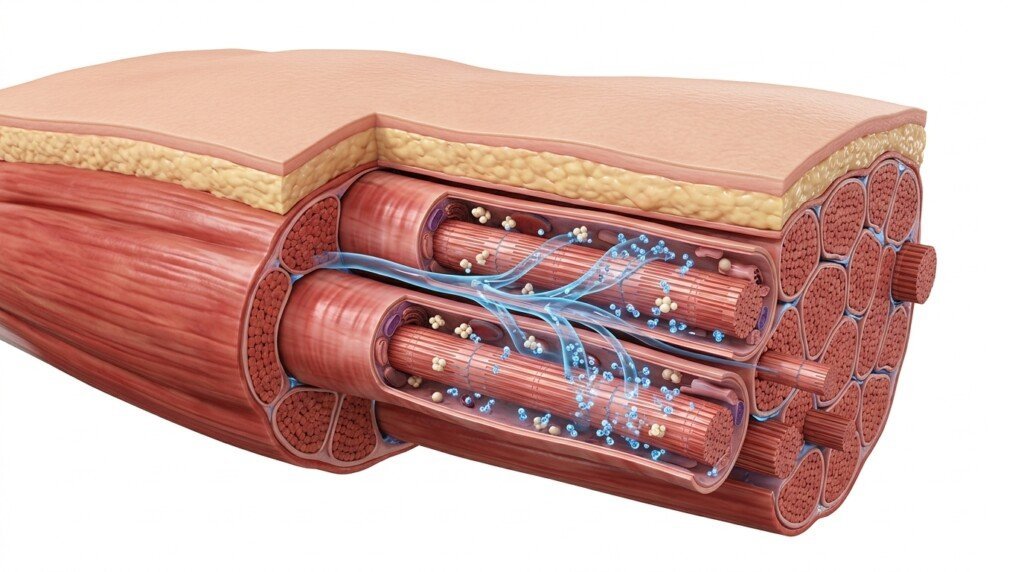
Creatine Draws Water Into Muscle Cells
Creatine is stored primarily inside skeletal muscle.
As muscle creatine stores increase, water naturally follows.
This happens because water moves toward areas containing higher concentrations of dissolved substances in order to maintain balance within the body.
Instead of collecting beneath the skin or around the abdomen, the additional water is pulled into muscle cells themselves.
Scientists refer to this as intracellular water.
This distinction is important because intracellular water behaves very differently from excess fluid that accumulates outside cells.
Intracellular Water Supports Normal Muscle Function
Muscle cells require an appropriate amount of fluid to perform efficiently.
Water helps support numerous biological processes, including nutrient transport, waste removal, and the cellular reactions involved in producing energy.
When creatine increases intracellular water, muscles become more hydrated at the cellular level.
Researchers believe this hydrated environment may help support exercise performance and muscle function during resistance training.
Rather than being a harmful effect, many scientists consider it part of creatine’s normal mechanism of action.
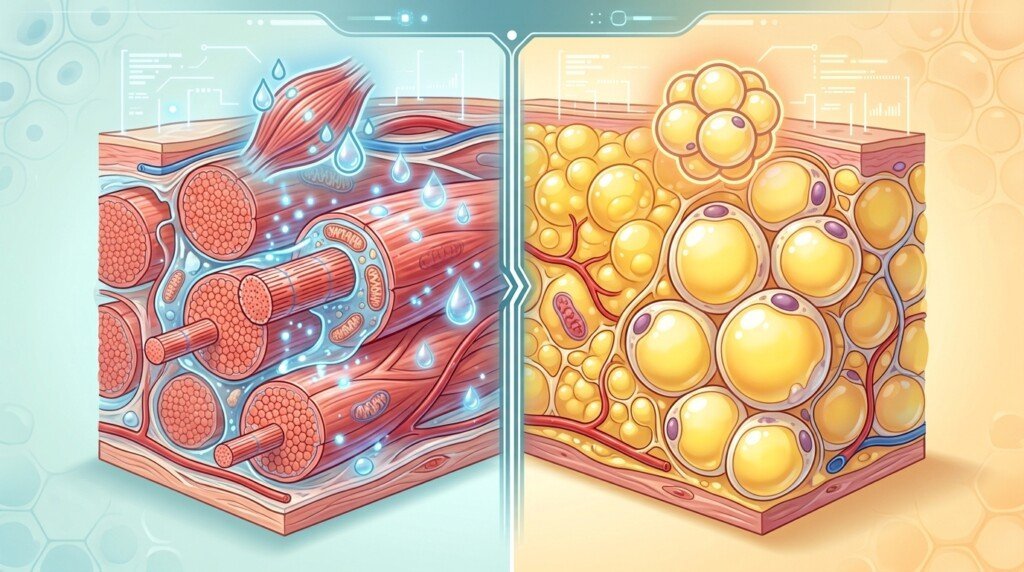
Water Retention Does Not Mean Fat Gain
One of the biggest misconceptions is assuming every increase in body weight equals additional body fat.
Body weight includes much more than fat alone.
It also reflects:
- Muscle tissue
- Body water
- Glycogen
- Digestive contents
- Bone
- Connective tissue
Because of this, a temporary increase in scale weight should never automatically be interpreted as fat gain.
Understanding overall Body Fat is far more informative than focusing on body weight alone.
Why the Scale Changes So Quickly
Body fat develops gradually through a sustained calorie surplus.
Water balance, on the other hand, can change within hours or days.
This explains why some people notice the scale moving upward shortly after beginning creatine.
The body has not suddenly accumulated pounds of fat overnight.
Instead, muscle cells have begun storing additional intracellular water.
This normal physiological adjustment occurs much faster than changes in body fat.
Is Creatine Weight Gain Fat or Water?
This is one of the most important questions for anyone pursuing weight loss.
Watching the scale increase after weeks of dieting can feel discouraging.
Fortunately, understanding the source of that weight can change the entire perspective.
Scale Weight Measures Everything
A bathroom scale cannot tell you what type of tissue has changed.
It simply measures total body mass.
That number includes:
- Fat
- Muscle
- Water
- Food
- Clothing
- Hydration status
As a result, body weight naturally fluctuates from one day to the next.
Many people already experience noticeable Daily Weight Fluctuations without taking creatine.
Factors such as sodium intake, carbohydrate consumption, hydration, exercise, and digestive contents all influence the scale.
Creatine simply adds another variable.
Temporary Weight Gain Is Different From Fat Gain
Body fat accumulates when the body consistently stores more energy than it uses.
This process requires a sustained calorie surplus over time.
Creatine does not contain large amounts of calories.
It also does not stimulate the body to store additional fat.
Instead, early increases in body weight generally reflect additional intracellular water stored within muscle tissue.
This temporary adjustment should not be confused with gaining fat.
Why Body Composition Matters More Than Weight
Imagine two people who both weigh 180 pounds.
One carries more lean muscle.
The other carries more body fat.
Although their body weight is identical, their health, appearance, and physical performance may be very different.
This is why evaluating Body Fat Percentage provides far more useful information than relying solely on body weight.
People focused on improving body composition often continue making progress even when the scale remains relatively stable.
Looking Beyond the Number on the Scale
Successful fat loss involves much more than watching body weight decrease every morning.
Progress may also appear through:
- Smaller waist measurements
- Better-fitting clothes
- Increased strength
- Improved endurance
- Visible muscle definition
These changes often occur even when temporary water shifts influence the scale.
People who notice their clothing fitting differently despite stable body weight frequently experience what’s commonly described as Losing Inches But Not Weight, a situation that highlights why scale weight tells only part of the story.
Where Does the Extra Water Go?
Many people imagine water spreading evenly throughout the body after taking creatine.
Others worry they’ll appear swollen or puffy.
The body’s response is actually much more organized.
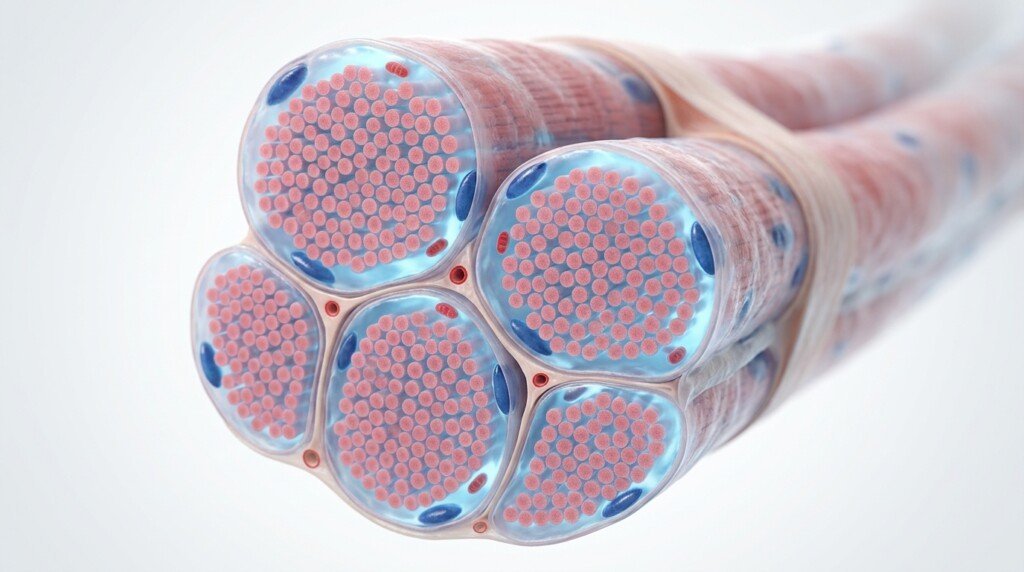
Most of the Water Is Stored Inside Muscle Cells
The additional water associated with creatine is primarily stored inside muscle cells rather than floating freely throughout the body.
This intracellular location is one of the reasons researchers distinguish creatine-related water retention from generalized fluid retention.
Because muscles naturally store creatine, they also become the primary destination for this additional water.
Muscles May Feel Fuller
Some individuals describe their muscles as feeling fuller after creatine supplementation.
This sensation is largely related to increased intracellular hydration rather than increased fat.
Well-hydrated muscle tissue often appears slightly fuller because the muscle cells themselves contain more water.
This differs from the soft appearance typically associated with increased body fat.
Water Distribution Is Highly Regulated
The human body carefully regulates fluid balance.
Hormones, kidneys, electrolytes, and cellular transport systems continuously adjust where water moves throughout the body.
Creatine works within these existing biological systems rather than overriding them.
Its primary influence remains concentrated inside skeletal muscle, where creatine is naturally stored.
Why This Matters During Fat Loss
Understanding where the water goes helps reduce unnecessary anxiety during a weight-loss journey.
If someone sees a two-pound increase on the scale after beginning creatine, it does not necessarily indicate that fat loss has stopped.
In many cases, body fat may continue decreasing even while intracellular water temporarily increases.
This is one reason health professionals encourage looking beyond short-term changes in body weight when evaluating progress.
How Long Does Water Retention Last?
One of the biggest concerns people have after noticing the scale move upward is whether the increase will continue indefinitely.
Fortunately, that’s not how the body responds.
For most healthy individuals, the initial increase in water stored inside muscle cells is temporary. As creatine levels inside the muscles reach a stable level, water balance also stabilizes.
Rather than continuing to climb week after week, body weight often settles into a new normal.

The Early Changes Are Usually the Most Noticeable
The greatest changes in water weight typically occur during the early stages after creatine supplementation begins.
This is because muscle cells are gradually increasing their creatine stores and drawing in additional intracellular water.
Once these stores become saturated, the rate of change slows considerably.
Many people stop noticing meaningful changes on the scale after this initial adjustment.
Daily Weight Can Still Fluctuate
Even after creatine reaches a stable level, body weight naturally changes from one day to the next.
Normal daily fluctuations may occur because of:
- Hydration status
- Carbohydrate intake
- Sodium consumption
- Hormonal changes
- Exercise
- Digestive contents
Creatine is only one of many factors that influence scale weight.
This is why tracking long-term trends is far more useful than reacting to individual weigh-ins.
Patience Provides Better Perspective
People often become discouraged after seeing a temporary increase on the scale.
However, evaluating progress over several weeks provides a much clearer picture than focusing on one or two isolated measurements.
If body fat is decreasing while muscle is being maintained, overall body composition may continue improving despite temporary water shifts.
Does Everyone Retain Water?
Not everyone experiences the same response to creatine.
Individual biology plays a significant role in determining how noticeable water retention becomes.
Some people observe small changes on the scale, while others notice very little difference at all.
Genetics Influence Individual Response
Every person’s muscles store creatine slightly differently.
People who naturally have lower creatine stores may experience larger changes after supplementation because their muscles have greater capacity to store additional creatine.
Others who already consume more creatine through their diet may notice smaller changes.
These differences are completely normal.
Training Status Can Make a Difference
People who regularly perform resistance training often respond differently than individuals with little exercise experience.
Active muscles generally store more creatine than inactive muscles.
As a result, trained individuals may notice changes in muscle fullness without experiencing dramatic increases in overall body weight.
Hydration Habits Also Matter
Proper hydration supports normal fluid balance throughout the body.
Ironically, drinking adequate water often helps the body regulate fluids more effectively than restricting water intake.
Most healthy individuals naturally maintain this balance without needing to make major adjustments.
Can You Reduce Creatine Water Retention?
Many people search for ways to eliminate creatine-related water retention altogether.
Before trying to reduce it, it’s important to understand that intracellular water is generally considered part of how creatine works.
In most cases, it is neither harmful nor something that needs to be “fixed.”
Avoid Obsessing Over the Scale
One of the simplest ways to reduce unnecessary stress is to stop using the scale as the only measure of progress.
Instead, monitor several indicators together:
- Waist measurements
- Progress photos
- Clothing fit
- Strength improvements
- Energy levels
- Body composition when available
These measurements often reveal positive changes that the scale alone cannot show.
Stay Consistent With Healthy Habits
Rather than trying to manipulate water balance, continue focusing on the habits that actually influence fat loss.
These include:
- Consistent nutrition
- Regular resistance training
- Adequate protein intake
- Good sleep
- Daily physical activity
Temporary water shifts become much less important when viewed within the context of long-term progress.
Don’t Mistake Water for Failure
Many people quit creatine after seeing the scale increase because they assume their fat-loss efforts have stopped working.
In reality, body fat may still be decreasing.
Understanding the difference between temporary water weight and fat gain helps people stay committed to their overall plan instead of abandoning a supplement based on a misunderstanding.
When Should Water Retention Be a Concern?
For most healthy adults, the mild intracellular water increase associated with creatine is considered a normal physiological response.
However, not every situation involving fluid retention is related to creatine.
Knowing when to seek medical advice is important.
Normal Creatine-Related Water Retention
Typical characteristics include:
- Small increase in body weight
- Fuller-looking muscles
- Stable overall health
- No significant discomfort
- No widespread swelling
These changes usually occur during the early stages and stabilize over time.
When It May Be Something Else
Fluid retention caused by certain medical conditions often looks very different.
Persistent swelling in the hands, feet, ankles, face, or other areas should not automatically be blamed on creatine.
If fluid retention is accompanied by symptoms such as pain, shortness of breath, severe swelling, or other concerning changes, medical evaluation is appropriate.
These situations fall outside the normal physiological effects associated with creatine supplementation.
Understanding this distinction helps prevent unnecessary worry while also encouraging people to seek appropriate medical care when symptoms suggest another underlying cause.
Key Takeaways
| Topic | Key Point |
|---|---|
| Water retention | Creatine increases intracellular water inside muscle cells, not body fat. |
| Scale changes | A temporary increase on the scale does not necessarily indicate fat gain. |
| Water location | Most additional water is stored within skeletal muscle rather than beneath the skin. |
| Duration | Water balance usually stabilizes after the initial adjustment period. |
| Individual response | Some people notice more water retention than others. |
| Progress tracking | Body composition, measurements, and strength provide better indicators than body weight alone. |
| Medical concerns | Mild intracellular water retention is normal, but persistent swelling with other symptoms should be medically evaluated. |

Frequently Asked Questions
1. Does Creatine Cause Water Retention?
Yes. Creatine increases water stored inside muscle cells, a process known as intracellular water retention. This temporary increase is different from gaining body fat.
2. Is creatine weight gain permanent?
For most people, the initial increase in body weight reflects temporary changes in muscle water. Body weight typically stabilizes once muscle creatine stores reach a steady level.
3. Does creatine make you look bloated?
Most of the additional water is stored inside muscle cells rather than under the skin. Many people notice fuller muscles instead of generalized bloating.
4. Should I stop taking creatine if the scale goes up?
Not necessarily. A higher scale reading does not automatically mean fat gain. Looking at body composition, waist measurements, clothing fit, and strength often provides a more accurate picture of progress.
5. Is creatine water retention harmful?
For healthy adults, the mild intracellular water retention associated with creatine is generally considered a normal physiological response rather than a harmful effect. Persistent or unusual swelling should be evaluated by a healthcare professional.
Conclusion
Understanding Does Creatine Cause Water Retention helps separate one of the most common fitness myths from what actually happens inside the body. Yes, creatine can temporarily increase water stored within muscle cells, but this is very different from gaining body fat. The resulting change on the scale reflects increased intracellular water, not a sudden increase in fat tissue. For many people, these early changes are simply part of the body’s normal adaptation to higher muscle creatine stores.
Instead of judging progress by scale weight alone, it’s far more useful to consider body composition, waist measurements, strength gains, and how your clothes fit. Temporary water fluctuations are a normal part of human physiology and can occur for many reasons beyond creatine. When viewed in the context of consistent nutrition, regular resistance training, and long-term fat-loss goals, creatine-related water retention becomes much less concerning and much easier to understand.
Disclaimer:
This post may contain affiliate links. If you purchase through them, we may earn a small commission at no extra cost to you. Also, this content is for informational purposes only and does not substitute professional medical advice.