Why Does Fat Adaptation Improve Energy Levels?
Fat adaptation and energy levels are often discussed as if switching to a ketogenic diet automatically unlocks a permanent supply of energy. The reality is more interesting.
Some people do report steadier energy after becoming accustomed to using more fat and ketones for fuel. They may notice fewer dramatic dips between meals, less dependence on frequent snacks, and more consistent energy during prolonged, lower-intensity activity.
But that does not mean fat adaptation creates unlimited energy or guarantees that everyone will feel better.
There is also an important part of the story that gets overlooked. Energy can temporarily get worse before it gets better. When carbohydrate intake drops sharply, the body has to adjust to a different fuel environment. During that transition, some people experience fatigue, headaches, reduced exercise performance, or difficulty concentrating.
That temporary dip is one reason people sometimes abandon the approach before they have had enough time to determine how their body responds.
The more accurate picture is not “carbs make you tired and fat makes you energetic.” Your body can use both carbohydrate and fat for energy. What changes during fat adaptation is the body’s ability to rely more heavily on fat-derived fuels when carbohydrate availability is low.
And that distinction matters.
Why does being fat-adapted lead to more stable energy throughout the day?
The idea of stable energy after fat adaptation comes down to fuel availability.
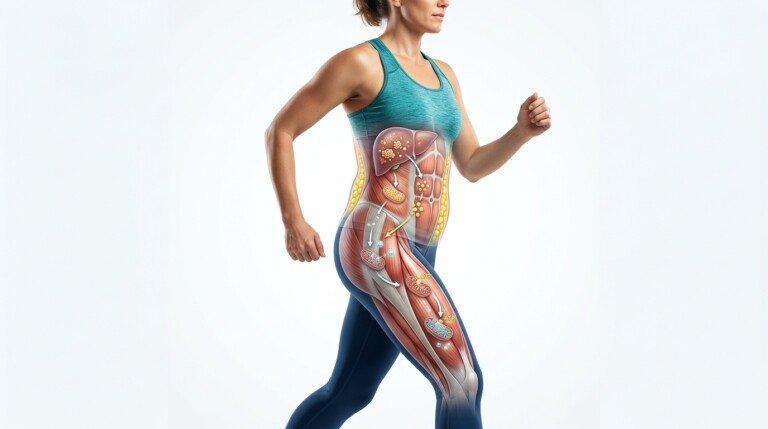
Your body has several ways to produce energy. Carbohydrate can be converted into glucose and used relatively quickly. Fat can be broken down into fatty acids, which can be used by many tissues for energy. When carbohydrate availability remains low, the liver can also produce ketones from fatty acids, providing another fuel source for tissues that can use them.
During a conventional mixed diet, the body constantly moves between these fuel sources.
After carbohydrate-containing meals, glucose availability rises and insulin secretion increases. As time passes after the meal, insulin generally falls and the body increases its reliance on stored fuels.
A metabolically adaptable person can make these transitions without needing to maintain a large amount of carbohydrate availability at every moment.
Fat adaptation shifts the balance further toward fat and ketone utilization.
That does not mean glucose stops being used.
It means the body becomes better equipped to operate when glucose availability is relatively limited.
This can matter for the subjective experience of energy because a person’s fuel supply between meals is not dependent solely on the carbohydrate they most recently consumed.
There is a substantial reserve of stored fat in the body, even in relatively lean individuals. The challenge is not whether fat exists. The challenge is how readily different tissues can access and use it under different conditions.
What physiological changes are behind this energy boost?
The first important change is increased reliance on fatty acids as an energy source.
When carbohydrate intake is restricted, insulin levels tend to be lower than they would be following a carbohydrate-rich meal. This supports greater release of fatty acids from adipose tissue.
Those fatty acids can enter tissues and undergo oxidation to generate energy.
The liver has another important role. When carbohydrate availability is sufficiently low, the liver converts some fatty acids into ketone bodies. The major ketones include beta-hydroxybutyrate and acetoacetate.
These ketones can circulate through the bloodstream and be used by several tissues as fuel.
The brain is particularly relevant because it normally relies heavily on glucose. During prolonged carbohydrate restriction or fasting, ketone availability increases and the brain can use ketones as a significant alternative fuel.
This is one reason people often associate ketosis with mental energy.
However, the physiology should not be turned into an exaggerated promise.
Ketones do not provide a magical energy source.
They are simply another fuel.
The body still needs adequate total energy, nutrients, sleep, hydration, and recovery.
Another important change involves how efficiently tissues handle fatty acids and ketones.
During sustained carbohydrate restriction, metabolic pathways involved in fat oxidation become more heavily relied upon. Mitochondria are responsible for much of the energy production from these substrates, and repeated exposure to a particular fuel environment can influence the enzymes and transport systems involved in its utilization.
In practical terms, the body becomes less dependent on constantly replenishing carbohydrate.
That can help explain why some people report that their energy feels less tied to meal timing after adaptation.
There is also a difference between fuel availability and fuel delivery.
Someone can have plenty of stored fat but still experience fatigue if they are not eating enough total calories, sleeping poorly, exercising excessively, or dealing with another health issue.
Fat adaptation does not override those factors.
This is why the claim that becoming fat-adapted automatically produces high energy is too simplistic.
A better description is that fat adaptation can improve the body’s ability to rely on fat and ketones when carbohydrate availability is limited, which may contribute to steadier energy for some people.


Why do fat-adapted people report fewer energy crashes than those relying on carbs?
The phrase “relying on carbs” can be misleading.
Virtually everyone uses carbohydrate to some degree. Even people following a ketogenic diet still have glucose in their bodies, and the body can produce glucose when necessary.
The more useful comparison is between someone whose energy availability is strongly influenced by repeated carbohydrate intake and someone who has developed a greater capacity to use stored fat and ketones between meals.
Consider a familiar pattern.
A person eats breakfast containing a substantial amount of rapidly digested carbohydrate. Blood glucose rises, insulin responds, and the body uses available glucose.
A few hours later, that person feels hungry or sluggish and reaches for another snack.
That does not automatically mean the first meal caused a “sugar crash.” The person’s total meal composition, sleep, caffeine intake, activity, stress, and individual glucose response all matter.
Still, large fluctuations in blood glucose can contribute to changes in perceived energy for some people.
Fat-adapted individuals may experience fewer of these subjective swings because they have a greater capacity to draw on fatty acids and ketones between meals.
Their energy supply is less dependent on the immediate presence of dietary carbohydrate.
This is also where the contrast with intense sugar cravings becomes useful. Some people experience a cycle in which highly palatable sweet foods provide a rapid reward followed by renewed hunger or cravings later. That experience is not identical to normal carbohydrate metabolism, but it can make the contrast with more stable eating patterns feel dramatic.
The important point is not that carbohydrate automatically causes crashes.
It does not.
A balanced carbohydrate-containing meal can provide sustained energy, especially when it contains protein, fiber, and minimally processed carbohydrate sources.
The difference is that fat adaptation gives the body another well-developed fuel pathway to draw upon.
There is also a practical reason endurance athletes sometimes become interested in this subject.
During prolonged activity, the body can draw heavily on stored fat. If an athlete has greater capacity for fat oxidation, they may be able to conserve some limited glycogen stores during lower-intensity efforts.
That does not mean a ketogenic diet is automatically superior for athletic performance.
High-intensity activity places greater demands on carbohydrate metabolism, and different sports have different fuel requirements.
The same principle applies outside sport.
If your goal is simply to avoid the feeling of needing food every two or three hours to function normally, improved fat utilization may be useful.
But if you are eating too few calories or not recovering adequately, changing your fuel source will not solve the underlying problem.
When should I expect to notice improved energy after starting fat adaptation?
There is no precise day on which energy suddenly switches from unstable to stable.
That expectation creates unnecessary frustration.
Some people notice changes relatively early. Others experience an initial decline in energy followed by gradual improvement. Some feel very little difference at all.
The transition depends on the person’s starting diet, carbohydrate intake, activity level, sleep, calorie intake, metabolic health, and individual physiology.
This is why the early experience should be viewed as a transition rather than a test of willpower.
A person who feels tired during the first several days has not necessarily failed.
At the same time, persistent severe fatigue should not automatically be interpreted as evidence that the body simply needs more time.
The quality and severity of symptoms matter.
Does energy actually dip before it improves during the transition?
Yes, it can.
This is one of the most important expectations to set before starting a ketogenic approach.
When carbohydrate intake falls sharply, the body does not instantly become highly efficient at relying on fat and ketones. Several systems are adjusting at the same time.
Glycogen stores decline.
Water balance changes.
Electrolyte handling changes.
Dietary patterns change.
The brain and other tissues encounter a different fuel environment.
Exercise can temporarily feel harder.
For some people, this combination produces the symptoms commonly referred to as keto flu.
Fatigue is one of the most recognizable complaints.

A person who normally feels energetic during a morning workout might suddenly feel sluggish. Someone who normally walks through the afternoon without difficulty may feel like they need to sit down.
That temporary experience can be discouraging because it appears to contradict the promise of improved energy.
But the transition and the adapted state are not the same thing.
The early period is essentially a period of adjustment.
The body is moving from a state in which dietary carbohydrate is readily available toward greater reliance on stored fat and ketone production.
This does not happen instantly.
For some people, energy begins improving as the transition progresses. For others, the process is slower or the perceived benefits are less dramatic.
There is also a psychological trap here.
If someone expects to feel incredible after a few days, ordinary fatigue can be interpreted as failure.
If someone expects every unpleasant symptom to be “part of adaptation,” serious symptoms can be ignored.
Neither extreme is useful.
A better approach is to monitor the trend.
Ask yourself:
Is my energy gradually becoming more stable?
Is my exercise tolerance recovering?
Am I sleeping reasonably well?
Is my appetite manageable?
Am I eating enough to support my daily activity?
Are headaches or fatigue improving rather than worsening?
These questions provide more information than asking whether you have reached a particular day on the calendar.
It is also worth remembering that fat adaptation does not eliminate normal energy fluctuations.
Everyone has periods of higher and lower energy.
Circadian rhythms influence alertness. Sleep affects concentration. Physical activity increases energy demand. Stress changes perceived fatigue. Meal size and composition influence how people feel.
A fat-adapted person can still have a tired afternoon.
They can still have a poor night’s sleep.
They can still need food after a demanding workout.
The realistic benefit is potentially greater metabolic flexibility toward fat and ketone use, not permanent freedom from fatigue.
There is another factor that deserves attention: total calorie intake.
Someone may begin a ketogenic diet and unintentionally eat far less than they need because many familiar foods have been removed. If energy intake becomes too low, fatigue is an expected consequence.
That fatigue should not be celebrated as evidence that the diet is working.
Weight loss and energy deprivation are not the same thing.
Similarly, someone who dramatically increases exercise while reducing carbohydrates may create a large energy gap. Their resulting fatigue could reflect inadequate recovery rather than insufficient fat adaptation.
This is why the surrounding lifestyle matters.
The body is not running a single experiment called “fat adaptation.”
It is responding to the complete environment.
Sleep, food intake, exercise, stress and hydration are all part of that environment.
People who want to understand whether their energy changes are actually associated with adaptation can track them rather than relying on memory.
A simple daily energy rating from 1 to 5 can be surprisingly useful.
Record your morning energy.
Record your afternoon energy.
Record your perceived exercise capacity.
Record your sleep quality.
After several weeks, compare the patterns.
If energy gradually becomes more stable while sleep, food intake and activity remain reasonably consistent, the change becomes more meaningful.
If energy continues to decline, that deserves a different interpretation.
Sometimes the correct response is not to push harder.
It may be to reassess the dietary approach.
This is particularly important for people with medical conditions, people taking glucose-lowering medication, pregnant or breastfeeding individuals, and anyone experiencing significant or persistent symptoms. A ketogenic diet can change glucose requirements and medication needs, so medical guidance may be appropriate.
The same principle applies to people whose fatigue existed before the dietary change.
Not every case of low energy is a fuel problem.
Iron deficiency, thyroid disorders, sleep disorders, depression, inadequate calorie intake, chronic illness and many other conditions can contribute to persistent fatigue.
Fat adaptation should not become a catch-all explanation.
If your energy is consistently poor, finding the cause is more important than forcing yourself to remain in ketosis.
For people who do respond well to the transition, however, the potential benefit is not necessarily a sudden burst of energy.
It may be much quieter.
You wake up and feel normal.
You reach lunchtime without feeling desperate for food.
You work through the afternoon without constantly thinking about your next snack.
You complete a long walk without feeling like you need immediate carbohydrate afterward.
Those changes may not feel dramatic enough to make a viral social media post.
They can still be meaningful.
The strongest case for fat adaptation is therefore not the promise of endless energy. It is the possibility of becoming less dependent on frequent carbohydrate availability and more capable of using stored fat and ketones as fuel.
That is a much more realistic claim.
Frequently Asked Questions (Fat adaptation and energy levels).
1. Does fat adaptation give you more energy?
It can contribute to steadier energy for some people, particularly between meals and during prolonged lower-intensity activity. It does not guarantee higher energy, and adequate calories, sleep, hydration and recovery remain essential.
2. Why do I feel more stable on keto?
A ketogenic diet can increase reliance on fatty acids and ketones when carbohydrate intake is low. Some people therefore experience fewer noticeable energy swings between meals. However, individual responses vary, and stable energy can also depend on meal composition, sleep and overall calorie intake.
3. Does energy dip before it improves during fat adaptation?
It can. Some people experience temporary fatigue, headaches or reduced exercise capacity during the early transition. These symptoms may improve as the body adjusts, although the timeline varies considerably.
4. How can I tell whether my improved energy is related to fat adaptation?
Track your energy at consistent times each day alongside sleep, appetite and exercise performance. A sustained pattern of improvement is more informative than one unusually energetic day or a single ketone reading.
5. Does fat adaptation prevent normal fatigue?
No. Fat-adapted people can still become tired from poor sleep, intense exercise, stress, inadequate food intake or illness. Fat adaptation changes fuel use, not the body’s basic need for rest and recovery.
Disclaimer:
This post may contain affiliate links. If you purchase through them, we may earn a small commission at no extra cost to you. Also, this content is for informational purposes only and does not substitute professional medical advice.
Ready to Start Your Journey?
Use our free 7-in-1 Weight Loss Toolkit to calculate your numbers and build your plan in minutes.
Open Free Tools →