What Is Fat Burning? How Your Body Burns Fat for Energy
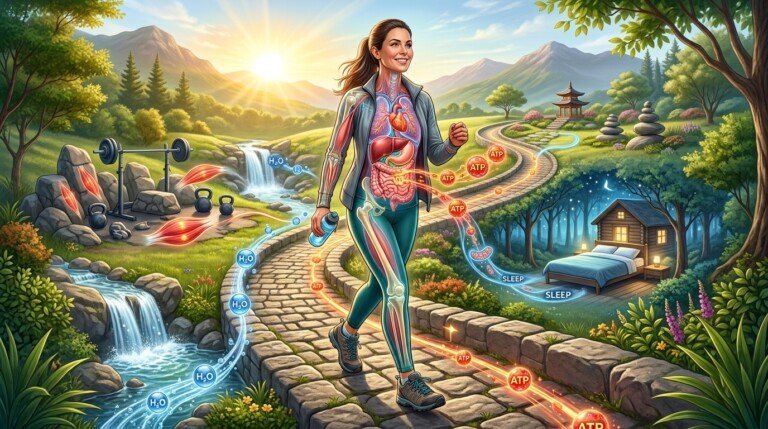
Body fat often gets a bad reputation, but it plays an essential role in keeping you alive. Every day, your body stores and uses fat as a reliable source of energy. Whether you’re sleeping, walking, working, or exercising, your body constantly decides whether to burn carbohydrates, fat, or a combination of both to meet its energy needs.
Understanding Fat Burning helps explain why losing body fat is more than simply exercising harder or eating less. It is a carefully regulated biological process involving hormones, enzymes, energy balance, and the body’s ability to access stored fat.
Many people imagine fat simply “melting away,” but that’s not what actually happens. Before stored fat can provide energy, it must be released from fat cells, transported through the bloodstream, and converted into usable fuel inside your cells. This process involves several complex steps that work together continuously throughout the day.
In this guide, you’ll follow the complete journey of stored body fat, from the moment it leaves a fat cell to the point where it becomes energy. You’ll also learn what influences this process, why fat burning does not always mean weight loss, and which everyday factors can naturally support efficient fat metabolism.
What Is Fat Burning?
Fat burning is the process by which your body converts stored fat into usable energy.
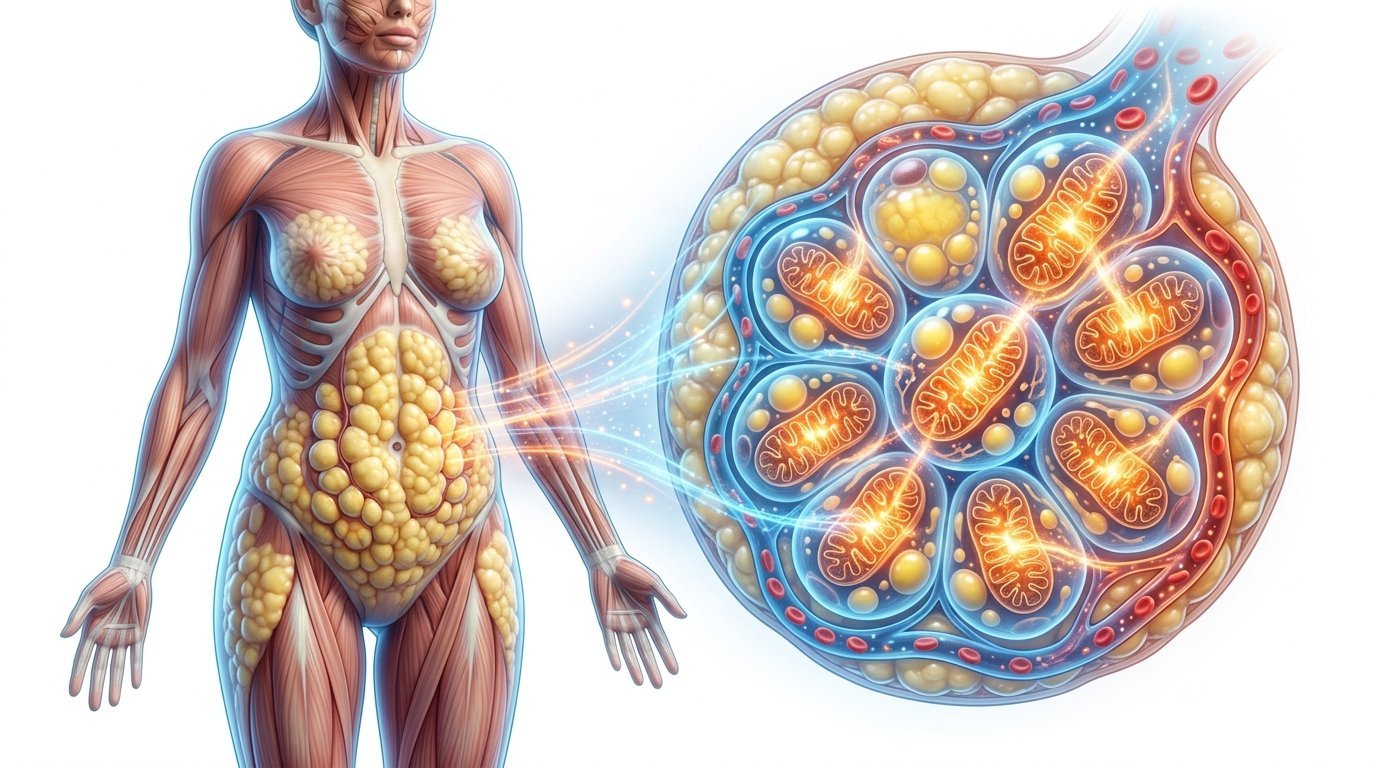
Whenever your body needs more energy than it is immediately receiving from food, it begins looking for additional fuel sources. One of its largest energy reserves is stored body fat, found inside specialized fat cells known as adipocytes within adipose tissue.
Rather than remaining permanently stored, these fat reserves are constantly being broken down and rebuilt depending on your body’s energy demands.
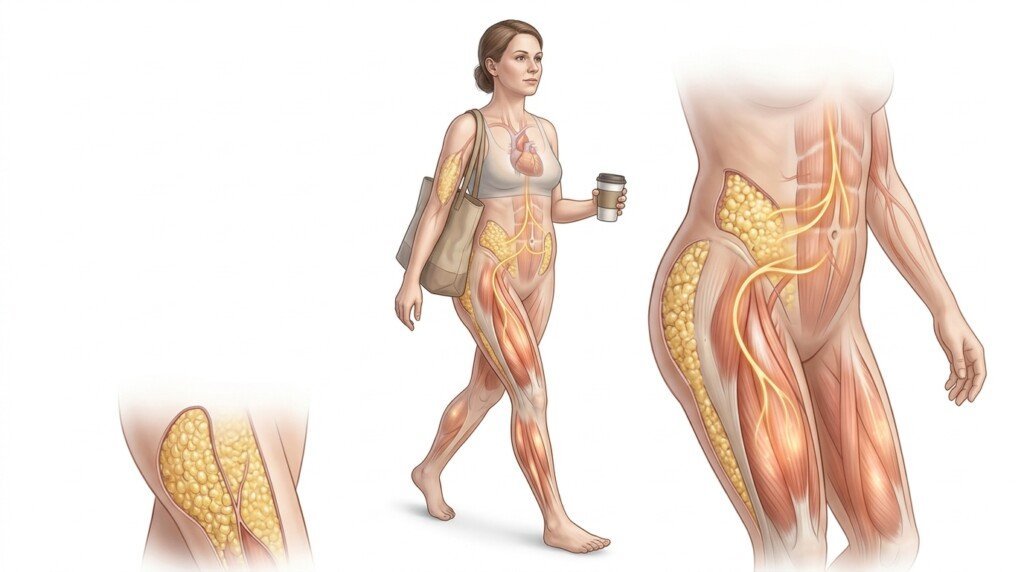
Fat burning is therefore not a special event that only happens during exercise. It occurs throughout the day, even while resting or sleeping. The difference lies in how much fat is being used compared with carbohydrates at any given moment.
Fat Burning Is a Normal Biological Function
Every healthy person burns some amount of fat every day.
Your body continually shifts between different fuel sources depending on factors such as:
- Current energy needs
- Food intake
- Hormone levels
- Physical activity
- Sleep
- Overall metabolic health
This ability to switch between carbohydrates and fat is known as metabolic flexibility and plays an important role in maintaining energy balance.
While Metabolism determines how much total energy your body uses, fat burning specifically explains how stored fat becomes one of those energy sources.
Fat Burning Is Not the Same as Fat Loss
One of the most common misunderstandings is assuming that burning fat automatically means losing body fat.
These terms are closely related but not identical.
Fat burning refers to your body using fat as fuel.
Fat loss refers to reducing the total amount of stored body fat over time.
For example, your body may burn stored fat during physical activity, but if you consistently consume more energy than you expend throughout the day, those fat stores can be replenished.
Long-term fat loss depends on maintaining an appropriate Calorie Deficit, where your body consistently uses more energy than it receives.
How Does Your Body Burn Stored Fat?
The journey from stored fat to usable energy happens through several carefully coordinated stages.
Instead of disappearing, stored fat follows a biological pathway that allows your body to safely convert it into fuel.
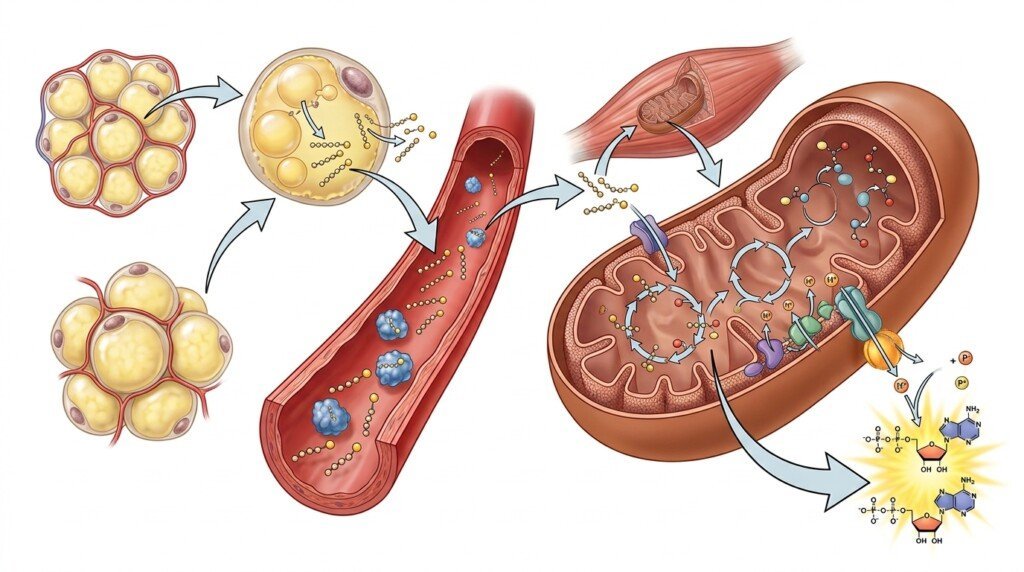
Step 1: Fat Is Stored Inside Adipose Tissue
Before fat can be burned, it must first exist as stored energy.
Most stored fat is found in adipose tissue throughout the body.
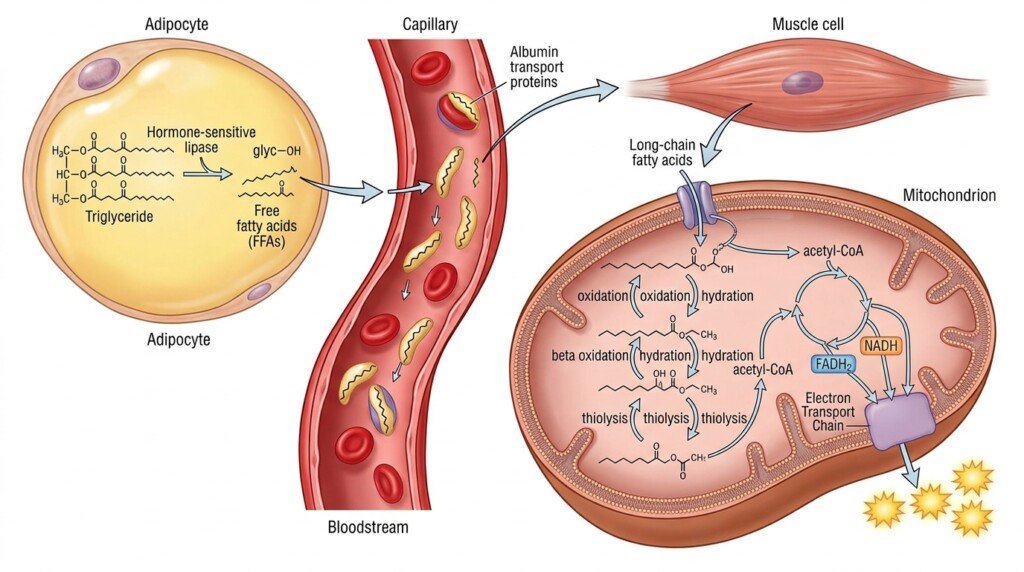
Inside each fat cell are triglycerides, which are molecules made from glycerol and three fatty acids.
These triglycerides serve as the body’s long-term energy reserve, allowing you to survive periods when food is unavailable or when energy demands increase.
Adipose tissue is far more than passive storage. It also produces hormones and signaling molecules that influence appetite, metabolism, and overall energy regulation.
Readers interested in understanding different fat types can also explore Body Fat, which explains how fat is distributed throughout the body.
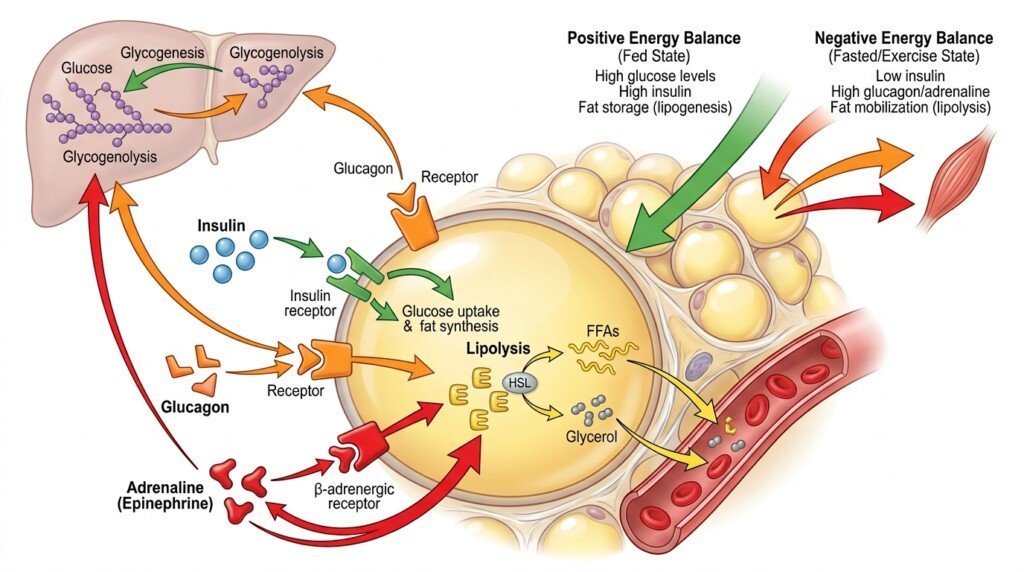
Step 2: Lipolysis Releases Stored Fat
The first true step of fat burning is called lipolysis.
Lipolysis is the process of breaking stored triglycerides into:
- Free fatty acids
- Glycerol
Think of it as unlocking the energy stored inside fat cells.
Several hormones influence lipolysis, including adrenaline, noradrenaline, glucagon, and insulin.
When your body requires additional energy, enzymes inside fat cells begin breaking triglycerides apart so they can leave storage.
Without lipolysis, stored fat cannot be used for energy.
Step 3: Fatty Acids Travel Through the Bloodstream
Once released, free fatty acids enter the bloodstream.
Because fat does not dissolve easily in blood, these fatty acids bind to a transport protein called albumin.
The bloodstream then delivers them to tissues that require energy, including:
- Skeletal muscles
- The heart
- The liver
- Other active organs
This transportation system allows your body to move stored energy wherever it is needed.
Step 4: Fat Oxidation Converts Fat Into Energy
Releasing fat from storage is only half the process.
The next stage is fat oxidation, where fatty acids enter cells and travel into structures called mitochondria.
Often described as the cell’s power plants, mitochondria convert fatty acids into ATP, the energy currency used by every cell in the body.
During this process:
- Oxygen is consumed.
- Fatty acids are broken down.
- ATP is produced.
- Carbon dioxide and water are released as by-products.
This entire sequence is what people commonly refer to as burning fat.
Although invisible, these reactions occur millions of times every second throughout your body.
Step 5: Energy Is Used Throughout the Body
Once ATP has been produced, your body immediately uses it to power essential functions such as:
- Breathing
- Circulation
- Brain activity
- Muscle contraction
- Digestion
- Body temperature regulation
- Cellular repair
Even when sitting quietly, your body requires a continuous supply of energy.
This explains why fat burning continues around the clock rather than only during exercise.
What Triggers the Fat-Burning Process?
Your body does not randomly decide when to use stored fat.
Several biological signals determine when fat becomes the preferred fuel source.
Energy Balance Plays the Biggest Role
The most important driver of fat burning is energy balance.
When your body consistently requires more energy than it receives from food, it increasingly relies on stored energy reserves.
This does not mean fat burning only occurs during a calorie deficit.
Fat is burned every day.
However, sustained fat loss becomes much more likely when energy expenditure exceeds energy intake over time.
Understanding overall Weight Loss begins with understanding this balance between energy consumed and energy used.
Glycogen Availability Influences Fuel Selection
Carbohydrates are stored in the body as glycogen.
When glycogen stores are plentiful, your body often relies more heavily on carbohydrates for immediate energy.
As glycogen becomes depleted through normal daily activity or extended periods between meals, the body gradually increases its reliance on stored fat.
Importantly, this shift happens naturally throughout the day and does not require extreme diets or fasting protocols.
Hormones Help Regulate Fat Burning
Hormones act as messengers that tell your body when to store energy and when to release it.
Some of the most important hormones involved include:
Insulin
After eating, insulin helps move nutrients into cells and encourages energy storage.
Higher insulin levels generally reduce lipolysis, while lower levels allow stored fat to become more accessible.
Adrenaline and Noradrenaline
These hormones stimulate lipolysis by signaling fat cells to release fatty acids during periods of increased energy demand.
Glucagon
Glucagon helps maintain stable blood sugar between meals while supporting the mobilization of stored energy.
These hormones work together continuously rather than operating independently.
Their balance changes throughout the day based on eating patterns, activity, and overall energy needs.
Why Doesn’t Burning Fat Always Mean You’re Losing Fat?
This is one of the most misunderstood aspects of human metabolism.
Many people assume that because their body burns fat during a workout or while sleeping, they must automatically be losing body fat.
The reality is more nuanced.
Your body is constantly storing and burning fat at the same time. These two processes occur simultaneously, with the balance between them determining whether your total body fat increases, decreases, or remains stable.
If fat burning exceeds fat storage over an extended period, body fat gradually declines.
If fat storage consistently exceeds fat burning, body fat gradually increases.
This is why temporary increases in fat oxidation do not always translate into noticeable fat loss on the scale.
Which Factors Affect How Efficiently You Burn Fat?
Although everyone burns fat every day, the efficiency of this process varies from person to person. Genetics play a role, but they are only one part of the picture. Daily habits, body composition, and overall metabolic health often have a much greater influence over time.
Understanding these factors helps explain why two people following similar routines may experience different results.
Muscle Mass Influences Energy Demand
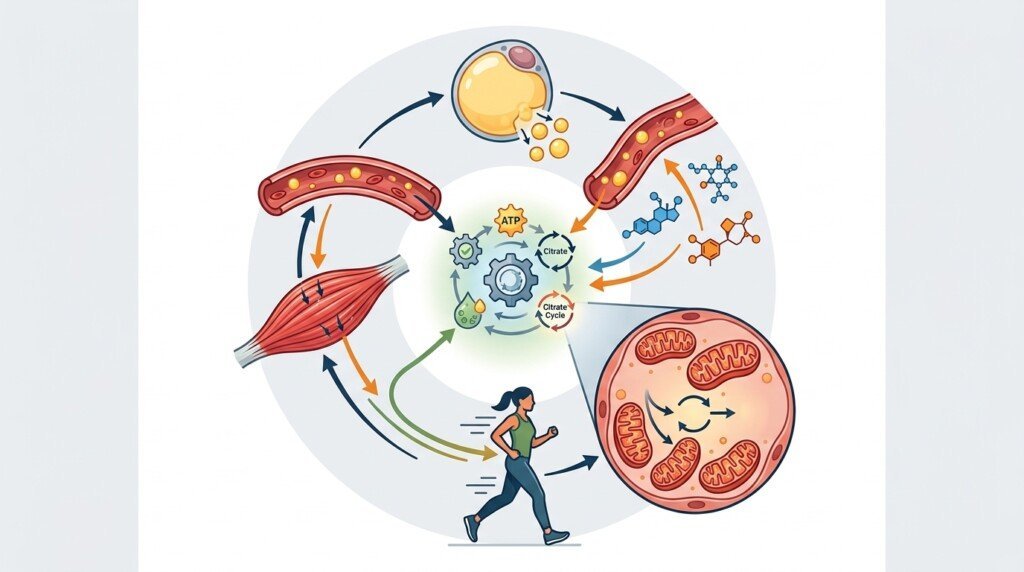
Muscle tissue is metabolically active, meaning it requires energy even while your body is at rest.
People with a greater amount of lean muscle generally have higher daily energy expenditure, which can create more opportunities for stored fat to be used over time.
This does not mean muscle directly burns large amounts of fat on its own. Instead, maintaining muscle supports overall energy expenditure, making long-term fat management easier.
Body composition is one reason why two people with the same body weight can have very different metabolic profiles. Readers interested in this relationship can also explore Body Recomposition, which explains how muscle and fat can change independently of body weight.
Metabolism Affects Total Energy Use
Fat burning and metabolism are closely connected, but they are not the same process.
Fat burning explains where energy comes from, while metabolism describes how much energy the body uses.
Someone with a higher daily energy expenditure naturally requires more fuel throughout the day. Depending on energy balance, part of that fuel may come from stored body fat.
Many biological factors influence metabolism, including:
- Age
- Body size
- Muscle mass
- Hormonal activity
- Daily movement
- Genetics
Because of these differences, fat burning is rarely identical between individuals.
Hormones Help Coordinate the Process
Hormones do not simply turn fat burning on or off.
Instead, they continuously adjust how the body stores and releases energy.
Several hormones work together to regulate fat metabolism, including:
- Insulin
- Glucagon
- Adrenaline
- Noradrenaline
- Cortisol
- Thyroid hormones
These chemical messengers respond to changes in energy availability, physical activity, stress, and nutrition.
Healthy hormonal regulation allows the body to shift efficiently between storing energy after meals and releasing stored fat when additional fuel is needed.
Daily Movement Adds Up
Many people only think about formal exercise when discussing fat burning.
However, everyday movement contributes significantly to total energy expenditure.
Walking through the grocery store, climbing stairs, cleaning the house, gardening, standing while working, and carrying groceries all require energy.
Collectively, these activities increase daily calorie expenditure and create additional opportunities for the body to utilize stored fat.
Overall Health Supports Efficient Fat Burning
Fat burning does not occur in isolation.
It depends on the health of multiple body systems working together, including:
- The cardiovascular system
- The endocrine system
- Skeletal muscles
- The liver
- Mitochondria
Supporting overall health through consistent lifestyle habits creates an environment where these systems can function efficiently.
Can You Increase Fat Burning Naturally?
Many advertisements promise dramatic fat-burning shortcuts.
Scientific evidence paints a different picture.
There is no single habit capable of transforming your body’s fat-burning ability overnight. Instead, small evidence-based habits work together to improve metabolic efficiency over time.

Maintain a Sustainable Energy Balance
The most reliable way to support long-term fat loss remains maintaining an appropriate energy balance.
When the body consistently requires more energy than it receives over time, stored fat becomes an increasingly important fuel source.
This principle forms the foundation of Sustainable Weight Loss, where gradual, realistic changes are prioritized over extreme approaches.
Preserve Lean Muscle
Maintaining muscle supports healthy metabolism throughout life.
Resistance training, adequate recovery, and sufficient protein intake all contribute to preserving lean body mass, allowing the body to maintain healthy energy expenditure as we age.
Stay Physically Active
Movement throughout the day encourages energy expenditure.
Whether through structured exercise or simply increasing everyday activity, regular movement provides the body with repeated opportunities to utilize stored energy.
Different forms of physical activity contribute in different ways, but the overall goal is consistency rather than perfection.
Support Thermogenesis
Thermogenesis refers to the body’s production of heat through normal metabolic processes.
Everyday activities such as digestion, maintaining body temperature, and physical movement all contribute to thermogenesis.
Understanding Thermogenesis helps explain why the body continues using energy even while resting.
Prioritize Recovery
Recovery often receives less attention than activity, yet it remains essential for long-term metabolic health.
Quality sleep, stress management, and sufficient recovery between periods of activity help support hormonal balance, muscle repair, and overall energy regulation.
Fat burning is ultimately supported by consistency rather than constant intensity.
What Are the Biggest Myths About Fat Burning?
The internet is filled with misleading advice about fat burning.
Separating myths from established science makes it much easier to set realistic expectations.
Myth 1: Sweating Means You’re Burning Fat
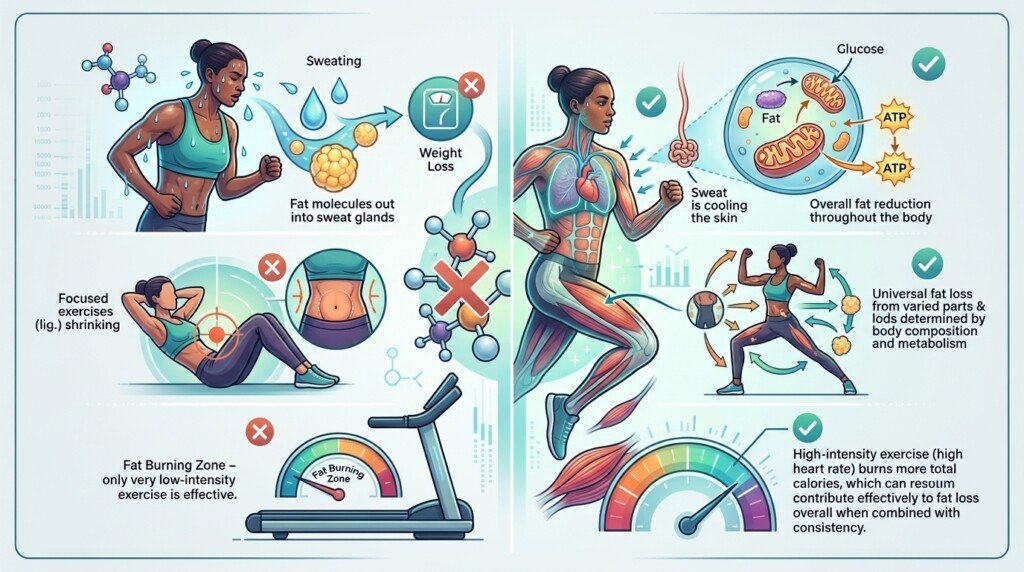
Sweating is your body’s cooling system.
When body temperature rises, sweat evaporates to help regulate heat.
Although sweating often occurs during physical activity, it does not indicate how much stored fat is being used.
Most weight lost through sweat is simply water that is quickly replaced after drinking fluids.
Myth 2: Fat Burning Only Happens During Exercise
Exercise certainly increases energy demand, but it is not the only time your body burns fat.
Fat oxidation continues throughout the day while:
- Sleeping
- Sitting
- Walking
- Working
- Recovering after activity
Your body continuously shifts between fuel sources based on changing energy requirements.
Myth 3: You Can Target Fat Burning in One Body Area
Many people believe specific exercises burn fat from specific body parts.
Current research does not support this idea.
When the body uses stored fat for energy, it draws from fat stores throughout the body according to genetics, hormones, and individual physiology.
Myth 4: Fat Burning Means Instant Weight Loss
The body constantly burns and stores fat.
Visible changes in body composition occur only when fat burning consistently exceeds fat storage over an extended period.
This is why sustainable progress usually develops gradually rather than overnight.
Myth 5: Faster Fat Burning Is Always Better
Many products promise to dramatically increase fat burning.
In reality, healthy weight management depends on maintaining balanced metabolism rather than pushing the body into extreme physiological states.
Steady, sustainable habits almost always outperform quick fixes.
The Journey of Fat Burning at a Glance
| Stage | What Happens |
|---|---|
| Energy demand increases | The body needs additional fuel. |
| Lipolysis begins | Stored triglycerides are broken into fatty acids and glycerol. |
| Fatty acids enter circulation | Albumin transports them through the bloodstream. |
| Cells receive fatty acids | Muscles, heart, liver, and other tissues absorb them. |
| Fat oxidation occurs | Mitochondria convert fatty acids into ATP. |
| Energy is produced | Cells use ATP for movement and essential body functions. |
This continuous cycle explains why fat burning is not a single event but an ongoing biological process that supports life every minute of every day.
Frequently Asked Questions
1. What is Fat Burning?
Fat Burning is the process of breaking down stored body fat into fatty acids and converting them into usable energy through fat oxidation.
2. How does fat burning work?
Fat burning begins with lipolysis, where stored triglycerides are broken down into fatty acids. These fatty acids travel through the bloodstream to cells, where mitochondria convert them into ATP for energy.
3. Does sweating mean you’re burning fat?
No. Sweating helps regulate body temperature but does not directly indicate how much body fat is being burned.
4. Can you burn fat without exercising?
Yes. Your body burns fat continuously, including while sleeping, resting, and performing everyday activities.
5. What is lipolysis?
Lipolysis is the biological process that breaks stored triglycerides into free fatty acids and glycerol so they can be used for energy.
6. What is fat oxidation?
Fat oxidation is the process of converting fatty acids into ATP inside the mitochondria, allowing cells to use fat as fuel.
7. Does Fat Burning always lead to weight loss?
No. Fat burning contributes to weight loss only when it consistently exceeds fat storage over time.
8. Which hormones influence fat burning?
Several hormones help regulate fat burning, including insulin, glucagon, adrenaline, noradrenaline, cortisol, and thyroid hormones.
9. Can you naturally improve fat burning?
Healthy body composition, regular movement, sufficient recovery, balanced nutrition, and maintaining an appropriate energy balance all support efficient fat burning.
10. Why is understanding Fat Burning important?
Understanding Fat Burning helps explain how the body uses stored fat for energy, why fat loss takes time, and why long-term results depend on consistent lifestyle habits rather than quick fixes.
Conclusion
Fat Burning is far more sophisticated than the simplified explanations often seen online. Rather than being triggered by a single workout, food, or trend, it is a continuous biological process that allows your body to access stored energy whenever it is needed. From lipolysis releasing fatty acids from adipose tissue to fat oxidation inside the mitochondria, every step is carefully regulated by hormones, energy balance, and your overall metabolic health.
Perhaps the most important takeaway is that fat burning and fat loss are not identical. Your body burns fat every day, but meaningful reductions in body fat occur only when energy expenditure consistently exceeds energy intake over time. By understanding how this process works, you can move beyond common myths and make informed decisions that support healthy, sustainable weight management for the long term.
Disclaimer:
This post may contain affiliate links. If you purchase through them, we may earn a small commission at no extra cost to you. Also, this content is for informational purposes only and does not substitute professional medical advice.
Ready to Start Your Journey?
Use our free 7-in-1 Weight Loss Toolkit to calculate your numbers and build your plan in minutes.
Open Free Tools →