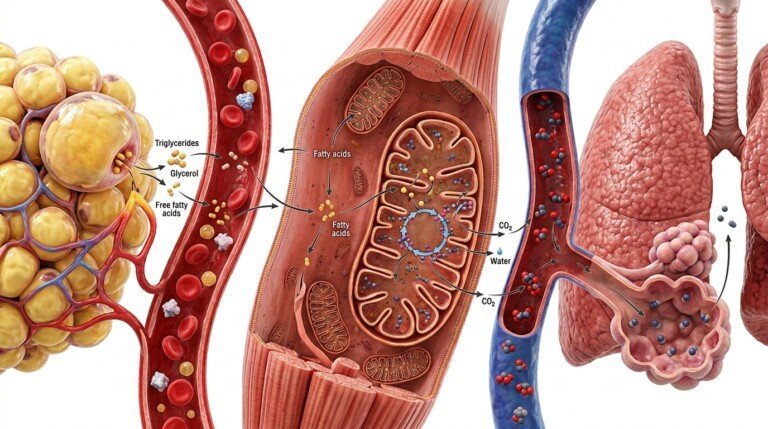

Natural Metabolism Boosters: 15 Foods, Drinks, and Habits Backed by Science
Most people think boosting metabolism requires expensive supplements or complicated routines. In reality, many of the factors that influence how your body uses energy are already part of your daily life. The foods you eat, the drinks you choose, and the habits you repeat every day all play a role in supporting metabolic health.
That’s why Natural Metabolism Boosters continue to attract so much attention. Unlike quick-fix products that promise dramatic results, natural approaches focus on helping your body function efficiently through nutrition and healthy lifestyle choices.
It is important to keep expectations realistic. No food or drink can suddenly transform a slow metabolism into a fast one overnight. However, research shows that certain foods, beverages, and daily habits can modestly support thermogenesis, preserve muscle mass, improve energy expenditure, and contribute to overall metabolic health.
The greatest benefit comes from combining several evidence-based habits rather than relying on any single ingredient. Small improvements repeated consistently over time often have a greater impact than chasing dramatic short-term solutions.
In this article, you’ll explore 15 natural metabolism boosters supported by research, understand why they work, and see how simple daily choices can contribute to long-term metabolic health.
Quick Answer
Natural Metabolism Boosters include protein-rich foods, water, green tea, coffee, chili peppers, regular movement, quality sleep, strength training, and other healthy habits that support normal metabolic function. While none of these dramatically increase calorie burning on their own, research suggests they may provide modest benefits when combined into a healthy lifestyle.
What Are Natural Metabolism Boosters and How Do They Support Your Body?
When people hear the phrase “natural metabolism booster,” they often imagine a single superfood or miracle drink.
The reality is much simpler.
Natural metabolism boosters are foods, beverages, and lifestyle habits that help support the body’s normal metabolic processes rather than forcing them to work faster.
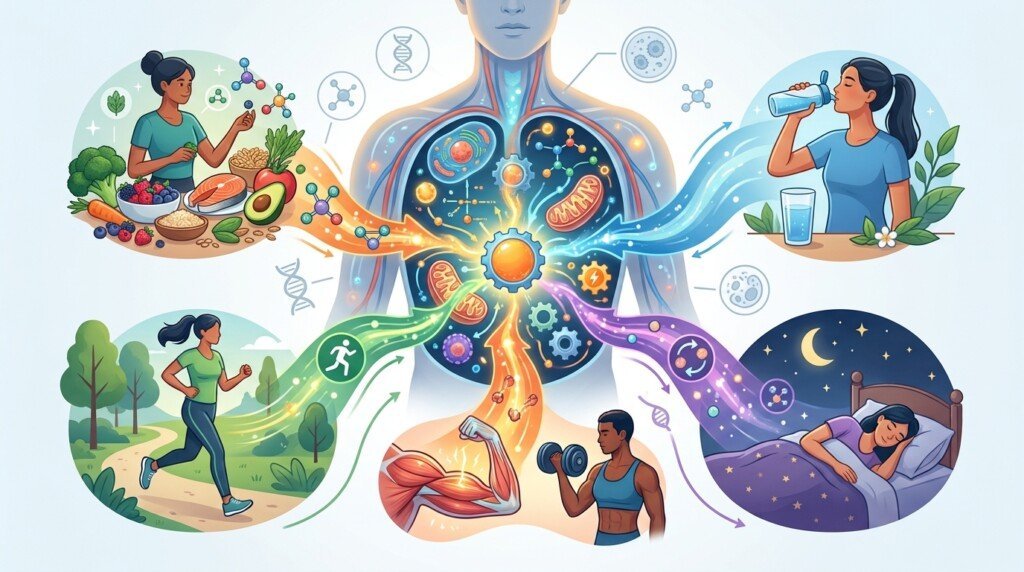
Your Metabolism Responds to Daily Choices
Your metabolism is influenced every day by factors such as:
- Food quality.
- Hydration.
- Physical activity.
- Muscle mass.
- Sleep.
- Stress.
- Hormonal balance.
Every healthy choice contributes a small piece to the overall picture.
Rather than searching for one powerful solution, researchers increasingly recommend combining multiple healthy habits that work together over time.
Natural Doesn’t Mean Instant
One of the biggest misconceptions is that “natural” automatically means highly effective.
Natural approaches tend to work gradually.
Instead of creating dramatic increases in calorie burning, they support the body’s existing metabolic systems.
This makes them more sustainable but also more realistic.
Readers interested in broader lifestyle strategies may also find Can You Speed Up Your Metabolism Naturally helpful for understanding how everyday behaviors influence metabolism.
Which Foods Naturally Support Metabolism?
Food influences metabolism in several different ways.
Some foods require more energy to digest.
Others help maintain lean muscle mass.
Some contain naturally occurring compounds that may temporarily increase thermogenesis.
Instead of looking for a single “fat-burning food,” it makes more sense to focus on foods that consistently support metabolic health.
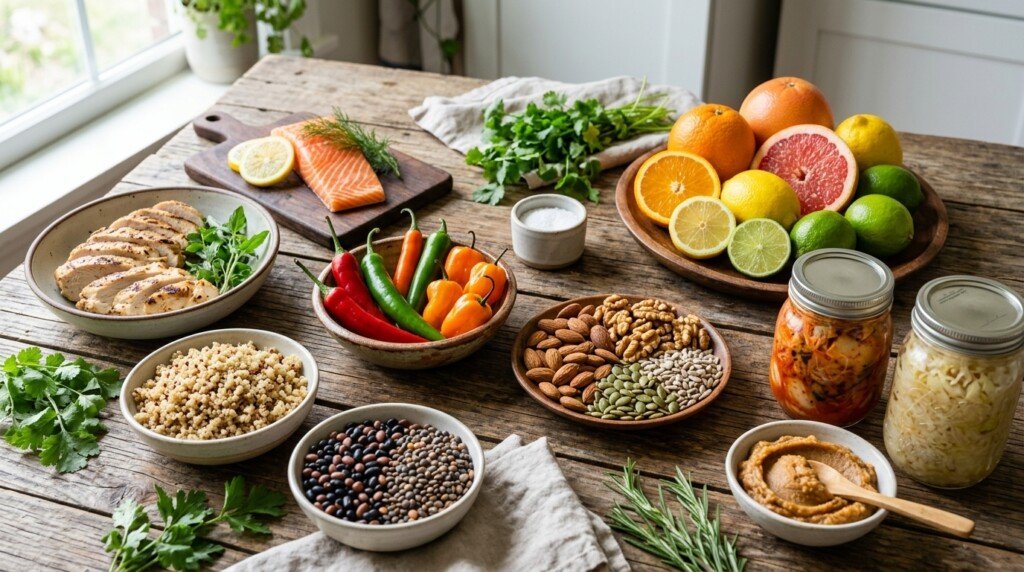
1. Lean Protein Foods
Protein remains one of the most effective nutritional tools for supporting metabolism.
Digesting protein requires more energy than digesting carbohydrates or fats, a phenomenon known as the thermic effect of food.
Protein also helps preserve lean muscle, which plays an important role in resting energy expenditure.
Examples include:
- Chicken
- Turkey
- Fish
- Eggs
- Greek yogurt
- Cottage cheese
- Tofu
Readers wanting additional food ideas can also explore High-Protein Foods That Burn Fat.
2. Whole Grains
Whole grains provide fiber, vitamins, minerals, and slow-digesting carbohydrates.
Compared with refined grains, they often promote steadier energy levels and support overall metabolic health.
Examples include:
- Oats
- Brown rice
- Quinoa
- Barley
- Whole wheat
Their primary benefit comes from improving overall dietary quality rather than directly increasing metabolism.
3. Legumes
Beans, lentils, and chickpeas combine plant protein with dietary fiber.
This combination supports fullness while contributing to healthy digestion and stable blood sugar.
Legumes also provide important minerals involved in energy metabolism.
4. Chili Peppers
Chili peppers contain capsaicin, a naturally occurring compound associated with thermogenesis.
Research suggests capsaicin may temporarily increase calorie expenditure, although the effect is generally modest.
Rather than relying on spicy foods alone, think of them as one small contributor within an overall healthy eating pattern.
Readers interested in the research behind this ingredient can also read Capsaicin and Metabolism.
5. Nuts and Seeds
Although calorie-dense, nuts and seeds provide:
- Healthy fats.
- Protein.
- Fiber.
- Magnesium.
- Zinc.
These nutrients support overall metabolic health while contributing to satiety.
Examples include:
- Almonds
- Walnuts
- Pistachios
- Chia seeds
- Flaxseeds
- Pumpkin seeds
6. Fruits Rich in Vitamin C
Vitamin C does not directly increase metabolism.
However, fruits rich in this nutrient contribute to overall health while providing antioxidants and fiber.
Good options include:
- Oranges
- Kiwi
- Strawberries
- Grapefruit
- Guava
Eating whole fruit also supports hydration and increases overall nutrient intake.
7. Fermented Foods
Healthy digestion plays an important role in overall wellness.
Fermented foods support a diverse gut microbiome, which researchers continue to study for its potential relationship with metabolic health.
Examples include:
- Yogurt
- Kefir
- Kimchi
- Sauerkraut
- Miso
Although research is still evolving, maintaining gut health appears beneficial for overall metabolism.
Evidence Snapshot: Which Foods Have the Strongest Support?
Not every metabolism-supporting food has the same level of evidence.
Current research consistently gives stronger support to foods that improve body composition and increase the thermic effect of food rather than foods promoted as “fat burners.”
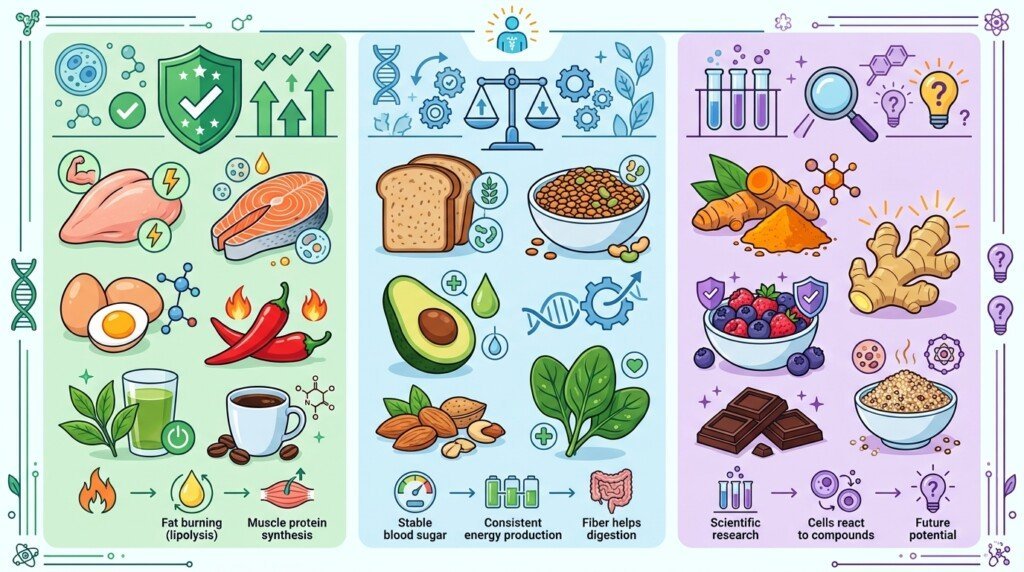
| Food | Primary Benefit | Evidence Strength |
|---|---|---|
| Lean protein | Thermic effect, muscle maintenance | Strong |
| Whole grains | Overall metabolic health | Moderate |
| Legumes | Protein, fiber, satiety | Moderate |
| Chili peppers | Mild thermogenesis | Moderate |
| Nuts and seeds | Nutrient density | Moderate |
| Vitamin C-rich fruits | Overall health support | Limited for metabolism |
| Fermented foods | Gut health | Emerging |
One clear pattern appears across nutrition research.
Whole dietary patterns consistently outperform individual “superfoods.”
That means combining several nutritious foods is likely to provide greater long-term benefits than relying on a single metabolism-supporting ingredient.
The next logical step is looking at what we drink every day, because beverages can also influence metabolism in meaningful ways.
Which Drinks May Help Metabolism?
What you drink throughout the day can influence hydration, energy levels, and, in some cases, calorie expenditure. While no beverage dramatically speeds up metabolism, several drinks have been studied for their potential to support normal metabolic function.
The key is understanding that these drinks work best as part of an overall healthy lifestyle rather than as standalone solutions.

8. Water
Water is one of the simplest and most overlooked metabolism-supporting habits.
Every cell in the body depends on adequate hydration to function properly, including the cells involved in energy production.
Some studies suggest drinking water may temporarily increase energy expenditure, although the effect is relatively small.
More importantly, staying hydrated supports:
- Normal metabolic processes.
- Physical performance.
- Temperature regulation.
- Digestion.
- Overall health.
Even mild dehydration can reduce physical performance and leave you feeling sluggish, making hydration an easy habit to prioritize.
9. Coffee
Coffee is often associated with metabolism because it naturally contains caffeine.
Caffeine may temporarily increase thermogenesis and calorie expenditure in some people, although the response varies depending on genetics, habitual caffeine intake, and individual tolerance.
Coffee should be viewed as one possible contributor rather than a miracle solution.
If you’re interested in the research behind caffeine, Coffee and Metabolism explores the topic in greater detail.
10. Green Tea
Green tea contains catechins along with naturally occurring caffeine.
Researchers believe these compounds may work together to produce modest improvements in fat oxidation and thermogenesis.
The overall effect is generally small, but green tea remains one of the better-studied beverages for metabolism support.
For a closer look at the research, Green Tea and Metabolism examines its potential benefits and limitations.
11. High-Protein Beverages
Protein shakes and other high-protein drinks are not “metabolism boosters” in the traditional sense.
However, they support lean muscle maintenance while contributing to the thermic effect of food.
They can be a practical option for individuals who struggle to meet their daily protein needs through food alone.
Readers looking for more beverage ideas can also explore Drinks That Boost Metabolism, which compares several metabolism-supporting drinks.
Which Daily Habits Matter Most for Metabolism?
When researchers compare lifestyle habits with individual foods or beverages, lifestyle almost always has the greater influence on long-term metabolic health.
These daily behaviors consistently appear among the strongest natural metabolism supporters.

12. Stay Physically Active Throughout the Day
Exercise is important, but everyday movement matters too.
Walking around the office, climbing stairs, standing more often, carrying groceries, gardening, and household chores all contribute to daily energy expenditure.
These activities are commonly grouped under non-exercise activity thermogenesis (NEAT).
Although each movement burns only a small amount of energy, the cumulative effect across an entire day can be meaningful.
13. Maintain Muscle Mass
Muscle tissue requires more energy to maintain than fat tissue.
Supporting lean muscle through regular resistance training and adequate protein intake contributes to healthy metabolism over time.
Rather than focusing only on body weight, preserving muscle becomes increasingly important with age.
14. Prioritize Quality Sleep
Sleep influences hormones involved in appetite, energy regulation, and metabolic health.
Poor sleep is associated with changes in hunger hormones, reduced energy levels, and less motivation for physical activity.
Improving sleep will not instantly increase metabolism, but it supports many biological systems involved in maintaining metabolic health.
15. Manage Stress Consistently
Chronic stress affects hormone regulation and may indirectly influence eating behaviors, recovery, and physical activity.
Stress management techniques such as mindfulness, relaxation exercises, spending time outdoors, or maintaining enjoyable hobbies contribute to overall wellness.
Like most natural metabolism boosters, stress management works gradually through consistent daily practice.
Which Natural Boosters Have the Strongest Evidence?
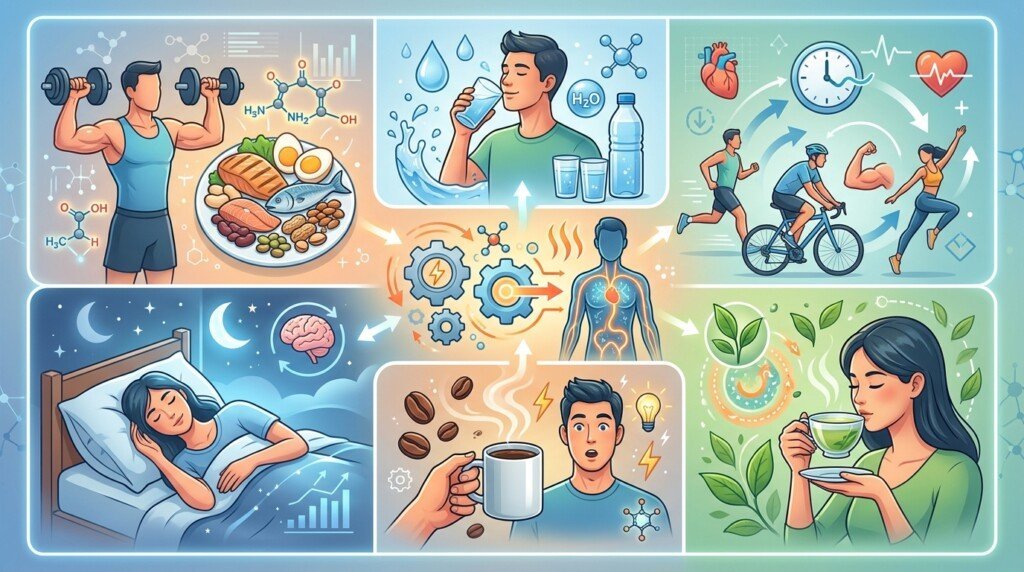
When looking at all 15 natural metabolism boosters together, not every option carries the same level of scientific support.
Some are supported by decades of human research, while others show promise but require additional studies.
Strong Evidence
- Lean protein.
- Daily physical activity.
- Maintaining muscle mass.
- Water for proper hydration.
Moderate Evidence
- Coffee.
- Green tea.
- Chili peppers.
- Whole grains.
- Legumes.
- High-protein beverages.
Emerging Evidence
- Fermented foods.
- Certain fruits.
- Stress management and gut health interactions.
One important pattern stands out.
The strongest evidence rarely supports a single food or drink. Instead, it supports combining multiple healthy habits over time.
What Should You Avoid Believing About Natural Metabolism Boosters?
Misinformation spreads quickly because metabolism is a topic filled with attractive promises.
Separating myths from evidence helps you make better long-term decisions.
Myth: One Food Can Transform Your Metabolism
No single food dramatically changes metabolic rate.
Healthy metabolism develops from consistent eating patterns rather than individual “superfoods.”
Myth: Natural Always Means Powerful
Natural ingredients can certainly support health.
However, natural does not automatically mean stronger or more effective than other evidence-based approaches.
Myth: More Is Better
Eating excessive amounts of spicy foods, drinking multiple cups of coffee, or relying heavily on any one food will not multiply the benefits.
Balance consistently produces better long-term outcomes.
Readers interested in common misconceptions may also enjoy Metabolism Myths, where several popular beliefs are examined in more detail.
Can Natural Metabolism Boosters Replace Supplements?
For many healthy adults, natural foods and lifestyle habits provide an excellent foundation for metabolic health.
That does not mean supplements are always unnecessary.

Instead, supplements should complement healthy habits rather than replace them.
For example, someone who already maintains a nutritious diet, stays active, and sleeps well may choose a supplement for additional support.
However, expecting a supplement to compensate for poor lifestyle habits is unlikely to produce meaningful results.
Future readers comparing supplement options may also be interested in Best Metabolism Boosters, Do Metabolism Boosters Work, and Are Metabolism Boosters Safe.
15 Natural Metabolism Boosters at a Glance
| Natural Booster | Primary Benefit | Evidence |
|---|---|---|
| Lean protein | Thermic effect, muscle support | Strong |
| Whole grains | Overall metabolic health | Moderate |
| Legumes | Protein and fiber | Moderate |
| Chili peppers | Mild thermogenesis | Moderate |
| Nuts and seeds | Nutrient density | Moderate |
| Vitamin C-rich fruits | General health | Emerging |
| Fermented foods | Gut health | Emerging |
| Water | Hydration and metabolism | Strong |
| Coffee | Temporary thermogenesis | Moderate |
| Green tea | Fat oxidation | Moderate |
| High-protein beverages | Muscle maintenance | Moderate |
| Daily movement (NEAT) | Energy expenditure | Strong |
| Muscle maintenance | Resting metabolic support | Strong |
| Quality sleep | Hormonal regulation | Strong |
| Stress management | Overall metabolic wellness | Emerging |

Frequently Asked Questions
1. What are Natural Metabolism Boosters?
Natural Metabolism Boosters include foods, drinks, and daily habits that support normal metabolic function, such as lean protein, water, coffee, green tea, physical activity, and quality sleep.
2. Can certain foods naturally increase metabolism?
Some foods may modestly increase thermogenesis or support muscle maintenance, but no food dramatically speeds up metabolism on its own.
3. Which drink is best for supporting metabolism?
Water, coffee, and green tea have the strongest evidence among commonly consumed beverages, although their effects are generally modest.
4. Does drinking more water boost metabolism?
Adequate hydration supports normal metabolic processes, and some studies suggest water may temporarily increase energy expenditure.
5. Is coffee better than green tea for metabolism?
Both have been studied extensively. Coffee mainly works through caffeine, while green tea combines caffeine with catechins. Individual responses vary.
6. Can natural metabolism boosters replace supplements?
For many people, healthy foods and lifestyle habits provide the foundation of metabolic health. Supplements may offer additional support but should not replace healthy habits.
7. Which lifestyle habit has the greatest impact on metabolism?
Maintaining muscle mass, staying physically active, sleeping well, and remaining hydrated consistently have stronger long-term effects than relying on individual foods.
8. Are spicy foods effective metabolism boosters?
Capsaicin may temporarily increase thermogenesis, but the effect is relatively small.
9. How long does it take to notice results?
Natural metabolism support develops gradually through consistent daily habits rather than rapid changes.
10. What is the biggest takeaway about natural metabolism support?
Combining nutritious foods, healthy drinks, regular movement, adequate sleep, hydration, and stress management provides greater long-term benefits than relying on any single metabolism booster.
Final Thoughts
The appeal of Natural Metabolism Boosters comes from their simplicity. Instead of chasing dramatic promises, they encourage everyday choices that support the body’s normal metabolic function. Foods rich in protein, nutritious beverages, regular movement, quality sleep, hydration, and stress management all contribute to a healthier metabolism, even though none of them produces instant or dramatic changes on its own.
The strongest message from current research is that consistency matters far more than any single food, drink, or habit. Building a balanced lifestyle that combines several evidence-supported practices is far more effective than searching for one perfect metabolism booster. When these healthy choices become part of your daily routine, they provide lasting support for metabolic health while benefiting your overall well-being.
Disclaimer:
This post may contain affiliate links. If you purchase through them, we may earn a small commission at no extra cost to you. Also, this content is for informational purposes only and does not substitute professional medical advice.
Ready to Start Your Journey?
Use our free 7-in-1 Weight Loss Toolkit to calculate your numbers and build your plan in minutes.
Open Free Tools →