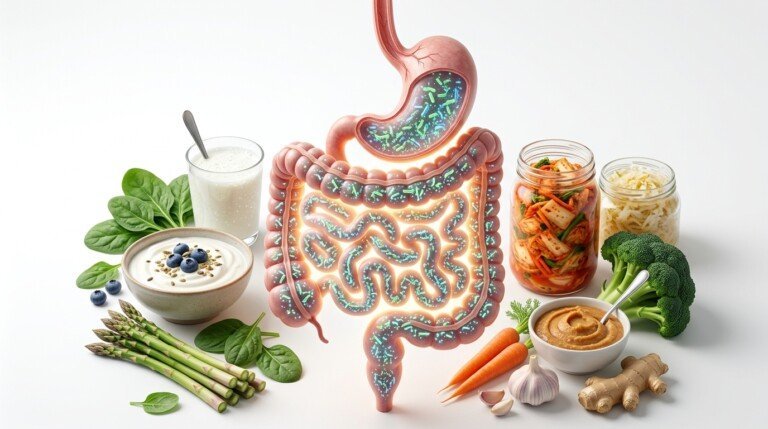

3 Ingredients That Mimic Ozempic Naturally
The popularity of Ozempic has changed the way people think about weight loss.
For years, most conversations focused on calories, exercise, and willpower. Then medications like Ozempic entered the spotlight and introduced a different discussion entirely.
People started asking questions such as:
Why am I hungry all the time?
Why do some people feel full after small meals while others constantly think about food?
Can appetite actually be controlled instead of constantly fought?
These questions have led many people to search for ingredients that mimic Ozempic naturally.
The interest is understandable.
Not everyone wants a prescription medication.
Some people cannot access it.
Others prefer starting with nutrition and evidence-based lifestyle strategies before considering pharmaceutical options.
The problem is that the internet is full of exaggerated claims.
Every week, a new supplement appears claiming to be “natural Ozempic.”
Most of those claims fall apart under scrutiny.
No natural ingredient perfectly replicates a prescription GLP-1 medication.
However, several ingredients may influence some of the same outcomes people care about, including appetite control, fullness, blood sugar regulation, and metabolic health.
The distinction is important.
The goal isn’t finding an exact copy.
The goal is identifying ingredients that support similar pathways in realistic and measurable ways.

Why Are People Trying to Mimic Ozempic in the First Place?
Before discussing ingredients, it’s worth understanding what people are actually trying to achieve.
Most individuals aren’t searching for Ozempic because they enjoy taking medication.
They’re searching for outcomes.
They want to:
- Feel less hungry
- Control cravings
- Avoid overeating
- Improve blood sugar balance
- Support sustainable weight loss
When viewed through that lens, the conversation becomes much clearer.
The question shifts from:
“What copies Ozempic?”
to
“What helps create similar benefits naturally?”
That’s a much more useful question.
Because different ingredients may support different parts of the puzzle.
One ingredient may help with satiety.
Another may support blood sugar balance.
Another may help reduce excessive snacking.
Together, these effects can create meaningful improvements even though none of them function exactly like a prescription medication.
Can Natural Ingredients Mimic Ozempic?
The honest answer is both yes and no.
No natural ingredient directly replaces Ozempic.
A prescription GLP-1 receptor agonist is specifically designed to interact with biological pathways in ways that supplements cannot fully replicate.
At the same time, certain ingredients may influence:
- Appetite
- Fullness
- Digestion
- Blood sugar control
- Eating behavior
Those effects are part of the reason Ozempic has attracted so much attention.
This is why researchers and health professionals often focus less on direct comparisons and more on outcomes.
If an ingredient helps someone feel fuller for longer, that matters.
If an ingredient helps support healthy blood sugar regulation, that matters too.
The goal isn’t identical biology.
The goal is practical benefit.
Among the many ingredients discussed online, three consistently appear at the center of the conversation.
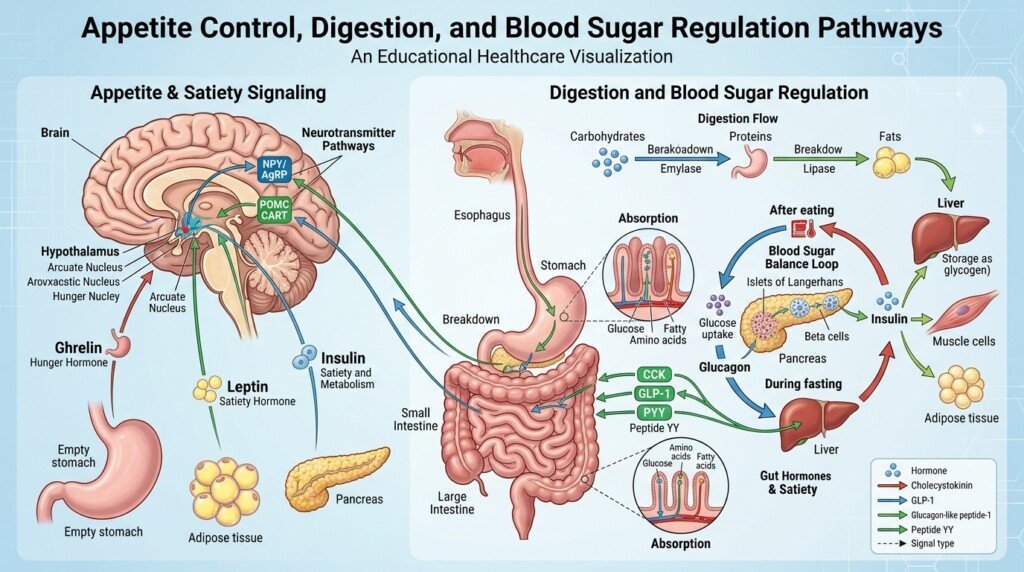
Berberine: The Ingredient Everyone Mentions
If you’ve spent more than a few minutes researching Ozempic alternatives, you’ve almost certainly encountered berberine.
Berberine is a naturally occurring compound found in several plants and has been studied for decades.
Unlike many trendy weight-loss supplements that rise and fall with social media trends, berberine has attracted scientific interest because of its relationship with metabolic health.
Researchers have explored its potential role in:
- Blood sugar regulation
- Insulin sensitivity
- Glucose metabolism
- Metabolic function
This is one reason berberine frequently appears in discussions involving type 2 diabetes and weight management.

Why Berberine Gets Compared to Ozempic
Most comparisons stem from one common goal:
Improving metabolic health.
People searching for Ozempic alternatives are often interested in more than weight loss.
They’re also interested in:
- Better blood sugar control
- Reduced cravings
- Improved insulin sensitivity
Because berberine is commonly studied in these areas, it naturally becomes part of the conversation.
What Berberine Doesn’t Do
This is where expectations matter.
Berberine is not a natural version of Ozempic.
It does not produce identical results.
It does not function through the same mechanisms.
And it does not deliver the dramatic outcomes some advertisements imply.
What it may do is support certain metabolic processes that influence weight-management efforts.
That’s a much more realistic expectation.
For readers interested in a deeper comparison, our guide to berberine vs Ozempic explores the differences in greater detail.
The Ingredient Hiding in Plain Sight: Glucomannan
If berberine is the ingredient everyone talks about, glucomannan may be the ingredient most people overlook.
That’s surprising because its primary benefit directly relates to one of the biggest struggles people face during weight loss:
Hunger.
Glucomannan is a soluble fiber derived from the root of the konjac plant.
What makes it unique is its ability to absorb water.
When mixed with liquid, it expands significantly and forms a gel-like substance inside the digestive system.
That simple characteristic may have important implications.

Why Fullness Matters More Than Motivation
Many people assume successful weight loss depends entirely on discipline.
In reality, biology often has a stronger influence than motivation.
A person who constantly feels hungry faces a much harder challenge than someone who naturally feels satisfied after meals.
This is why satiety matters.
The less frequently you feel intense hunger, the easier it often becomes to maintain healthy eating habits.
How Glucomannan Supports Satiety
When consumed with adequate water before meals, glucomannan may:
- Increase fullness
- Slow digestion
- Support portion control
- Reduce unnecessary snacking
Notice that none of those benefits involve directly burning fat.
Instead, they influence eating behavior.
And eating behavior is often where long-term success begins.
Why This Matters in the Ozempic Conversation
One reason Ozempic receives so much attention is because users frequently report reduced hunger.
Glucomannan does not replicate the medication.
However, helping people feel fuller for longer addresses one of the same practical challenges.
That’s why it remains one of the most discussed ingredients in appetite-management circles.
Protein: The Most Overlooked Ozempic Alternative
When people search for ingredients that mimic Ozempic, they often expect to find an exotic herb or newly discovered supplement.
The funny thing is that one of the most effective appetite-supporting tools has been sitting in kitchens for decades.
Protein.
It isn’t flashy.
It doesn’t have a trendy marketing campaign.
And nobody is calling grilled chicken or Greek yogurt a miracle weight-loss solution.
Yet protein continues to outperform many supplements when it comes to one important outcome:
Helping people feel satisfied.

Why Protein Changes the Hunger Equation
Think about two different breakfasts.
The first is a sugary pastry and flavored coffee.
The second contains eggs, Greek yogurt, and fruit.
Both meals provide calories.
But they rarely affect hunger the same way.
Many people notice that protein-rich meals help them stay satisfied longer.
This often leads to:
- Fewer cravings
- Less snacking
- Better portion control
- More stable energy levels
These are exactly the kinds of outcomes many people hope to achieve when searching for Ozempic alternatives.
The Science Behind Satiety
Protein digestion requires more work than many other nutrients.
It also influences hormones involved in fullness and appetite regulation.
As a result, meals containing adequate protein often create stronger feelings of satisfaction compared to meals dominated by refined carbohydrates.
This doesn’t mean protein is a magic solution.
But it does mean protein deserves far more attention than many expensive supplements receiving aggressive marketing.
Protein and Long-Term Weight Management
One reason successful weight-loss plans frequently emphasize protein is because weight loss is rarely the hardest part.
Maintenance is.
Many diets work temporarily.
The challenge is finding an approach that remains sustainable six months later.
Protein helps support sustainability because it addresses one of the biggest reasons people abandon healthy eating plans:
Constant hunger.
Food First, Supplements Second
Whenever possible, protein should come primarily from food sources such as:
- Eggs
- Fish
- Poultry
- Greek yogurt
- Cottage cheese
- Lean meats
- Legumes
- Tofu
Protein powders can be useful when dietary intake falls short, but they should generally support a healthy diet rather than replace it.
So Which Ingredient Comes Closest?
People often want a simple answer.
Which ingredient is most similar?
Which ingredient works best?
Which ingredient should they choose?
Unfortunately, biology rarely works that way.
Each ingredient discussed in this article addresses a different aspect of the problem.
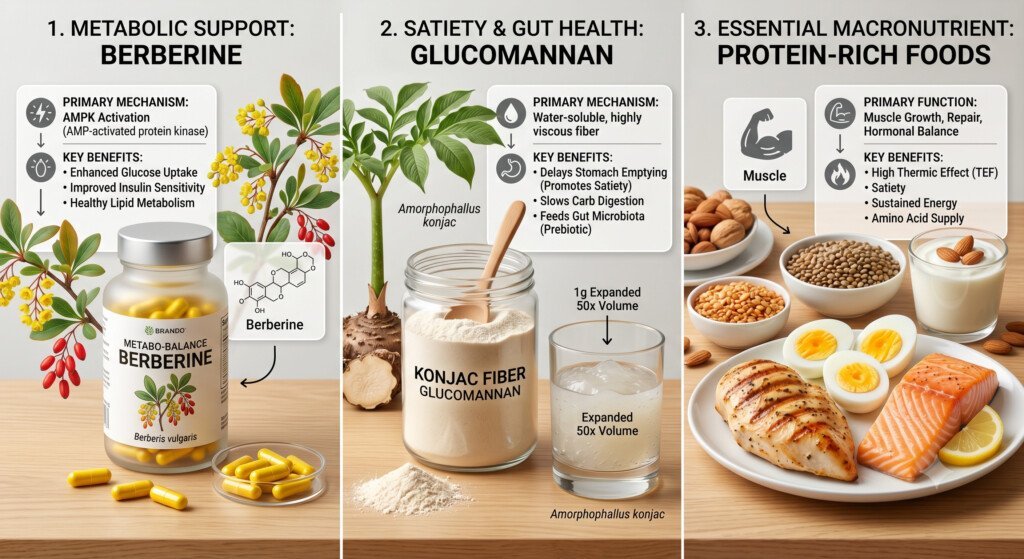
Berberine
Best known for its relationship with:
- Blood sugar regulation
- Insulin sensitivity
- Metabolic health
Glucomannan
Best known for:
- Satiety
- Fullness
- Portion control
Protein
Best known for:
- Hunger management
- Meal satisfaction
- Long-term dietary adherence
Rather than competing against one another, these ingredients often address different needs.
The best choice depends on the challenge a person is trying to solve.
What Most Articles Get Wrong About Ozempic Alternatives
The internet rewards extreme claims.
Unfortunately, health information often suffers because of it.
Many articles promise:
- Natural Ozempic
- Ozempic without a prescription
- Identical Ozempic results naturally
These claims create unrealistic expectations.
People begin expecting supplement-level solutions to produce medication-level outcomes.
When those expectations aren’t met, disappointment follows.
The more useful approach is understanding what natural ingredients can realistically do.
Natural ingredients may:
- Support appetite control
- Improve satiety
- Help regulate eating behavior
- Support metabolic health
- Encourage consistency
Those benefits matter.
They simply shouldn’t be confused with pharmaceutical effects.
How These Ingredients Differ From Ozempic
This distinction deserves its own discussion.
Ozempic is a prescription medication developed specifically to influence GLP-1 pathways.
The ingredients discussed here do not replicate that mechanism.
Instead, they influence related outcomes through different routes.
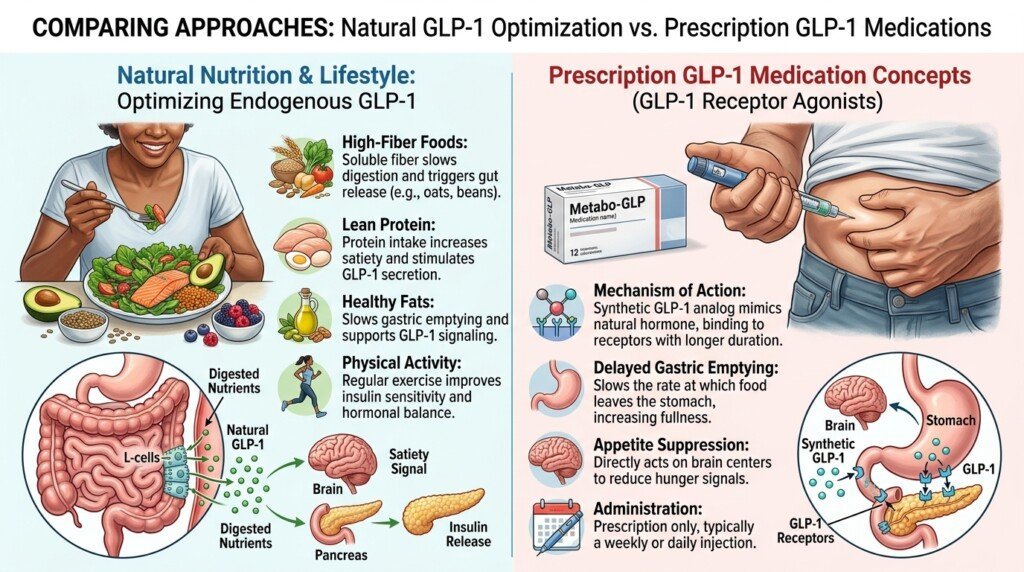
Ozempic Works Directly
Prescription GLP-1 medications are designed to target specific biological pathways.
Their effects are often stronger and more predictable.
Natural Ingredients Work Indirectly
Berberine, glucomannan, and protein support processes connected to:
- Appetite
- Digestion
- Blood sugar
- Satiety
The effect is usually more gradual.
Results depend heavily on consistency and overall lifestyle habits.
Expectations Matter
Many people become frustrated because they compare supplements to medications.
A better comparison is this:
Medication may create stronger biological leverage.
Natural ingredients may help create a healthier environment where better habits become easier to maintain.
Those are different goals.
Both can be valuable.
The Missing Piece Nobody Talks About
There is one factor that influences appetite, cravings, and weight management more than most supplements.
Lifestyle.
No ingredient can consistently overcome:
- Chronic sleep deprivation
- Severe stress
- Constant overeating
- Physical inactivity
This doesn’t mean supplements are useless.
It means they work best when supporting an already healthy foundation.
Someone sleeping well, eating balanced meals, staying active, and managing stress will typically experience greater benefits than someone relying exclusively on supplements.
This is one reason our guide to natural alternatives to Ozempic focuses on broader lifestyle strategies rather than individual ingredients alone.

Frequently Asked Questions
1. What ingredients mimic Ozempic naturally?
The most commonly discussed ingredients include berberine, glucomannan, and protein because they may support appetite control, satiety, blood sugar balance, and metabolic health.
2. Is berberine the same as Ozempic?
No. Berberine and Ozempic work differently and should not be considered identical. Berberine is commonly studied for metabolic health and blood sugar support.
3. Does glucomannan work like Ozempic?
Not directly. Glucomannan primarily supports fullness and appetite control through its fiber content.
4. Why is protein included as an Ozempic alternative?
Protein helps increase satiety and may reduce hunger between meals, making it easier for some people to maintain healthy eating habits.
5. Which ingredient is best for appetite control?
Protein and glucomannan are often discussed for their ability to support fullness and reduce hunger.
6. Can natural ingredients replace Ozempic?
Natural ingredients should not be viewed as direct replacements for prescription medications. They may support similar goals but generally produce smaller and slower effects.
Final Thoughts
The search for ingredients that mimic Ozempic reflects a larger shift in how people think about weight management.
Instead of focusing solely on calories, more individuals are exploring appetite regulation, satiety, blood sugar balance, and metabolic health.
While no natural ingredient perfectly replicates Ozempic, several may support similar outcomes.
Berberine offers potential metabolic support.
Glucomannan helps address fullness and appetite control.
Protein remains one of the most practical tools for reducing hunger and improving dietary consistency.
The key is maintaining realistic expectations.
These ingredients are not miracle solutions.
They are tools.
When combined with healthy eating, regular movement, quality sleep, and sustainable habits, they may help create meaningful progress over time.
And in the world of long-term weight management, consistency often matters far more than finding a perfect shortcut.
Disclaimer:
This post may contain affiliate links. If you purchase through them, we may earn a small commission at no extra cost to you. Also, this content is for informational purposes only and does not substitute professional medical advice.