
Does Poor Sleep Increase Belly Fat? What Studies Show
Sleep and Belly Fat are more closely connected than many people realize. You may exercise regularly, choose balanced meals, and carefully watch your calorie intake, yet your waistline still seems stubbornly unchanged. It’s a frustrating experience that leads many people to wonder whether something beyond diet and exercise could be influencing where their body stores fat.
One possibility that has attracted growing scientific attention is sleep.
For years, sleep was viewed simply as a time for rest. Today, researchers understand that sleep plays a vital role in regulating hormones, metabolism, appetite, stress responses, recovery, and energy balance. These systems work together every day to influence body composition, including how and where fat is stored.
This does not mean that one night of poor sleep suddenly creates belly fat. Body fat develops gradually through long-term lifestyle patterns. However, consistently sleeping too little or experiencing poor-quality sleep may influence several biological and behavioral processes that make excess abdominal fat more likely over time.
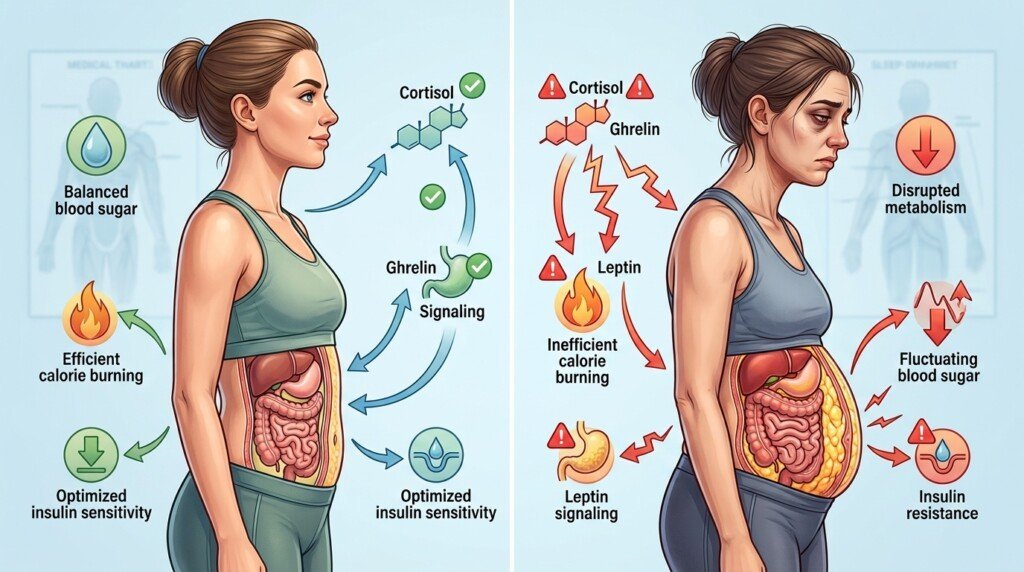
Poor sleep has been linked with increased hunger, stronger cravings, reduced physical activity, changes in cortisol regulation, and decreased insulin sensitivity. Individually, these effects may seem small. Together, they can make maintaining a healthy weight significantly more difficult.
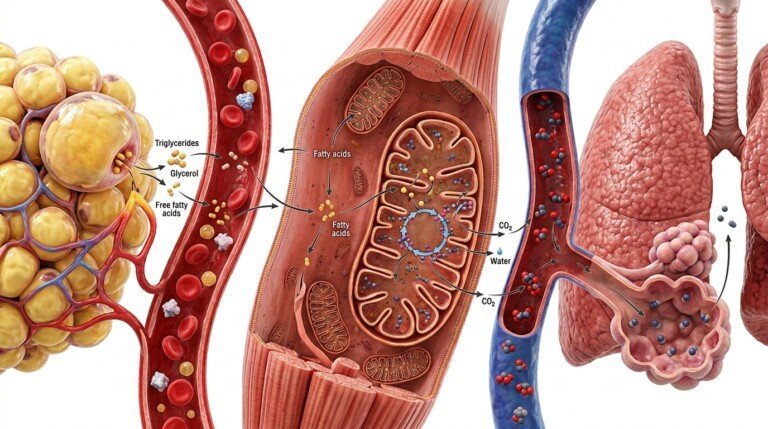
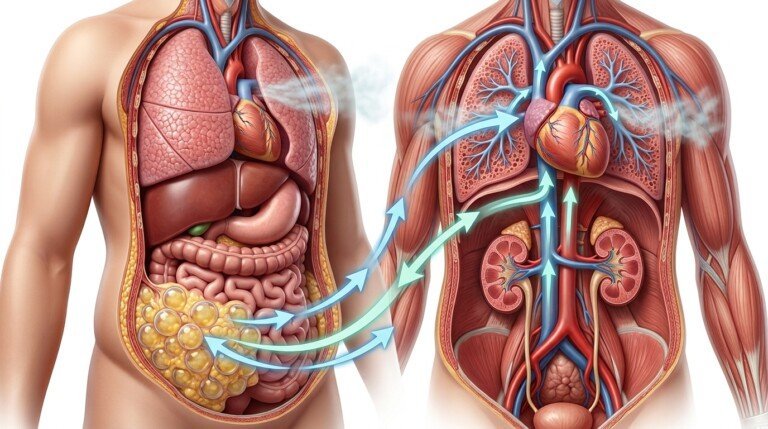
Researchers are particularly interested in visceral fat, the fat stored deep inside the abdomen around internal organs. Unlike subcutaneous fat, which sits beneath the skin, visceral fat is more closely associated with metabolic health. While sleep alone does not determine visceral fat levels, growing evidence suggests that healthy sleep is an important part of maintaining overall body composition.
Understanding the connection between Sleep and Belly Fat helps shift attention away from quick fixes and toward sustainable lifestyle habits that support long-term health.
In this article, you’ll learn whether poor sleep increases belly fat, why sleep influences abdominal fat storage, how cortisol fits into the picture, why cravings often increase after poor sleep, which sleep habits support healthier body composition, how long improvements may take, and when persistent sleep problems deserve medical attention.
Quick Answer
Poor sleep does not directly create belly fat, but research suggests it may contribute to conditions that support abdominal fat gain over time. Insufficient sleep can influence appetite, cravings, cortisol regulation, insulin sensitivity, recovery, and daily activity levels. Combined with long-term lifestyle habits, these effects may increase the likelihood of excess body fat, including visceral fat around the abdomen.
Does Poor Sleep Increase Belly Fat?
The simple answer is that poor sleep may contribute to belly fat over time, but it is rarely the only cause.
Body fat develops through a combination of genetics, nutrition, physical activity, hormone regulation, stress, and overall energy balance. Sleep influences many of these factors simultaneously.
Belly Fat Develops Gradually
No single night of poor sleep creates abdominal fat.
Instead, repeated sleep deprivation may slowly influence behaviors and biological processes that affect long-term body composition.
Healthy sleep helps support the daily habits needed for sustainable weight management.
Poor Sleep Influences Several Body Systems
Sleep affects many systems involved in body weight, including:
- Appetite regulation
- Hormone balance
- Recovery
- Physical activity
- Energy balance
Small changes across several systems can gradually accumulate over months or years.
Fat Distribution Matters
Not all body fat behaves the same way.
Some fat is stored beneath the skin, while Visceral Fat surrounds internal organs inside the abdomen.
Researchers pay close attention to visceral fat because of its close relationship with overall metabolic health.
Sleep Supports Healthy Lifestyle Habits
People who sleep well often find it easier to:
- Exercise consistently
- Plan balanced meals
- Control portion sizes
- Stay physically active
- Manage stress
These healthy habits influence body composition much more than sleep alone.
Long-Term Patterns Matter Most
Healthy body composition depends on consistent lifestyle choices.
Sleep should be viewed as one important part of an overall healthy lifestyle rather than a standalone solution for reducing belly fat.
Why Does Sleep Affect Belly Fat Storage?
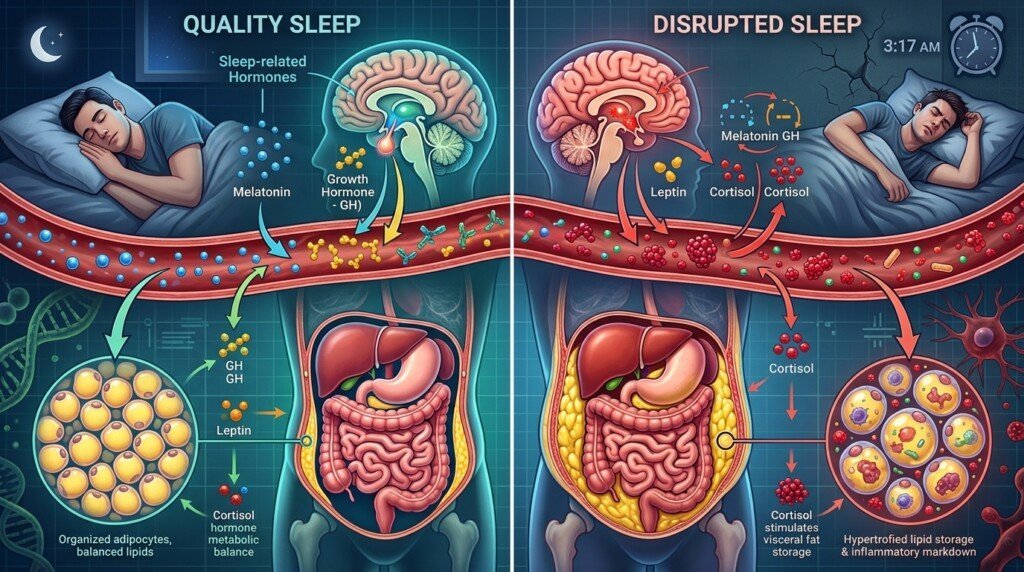
Scientists believe sleep influences abdominal fat through several interconnected pathways rather than one single mechanism.
Sleep affects hormones, metabolism, appetite, recovery, and behavior simultaneously.
Sleep Helps Regulate Appetite
Healthy sleep supports the normal balance of hormones involved in hunger and fullness.
When sleep becomes inadequate, appetite may become more difficult to regulate.
This often makes maintaining healthy eating habits more challenging.
Sleep Influences Daily Energy
Poor sleep commonly causes fatigue.
People who feel exhausted often:
- Move less
- Exercise less consistently
- Spend more time sitting
- Feel less motivated
Reduced movement may gradually influence body fat over time.
Sleep Supports Recovery
Recovery from exercise occurs largely during sleep.
Without adequate recovery, maintaining consistent physical activity becomes more difficult.
This may indirectly influence long-term body composition.
Circadian Rhythm Influences Metabolism
The body’s internal clock regulates numerous metabolic processes.
Healthy sleep schedules help maintain normal circadian rhythms that support overall metabolic function.
Body Fat Storage Depends on Many Factors
Sleep represents only one piece of a much larger picture.
Nutrition, physical activity, stress management, genetics, and overall energy balance all work together to determine where body fat is stored.
Can Cortisol Play a Role?
Yes.
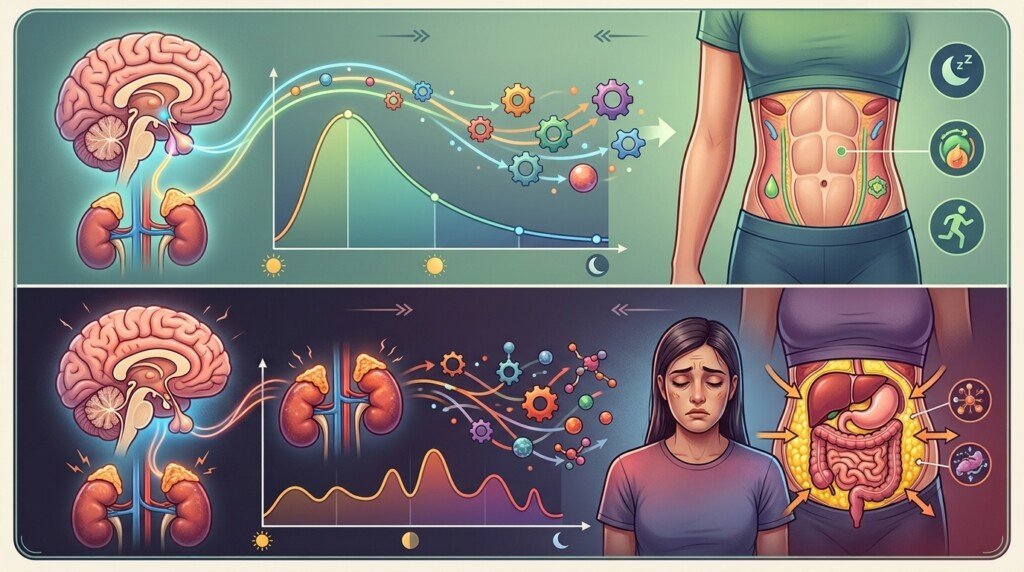
Cortisol is one of several hormones researchers study when examining the relationship between sleep and belly fat.
However, its role is often misunderstood.
Cortisol Is a Normal Hormone
Cortisol is not a “bad” hormone.
It plays important roles in:
- Energy regulation
- Blood pressure
- Immune function
- Daily stress responses
Healthy cortisol levels follow predictable daily rhythms.
Sleep Helps Maintain Cortisol Rhythm
Normally, cortisol rises and falls according to your body’s internal clock.
Poor sleep may interfere with this rhythm, particularly when sleep deprivation becomes chronic.
Stress and Sleep Influence Each Other
Sleep and stress have a two-way relationship.
Poor sleep may increase feelings of stress, while chronic stress often makes falling asleep more difficult.
This creates a cycle that can become difficult to break.
The interaction between stress hormones and abdominal fat is explored more thoroughly throughout Cortisol Belly Fat.
Cortisol Does Not Work Alone
Although cortisol receives considerable attention, it is only one part of a much larger system.
Body fat regulation also depends on:
- Nutrition
- Physical activity
- Recovery
- Appetite hormones
- Insulin sensitivity
Looking at cortisol alone oversimplifies a complex biological process.
Healthy Sleep Supports Hormonal Balance
Consistent, high-quality sleep supports healthier regulation of cortisol alongside many other hormones involved in metabolism and recovery.
Does Poor Sleep Increase Cravings?
For many people, yes.
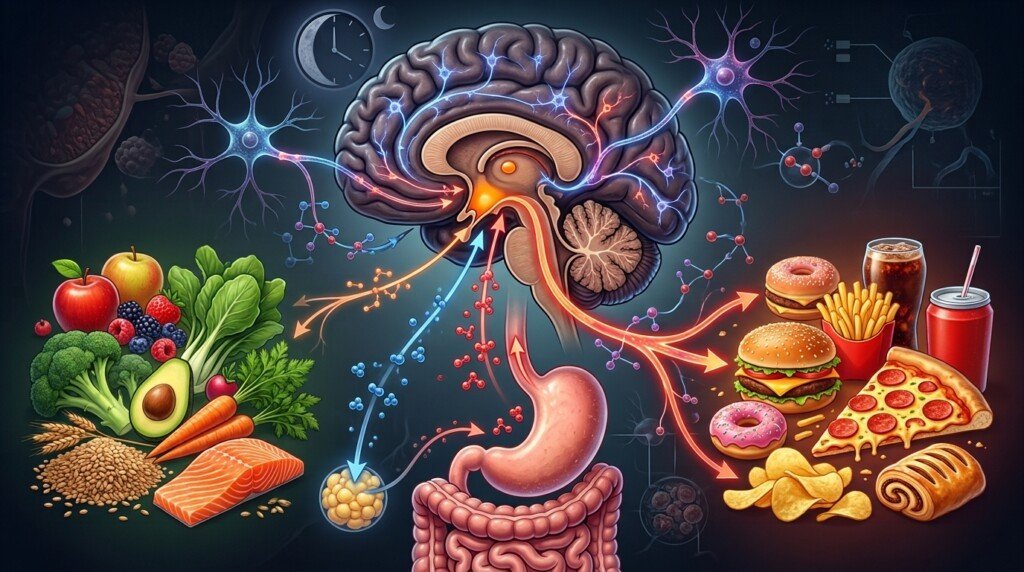
One of the most noticeable effects of poor sleep is an increase in food cravings.
These cravings are not simply caused by a lack of willpower.
They are influenced by changes occurring throughout the brain and body.
Hunger Hormones May Shift
Research suggests poor sleep may influence hormones involved in appetite regulation.
Some people experience:
- Greater hunger
- Reduced fullness
- Increased desire to eat
The science behind these hormones is discussed further throughout Hunger Hormones.
Highly Processed Foods Become More Appealing
After poor sleep, many people naturally crave foods that are:
- Sweet
- Salty
- High in fat
- High in refined carbohydrates
These foods provide quick energy but are often less satisfying over time.
Decision-Making Becomes Harder
Fatigue affects more than physical energy.
Many people find it harder to:
- Plan meals
- Control portions
- Resist snacks
- Maintain healthy routines
These behavioral changes may gradually influence calorie intake.
Cravings Are Temporary
One poor night of sleep does not permanently change appetite.
However, repeated sleep deprivation may make healthy eating consistently more difficult.
Healthy Sleep Supports Better Food Choices
Getting enough quality sleep often improves concentration, mood, and appetite regulation, making balanced eating habits easier to maintain.
Which Sleep Habits Help Reduce Belly Fat?
No sleep habit can specifically target belly fat.
However, healthy sleep routines can support the biological processes that make long-term fat loss easier. Combined with balanced nutrition and regular physical activity, better sleep creates an environment that supports healthier body composition over time.
The goal is not to sleep more whenever possible. Instead, focus on sleeping well and maintaining a consistent routine.

Keep a Consistent Sleep Schedule
Your body functions best when it follows a predictable rhythm.
Going to bed and waking up at similar times every day helps regulate your circadian rhythm, which influences hormones, metabolism, and energy levels.
Consistency is often more important than trying to “catch up” on sleep during weekends.
Create a Relaxing Bedtime Routine
The transition from a busy day to restful sleep should be gradual.
Simple relaxing activities include:
- Reading
- Gentle stretching
- Deep breathing
- Meditation
- Listening to calming music
These habits help prepare your mind and body for quality sleep.
Reduce Screen Time Before Bed
Bright light from electronic devices may interfere with your body’s natural sleep signals.
Limiting exposure to:
- Smartphones
- Tablets
- Computers
- Television screens
during the hour before bedtime may help improve sleep quality.
Stay Physically Active During the Day
Regular movement benefits both sleep and weight management.
Activities such as walking, cycling, swimming, or strength training can support healthier sleep while also improving overall body composition.
Create a Comfortable Sleep Environment
A restful bedroom often includes:
- Comfortable bedding
- A cool room temperature
- Minimal noise
- Low lighting
Small environmental improvements can make falling asleep easier.
Be Patient With Your Progress
Healthy sleep habits usually improve gradually.
Consistent routines practiced over weeks and months often produce much greater benefits than dramatic short-term changes.
Many of these habits also strengthen overall Stress and Weight Loss management by supporting recovery and reducing daily fatigue.
How Long Does It Take to See Improvements?
Many people hope that improving sleep will quickly reduce belly fat.
In reality, changes happen gradually.
Sleep supports the healthy behaviors that contribute to long-term weight management rather than producing immediate visible results.

Better Energy May Come First
One of the earliest improvements people notice is feeling more refreshed during the day.
Higher energy often makes it easier to:
- Exercise regularly
- Prepare healthy meals
- Stay physically active
- Maintain consistent routines
These improvements usually appear before noticeable changes in body composition.
Appetite May Become Easier to Manage
As healthy sleep becomes more consistent, some people find it easier to regulate hunger and reduce unnecessary snacking.
Balanced appetite supports healthier eating habits over time.
Body Composition Changes Require Patience
Visible changes in belly fat rarely occur within days.
Body composition improves gradually through consistent healthy habits including:
- Quality sleep
- Balanced nutrition
- Physical activity
- Stress management
There is no shortcut for sustainable fat loss.
Lifestyle Consistency Produces the Best Results
Healthy sleep works best when combined with other long-term habits.
Improving only one area while neglecting the others usually limits overall progress.
Focus on Sustainable Improvements
Instead of expecting immediate changes in waist size, pay attention to improvements in:
- Daily energy
- Recovery
- Exercise consistency
- Mood
- Healthy eating habits
These changes often appear before visible body composition improvements.
When Should You Talk to a Doctor?
Poor sleep occasionally affects everyone.
Stress, travel, illness, or schedule changes can temporarily disrupt sleep without causing long-term problems.
However, persistent sleep difficulties deserve professional attention.
Sleep Problems Continue for Several Weeks
If you regularly struggle to fall asleep or stay asleep despite practicing healthy sleep habits, consider discussing your symptoms with a healthcare professional.
Persistent sleep disruption should not be ignored.
Daytime Fatigue Becomes Severe
Feeling constantly exhausted despite spending enough time in bed may affect:
- Work performance
- Driving
- Physical activity
- Concentration
- Daily responsibilities
Persistent fatigue warrants medical evaluation.
Sleep Regularly Affects Daily Life
Professional guidance may be helpful if poor sleep consistently affects your:
- Mood
- Memory
- Productivity
- Relationships
- Overall quality of life
Weight Management Remains Difficult
If you consistently practice healthy eating, regular exercise, and good sleep habits but continue experiencing unexpected weight changes, a healthcare professional can help determine whether additional factors should be evaluated.
Early Support Can Improve Long-Term Health
Seeking medical advice is a proactive step toward improving sleep quality and overall well-being.
Early intervention may help identify issues before they become more significant.
Practical Action Plan
Healthy sleep supports healthy body composition when combined with other positive lifestyle habits.
Start with these practical steps:
- Aim for 7 to 9 hours of quality sleep each night.
- Keep a consistent bedtime and wake-up time.
- Reduce screen exposure before bed.
- Stay physically active most days of the week.
- Eat balanced meals throughout the day.
- Practice stress-management techniques regularly.
- Create a cool, quiet, and comfortable sleeping environment.
- Stay patient and focus on long-term consistency.
Small improvements repeated every day often lead to meaningful long-term health benefits.

Frequently Asked Questions
1. Does poor sleep increase belly fat?
Poor sleep does not directly create belly fat, but research suggests it may contribute to factors such as increased appetite, cravings, altered cortisol regulation, reduced physical activity, and changes in metabolism that may increase abdominal fat over time.
2. Why does poor sleep affect belly fat?
Sleep influences hormone balance, appetite regulation, recovery, metabolism, and daily energy levels. Together, these factors can affect long-term body composition, including visceral fat.
3. Does cortisol cause belly fat?
Cortisol is one of several hormones involved in energy regulation. Healthy sleep helps maintain normal cortisol rhythms, but belly fat is influenced by many factors including nutrition, physical activity, stress, genetics, and overall energy balance.
4. Can improving sleep help reduce belly fat?
Healthy sleep supports appetite regulation, recovery, energy levels, and consistent healthy habits. While sleep alone does not reduce belly fat, it helps create conditions that support sustainable fat loss.
5. How long does it take to notice improvements after sleeping better?
Many people notice improved energy and recovery within days or weeks. Visible changes in body composition generally require longer-term consistency with healthy sleep, balanced nutrition, and regular physical activity.
Final Thoughts
The connection between Sleep and Belly Fat is supported by a growing body of research, but it is important to understand what the science actually shows. Poor sleep does not automatically cause abdominal fat, nor does one good night’s sleep make it disappear. Instead, sleep influences a wide range of biological processes that affect appetite, hormone regulation, recovery, metabolism, physical activity, and long-term energy balance. When these systems are repeatedly disrupted by inadequate sleep, maintaining a healthy body composition may become more difficult.
Healthy sleep should be viewed as one of the essential pillars of overall health rather than an isolated weight-loss strategy. Consistently getting enough quality sleep makes it easier to manage cravings, recover from exercise, stay physically active, and maintain balanced eating habits. Combined with nutritious food choices, regular movement, and effective stress management, quality sleep helps create the conditions needed for gradual, sustainable fat loss.
Rather than looking for quick fixes to reduce belly fat, focus on building habits you can maintain for years. Prioritizing restorative sleep alongside healthy daily routines supports Metabolic Health, complements the factors discussed in Poor Sleep and Weight Gain, and contributes to healthier body composition over the long term.
Disclaimer:
This post may contain affiliate links. If you purchase through them, we may earn a small commission at no extra cost to you. Also, this content is for informational purposes only and does not substitute professional medical advice.
Ready to Start Your Journey?
Use our free 7-in-1 Weight Loss Toolkit to calculate your numbers and build your plan in minutes.
Open Free Tools →