
How Many Hours of Sleep Do You Need to Lose Weight?
Some people swear that sleeping eight hours transformed their weight-loss journey. Others claim they sleep for nine hours every night yet still struggle to lose body fat. This raises an important question: How many hours of sleep do you actually need for weight loss?
The answer is not as simple as choosing one perfect number.
Sleep influences many biological systems involved in body weight, including appetite regulation, metabolism, recovery, hormone balance, and daily energy levels. However, sleeping longer does not automatically cause fat loss, just as sleeping less does not guarantee weight gain after a single night. What matters most is the combination of healthy sleep duration, good sleep quality, and consistent daily habits.
Research has consistently shown that adults who regularly get enough high-quality sleep often find it easier to maintain healthy eating patterns, recover from exercise, regulate appetite, and stay physically active. In contrast, chronic sleep deprivation may increase hunger, reduce energy, encourage cravings, and make long-term weight management more difficult.
Another common misunderstanding is believing that every adult needs exactly the same amount of sleep. In reality, sleep needs vary slightly from person to person depending on age, activity level, health status, and lifestyle. While general recommendations exist, the best amount of sleep is the amount that allows you to wake feeling refreshed and function well throughout the day.
Understanding Sleep Hours for Weight Loss helps shift the focus away from searching for a magic number and toward building sustainable habits that support both healthy sleep and long-term metabolic health.
In this article, you’ll learn how many hours of sleep most adults need, whether sleeping longer always helps, why sleep quality often matters as much as sleep duration, whether sleeping too much can affect weight, how naps fit into a healthy sleep schedule, and how to build a bedtime routine that supports your weight-loss goals.
Quick Answer
Most healthy adults should aim for 7 to 9 hours of quality sleep each night. Research suggests this range best supports appetite regulation, hormone balance, metabolism, recovery, and energy levels. Sleep quality and consistency are just as important as total sleep time. Sleeping longer than necessary does not automatically improve weight loss, while regularly sleeping too little may make maintaining healthy habits more difficult.
How Many Hours of Sleep Do You Need for Weight Loss?
There is no single sleep duration that guarantees weight loss.
However, research consistently shows that most healthy adults benefit from getting between 7 and 9 hours of quality sleep each night.
Rather than thinking of sleep as a fat-burning tool, it is more accurate to view it as one of the foundations that supports healthy body weight.

Most Adults Benefit From Seven to Nine Hours
Organizations focused on sleep health generally recommend that adults regularly aim for seven to nine hours of sleep.
This amount supports many essential biological functions including:
- Hormone regulation
- Physical recovery
- Brain function
- Appetite control
- Daily energy
Although individual needs vary slightly, this range works well for most healthy adults.
Consistency Matters More Than Occasional Long Nights
Sleeping ten hours after several nights of poor sleep does not completely erase the effects of sleep deprivation.
Your body benefits most from maintaining a regular sleep schedule throughout the week.
Going to bed and waking up at similar times helps strengthen your natural circadian rhythm.
Sleep Supports Healthy Lifestyle Habits
Getting enough sleep makes it easier to maintain habits that support long-term weight management.
People who sleep well often find it easier to:
- Prepare nutritious meals
- Stay physically active
- Recover from exercise
- Manage daily stress
Sleep creates the conditions that allow these healthy behaviors to become more consistent.
Sleep Needs Change Throughout Life
Sleep recommendations vary depending on age.
Children, teenagers, adults, and older adults all have different biological sleep requirements.
For healthy adults, seven to nine hours remains the most widely recommended range.
Quality Always Matters
Simply spending enough time in bed is not enough.
Interrupted or poor-quality sleep may reduce many of the benefits normally associated with healthy sleep duration.
This relationship becomes clearer when comparing sleep quality and sleep quantity.
Is More Sleep Always Better?
Many people assume that if seven or eight hours of sleep is healthy, then sleeping ten or eleven hours must be even better.
Current evidence does not support that conclusion.
Healthy sleep is about balance rather than extremes.

More Sleep Does Not Automatically Increase Fat Loss
Sleeping longer does not directly burn more body fat.
Fat loss continues to depend primarily on:
- Balanced nutrition
- Physical activity
- Recovery
- Long-term energy balance
Sleep simply supports these processes.
Sleep Should Match Your Individual Needs
Some people naturally feel fully rested after seven hours.
Others may consistently require closer to nine hours.
The goal is waking up refreshed rather than chasing a specific number.
Oversleeping May Reflect Other Factors
Occasionally sleeping longer after illness or intense physical activity is completely normal.
However, regularly sleeping far beyond your normal needs may sometimes reflect other lifestyle or health factors worth discussing with a healthcare professional.
Balance Produces Better Results
Healthy sleep habits focus on:
- Consistent bedtime
- Consistent wake time
- Good sleep quality
- Adequate duration
This balanced approach supports overall health more effectively than simply increasing sleep time.
Healthy Sleep Is One Part of the Bigger Picture
Even perfect sleep cannot replace:
- Nutritious eating
- Exercise
- Stress management
- Long-term healthy habits
Weight management always depends on multiple lifestyle factors working together.
Does Sleep Quality Matter More Than Sleep Duration?
In many cases, yes.
Sleeping for eight interrupted hours may provide fewer benefits than seven hours of uninterrupted, restorative sleep.
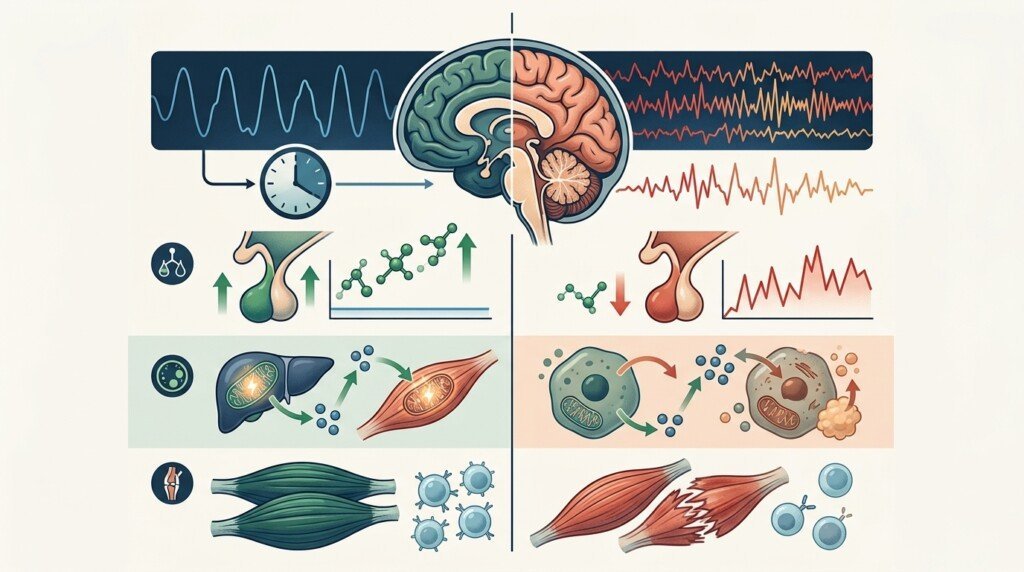
Both sleep duration and sleep quality influence health, but quality often determines how effectively your body recovers overnight.
Restorative Sleep Supports Recovery
During healthy sleep, the body cycles through several sleep stages that contribute to:
- Muscle recovery
- Brain function
- Hormone regulation
- Tissue repair
Frequent awakenings may interrupt these natural processes.
Quality Sleep Supports Appetite Regulation
Consistent, uninterrupted sleep helps maintain normal regulation of appetite-related hormones.
Healthy sleep quality supports better control of hunger and fullness throughout the following day.
The relationship between sleep and appetite is explored further throughout Sleep and Weight Loss.
Good Sleep Improves Daily Energy
People who sleep well often wake feeling:
- More alert
- More focused
- More motivated
- Better prepared for physical activity
These benefits help support healthy daily routines.
Sleep Environment Influences Quality
Good sleep quality is often supported by:
- Comfortable bedding
- Quiet surroundings
- Low light
- Comfortable room temperature
Small environmental changes may noticeably improve sleep.
Consistent Quality Builds Long-Term Health
One excellent night’s sleep cannot completely offset weeks of poor sleep.
Healthy sleep quality develops through regular habits practiced consistently over time.
Can Sleeping Too Much Affect Weight?
The relationship between longer sleep and body weight is more complicated than many people expect.
Research has observed associations between very long sleep duration and certain health outcomes, but this does not mean sleeping longer directly causes weight gain.

Association Does Not Mean Cause
Scientific studies sometimes observe links between long sleep duration and higher body weight.
However, these studies cannot always determine which factor came first.
Other health or lifestyle factors may contribute to both.
Low Activity May Play a Role
People who spend more time sleeping may naturally spend fewer hours being physically active.
Overall daily movement remains an important component of long-term energy balance.
Sleep Needs Can Increase Temporarily
Sleeping longer after illness, intense exercise, or periods of sleep deprivation is a normal recovery response.
Occasional longer sleep is not usually a cause for concern.
Focus on Healthy Patterns
Rather than worrying about isolated nights, pay attention to your overall sleep routine across weeks and months.
Consistent healthy sleep patterns matter far more than occasional variations.
Overall Lifestyle Remains Most Important
Sleep duration represents only one part of overall health.
Balanced nutrition, regular movement, recovery, and stress management remain equally important for sustainable weight management.
Which Bedtime Habits Improve Sleep?
A good night’s sleep rarely happens by accident.
It is usually the result of small, consistent habits that prepare both your body and your mind for rest. While no bedtime routine guarantees perfect sleep every night, healthy habits can significantly improve sleep quality over time.
The goal is not to create a complicated evening schedule. Instead, focus on building a routine that you can maintain consistently.

Go to Bed at the Same Time Each Night
One of the most effective ways to improve sleep is keeping a consistent bedtime.
Going to sleep and waking up at similar times every day helps reinforce your body’s natural circadian rhythm.
A regular schedule supports:
- Better sleep quality
- More refreshing mornings
- Improved daily energy
- More consistent hormone regulation
Even weekends are less disruptive when your sleep schedule stays relatively stable.
Create a Calm Evening Routine
Your brain benefits from a gradual transition between daytime activity and nighttime rest.
Relaxing evening activities may include:
- Reading a book
- Gentle stretching
- Meditation
- Deep breathing
- Listening to calming music
These activities help signal that the day is ending and sleep is approaching.
Reduce Bright Light Before Bed
Exposure to bright light late in the evening may interfere with your body’s natural sleep cycle.
Many people benefit from reducing exposure to:
- Mobile phones
- Tablets
- Computers
- Bright television screens
Creating a dimmer environment before bedtime helps support natural sleep signals.
Make Your Bedroom Comfortable
Your sleep environment plays a larger role than many people realize.
A comfortable bedroom often includes:
- A cool temperature
- Minimal noise
- Low lighting
- Comfortable mattress and pillows
Small environmental improvements can noticeably improve sleep quality.
Stay Active During the Day
Regular physical activity supports healthier sleep.
People who remain physically active throughout the day often find it easier to fall asleep and experience more refreshing rest.
Even moderate daily movement contributes to healthier sleep habits.
Avoid Heavy Meals Immediately Before Bed
Large meals close to bedtime may make falling asleep less comfortable for some individuals.
Eating balanced meals earlier in the evening often supports better sleep.
Consistency Creates Results
Improving sleep is similar to improving fitness.
Small habits practiced consistently usually produce greater long-term benefits than occasional dramatic changes.
Many of these habits also strengthen overall Weight Loss Habits, making them valuable for both sleep and long-term health.
Can Naps Replace Nighttime Sleep?
Naps can be refreshing, especially after an unusually short night.
However, they should not be viewed as a replacement for regular nighttime sleep.
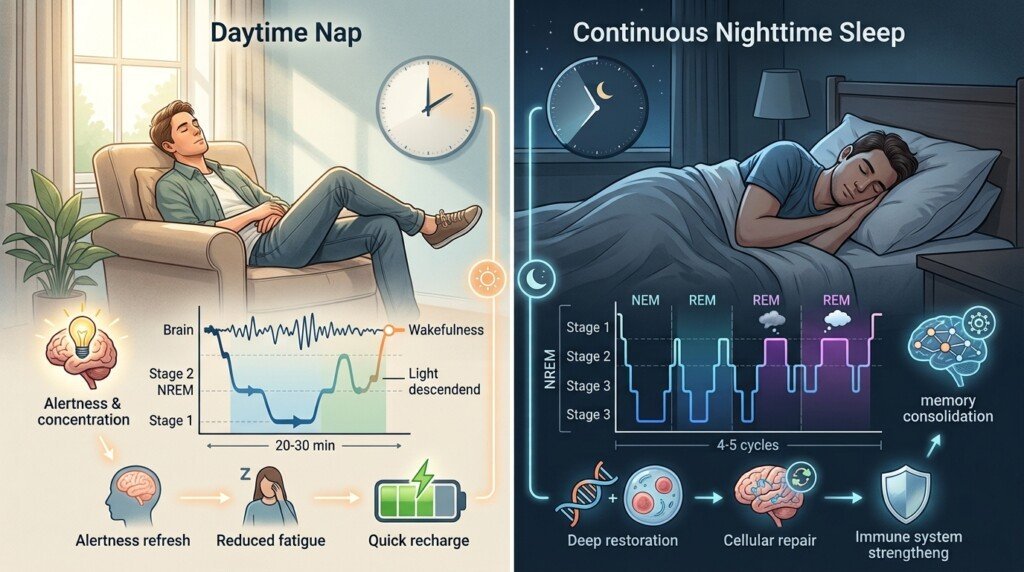
Your body performs many important recovery processes during a full night’s sleep that short daytime naps cannot completely replicate.
Nighttime Sleep Remains the Priority
Most biological recovery occurs during continuous nighttime sleep.
This includes:
- Hormone regulation
- Muscle recovery
- Memory processing
- Tissue repair
Naps cannot fully replace these overnight processes.
Short Naps Can Improve Alertness
Brief daytime naps may temporarily improve:
- Alertness
- Concentration
- Mood
- Mental performance
For some people, a short nap helps restore energy after an unusually demanding day.
Long Afternoon Naps May Affect Bedtime
Very long or late-afternoon naps may make it more difficult for some individuals to fall asleep at their normal bedtime.
Maintaining a consistent nighttime schedule remains the primary goal.
Do Not Depend on Naps Every Day
Regularly needing long naps may indicate that nighttime sleep is not meeting your body’s needs.
Whenever possible, focus first on improving overnight sleep quality.
Think of Naps as Occasional Support
Naps can be useful during unusual circumstances, but they work best as an occasional supplement rather than a daily replacement for healthy nighttime sleep.
Maintaining healthy nighttime sleep remains the most effective strategy for supporting Sleep and Metabolic Health.
How Can You Build a Better Sleep Routine?
Healthy sleep routines are built through consistency rather than perfection.
Instead of changing everything at once, focus on a few habits that you can realistically maintain every day.
Choose a Consistent Wake-Up Time
Your wake-up time helps regulate your internal clock.
Even if bedtime varies occasionally, waking at approximately the same time each morning supports healthier circadian rhythms.
Plan Your Evenings Earlier
Preparing for the next day before bedtime reduces unnecessary stress later at night.
Simple habits include:
- Preparing tomorrow’s clothes
- Organizing meals
- Finishing household tasks
- Writing tomorrow’s priorities
Reducing evening stress often makes it easier to relax before bed.
Develop a Relaxing Mindset
Many people stay awake because their minds remain busy long after they get into bed.
Practicing calming activities before bedtime helps your brain transition toward rest.
Stay Patient
Sleep routines improve gradually.
Missing one good night’s sleep does not erase your progress.
Return to your routine the following evening rather than trying to compensate with drastic changes.
Build Habits That Fit Your Lifestyle
The best sleep routine is one you can maintain consistently.
Choose habits that fit naturally into your daily schedule instead of creating routines that feel unrealistic.
Healthy sleep becomes much easier when it fits comfortably into everyday life rather than feeling like another task to complete.
Regular sleep routines also support Stress and Weight Loss, since predictable schedules often reduce both physical and mental fatigue over time.
Sleep Routine Checklist
A simple routine can make healthy sleep easier to maintain.
Consider using this checklist as part of your evening habits:
- Go to bed at a similar time each night.
- Wake up at a consistent time every morning.
- Dim lights before bedtime.
- Limit screen time during the last hour before sleep.
- Keep your bedroom cool, dark, and quiet.
- Stay physically active during the day.
- Eat balanced evening meals without overeating close to bedtime.
- Practice a relaxing activity before going to bed.
- Be patient and stay consistent with your routine.
Small improvements repeated every day often lead to meaningful long-term results.

Frequently Asked Questions
1. How many hours of sleep do you need for weight loss?
Most healthy adults benefit from getting between 7 and 9 hours of quality sleep each night. Healthy sleep supports appetite regulation, metabolism, recovery, and energy levels that contribute to long-term weight management.
2. Is sleeping more always better for weight loss?
No. Sleeping longer than necessary does not automatically improve weight loss. Consistent, high-quality sleep within the recommended range is generally more beneficial than simply increasing the number of hours spent in bed.
3. Does sleep quality matter more than sleep duration?
Both are important, but high-quality sleep often provides greater benefits than spending additional hours in bed with frequent interruptions. Restorative sleep supports recovery, hormone regulation, and healthy daily energy.
4. Can naps replace nighttime sleep?
No. Short naps may temporarily improve alertness, but they cannot replace the continuous recovery processes that occur during healthy nighttime sleep.
5. What is the best bedtime habit for better sleep?
Maintaining a consistent sleep schedule is one of the most effective habits. Going to bed and waking up at similar times each day helps regulate your circadian rhythm and supports better sleep quality.
Final Thoughts
When people ask about Sleep Hours for Weight Loss, they are often hoping to find one perfect number that guarantees better results. The science tells a different story. For most healthy adults, consistently getting 7 to 9 hours of quality sleep provides the strongest foundation for appetite regulation, hormone balance, metabolism, recovery, and daily energy. Just as importantly, the quality and consistency of your sleep often matter as much as the total number of hours you spend in bed.
Healthy sleep should not be viewed as a shortcut for losing weight, but it is one of the habits that makes every other healthy choice easier. A well-rested body is better prepared to recover from exercise, regulate hunger, stay physically active, and maintain balanced eating patterns. In contrast, chronic sleep deprivation may gradually make these behaviors more difficult to sustain.
Rather than chasing a perfect sleep schedule, focus on building a routine you can maintain over the long term. Consistent bedtimes, a relaxing evening routine, regular physical activity, and a comfortable sleep environment all contribute to better rest. Combined with balanced nutrition and healthy daily habits, quality sleep becomes a powerful partner in supporting sustainable weight management, improved Sleep and Metabolic Health, and long-term overall well-being.
Disclaimer:
This post may contain affiliate links. If you purchase through them, we may earn a small commission at no extra cost to you. Also, this content is for informational purposes only and does not substitute professional medical advice.
Ready to Start Your Journey?
Use our free 7-in-1 Weight Loss Toolkit to calculate your numbers and build your plan in minutes.
Open Free Tools →