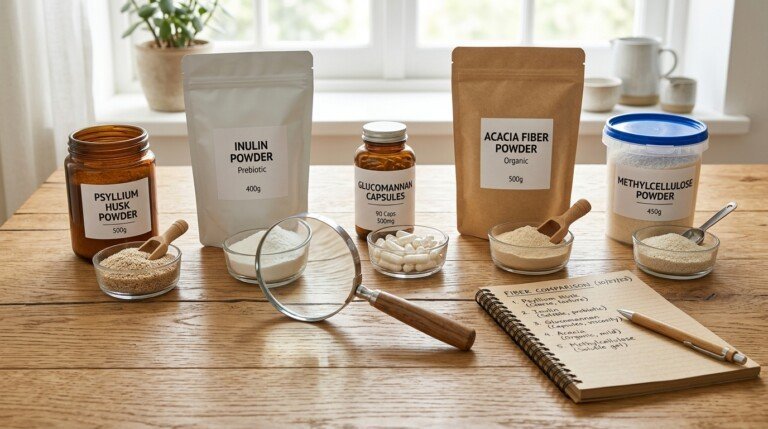
Types of Fiber Supplements Explained: Psyllium, Inulin, Methylcellulose, and More
Choosing a fiber supplement sounds simple until you see the number of options available. One product contains psyllium husk, another features inulin, while others list ingredients such as methylcellulose, polycarbophil, wheat dextrin, or acacia fiber. They all claim to support digestive health, yet they are far from identical.
That often leads to an important question: which one is actually right for you?
Understanding the Types of Fiber Supplements is the first step toward making an informed choice. Each type has unique physical properties, comes from different sources, and behaves differently within the digestive system. Some dissolve easily in water, some act as prebiotics, and others mainly add bulk. These differences explain why one supplement may be recommended in one situation but not another.
This guide explores the major Types of Fiber Supplements, explains how they differ, and introduces the most common ingredients you’ll encounter when comparing products. Rather than focusing on brands or marketing claims, you’ll learn what each fiber actually is and where it fits into a broader understanding of dietary fiber.
Quick Answer
The main Types of Fiber Supplements include soluble fibers such as psyllium husk, inulin, acacia fiber, beta-glucan, and partially hydrolyzed guar gum, along with insoluble fibers such as wheat bran and cellulose. Other commonly used ingredients include methylcellulose, calcium polycarbophil, and prebiotic fibers. Each type has different characteristics, making it important to understand the ingredient rather than choosing a supplement based on packaging alone.
What Are Soluble Fiber Supplements?
If you’ve spent any time reading supplement labels, you’ve probably noticed the phrase soluble fiber.
This is one of the two primary categories of dietary fiber, and many of today’s most popular fiber supplements belong to it.
The word “soluble” simply means that this type of fiber dissolves in water.
When mixed with liquid, many soluble fibers form a thick, gel-like consistency that changes how they move through the digestive system.
Although different soluble fibers have unique characteristics, they share several common features that make them popular ingredients in dietary supplements.


Common Characteristics of Soluble Fiber
Most soluble fiber supplements are valued because they interact readily with water.
Depending on the specific ingredient, they may:
- Dissolve completely
- Form a soft gel
- Blend smoothly into drinks
- Mix with food more easily than some insoluble fibers
Not every soluble fiber behaves exactly the same, but these characteristics help distinguish them from insoluble fibers.
Popular Soluble Fiber Ingredients
Several well-known ingredients belong to this category.
These include:
- Psyllium husk
- Inulin
- Acacia fiber
- Beta-glucan
- Partially hydrolyzed guar gum
- Wheat dextrin
Each ingredient differs in origin, texture, fermentation, and how it interacts within the digestive tract.
We’ll examine many of them individually throughout this article.
Why Ingredient Names Matter
Many shoppers compare products by brand name instead of looking at the ingredient list.
That can be misleading.
Two different brands may actually contain the same fiber ingredient, while two products from the same manufacturer may use completely different fiber sources.
Learning to recognize ingredient names helps you compare products more confidently.
What Are Insoluble Fiber Supplements?
The second major category consists of insoluble fiber.
Unlike soluble fiber, insoluble fiber does not dissolve in water.
Instead, it largely maintains its structure as it moves through the digestive tract.
Although less common than soluble fiber in commercial supplements, insoluble fibers remain important components of overall dietary fiber intake.

How Insoluble Fiber Differs
The main difference is physical behavior.
Rather than forming a gel, insoluble fibers generally remain intact.
This creates different functional characteristics compared with soluble fibers.
Because of these differences, some products combine both soluble and insoluble fibers into one formula.
Common Sources
Examples of insoluble fiber include:
- Cellulose
- Wheat bran
- Certain vegetable fibers
Many whole foods naturally provide both soluble and insoluble fiber, which is one reason nutrition experts continue encouraging a varied diet rich in plant foods.
Blended Fiber Products
Modern supplements often combine multiple fiber ingredients instead of relying on just one.
These blended products attempt to provide several fiber characteristics within a single serving.
Whether a blended formula is appropriate depends on individual goals and preferences rather than the number of ingredients included.
What Is Psyllium Husk?
Among all Types of Fiber Supplements, psyllium husk is probably the best known.
It has been used for decades and appears in numerous fiber supplement products around the world.
Despite its popularity, many people are surprised to learn that psyllium comes from a plant.
Where Does Psyllium Come From?
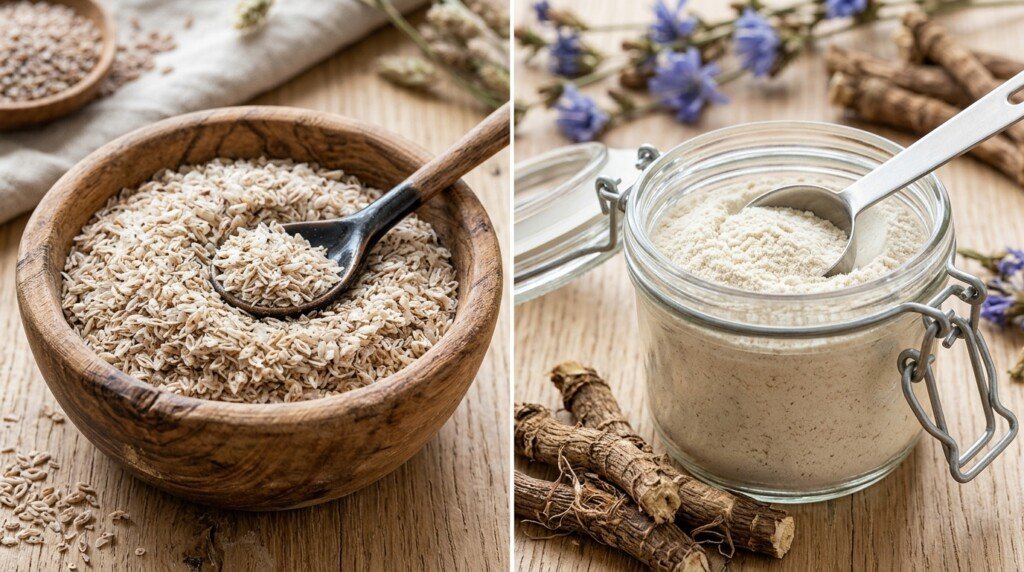
Psyllium is obtained from the seeds of Plantago ovata, a plant primarily cultivated in regions of India and surrounding countries.
The outer coating of these seeds, known as the husk, is processed into the ingredient used in dietary fiber supplements.
Its natural origin is one reason it has remained popular for many years.
What Makes Psyllium Different?
Compared with many other fibers, psyllium is known for its remarkable ability to absorb water.
When mixed with liquid, it forms a thick gel.
This characteristic makes it one of the most widely researched fiber ingredients available today.
It is also commonly used as the primary ingredient in many over-the-counter fiber products.
Psyllium Appears in Many Forms
Consumers can purchase psyllium in several convenient formats, including:
- Powder
- Capsules
- Sachets
- Flavored drink mixes
- Combination fiber products
Although the format changes, the ingredient itself remains the same.
Understanding the ingredient is far more important than focusing on packaging.
What Is Inulin?
Inulin has become increasingly popular over the past decade, particularly because of growing interest in gut health and the human microbiome.
Unlike psyllium, inulin is often described as a prebiotic fiber.
A Naturally Occurring Plant Fiber
Inulin occurs naturally in many plants.
Common food sources include:
- Chicory root
- Garlic
- Onions
- Leeks
- Jerusalem artichokes
- Asparagus
Commercial supplements frequently extract inulin from chicory root because it provides a concentrated source.
Why Is Inulin Called a Prebiotic?
Prebiotics are substances that serve as food for beneficial microorganisms living in the digestive tract.
Rather than directly nourishing the body, prebiotic fibers help support a healthy gut microbiome.
Inulin belongs to this category, making it one of the most recognized prebiotic fiber ingredients.
Growing interest in gut bacteria has made inulin increasingly common in nutrition products.
Where You’ll Find Inulin
Besides standalone supplements, inulin also appears in:
- Fiber powders
- Nutrition shakes
- Meal replacement products
- Protein bars
- High-fiber snack foods
- Functional beverages
Manufacturers often include it because it contributes fiber while blending relatively easily into many products.
What Is Methylcellulose?
Among the many Types of Fiber Supplements, methylcellulose stands out because it is produced differently from plant fibers such as psyllium or inulin.
Although it originates from plant cellulose, it undergoes processing that changes how it behaves inside the digestive system.
For this reason, methylcellulose is often discussed separately from naturally occurring fiber ingredients.
How Is Methylcellulose Made?
Methylcellulose is derived from cellulose, one of the main structural components of plants.
Through a manufacturing process, cellulose is modified into a water-soluble fiber that can be used in dietary supplements and certain food products.
Even though it is processed differently from natural fibers, it still functions as a source of dietary fiber.
What Makes Methylcellulose Different?
Unlike several naturally fermentable fibers, methylcellulose passes through the digestive tract with relatively little fermentation.
This characteristic gives it different properties compared with ingredients like inulin.
Because of these differences, manufacturers often choose methylcellulose for products intended for people looking for an alternative to highly fermentable fibers.
Where Is Methylcellulose Found?
You’ll commonly find methylcellulose in:
- Fiber powders
- Fiber capsules
- Digestive health supplements
- Some over-the-counter fiber products
Reading the ingredient label is the easiest way to determine whether a product contains methylcellulose.

What Is Calcium Polycarbophil?
Another ingredient you may encounter while comparing fiber supplements is calcium polycarbophil.
Although it receives less attention than psyllium or inulin, it remains a well-established fiber ingredient in many digestive health products.
How Does Calcium Polycarbophil Work?
Calcium polycarbophil is classified as a bulk-forming fiber.
Like other bulk-forming fibers, it interacts with water as it moves through the digestive tract.
Its physical characteristics differ from both psyllium and methylcellulose, making it another option available within the broader category of dietary fiber supplements.
Where Is It Commonly Used?
Products containing calcium polycarbophil are usually available as:
- Tablets
- Caplets
- Capsules
It appears less frequently in powdered drink mixes compared with psyllium or inulin.
Another Example of Why Ingredients Matter
Many consumers assume all fiber supplements are interchangeable.
Calcium polycarbophil demonstrates why that assumption can be misleading.
Understanding the actual ingredient provides much more useful information than focusing only on product branding.
Which Fiber Supplement Is Best?
This is probably the question every shopper wants answered.
Unfortunately, there is no single fiber supplement that is best for everyone.
The ideal choice depends on your individual goals, dietary preferences, and the type of fiber you want to include in your routine.

Different Goals Call for Different Fibers
One person may be interested in increasing overall dietary fiber.
Another may be looking for a prebiotic ingredient.
Someone else may simply want a supplement that mixes smoothly into drinks.
These goals often lead to different product choices.
That is why understanding the Types of Fiber Supplements is far more useful than searching for one universally “best” product.
Compare Ingredients Before Brands
Rather than asking which brand is best, begin by asking which ingredient best matches your needs.
Consider questions such as:
- Is the fiber soluble or insoluble?
- Is it naturally derived?
- Is it a prebiotic fiber?
- Does it contain one ingredient or a blend?
- Is it available in a format you’ll use consistently?
These questions provide a better starting point than marketing claims.
Simplicity Often Wins
Some supplements contain a single fiber source.
Others combine five or six ingredients into one formula.
Neither approach is automatically better.
The best supplement is usually the one that clearly matches your health goals while providing transparent ingredient information.
Which Fiber Is Less Likely to Cause Bloating?
When comparing Types of Fiber Supplements, many people also wonder whether certain fibers are generally gentler than others.
The answer depends on how different fibers interact with the digestive system.
One important distinction is whether a fiber is highly fermentable or only minimally fermented by gut bacteria.
Fermentable Fibers
Ingredients such as inulin are considered fermentable prebiotic fibers.
Because they are used by beneficial gut bacteria, some people notice digestive changes as their body adapts.
Individual responses vary considerably, and tolerance differs from person to person.
Less Fermentable Fibers
Other fibers, including methylcellulose, are generally fermented much less within the digestive tract.
For that reason, they are often discussed as an alternative for individuals seeking a different type of fiber.
Individual Response Matters Most
There is no universal answer because digestive systems differ.
Factors that influence tolerance include:
- Overall diet
- Existing fiber intake
- Gut microbiome
- Hydration
- Individual digestive sensitivity
This is why comparing ingredients is more helpful than assuming every fiber behaves the same way.
Which Fiber Is Commonly Chosen for Constipation Support?
Although this article is not intended to provide treatment recommendations, many readers naturally wonder which fiber ingredients are most commonly discussed in relation to bowel regularity.
Understanding this helps explain why certain ingredients appear so frequently in commercial products.
Psyllium Is One of the Most Recognized Options
Among all fiber ingredients, psyllium is probably the one most commonly associated with digestive regularity.
Its ability to absorb water has made it one of the most extensively studied fiber sources available.
This widespread recognition explains why it appears in many well-known fiber supplements.
Other Fiber Ingredients Also Exist
Psyllium is not the only ingredient used in digestive health products.
Depending on the formulation, manufacturers may also include:
- Methylcellulose
- Calcium polycarbophil
- Wheat dextrin
- Acacia fiber
- Inulin
Each ingredient offers different physical characteristics, which is why comparing products by ingredient remains so important.
Detailed discussions about constipation management and treatment approaches are covered separately because they require more specific medical guidance than this educational overview.
Key Takeaways
| Topic | Key Point |
|---|---|
| Soluble fiber | Includes psyllium, inulin, acacia fiber, beta-glucan, and other fibers that dissolve in water. |
| Insoluble fiber | Includes cellulose and wheat bran, which generally remain intact as they move through the digestive tract. |
| Psyllium husk | One of the most widely recognized and extensively researched fiber ingredients. |
| Inulin | A naturally occurring prebiotic fiber commonly sourced from chicory root. |
| Methylcellulose | A modified plant-derived fiber with characteristics that differ from fermentable fibers. |
| Calcium polycarbophil | A bulk-forming fiber commonly found in tablet and capsule supplements. |
| Choosing a supplement | Focus on the ingredient and your health goals rather than marketing claims or brand popularity. |

Frequently Asked Questions
1. What are the main Types of Fiber Supplements?
The main Types of Fiber Supplements include soluble fibers, insoluble fibers, prebiotic fibers, psyllium husk, inulin, methylcellulose, calcium polycarbophil, acacia fiber, wheat dextrin, and blended fiber products.
2. Is psyllium the same as inulin?
No. Psyllium and inulin are different fiber ingredients with different characteristics. Psyllium comes from the husk of Plantago ovata seeds, while inulin is a naturally occurring prebiotic fiber commonly extracted from chicory root.
3. What is a prebiotic fiber?
A prebiotic fiber is a type of dietary fiber that serves as nourishment for beneficial bacteria living in the digestive tract. Inulin is one of the best-known examples.
4. Which Types of Fiber Supplements are most common?
Psyllium husk, inulin, methylcellulose, calcium polycarbophil, acacia fiber, wheat dextrin, and blended fiber products are among the most commonly available options.
5. How do I choose between different Types of Fiber Supplements?
Begin by identifying your health goals, then compare the actual fiber ingredients, whether the product contains soluble or insoluble fiber, its format, and the manufacturer’s quality standards instead of relying only on marketing claims.
Conclusion
Understanding the different Types of Fiber Supplements makes choosing a product much less confusing. Although many supplements appear similar on store shelves, their ingredients can behave very differently. Soluble fibers such as psyllium and inulin, insoluble fibers like cellulose and wheat bran, along with specialized ingredients including methylcellulose and calcium polycarbophil, each offer unique characteristics. Recognizing these differences helps you evaluate products based on what they actually contain rather than the promises printed on the packaging.
Instead of searching for a single “best” fiber supplement, focus on finding one that aligns with your individual health goals and preferences. Reading ingredient labels, understanding the distinction between soluble, insoluble, and prebiotic fibers, and choosing products from reputable manufacturers will help you make a more informed decision. As you continue through this fiber supplement series, you’ll explore each ingredient in greater depth, making it even easier to identify the option that best fits your long-term nutrition and wellness plan.
Disclaimer:
This post may contain affiliate links. If you purchase through them, we may earn a small commission at no extra cost to you. Also, this content is for informational purposes only and does not substitute professional medical advice.