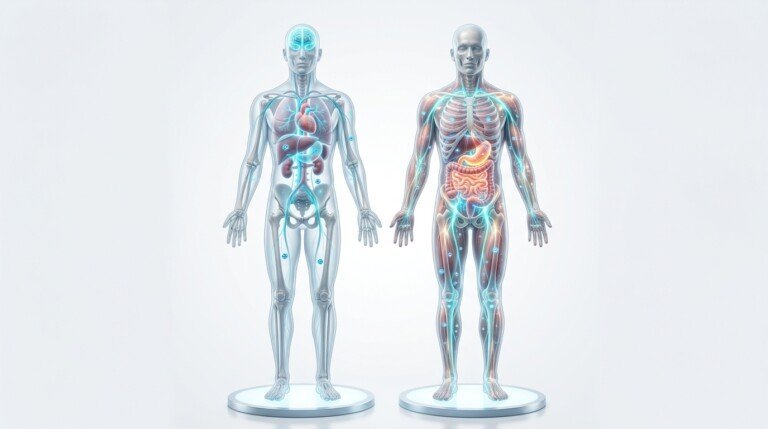


When Does Fat Burning Start During Exercise? The Science Behind Fat Oxidation
Many people have heard that the body only starts burning fat after exercising for 20 or 30 minutes. Others believe you need to reach a specific heart rate before fat loss begins. These ideas are repeated so often that they are accepted as fact, yet modern exercise science paints a much more interesting picture.
The reality is that When Does Fat Burning Start During Exercise depends on how your body produces energy rather than a single point in time. From the moment you begin moving, your muscles rely on a combination of carbohydrates and fat to meet their energy demands. The proportion of each fuel changes continuously based on workout intensity, duration, fitness level, and individual metabolism.
Understanding this process helps explain why two people performing the same exercise may burn different amounts of fat, why exercise intensity matters, and why focusing on long-term energy balance is far more important than chasing a mythical “fat-burning switch.”
In this article, we’ll explore how your body chooses its fuel during exercise, the role of glycogen and fat oxidation, whether the fat-burning zone really exists, and what current scientific evidence says about maximizing fat loss.
Quick Answer
When Does Fat Burning Start During Exercise? Your body begins burning fat almost immediately after exercise starts. However, carbohydrates and fat are used together as fuel, and the balance shifts depending on exercise intensity, duration, and your fitness level. There is no exact minute when fat burning suddenly begins.
When Does Your Body Start Burning Fat During Exercise?
One of the biggest misconceptions about exercise is that the body waits for a certain amount of time before using fat for energy.
That simply is not how human metabolism works.
Your body is constantly using multiple fuel sources, even while you are sitting, sleeping, or walking around the house.
Exercise increases energy demand, but the body continues drawing energy from both carbohydrates and fat throughout the activity.

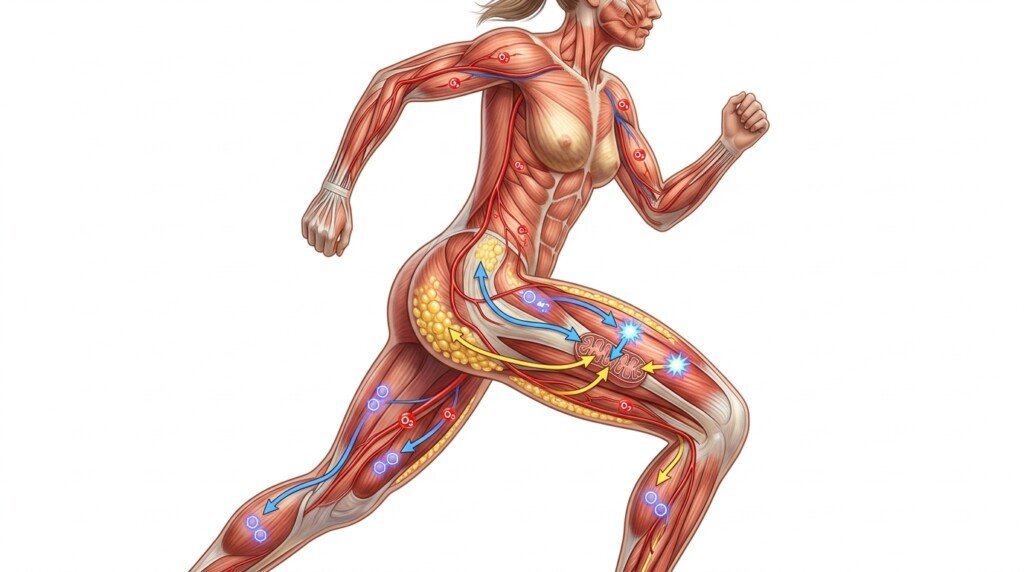
Fat Burning Begins Almost Immediately
As soon as movement starts, your muscles require energy.
The body responds by using available fuel from several energy systems simultaneously.
These include:
- Stored glycogen
- Blood glucose
- Stored body fat
- Small amounts of amino acids
The contribution of each source changes continuously during exercise.
Rather than switching from carbohydrates to fat at a specific time, your body constantly adjusts the balance according to energy needs.
Your Body Is Always Balancing Fuel Sources
Think of your metabolism as a flexible energy management system.
When exercise begins, carbohydrate use often increases because it provides energy quickly.
At the same time, fat oxidation continues in the background.
As exercise continues, the balance between these fuel sources may gradually shift depending on workout intensity and duration.
This dynamic process is one reason why Fat Burning is better understood as a continuous physiological process rather than a single event.
Does the Body Burn Carbohydrates Before Fat?
This question often creates confusion because people imagine the body emptying one fuel tank before opening another.
Human physiology is much more efficient than that.
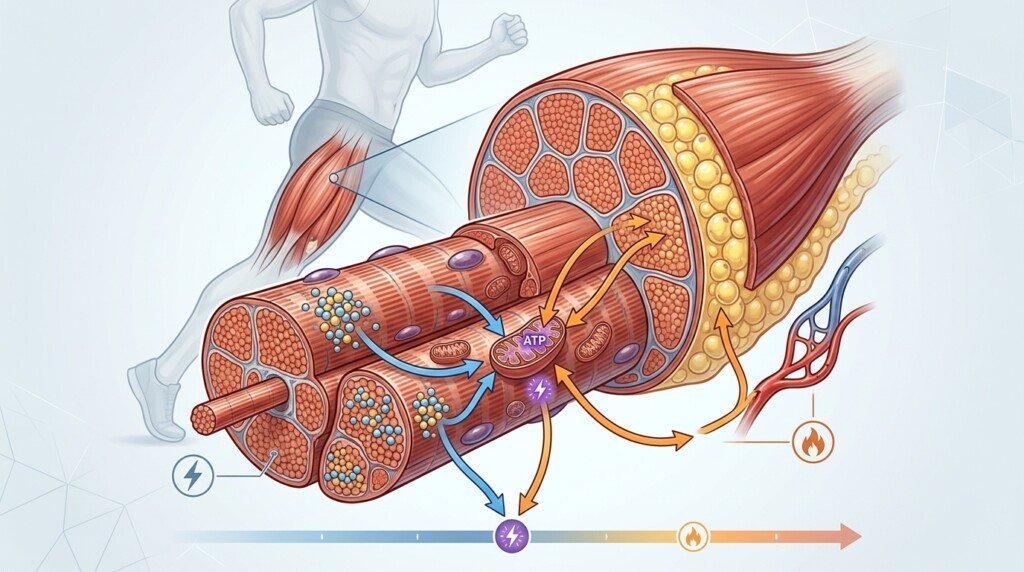
Carbohydrates and Fat Work Together
Both carbohydrates and fat contribute energy during exercise.
The difference lies in how much of each fuel your body uses under different conditions.
Generally speaking:
- Higher-intensity exercise relies more heavily on carbohydrates.
- Lower to moderate intensity uses a greater proportion of fat.
- Both fuels continue contributing throughout most forms of exercise.
This overlapping system allows the body to respond quickly as energy demands change.
What Is Glycogen?
Glycogen is the stored form of carbohydrate found primarily in your muscles and liver.
It serves as a readily available energy reserve during physical activity.
When exercise intensity increases, glycogen becomes increasingly important because it can supply energy rapidly.
However, using glycogen does not mean fat burning stops.
Both processes occur simultaneously.
Fat Oxidation Happens Alongside Glycogen Use
Fat oxidation refers to the process of breaking down stored fat to produce usable energy.
Although this process supplies energy more slowly than glycogen, it becomes increasingly valuable during longer periods of physical activity.
Rather than competing, glycogen and fat oxidation complement one another to meet the body’s changing energy requirements.
Does Workout Intensity Affect Fat Burning?
Exercise intensity has one of the greatest influences on which fuel sources your body uses.
However, the relationship is more complex than many people expect.

Lower Intensities Use a Greater Percentage of Fat
During lower-intensity exercise, the body has enough time to convert stored fat into usable energy.
This means a larger percentage of calories may come from fat oxidation.
However, total calorie expenditure is often lower than during more demanding exercise.
Higher Intensities Increase Total Energy Demand
As exercise becomes more intense, your muscles require energy more rapidly.
Because glycogen provides energy quickly, carbohydrate use increases.
Fat oxidation still occurs, but carbohydrates contribute a larger proportion of total energy.
Importantly, higher-intensity exercise often burns substantially more total calories.
This explains why different workout styles can both support fat loss despite using different fuel mixtures during exercise.
Readers interested in interval training physiology may also find HIIT for Fat Burning helpful for understanding how high-intensity exercise influences calorie expenditure and post-exercise fat oxidation.
Fitness Level Also Changes Fuel Use
Well-trained individuals often become more efficient at using fat during exercise.
Regular endurance training improves:
- Mitochondrial function
- Oxygen delivery
- Fat oxidation capacity
- Overall exercise efficiency
These adaptations allow the body to rely more effectively on fat during prolonged activity.
What Is the Fat-Burning Zone?
The phrase “fat-burning zone” appears on many fitness trackers and cardio machines.
While the concept has some scientific basis, it is often misunderstood.

The Fat-Burning Zone Refers to Fuel Proportion
At moderate exercise intensities, the body typically obtains a larger percentage of its energy from fat compared with very intense exercise.
This range is commonly called the fat-burning zone.
However, this does not necessarily mean it produces greater long-term fat loss.
Percentage Is Not the Same as Total Calories
Consider two workouts.
One burns 250 calories with 60% coming from fat.
Another burns 500 calories with 40% coming from fat.
Although the second workout uses a lower percentage of fat, the total amount of energy expended may still be greater.
For this reason, researchers generally emphasize total energy expenditure and long-term consistency rather than exercising only within a specific heart-rate zone.
Does a Longer Workout Burn More Fat?
Many people believe that simply exercising for a longer time automatically leads to greater fat burning. While exercise duration does influence how the body uses fuel, the relationship is more complex than the number of minutes you spend working out.
Both workout duration and exercise intensity affect fat oxidation, and they work together rather than independently.

Fat Oxidation Often Increases During Longer Sessions
As exercise continues, especially at a moderate intensity, the body gradually shifts toward using a higher proportion of fat for energy.
One reason is that glycogen stores begin to decline over time, encouraging the body to rely more heavily on stored fat.
This does not mean glycogen is completely depleted or that fat suddenly becomes the only fuel source. Instead, the balance between carbohydrate and fat use changes gradually throughout the workout.
Longer Does Not Always Mean Better
Although longer workouts may increase total calorie expenditure, more exercise is not always the most effective approach.
Very long sessions can also increase:
- Physical fatigue
- Recovery demands
- Risk of overuse injuries
- Difficulty maintaining consistency
For many people, a workout they can perform consistently several times each week provides better long-term results than occasional marathon exercise sessions.
Exercise Quality Still Matters
A focused, well-structured workout performed consistently often contributes more to long-term fat loss than exercising for excessive periods without adequate recovery.
Rather than asking how long a workout should be, it is more useful to ask whether your exercise routine is sustainable over months and years.
Is Fasted Exercise Better for Fat Burning?
Another common belief is that exercising on an empty stomach dramatically increases fat burning.
The scientific evidence is more nuanced.
Fasted Exercise May Increase Fat Oxidation During the Workout
When you exercise after an overnight fast, insulin levels are generally lower and glycogen stores may be slightly reduced.
Under these conditions, the body may rely on a greater proportion of fat during the exercise session.
This is why fasted exercise is often associated with increased fat oxidation while exercising.
Greater Fat Oxidation Does Not Guarantee Greater Fat Loss
Using a higher percentage of fat during one workout does not necessarily translate into greater reductions in body fat over weeks or months.
Research comparing fasted and fed exercise often finds that total daily energy balance remains the more important factor for long-term fat loss.
The body adapts over an entire day rather than responding only to what happens during a single workout.
Personal Preference Matters
Some people enjoy exercising before breakfast, while others perform better after eating.
Both approaches can support fat loss when they fit comfortably into a consistent exercise routine.
Readers interested in choosing an exercise schedule may also find Morning Exercise for Weight Loss useful for understanding how workout timing can influence consistency and performance.
What Matters Most for Long-Term Fat Loss?
After decades of exercise research, one conclusion appears repeatedly.
The greatest predictor of fat loss success is not whether fat burning begins after 20 minutes or whether someone exercises in the so-called fat-burning zone.
Long-term success comes from maintaining healthy habits consistently.
Total Energy Expenditure Is More Important Than Fuel Percentage
During exercise, your body continuously shifts between carbohydrates and fat.
However, body composition changes over weeks and months are influenced far more by total energy balance than by the percentage of fat used during a particular workout.
This explains why many different exercise styles can successfully support fat loss.
Consistency Produces Better Results Than Perfection
The best workout is usually the one you can continue performing.
Consistency allows your body to gradually improve:
- Cardiovascular fitness
- Fat oxidation
- Exercise efficiency
- Recovery capacity
- Overall health
These adaptations accumulate over time and contribute to sustainable body fat reduction.
Recovery Supports Adaptation
Exercise stimulates change.
Recovery allows those changes to occur.
Without adequate recovery, progress may slow because the body has less opportunity to repair tissues and adapt to training.
Sleep, stress management, hydration, and balanced nutrition all contribute to effective recovery and long-term success.
Exercise Is Only One Part of the Picture
Although exercise plays an important role in health and body composition, it works best alongside other healthy lifestyle habits.
Nutrition, recovery, and daily physical activity all influence how effectively the body manages stored fat over time.
Readers interested in how resistance exercise contributes to body composition may also benefit from Strength Training for Fat Loss, while Metabolism explains how your body uses energy throughout the day.
Future discussions about Best Time to Exercise for Fat Burning and Best Diet for Fat Burning build on these same principles by exploring how workout timing and nutrition influence overall fat-loss success.
Key Takeaways
| Concept | What the Evidence Shows |
|---|---|
| Fat burning starts immediately | Yes. Fat and carbohydrates are both used from the beginning of exercise. |
| Glycogen and fat work together | Both fuel sources contribute throughout most workouts. |
| Exercise intensity matters | Higher intensity shifts more energy toward carbohydrates while increasing total calorie expenditure. |
| The fat-burning zone exists | Yes, but it does not automatically produce greater long-term fat loss. |
| Longer workouts burn more fat | They may increase fat oxidation, but consistency matters more than duration alone. |
| Fasted exercise is not required | Both fasted and fed exercise can support fat loss. |
| Long-term energy balance matters most | Sustainable habits consistently outperform short-term strategies. |

Frequently Asked Questions
1. When Does Fat Burning Start During Exercise?
When Does Fat Burning Start During Exercise? Your body begins using fat for energy almost immediately after exercise starts. Fat and carbohydrates are used together, with their contribution changing based on workout intensity and duration.
2. Do you start burning fat only after 30 minutes?
No. Fat oxidation begins from the start of exercise. The idea that fat burning only starts after 30 minutes is a common misconception.
3. Does the body burn carbohydrates before fat?
No. Your body uses both carbohydrates and fat at the same time. The balance shifts continuously depending on your energy needs.
4. What is glycogen?
Glycogen is the stored form of carbohydrate found mainly in muscles and the liver. It provides a readily available source of energy during physical activity.
5. Does higher exercise intensity burn less fat?
Higher-intensity exercise uses a greater proportion of carbohydrates, but it often burns more total calories. Both moderate- and high-intensity exercise can support fat loss.
6. Is the fat-burning zone real?
Yes. The fat-burning zone refers to an exercise intensity where a larger percentage of energy comes from fat. However, this does not automatically make it the best option for long-term fat loss.
7. Does a longer workout always burn more fat?
Longer workouts may increase fat oxidation and total calorie expenditure, but workout quality, recovery, and consistency remain more important than duration alone.
8. Is fasted exercise better for fat burning?
Fasted exercise may increase fat oxidation during the workout, but current research shows it does not consistently produce greater long-term fat loss than exercising after eating.
9. Can resistance training help with fat loss?
Yes. Resistance training supports muscle preservation and overall energy expenditure, making it an important part of many effective fat-loss programs.
10. What matters most for losing body fat?
Long-term energy balance, regular physical activity, balanced nutrition, recovery, and consistency have a much greater impact on body fat than trying to maximize fat burning during a single workout.
Conclusion
Understanding When Does Fat Burning Start During Exercise helps replace common fitness myths with evidence-based knowledge. Your body does not wait 20 or 30 minutes before using fat as fuel. Instead, fat oxidation begins almost immediately, working alongside carbohydrates to supply energy throughout physical activity. The exact balance between these fuel sources changes continuously according to exercise intensity, duration, fitness level, and individual physiology.
While concepts such as the fat-burning zone, workout length, and fasted exercise are interesting, they are only small pieces of a much larger picture. Sustainable fat loss depends far more on consistent exercise, balanced nutrition, adequate recovery, and long-term energy balance than on trying to manipulate which fuel source your body uses during a single workout. Focusing on these bigger habits will produce more meaningful and lasting improvements in body composition than chasing short-term fat-burning strategies.
Disclaimer:
This post may contain affiliate links. If you purchase through them, we may earn a small commission at no extra cost to you. Also, this content is for informational purposes only and does not substitute professional medical advice.
Ready to Start Your Journey?
Use our free 7-in-1 Weight Loss Toolkit to calculate your numbers and build your plan in minutes.
Open Free Tools →