How Does Fat Burning Work? A Beginner-Friendly Guide

Many people talk about “burning fat,” but very few understand what actually happens inside the body. The phrase appears everywhere, from fitness magazines to social media videos, often accompanied by promises of quick results or secret techniques. Unfortunately, much of this information oversimplifies a complex biological process.

Your body does not simply switch into a magical fat-burning mode. Instead, it constantly balances storing energy and using energy depending on your activity level, food intake, hormones, and overall metabolism. Every minute of the day, your body decides whether to use carbohydrates, stored fat, or a combination of both to meet its energy needs.

Fat burning is a completely natural process that occurs in everyone, not just athletes or people trying to lose weight. Even while you’re sleeping, walking, or sitting at your desk, your body is breaking down small amounts of stored fat to help fuel normal bodily functions. The difference during weight loss is that your body begins using more stored fat than it replaces over time.

Understanding How Fat Burning Works also helps eliminate many common myths. Sweating does not mean you’re burning more fat. Skipping meals does not automatically speed up fat loss. Likewise, no single exercise or food can magically force your body to burn fat faster.

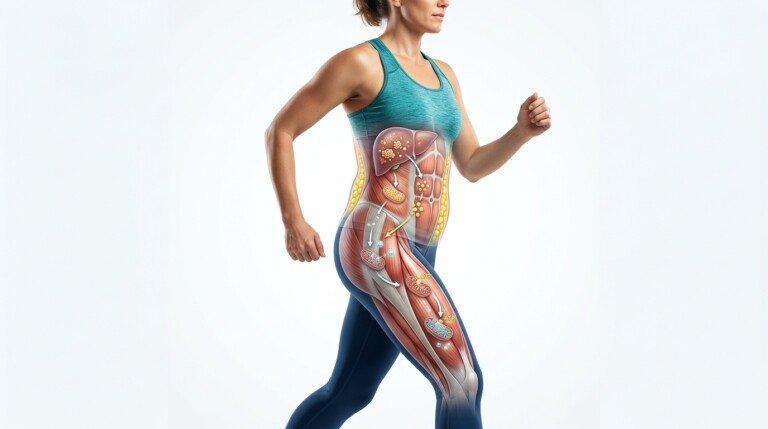
Instead, fat burning depends on several interconnected processes. Stored fat must first be released from fat cells through lipolysis. Those fatty acids must then be transported to cells where they undergo fat oxidation inside tiny structures called mitochondria. Only then can the released energy be used to power movement and normal body functions.

Learning this science makes weight loss much less confusing. Rather than chasing shortcuts, you begin to understand why consistent habits such as regular physical activity, balanced nutrition, adequate sleep, and sustainable calorie balance remain the most effective way to improve body composition.

In this article, you’ll learn how fat burning works, what lipolysis and fat oxidation actually mean, how exercise influences fat burning, whether eating less automatically burns more fat, the daily habits that support healthy fat metabolism, and the biggest myths that continue to confuse people about fat loss.


How Does Fat Burning Work?

Fat burning is the process by which your body uses stored fat as a source of energy.

It does not happen in one single step. Instead, several biological processes work together to release stored fat, transport it to cells, and convert it into usable energy.

Understanding these stages makes it easier to see why healthy fat loss takes time.

Your Body Is Always Using Energy

Every second of the day, your body requires energy for essential functions such as:

  • Breathing
  • Circulation
  • Brain activity
  • Digestion
  • Body temperature regulation
  • Muscle movement

Even while resting, your body continuously burns calories to stay alive.

Stored Fat Acts as an Energy Reserve

When you consume more calories than your body immediately needs, excess energy is stored inside fat cells as triglycerides.

Later, when your body requires additional fuel, these stored triglycerides become available for energy production.

This storage system is explained in greater detail throughout Body Fat, where the role of adipose tissue is explored.

Fat Burning Happens Throughout the Day

Many people assume fat burning occurs only during exercise.

In reality, your body burns varying amounts of fat:

  • While sleeping
  • Between meals
  • During walking
  • While working
  • During exercise
  • During recovery

The amount depends on your energy needs at any given moment.

Energy Balance Determines Long-Term Fat Loss

Fat burning alone does not guarantee fat loss.

Your body burns fat every day while also storing fat after meals.

Long-term fat loss occurs only when stored fat is used more frequently than it is replaced.

This relationship is known as energy balance.

Hormones Help Control the Process

Several hormones regulate when fat is stored and when it is released.

These include:

  • Insulin
  • Glucagon
  • Adrenaline
  • Noradrenaline

Rather than working independently, these hormones constantly adjust energy use according to your body’s needs.


What Is Lipolysis?

Lipolysis is the first major step in the fat-burning process.

It refers to the breakdown of stored triglycerides inside fat cells into smaller molecules that the body can transport and eventually use for energy.

Without lipolysis, stored body fat would remain locked inside fat cells.

Fat Cells Store Triglycerides

Most stored body fat exists in the form of triglycerides.

These molecules contain three fatty acids attached to one glycerol molecule.

Triglycerides allow the body to store large amounts of energy efficiently.

Hormones Trigger Lipolysis

When your body requires additional energy, hormones send signals to fat cells.

These signals activate enzymes that begin breaking triglycerides apart.

The process is carefully controlled according to your current energy needs.

Fatty Acids Enter the Bloodstream

After triglycerides are broken down, two products are released:

  • Fatty acids
  • Glycerol

These molecules travel through the bloodstream toward tissues that require fuel.

Lipolysis alone does not produce energy.

It simply prepares stored fat for the next stage.

Lipolysis Does Not Mean Fat Loss

Many people confuse releasing fat with losing fat.

Lipolysis only releases stored fat from fat cells.

If the released fatty acids are not eventually used for energy, they may be stored again later.

True fat loss requires the next process called fat oxidation.

Lipolysis Happens Continuously

Small amounts of lipolysis occur throughout the day.

The rate changes according to:

  • Physical activity
  • Meal timing
  • Hormones
  • Sleep
  • Overall energy balance

Your body constantly adjusts this process to match changing energy demands.


What Is Fat Oxidation?

Once fatty acids have been released through lipolysis, they must be used by cells.

This second stage is called fat oxidation.

Fat oxidation converts released fatty acids into usable energy.

Fatty Acids Enter Cells

After traveling through the bloodstream, fatty acids enter muscle cells and other tissues that require energy.

These cells prepare the fatty acids for energy production.

Mitochondria Produce Energy

Inside nearly every cell are tiny structures called mitochondria.

Often described as the cell’s powerhouses, mitochondria convert nutrients into usable energy.

Here, fatty acids combine with oxygen through several chemical reactions.

Fat Oxidation Produces Three Main Products

As fatty acids are metabolized, the body produces:

  • Energy
  • Carbon dioxide
  • Water

The released energy powers your muscles and organs.

Carbon dioxide leaves through your lungs.

Water becomes part of your body’s normal fluid balance.

The journey of these byproducts is explained further throughout Where Does Fat Go When You Lose Weight.

Oxygen Is Essential

Without oxygen, fat oxidation cannot occur efficiently.

This is one reason breathing becomes faster during physical activity.

Your muscles require more oxygen to support increased energy production.

Fat Oxidation Supports Everyday Life

Although exercise increases fat oxidation, this process also occurs:

  • While sleeping
  • During quiet walking
  • Between meals
  • During normal daily activities

Fat oxidation is a continuous part of healthy metabolism rather than something reserved only for workouts.


Does Exercise Increase Fat Burning?

Yes.

Exercise increases your body’s energy requirements, which often leads to greater use of stored fat over time.

However, the relationship is more complex than many people realize.

Exercise Raises Energy Demand

Every movement requires energy.

As activity increases, your muscles require additional fuel.

Depending on the exercise intensity, your body uses a combination of:

  • Stored carbohydrates
  • Stored fat

The proportion changes throughout the activity.

Different Exercises Use Energy Differently

Lower and moderate intensity activities such as walking often rely on a greater percentage of fat for fuel.

Higher intensity exercise typically uses more carbohydrates during the activity itself because they can be broken down more quickly.

Both forms of exercise contribute to overall calorie expenditure and can support long-term fat loss.

Strength Training Supports Body Composition

Resistance training does more than burn calories during a workout.

It helps preserve and build lean muscle, which supports healthy body composition during weight loss.

These benefits are discussed further throughout Strength Training for Fat Loss.

Consistency Matters More Than Perfection

One workout does not dramatically change body fat.

Instead, regular physical activity performed consistently over weeks and months gradually improves body composition.

Walking, cycling, swimming, and resistance training can all contribute to healthier long-term results.

Daily Movement Also Counts

Structured workouts are valuable, but everyday movement also increases total energy expenditure.

Simple activities such as:

  • Taking the stairs
  • Walking after meals
  • Gardening
  • Household chores

all contribute to healthy fat metabolism.


Does Eating Less Automatically Burn More Fat?

Many people assume that eating as little as possible is the fastest way to lose body fat. While creating a calorie deficit is necessary for fat loss, drastically reducing food intake does not automatically increase fat burning. In fact, eating too little for long periods may make it more difficult to maintain muscle, exercise regularly, and sustain healthy habits.

Fat burning depends on overall energy balance, adequate nutrition, and long-term consistency rather than severe calorie restriction.

A Moderate Calorie Deficit Encourages Fat Loss

Your body begins relying more on stored fat when calorie intake is consistently lower than calorie expenditure.

A moderate calorie deficit allows your body to gradually use stored energy while still supporting:

  • Daily activities
  • Exercise
  • Recovery
  • Muscle maintenance

This approach is generally easier to maintain than highly restrictive eating patterns.

Extremely Low Calorie Intake Has Limitations

Very low calorie diets may initially produce rapid weight loss, but much of that early change can come from:

  • Water
  • Glycogen
  • Lean tissue

Long-term success depends on preserving muscle while gradually reducing body fat.

Nutrition Quality Still Matters

Fat burning is influenced by calorie balance, but the quality of your diet also affects overall health.

Balanced meals containing:

  • Lean protein
  • Whole grains
  • Fruits
  • Vegetables
  • Healthy fats

provide nutrients that support physical activity and recovery.

Protein Helps Preserve Lean Muscle

Adequate protein intake becomes especially important during weight loss.

Protein supports:

  • Muscle maintenance
  • Recovery
  • Fullness after meals

Maintaining lean muscle helps improve overall body composition as body fat decreases.

Sustainable Habits Produce Better Results

Healthy fat loss is rarely about eating the smallest possible amount.

Instead, it comes from creating eating habits that you can comfortably maintain over months and years.

This approach also reduces the likelihood of repeated cycles of restrictive dieting.


Which Habits Improve Fat Burning?

Your body naturally burns fat every day, but certain habits help create conditions where fat oxidation occurs more consistently.

These habits improve overall metabolic efficiency while supporting healthier body composition.

Stay Physically Active

Movement increases daily energy expenditure.

Helpful forms of activity include:

  • Walking
  • Cycling
  • Swimming
  • Resistance training
  • Recreational sports

Regular movement also supports cardiovascular health and overall fitness.

Include Strength Training Each Week

Resistance exercise helps preserve lean muscle while reducing body fat.

Maintaining muscle supports:

  • Healthy metabolism
  • Physical strength
  • Functional movement
  • Long-term weight management

This is why strength training remains an important component of healthy fat loss.

Prioritize Sleep

Sleep influences many biological processes involved in metabolism.

Consistent, high-quality sleep supports:

  • Recovery
  • Appetite regulation
  • Exercise performance
  • Daily energy levels

Poor sleep often makes healthy behaviors more difficult to maintain.

Manage Stress

Long-term stress may influence food choices, physical activity, and recovery.

Healthy stress management strategies include:

  • Walking outdoors
  • Meditation
  • Deep breathing
  • Reading
  • Spending time with family
  • Enjoyable hobbies

These habits support overall well-being while making healthy routines easier to sustain.

Build Consistent Eating Patterns

Skipping meals or following highly restrictive diets is not necessary for healthy fat burning.

Instead, consistent eating habits built around nutritious foods help support stable energy levels and long-term adherence.

Stay Patient

Fat burning is a continuous biological process.

Visible changes in body composition usually require weeks or months of consistent healthy habits.

Patience remains one of the most valuable tools for sustainable progress.

Regular activity also supports Metabolic Health, which influences how efficiently your body manages energy over time. If progress temporarily slows despite healthy habits, a Weight Loss Plateau may simply reflect normal biological adaptation rather than failure.

People often compare different activities when trying to maximize fat loss. In reality, both approaches discussed in Walking vs Running for Weight Loss can contribute to healthier body composition when performed consistently.


What Are the Biggest Fat-Burning Myths?

The internet is full of claims promising faster fat burning through secret foods, special workouts, or dramatic lifestyle changes.

Most of these claims misunderstand how human metabolism actually works.

Myth 1: Sweating Means You’re Burning Fat

Sweat helps cool your body.

It does not represent body fat leaving the body.

Heavy sweating usually reflects water loss rather than fat loss.

Myth 2: You Can Target Fat Loss From One Body Part

Exercises strengthen specific muscles, but they cannot force fat to disappear from one particular area.

Your body determines where stored fat is released according to genetics, hormones, and overall physiology.

Myth 3: Exercising on an Empty Stomach Burns More Fat

Some people burn a slightly greater percentage of fat during fasted exercise.

However, total long-term fat loss depends far more on overall energy balance and exercise consistency than workout timing.

Myth 4: Carbohydrates Completely Stop Fat Burning

Your body continually shifts between using carbohydrates and fat for energy.

Eating carbohydrates does not permanently stop fat oxidation.

Both fuel sources are used throughout the day according to your body’s changing needs.

Myth 5: Fat Burning Happens Only During Exercise

Fat oxidation occurs continuously.

Your body burns fat while:

  • Sleeping
  • Walking
  • Working
  • Resting
  • Recovering

Exercise simply increases total energy demand.

Myth 6: Faster Fat Burning Always Means Faster Fat Loss

Fat oxidation during a single workout does not determine long-term results.

Overall calorie balance, nutrition, muscle maintenance, sleep, and consistency have a much greater influence on body composition.


Frequently Asked Questions

1. How does fat burning work?

Fat burning begins with lipolysis, where stored triglycerides are broken into fatty acids and glycerol. These fatty acids are then oxidized inside cells to produce energy, carbon dioxide, and water.

2. What is the difference between lipolysis and fat oxidation?

Lipolysis releases stored fat from fat cells, while fat oxidation uses those released fatty acids to produce energy. Both processes are necessary for healthy fat loss.

3. Does exercise increase fat burning?

Yes. Exercise raises your body’s energy demand, encouraging greater use of stored fat over time. Both aerobic exercise and strength training contribute to improved body composition.

4. Does eating less automatically burn more fat?

Not necessarily. A moderate calorie deficit supports healthy fat loss, but eating too little may reduce exercise performance, make muscle maintenance more difficult, and become harder to sustain long term.

5. What daily habits support healthy fat burning?

Regular physical activity, resistance training, balanced nutrition, quality sleep, stress management, and consistent healthy routines all help support efficient fat metabolism and long-term body composition.


Final Thoughts

Understanding How Fat Burning Works makes it clear that fat loss is not controlled by one food, one workout, or one shortcut. It is the result of several biological processes working together. Stored triglycerides are first released from fat cells through lipolysis, then converted into usable energy through fat oxidation inside the mitochondria. Throughout this process, your body continuously balances storing energy and using energy according to your daily needs.

The encouraging news is that your body already knows how to burn fat efficiently. You do not need miracle diets or complicated strategies to activate this process. Instead, regular physical activity, balanced nutrition, quality sleep, effective stress management, and a sustainable calorie deficit create the conditions that allow your body to use stored fat naturally while preserving lean muscle.

Perhaps the most important lesson is that successful fat loss is built on consistency rather than intensity. Every healthy meal, every walk, every strength training session, and every good night’s sleep contributes to better body composition over time. By understanding the science behind fat burning, you can focus on habits that support long-term health instead of chasing myths or expecting overnight results.


Disclaimer:

This post may contain affiliate links. If you purchase through them, we may earn a small commission at no extra cost to you. Also, this content is for informational purposes only and does not substitute professional medical advice.

Where Does Fat Go When You Lose Weight? The Surprising Science

Most people know that losing weight means reducing body fat, but very few know what actually happens to that fat afterward. Does it simply disappear? Is it converted into muscle? Do you sweat it out during exercise? Or does your body somehow burn it into nothing?

These questions have led to countless myths over the years. Some people believe fat melts away through sweat, while others think it is converted directly into energy or leaves the body through bowel movements. Although these explanations sound believable, they are not supported by science.

The truth is much more fascinating.

Body fat does not vanish. It undergoes a carefully controlled biological process called fat oxidation. During this process, stored fat is broken down, combined with oxygen, and transformed into substances that your body can eliminate naturally. Surprisingly, the majority of lost body fat actually leaves your body through your lungs as carbon dioxide every time you breathe. The rest leaves as water through urine, sweat, breath, and other body fluids.

Understanding this process changes the way you think about weight loss. Instead of viewing fat loss as something mysterious, you begin to see it as a normal part of human metabolism. Every walk, workout, and everyday movement increases your body’s energy demand, allowing stored fat to be gradually converted into usable fuel and safely removed from the body.

Learning Where Does Fat Go When You Lose Weight also helps eliminate misleading marketing claims about detoxes, fat-melting products, and miracle solutions. Your body already has an incredibly efficient system for reducing body fat. The goal is simply to create the right conditions for that system to work.

In this article, you’ll learn where body fat actually goes during weight loss, whether fat is turned into energy, if sweating removes fat, why breathing plays such a major role, whether urine removes fat, how fat oxidation works, and which daily habits naturally support healthy fat burning.


Where Does Fat Go When You Lose Weight?

Contrary to popular belief, fat does not simply disappear.

When your body loses fat, the stored triglycerides inside fat cells are broken down through normal metabolic processes.

Those stored molecules are eventually converted into carbon dioxide and water.

Your body then removes these substances naturally.

Fat Leaves the Body Gradually

Fat loss happens slowly because your body continuously breaks down small amounts of stored fat whenever additional energy is required.

This occurs:

  • Between meals
  • During physical activity
  • While sleeping
  • During everyday movement

The process is ongoing rather than occurring all at once.

Fat Cells Become Smaller

Many people think fat cells disappear after weight loss.

In reality, fat cells usually remain in the body but become smaller as stored triglycerides are removed.

This explains why body composition improves even though the number of fat cells often changes very little.

The Body Uses Stored Triglycerides

Inside each fat cell, energy is stored primarily as triglycerides.

When your body requires fuel, these triglycerides are broken into:

  • Fatty acids
  • Glycerol

These smaller molecules travel through the bloodstream to tissues that need energy.

Fat Loss Depends on Energy Balance

Fat leaves the body only after stored energy has been used.

This typically happens when energy expenditure consistently exceeds calorie intake over time.

Healthy fat loss is therefore a gradual biological process rather than a rapid event.

The storage and release of body fat are explained more thoroughly throughout Body Fat and How the Body Stores Fat, where the physiology of fat cells is discussed in greater detail.


Is Fat Turned Into Energy?

This is one of the most common questions about weight loss.

The short answer is both yes and no.

Fat itself does not simply become energy.

Instead, fat is broken down through chemical reactions that release energy while also producing carbon dioxide and water.

Energy Is Released During Fat Breakdown

When stored triglycerides are broken apart, the resulting fatty acids enter cells where they undergo oxidation.

This process releases usable energy that powers:

  • Muscle contraction
  • Organ function
  • Brain activity
  • Everyday movement

The fat itself is not transformed into pure energy.

Rather, energy is released as part of the chemical reactions that break fat apart.

The Law of Conservation of Matter Still Applies

Matter cannot simply disappear.

Every atom contained within stored body fat must end up somewhere.

This is why fat ultimately leaves the body as carbon dioxide and water.

Nothing is lost without explanation.

Fat Powers Daily Activities

Whenever your body requires additional fuel, stored fat may contribute energy for:

  • Walking
  • Climbing stairs
  • Household chores
  • Exercise
  • Sleeping
  • Maintaining body temperature

Even while resting, your body continuously uses energy.

Fat Is Not Converted Into Muscle

Another common myth suggests that fat becomes muscle during exercise.

Fat tissue and muscle tissue are completely different types of cells.

During healthy weight loss:

  • Fat cells shrink.
  • Muscles become stronger through training.
  • Body composition improves.

These changes happen simultaneously but independently.


Do You Sweat Out Fat?

No.

Sweating does not remove body fat.

Sweat is produced primarily to regulate body temperature rather than eliminate fat.

Although intense exercise causes heavy sweating, the weight lost through sweat consists almost entirely of water.

Sweat Is Mostly Water

Sweat contains:

  • Water
  • Sodium
  • Potassium
  • Small amounts of other electrolytes

It does not contain meaningful amounts of stored body fat.

Temporary Weight Loss Can Be Misleading

After a long workout or time in a hot environment, the scale often shows lower body weight.

This reduction is almost entirely due to water loss.

Once you drink fluids, your body replaces that water and your weight returns to normal.

Sweating Does Not Increase Fat Loss By Itself

Wearing heavy clothing or exercising in extreme heat increases sweating but does not directly increase body fat reduction.

Fat loss depends on energy expenditure rather than the amount of sweat produced.

Exercise Burns Calories, Not Sweat

Exercise supports fat loss because it increases your body’s energy demand.

Sweating simply helps cool the body while that activity takes place.

The amount you sweat says very little about how much fat you are burning.


Do You Breathe Out Fat?

Surprisingly, yes.

Most of the fat you lose eventually leaves your body through your lungs.

This happens because fat oxidation produces carbon dioxide, which is removed every time you exhale.

Carbon Leaves Through Your Breath

Stored triglycerides contain large amounts of carbon.

During fat oxidation, these carbon atoms combine with oxygen to form carbon dioxide.

Your lungs then remove this carbon dioxide during normal breathing.

This is the primary pathway through which fat leaves the body.

Breathing Is Part of Normal Metabolism

Every breath you take removes small amounts of carbon dioxide.

When fat loss occurs, more carbon from stored triglycerides is gradually eliminated through this natural process.

You cannot speed this up by breathing faster.

Only increased energy demand causes additional fat oxidation.

Exercise Increases Carbon Dioxide Production

During physical activity, your muscles require more energy.

As more fat and carbohydrates are metabolized, carbon dioxide production increases.

This is why breathing becomes heavier during exercise.

Your lungs are removing greater amounts of carbon dioxide created during energy production.

The Lungs Play a Bigger Role Than Most People Realize

Although many people associate fat loss with sweating, the lungs actually remove most of the carbon contained within stored body fat.

This remarkable process demonstrates how closely respiration and metabolism work together.


Does Fat Leave Through Urine?

Yes, but only to a limited extent.

One of the biggest misconceptions about weight loss is that body fat leaves mainly through urine. While water produced during fat metabolism is eventually eliminated through urine, urine itself is not the primary route through which body fat leaves the body.

Most fat is removed as carbon dioxide through your lungs, while a smaller portion leaves as water.

Water Is Produced During Fat Oxidation

As stored fat is broken down, your body creates water as one of the end products of metabolism.

This water contributes to your normal body fluids and may eventually leave through:

  • Urine
  • Sweat
  • Tears
  • Breath
  • Other body fluids

This explains why urine plays a small supporting role in fat loss rather than being the main pathway.

Urination Does Not Remove Stored Fat Directly

Body fat does not dissolve into urine.

Instead, only the water created during fat metabolism may eventually be excreted by the kidneys.

Frequent urination does not mean you are losing more body fat.

Hydration Supports Normal Metabolism

Drinking enough water supports healthy kidney function and normal metabolism.

Good hydration also helps maintain:

  • Blood circulation
  • Digestion
  • Physical performance
  • Temperature regulation

However, drinking excessive amounts of water does not accelerate fat loss.

Water Weight Is Different From Fat Loss

Many people notice rapid weight changes after increasing or decreasing fluid intake.

These short-term changes almost always reflect shifts in body water rather than changes in body fat.

True fat loss occurs much more gradually.


How Does Fat Oxidation Work?

Fat oxidation is the scientific process through which stored body fat is converted into usable energy.

This process occurs continuously throughout life whenever your body requires additional fuel.

Understanding fat oxidation explains exactly how stored fat eventually leaves the body.

Fat Cells Release Stored Triglycerides

When your body needs energy, hormones signal fat cells to release stored triglycerides.

These triglycerides are broken into:

  • Fatty acids
  • Glycerol

These smaller molecules travel through the bloodstream toward tissues that require energy.

Cells Use Oxygen to Produce Energy

Inside your cells, fatty acids combine with oxygen through a series of metabolic reactions.

These reactions produce:

  • Energy
  • Carbon dioxide
  • Water

The released energy supports every aspect of normal body function.

Carbon Dioxide Leaves Through the Lungs

The carbon dioxide created during fat oxidation travels through your bloodstream to your lungs.

Every exhale removes small amounts of this carbon dioxide from your body.

Over time, this becomes the primary route through which body fat is eliminated.

Water Leaves Naturally

The water created during fat oxidation contributes to your body’s normal fluid balance.

It eventually leaves through:

  • Urine
  • Sweat
  • Breath
  • Other body fluids

This happens automatically as part of normal physiology.

Fat Oxidation Happens Every Day

Your body continually shifts between storing and using energy.

Fat oxidation occurs:

  • While walking
  • During exercise
  • Between meals
  • During sleep
  • While performing everyday activities

It is a normal part of healthy metabolism rather than a special event triggered by one workout or one food.


Which Habits Support Fat Burning?

Although your body naturally burns fat every day, certain lifestyle habits help create conditions where fat oxidation occurs more consistently over time.

These habits support healthy body composition without relying on quick fixes.

Stay Physically Active

Movement increases your body’s energy requirements.

Activities such as:

  • Walking
  • Cycling
  • Swimming
  • Resistance training
  • Recreational sports

all contribute to greater daily energy expenditure.

Consistency matters far more than occasional intense workouts.

Maintain a Moderate Calorie Deficit

Fat loss occurs when your body consistently uses more energy than it receives from food.

A moderate calorie deficit allows stored fat to be gradually used while helping preserve lean muscle.

Extremely restrictive diets are rarely sustainable and often make long-term success more difficult.

Prioritize Strength Training

Resistance exercise helps maintain lean muscle during weight loss.

Preserving muscle supports:

  • Healthy metabolism
  • Physical strength
  • Mobility
  • Long-term body composition

Building muscle also improves overall fitness even when body weight changes slowly.

Eat Balanced Meals

Meals built around:

  • Lean protein
  • Vegetables
  • Fruits
  • Whole grains
  • Healthy fats

provide nutrients that support overall health while making long-term calorie balance easier to maintain.

Balanced nutrition also helps sustain energy for physical activity.

Sleep Well

Sleep supports many biological systems involved in healthy weight management.

Consistent, restorative sleep helps regulate:

  • Appetite
  • Recovery
  • Physical performance
  • Daily energy levels

Poor sleep often makes healthy habits more difficult to maintain.

Manage Stress

Long-term stress may influence eating behaviors, physical activity, and sleep quality.

Managing stress through healthy coping strategies supports better lifestyle consistency.

Examples include:

  • Walking outdoors
  • Deep breathing
  • Meditation
  • Reading
  • Spending time with family
  • Enjoyable hobbies

Focus on Sustainable Habits

Fat oxidation is not controlled by a single workout or one healthy meal.

It reflects the combined effect of daily habits practiced consistently over months and years.

Building routines you can maintain long term remains the most effective strategy for improving body composition.

These principles closely align with Metabolic Health and Sustainable Weight Loss, where long-term behavior change is emphasized over short-term results.

If you’ve ever wondered Which Body Part Loses Fat First, remember that your body decides where stored fat is released based largely on genetics and hormones. While you cannot choose where fat comes from, consistent healthy habits allow overall body fat to decrease gradually over time.


Frequently Asked Questions

1. Where does fat go when you lose weight?

Most lost body fat leaves the body as carbon dioxide through the lungs. The remaining portion becomes water, which is eliminated through urine, sweat, breath, and other body fluids.

2. Is fat converted directly into energy?

No. Fat is broken down through oxidation, releasing energy while producing carbon dioxide and water. The fat itself does not simply become energy.

3. Do you sweat out body fat?

No. Sweat consists mainly of water and electrolytes. Sweating helps regulate body temperature but does not directly remove stored body fat.

4. Why do you breathe out fat?

During fat oxidation, carbon atoms from stored triglycerides combine with oxygen to form carbon dioxide. Your lungs remove this carbon dioxide every time you exhale.

5. Can drinking more water increase fat loss?

Drinking enough water supports overall health and normal metabolism, but it does not directly increase fat oxidation or cause the body to burn more fat.


Final Thoughts

Understanding Where Does Fat Go When You Lose Weight replaces one of the biggest myths in health and fitness with a fascinating scientific reality. Body fat does not melt away, disappear, or leave primarily through sweat. Instead, stored triglycerides are broken down through fat oxidation, releasing energy while producing carbon dioxide and water. Most of the carbon leaves your body through your lungs with every breath you take, while the remaining water is naturally eliminated through urine, sweat, and other body fluids.

This process highlights how remarkable the human body truly is. Every walk, workout, household task, and even periods of rest contribute to your body’s ongoing ability to use stored fat for energy. Healthy fat loss is not driven by detoxes, excessive sweating, or miracle products. It is the result of normal metabolic processes working efficiently when your energy balance supports the use of stored fat.

The most effective way to encourage fat oxidation is through consistent lifestyle habits rather than shortcuts. Regular physical activity, balanced nutrition, quality sleep, stress management, and patience create the conditions your body needs to gradually reduce excess body fat while preserving lean muscle. By understanding the science behind fat loss, you can focus less on myths and more on sustainable habits that support long-term metabolic health and lasting body composition improvements.


Disclaimer:

This post may contain affiliate links. If you purchase through them, we may earn a small commission at no extra cost to you. Also, this content is for informational purposes only and does not substitute professional medical advice.

Exit mobile version