How Does Your Body Store Fat? The Science Explained
Many people believe that body fat appears simply because they ate too much or exercised too little. While eating more calories than your body needs certainly plays a role, the actual process of fat storage is far more sophisticated than most people realize. Every meal you eat sets off a series of carefully regulated biological processes that determine whether energy is used immediately, stored for later, or converted into body fat.
Your body evolved to store fat for survival. Long before grocery stores and refrigerators existed, food was unpredictable. Storing extra energy as body fat allowed humans to survive periods of famine, illness, and seasonal food shortages. Today, the same biological system still operates, even though food is far more accessible.
Fat storage is not a sign that your body is malfunctioning. It is a normal function designed to maintain energy balance. Problems arise only when excess calories are stored consistently over long periods, causing fat cells to enlarge and body fat to accumulate beyond healthy levels.
Hormones also play an important role in this process. Insulin, stress hormones, and several appetite-regulating hormones influence how efficiently your body stores and releases fat. At the same time, physical activity, sleep quality, nutrition, and overall metabolic health all affect whether your body is more likely to store or burn energy.
Understanding How the Body Stores Fat helps replace common myths with evidence-based knowledge. Instead of viewing fat storage as something mysterious or uncontrollable, you can better understand the biological mechanisms behind weight gain and body composition.
In this article, you’ll learn how your body stores fat, why excess calories become stored energy, which hormones regulate fat storage, where stored fat is kept, whether stored fat can later be burned for energy, which daily habits encourage fat storage, and practical lifestyle strategies that naturally support healthier body composition.
How Does Your Body Store Fat?
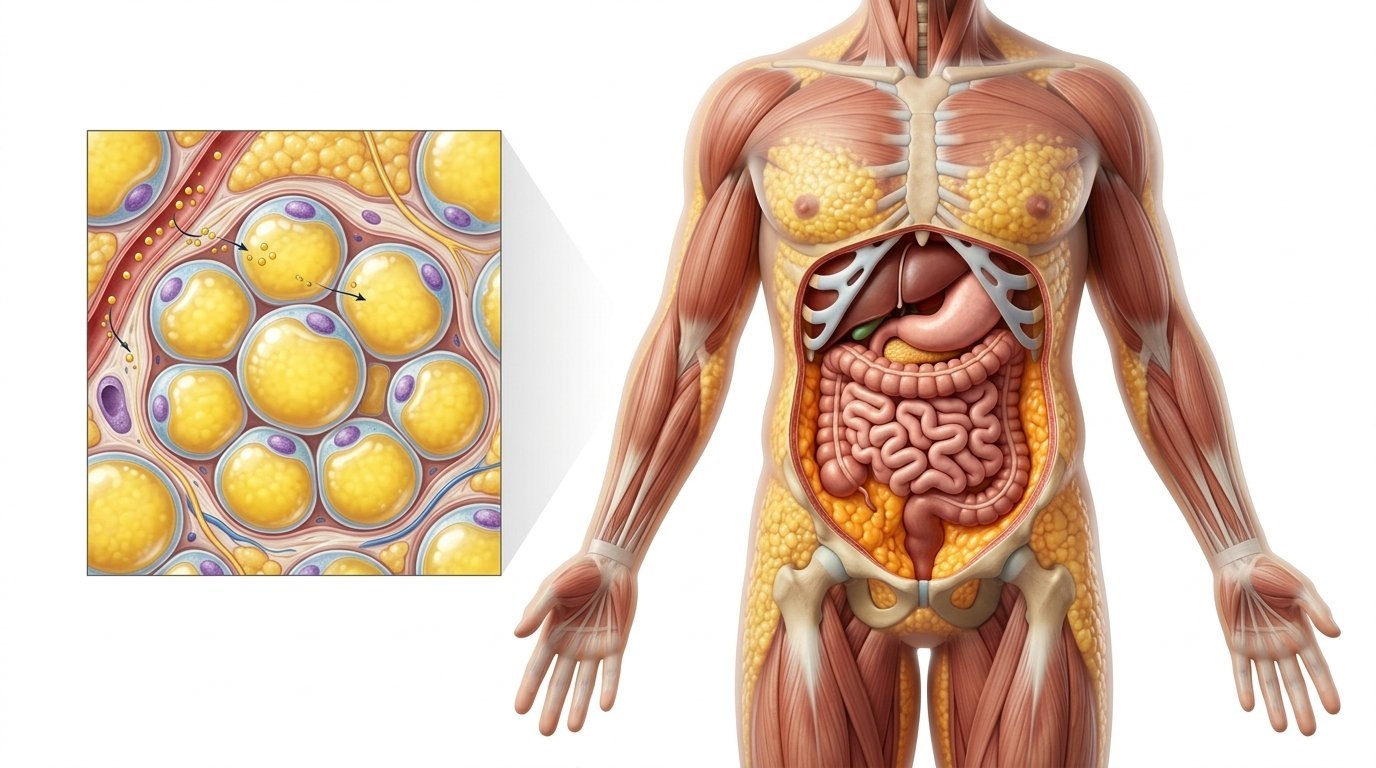
Fat storage is the body’s natural way of saving excess energy for future use.
Whenever you consume more calories than your body immediately needs, the surplus energy is converted into a form that can be stored efficiently inside fat cells.
This process is highly organized and controlled by multiple hormones, enzymes, and metabolic pathways.

Your Body Prioritizes Immediate Energy First
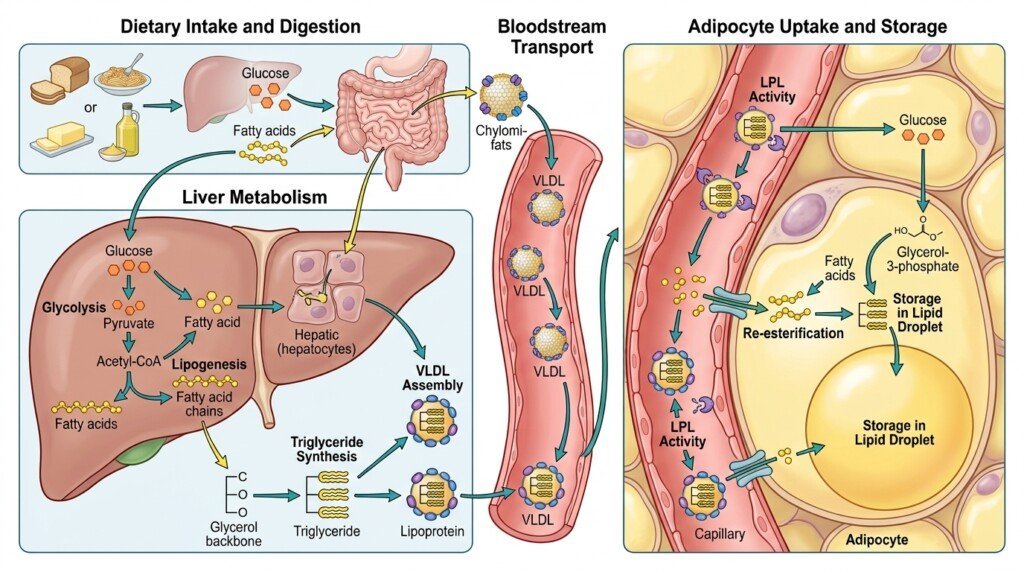
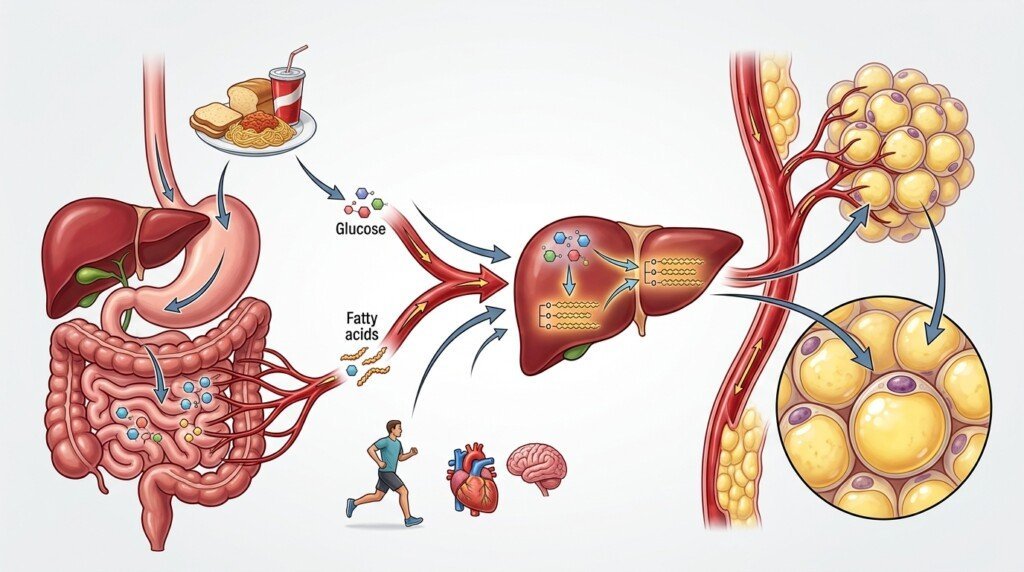
After eating, your digestive system breaks food into smaller nutrients.
These nutrients provide energy for:
- Breathing
- Movement
- Brain function
- Digestion
- Organ function
- Physical activity
Your body always uses available energy before storing any excess.
Excess Energy Is Stored as Triglycerides
If energy intake exceeds immediate needs, the remaining calories are converted into triglycerides.
Triglycerides are the primary form of stored fat inside the body.
These triglycerides are packed into specialized fat cells for future use.
This storage process allows the body to access energy whenever food is unavailable.
Fat Cells Store Energy Efficiently
Fat cells, known scientifically as adipocytes, are remarkably efficient energy storage units.
Each fat cell can expand considerably as it stores additional triglycerides.
When energy demand later increases, these same cells release stored fat back into circulation.
The structure and function of adipose tissue are explained in greater detail throughout Body Fat, where different types of fat tissue are explored.
Fat Storage Is a Normal Survival Mechanism
Many people think fat storage is harmful by itself.
In reality, it is an essential survival mechanism.
Without stored body fat, humans would struggle to survive periods of:
- Illness
- Fasting
- Food shortages
- Extended physical activity
Healthy fat storage allows the body to maintain energy balance during changing conditions.
Fat Storage Never Completely Stops
Even healthy individuals constantly store and release small amounts of fat.
Your body continuously adjusts energy storage according to:
- Food intake
- Physical activity
- Hormones
- Sleep
- Stress
- Overall energy needs
This process continues throughout your entire life.
Why Does the Body Store Extra Calories as Fat?
The body stores excess calories because fat provides the most efficient long-term energy reserve.
Instead of wasting unused energy, your body prepares for future energy needs.
Fat Stores More Energy Than Other Nutrients
One gram of dietary fat contains significantly more stored energy than carbohydrates or protein.
This makes fat an efficient fuel reserve.
Your body can store large amounts of energy without dramatically increasing body size.
The Body Cannot Predict Future Food Availability
Your metabolism has no way of knowing when the next meal will arrive.
Throughout human evolution, periods of food scarcity were common.
Storing surplus energy improved survival during:
- Seasonal food shortages
- Illness
- Injury
- Long journeys
Although food availability has changed dramatically, human biology has changed much more slowly.
Calorie Surplus Drives Fat Storage
Fat storage occurs whenever calorie intake consistently exceeds calorie expenditure over time.
This relationship is known as energy balance.
Positive energy balance means:
Calories consumed exceed calories burned.
Over weeks and months, repeated positive energy balance gradually increases body fat stores.
The Source of Calories Matters Less Than Total Energy
Many people wonder whether carbohydrates, fat, or protein are uniquely responsible for fat storage.
While nutrients are processed differently, excess calories from any source can eventually contribute to fat storage when total energy intake remains consistently above energy needs.
Fat Storage Is Highly Regulated
Fat storage is not random.
Numerous hormones, enzymes, and metabolic pathways carefully regulate:
- Nutrient transport
- Energy use
- Fat production
- Fat breakdown
These systems constantly adjust according to your body’s changing needs.
Which Hormones Affect Fat Storage?
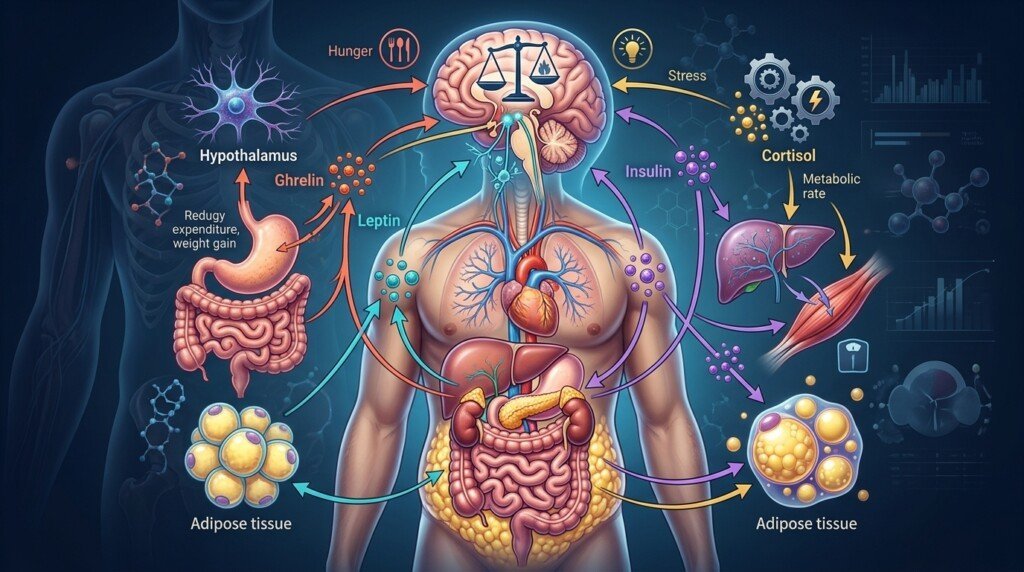
Hormones act as chemical messengers that help regulate when energy should be stored and when it should be released.
Several hormones work together rather than one hormone controlling the entire process.
Insulin
Insulin is one of the best-known hormones involved in fat storage.
After eating, insulin helps move glucose from the bloodstream into cells where it can be used for energy.
When immediate energy needs have been met, insulin also supports the storage of excess energy inside fat cells.
Insulin itself is not harmful. It performs an essential role in maintaining normal blood sugar regulation.
The relationship between insulin and long-term health is explored further throughout Insulin Resistance.
Cortisol
Cortisol helps the body respond to physical and emotional stress.
Short-term increases are completely normal.
However, prolonged stress combined with unhealthy lifestyle habits may influence appetite, food choices, and body fat distribution.
Its relationship with abdominal fat is discussed further throughout Hormonal Belly Fat.
Leptin
Leptin is produced primarily by fat cells.
It helps communicate how much stored energy the body has available.
Under normal conditions, leptin contributes to appetite regulation and overall energy balance.
Ghrelin
Often called the hunger hormone, ghrelin helps signal when it is time to eat.
Levels typically rise before meals and fall afterward.
Sleep quality, meal timing, and lifestyle habits can all influence ghrelin levels.
Multiple Hormones Work Together
Fat storage is never controlled by a single hormone.
Instead, insulin, leptin, ghrelin, cortisol, and many other hormones constantly communicate with the brain, liver, muscles, and fat tissue to maintain overall energy balance.
Where Does Stored Fat Go?
Stored fat does not collect randomly throughout the body.
Instead, genetics, hormones, sex, and age all influence where fat is deposited.
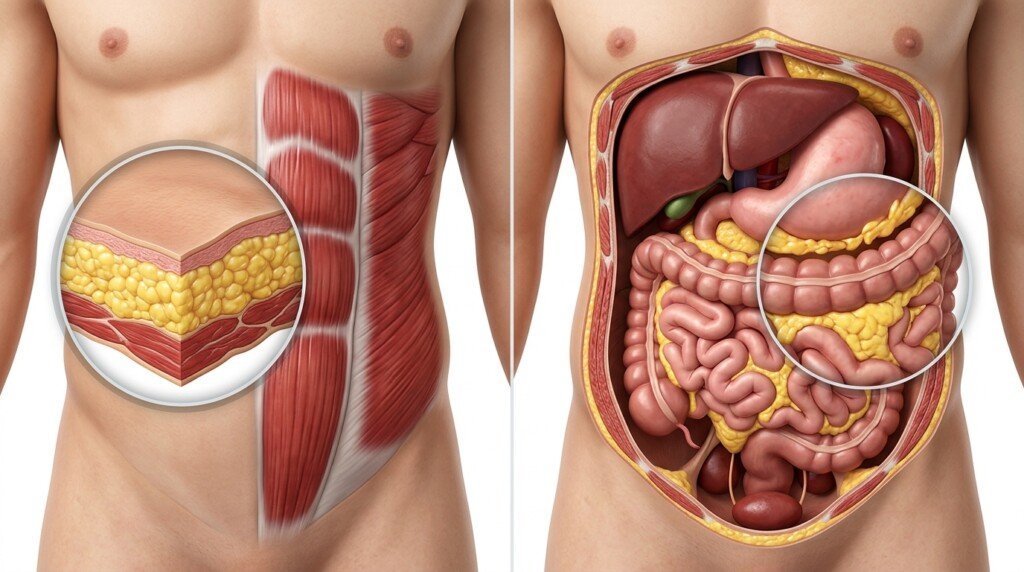
Most Stored Fat Is Subcutaneous Fat
The majority of body fat is stored beneath the skin.
This layer is called subcutaneous fat.
It commonly accumulates around:
- Abdomen
- Hips
- Thighs
- Arms
- Buttocks
Moderate amounts of subcutaneous fat are completely normal and perform several important protective functions.
Some Fat Surrounds Internal Organs
A smaller proportion of body fat is stored deep inside the abdominal cavity.
This fat is known as visceral fat.
Unlike subcutaneous fat, visceral fat surrounds organs such as the liver, pancreas, and intestines.
Higher levels of visceral fat are more strongly associated with metabolic health concerns.
Fat Distribution Differs Between Individuals
Genetics strongly influence where fat is stored.
Some people naturally store more fat around the hips and thighs.
Others tend to accumulate more abdominal fat.
Hormones also contribute to these differences.
Fat Cells Can Expand
When extra energy continues to be stored, existing fat cells gradually enlarge.
Over long periods of sustained calorie surplus, the body may also create additional fat cells.
Both processes contribute to increasing body fat over time.
Stored Fat Remains Available
Importantly, stored fat is never permanently trapped.
When your body needs additional energy, these same fat stores can later be broken down and used as fuel.
That process is explained in the next section.
Can Stored Fat Be Burned Later?
Yes.
One of the most reassuring facts about body fat is that it is stored specifically so your body can use it later. Fat storage is not a permanent state. Instead, your body constantly shifts between storing energy after meals and releasing stored energy when additional fuel is needed.
Understanding this process helps explain why long-term habits matter far more than quick fixes.
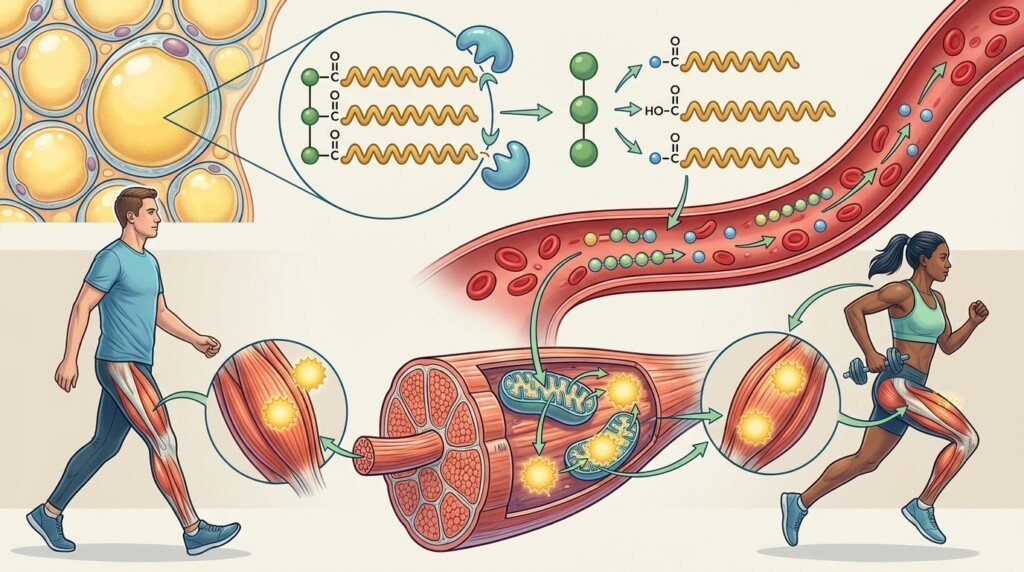
Your Body Uses Stored Fat Between Meals
Several hours after eating, your body gradually begins using stored energy.
As blood glucose levels decline, hormones signal fat cells to release triglycerides.
These triglycerides are broken down into:
- Fatty acids
- Glycerol
These substances enter the bloodstream and are transported to tissues that need energy.
This process happens naturally every day.
Exercise Increases Energy Demand
Physical activity increases your body’s energy requirements.
Depending on the intensity and duration of exercise, your body draws energy from several sources, including stored body fat.
Activities that encourage fat utilization include:
- Walking
- Cycling
- Swimming
- Strength training
- Hiking
- Everyday movement
Exercise does not target fat from one specific area. Instead, your body determines where stored energy comes from based on genetics and physiology.
A Calorie Deficit Encourages Fat Use
When you consistently consume slightly fewer calories than your body uses, your body gradually relies more on stored energy.
This is known as a calorie deficit.
Over time, fat cells release more stored triglycerides than they receive, causing them to shrink gradually.
Healthy fat loss is usually slow because this process occurs over weeks and months rather than days.
Fat Leaves the Body Through Normal Metabolism
Many people wonder where fat actually goes when it is “burned.”
Fat does not simply disappear.
As stored fat is broken down for energy, it is converted into carbon dioxide and water through normal metabolic processes.
Most of the carbon leaves the body through exhaled air, while the remaining water is eliminated through urine, sweat, and other normal body fluids.
Fat Loss Is Different From Weight Loss
Losing body weight does not always mean losing body fat.
Weight can fluctuate because of:
- Water balance
- Glycogen storage
- Food inside the digestive system
- Muscle gain
Improving body composition means gradually reducing excess fat while preserving lean muscle.
Which Habits Increase Fat Storage?
No single meal causes long-term fat gain.
Instead, body fat gradually increases when certain habits consistently create a positive energy balance over time.
Recognizing these habits allows you to make practical changes without following extreme approaches.

Regularly Eating More Calories Than You Need
The most important factor influencing fat storage is long-term calorie surplus.
When calorie intake consistently exceeds calorie expenditure, excess energy is stored inside fat cells.
Small surpluses repeated every day can gradually increase body fat over months and years.
Spending Most of the Day Sitting
A sedentary lifestyle reduces total daily energy expenditure.
Even people who exercise regularly may benefit from increasing everyday movement by:
- Walking more
- Standing periodically
- Taking stairs
- Performing household activities
Daily movement contributes significantly to overall energy balance.
Poor Sleep Habits
Sleep influences appetite regulation, energy levels, and food choices.
Chronic sleep deprivation may lead to:
- Increased hunger
- Reduced motivation to exercise
- Greater snacking
- Lower physical activity
Healthy sleep supports healthier body composition over time.
Chronic Stress
Stress itself does not automatically create body fat.
However, prolonged stress often influences eating behaviors, physical activity, and sleep quality.
Managing stress helps support healthier long-term lifestyle habits.
Frequently Choosing Highly Processed Foods
Highly processed foods often provide large amounts of calories while producing less fullness than minimally processed foods.
Building meals around nutritious whole foods may make calorie balance easier to maintain.
Ignoring Portion Sizes
Even nutritious foods contribute calories.
Frequently eating portions much larger than your body’s energy needs can gradually increase fat storage.
Learning portion awareness supports long-term weight management without eliminating favorite foods.
Many practical strategies for building sustainable routines are discussed throughout Weight Loss Habits, where everyday behaviors that influence body composition are explored in greater detail.
How Can You Reduce Fat Storage Naturally?
Reducing fat storage is not about stopping your body from storing fat completely.
Instead, the goal is maintaining healthy energy balance so that stored fat gradually decreases over time while preserving lean muscle.
Maintain Balanced Energy Intake
The most effective long-term strategy is keeping calorie intake aligned with your body’s energy needs.
Moderate changes that can be maintained consistently are generally more successful than highly restrictive diets.
Prioritize Regular Physical Activity
Exercise increases energy expenditure while supporting overall health.
A balanced routine may include:
- Walking
- Strength training
- Cycling
- Swimming
- Recreational sports
Consistency matters more than choosing one specific activity.
Preserve Lean Muscle
Strength training helps maintain muscle during periods of fat loss.
Preserving lean muscle supports:
- Healthy metabolism
- Physical function
- Mobility
- Long-term body composition
Regular resistance exercise becomes increasingly important with age.
Build Balanced Meals
Meals that include:
- Lean protein
- Vegetables
- Fruits
- Whole grains
- Healthy fats
help support fullness while providing essential nutrients.
Balanced eating patterns are generally easier to maintain over the long term than highly restrictive approaches.
Improve Sleep Quality
Quality sleep supports:
- Recovery
- Appetite regulation
- Physical activity
- Healthy decision-making
Better sleep strengthens nearly every healthy lifestyle habit.
Manage Stress Consistently
Daily stress management supports healthier routines.
Helpful strategies include:
- Walking outdoors
- Deep breathing
- Mindfulness
- Time with family
- Relaxing hobbies
Reducing stress makes it easier to maintain consistent healthy habits.
Focus on Long-Term Lifestyle Changes
Fat storage develops gradually.
Reducing excess body fat also takes time.
Rather than searching for rapid solutions, build routines that you can realistically maintain for years.
These habits also support better Metabolic Health, which plays an important role in long-term body composition and overall well-being.

Frequently Asked Questions
1. How does the body store fat?
The body stores excess calories as triglycerides inside fat cells called adipocytes. This process allows energy to be saved for future use when food intake is lower or energy needs increase.
2. Why does the body store extra calories as fat?
Fat storage is a normal survival mechanism. When calorie intake exceeds immediate energy needs, the body stores the surplus as an efficient long-term energy reserve.
3. Can stored body fat be burned later?
Yes. During periods of increased energy demand or a sustained calorie deficit, stored triglycerides are broken down into fatty acids and glycerol, which are used to produce energy.
4. Which hormones influence fat storage?
Several hormones help regulate fat storage, including insulin, leptin, ghrelin, and cortisol. These hormones work together to maintain energy balance rather than acting independently.
5. What habits increase fat storage?
Consistently consuming more calories than your body uses, low physical activity, poor sleep, chronic stress, large portion sizes, and frequent intake of highly processed foods can all contribute to increased fat storage over time.
Final Thoughts
Understanding How the Body Stores Fat reveals that fat storage is not a flaw in human biology but one of the body’s most important survival mechanisms. Every day, your body carefully decides whether to use incoming energy immediately or save it for later by storing it as triglycerides inside fat cells. This process is regulated by energy balance, hormones, and metabolism, allowing you to maintain normal body function even when food is not immediately available.
The same system that once protected humans during periods of food scarcity now operates in an environment where food is readily accessible. When calorie intake consistently exceeds energy needs, fat cells gradually store more energy. The encouraging news is that this process is reversible. As energy demands increase through physical activity and balanced nutrition, stored fat can be mobilized and used as fuel, allowing fat cells to shrink over time.
Perhaps the most valuable lesson is that body composition changes are driven by long-term habits rather than single meals or temporary efforts. Regular movement, balanced eating, quality sleep, stress management, and consistent healthy routines all influence how your body stores and uses energy. By understanding the science behind fat storage, you can make informed decisions that support healthier body composition, better metabolic health, and sustainable long-term wellness.
Disclaimer:
This post may contain affiliate links. If you purchase through them, we may earn a small commission at no extra cost to you. Also, this content is for informational purposes only and does not substitute professional medical advice.
Ready to Start Your Journey?
Use our free 7-in-1 Weight Loss Toolkit to calculate your numbers and build your plan in minutes.
Open Free Tools →