What Is Visceral Fat? Causes, Health Risks, and How to Reduce It Naturally
Most people think all belly fat is the same. If your waistline grows, it’s easy to assume it’s simply excess fat sitting under the skin. But not all fat behaves the same way. Some fat is relatively harmless, while another type can quietly increase your risk of serious health conditions even if you don’t appear overweight.
That hidden fat is called visceral fat.
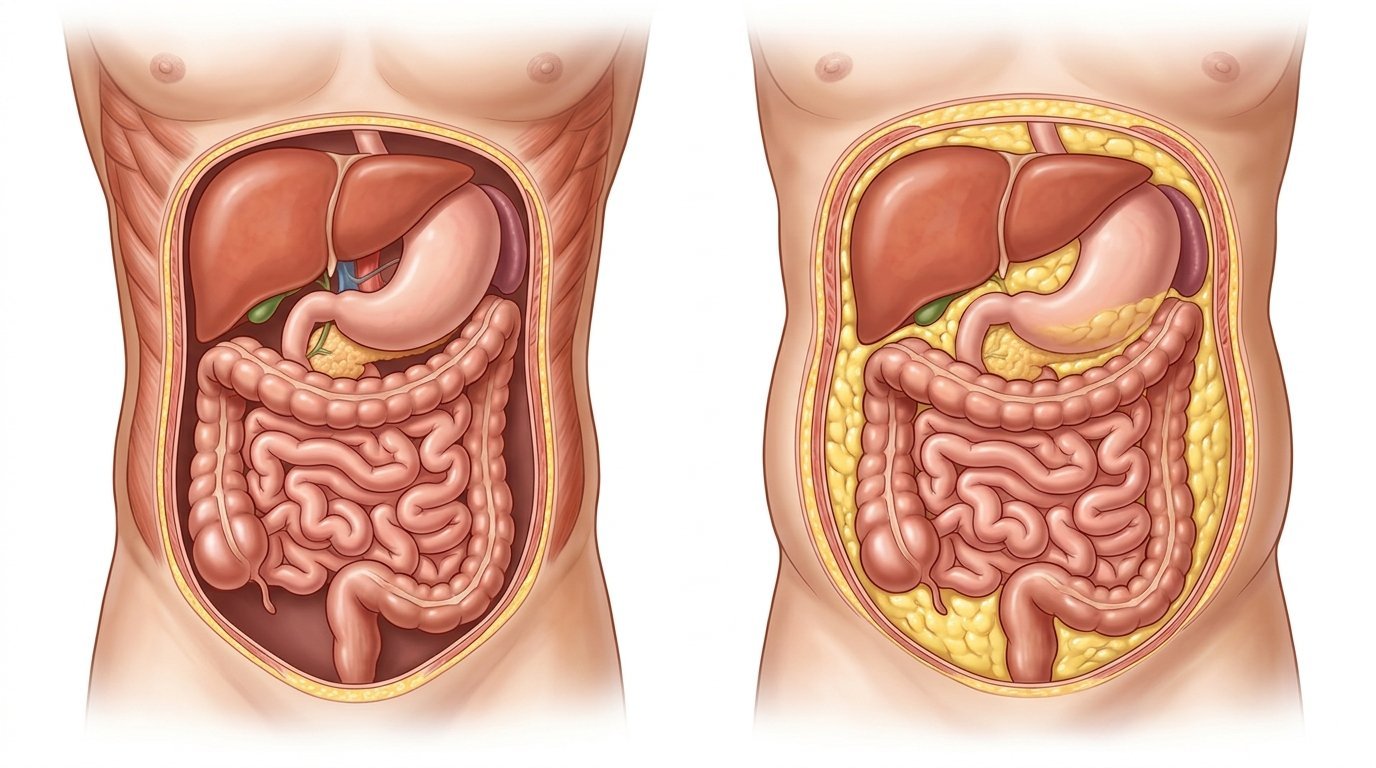
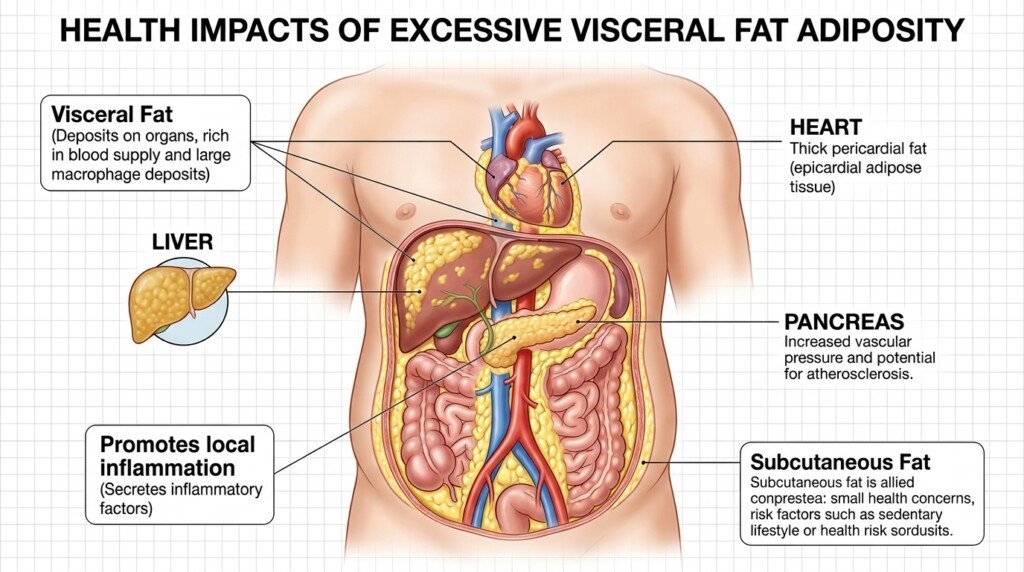
Unlike the soft fat you can pinch around your stomach, visceral fat surrounds vital organs deep inside your abdomen. Small amounts are necessary because they help protect internal organs. However, when visceral fat builds up beyond healthy levels, it becomes one of the strongest indicators of poor metabolic health and raises the risk of heart disease, type 2 diabetes, fatty liver disease, and other chronic conditions.
The good news is that visceral fat is often more responsive to healthy lifestyle changes than many people realize. Improving your eating habits, becoming more active, sleeping well, and managing stress can gradually reduce this dangerous belly fat and improve your overall health.
In this guide, you’ll learn what visceral fat is, why it matters, what causes it to accumulate, how to tell if you have too much, and the most effective ways to reduce it naturally.

What Exactly Is Visceral Fat?
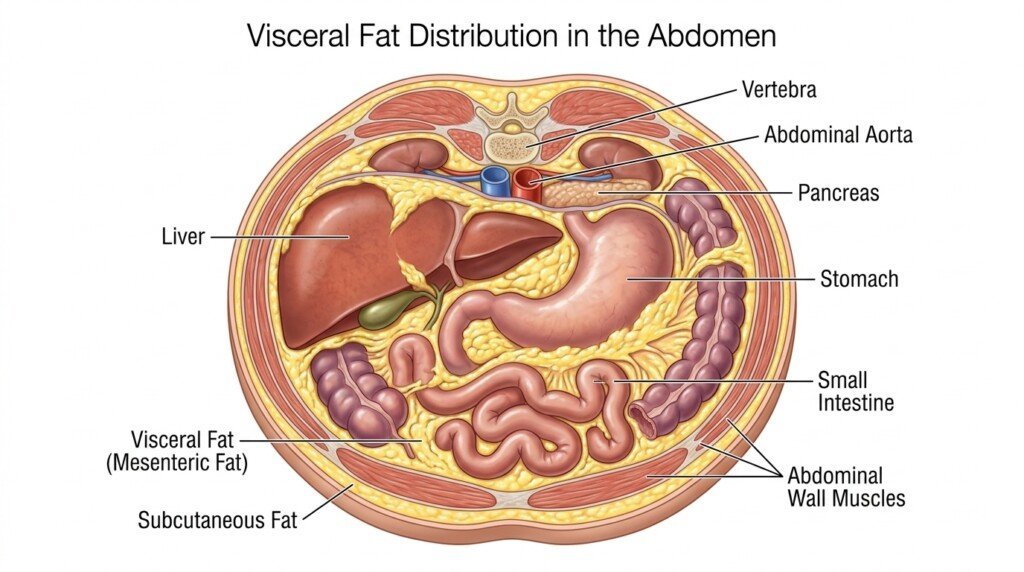
Visceral fat is a type of body fat stored deep inside the abdominal cavity. Instead of sitting just beneath your skin, it wraps around important organs such as your liver, stomach, intestines, and pancreas.
Because it’s located internally, visceral fat is often called internal belly fat or abdominal fat.
Every healthy person carries some visceral fat. It cushions organs and provides energy when needed. Problems begin when too much accumulates.
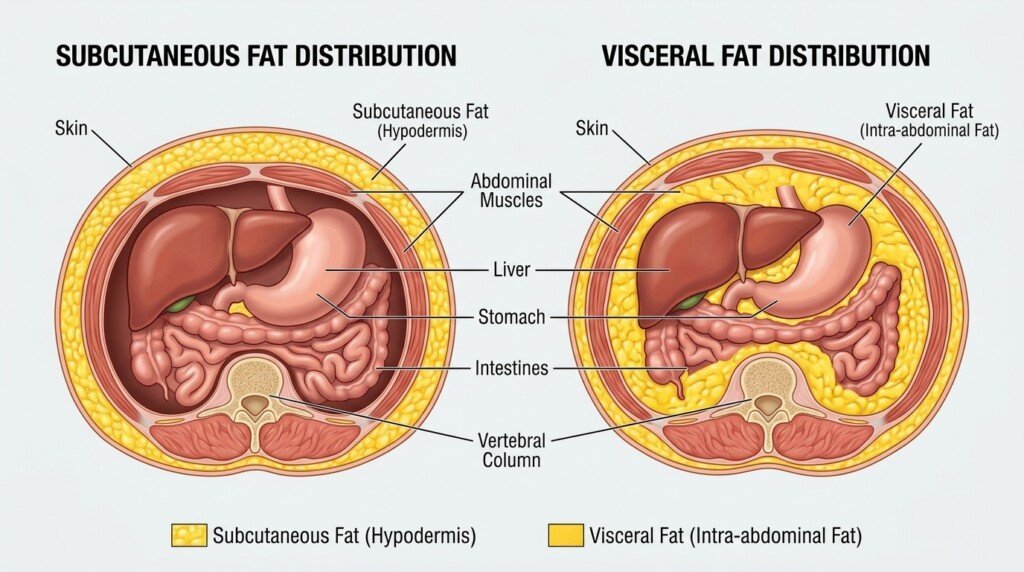
Unlike subcutaneous fat the softer layer located just beneath the skin visceral fat is biologically active. It releases hormones, inflammatory substances, and chemical messengers that influence many processes throughout your body.
This means visceral fat doesn’t simply take up space. It actively affects how your body regulates blood sugar, stores energy, controls inflammation, and maintains cardiovascular health.
Visceral Fat vs. Subcutaneous Fat
Understanding the difference helps explain why doctors pay so much attention to waist size.
Subcutaneous fat
- Lies directly under the skin
- Can be pinched with your fingers
- Provides insulation and cushioning
- Is generally less harmful
Visceral fat
- Surrounds internal organs
- Cannot be pinched
- Produces inflammatory chemicals
- Is linked with numerous chronic diseases
Someone can have relatively little subcutaneous fat while still carrying excessive visceral fat. This is one reason why body weight alone doesn’t always reflect health.
Why Is Visceral Fat Considered More Dangerous?
Many health experts consider visceral fat one of the most concerning forms of excess body fat because of how it interacts with the body’s organs.
Rather than remaining inactive, visceral fat continuously communicates with other organs through hormones and inflammatory compounds.
Over time, excessive visceral fat may contribute to:
- Chronic inflammation
- Insulin resistance
- Elevated blood pressure
- Increased cholesterol abnormalities
- Fatty liver disease
- Cardiovascular disease
- Metabolic syndrome
These effects develop gradually, often without obvious symptoms.
A person may feel perfectly healthy while visceral fat slowly increases around internal organs for years.
This silent progression is why healthcare providers frequently measure waist circumference alongside body weight.
Why Does Fat Around Your Organs Cause So Many Problems?
The location of visceral fat makes a significant difference.
Because it surrounds organs and sits close to major blood vessels, substances released by visceral fat can travel directly to the liver through the portal vein.
This influences how the liver manages:
- Blood sugar
- Cholesterol production
- Fat metabolism
- Inflammation
As visceral fat increases, these normal processes become less efficient.
Eventually, this may contribute to a cycle where additional fat storage becomes easier while fat loss becomes more challenging.
This doesn’t mean visceral fat makes weight loss impossible it simply highlights why maintaining metabolic health is so important.
What Causes Visceral Fat to Build Up?
There isn’t one single cause of visceral fat. Instead, it usually develops through a combination of lifestyle, genetics, aging, and environmental factors.
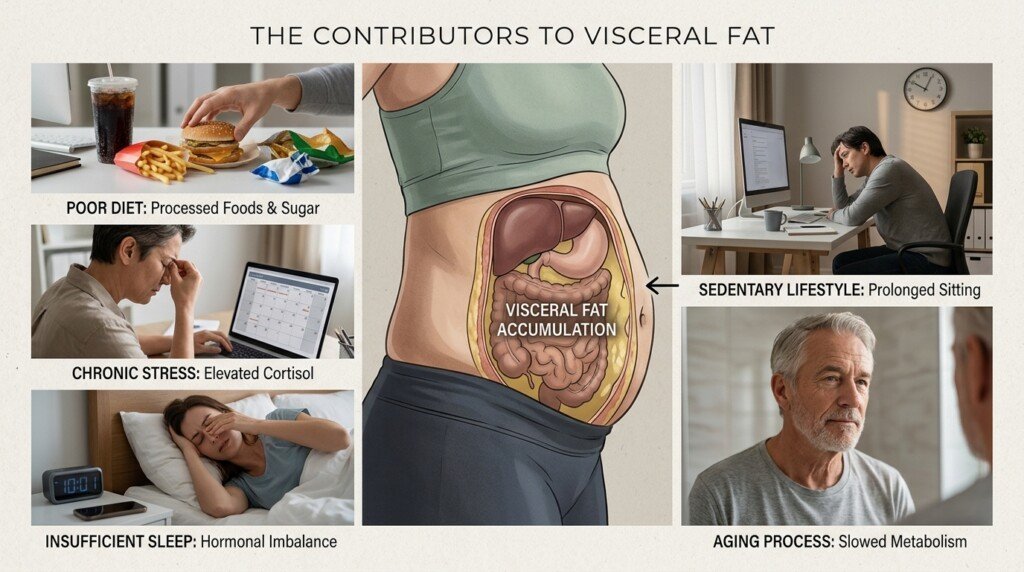
A Diet High in Ultra-Processed Foods
Highly processed foods often contain excessive calories, refined carbohydrates, added sugars, and unhealthy fats.
Regularly consuming these foods without balancing energy intake and expenditure increases overall fat storage, including visceral fat.
Whole foods rich in fiber, lean protein, fruits, vegetables, and healthy fats generally support healthier body composition over time.
Physical Inactivity
Modern lifestyles involve far more sitting than previous generations.
Long hours at desks, commuting, and screen time reduce daily calorie expenditure.
Even individuals who exercise several times each week may accumulate visceral fat if they remain sedentary for most of the day.
Increasing overall daily movement not just scheduled workouts can make a meaningful difference.
Chronic Stress
Long-term stress may encourage behaviors that indirectly promote visceral fat gain.
People under chronic stress often experience:
- Emotional eating
- Reduced physical activity
- Poor sleep
- Increased cravings for highly processed foods
Stress management doesn’t eliminate visceral fat overnight, but it supports healthier lifestyle choices that reduce long-term risk.
If stress is a significant challenge, our guide on Stress and Weight Loss explores practical strategies that complement healthy fat-loss habits.
Poor Sleep
Sleep plays a surprisingly important role in body composition.
Consistently sleeping too little can affect appetite regulation, food choices, recovery, and energy levels.
Many people notice they’re more likely to snack, overeat, or skip exercise after poor-quality sleep.
Over months or years, these behaviors may contribute to gradual visceral fat accumulation.
Aging
As people get older, body composition naturally changes.
Muscle mass tends to decrease while body fat often increases unless regular resistance training and balanced nutrition are maintained.
Many adults notice fat shifting toward the abdominal area with age.
This doesn’t mean visceral fat is inevitable it simply means healthy habits become increasingly important over time.
For adults navigating age-related changes, our article on Weight Loss After 40 explains why body composition changes and what lifestyle adjustments can help.
Hormonal Changes
Hormones influence where fat is stored throughout the body.
Changes associated with aging, menopause, and other normal life stages may increase the tendency to accumulate abdominal fat.
However, hormones are rarely the sole reason someone develops excess visceral fat.
Lifestyle remains one of the strongest modifiable factors.
Excess Body Weight
Although not everyone with obesity has excessive visceral fat, carrying excess body weight increases the likelihood of storing more fat around internal organs.
At the same time, some individuals with a normal body weight can still have high levels of visceral fat a pattern sometimes called “thin outside, fat inside.”
This is one reason healthcare professionals evaluate more than the number on the scale.
How Can You Tell If You Have Visceral Fat?
Unlike subcutaneous fat, visceral fat cannot be seen directly.
Many people assume a flat stomach means low visceral fat, while a larger waist automatically means dangerous fat levels.
Reality is more complex.
Some common signs that may suggest increased visceral fat include:
- A growing waistline
- Increased waist circumference despite stable weight
- Difficulty fitting into clothing around the abdomen
- Elevated blood pressure
- High cholesterol
- Elevated blood sugar
- Fatty liver identified during routine testing
These signs don’t confirm visceral fat on their own, but they often prompt further evaluation.
It’s also important to remember that visceral fat itself rarely causes pain or obvious physical symptoms.
Instead, it quietly affects long-term health.
In the next section, we’ll look at how you can estimate visceral fat at home, the measurements doctors use, and the most effective natural strategies including nutrition and exercise to reduce it safely and sustainably.

How Can You Measure Visceral Fat at Home?
You can’t see visceral fat directly without medical imaging, but that doesn’t mean you’re completely in the dark. While CT scans and MRI scans are considered the most accurate ways to measure visceral fat, they’re expensive and usually reserved for medical reasons rather than routine screening.
Fortunately, several simple methods can help you estimate whether you may have excess visceral fat.
Measure Your Waist Circumference
Your waist circumference is one of the easiest and most useful indicators of abdominal fat.
To measure it correctly:
- Stand upright and relax your stomach.
- Place a flexible measuring tape around your waist, just above your hip bones.
- Exhale normally before taking the measurement.
- Avoid pulling the tape too tightly.
Although waist circumference alone cannot distinguish visceral fat from subcutaneous fat, a larger waist is strongly associated with increased visceral fat levels and a higher risk of metabolic diseases.
Pay Attention to Your Waist-to-Height Ratio
Some healthcare professionals also recommend comparing your waist measurement with your height.
A commonly used guideline is to keep your waist circumference to less than half your height. While this isn’t a diagnosis, it can provide a practical way to monitor changes over time.
Consider Body Composition Measurements
Smart scales, handheld body composition analyzers, and professional body composition assessments can estimate body fat percentage.
These devices don’t directly measure visceral fat, but they can help you track overall changes in body composition alongside your waist measurement.
When Is Medical Testing Necessary?
If you have a large waist circumference along with high blood pressure, abnormal cholesterol, elevated blood sugar, or a family history of metabolic disease, your healthcare provider may recommend further evaluation.
Imaging tests aren’t usually needed for healthy individuals trying to lose weight, but they may be appropriate when investigating certain medical conditions.
Can You Reduce Visceral Fat Naturally?
Yes and that’s one of the encouraging things about visceral fat.
Research consistently shows that visceral fat often responds well to healthy lifestyle changes. While everyone loses fat differently, internal belly fat tends to decrease as overall health improves.
There isn’t a single food, workout, or shortcut that specifically targets visceral fat. Instead, lasting results come from combining several healthy habits.

Create a Sustainable Calorie Deficit
To lose body fat, your body needs to use more energy than it consumes over time.
That doesn’t mean starving yourself or following an extreme diet.
Instead, focus on:
- Eating nutrient-dense foods
- Controlling portion sizes
- Limiting excess calories from highly processed foods
- Choosing meals that keep you satisfied
A moderate calorie deficit is generally easier to maintain than aggressive dieting.
If you’re looking for a long-term approach, our guide to Sustainable Weight Loss explains how to build healthy habits that support lasting fat loss.
Prioritize Whole Foods
Whole foods naturally provide more nutrients and fiber while often being less calorie-dense than ultra-processed foods.
Build most meals around:
- Vegetables
- Fruits
- Whole grains
- Beans and legumes
- Lean protein
- Fish
- Eggs
- Nuts and seeds
- Healthy fats like olive oil and avocado
These foods support overall metabolic health while making it easier to maintain a healthy body weight.
Move More Throughout the Day
Exercise is important, but daily movement matters just as much.
Simple habits such as:
- Walking after meals
- Taking the stairs
- Standing regularly during work
- Parking farther away
- Gardening
- Household chores
all contribute to increased daily energy expenditure.
Small actions performed consistently often have a greater long-term impact than occasional intense workouts.
Sleep Consistently
Adults generally benefit from getting seven to nine hours of quality sleep each night.
Good sleep supports:
- Appetite regulation
- Recovery
- Energy levels
- Healthy food choices
- Physical performance
Improving sleep won’t magically remove visceral fat, but it helps create an environment where healthy habits are easier to maintain.
Manage Chronic Stress
Stress doesn’t automatically cause visceral fat, but it can influence behaviors that contribute to weight gain.
Healthy stress-management strategies include:
- Walking outdoors
- Deep breathing exercises
- Meditation
- Spending time with friends and family
- Journaling
- Regular physical activity
- Limiting excessive screen time
Reducing chronic stress supports both physical and mental well-being.
If stress frequently affects your eating habits, you may also find our article on Stress and Weight Loss helpful.
Which Foods Help Reduce Visceral Fat?
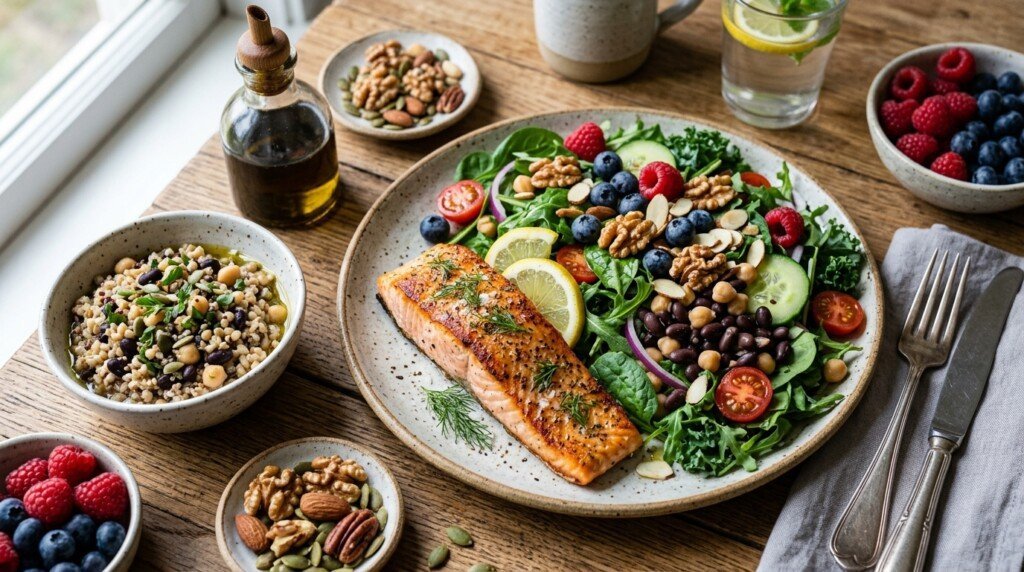
No single food can melt away visceral fat. However, dietary patterns rich in minimally processed foods consistently support healthier body composition.
High-Fiber Foods
Fiber slows digestion, supports fullness, and may help reduce overall calorie intake.
Excellent sources include:
- Oats
- Lentils
- Chickpeas
- Apples
- Pears
- Berries
- Broccoli
- Brussels sprouts
- Chia seeds
Fiber also supports digestive health, making it a valuable part of a balanced eating pattern.
For more information, explore our guide on Gut Health and Weight Loss.
Lean Protein
Protein helps preserve muscle while losing weight and promotes fullness after meals.
Healthy options include:
- Chicken
- Turkey
- Fish
- Eggs
- Greek yogurt
- Cottage cheese
- Tofu
- Tempeh
- Beans
Including protein at each meal may make it easier to maintain a calorie deficit.
Healthy Fats
Despite their higher calorie content, healthy fats can improve meal satisfaction.
Choose foods such as:
- Olive oil
- Avocados
- Walnuts
- Almonds
- Pistachios
- Flaxseeds
The key is moderation, since healthy fats are still energy-dense.
Whole Grains
Replacing refined grains with whole grains increases fiber intake and often improves meal quality.
Examples include:
- Brown rice
- Oats
- Quinoa
- Barley
- Whole wheat bread
Plenty of Vegetables
Vegetables provide volume, vitamins, minerals, and fiber while remaining relatively low in calories.
Aim to fill roughly half your plate with vegetables whenever possible.
What Foods Should You Limit?
Rather than labeling foods as “good” or “bad,” it’s more helpful to reduce foods that are easy to overeat.
These include:
- Sugary drinks
- Candy
- Pastries
- Deep-fried foods
- Fast food
- Highly processed snacks
- Excess alcohol
Making gradual substitutions is usually more sustainable than eliminating entire food groups overnight.
Which Exercises Are Best for Visceral Fat?
There isn’t one “perfect” workout for visceral fat. The best exercise is the one you can perform consistently.
Combining different forms of exercise usually delivers the greatest benefits.

Brisk Walking
Walking is accessible, low-impact, and suitable for most fitness levels.
Even a daily 30- to 45-minute brisk walk can contribute to improved body composition over time.
If you’re deciding between different cardio options, our comparison of Walking vs Running for Weight Loss can help you choose what fits your lifestyle.
Strength Training
Building muscle increases your resting energy expenditure and helps preserve lean tissue during weight loss.
Aim to train all major muscle groups at least two times each week using:
- Free weights
- Resistance bands
- Machines
- Bodyweight exercises
Our guide on Strength Training for Fat Loss explains how resistance training supports healthy body composition.
Cardio Exercise
Activities such as:
- Cycling
- Swimming
- Jogging
- Dancing
- Hiking
all improve cardiovascular fitness while helping increase calorie expenditure.
The ideal plan often combines both aerobic exercise and resistance training rather than choosing one over the other.
How Long Does It Take to Lose Visceral Fat?
There isn’t a universal timeline because every person’s starting point, lifestyle, age, and overall health are different.
Some people notice their waist circumference gradually decreasing within several weeks of consistently improving their eating habits and activity levels.
Others may require several months before significant changes become noticeable.
Rather than focusing only on body weight, track progress using:
- Waist circumference
- Clothing fit
- Energy levels
- Fitness improvements
- Body composition measurements
Slow, steady progress is generally more sustainable than rapid weight loss.
When Should You Talk to a Doctor About Visceral Fat?
Lifestyle changes are appropriate for many people, but some situations warrant professional medical advice.
Consider speaking with your healthcare provider if you:
- Have a rapidly increasing waist circumference
- Develop high blood pressure or abnormal cholesterol
- Have elevated blood sugar levels
- Experience unexplained weight changes
- Have a strong family history of metabolic disease
- Need guidance on developing a safe weight-loss plan
Early intervention can help identify risk factors before they progress into more serious health conditions.
Frequently Asked Questions
1. Is visceral fat the same as belly fat?
Not exactly. Belly fat includes both subcutaneous fat beneath the skin and visceral fat surrounding your internal organs.
2. Can you feel visceral fat?
No. Visceral fat lies deep inside the abdomen, so it can’t be pinched or felt directly.
3. Is visceral fat harder to lose than other fat?
Not necessarily. Many studies suggest visceral fat responds well to healthy lifestyle changes, particularly when combined with consistent exercise and balanced nutrition.
4. Can skinny people have visceral fat?
Yes. Someone can appear slim while still carrying unhealthy amounts of visceral fat around internal organs.
5. What’s the fastest way to reduce visceral fat?
There is no safe shortcut. The most effective strategy combines a balanced diet, regular physical activity, adequate sleep, stress management, and long-term consistency.
Final Thoughts
Visceral fat is more than just extra weight around your waist it’s a type of internal body fat that can significantly influence your long-term health. Because it surrounds vital organs and actively affects processes such as inflammation, blood sugar regulation, and heart health, keeping visceral fat within a healthy range should be a priority for anyone interested in improving overall well-being.
Fortunately, reducing visceral fat doesn’t require extreme diets or complicated fitness programs. Small, consistent improvements in your eating habits, daily activity, sleep, and stress management can make a meaningful difference over time.
Remember that progress isn’t measured only by the number on the scale. A smaller waist circumference, improved energy, healthier blood test results, and better overall fitness are all signs that your body is moving in the right direction.
The goal isn’t simply to lose weight it’s to build healthier habits that support a stronger, more resilient body for years to come.
Disclaimer:
This post may contain affiliate links. If you purchase through them, we may earn a small commission at no extra cost to you. Also, this content is for informational purposes only and does not substitute professional medical advice.
Ready to Start Your Journey?
Use our free 7-in-1 Weight Loss Toolkit to calculate your numbers and build your plan in minutes.
Open Free Tools →