


Which Body Part Loses Fat First During Weight Loss?
Which body part loses fat first? It’s one of the first questions people ask after beginning a weight-loss journey.
You’ve probably asked it yourself.
You step on the scale after several weeks of healthier eating and regular exercise. The numbers are moving in the right direction, but when you look in the mirror, the area you most wanted to change seems exactly the same.
Your stomach still looks full.
Your thighs don’t seem any smaller.
Your arms look no different.
It’s frustrating, especially when you’re putting in the effort.
Then something unexpected happens.
A shirt suddenly feels looser around your shoulders.
Your face looks slimmer in photos.
A watch fits differently around your wrist.
Weight is coming off but not where you expected.
At this point, many people start wondering whether their body is doing something wrong.
The truth is that it’s doing exactly what it’s designed to do.
Fat loss doesn’t happen according to our preferences. It follows biological patterns influenced by genetics, hormones, age, sex, and individual body composition. That’s why two people can follow nearly identical diets and exercise routines yet notice fat disappearing from completely different areas.
Understanding how this process works can help set realistic expectations and prevent the discouragement that causes many people to quit too soon.

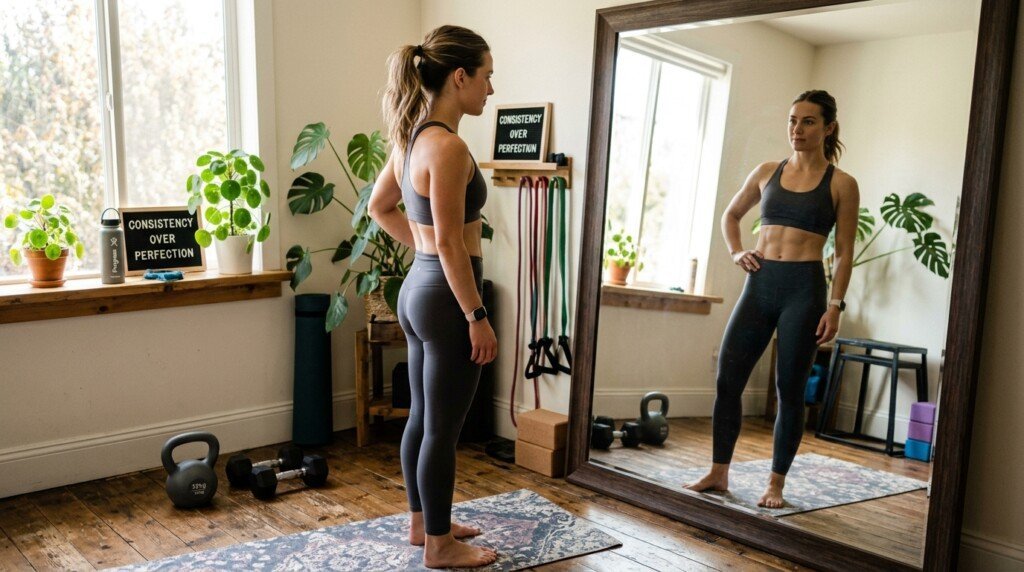
Why Does Fat Loss Never Seem to Happen Where We Want It Most?
Imagine pouring water out of a swimming pool.
You don’t get to choose which corner empties first.
The water level falls everywhere, even if some areas appear to change faster than others.
Body fat behaves in a surprisingly similar way.
Most people carry fat in multiple locations at the same time. Some of those fat stores respond quickly when you’re in a calorie deficit, while others are much more resistant.
Unfortunately, the most stubborn areas are often the ones people care about most.
For one person, it’s the lower abdomen.
For another, it’s the hips.
Someone else may struggle with fat around the thighs or upper arms.
These differences aren’t caused by poor exercise choices.
They’re largely determined by biology.
Accepting that reality doesn’t make weight loss less effective.
It simply helps explain why patience is often required.
How Fat Loss Actually Works
One of the biggest misconceptions about weight loss is that exercising a specific body part causes fat to disappear from that area.
It sounds logical.
If you perform hundreds of abdominal exercises, your stomach should become smaller.
If you do arm workouts every day, your arms should become leaner.
That’s not how the body operates.
Fat is stored throughout the body as an energy reserve.
When you consistently consume fewer calories than your body uses, stored fat begins supplying part of that energy.
The important word is stored.
Your body doesn’t remove fat only from the muscles you’re exercising.
Instead, it draws energy from fat stores across the body according to complex biological processes that scientists are still studying.
This is why walking, swimming, cycling, strength training, and countless other forms of exercise can all contribute to overall fat loss.
The activity matters.
But it doesn’t determine exactly where fat disappears first.
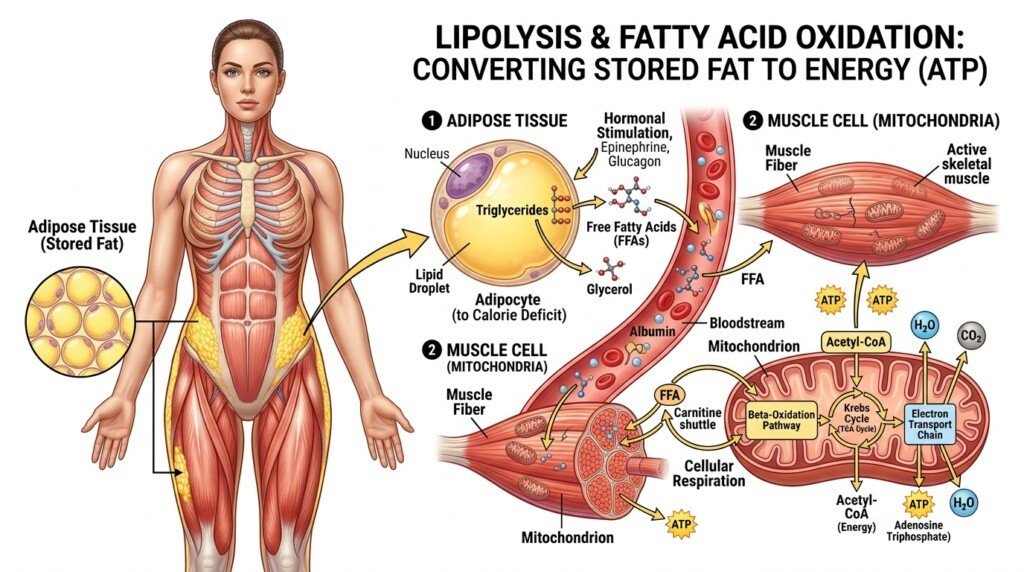
The Difference Between Weight Loss and Fat Loss
Another source of confusion is the difference between losing weight and losing fat.
The number on the scale reflects everything that contributes to body weight, including:
- Body fat
- Muscle
- Water
- Food currently being digested
- Glycogen stores
Someone can lose several pounds during the first week of a new eating plan, yet much of that change may come from water rather than body fat.
True fat loss tends to happen more gradually.
That’s one reason progress photos and clothing fit often provide a better picture than the scale alone.
Can You Choose Where Fat Comes Off First?
This question has probably sold millions of fitness products over the years.
Unfortunately, the answer remains the same.
Not really.
Many products promise targeted fat reduction.
Ab machines claim to melt belly fat.
Arm workouts promise toned arms.
Thigh exercises promise slimmer legs.
While those exercises strengthen muscles, they don’t selectively remove fat covering those muscles.
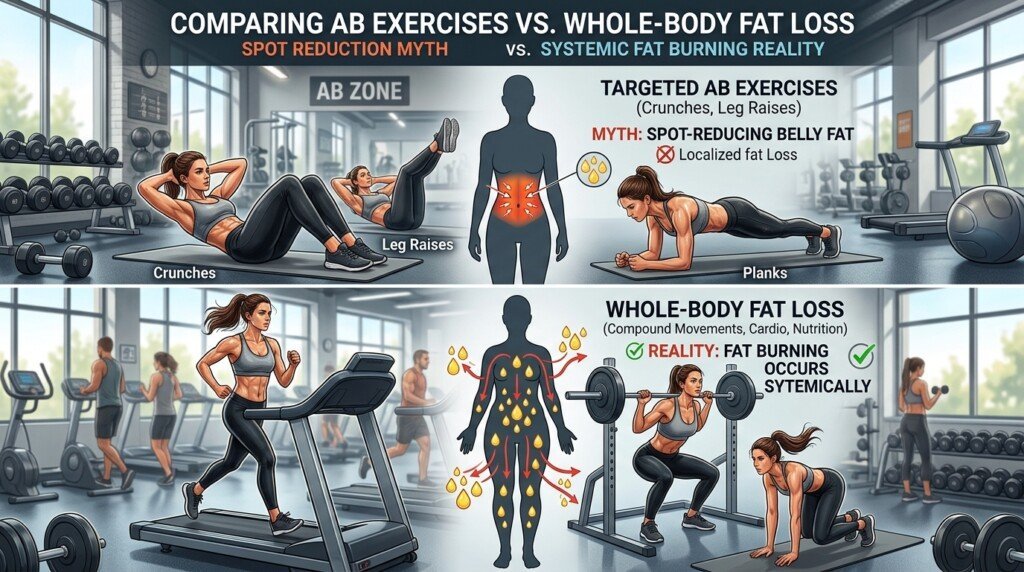
What Science Calls Spot Reduction
The belief that exercising one body part burns fat specifically from that location is known as spot reduction.
Researchers have examined this idea for decades.
The overwhelming conclusion is that while exercise is extremely valuable for health and overall fat loss, it does not allow people to control where fat disappears first.
That doesn’t mean abdominal workouts are useless.
Far from it.
Strong core muscles improve posture, balance, athletic performance, and overall strength.
The visible definition simply appears after enough overall body fat has been lost.
Why This Matters
Understanding this concept prevents unrealistic expectations.
If someone performs hundreds of crunches every day for a month without seeing dramatic belly-fat changes, they may incorrectly assume the program failed.
In reality, fat loss may be occurring elsewhere while abdominal muscles are becoming stronger underneath.
That’s progress even if the mirror doesn’t reveal it immediately.
Why Does the Face Sometimes Look Slimmer Before the Stomach?
Many people notice facial changes surprisingly early during weight loss.
Friends may comment that someone “looks thinner” even before clothing sizes change.
There are several reasons for this.
The face generally contains less stored fat than larger areas like the abdomen, hips, or thighs.
Small reductions therefore become noticeable more quickly.
Water retention can also influence facial appearance.
Changes in diet, sodium intake, hydration, and overall lifestyle may reduce puffiness, making facial features appear more defined.
This early visual progress often motivates people to continue.
Ironically, while they’re celebrating a slimmer face, the body may already be reducing fat from many other areas that simply aren’t as easy to notice.
Which Areas Commonly Lose Fat First?
Although everyone is different, certain patterns appear frequently.
Some individuals notice changes first in the:
- Face
- Neck
- Shoulders
- Upper chest
- Arms
Others experience changes around the waist before seeing noticeable differences elsewhere.
Still others notice improved muscle definition in the legs long before stubborn abdominal fat begins changing.
These differences reflect individual fat distribution.
The important point is this:
There is no universal order.
Anyone claiming that everyone loses fat from exactly the same body part first is oversimplifying a far more complex biological process.
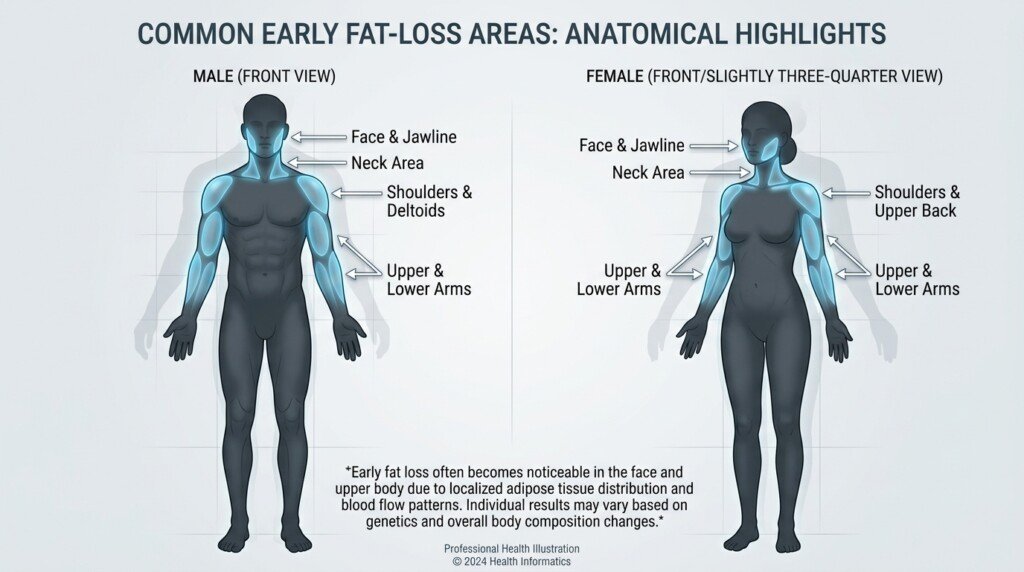
Why Do Two People Lose Fat in Completely Different Places?
If you’ve ever compared your progress with someone else, you’ve probably noticed how unpredictable fat loss can be.
Two people may begin the same workout program.
They may eat similar meals, exercise the same number of days each week, and lose the same amount of body weight.
Yet their results can look completely different.
One person notices a slimmer waist.
Another sees changes in their face first.
Someone else loses fat around their legs while their stomach appears almost unchanged.
This isn’t because one person has found a better exercise routine.
It’s because body fat distribution is highly individual.
Genetics Play a Bigger Role Than Most People Realize
Your genes influence where your body prefers to store fat and where it tends to release it first.
Some families naturally carry more fat around the hips and thighs.
Others store more around the abdomen.
Some people remain lean through their arms while carrying extra fat around the waist.
Others experience the opposite.
Although lifestyle influences overall body fat, genetics often determine where that fat is stored.
That’s why comparing your progress to someone else’s rarely provides useful information.
Age Can Change Fat Distribution
Fat distribution doesn’t remain constant throughout life.
As people get older, hormonal changes, reduced muscle mass, and changes in metabolism often influence where fat is stored.
Many adults notice that maintaining a lean waist becomes more challenging in their forties and fifties than it was in their twenties.
This doesn’t mean fat loss becomes impossible.
It simply means the body changes over time.
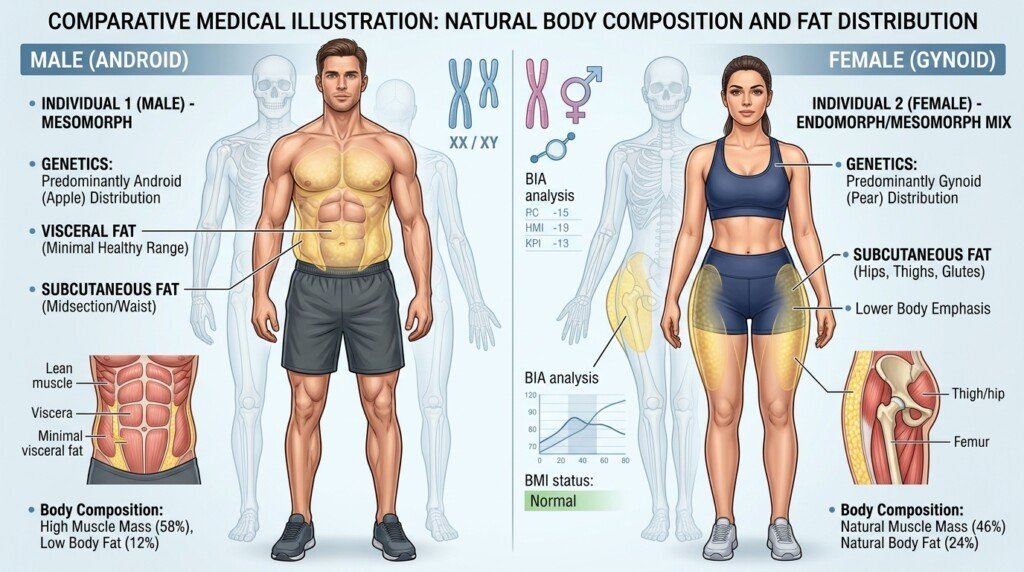
Men and Women Often Lose Fat Differently
Sex hormones influence body composition in significant ways.
Women commonly store more fat around the hips, thighs, and buttocks.
Men often carry a greater proportion of fat around the abdomen.
These patterns are generalizations rather than strict rules, but they explain why weight-loss journeys can look different between men and women.
For readers interested in these biological differences, our guide to weight loss for women vs men explores how hormones and body composition affect results.
What Role Do Hormones Play in Fat Distribution?
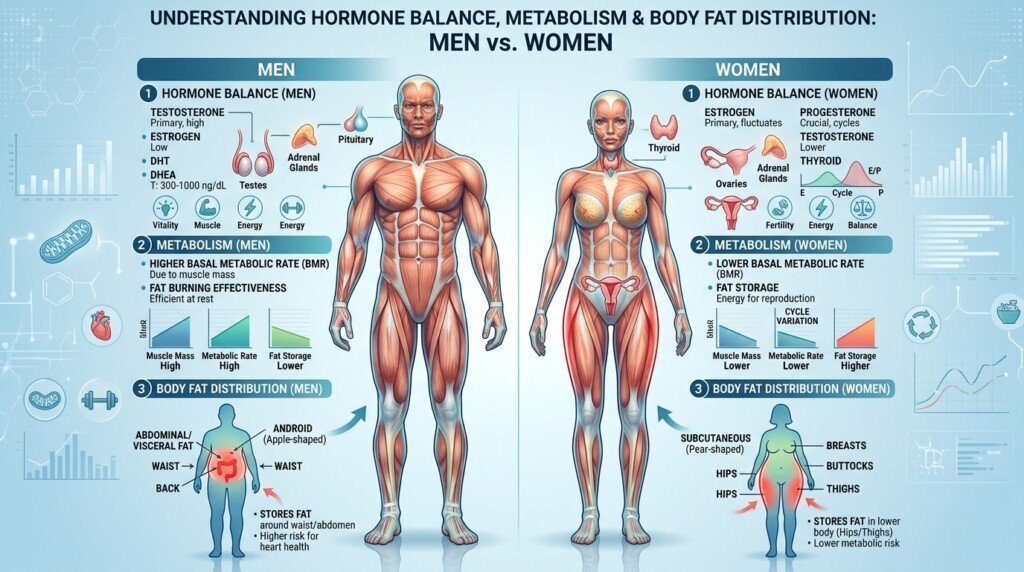
Hormones act as chemical messengers throughout the body.
They influence appetite, metabolism, energy balance, and where fat tends to accumulate.
This doesn’t mean hormones override calorie balance.
However, they help explain why fat distribution varies so much.
Insulin
Insulin helps regulate blood sugar by allowing glucose to enter cells.
When insulin function becomes impaired, body composition may change over time.
This relationship is one reason healthy eating patterns remain important for long-term metabolic health.
Cortisol
Chronic stress may influence eating behaviors and body composition.
High stress levels are often associated with:
- Emotional eating
- Poor sleep
- Reduced physical activity
- Greater difficulty maintaining healthy habits
While cortisol is frequently blamed for belly fat, the reality is more complex than many headlines suggest.
Lifestyle factors usually work together rather than independently.
Estrogen and Testosterone
Sex hormones also influence where fat is stored.
Changes during menopause, aging, and other life stages often alter fat distribution.
Again, these changes vary between individuals.
The important takeaway is that hormones influence the pattern of fat storage not just the amount of fat itself.
What’s the Difference Between Visceral Fat and Subcutaneous Fat?
Not all body fat is the same.
Understanding this distinction helps explain why appearance doesn’t always reflect health.
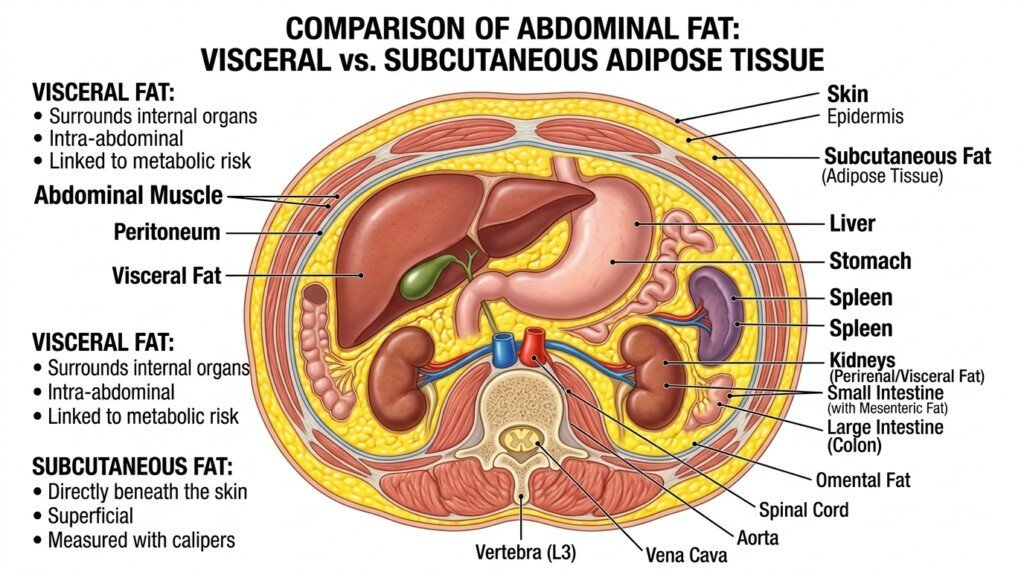
Subcutaneous Fat
Subcutaneous fat sits directly beneath the skin.
It’s the fat you can pinch around areas such as:
- Arms
- Thighs
- Hips
- Abdomen
This is the fat most people notice when looking in the mirror.
Visceral Fat
Visceral fat is different.
It surrounds internal organs within the abdominal cavity.
Unlike subcutaneous fat, it cannot be measured simply by looking in the mirror.
Excess visceral fat has been associated with increased health risks, making it an important focus of long-term weight management.
Interestingly, improvements in metabolic health may occur even before dramatic physical changes become visible.
That’s one reason persistence matters.
Progress isn’t always immediately reflected in appearance.
Why Does Belly Fat Usually Feel Like the Last to Go?
Ask almost anyone trying to lose weight what body part frustrates them most.
The answer is usually the stomach.
Lower abdominal fat often appears stubborn.
Even after noticeable progress elsewhere, many people continue waiting for changes around the waist.
This experience is extremely common.
One reason is that abdominal fat often responds more slowly than fat stored in other locations.
Additionally, people pay far more attention to their stomach than to areas like the shoulders, neck, or calves.
Small improvements therefore become harder to recognize.
This doesn’t mean nothing is happening.
Fat loss is often occurring gradually, even if the mirror seems stubborn.
Readers specifically interested in abdominal fat may find our guide to the best supplement for belly fat helpful for understanding evidence-based strategies that may complement healthy eating and regular physical activity.
Why Doesn’t Spot Reduction Actually Work?
This myth has survived for decades because it sounds logical.
Exercise a body part.
Burn fat from that body part.
Unfortunately, human physiology doesn’t work that way.
When muscles contract during exercise, they use energy.
That energy comes from multiple sources throughout the body rather than exclusively from nearby fat cells.
Doing hundreds of sit-ups strengthens abdominal muscles.
Doing hundreds of squats strengthens the legs.
Neither exercise guarantees that fat covering those muscles will disappear first.
This doesn’t make targeted exercises useless.
Strong muscles improve posture, function, athletic performance, and overall fitness.
Visible muscle definition simply depends on reducing overall body fat.
What’s a Better Way to Measure Progress?
One of the biggest mistakes people make is relying entirely on the bathroom scale.
The scale tells part of the story.
Not the whole story.
Instead, consider tracking several indicators.
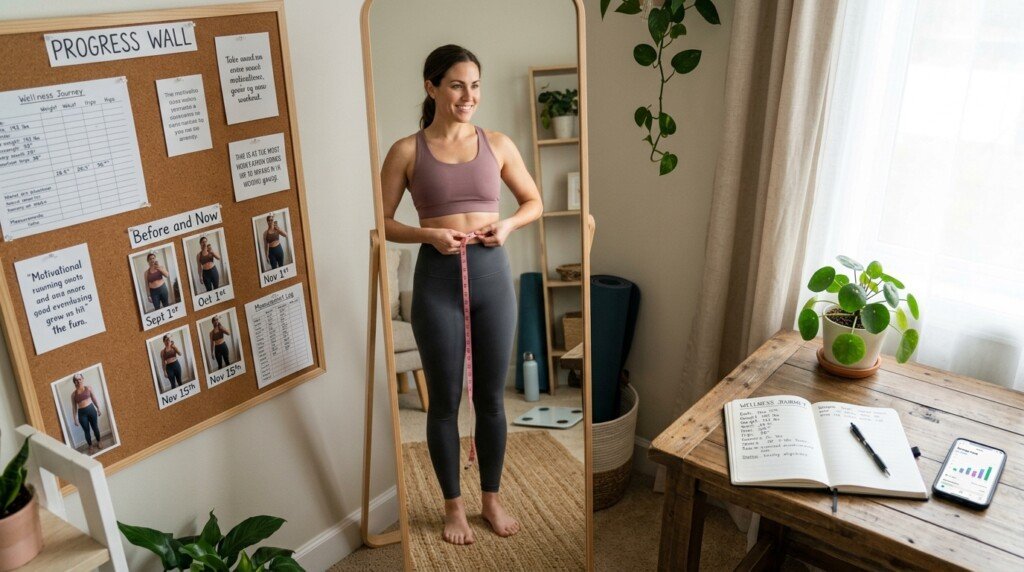
Progress Photos
Photos taken under similar lighting and conditions often reveal changes that are difficult to notice day to day.
Clothing Fit
Many people recognize progress because their jeans fit differently long before dramatic scale changes occur.
Body Measurements
Tracking waist, hips, chest, arms, and thighs provides a more complete picture of body composition.
Energy Levels
Improved stamina and easier movement often appear before major visual changes.
Strength
Becoming stronger during exercise represents meaningful progress regardless of what the scale says.
When multiple indicators improve together, you’re likely moving in the right direction.
The Biggest Mistake People Make During Fat Loss
Perhaps the greatest mistake isn’t choosing the wrong workout.
It’s quitting too early.
Many people expect visible changes in their problem area within a few weeks.
When that doesn’t happen, motivation disappears.
Healthy habits stop.
Progress reverses.
In reality, fat loss is rarely linear.
Some weeks produce dramatic changes.
Other weeks feel completely stagnant.
This is normal.
The individuals who succeed long term are often those who continue following healthy habits even when visible changes seem slow.
That’s why developing sustainable weight loss habits often matters far more than chasing rapid results.
Consistency almost always outperforms perfection.
Frequently Asked Questions
1. Which body part loses fat first?
There is no universal answer. Many people notice changes first in the face, neck, shoulders, or upper body, while others experience different patterns based on genetics and hormones.
2. Can I choose where I lose fat first?
No. Spot reduction is largely considered a myth. Overall fat loss occurs throughout the body rather than from one targeted area.
3. Why is belly fat so difficult to lose?
Belly fat often responds more slowly than fat stored elsewhere. Genetics, hormones, age, and lifestyle all influence this process.
4. Do sit-ups burn belly fat?
Sit-ups strengthen the abdominal muscles but do not specifically remove fat from the stomach.
5. Does walking help reduce body fat?
Yes. Walking contributes to overall calorie expenditure and can support total body fat loss when combined with healthy eating.
6. Why does my face look thinner before my stomach?
The face contains less fat than larger body areas, making relatively small changes easier to notice.
7. How should I track fat-loss progress?
Use multiple methods, including progress photos, body measurements, clothing fit, strength improvements, and energy levels instead of relying only on the scale.
Final Thoughts
If you’re wondering which body part loses fat first, the most honest answer is this:
It depends.
Your body follows its own biological blueprint.
Genetics influence fat storage.
Hormones affect distribution.
Age changes body composition.
Lifestyle determines whether overall fat loss occurs.
What you can’t control is the order in which fat disappears.
What you can control is building habits that consistently reduce body fat over time.
Eventually, even stubborn areas begin to change.
Not because you discovered a secret exercise or miracle solution.
But because you gave your body enough time to do what it naturally does when healthy habits become part of everyday life.
Patience may not be the most exciting weight-loss strategy.
But it’s one of the most effective.
Disclaimer:
This post may contain affiliate links. If you purchase through them, we may earn a small commission at no extra cost to you. Also, this content is for informational purposes only and does not substitute professional medical advice.
Ready to Start Your Journey?
Use our free 7-in-1 Weight Loss Toolkit to calculate your numbers and build your plan in minutes.
Open Free Tools →