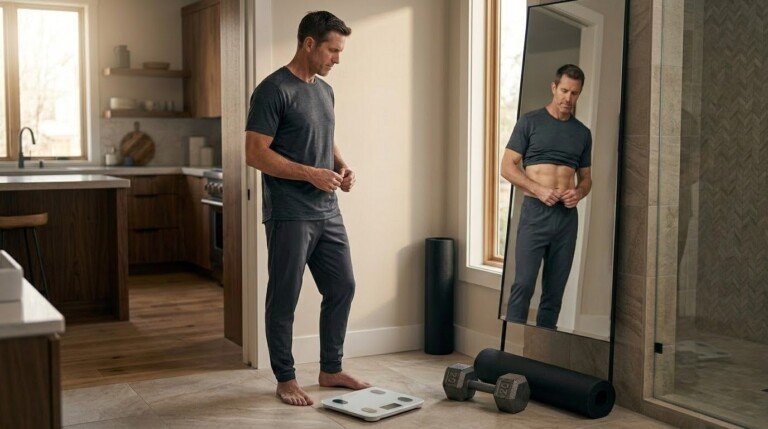
Can You Be Skinny and Still Have Visceral Fat? Understanding TOFI

Skinny Fat Visceral Fat is a concept that surprises many people. Most of us associate dangerous body fat with being overweight, but body weight alone doesn’t always tell the whole story. It is possible to appear slim on the outside while carrying unhealthy amounts of fat deep inside the abdomen. This hidden fat is known as visceral fat, and it can affect long-term health even when the number on the scale looks normal.

Healthcare professionals often use the term TOFI, which stands for Thin Outside, Fat Inside, to describe people who have a normal Body Mass Index (BMI) but still carry excessive visceral fat and relatively low muscle mass. Because this fat surrounds vital organs such as the liver, stomach, pancreas, and intestines, it may increase the risk of metabolic health problems without causing obvious changes in appearance.

One reason TOFI often goes unnoticed is that people who are naturally thin may assume they are automatically healthy. However, body composition matters just as much as body weight. A person with a healthy BMI but high body fat percentage and low muscle mass may have a greater health risk than someone who weighs more but has a healthier distribution of body fat.

The encouraging news is that hidden visceral fat can often be reduced through healthy lifestyle habits. Improving nutrition, building muscle, staying physically active, and monitoring waist circumference can all support better metabolic health.

In this guide, you’ll learn how skinny fat visceral fat develops, what TOFI means, why some thin people carry hidden belly fat, how to recognize the signs, and the lifestyle habits that help improve body composition naturally.


Can Thin People Have Visceral Fat?

Yes.

Many people assume visceral fat only affects individuals who are overweight or obese, but research shows that thin people can also develop excess visceral fat.

Body weight measures how heavy someone is, but it does not show:

  • Where body fat is stored
  • How much muscle they have
  • Their body fat percentage
  • Their metabolic health

Two people with the same weight and BMI can have completely different body compositions.

One person may have:

  • Higher muscle mass
  • Lower body fat
  • Less visceral fat

Another person may have:

  • Lower muscle mass
  • Higher body fat percentage
  • More visceral fat around internal organs

Although they appear similar from the outside, their health risks may be very different.

This is why healthcare professionals increasingly emphasize body composition rather than body weight alone.

If you’re new to this topic, our guide on Visceral Fat explains why internal belly fat affects health differently than other types of body fat.


What Is TOFI (Thin Outside, Fat Inside)?

TOFI stands for Thin Outside, Fat Inside.

It describes people who appear lean but carry unhealthy amounts of visceral fat and often have relatively low muscle mass.

Unlike obesity, TOFI usually cannot be identified simply by looking at someone.

A person with TOFI may:

  • Wear small clothing sizes
  • Have a normal BMI
  • Look slim
  • Still carry excessive fat around internal organs

This hidden fat often develops gradually over many years.

Because it is stored beneath the abdominal muscles, it remains invisible from the outside.

Why Is TOFI Important?

TOFI demonstrates that appearance does not always reflect health.

Someone who appears fit may still have several metabolic risk factors if they have excessive visceral fat.

This is why routine health screenings remain valuable regardless of body weight.

Many people first learn about TOFI after routine blood work or body composition testing reveals unexpected metabolic concerns.


Why Can Normal-Weight People Develop Visceral Fat?

Several factors influence where your body stores fat.

Genetics

Genetics play an important role in fat distribution.

Some individuals naturally store more fat around their abdomen than others, even while maintaining a healthy body weight.

Low Muscle Mass

Muscle tissue supports healthy body composition.

People with relatively little muscle may have a higher body fat percentage despite appearing slim.

This is one reason resistance training is important for overall health.

Physical Inactivity

Someone can maintain a stable body weight while living a largely sedentary lifestyle.

Low activity levels often contribute to poorer body composition over time.

Poor Nutrition

Consistently eating highly processed foods while consuming too little protein, fiber, fruits, and vegetables may gradually contribute to higher body fat percentages.

Aging

As people age, muscle mass naturally declines unless steps are taken to preserve it through regular physical activity and resistance exercise.

This gradual shift may increase body fat percentage even if body weight changes very little.

Lifestyle Habits

Sleep quality, stress, daily movement, and long-term eating habits all influence overall body composition.

Rather than one single cause, TOFI usually develops from a combination of several lifestyle and genetic factors.


How Can You Tell If You Have Hidden Visceral Fat?

Hidden visceral fat can be difficult to recognize because it isn’t always reflected in your appearance.

However, several clues may suggest that further evaluation is worthwhile.

Waist Circumference

A growing waistline is often one of the simplest indicators of increasing abdominal fat.

Even people with a healthy BMI should monitor their waist circumference over time.

Body Composition Testing

Body composition analysis provides much more information than body weight alone.

Depending on the method used, it can estimate:

  • Body fat percentage
  • Muscle mass
  • Fat distribution
  • Visceral fat estimates

Fitness Level

Someone with low cardiovascular fitness and low muscle strength despite appearing thin may benefit from evaluating their overall body composition.

Although fitness alone cannot diagnose visceral fat, it often provides useful context.

Medical Evaluation

Healthcare providers may recommend additional evaluation if routine blood tests reveal metabolic risk factors despite a normal body weight.

If you’re interested in learning practical ways to estimate internal belly fat, our guide on How to Measure Visceral Fat explains several home and clinical methods.


How Can You Reduce Visceral Fat If You’re Already Thin?

Being thin does not mean you should focus on losing as much weight as possible.

For people with a TOFI body type, the goal is usually to improve body composition rather than simply reduce the number on the scale.

This means lowering excess visceral fat while maintaining or increasing lean muscle mass.

Focus on Nutrient-Dense Foods

Building meals around whole, minimally processed foods helps support a healthier body composition.

Aim to include:

  • Lean protein
  • Vegetables
  • Fruits
  • Whole grains
  • Legumes
  • Nuts and seeds
  • Healthy fats

These foods provide essential nutrients while supporting muscle maintenance and overall metabolic health.

Rather than following restrictive diets, focus on creating eating habits you can maintain over the long term.

For practical meal ideas, our guide on High-Protein Foods That Burn Fat explains how protein-rich foods support healthy body composition.

Increase Daily Movement

Even if your weight remains stable, becoming more physically active improves overall health.

Simple activities include:

  • Walking
  • Cycling
  • Swimming
  • Hiking
  • Taking the stairs
  • Gardening

Regular movement supports cardiovascular fitness while complementing strength training.

Prioritize Sleep

Sleep influences recovery, energy, appetite regulation, and long-term health.

Adults generally benefit from seven to nine hours of quality sleep each night.

Consistent sleep also helps support regular physical activity and healthier food choices.

Stay Consistent

Improving body composition takes time.

Unlike crash diets, sustainable lifestyle habits gradually reduce visceral fat while supporting stronger muscles and better overall fitness.

Small improvements repeated every day are far more effective than short periods of extreme effort.


Does Strength Training Help Skinny Fat Individuals?

Yes.

For people with a TOFI body type, strength training is often one of the most valuable lifestyle habits.

Unlike activities that focus primarily on burning calories, resistance training helps preserve and build lean muscle mass.

Increasing muscle provides several important benefits.

Improved Body Composition

Building muscle changes the proportion of lean tissue to body fat.

Someone may weigh nearly the same while becoming significantly healthier because their body composition improves.

Better Metabolic Health

Muscle tissue plays an important role in overall metabolism.

Maintaining healthy muscle mass supports better long-term metabolic function and physical performance.

Increased Functional Strength

Strength training improves more than appearance.

Daily activities often become easier, including:

  • Carrying groceries
  • Climbing stairs
  • Lifting objects
  • Standing from a seated position
  • Maintaining balance

These improvements contribute to long-term quality of life.

Beginner-Friendly Exercises

People new to resistance training can begin with simple movements such as:

  • Bodyweight squats
  • Wall push-ups
  • Glute bridges
  • Resistance band rows
  • Dumbbell presses
  • Step-ups

The focus should always be on proper technique before increasing resistance.

If you’d like a complete beginner guide, our article on Strength Training for Fat Loss explains how resistance exercise supports healthier body composition.


When Should You Seek Medical Advice?

Many people with a TOFI body type feel healthy and experience no obvious symptoms.

However, certain situations may warrant professional evaluation.

Consider speaking with a healthcare provider if you have:

  • A steadily increasing waist circumference despite maintaining a normal weight
  • High blood pressure
  • Elevated cholesterol
  • Abnormal blood sugar results
  • A family history of cardiovascular disease or metabolic disorders
  • Concerns about your body composition or metabolic health

A healthcare professional may recommend additional assessments such as:

  • Waist circumference measurement
  • Body composition analysis
  • Blood pressure testing
  • Blood tests
  • Imaging studies when appropriate

Early evaluation allows potential concerns to be identified before more serious health problems develop.

Remember that preventive healthcare is valuable regardless of your clothing size or Body Mass Index.


Frequently Asked Questions

1. Can skinny people really have visceral fat?

Yes. A person with a normal body weight can still carry excess visceral fat around internal organs. This pattern is often described as TOFI, or Thin Outside, Fat Inside.

2. Is BMI enough to determine whether I have visceral fat?

No. BMI estimates body weight relative to height, but it does not measure body fat percentage, muscle mass, or fat distribution.

3. Is TOFI the same as being overweight?

No. People with TOFI often have a normal Body Mass Index but carry higher levels of visceral fat and lower muscle mass than expected.

4. Does strength training help people with hidden visceral fat?

Yes. Resistance training helps build or preserve muscle while improving overall body composition, making it an important part of a healthy lifestyle for individuals with a TOFI body type.

5. Can women and men both develop TOFI?

Yes. Both men and women can develop hidden visceral fat, although fat distribution patterns often differ between the sexes.
Our guide on Weight Loss for Women vs Men explains how hormones and body composition influence these differences.


Final Thoughts

Understanding skinny fat visceral fat helps challenge the common belief that a normal body weight always means good health. People with a TOFI body type may look lean on the outside while carrying excess visceral fat around important internal organs. Because this fat is hidden, it often goes unnoticed until body composition or metabolic health is evaluated.

The encouraging news is that TOFI is not permanent. Building muscle through strength training, eating a balanced diet, staying physically active, getting enough sleep, and maintaining consistent healthy habits can all improve body composition over time.

Rather than focusing only on the number on the scale, pay attention to the quality of your body composition, your waist circumference, your fitness level, and your overall metabolic health. These factors provide a much clearer picture of long-term wellness than body weight alone.


Disclaimer:

This post may contain affiliate links. If you purchase through them, we may earn a small commission at no extra cost to you. Also, this content is for informational purposes only and does not substitute professional medical advice.

How to Measure Visceral Fat at Home? 7 Practical Methods

How to measure visceral fat is one of the most common questions people ask after learning about the health risks of internal belly fat. Unlike the fat you can pinch beneath your skin, visceral fat is hidden deep inside your abdomen, surrounding important organs such as the liver, stomach, and intestines. Because it isn’t visible, many people wonder whether there’s a reliable way to estimate their visceral fat level without expensive medical tests.

The good news is that while no home method can measure visceral fat with complete accuracy, several practical tools can help you estimate your risk. Simple measurements like your waist circumference, waist-to-height ratio, and body composition can provide valuable clues about whether you may be carrying excess visceral fat. These methods are inexpensive, easy to perform, and useful for tracking changes over time.

Medical imaging techniques such as MRI and CT scans remain the gold standard for measuring visceral fat, but they are rarely necessary for routine health monitoring. For most people, combining a few simple home measurements provides enough information to understand their overall risk and determine whether further evaluation may be helpful.

In this guide, you’ll learn how to measure visceral fat at home using seven practical methods, understand the advantages and limitations of each approach, discover which medical tests provide the most accurate results, and learn when professional testing may be worth considering.


What Is Visceral Fat?

Before learning how to measure visceral fat, it’s important to understand what makes it different from other types of body fat.

Visceral fat is stored deep inside the abdominal cavity, where it surrounds organs such as the liver, pancreas, stomach, and intestines. Unlike subcutaneous fat, which sits directly beneath the skin, visceral fat cannot be pinched or seen from the outside.

A small amount of visceral fat is completely normal. It cushions your organs and helps protect them from physical impact. Problems begin when visceral fat accumulates beyond healthy levels.

Excess visceral fat is associated with several health conditions because it is metabolically active. It releases hormones and inflammatory substances that may influence blood sugar regulation, cholesterol levels, blood pressure, and overall metabolic health.

One challenge is that visceral fat often develops gradually without causing obvious symptoms. Some people have relatively flat stomachs but still carry unhealthy amounts of internal fat. Others may have larger waistlines due primarily to subcutaneous fat rather than visceral fat.

Understanding your visceral fat level provides more useful health information than relying on body weight alone.

For a complete explanation of why this type of fat matters, see our guide on Visceral Fat.


Why Should You Measure Visceral Fat?

Many people monitor their weight regularly but never think about where their body stores fat.

Two people may weigh exactly the same and have the same Body Mass Index (BMI), yet one may carry significantly more visceral fat than the other. This difference can affect long-term health more than body weight alone.

Measuring visceral fat can help you:

  • Estimate your overall metabolic health
  • Identify potential health risks earlier
  • Track changes over time
  • Monitor improvements in body composition
  • Have more informed discussions with your healthcare provider

Unlike the bathroom scale, visceral fat measurements focus on fat distribution rather than total body weight.

This is particularly important because abdominal fat is more closely linked with health risks than fat stored in other parts of the body.

Rather than obsessing over daily weight fluctuations, monitoring your waist size and body composition often provides a clearer picture of your overall progress.

If you’re working toward healthier long-term habits, our article on Weight Loss Habits explains why tracking meaningful health markers often produces better results than focusing only on the number on the scale.


Can You Measure Visceral Fat at Home?

The simple answer is yes, but only indirectly.

There is currently no home device that can directly measure visceral fat with the same precision as medical imaging.

Instead, home methods estimate your likelihood of carrying excess visceral fat by evaluating measurements that are strongly associated with internal fat accumulation.

Using several methods together generally provides a better picture than relying on a single measurement.

Method 1: Measure Your Waist Circumference

Waist circumference is one of the simplest and most widely recommended ways to estimate abdominal fat.

To measure correctly:

  1. Stand upright.
  2. Relax your stomach.
  3. Place a flexible measuring tape just above your hip bones.
  4. Breathe out normally.
  5. Record the measurement without pulling the tape tightly.

A larger waist circumference generally indicates a higher likelihood of carrying excess visceral fat.

The advantage of this method is its simplicity. It requires only a measuring tape and takes less than a minute.

However, waist circumference cannot distinguish between visceral fat and subcutaneous fat. It should be viewed as an estimate rather than a diagnosis.

Method 2: Calculate Your Waist-to-Height Ratio

Many researchers believe waist-to-height ratio offers a more meaningful assessment than waist circumference alone.

The calculation is simple:

Waist circumference ÷ Height

A commonly recommended guideline is to keep your waist measurement below half of your height.

For example:

  • Height: 170 cm
  • Waist: 82 cm
  • Ratio: 0.48

This method accounts for differences in body size and is often considered more informative than waist circumference by itself.

Method 3: Check Your Body Mass Index (BMI)

Body Mass Index compares your height and weight to estimate whether your body weight falls within a healthy range.

Although BMI cannot measure visceral fat directly, higher BMI values often increase the likelihood of excess abdominal fat.

BMI works well for population studies but has important limitations.

For example, muscular individuals may have elevated BMI despite having low body fat.

Similarly, some people with normal BMI still carry unhealthy amounts of visceral fat.

Because of these limitations, BMI should always be interpreted alongside other measurements.

Method 4: Use Smart Scales

Many modern smart scales estimate body composition using bioelectrical impedance analysis.

Some devices even provide a “visceral fat score.”

These scales work by sending a very small electrical current through the body and estimating body composition based on electrical resistance.

Although convenient, their visceral fat estimates are only approximations.

Results may vary depending on:

  • Hydration
  • Recent meals
  • Exercise
  • Time of day

Smart scales are generally more useful for tracking long-term trends than determining your exact visceral fat level.

Method 5: Use an Online Visceral Fat Calculator

Another practical way to estimate visceral fat at home is by using a visceral fat calculator. These tools typically ask for information such as your age, sex, height, weight, and waist circumference to estimate your level of abdominal fat.

While they cannot directly measure visceral fat, calculators combine several body measurements that are associated with fat distribution.

The biggest advantage of these calculators is convenience. They are free, easy to use, and can provide a general estimate within minutes.

However, it’s important to understand their limitations.

A calculator cannot account for factors such as muscle mass, genetics, body composition, or where your body naturally stores fat. Because of this, the results should be viewed as an estimate rather than a medical diagnosis.

If you use a visceral fat calculator, use the same measurements each time so you can track changes consistently.

Method 6: Monitor Your Waist Size Over Time

One measurement rarely tells the whole story.

A much better approach is to monitor your waist size every few weeks under the same conditions.

For the most consistent results:

  • Measure at the same time of day.
  • Measure before eating if possible.
  • Use the same measuring tape.
  • Measure in the same location around your waist.
  • Record your measurements in a notebook or health app.

Tracking trends over several months provides far more useful information than comparing measurements taken only once.

Even a gradual reduction in waist circumference can indicate that your body composition is improving.

This method is especially useful because it focuses on long-term progress instead of daily fluctuations.

If you’re building healthier long-term habits, our guide on Sustainable Weight Loss explains why consistency matters far more than rapid changes.

Method 7: Combine Multiple Measurements

The most reliable home assessment comes from combining several methods instead of relying on just one.

For example, you might monitor:

  • Waist circumference
  • Waist-to-height ratio
  • BMI
  • Smart scale measurements
  • Body weight
  • Progress photos
  • Clothing fit

Looking at these measurements together provides a more complete picture of your body composition.

This approach reduces the chance of drawing incorrect conclusions from a single number.


How Accurate Are Smart Scales for Visceral Fat?

Smart scales have become increasingly popular because they estimate several body composition measurements in just a few seconds.

Many models display:

  • Body fat percentage
  • Muscle mass
  • Water percentage
  • Bone mass
  • Visceral fat level

Although these features appear impressive, it is important to understand how the technology works.

Most smart scales use bioelectrical impedance analysis (BIA).

A weak electrical current travels through your body. Because fat, muscle, and water conduct electricity differently, the device estimates body composition using prediction algorithms.

This means smart scales do not actually see or measure visceral fat.

Instead, they estimate visceral fat based on statistical models developed from large groups of people.

What Affects Smart Scale Accuracy?

Several factors can influence your results.

These include:

  • Hydration level
  • Recent food intake
  • Exercise
  • Alcohol consumption
  • Time of day
  • Menstrual cycle
  • Skin temperature

Because these factors change throughout the day, your visceral fat score may also fluctuate.

For the most consistent results:

  • Measure first thing in the morning.
  • Use the scale before breakfast.
  • Measure under similar conditions each time.

Should You Trust the Number?

Smart scales should not be viewed as diagnostic tools.

Instead, they work best for monitoring long-term trends.

If your estimated visceral fat score gradually decreases over several months while your waist circumference also declines, this likely reflects positive changes in body composition.

However, a single reading should never be interpreted as proof that you have too much or too little visceral fat.


What Waist Measurement Indicates High Visceral Fat?

Waist circumference is one of the simplest indicators healthcare professionals use when assessing abdominal obesity.

Although it cannot directly measure visceral fat, larger waist measurements are associated with a higher likelihood of internal fat accumulation.

General guidelines often suggest increased health risk when waist circumference exceeds:

  • Men: More than 40 inches (102 cm)
  • Women: More than 35 inches (88 cm)

These values are commonly used for many adult populations, although recommended cutoffs may differ slightly depending on ethnicity and healthcare guidelines.

Remember that waist circumference should always be interpreted alongside other health measurements.

A person with a waist below these values may still have elevated visceral fat, while someone above them may carry a larger proportion of subcutaneous fat.

This is why waist circumference should be viewed as a screening tool rather than a diagnosis.

Why Waist-to-Height Ratio May Be Better

Many researchers now recommend paying attention to waist-to-height ratio because it considers overall body size.

A simple rule many healthcare professionals use is:

Keep your waist circumference below half your height.

For example:

HeightRecommended Waist Below
160 cm80 cm
170 cm85 cm
180 cm90 cm

Although this approach is not perfect, it provides a useful estimate for many adults.


Which Medical Tests Measure Visceral Fat?

Home measurements provide estimates, but medical imaging offers much greater accuracy.

Several clinical tests can measure visceral fat directly.

CT Scan

A CT scan uses X-rays to create detailed cross-sectional images of the body.

Because the images clearly distinguish fat from other tissues, CT scans provide one of the most accurate measurements of visceral fat.

However, CT scans involve radiation exposure and are generally reserved for medical evaluation rather than routine screening.

MRI

Magnetic Resonance Imaging uses magnetic fields instead of radiation.

MRI provides extremely detailed images and accurately measures visceral fat without exposing patients to X-rays.

The main disadvantages are cost and availability.

MRI is considered one of the best methods for measuring visceral fat, but it is usually unnecessary for healthy individuals simply trying to monitor their progress.

DEXA Scan

DEXA scans were originally developed to assess bone density.

Many modern DEXA systems also provide detailed body composition analysis.

They estimate:

  • Total body fat
  • Lean muscle mass
  • Fat distribution

Although DEXA does not measure visceral fat as directly as CT or MRI, it provides valuable information about overall body composition and abdominal fat.

Because of its relatively low radiation exposure and detailed analysis, DEXA has become increasingly popular in sports medicine and preventive healthcare.


When Should You Get Professional Testing?

Most people do not need advanced imaging to estimate visceral fat.

Simple home measurements are usually sufficient for monitoring overall health.

However, professional testing may be appropriate if:

  • Your healthcare provider recommends further evaluation.
  • You have multiple cardiovascular risk factors.
  • You have unexplained metabolic abnormalities.
  • You require detailed body composition analysis for medical reasons.
  • You are participating in clinical research or specialized treatment programs.

For most healthy adults, regularly monitoring waist circumference and maintaining healthy lifestyle habits is far more practical than scheduling advanced imaging tests.


Frequently Asked Questions

1. Can you measure visceral fat without a scan?

Yes. While only imaging tests can measure visceral fat directly, waist circumference, waist-to-height ratio, BMI, and smart scales can estimate your risk at home.

2. Are smart scales accurate for visceral fat?

They provide estimates rather than direct measurements. They are best used to monitor long-term trends instead of diagnosing visceral fat levels.

3. Is waist circumference better than BMI?

Waist circumference often provides more useful information about abdominal fat, especially when combined with BMI and waist-to-height ratio.

4. Which medical test is the most accurate?

MRI and CT scans are generally considered the most accurate methods for measuring visceral fat.

5. How often should you measure visceral fat?

For most people, checking waist circumference and other home measurements every four to eight weeks is sufficient to monitor meaningful changes.


Final Thoughts

Learning how to measure visceral fat does not require expensive equipment or complicated medical testing. Although no home method can directly measure the fat surrounding your organs, practical tools such as waist circumference, waist-to-height ratio, BMI, smart scales, and visceral fat calculators can provide valuable insights into your overall health.

The key is to focus on long-term trends rather than a single measurement. Combining several methods gives you a clearer picture of your body composition and helps you monitor changes more effectively over time.

If your measurements consistently indicate a higher risk of excess visceral fat or if you have additional health concerns, discussing the results with your healthcare provider can help determine whether professional testing is appropriate. For most people, consistent monitoring and healthy lifestyle habits remain the most practical approach to protecting long-term metabolic health.


Disclaimer:

This post may contain affiliate links. If you purchase through them, we may earn a small commission at no extra cost to you. Also, this content is for informational purposes only and does not substitute professional medical advice.

Visceral Fat vs Subcutaneous Fat: What’s the Difference?

Visceral Fat vs Subcutaneous Fat is a comparison that often confuses people trying to improve their health or lose weight. Many assume all belly fat is the same, but your body actually stores fat in different ways, and each type has a different impact on your overall health.

The two primary types of abdominal fat are visceral fat and subcutaneous fat. Subcutaneous fat sits just beneath the skin and is the fat you can pinch with your fingers. Visceral fat, on the other hand, is stored deep inside the abdomen, where it surrounds vital organs such as the liver, stomach, and intestines. Although both contribute to body weight and body composition, visceral fat is generally associated with greater health risks.

Knowing the difference between these two types of fat is more than a matter of curiosity. It can help you better understand your health, identify potential risk factors, and focus on lifestyle habits that support long-term wellness instead of chasing quick fixes.

In this guide, you’ll learn visceral fat vs subcutaneous fat differences, where each type is stored, why one is considered more dangerous, how to estimate which type you may have, and the lifestyle habits that help reduce excess belly fat naturally.


What Is Visceral Fat?

Visceral fat is a type of body fat stored deep inside the abdominal cavity. Instead of sitting beneath the skin, it surrounds important organs such as the liver, stomach, intestines, and pancreas.

Because of its location, visceral fat is often called internal fat or internal belly fat.

Everyone has some visceral fat. A small amount helps cushion and protect internal organs. Problems develop when too much visceral fat accumulates.

Unlike other types of body fat, visceral fat is metabolically active. It releases hormones and inflammatory substances that can influence blood sugar regulation, cholesterol levels, blood pressure, and overall metabolic health.

People often cannot see visceral fat directly because it lies beneath the abdominal muscles. This means someone may carry unhealthy levels of visceral fat even if they do not appear extremely overweight.

If you’d like to learn more about how visceral fat develops and why it matters, read our complete guide on Visceral Fat.


What Is Subcutaneous Fat?

Subcutaneous fat is the layer of fat located directly beneath the skin.

It is the fat you can pinch on areas such as:

  • The stomach
  • Hips
  • Thighs
  • Arms
  • Buttocks

Unlike visceral fat, subcutaneous fat serves several useful purposes.

It helps:

  • Insulate the body
  • Protect muscles and bones
  • Store energy
  • Cushion against physical impact

Having some subcutaneous fat is completely normal and necessary for good health.

Problems usually occur when excessive amounts accumulate over time, contributing to overweight or obesity.

Although excess subcutaneous fat may affect appearance and overall body weight, it generally poses fewer health risks than excess visceral fat.


Visceral Fat vs Subcutaneous Fat: What Is the Difference?

While both are forms of body fat, they differ in several important ways.

FeatureVisceral FatSubcutaneous Fat
LocationAround internal organsBeneath the skin
Can you pinch it?NoYes
VisibilityHiddenVisible
Health riskHigherLower
RoleOrgan protection and energy storageInsulation, cushioning, and energy storage
InflammationHigher potentialLower potential

The biggest difference is where the fat is stored.

Visceral fat surrounds your organs, while subcutaneous fat sits outside the abdominal muscles beneath the skin.

This difference in location explains why visceral fat has a much greater effect on overall health.

Why Storage Location Matters

Fat stored around organs is positioned close to important blood vessels and the liver.

Because of this, substances released by visceral fat can directly influence many metabolic processes throughout the body.

Subcutaneous fat does not have the same level of interaction with internal organs.

This is why two people with similar body weight may have very different health risks depending on how their fat is distributed.


Which Type of Belly Fat Is More Dangerous?

Visceral fat is considered the more dangerous type of belly fat.

While both forms can increase with excess calorie intake, visceral fat is more strongly associated with long-term health problems.

High levels of visceral fat have been linked with:

  • Cardiovascular disease
  • Fatty liver
  • High blood pressure
  • Metabolic syndrome
  • Chronic inflammation
  • Abdominal obesity

This does not mean subcutaneous fat is completely harmless.

Large amounts of subcutaneous fat can still contribute to excess body weight and reduce mobility, but its impact on metabolic health is generally less significant than visceral fat.

Another important difference is that visceral fat often accumulates without obvious warning signs.

Many people assume they only need to worry about belly fat if they can see it. In reality, someone with a relatively modest waistline may still carry unhealthy levels of internal fat.


How Can You Tell Which Type of Fat You Have?

Without medical imaging, it is impossible to know the exact amount of visceral fat you carry.

However, several clues can help estimate your risk.

Waist Circumference

A growing waistline often suggests an increase in abdominal fat.

Although waist circumference cannot distinguish between visceral and subcutaneous fat, larger waist measurements are associated with higher levels of visceral fat.

The Pinch Test

If the fat around your stomach can be easily pinched, much of it is subcutaneous fat.

However, this does not rule out the presence of visceral fat underneath.

Many people have both types at the same time.

Body Shape

Individuals who carry most of their weight around the midsection often have a greater likelihood of excess visceral fat compared with people who primarily store fat around their hips and thighs.

Body shape alone cannot confirm visceral fat, but it can provide useful context when combined with waist measurements and overall health markers.

Medical Imaging

CT scans and MRI scans remain the most accurate methods for measuring visceral fat.

These tests are generally used for medical evaluation rather than routine weight-loss tracking.


Can You Lose Both Types of Fat the Same Way?

Yes.

Your body does not selectively burn one type of fat while leaving the other untouched.

When you create a sustainable calorie deficit through healthy eating and regular physical activity, your body gradually reduces stored fat from multiple areas.

Both visceral fat and subcutaneous fat decrease as overall body fat decreases.

Interestingly, research suggests visceral fat often responds relatively well to healthy lifestyle changes.

This is encouraging because even modest improvements in diet and physical activity may reduce the amount of fat surrounding your internal organs.

It is important to remember that you cannot choose where fat comes off first.

Every person’s fat-loss pattern is influenced by genetics, hormones, age, and overall body composition.

If you are curious about why fat disappears from certain areas before others, read our guide on Which Body Part Loses Fat First.


Which Lifestyle Habits Reduce Both Types of Fat?

There is no shortcut for reducing either visceral fat or subcutaneous fat.

Instead, long-term lifestyle habits produce the most reliable results.

Eat Mostly Whole Foods

Meals built around vegetables, fruits, lean proteins, legumes, whole grains, and healthy fats provide nutrients while making it easier to maintain a healthy calorie intake.

Highly processed foods tend to be easier to overeat and often contribute excess calories.

Stay Physically Active

Regular movement supports overall fat loss and improves body composition.

A balanced routine that combines walking, cardiovascular exercise, and resistance training is effective for most adults.

Build Muscle

Strength training helps preserve lean muscle while losing fat.

Maintaining muscle also supports healthy metabolism during weight loss.

Prioritize Sleep

Consistent, high-quality sleep supports healthy eating habits, recovery, and overall metabolic function.

Poor sleep often leads to increased hunger and reduced motivation to stay active.

Manage Daily Stress

Chronic stress can make healthy lifestyle habits more difficult to maintain.

Finding sustainable ways to relax supports long-term weight management and overall health.


When Should You Be Concerned About Visceral Fat?

Everyone carries some visceral fat, but excessive amounts deserve attention.

Consider speaking with a healthcare professional if you have:

  • A steadily increasing waist circumference
  • High blood pressure
  • Elevated cholesterol
  • Fatty liver
  • Multiple metabolic risk factors
  • A family history of cardiovascular disease

Early lifestyle changes can significantly reduce long-term health risks.

Rather than focusing only on body weight, pay attention to your waist measurement, physical activity, nutrition, and overall health.


Frequently Asked Questions

1. Is visceral fat worse than subcutaneous fat?

Yes. Visceral fat surrounds internal organs and is associated with a higher risk of several chronic diseases compared with subcutaneous fat.

2. Can you have both visceral fat and subcutaneous fat?

Yes. Most people have both. The difference is how much of each type is present.

3. Is belly fat always visceral fat?

No. Belly fat includes both visceral fat and subcutaneous fat.

4. Can exercise reduce both types of fat?

Yes. Regular exercise combined with healthy eating helps reduce overall body fat, including both visceral and subcutaneous fat.

5. Can thin people have visceral fat?

Yes. Some people with a normal body weight still carry excess visceral fat around their organs.


Final Thoughts

Although visceral fat and subcutaneous fat are both forms of body fat, they are not the same. Subcutaneous fat sits beneath the skin and plays important roles in insulation and energy storage. Visceral fat, on the other hand, surrounds your internal organs and has a much greater influence on metabolic health.

Understanding the difference can help you look beyond the number on the scale. A healthy lifestyle that includes balanced nutrition, regular physical activity, quality sleep, and consistent daily habits can reduce both types of fat while improving your overall health.

The goal is not simply to have a smaller waist. It is to create lasting habits that support a healthier body from the inside out.


Disclaimer:

This post may contain affiliate links. If you purchase through them, we may earn a small commission at no extra cost to you. Also, this content is for informational purposes only and does not substitute professional medical advice.

Which Body Part Loses Fat First During Weight Loss?

Which body part loses fat first? It’s one of the first questions people ask after beginning a weight-loss journey.

You’ve probably asked it yourself.

You step on the scale after several weeks of healthier eating and regular exercise. The numbers are moving in the right direction, but when you look in the mirror, the area you most wanted to change seems exactly the same.

Your stomach still looks full.

Your thighs don’t seem any smaller.

Your arms look no different.

It’s frustrating, especially when you’re putting in the effort.

Then something unexpected happens.

A shirt suddenly feels looser around your shoulders.

Your face looks slimmer in photos.

A watch fits differently around your wrist.

Weight is coming off but not where you expected.

At this point, many people start wondering whether their body is doing something wrong.

The truth is that it’s doing exactly what it’s designed to do.

Fat loss doesn’t happen according to our preferences. It follows biological patterns influenced by genetics, hormones, age, sex, and individual body composition. That’s why two people can follow nearly identical diets and exercise routines yet notice fat disappearing from completely different areas.

Understanding how this process works can help set realistic expectations and prevent the discouragement that causes many people to quit too soon.


Why Does Fat Loss Never Seem to Happen Where We Want It Most?

Imagine pouring water out of a swimming pool.

You don’t get to choose which corner empties first.

The water level falls everywhere, even if some areas appear to change faster than others.

Body fat behaves in a surprisingly similar way.

Most people carry fat in multiple locations at the same time. Some of those fat stores respond quickly when you’re in a calorie deficit, while others are much more resistant.

Unfortunately, the most stubborn areas are often the ones people care about most.

For one person, it’s the lower abdomen.

For another, it’s the hips.

Someone else may struggle with fat around the thighs or upper arms.

These differences aren’t caused by poor exercise choices.

They’re largely determined by biology.

Accepting that reality doesn’t make weight loss less effective.

It simply helps explain why patience is often required.


How Fat Loss Actually Works

One of the biggest misconceptions about weight loss is that exercising a specific body part causes fat to disappear from that area.

It sounds logical.

If you perform hundreds of abdominal exercises, your stomach should become smaller.

If you do arm workouts every day, your arms should become leaner.

That’s not how the body operates.

Fat is stored throughout the body as an energy reserve.

When you consistently consume fewer calories than your body uses, stored fat begins supplying part of that energy.

The important word is stored.

Your body doesn’t remove fat only from the muscles you’re exercising.

Instead, it draws energy from fat stores across the body according to complex biological processes that scientists are still studying.

This is why walking, swimming, cycling, strength training, and countless other forms of exercise can all contribute to overall fat loss.

The activity matters.

But it doesn’t determine exactly where fat disappears first.

The Difference Between Weight Loss and Fat Loss

Another source of confusion is the difference between losing weight and losing fat.

The number on the scale reflects everything that contributes to body weight, including:

  • Body fat
  • Muscle
  • Water
  • Food currently being digested
  • Glycogen stores

Someone can lose several pounds during the first week of a new eating plan, yet much of that change may come from water rather than body fat.

True fat loss tends to happen more gradually.

That’s one reason progress photos and clothing fit often provide a better picture than the scale alone.


Can You Choose Where Fat Comes Off First?

This question has probably sold millions of fitness products over the years.

Unfortunately, the answer remains the same.

Not really.

Many products promise targeted fat reduction.

Ab machines claim to melt belly fat.

Arm workouts promise toned arms.

Thigh exercises promise slimmer legs.

While those exercises strengthen muscles, they don’t selectively remove fat covering those muscles.

What Science Calls Spot Reduction

The belief that exercising one body part burns fat specifically from that location is known as spot reduction.

Researchers have examined this idea for decades.

The overwhelming conclusion is that while exercise is extremely valuable for health and overall fat loss, it does not allow people to control where fat disappears first.

That doesn’t mean abdominal workouts are useless.

Far from it.

Strong core muscles improve posture, balance, athletic performance, and overall strength.

The visible definition simply appears after enough overall body fat has been lost.

Why This Matters

Understanding this concept prevents unrealistic expectations.

If someone performs hundreds of crunches every day for a month without seeing dramatic belly-fat changes, they may incorrectly assume the program failed.

In reality, fat loss may be occurring elsewhere while abdominal muscles are becoming stronger underneath.

That’s progress even if the mirror doesn’t reveal it immediately.


Why Does the Face Sometimes Look Slimmer Before the Stomach?

Many people notice facial changes surprisingly early during weight loss.

Friends may comment that someone “looks thinner” even before clothing sizes change.

There are several reasons for this.

The face generally contains less stored fat than larger areas like the abdomen, hips, or thighs.

Small reductions therefore become noticeable more quickly.

Water retention can also influence facial appearance.

Changes in diet, sodium intake, hydration, and overall lifestyle may reduce puffiness, making facial features appear more defined.

This early visual progress often motivates people to continue.

Ironically, while they’re celebrating a slimmer face, the body may already be reducing fat from many other areas that simply aren’t as easy to notice.


Which Areas Commonly Lose Fat First?

Although everyone is different, certain patterns appear frequently.

Some individuals notice changes first in the:

  • Face
  • Neck
  • Shoulders
  • Upper chest
  • Arms

Others experience changes around the waist before seeing noticeable differences elsewhere.

Still others notice improved muscle definition in the legs long before stubborn abdominal fat begins changing.

These differences reflect individual fat distribution.

The important point is this:

There is no universal order.

Anyone claiming that everyone loses fat from exactly the same body part first is oversimplifying a far more complex biological process.


Why Do Two People Lose Fat in Completely Different Places?

If you’ve ever compared your progress with someone else, you’ve probably noticed how unpredictable fat loss can be.

Two people may begin the same workout program.

They may eat similar meals, exercise the same number of days each week, and lose the same amount of body weight.

Yet their results can look completely different.

One person notices a slimmer waist.

Another sees changes in their face first.

Someone else loses fat around their legs while their stomach appears almost unchanged.

This isn’t because one person has found a better exercise routine.

It’s because body fat distribution is highly individual.

Genetics Play a Bigger Role Than Most People Realize

Your genes influence where your body prefers to store fat and where it tends to release it first.

Some families naturally carry more fat around the hips and thighs.

Others store more around the abdomen.

Some people remain lean through their arms while carrying extra fat around the waist.

Others experience the opposite.

Although lifestyle influences overall body fat, genetics often determine where that fat is stored.

That’s why comparing your progress to someone else’s rarely provides useful information.

Age Can Change Fat Distribution

Fat distribution doesn’t remain constant throughout life.

As people get older, hormonal changes, reduced muscle mass, and changes in metabolism often influence where fat is stored.

Many adults notice that maintaining a lean waist becomes more challenging in their forties and fifties than it was in their twenties.

This doesn’t mean fat loss becomes impossible.

It simply means the body changes over time.

Men and Women Often Lose Fat Differently

Sex hormones influence body composition in significant ways.

Women commonly store more fat around the hips, thighs, and buttocks.

Men often carry a greater proportion of fat around the abdomen.

These patterns are generalizations rather than strict rules, but they explain why weight-loss journeys can look different between men and women.

For readers interested in these biological differences, our guide to weight loss for women vs men explores how hormones and body composition affect results.


What Role Do Hormones Play in Fat Distribution?

Hormones act as chemical messengers throughout the body.

They influence appetite, metabolism, energy balance, and where fat tends to accumulate.

This doesn’t mean hormones override calorie balance.

However, they help explain why fat distribution varies so much.

Insulin

Insulin helps regulate blood sugar by allowing glucose to enter cells.

When insulin function becomes impaired, body composition may change over time.

This relationship is one reason healthy eating patterns remain important for long-term metabolic health.

Cortisol

Chronic stress may influence eating behaviors and body composition.

High stress levels are often associated with:

  • Emotional eating
  • Poor sleep
  • Reduced physical activity
  • Greater difficulty maintaining healthy habits

While cortisol is frequently blamed for belly fat, the reality is more complex than many headlines suggest.

Lifestyle factors usually work together rather than independently.

Estrogen and Testosterone

Sex hormones also influence where fat is stored.

Changes during menopause, aging, and other life stages often alter fat distribution.

Again, these changes vary between individuals.

The important takeaway is that hormones influence the pattern of fat storage not just the amount of fat itself.


What’s the Difference Between Visceral Fat and Subcutaneous Fat?

Not all body fat is the same.

Understanding this distinction helps explain why appearance doesn’t always reflect health.

Subcutaneous Fat

Subcutaneous fat sits directly beneath the skin.

It’s the fat you can pinch around areas such as:

  • Arms
  • Thighs
  • Hips
  • Abdomen

This is the fat most people notice when looking in the mirror.

Visceral Fat

Visceral fat is different.

It surrounds internal organs within the abdominal cavity.

Unlike subcutaneous fat, it cannot be measured simply by looking in the mirror.

Excess visceral fat has been associated with increased health risks, making it an important focus of long-term weight management.

Interestingly, improvements in metabolic health may occur even before dramatic physical changes become visible.

That’s one reason persistence matters.

Progress isn’t always immediately reflected in appearance.


Why Does Belly Fat Usually Feel Like the Last to Go?

Ask almost anyone trying to lose weight what body part frustrates them most.

The answer is usually the stomach.

Lower abdominal fat often appears stubborn.

Even after noticeable progress elsewhere, many people continue waiting for changes around the waist.

This experience is extremely common.

One reason is that abdominal fat often responds more slowly than fat stored in other locations.

Additionally, people pay far more attention to their stomach than to areas like the shoulders, neck, or calves.

Small improvements therefore become harder to recognize.

This doesn’t mean nothing is happening.

Fat loss is often occurring gradually, even if the mirror seems stubborn.

Readers specifically interested in abdominal fat may find our guide to the best supplement for belly fat helpful for understanding evidence-based strategies that may complement healthy eating and regular physical activity.


Why Doesn’t Spot Reduction Actually Work?

This myth has survived for decades because it sounds logical.

Exercise a body part.

Burn fat from that body part.

Unfortunately, human physiology doesn’t work that way.

When muscles contract during exercise, they use energy.

That energy comes from multiple sources throughout the body rather than exclusively from nearby fat cells.

Doing hundreds of sit-ups strengthens abdominal muscles.

Doing hundreds of squats strengthens the legs.

Neither exercise guarantees that fat covering those muscles will disappear first.

This doesn’t make targeted exercises useless.

Strong muscles improve posture, function, athletic performance, and overall fitness.

Visible muscle definition simply depends on reducing overall body fat.


What’s a Better Way to Measure Progress?

One of the biggest mistakes people make is relying entirely on the bathroom scale.

The scale tells part of the story.

Not the whole story.

Instead, consider tracking several indicators.

Progress Photos

Photos taken under similar lighting and conditions often reveal changes that are difficult to notice day to day.

Clothing Fit

Many people recognize progress because their jeans fit differently long before dramatic scale changes occur.

Body Measurements

Tracking waist, hips, chest, arms, and thighs provides a more complete picture of body composition.

Energy Levels

Improved stamina and easier movement often appear before major visual changes.

Strength

Becoming stronger during exercise represents meaningful progress regardless of what the scale says.

When multiple indicators improve together, you’re likely moving in the right direction.


The Biggest Mistake People Make During Fat Loss

Perhaps the greatest mistake isn’t choosing the wrong workout.

It’s quitting too early.

Many people expect visible changes in their problem area within a few weeks.

When that doesn’t happen, motivation disappears.

Healthy habits stop.

Progress reverses.

In reality, fat loss is rarely linear.

Some weeks produce dramatic changes.

Other weeks feel completely stagnant.

This is normal.

The individuals who succeed long term are often those who continue following healthy habits even when visible changes seem slow.

That’s why developing sustainable weight loss habits often matters far more than chasing rapid results.

Consistency almost always outperforms perfection.


Frequently Asked Questions

1. Which body part loses fat first?

There is no universal answer. Many people notice changes first in the face, neck, shoulders, or upper body, while others experience different patterns based on genetics and hormones.

2. Can I choose where I lose fat first?

No. Spot reduction is largely considered a myth. Overall fat loss occurs throughout the body rather than from one targeted area.

3. Why is belly fat so difficult to lose?

Belly fat often responds more slowly than fat stored elsewhere. Genetics, hormones, age, and lifestyle all influence this process.

4. Do sit-ups burn belly fat?

Sit-ups strengthen the abdominal muscles but do not specifically remove fat from the stomach.

5. Does walking help reduce body fat?

Yes. Walking contributes to overall calorie expenditure and can support total body fat loss when combined with healthy eating.

6. Why does my face look thinner before my stomach?

The face contains less fat than larger body areas, making relatively small changes easier to notice.

7. How should I track fat-loss progress?

Use multiple methods, including progress photos, body measurements, clothing fit, strength improvements, and energy levels instead of relying only on the scale.


Final Thoughts

If you’re wondering which body part loses fat first, the most honest answer is this:

It depends.

Your body follows its own biological blueprint.

Genetics influence fat storage.

Hormones affect distribution.

Age changes body composition.

Lifestyle determines whether overall fat loss occurs.

What you can’t control is the order in which fat disappears.

What you can control is building habits that consistently reduce body fat over time.

Eventually, even stubborn areas begin to change.

Not because you discovered a secret exercise or miracle solution.

But because you gave your body enough time to do what it naturally does when healthy habits become part of everyday life.

Patience may not be the most exciting weight-loss strategy.

But it’s one of the most effective.


Disclaimer:

This post may contain affiliate links. If you purchase through them, we may earn a small commission at no extra cost to you. Also, this content is for informational purposes only and does not substitute professional medical advice.

5 Genius Body Fat Loss Tips You Haven’t Tried Before

Body fat loss tips can make or break your fitness journey. In this guide, you’ll discover 5 genius strategies that go beyond the basics to help you burn fat faster and more effectively

1. High-Intensity Interval Training (HIIT): A Game-Changer for Weight Loss

HIIT is one of the most powerful body fat loss tips for busy people…

Why HIIT is Effective for Weight Loss

Here’s why you should consider incorporating HIIT into your fitness routine:

  • Time-Efficient: HIIT workouts typically last between 15-30 minutes, making them a quick yet effective way to burn calories and improve fitness.
  • Increased Calorie Burn: Due to the afterburn effect, your body continues to burn calories even after your workout has ended. This leads to more fat loss over time.
  • Boosts Metabolism: HIIT increases your metabolism, which helps you burn more calories throughout the day, even while at rest.
  • Preserves Muscle Mass: Unlike long-duration cardio, HIIT helps preserve lean muscle mass while promoting fat loss.
  • Variety and Fun: With many different exercises to choose from, HIIT keeps your workouts engaging and prevents monotony.

If you’re new to HIIT, there are online fitness programs that provide structured HIIT workouts and progress tracking to help you maximize results. 6 Best HIIT Exercises – Healthline

How to Get Started with HIIT for Weight Loss

Here are some tips for effectively incorporating HIIT into your routine:

  • Start Slow: If you’re new to HIIT, start with shorter intervals (20 seconds of intense exercise followed by 40 seconds of rest) and gradually increase intensity as your fitness improves.
  • Choose Simple Exercises: Begin with exercises that use your body weight, such as jumping jacks, squats, and burpees. These movements are great for beginners.
  • Warm Up and Cool Down: Warm up before each session and cool down afterward to prevent injury and aid in recovery.
  • Stay Consistent: Aim for at least 2-3 HIIT sessions per week for optimal fat-burning results.
  • Track Your Progress: Use a fitness app or tracker to measure your performance and make sure you’re challenging yourself with each workout.

To make your HIIT journey even more effective, consider enrolling in HIIT-focused courses that offer expert guidance and structured workout plans.

The Benefits of HIIT for Weight Loss

  • Burns More Calories: The intensity of HIIT leads to more calories burned during and after the workout.
  • Improves Cardio Health: HIIT strengthens your heart and improves your cardiovascular health in less time.
  • Increases Fat Loss: Research shows that HIIT is especially effective for reducing visceral fat (the fat around your organs), which is linked to various health problems.
  • Convenient: HIIT can be done anywhere at the gym, at home, or even outside, with minimal equipment needed.
  • Improves Overall Fitness: HIIT boosts endurance, strength, and speed, leading to improved overall physical fitness.

For additional support, many fitness platforms offer specialized HIIT programs that can help you optimize your workouts and achieve maximum results in less time.

Common Mistakes to Avoid When Doing HIIT

  • Overdoing It: While HIIT is intense, it’s important to listen to your body. Pushing yourself too hard can lead to injury.
  • Neglecting Rest: The rest periods are just as important as the intense bursts of exercise. Don’t skip them!
  • Skipping Warm-Up and Cool-Down: Warming up and cooling down helps prevent injury and promotes better recovery.
  • Not Mixing Up Exercises: To keep things interesting and challenge your body, vary the exercises you use in your HIIT sessions.
  • Inconsistent Training: While HIIT is effective, consistency is key. Stick to a regular routine for optimal results.

HIIT-focused programs can help you stay on track and teach you the proper form to avoid mistakes while maximizing your workout results.

Pro Tip: If you’re new to HIIT, try a guided HIIT app. These apps offer structured workouts for all fitness levels.

Supplement Suggestion:pre-workout supplement can give you the energy and focus you need to power through intense sessions.


2. Strength Training: Unlocking Your Body’s Potential for Fat Loss

When it comes to effective body fat loss tips, strength training is a non-negotiable.

Why Strength Training is Essential for Weight Loss

Here’s why you should incorporate strength training into your fitness routine:

  • Boosts Metabolism: More muscle means a higher metabolism, leading to greater calorie burn throughout the day, even while you sleep.
  • Builds Lean Muscle: Strength training helps you build lean muscle mass, which is essential for improving body composition and achieving a toned appearance.
  • Fat Burning: Muscle is metabolically active tissue, so increasing muscle mass helps you burn fat more efficiently.
  • Enhances Fat Loss: Studies show that people who combine strength training with cardio lose more fat and retain more muscle than those who only focus on cardio.
  • Improves Strength and Functionality: Strength training improves overall functional fitness, making everyday activities easier and reducing the risk of injury.

For those new to strength training, online workout programs can guide you through safe and effective routines to get started.

How to Start Strength Training for Fat Loss

Follow these steps to incorporate strength training into your routine:

  • Start with Bodyweight Exercises: If you’re a beginner, start with bodyweight exercises such as squats, lunges, push-ups, and planks. These can be done anywhere and are great for building a foundation.
  • Use Weights: Once you’re comfortable, you can add dumbbells, kettlebells, or resistance bands to your workouts.
  • Aim for Compound Movements: Focus on compound exercises that target multiple muscle groups (e.g., squats, deadlifts, bench press, rows). These exercises help build muscle more efficiently and burn more calories.
  • Increase Intensity Gradually: As you get stronger, gradually increase the weight or resistance to continue challenging your muscles.
  • Allow for Recovery: Give your muscles time to recover between strength training sessions to allow for growth and repair.

Many online fitness courses offer structured strength training programs that are tailored to various fitness levels, making it easier to get started and progress safely.

The Benefits of Strength Training for Fat Loss

  • Increased Calorie Burn: By building muscle, strength training helps you burn more calories even when you’re not working out.
  • Toned Physique: Strength training shapes and defines your body, creating a lean, toned appearance by building muscle and burning fat.
  • Better Body Composition: With more muscle and less fat, your body composition improves, leading to better overall health and fitness.
  • Improved Functional Strength: Strength training increases overall body strength, which helps with daily tasks and can enhance athletic performance.
  • Long-Term Weight Management: Strength training boosts your metabolism in the long term, making it easier to maintain your weight once you reach your goals.

To get the most out of strength training, consider joining online fitness communities or programs that specialize in strength training and fat loss. These platforms provide support, guidance, and personalized workout plans to help you achieve your fitness goals.

Common Mistakes to Avoid in Strength Training

  • Neglecting Proper Form: Good form is crucial to prevent injury and maximize results. Always prioritize form over weight.
  • Skipping Warm-Ups: Warming up before strength training prepares your muscles and joints for the workout, reducing the risk of injury.
  • Overtraining: Strength training is effective, but muscles need recovery time to grow. Avoid working the same muscle groups on consecutive days.
  • Focusing Only on Cardio: While cardio is important for burning fat, neglecting strength training can result in muscle loss and a slower metabolism.
  • Lack of Progression: To continue building muscle, you need to progressively increase the weight, resistance, or intensity of your workouts.

Strength training is a vital component of any fat loss plan, and strength training courses can provide valuable information on how to progress safely and effectively.

Pro Tip: If you don’t have access to a gym, try a home workout program with resistance bands or bodyweight exercises.

Supplement Suggestion:protein powder can help your muscles recover and grow stronger after workouts.


3. Circuit Training: The Ultimate Fat-Burning Workout

Learn how circuit training can help you burn fat, build muscle, and improve overall fitness. Discover the science behind this efficient workout that combines strength and cardio.

Why Circuit Training Is Great for Fat Loss

Here’s why circuit training should be part of your fitness routine:

  • Maximized Calorie Burn: Circuit training keeps your heart rate high throughout the workout, which helps burn more calories during the session and even after it’s over, due to the afterburn effect (EPOC).
  • Improves Cardiovascular Health: The cardio intervals in circuit training improve heart health while enhancing endurance.
  • Builds Muscle and Burns Fat: By incorporating strength exercises, circuit training builds lean muscle mass, which increases metabolism and promotes fat burning.
  • Time-Efficient: Circuit training allows you to get a full-body workout in a short amount of time, making it perfect for those with busy schedules.
  • Full-Body Workout: Circuit training works multiple muscle groups at once, providing a balanced, full-body workout that strengthens and tones.

To take full advantage of circuit training’s benefits, many fitness programs offer structured circuit training workouts tailored to your fitness level and goals.

How to Get Started with Circuit Training for Fat Loss

To incorporate circuit training into your routine, follow these simple steps:

  • Choose Your Exercises: Select 6-8 exercises that target different muscle groups (e.g., squats, push-ups, lunges, jumping jacks, burpees).
  • Set Work-to-Rest Ratios: For each exercise, work for 30-45 seconds, followed by 15-30 seconds of rest. Repeat the circuit for 3-5 rounds.
  • Incorporate Cardio and Strength: Ensure that your circuit includes both strength exercises (to build muscle) and cardio movements (to elevate the heart rate and burn calories).
  • Start with Lower Intensity: If you’re new to circuit training, start with easier exercises and lower intensity, and gradually increase the difficulty as you get stronger.
  • Track Progress: Keep track of the number of rounds you complete, the time you spend on each exercise, and the weight you use (if applicable). This will help you see improvements and stay motivated.

If you’re unsure where to start, consider enrolling in an online course or program that offers guided circuit training workouts with progression plans and expert tips.

The Benefits of Circuit Training for Fat Loss

  • Increased Fat Burn: By combining strength and cardio, circuit training maximizes fat burning during and after the workout.
  • Improved Muscle Tone: Circuit training helps build lean muscle mass, which enhances metabolism and contributes to a toned physique.
  • Boosted Endurance: The mix of intense cardio and strength exercises boosts your cardiovascular endurance and overall stamina.
  • Full-Body Workout: Circuit training targets every major muscle group, providing a comprehensive workout that strengthens and tones.
  • Improved Time Management: With short, intense workouts, circuit training is perfect for people with limited time but still want to achieve significant results.

Many online circuit training courses can guide you step-by-step, helping you improve form, optimize results, and ensure you’re getting the most out of your workouts.

Common Mistakes to Avoid in Circuit Training

  • Skipping Warm-Up and Cool-Down: Don’t forget to warm up before your session and cool down afterward to prevent injuries and promote recovery.
  • Overdoing It: It’s important to challenge yourself but also listen to your body. Avoid pushing too hard, especially when you’re new to circuit training.
  • Poor Form: Focus on form over speed. If you sacrifice technique for intensity, you risk injury and reduce the effectiveness of your workout.
  • Not Progressing: To continue seeing results, make sure to increase the intensity over time by adding weight, reducing rest, or trying more difficult exercises.
  • Inconsistent Training: Consistency is key for fat loss and muscle building. Stick to a regular circuit training schedule to see the best results.

If you want to refine your technique and progress more effectively, consider checking out advanced circuit training courses that focus on proper form and safe progression.

Pro Tip: If you need inspiration, try a circuit training app. These apps provide customizable workouts for all fitness levels.

Supplement Suggestion:BCAA supplement can help reduce muscle fatigue during intense circuits.


4. Steady-State Cardio: A Steady Approach to Fat Loss

Learn how steady-state cardio can help you burn fat and improve cardiovascular health. Discover the science behind this effective, low-impact workout for fat loss.

Why Steady-State Cardio Is Effective for Fat Loss

Here’s why steady-state cardio can be a great addition to your fitness routine:

  • Sustainable for Beginners: Steady-state cardio is easier on the body than high-intensity exercises, making it ideal for beginners or those easing back into a fitness routine.
  • Fat-Burning Over Time: While it might not deliver immediate calorie burn like HIIT, steady-state cardio burns fat efficiently when done consistently over time.
  • Improves Cardiovascular Health: Steady-state cardio strengthens your heart, improves circulation, and increases lung capacity, which is vital for overall health and stamina.
  • Easy to Maintain: It’s a low-impact workout, so it’s easier on your joints compared to higher-intensity workouts like running or jumping.
  • Can Be Done Anywhere: You don’t need a gym to perform steady-state cardio. A brisk walk, a light jog, or even a bike ride in your neighborhood can give you the same benefits.

If you’re looking to increase the intensity or need a structured plan, there are many online fitness courses that offer cardio programs specifically designed for fat loss.

How to Incorporate Steady-State Cardio into Your Routine

To get the most out of steady-state cardio, follow these steps:

  • Choose the Right Activity: Pick an activity that you enjoy and can sustain for 30-60 minutes, such as brisk walking, cycling, jogging, or swimming.
  • Start Slow: If you’re new to cardio, begin with shorter sessions (10-15 minutes) and gradually increase the duration as your endurance improves.
  • Maintain Moderate Intensity: Aim for a pace where you can still hold a conversation but are working hard enough to break a sweat.
  • Aim for Consistency: Incorporate steady-state cardio 3-5 times a week to see the best results over time.
  • Combine with Strength Training: While steady-state cardio is great for fat loss, pairing it with strength training helps build lean muscle, which further boosts your metabolism.

If you’d like additional guidance, consider joining online fitness programs that offer structured cardio routines and progression plans.

The Benefits of Steady-State Cardio for Fat Loss

  • Consistent Fat Burning: When done regularly, steady-state cardio helps burn fat steadily and contributes to long-term weight loss.
  • Improved Cardiovascular Health: Regular steady-state cardio strengthens your heart, improves circulation, and lowers the risk of heart disease.
  • Low Impact: This type of cardio is less stressful on the joints compared to high-intensity workouts, making it ideal for people with joint pain or those recovering from injury.
  • Endurance Building: Steady-state cardio improves your stamina, making it easier to engage in other physical activities for longer periods.
  • Mental Clarity and Stress Relief: Consistent aerobic exercise has been shown to reduce stress and improve mood, which can be a valuable tool in maintaining motivation for weight loss.

For more structured guidance, check out online courses that focus on steady-state cardio for fat loss and overall fitness improvement.

Common Mistakes to Avoid in Steady-State Cardio

  • Not Varying Intensity: While steady-state cardio is effective, doing the same routine every time can lead to a plateau. Vary your pace, duration, or type of cardio to challenge your body.
  • Overdoing It: Too much cardio without enough rest can lead to overtraining, which can hinder fat loss and lead to injury. Balance your cardio sessions with strength training and rest days.
  • Focusing Only on Cardio: While steady-state cardio is great for burning fat, it’s important to include strength training to build muscle and boost metabolism.
  • Not Tracking Progress: Without tracking your workouts, it’s hard to know if you’re improving or burning more calories. Use a fitness tracker or app to monitor your progress.
  • Ignoring Nutrition: Exercise alone won’t lead to weight loss if your nutrition isn’t in check. Pair steady-state cardio with a balanced diet to maximize fat loss.

If you’d like more direction, online fitness courses that incorporate both cardio and strength training can help you create a balanced program for better results.

Pro Tip: If you’re short on time, try a stationary bike or treadmill for convenient at-home cardio.

Supplement Suggestion: An electrolyte drink can help you stay hydrated during longer cardio sessions.


5. Tabata Training: The Ultimate Fat-Burning Workout

Tabata training stands out as one of the most efficient body fat loss tips for burning calories in record time

Why Tabata Training Is Great for Fat Loss

Tabata training is an incredibly efficient workout for fat loss for several reasons:

  • Maximum Calorie Burn: The short bursts of high-intensity exercise and minimal rest periods elevate your heart rate and keep it elevated even after the workout, leading to increased calorie burn during and post-workout (the afterburn effect).
  • Fat-Burning Efficiency: Because of the high intensity, Tabata training burns a significant amount of fat in a very short period, making it ideal for people who are short on time but still want to see fat loss results.
  • Improved Aerobic and Anaerobic Capacity: Tabata improves both cardiovascular and muscular endurance, enhancing overall fitness and stamina.
  • Time-Efficient: A full Tabata workout can be completed in just 4 minutes, making it easy to fit into any schedule.
  • No Equipment Needed: While you can use equipment, Tabata can also be done with bodyweight exercises, making it accessible and versatile for home workouts.

If you want a guided plan to help you get started, online courses often offer Tabata-specific routines that can take your fat-burning workouts to the next level.

How to Get Started with Tabata Training for Fat Loss

Getting started with Tabata training is simple and can be adapted to your fitness level:

  • Choose Your Exercises: Pick 4-5 exercises that target different muscle groups (e.g., squats, push-ups, burpees, jumping jacks, mountain climbers).
  • Set the Timer: Use a Tabata timer app or a stopwatch to track your 20-second work periods and 10-second rest intervals.
  • Intensity is Key: For the 20 seconds of work, give 100% effort. Push yourself to go as hard as you can during each interval.
  • Repeat for 4 Minutes: Complete 8 rounds of the exercise, with each round lasting 4 minutes. You can repeat the cycle for up to 4-5 Tabata sessions to get a full workout.
  • Rest Between Cycles: Take a 1-2 minute rest between each Tabata cycle before starting the next one.

Many online fitness programs offer structured Tabata workouts with variations in exercises and intensities, helping you progress and stay challenged.

The Benefits of Tabata Training for Fat Loss

  • Efficient Fat Burn: The intensity of Tabata maximizes fat burning in a short amount of time, leading to effective fat loss.
  • Enhanced Cardiovascular Health: By improving both aerobic and anaerobic capacity, Tabata boosts heart health and overall stamina.
  • Muscle Building: The high-intensity intervals engage muscle groups and promote muscle toning and strength.
  • Increased Metabolism: After a Tabata workout, your metabolism stays elevated for hours, continuing to burn calories post-workout.
  • Improved Endurance: Regular Tabata training increases your endurance, making other workouts or physical activities easier.

Tabata workouts are often included in fitness courses that emphasize high-intensity training for maximum fat loss. These courses can help guide you through advanced Tabata routines as you progress.

Common Mistakes to Avoid in Tabata Training

  • Not Giving 100% Effort: Tabata is designed to push your body to its limits. If you don’t give full effort during the 20-second work periods, you won’t get the fat-burning benefits.
  • Skipping Rest Periods: The brief 10-second rest is critical to the Tabata structure. Skipping it or not allowing yourself adequate recovery will affect the workout’s effectiveness.
  • Overtraining: Since Tabata is so intense, it’s important to avoid overdoing it. Incorporate rest days into your schedule to allow your body to recover and prevent burnout.
  • Incorrect Form: Even under time pressure, don’t sacrifice form for speed. Proper form ensures you target the right muscles and reduces the risk of injury.
  • Not Mixing Up the Exercises: Keep your workouts fresh and challenging by changing up the exercises or varying the intensity from time to time.

Consider enrolling in online fitness programs that include Tabata training sessions and offer expert tips on maximizing efficiency and maintaining proper form.

Pro Tip: If you’re new to Tabata, try a Tabata timer app. These apps make it easy to follow the intervals.

Supplement Suggestion:fat burner supplement can enhance your energy and focus during intense Tabata sessions.


Product Recommendations

Here are some of my top picks to help you crush your fat-burning workouts:

  1. Guided HIIT App: Perfect for structured high-intensity workouts.
  2. Home Workout Program: Burn fat and build muscle from home.
  3. Pre-Workout Supplement: Boost energy and focus for intense sessions.
  4. Protein Powder: Support muscle recovery and growth.
  5. Circuit Training App: Customizable workouts for all fitness levels.

Fat Burner Supplement: Enhance energy and fat loss during workouts.


Conclusion

By applying these 5 body fat loss tips, you can transform your fitness journey

FAQ

1. What’s the best type of workout for fast fat loss HIIT, Tabata, or circuit training?

All three are excellent, but it depends on your goals and fitness level. HIIT is great for time-strapped individuals wanting a quick metabolic boost. Tabata is ideal for ultra-intense, short-duration workouts, while circuit training offers a balanced mix of strength and cardio. Many people combine them throughout the week for maximum fat-burning results.

2. Can I lose fat without doing cardio?

Yes, strength training alone can significantly help with fat loss by building muscle, which increases your resting metabolic rate. However, adding even a bit of cardio like HIIT or steady-state cardio can accelerate fat burning and improve heart health. The best fat loss plans usually include both.

3. How often should I work out to lose body fat effectively?

For sustainable fat loss, aim for 4–5 workout sessions per week, mixing strength training, HIIT, or circuit training. Also include rest days to allow for recovery. Consistency over time is more important than intensity every single day.

4. Is steady-state cardio still effective for fat loss or is HIIT better?

Steady-state cardio is still very effective, especially for beginners or people recovering from injury. It burns fat slowly and steadily over time. HIIT burns more calories in less time and is excellent for boosting metabolism, but it’s more intense and may not be ideal for everyone.

5. Do I need supplements to lose fat or are workouts and diet enough?

Supplements are helpful but not essential. A solid workout routine and clean diet should be your priority. However, adding supplements like protein powder, BCAAs, or a fat burner can enhance performance, recovery, and motivation when used correctly.

6. How soon can I see results from these fat loss workouts?

Everyone is different, but many people start noticing changes in 2–4 weeks if they stay consistent with workouts and eat clean. Visible fat loss depends on your starting point, intensity, and lifestyle habits, including sleep and stress management.

7. What are the biggest mistakes people make when trying to lose body fat?

Some of the top mistakes include relying too much on cardio, skipping strength training, neglecting nutrition, overtraining without rest, and giving up too early. Fat loss is a process, and the key is to stick with a structured plan and trust the process.


Disclaimer

Some of the links in this post are affiliate links, which means I may earn a small commission if you purchase through them. This comes at no extra cost to you and helps support the creation of free, valuable content like this. Thank you for your support!

Exit mobile version