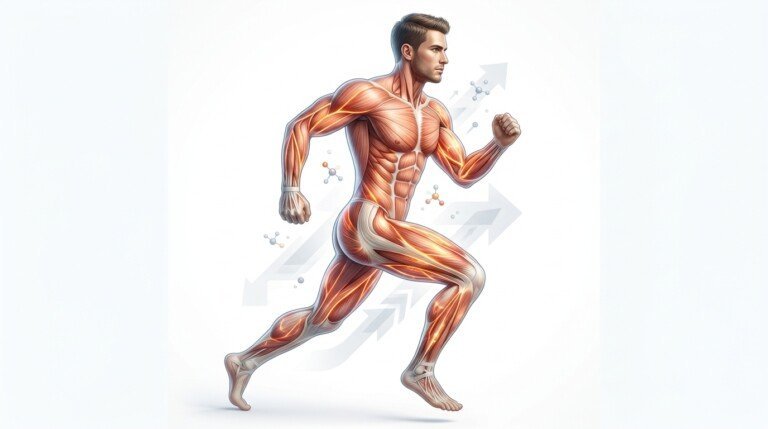


Why You Lose Muscle During Weight Loss (And How to Prevent It)
Losing weight sounds simple on paper: eat fewer calories than your body uses, and the number on the scale goes down. But the body does not treat every pound of weight as disposable fat. During a calorie deficit, some of the weight you lose can come from body fat, while some can come from lean tissue, including muscle.
This is why muscle loss during weight loss deserves more attention than simply watching the scale fall. Two people can lose the same amount of weight and end up with very different results. One may lose mostly fat while maintaining much of their muscle. Another may lose a substantial amount of lean tissue along with the fat.
The difference matters because muscle is not just about appearance. It contributes to movement, strength, physical function, glucose handling, and the amount of metabolically active tissue your body carries. Losing muscle unnecessarily can also make a successful-looking diet less successful from a body-composition perspective.
The good news is that muscle loss is not an unavoidable consequence of every diet. The body responds to the size and duration of the calorie deficit, the amount of available protein, physical activity, training stimulus, starting body composition, age, and several other factors. Understanding why muscle is broken down in the first place makes it much easier to understand how it can be protected.
What is muscle loss during weight loss, physiologically?
When body weight falls, the body has to meet an energy demand that food is no longer completely covering. It can draw on stored energy, primarily body fat, but it also has access to other tissues and energy reserves.
Body fat is the body’s largest long-term energy store, so it makes sense that fat provides a substantial portion of the energy required during weight loss. However, the body is constantly breaking down and rebuilding proteins throughout the day. Muscle tissue is particularly responsive to whether the body has enough energy, amino acids, and physical demand to justify maintaining it.
That creates a basic physiological tension during dieting. The body wants to meet its energy requirements while also adapting to a lower intake. If the conditions are unfavorable, muscle tissue can become one of the sources contributing to that energy balance.
Muscle loss is therefore not simply a matter of “the body burning muscle instead of fat.” The process is more complicated. Changes in muscle protein turnover, glycogen storage, water balance, hormonal signals, physical activity, and energy availability all influence how much lean tissue is retained as weight decreases.
It is also important to understand that a reduction in lean mass on a scale or body-composition device does not automatically mean that an equivalent amount of actual muscle tissue has disappeared. Glycogen and the water stored alongside it can change substantially during dieting. A person’s measured lean mass can therefore fluctuate even when the actual contractile muscle tissue has changed very little.

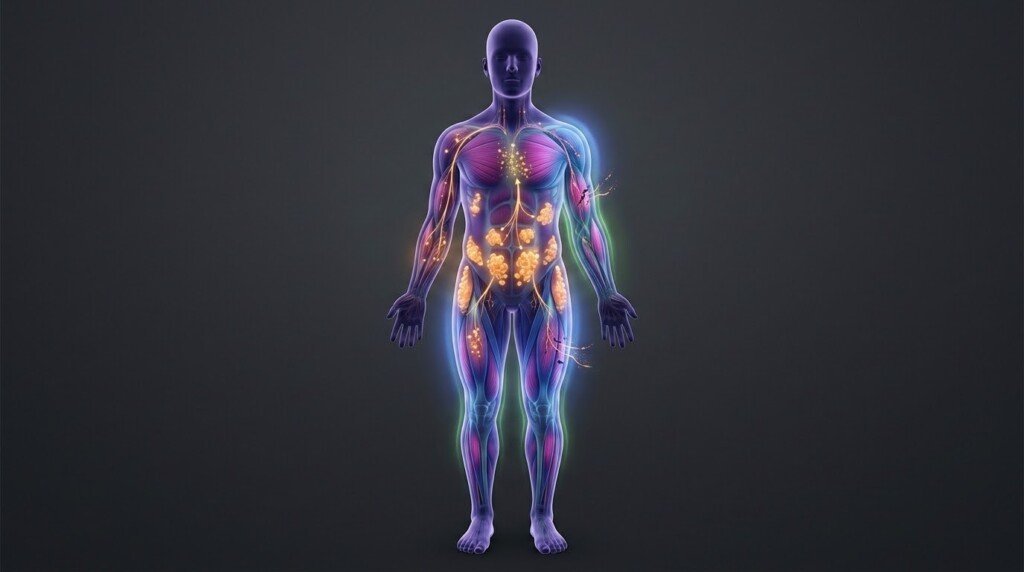
What is the primary metabolic reason the body breaks down muscle during a deficit?
The primary reason muscle can be broken down during a calorie deficit is that the body is trying to maintain its energy and amino acid requirements while receiving less energy from food.
Muscle contains protein, and protein can be broken down into amino acids. Some of these amino acids can ultimately contribute to processes that help maintain blood glucose or provide substrates for energy metabolism. This does not mean the body suddenly decides that muscle is its preferred fuel source. Rather, muscle protein is part of a constantly changing pool of tissue that the body regulates according to its current needs.
When energy availability is low, the body also changes its priorities. Preserving every gram of metabolically active tissue is energetically expensive. If the body receives insufficient energy and does not receive strong signals to maintain muscle, the balance between muscle protein breakdown and muscle protein synthesis can shift in an unfavorable direction.
This is particularly important during aggressive or prolonged dieting. A mild, well-managed deficit can be very different from severe restriction. The deeper the energy shortage becomes, the more difficult it can be to maintain the same physiological environment that supports muscle retention.
The starting point also matters. Someone with substantial body-fat stores has more stored energy available than someone who is already very lean. This can influence how the body responds to an energy deficit.
Age matters as well. Younger people generally have a stronger muscle-building response to exercise and dietary protein than older adults, although older adults can still preserve and build muscle with appropriate nutrition and training.
So the key idea is not that calorie restriction automatically destroys muscle. It is that the conditions created by a calorie deficit can shift the balance toward muscle breakdown when the body does not receive enough energy, protein, or physical stimulus to justify preserving all of its lean tissue.
How does a calorie deficit contribute to muscle catabolism versus fat breakdown?
A calorie deficit creates the demand for stored energy, but the body does not draw from its energy reserves in exactly the same proportions at all times.
Fat tissue is specifically designed to store large amounts of energy. When energy intake falls below expenditure, stored fat can be mobilized and used to help cover the difference. This is one of the fundamental processes behind fat loss.
Muscle tissue is different. Its primary purpose is not to store energy. It is functional tissue involved in movement, force production, posture, and metabolism. Breaking down muscle simply to provide energy is costly because rebuilding it later requires resources.
The body therefore has several reasons to preserve muscle when possible. But preservation is not guaranteed.
One of the most important concepts is muscle protein balance. Muscle is continuously undergoing both protein breakdown and protein synthesis. If synthesis consistently exceeds breakdown, muscle can grow. If breakdown exceeds synthesis over time, muscle can shrink.
A calorie deficit can influence this balance in several ways. Reduced energy availability can make muscle building more difficult. Lower food intake can reduce the total amount of protein available unless protein-rich foods are deliberately prioritized. Reduced training or physical activity can also remove an important signal telling the body that its muscle tissue is still necessary.
This is why weight loss can produce different changes in different people.
Imagine two people who each lose 10 pounds. Person A loses mostly body fat while retaining most of their muscle. Person B loses a mixture of fat and lean tissue. Their scale results look identical, but their body composition is not.
That distinction is one reason the goal of weight loss should not simply be “lose as much weight as possible.” A better goal is to reduce excess fat while preserving as much functional lean tissue as reasonably possible.
It is also why a person can become lighter without necessarily becoming healthier, stronger, or more athletic. The composition of the weight lost matters.
For readers exploring this distinction in greater depth, the difference between fat loss and muscle loss is an important part of understanding what the scale can and cannot tell you.
How can muscle loss be minimized or prevented?
Muscle loss can often be reduced by creating conditions that tell the body its muscle tissue is still valuable and needed.
The major principles are straightforward. Avoid unnecessarily aggressive calorie restriction, consume enough protein, provide the muscles with an appropriate resistance-training stimulus, maintain adequate recovery, and avoid allowing a weight-loss phase to continue indefinitely without reassessing the situation.
The practical details matter, but the underlying idea is simple: weight loss should create a reason for the body to release stored fat without creating an equally strong reason to reduce valuable muscle tissue.
This is where the rest of the muscle-preservation cluster becomes useful. Protein intake, resistance training, signs of muscle loss, individual risk factors, and the relationship between muscle and metabolism all address different parts of the same problem.
Body recomposition is another relevant concept because some people can reduce fat while maintaining or even increasing muscle under the right conditions. The physiological context is different from simply trying to make the scale drop as quickly as possible.
The key is to stop thinking about weight loss as a single number. The more useful question is, “What is happening to the different tissues that make up that weight?”
Why does a calorie deficit specifically trigger muscle breakdown?
A calorie deficit does not function like an on-off switch that immediately tells the body to destroy muscle. Instead, prolonged energy restriction changes the environment in which muscle tissue is maintained.
When food intake decreases, the body has less incoming energy and fewer nutrients available for growth and repair. At the same time, weight loss itself changes the amount of energy the body needs to move and maintain itself.
This creates a series of adaptations.
Energy expenditure can decline as body weight decreases. Spontaneous physical activity may change. Hormonal signals related to energy availability can shift. Hunger can increase. Recovery can become more difficult when dietary intake is very low. These changes can make maintaining muscle increasingly challenging if the deficit is too aggressive.
The severity of the deficit matters enormously.
A moderate calorie deficit with adequate nutrition is not physiologically equivalent to prolonged starvation. The body has much more flexibility when it has enough resources to support normal tissue maintenance.
This is also why the idea that “eating less always means losing more fat” is incomplete. Eating substantially less can make the scale move faster initially, but the composition of that weight loss may become less favorable. Water, glycogen, lean tissue, and fat can all contribute to the change.
The smartest approach is therefore not necessarily the most extreme approach. It is the approach that produces meaningful fat loss while preserving the physical capabilities and lean tissue you want to keep.
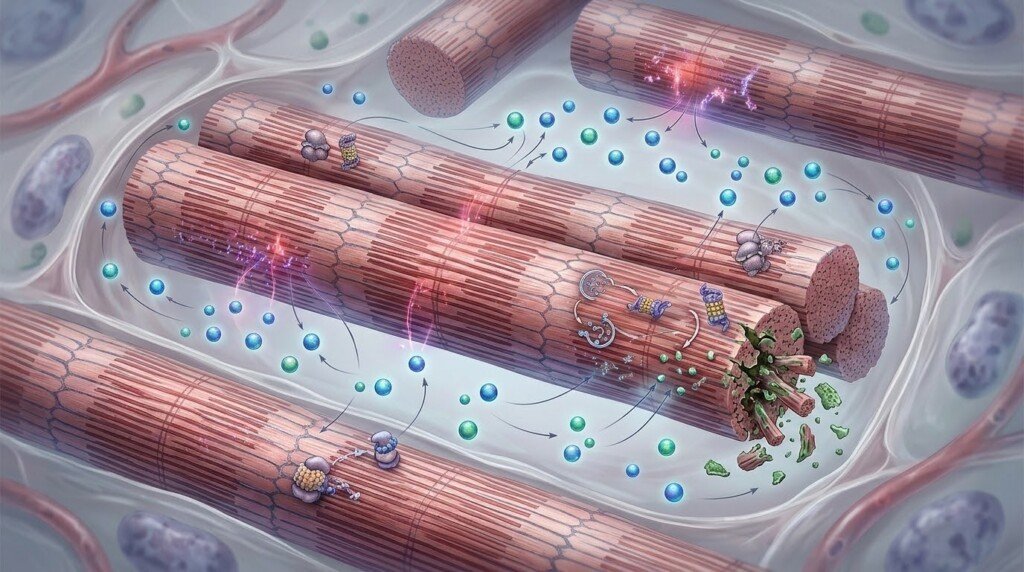
How does a calorie deficit affect muscle protein synthesis?
Muscle protein synthesis is the process through which the body creates new muscle proteins. It is one side of the ongoing process known as muscle protein turnover.
A calorie deficit can make muscle protein synthesis more difficult because the body has fewer available resources and may be less willing to invest heavily in building new tissue.
This does not mean muscle protein synthesis completely stops during dieting. It can still occur, particularly when adequate protein and resistance exercise are present. However, the overall environment may be less favorable for muscle growth than it would be during energy balance or a calorie surplus.
This distinction is important because people often assume that maintaining muscle and building muscle are exactly the same physiological challenge.
They are not.
Maintaining existing muscle generally requires less than building substantial amounts of new muscle. Someone dieting with a reasonable training stimulus may be able to preserve much of their existing muscle even though they are not gaining muscle rapidly.
Muscle protein synthesis is also influenced by individual meals and exercise sessions. A person can stimulate muscle protein synthesis while dieting, but the total daily and weekly balance still matters.
Think of it like maintaining a house while spending less money. You may still repair important areas, but you have fewer resources available for major renovations. If you also stop maintaining the house entirely, deterioration becomes more likely.
The same broad principle applies to muscle tissue.
Can you actually build muscle while in a calorie deficit?
Yes, in certain circumstances, it is possible to build muscle while losing body fat.
This is one of the reasons body recomposition receives so much attention. However, it would be misleading to suggest that everyone can build muscle rapidly while dieting.
The likelihood is influenced by training experience, starting body composition, protein intake, exercise quality, recovery, age, and the size of the calorie deficit.
Beginners often have a particularly favorable opportunity because their muscles are responding to a new training stimulus. People returning to resistance training after a long break may also regain previously lost muscle relatively efficiently. Individuals carrying higher levels of body fat may have more stored energy available to support the process.
Experienced lifters who are already highly muscular face a different challenge. Their bodies have adapted to training, and adding new muscle generally becomes slower and more demanding. Trying to create substantial muscle gain while simultaneously maintaining a calorie deficit becomes more difficult.
This is why body recomposition should not be presented as a universal shortcut.
For people interested in the broader concept, body recomposition provides a useful framework for understanding how fat loss and muscle gain can sometimes occur during the same period.
The important point here is that a calorie deficit does not automatically mean muscle gain is impossible. It means the conditions for muscle growth are more constrained.
What hormonal changes during a deficit accelerate muscle breakdown?
Hormones help coordinate how the body responds to changes in energy availability. During significant calorie restriction, several hormonal signals can shift in ways that make maintaining lean tissue more difficult.
One important change involves insulin. Insulin is not simply a blood-sugar hormone. It also influences protein metabolism and has an anti-catabolic role in certain tissues. When energy and carbohydrate intake fall, insulin levels can change, which alters the overall metabolic environment.
Other hormonal systems are also affected by prolonged energy restriction. Signals related to thyroid function, reproductive hormones, stress, appetite, and energy availability can change as the body attempts to adapt to reduced intake.
Cortisol is particularly relevant because it is involved in the body’s response to stress and energy demand. Persistent physiological stress can contribute to a more catabolic environment, although it would be inaccurate to blame a single hormone for muscle loss.
The body operates as an integrated system.
This is why a person who is dieting aggressively, sleeping poorly, training excessively, and eating very little may experience a different outcome from someone consuming a moderate deficit with sufficient nutrition and recovery.
Hormonal adaptation is not the body “breaking down” because it has failed. It is the body responding to a perceived shortage of resources.
From an evolutionary perspective, conserving energy during scarcity is useful. From a modern weight-loss perspective, however, the same adaptation can make aggressive dieting counterproductive when the goal is specifically to reduce fat while preserving lean tissue.
Can muscle loss ever become irreversible?
Most dieting-related muscle loss is not automatically permanent. Muscle tissue can often be regained when the conditions that support muscle maintenance and growth are restored.
However, saying that all muscle loss is easily reversible would be inaccurate.
The ability to regain muscle depends on why the loss occurred, how severe it was, how long it lasted, the person’s age, health status, physical activity, nutrition, and whether an underlying condition contributed to the loss.
There is also an important distinction between temporary changes in measured lean mass and genuine loss of muscle tissue.
A person may see their lean mass decrease during a diet because glycogen stores fall and the water associated with those stores decreases. Changes in food volume and hydration can also affect measurements. That is not necessarily equivalent to losing a large amount of contractile muscle.
True muscle atrophy is different.
When muscle fibers become smaller because they are not receiving sufficient nutritional or mechanical stimulus, regaining that tissue is often possible. The body retains an ability to adapt to resistance training and adequate nutrition even after periods of inactivity or dieting.
The concern becomes greater when muscle loss is associated with severe malnutrition, prolonged immobilization, chronic illness, advanced aging, or another medical condition. In those situations, restoring muscle may require more than simply eating more and exercising.

What causes irreversible muscle loss, and how is that different from normal, recoverable loss?
There is no single point at which muscle loss suddenly becomes irreversible.
Instead, the possibility of full recovery depends on the underlying cause and the extent of tissue damage or physiological decline.
Normal dieting-related muscle loss is usually related to changes in protein turnover, energy availability, physical activity, and training stimulus. When the environment improves, muscle can often be rebuilt.
More serious situations can involve prolonged immobilization, severe malnutrition, neurological disease, advanced age, chronic illness, or conditions that interfere with the body’s ability to produce or maintain muscle tissue.
In those circumstances, simply reversing the calorie deficit may not restore everything that was lost.
Another factor is time.
A short period of reduced activity can produce noticeable strength and muscle changes, but the body generally retains substantial capacity for recovery. Longer periods of inactivity or severe undernutrition can create a much larger physiological challenge.
This is why the phrase “use it or lose it” has some practical truth. Muscle is metabolically expensive tissue. The body has less reason to maintain a large amount of it when it is not being used.
The encouraging part is that muscle is also highly adaptable.
People often underestimate how much improvement is possible after a period of muscle loss. With appropriate nutrition, progressive resistance exercise, and adequate recovery, previously trained individuals can sometimes regain muscle more quickly than they initially built it.
That does not mean every loss can be completely reversed, but it does mean that seeing a temporary decline in muscle does not automatically mean the situation is permanent.
How does severe or prolonged calorie restriction increase this risk?
Severe calorie restriction increases the risk of muscle loss because it creates a much larger gap between the energy the body needs and the energy it receives.
When the deficit becomes extreme, maintaining all body tissues becomes increasingly difficult. Protein intake may fall, training performance can deteriorate, recovery can suffer, and hormonal signals associated with energy availability can shift.
The problem becomes even more pronounced when severe restriction continues for a long period.
A short-term reduction in food intake can produce a temporary change in body weight without causing major structural muscle loss. But prolonged underfeeding places greater pressure on the body’s ability to preserve lean tissue.
This is one reason crash diets can be misleading.
The scale may drop dramatically during the first several days or weeks. Some of that change may come from reduced glycogen and water, but prolonged severe restriction can also increase the contribution of lean tissue to total weight loss.
There is another issue that often gets overlooked: physical performance.
When a person is severely restricting calories, workouts may become harder. Strength can decline. Training volume may fall. Daily movement may decrease because the person feels exhausted.
Once the muscles are receiving less nutritional support and less mechanical demand, the signals supporting their maintenance become weaker.
That creates a cycle that can make body composition less favorable.
A sustainable calorie deficit is therefore not simply about making dieting easier psychologically. It can also create a better physiological environment for retaining lean tissue.
This is particularly important for people who have already lost substantial weight and are considering pushing the deficit even harder because progress has slowed.
A slower rate of weight loss is not necessarily failure. In some situations, it may represent a more controlled approach that protects the quality of the weight being lost.
FAQ
1. Why do you lose muscle when losing weight?
You can lose muscle during weight loss because a calorie deficit changes the body’s energy and protein balance. When energy intake is low, muscle protein synthesis can become less favorable, while muscle protein breakdown may increase. The risk is higher with aggressive or prolonged calorie restriction, inadequate protein, reduced resistance exercise, poor recovery, and certain health conditions.
2. Can you lose fat without losing muscle?
Yes. It is possible to lose mostly body fat while retaining much of your existing muscle, particularly when the calorie deficit is moderate and nutrition, resistance training, and recovery are well managed. The exact outcome varies between individuals, so some lean-mass change can still occur during weight loss.
3. Can muscle loss be reversed?
Much dieting-related muscle loss can be regained. Returning to adequate nutrition and providing the muscles with an appropriate training stimulus can support recovery. However, severe muscle loss associated with prolonged malnutrition, chronic illness, immobilization, or advanced aging may be more difficult to fully reverse and can require professional guidance.
Disclaimer:
This post may contain affiliate links. If you purchase through them, we may earn a small commission at no extra cost to you. Also, this content is for informational purposes only and does not substitute professional medical advice.
Ready to Start Your Journey?
Use our free 7-in-1 Weight Loss Toolkit to calculate your numbers and build your plan in minutes.
Open Free Tools →