What Are the Best Foods for Insulin Resistance? 15 Science-Backed Choices
Choosing the Best Foods for Insulin Resistance can play a major role in supporting healthier blood sugar levels and improving insulin sensitivity over time. While no single food can reverse insulin resistance on its own, research consistently shows that an overall eating pattern rich in whole, minimally processed foods is one of the most effective ways to improve metabolic health.
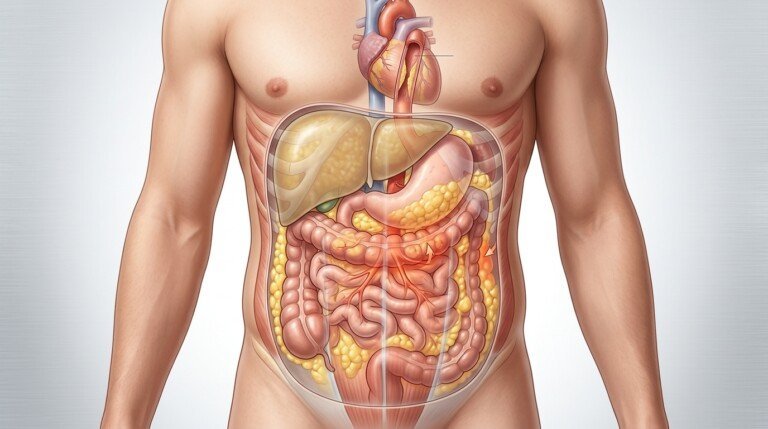
Insulin resistance develops when the body’s cells become less responsive to insulin, the hormone responsible for moving glucose from the bloodstream into the cells for energy. As insulin sensitivity decreases, the pancreas produces more insulin to compensate. Over time, this may contribute to elevated blood sugar, increased abdominal fat, metabolic syndrome, and a greater risk of developing type 2 diabetes.
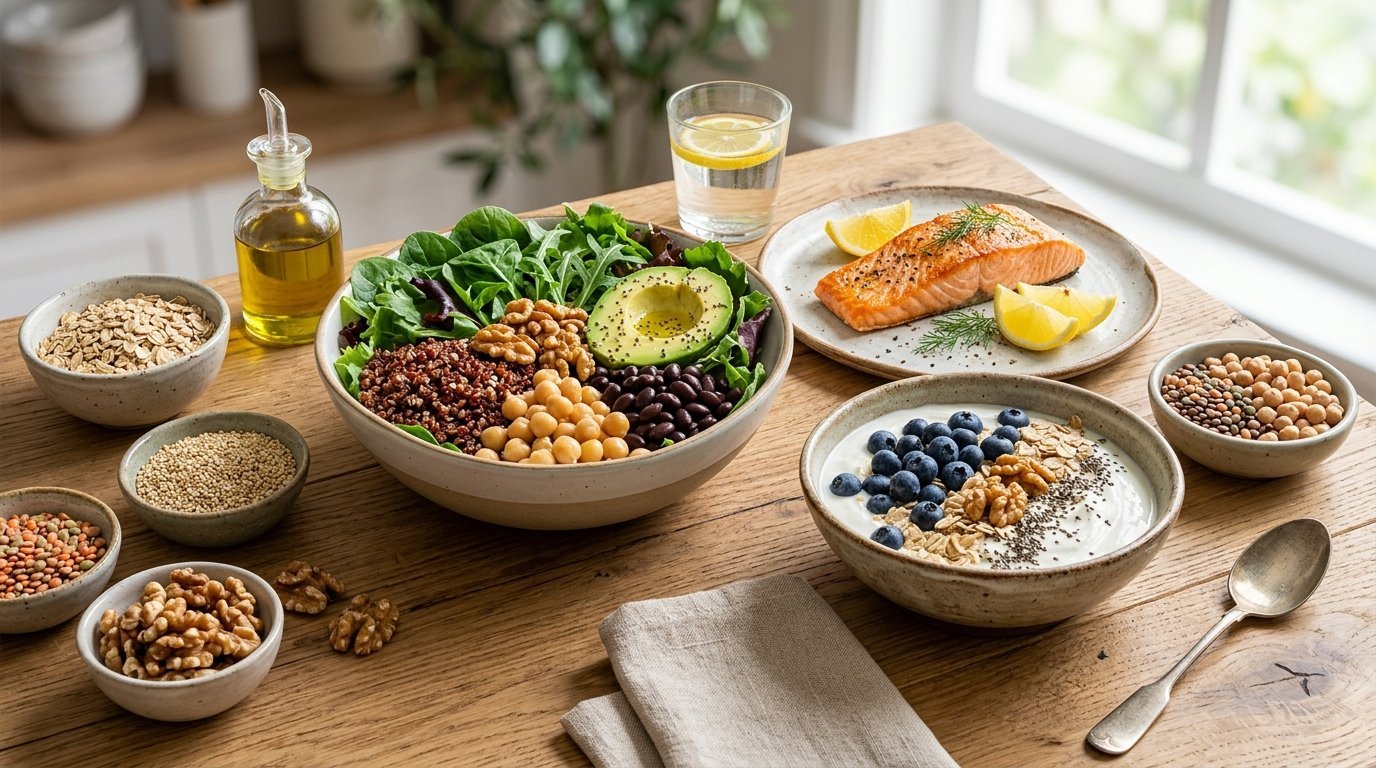
The encouraging news is that everyday food choices can make a meaningful difference. Diets rich in fiber, lean protein, healthy fats, whole grains, legumes, vegetables, fruits, and other nutrient-dense foods have been associated with improved insulin sensitivity and better long-term metabolic health. These foods help support steady energy levels, reduce large blood sugar fluctuations, and promote feelings of fullness throughout the day.
Rather than searching for one “superfood,” it is more helpful to build balanced meals using a variety of nutritious ingredients. Consistency matters far more than perfection, and small improvements repeated daily often produce meaningful long-term results.
In this guide, you’ll discover the Best Foods for Insulin Resistance, why fiber and protein are so important, how healthy fats support blood sugar regulation, whether low-glycemic foods are worth choosing, and what a balanced day of eating can look like.
What Are the Best Foods for Insulin Resistance?
There isn’t one perfect food for insulin resistance.
Instead, research consistently supports eating patterns built around whole, minimally processed foods that provide fiber, protein, healthy fats, vitamins, minerals, and antioxidants.
These foods help create balanced meals that support healthy blood sugar regulation and long-term metabolic health.
Below are fifteen science-backed food choices that fit well into an insulin-friendly eating pattern.

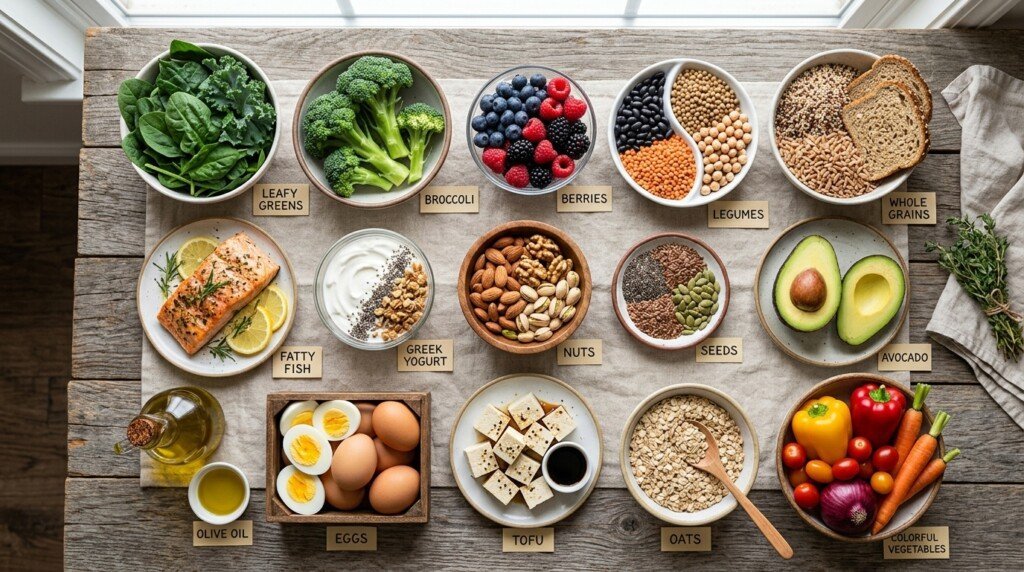
1. Leafy Green Vegetables
Leafy greens are among the most nutrient-dense foods available.
Examples include:
- Spinach
- Kale
- Swiss chard
- Arugula
- Romaine lettuce
They provide fiber, vitamins, minerals, and antioxidants while remaining naturally low in calories.
Adding leafy greens to salads, smoothies, soups, or omelets is an easy way to improve meal quality.
2. Broccoli
Broccoli contains fiber and beneficial plant compounds that support overall health.
It works well roasted, steamed, stir-fried, or added to grain bowls.
Other cruciferous vegetables such as cauliflower and Brussels sprouts offer similar nutritional benefits.
3. Berries
Blueberries, strawberries, raspberries, and blackberries provide natural sweetness together with fiber and antioxidants.
Unlike fruit juice, whole berries digest more slowly because their fiber remains intact.
If you’re looking for additional fruit ideas, Best Fruits for Weight Loss includes several nutrient-rich options that also fit well into an insulin-friendly eating pattern.
4. Legumes
Beans, lentils, and chickpeas combine plant protein with fiber.
Examples include:
- Black beans
- Kidney beans
- Lentils
- Chickpeas
- Navy beans
Legumes are filling, versatile, and work well in soups, salads, curries, and grain bowls.
5. Whole Grains
Whole grains retain more fiber than refined grains.
Nutritious choices include:
- Oats
- Brown rice
- Quinoa
- Barley
- Whole wheat
Replacing refined grains with whole-grain alternatives supports better overall diet quality.
6. Fatty Fish
Fish such as:
- Salmon
- Sardines
- Trout
- Mackerel
provide high-quality protein together with omega-3 fatty acids that support cardiovascular health.
Aim to include fish regularly as part of a balanced eating pattern.
7. Greek Yogurt
Plain Greek yogurt provides protein together with calcium and beneficial bacteria that support digestive health.
Choose unsweetened varieties whenever possible.
8. Nuts
Almonds, walnuts, pistachios, and pecans provide healthy fats, fiber, and plant protein.
A small handful makes a satisfying snack or meal addition.
9. Seeds
Chia seeds, flaxseeds, pumpkin seeds, and sunflower seeds provide healthy fats, fiber, and minerals.
They can easily be added to oatmeal, yogurt, salads, or smoothies.
10. Avocados
Avocados contain monounsaturated fats together with fiber.
They pair well with salads, whole-grain toast, sandwiches, and grain bowls.
11. Olive Oil
Extra virgin olive oil is a cornerstone of the Mediterranean diet.
Using olive oil instead of highly processed fats supports an overall healthy eating pattern.
12. Eggs
Eggs provide complete protein and can be included in balanced breakfasts, lunches, or dinners.
For breakfast inspiration, Best Breakfast for Weight Loss offers meal ideas that naturally combine protein with fiber-rich ingredients.
13. Tofu and Tempeh
These soy-based foods provide plant protein while fitting well into vegetarian and vegan meal plans.
14. Oats
Oats contain soluble fiber that slows digestion and helps create satisfying meals.
They are an excellent breakfast option when paired with fruit, nuts, or Greek yogurt.
15. Colorful Vegetables
Bell peppers, tomatoes, zucchini, carrots, mushrooms, cucumbers, and many other vegetables provide vitamins, minerals, antioxidants, and fiber.
Filling half your plate with vegetables is one of the simplest ways to improve overall nutrition.
Think About Your Overall Eating Pattern
Rather than trying to eat one “perfect” food every day, focus on building meals that combine:
- Lean protein
- Fiber-rich vegetables
- Whole-food carbohydrates
- Healthy fats
This balanced approach is supported by the strongest scientific evidence for improving insulin sensitivity.
Why Does Fiber Help Improve Insulin Sensitivity?
Fiber is one of the most valuable nutrients for people looking to improve metabolic health.
Although fiber does not directly lower insulin resistance on its own, it supports several important processes that help regulate blood sugar and improve the overall quality of your diet.
Unlike refined carbohydrates, fiber slows digestion and helps glucose enter the bloodstream more gradually. This steady release may reduce large fluctuations in blood sugar after meals and contribute to better insulin sensitivity over time.
Fiber Helps You Feel Full Longer
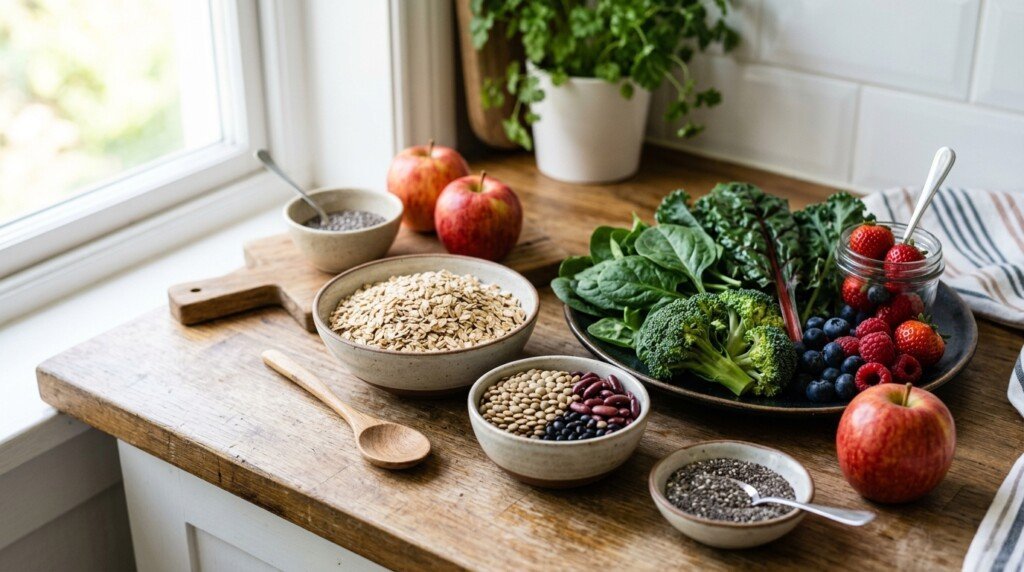
One of fiber’s biggest benefits is its ability to increase satiety.
Meals rich in vegetables, legumes, fruits, and whole grains tend to keep you satisfied for longer than meals made primarily from refined carbohydrates.
Feeling full between meals may reduce unnecessary snacking and help support healthy body weight over time.
Fiber Supports Gut Health
Fiber acts as food for beneficial bacteria living in your digestive system.
A healthy gut microbiome plays an important role in digestion and overall metabolic health.
Many high-fiber foods also contain vitamins, minerals, and antioxidants that contribute to better long-term wellness.
The relationship between digestion and metabolism is discussed further in Gut Health and Weight Loss, where gut health is explored as part of an overall healthy lifestyle.
High-Fiber Foods Naturally Improve Meal Quality
Many foods that are naturally rich in fiber also provide other valuable nutrients.
Excellent choices include:
- Vegetables
- Fruits
- Lentils
- Beans
- Chickpeas
- Oats
- Brown rice
- Quinoa
- Chia seeds
- Flaxseeds
Rather than counting every gram of fiber, aim to include one or more fiber-rich foods with every meal.
This simple habit often improves overall nutrition without making healthy eating feel overly complicated.
Fiber Works Best With Other Healthy Habits
Fiber is most effective when combined with other healthy lifestyle choices, including regular physical activity, adequate sleep, balanced meals, and maintaining a healthy body weight.
Many people who successfully Reverse Insulin Resistance Naturally do so by improving several daily habits together instead of focusing on one nutrient alone.
Building meals around fiber-rich foods is one of the easiest and most sustainable places to start.
Which Protein Sources Are Best?
Protein is one of the most important nutrients for supporting healthy insulin sensitivity. While protein does not directly reverse insulin resistance, it helps build balanced meals, promotes fullness, preserves muscle mass, and supports overall metabolic health.
Muscle tissue is one of the body’s largest users of glucose. Maintaining healthy muscle through adequate protein intake and regular physical activity helps your body use glucose more efficiently over time.
Rather than focusing on protein powders or specialty products, aim to include high-quality protein from whole foods throughout the day.
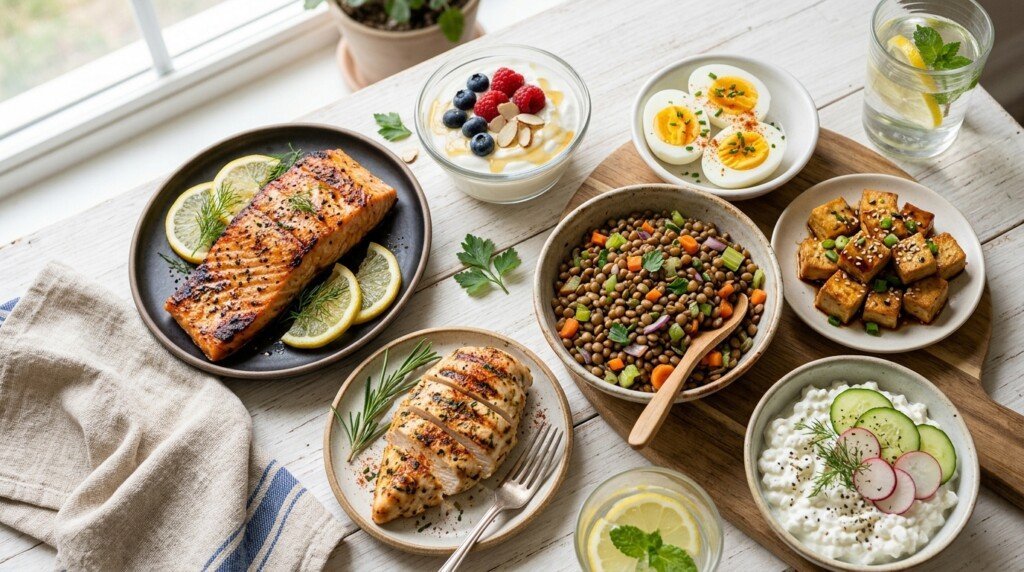
Fish
Fish is one of the best protein choices for an insulin-friendly eating pattern.
Options include:
- Salmon
- Sardines
- Trout
- Mackerel
- Tuna
- Cod
These foods provide complete protein, while oily fish also contain omega-3 fatty acids that support heart health.
Poultry
Skinless chicken and turkey provide lean protein with relatively little saturated fat.
Grilled, baked, roasted, or air-fried preparations generally fit well into balanced meals.
Eggs
Eggs are rich in high-quality protein and can be enjoyed at breakfast, lunch, or dinner.
Pairing eggs with vegetables and whole-grain foods creates a satisfying, nutrient-dense meal.
Greek Yogurt and Cottage Cheese
Plain Greek yogurt and cottage cheese provide protein together with calcium and other nutrients.
Choose unsweetened varieties whenever possible to reduce unnecessary added sugars.
Legumes
Beans, lentils, peas, and chickpeas are excellent plant-based protein sources.
They also provide fiber, making them especially filling.
Tofu and Tempeh
These soy-based foods are complete proteins and work well in stir-fries, salads, grain bowls, and many vegetarian meals.
Spread Protein Throughout the Day
Instead of eating most of your protein at dinner, try including protein with every meal.
For example:
- Greek yogurt at breakfast
- Chicken or lentils at lunch
- Fish at dinner
- Nuts or cottage cheese for snacks
Balanced protein intake throughout the day helps create satisfying meals while supporting healthy body composition.
If you’re looking for more ideas, High-Protein Foods That Burn Fat includes practical examples of protein-rich foods that fit into a healthy lifestyle.
Which Healthy Fats Support Blood Sugar Control?
Healthy fats have sometimes been misunderstood because they are higher in calories than protein or carbohydrates.
However, fats are an essential part of a balanced eating pattern and support many important functions throughout the body.
When eaten in appropriate portions, healthy fats help create satisfying meals and improve overall diet quality.
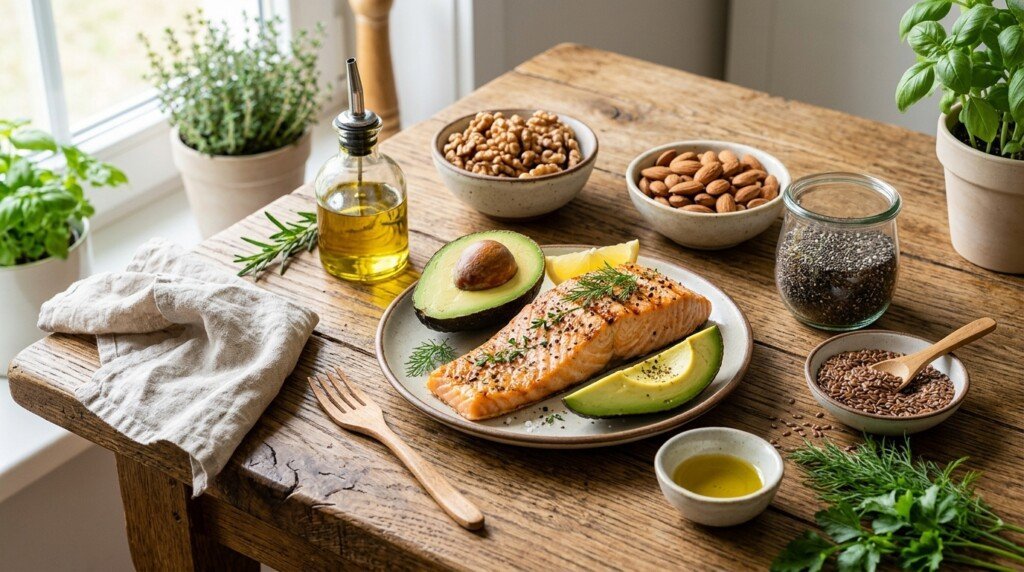
Extra Virgin Olive Oil
Extra virgin olive oil is one of the best-studied healthy fats.
It forms the foundation of the Mediterranean diet and works well in:
- Salad dressings
- Roasted vegetables
- Grain bowls
- Homemade sauces
Replacing highly processed fats with olive oil supports an overall healthier eating pattern.
Avocados
Avocados provide monounsaturated fats together with fiber, vitamins, and minerals.
They work well in:
- Salads
- Whole-grain toast
- Sandwiches
- Smoothies
- Grain bowls
Because avocados also contain fiber, they help create meals that are both satisfying and nutritious.
Nuts
Nuts provide a combination of:
- Healthy fats
- Protein
- Fiber
- Magnesium
- Vitamin E
Nutritious choices include:
- Almonds
- Walnuts
- Pistachios
- Pecans
- Cashews
Because nuts are calorie-dense, moderate portions are generally recommended.
Seeds
Seeds offer many of the same nutritional benefits as nuts.
Excellent options include:
- Chia seeds
- Flaxseeds
- Pumpkin seeds
- Sunflower seeds
Adding seeds to oatmeal, yogurt, salads, or smoothies is an easy way to increase nutrient intake.
Fatty Fish
Healthy fats are not limited to plant foods.
Fatty fish provide omega-3 fatty acids that support cardiovascular health while supplying high-quality protein.
Including fish regularly creates balanced meals without relying on processed foods.
Healthy Fats Work Best as Part of Balanced Meals
Healthy fats should not replace vegetables, fiber, or protein.
Instead, they work best alongside:
- Lean protein
- Fiber-rich vegetables
- Whole grains
- Fruits
Balanced meals are far more important than focusing on one nutrient alone.
Are Low-Glycemic Foods Better for Insulin Resistance?
Many people hear the term “low glycemic foods” after learning they have insulin resistance.
Understanding what this means can help you make more informed food choices without becoming overwhelmed.
What Is the Glycemic Index?
The glycemic index, often called GI, ranks carbohydrate-containing foods according to how quickly they raise blood sugar after eating.
Generally speaking:
- Low-GI foods produce a slower rise.
- High-GI foods are digested more quickly.
However, the glycemic index tells only part of the story.
Real meals usually contain protein, healthy fats, and fiber, all of which influence digestion.
Examples of Lower-Glycemic Foods
Many nutritious foods naturally have a lower glycemic impact, including:
- Oats
- Lentils
- Beans
- Chickpeas
- Apples
- Pears
- Berries
- Non-starchy vegetables
- Plain Greek yogurt
- Quinoa
These foods also provide valuable nutrients beyond their glycemic properties.
Meal Quality Matters More Than One Number
The glycemic index should be viewed as one helpful tool rather than the only factor when choosing foods.
For example, a balanced meal containing:
- Grilled salmon
- Brown rice
- Broccoli
- Olive oil
is likely to have a different effect on blood sugar than eating the rice alone.
The combination of protein, fiber, and healthy fats slows digestion naturally.
Think About Patterns, Not Perfection
Trying to memorize glycemic index values for hundreds of foods is unnecessary for most people.
Instead, focus on creating meals that include:
- Vegetables
- Lean protein
- Whole grains
- Healthy fats
- Fruits
- Legumes
This approach naturally emphasizes many lower-glycemic foods while supporting long-term metabolic health.
Consistently following these eating habits is far more important than trying to achieve a perfect glycemic score for every meal.
What Does a One-Day Meal Plan Look Like?
One of the biggest misconceptions about eating for insulin resistance is that meals need to be complicated or restrictive. In reality, the best meal plans are simple, balanced, and easy to maintain over the long term.
A healthy eating pattern focuses on combining lean protein, high-fiber carbohydrates, healthy fats, and plenty of vegetables at each meal. This combination helps create satisfying meals while supporting healthy blood sugar regulation.
The following sample meal plan is not intended as a strict prescription. Instead, it demonstrates how the Best Foods for Insulin Resistance can fit naturally into an ordinary day.
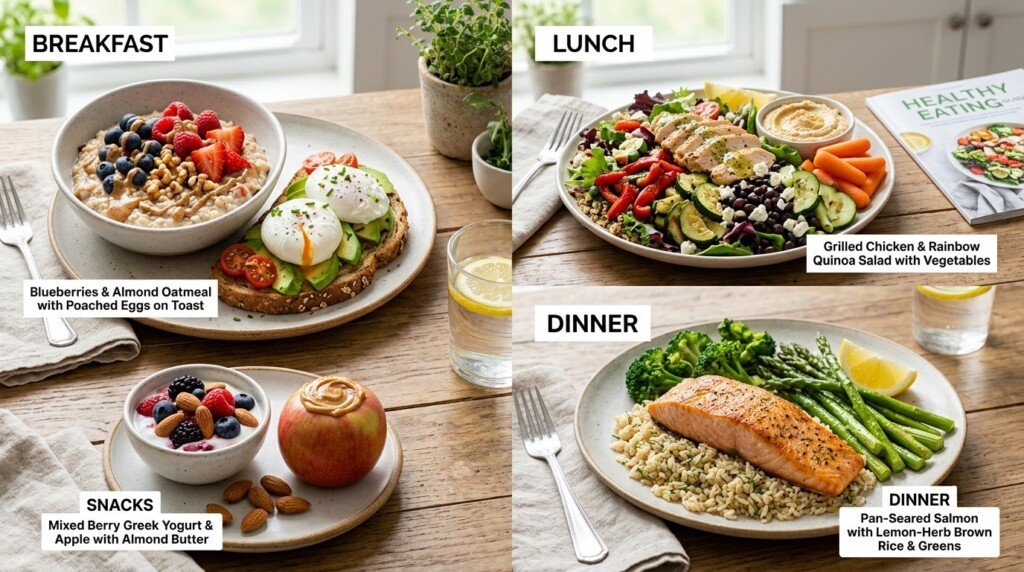
Breakfast
- Plain Greek yogurt
- Rolled oats
- Fresh blueberries
- Chia seeds
- Chopped walnuts
This breakfast combines protein, fiber, healthy fats, and whole grains to create a filling start to the day.
If mornings are busy, overnight oats prepared the night before make an easy alternative.
Several similar meal ideas can also be found in Best Breakfast for Weight Loss, where balanced breakfasts are designed around long-lasting energy and satisfaction.
Mid-Morning Snack
- Apple
- Small handful of almonds
This simple snack provides fiber together with healthy fats and helps maintain steady energy between meals.
Lunch
- Grilled chicken breast
- Quinoa
- Mixed salad with spinach, tomatoes, cucumber, carrots, and bell peppers
- Olive oil and lemon dressing
This meal contains:
- Lean protein
- Whole grains
- Vegetables
- Healthy fats
Together, these nutrients create a balanced plate without feeling overly restrictive.
Afternoon Snack
- Carrot sticks
- Hummus
Legumes such as chickpeas provide both fiber and plant protein, making hummus a nutritious snack option.
Dinner
- Baked salmon
- Steamed broccoli
- Brown rice
- Side salad
This meal combines one of the healthiest protein sources with vegetables, healthy fats, and whole grains.
Evening Snack (Optional)
If you’re genuinely hungry later in the evening, consider:
- Cottage cheese
- Plain Greek yogurt
- Fresh berries
The goal is not to eliminate snacks but to choose options that contribute meaningful nutrition.
People looking for affordable meal ideas often discover that healthy eating can also fit within a budget. Cheap Foods for Weight Loss includes several economical foods that also work well in an insulin-friendly eating pattern.
Build Meals Instead of Following Rules
Rather than memorizing meal plans, think about building every meal from four simple components:
- A lean protein
- Plenty of vegetables
- A high-fiber carbohydrate
- A healthy fat
This flexible approach is easier to maintain than rigid meal plans because it allows endless food combinations while still supporting healthy blood sugar regulation.
Which Eating Habits Improve Insulin Sensitivity?
The foods you eat matter, but your overall eating habits matter just as much.
Healthy routines practiced consistently often have a greater impact than chasing the latest nutrition trend.
Eat Mostly Whole Foods
Whole foods naturally provide more fiber, vitamins, minerals, and antioxidants than highly processed alternatives.
Examples include:
- Vegetables
- Fruits
- Whole grains
- Legumes
- Fish
- Poultry
- Eggs
- Plain dairy products
- Nuts
- Seeds
Building most meals around these foods improves overall diet quality without requiring perfection.
Balance Every Meal
Meals that include carbohydrates by themselves may leave you feeling hungry again sooner.
Combining carbohydrates with protein, fiber, and healthy fats creates a slower, steadier digestion process.
A balanced plate often feels more satisfying and supports consistent energy throughout the day.
Cook More Meals at Home
Preparing meals yourself gives you greater control over ingredients and portion sizes.
Home cooking also makes it easier to include vegetables, whole grains, and lean proteins regularly.
This doesn’t mean every meal must be homemade.
Even preparing a few extra meals each week can improve overall eating habits.
Practice Mindful Eating
Many people eat quickly while working, driving, or watching television.
Slowing down allows your body time to recognize fullness.
Simple habits include:
- Eating without distractions
- Chewing thoroughly
- Taking smaller bites
- Pausing between bites
Mindful eating supports healthier eating behaviors over time.
Plan Ahead
Keeping healthy ingredients available reduces the temptation to rely on convenience foods when you’re busy.
Simple planning ideas include:
- Washing vegetables ahead of time
- Cooking grains in batches
- Preparing lunches the night before
- Keeping fruit visible on the counter
- Stocking healthy snacks
Small planning habits often make healthy choices much easier.
Stay Consistent
The healthiest eating pattern is one you can maintain.
There is no perfect diet that works for everyone.
Instead of aiming for perfection, focus on making nutritious choices most of the time.
People who successfully Reverse Insulin Resistance Naturally usually do so through consistent habits rather than temporary diets.

Frequently Asked Questions
1. What are the best foods for insulin resistance?
The best foods include leafy green vegetables, legumes, whole grains, berries, fatty fish, nuts, seeds, olive oil, lean proteins, and other minimally processed foods that support healthy blood sugar regulation.
2. Does fiber improve insulin sensitivity?
Fiber supports healthy digestion, promotes fullness, and slows the absorption of glucose after meals, making it an important part of an eating pattern that supports insulin sensitivity.
3. Are low-glycemic foods better for insulin resistance?
Many low-glycemic foods fit well into a healthy eating pattern because they often contain fiber and other beneficial nutrients. However, overall meal quality is more important than focusing only on glycemic index values.
4. What should an insulin resistance meal plan include?
A balanced meal plan should include lean protein, vegetables, whole grains, healthy fats, legumes, fruits, and other nutrient-dense whole foods while emphasizing consistency rather than restriction.
5. Can healthy eating improve insulin resistance naturally?
For many people, healthy eating combined with regular physical activity, quality sleep, stress management, and maintaining a healthy body weight supports improved insulin sensitivity over time.
Final Thoughts
Choosing the Best Foods for Insulin Resistance is less about finding one perfect ingredient and more about creating a balanced eating pattern that supports long-term metabolic health. Meals built around vegetables, fruits, legumes, whole grains, lean proteins, healthy fats, and other minimally processed foods provide the strongest scientific foundation for improving insulin sensitivity.
At the same time, healthy eating works best when combined with other positive lifestyle habits. Regular physical activity, quality sleep, stress management, and maintaining a healthy body weight all contribute to better blood sugar regulation and overall well-being.
Instead of chasing restrictive diets or short-term trends, focus on building meals you genuinely enjoy and can continue eating for years. Small, consistent improvements often produce the greatest long-term benefits for insulin sensitivity and lifelong metabolic health.
Disclaimer:
This post may contain affiliate links. If you purchase through them, we may earn a small commission at no extra cost to you. Also, this content is for informational purposes only and does not substitute professional medical advice.
Fuel Your Body Right
Use our free Nutrition Toolkit to find your protein target, fasting window, and net carbs in minutes.
Open Free Tools →