

What Causes Skinny Fat? Diet, Muscle Loss & Genetics
If you are wondering what causes skinny fat, the answer is rarely one single thing. A person can stay within a normal weight range while gradually losing muscle, carrying more body fat, or developing a body composition that looks very different from what the scale suggests.
That can happen after years of being relatively inactive, eating a low-quality diet without necessarily overeating, doing plenty of cardio but little resistance training, or simply having a body that tends to store fat and build muscle differently from someone else. Genetics can influence the picture too, but they are only part of it.
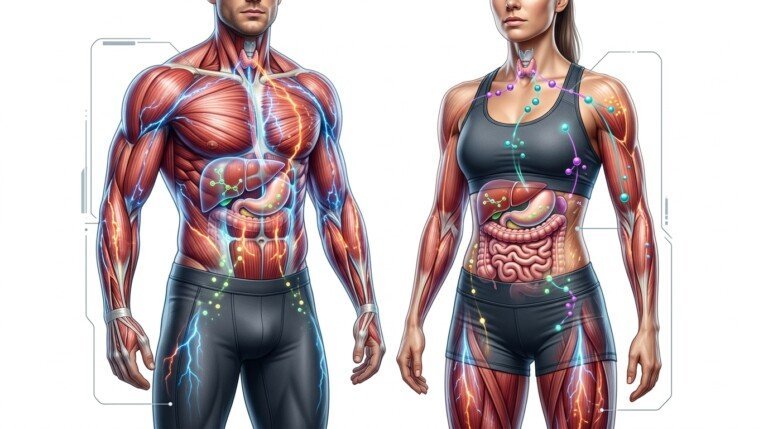
The phrase “skinny fat” is informal rather than a medical diagnosis. In everyday fitness language, it generally describes someone who appears relatively slim or has a normal body weight but has comparatively low muscle mass and a higher body-fat level than their appearance or scale weight might suggest. That distinction matters because body weight alone cannot tell you how much of your body is muscle, fat, bone, water, and other tissue.
This is why two people who weigh exactly the same can look completely different.
One may have years of resistance training behind them, relatively strong muscles, and a lower proportion of body fat. Another may have little muscle mass and a higher proportion of body fat despite wearing the same clothing size. Neither situation can be understood properly by looking at the scale alone.
The good news is that being naturally slim does not automatically mean you are stuck with a particular body composition. Lifestyle plays a major role, and understanding the causes is more useful than simply trying to eat less whenever the scale rises.
What are the common causes of being skinny fat?
There is a common misconception that body composition is determined almost entirely by how much someone weighs. In reality, weight tells you very little about the relationship between muscle and fat.
A person can maintain the same body weight for years while their composition changes underneath it. If muscle gradually decreases while fat gradually increases, total body weight may barely move. The person may still fit into their usual clothes and may not consider themselves overweight, yet their body composition has shifted significantly.
This is one reason the causes of skinny fat are often missed. The scale does not necessarily provide a warning when muscle is being lost.
Several factors can contribute, but two of the most important are insufficient muscle-building activity and poor overall diet quality.
Why is a lack of muscle mass such a central factor?
Muscle is one of the biggest pieces of the body-composition equation. If someone has relatively little muscle, even a moderate amount of body fat can represent a larger percentage of their total body weight.
Imagine two people who each weigh 70 kilograms. If one carries considerably more muscle and the other carries considerably less, their body shapes, strength, metabolic characteristics, and body-fat percentages can be very different despite the identical number on the scale.
This is why “normal weight” and “healthy body composition” should not be treated as interchangeable terms.
Muscle tissue also provides an important structural foundation for the body. It supports movement, contributes to physical strength, and gives the body much of its visible shape. When muscle mass is low, a person can look relatively soft even when their overall weight is not high.
The issue becomes particularly relevant when someone loses weight without preserving muscle. A lower scale weight can look like success, but if a significant portion of the weight lost comes from lean tissue, the resulting body composition may not improve as much as expected.


This is one reason aggressive dieting can sometimes produce an outcome that feels confusing. Someone may become lighter without becoming noticeably more muscular or defined.
The opposite can happen too. Someone may gain a little weight while adding muscle and reducing body fat. The scale moves in a direction that looks disappointing, while the actual composition becomes healthier and more athletic.
Resistance training is therefore an important part of the body-composition conversation. The goal is not simply to burn as many calories as possible. It is also to give the body a reason to maintain and develop muscle.
This is where people who spend years doing only endurance exercise can sometimes run into trouble.
Cardio itself is not the cause of skinny fat. Running, cycling, swimming, walking, and other forms of cardiovascular exercise can be extremely beneficial. The problem arises when cardiovascular activity becomes almost the entire training routine while resistance exercise and adequate nutrition are consistently neglected.
Someone might run several times a week, eat relatively little, and lose weight repeatedly. If there is not enough stimulus or nutritional support to maintain muscle, their body composition may gradually become less favorable even though they appear “fit” from the outside.
The same principle applies to people who are active but never progressively challenge their muscles. Movement is valuable, but not all movement provides the same signal for maintaining or building muscle.
There is another overlooked factor: aging.
Muscle mass tends to become harder to maintain as people get older, especially when resistance exercise and adequate nutrition are absent. A person who was naturally lean in their twenties may therefore notice that their body looks softer later in life even if their body weight has not changed dramatically.
That does not mean aging inevitably causes a skinny-fat appearance. It means that maintaining muscle becomes increasingly important rather than something that can be taken for granted.
The practical lesson is simple. If someone wants to understand their body composition, looking only at weight misses a major part of the story.
How can a poor diet contribute even at a “normal” weight?
A poor diet can affect body composition without causing obvious weight gain.
This sounds contradictory until you separate calorie balance from nutritional quality.
Someone can consume enough calories to maintain their weight while eating a diet that provides relatively little protein, fiber, micronutrient-rich food, or minimally processed whole foods. Their weight may remain stable, but their body composition and overall nutritional quality may not be ideal.
The mistake is assuming that maintaining a normal weight means the diet must be supporting a healthy body composition.
It does not.
Consider someone whose typical day contains sugary drinks, refined snacks, highly processed meals, and very little protein or produce. If their total intake happens to match their energy needs, they might not gain much weight. But their diet may still provide poor support for maintaining muscle and controlling appetite.
Protein deserves particular attention because it supplies amino acids needed for muscle maintenance and repair. Someone who consistently consumes too little protein while also doing little resistance training has fewer reasons and fewer resources to maintain substantial muscle mass.
That does not mean protein alone prevents a skinny-fat body composition. Body composition is influenced by total nutrition, activity, genetics, age, hormones, sleep, and many other factors. But chronically inadequate protein can be one piece of an unfavorable pattern.
Fiber and food quality matter for a different reason.

A diet built primarily around highly processed foods can make it easier to consume large amounts of energy without feeling particularly satisfied. Foods with more fiber, water, protein, and minimally processed ingredients often provide greater satiety for the same amount of energy.
This distinction becomes important when someone repeatedly cycles between overeating and restrictive dieting.
A person might gain some fat, then respond with a very restrictive diet, lose weight, regain some of it, and repeat the cycle. If muscle is not deliberately preserved during those periods, their body composition can gradually move in the wrong direction even if their long-term average weight appears relatively stable.
There is also a misconception that only people who eat huge amounts of food can develop excess body fat.
That is not true.
Energy requirements vary substantially between people. A relatively small long-term energy surplus can contribute to fat accumulation, while someone else may maintain their weight on a higher intake because their activity and energy expenditure are different.
The reverse is also true. Someone can eat what seems like a “small” amount of food but still fail to maintain adequate nutrition if their diet is highly restrictive.
The better question is not simply, “Do I eat too much?”
It is, “Does my overall diet support the body composition I am trying to maintain?”
That question includes adequate protein, a useful amount of fiber, nutrient-dense foods, appropriate energy intake, and enough variety to support normal nutrition.
Another common pattern is replacing meals with low-calorie snacks throughout the day. Someone may believe they are eating very little because their portions look small, but the overall nutritional composition of the diet may still be poor.
The opposite can happen as well. A person may eat large amounts of nutritious food and maintain a higher body weight, yet have excellent muscle mass and a favorable body composition.
This is why the label “skinny fat” should never be reduced to a simple diet rule.
Body composition is a relationship between several factors rather than the result of one food.
Is genetics really to blame for being skinny fat?
Genetics absolutely matter, but using genetics as the entire explanation is too simplistic.
Your genes influence many characteristics related to body composition. They can affect where your body tends to store fat, how easily you gain or maintain muscle, appetite regulation, activity tendencies, and aspects of your response to diet and exercise.
That does not mean your genes determine exactly how your body will look.
Think of genetics as part of the starting conditions rather than a fixed final result.
Two people can follow similar routines and still develop somewhat different physiques. One may build muscle quickly with resistance training. Another may need more time and consistency to see the same changes. One person may naturally carry more fat around the hips, while another stores more around the abdomen.
Those differences are real.
But lifestyle can modify the outcome considerably.
How much of this is genetic versus lifestyle-driven?
There is no useful percentage that can be assigned to one individual and labeled “genetic” versus “lifestyle.”
Body composition is influenced by an interaction between inherited traits and environmental factors. Genetics can influence susceptibility, while daily behavior determines many of the inputs acting on that biology.
This is why two extremes are both misleading.
The first extreme says, “Skinny fat is entirely caused by poor lifestyle.”
That ignores genuine biological differences between people.
The second says, “I am skinny fat because of genetics, so there is nothing I can do.”
That ignores the substantial role of muscle-building activity, nutrition, sleep, age-related changes, and overall physical activity.
A person with a genetic tendency toward lower muscle mass may need to be more deliberate about resistance training than someone who naturally carries more muscle.
Someone genetically inclined to store more fat around the abdomen may need to pay closer attention to their overall body composition than a person who tends to remain leaner in that area.
But neither person is simply locked into their starting point.
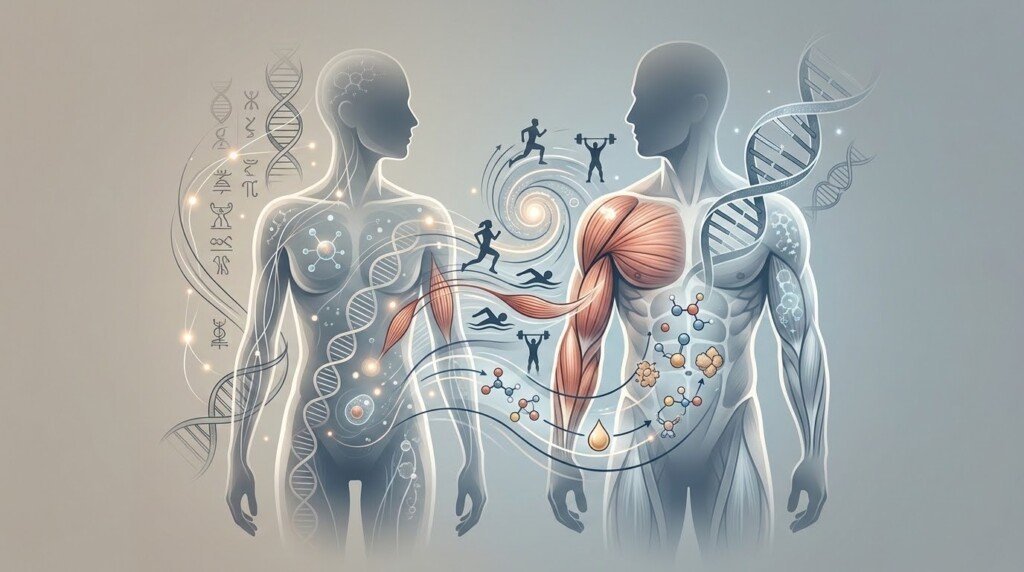
Lifestyle can influence muscle retention, muscle growth, physical fitness, and fat accumulation even when genetic differences remain.
This is particularly important because genetics are often used to explain outcomes that are actually the result of years of habits.
A person might say, “I have always been skinny fat,” but when they look back honestly, they may discover that they have also spent years sitting for most of the day, doing little resistance training, eating inconsistently, sleeping poorly, or repeatedly following restrictive diets.
That does not mean genetics are irrelevant. It means the explanation may be more complicated than it initially appears.
Why do some people become skinny fat despite looking thin their whole life?
This is one of the more interesting questions because a naturally thin appearance can hide changes in body composition.
Some people remain relatively light throughout their lives without building much muscle. If they are young and naturally active, that may not be obvious. Their body may look lean simply because their total fat mass is not high.
As activity decreases with age, however, the same person may gradually lose muscle while gaining some fat.
Their weight might remain surprisingly stable.
This is where the scale can become misleading.
Suppose someone weighs 65 kilograms at age 25 and again at age 40. It would be easy to assume that nothing important has changed.
But imagine that their earlier body composition included considerably more muscle and less fat. Over the following fifteen years, they became less active, stopped strength training, and spent more time sitting. Their weight stayed close to 65 kilograms, but some muscle was replaced by fat.
The scale would barely notice.
Their body would.
This pattern is one reason people who have always been “thin” can become concerned about their shape later in adulthood. They may notice a softer waist, less muscle definition, reduced strength, or clothes fitting differently even though they have never considered themselves overweight.
Another factor is the gradual reduction in everyday movement.
Someone does not need to become completely sedentary for their activity level to change. Walking less, taking fewer stairs, spending more time driving, working from home, and reducing recreational activity can collectively lower daily energy expenditure.
At the same time, appetite may not decrease proportionally.
The result can be a slow shift in body composition rather than dramatic weight gain.
There is also the issue of muscle memory and training history.
Someone who has never developed much muscle has a different starting point from someone who previously trained consistently and later became inactive. The latter may have more experience maintaining or rebuilding muscle when they return to resistance training.
This is another reason body composition should be viewed as a dynamic process rather than a permanent body type.
A person who has always been thin is not necessarily protected from losing muscle or accumulating fat.
What role does a sedentary lifestyle play in creating skinny fat?
Low daily movement is one of the most practical factors to consider.
You can technically be a normal weight while spending most of the day sitting. Your body may not require large amounts of energy to maintain that routine, but your muscles also receive relatively little demand.
Muscles adapt to the demands placed on them.
If daily life consistently provides little resistance or physical challenge, there is less stimulus for maintaining high levels of muscular strength and size.
This does not mean someone needs to exercise for hours every day. It means that regular movement and resistance training serve different purposes.
Walking can support general activity and cardiovascular health. Resistance training provides a specific stimulus for muscle.
A balanced approach therefore makes more sense than treating one type of exercise as a replacement for everything else.
This is especially relevant for people who identify as “thin” and therefore assume they do not need to train.
Being thin is not the same as being muscular.
Likewise, being heavier does not automatically mean someone has poor body composition.
The useful target is not a particular appearance. It is a body that has an appropriate amount of muscle and body fat for the individual’s health, goals, and circumstances.
Can years of cardio without strength training contribute to skinny fat?
They can contribute indirectly, but cardio should not be blamed for the problem.
Cardiovascular exercise is valuable. It can improve aerobic fitness, support heart health, increase physical activity, and contribute to energy expenditure.
The problem is balance.
If someone performs large amounts of cardio while consistently neglecting resistance training, they may not receive enough muscular stimulus to maximize muscle retention or development.
This becomes particularly relevant during periods of calorie restriction.
When energy intake is reduced, the body does not simply remove fat and leave everything else untouched. Weight loss can involve both fat mass and lean mass. Resistance training and adequate nutrition can help support the preservation of lean tissue.
Therefore, a person who repeatedly uses long cardio sessions as their primary strategy for changing their body composition may become lighter without developing the muscular foundation they actually want.
This can create the frustrating situation of being lighter but still feeling “soft.”
The answer is not necessarily to stop cardio. It is to stop treating cardio as the only tool available.

Can genetics make someone more likely to store fat while remaining thin?
Yes, genetic differences can influence fat distribution and body composition.
Some people naturally carry more fat in certain areas, while others distribute it differently. Genetics also influence characteristics related to muscle development and energy regulation.
This helps explain why two people with similar body weights can have noticeably different physiques.
However, genetics do not make lifestyle irrelevant.
Someone may have a stronger genetic tendency toward storing body fat, but their muscle mass can still respond to resistance training. Their physical activity can still change. Their dietary quality can still improve.
Likewise, someone who naturally stays thin can still benefit from strength training and adequate nutrition.
Genetics explain differences between people. They do not eliminate the value of behavior.
A more useful way to think about the skinny-fat problem
The phrase “skinny fat” can make the situation sound like a strange contradiction.
It is actually easier to understand when you stop thinking about weight and start thinking about proportions.
Imagine a simple balance between muscle and fat.
If muscle decreases while fat stays the same, body-fat percentage rises.
If muscle decreases while fat increases, body-fat percentage can rise even more.
If someone maintains their body weight while losing muscle and gaining fat, the scale may report almost no change even though their composition has shifted substantially.
That is the central concept behind the term.
It also explains why trying to solve every body-composition concern through weight loss can backfire.
If someone is already relatively light, aggressively cutting calories may make the scale move down without addressing the underlying lack of muscle.
The better question may be, “How can I improve the proportion of muscle to fat?”
That is a different objective from simply becoming lighter.
For readers who want to understand the distinction between appearance, weight, and actual composition, what is skinny fat provides the foundation for interpreting the term and its practical meaning.
Why the “normal weight” label can be misleading
Weight categories can be useful for population-level health screening, but they do not describe everything happening inside an individual body.
Two people can have the same body mass index and very different amounts of muscle and fat.
This is particularly relevant when someone has a relatively small frame or low total body weight. A moderate amount of body fat can represent a larger percentage of their overall weight if muscle mass is also low.
That does not mean everyone who looks soft is unhealthy.
Appearance alone cannot diagnose body composition or disease.
It also does not mean having visible abdominal definition is a requirement for health.
The useful takeaway is simply that body weight is one measurement among many.
Strength, physical activity, waist circumference, body-fat estimates, fitness, nutrition, and overall health all provide additional context.
Why genetics should be considered without becoming an excuse
A balanced view of genetics is more useful than either blaming or ignoring them.
If genetics influence your body composition, acknowledging that can help explain why your experience differs from someone else’s.
But recognizing genetic influence should lead to better expectations, not helplessness.
For example, someone who naturally gains muscle slowly may need more patience with strength training. Someone who tends to gain fat around the abdomen may need to pay attention to overall body composition rather than relying on clothing size as the only indicator.
The important distinction is between influence and determination.
Genes influence your response.
They do not write every chapter of the story.
Your training history, nutrition, activity level, sleep, age, and long-term habits all interact with that biological starting point.
That is why blaming genetics for every unfavorable body-composition change is usually an incomplete explanation.
Frequently Asked Questions
1. What causes skinny fat?
The most common contributors include low muscle mass, insufficient resistance training, sedentary behavior, poor overall diet quality, repeated restrictive dieting, aging-related muscle loss, and individual genetic differences. Usually, it is the interaction of several factors rather than one specific cause.
2. Is skinny fat genetic?
Genetics can influence muscle development, fat distribution, appetite, and other characteristics related to body composition. However, genetics are not the only factor. Training, nutrition, physical activity, age, and other lifestyle factors can substantially influence the final result.
3. Can a poor diet cause skinny fat even if I’m not overweight?
Yes. A person can maintain a normal body weight while eating a diet that provides inadequate protein or poor overall nutritional quality and while doing little resistance training. Normal weight does not automatically mean an optimal muscle-to-fat ratio.
4. Can cardio cause skinny fat?
Cardio itself does not cause skinny fat. The concern is an unbalanced routine in which someone performs substantial cardio but does little resistance training and does not adequately support muscle maintenance. Cardio and strength training can serve complementary roles.
5. Can you fix skinny fat?
Body composition can often be improved by addressing the factors that contributed to it, particularly resistance training, appropriate nutrition, adequate protein, and regular physical activity. The specific approach depends on the individual’s starting body composition, health, goals, and training experience.
Disclaimer:
This post may contain affiliate links. If you purchase through them, we may earn a small commission at no extra cost to you. Also, this content is for informational purposes only and does not substitute professional medical advice.
Ready to Start Your Journey?
Use our free 7-in-1 Weight Loss Toolkit to calculate your numbers and build your plan in minutes.
Open Free Tools →