
Why Is Portion Control So Hard to Stick To?
Almost everyone has experienced it at some point. You decide to eat more balanced portions, and for a few days everything feels manageable. Meals are planned, serving sizes seem reasonable, and motivation is high. Then life happens. A busy workday leads to takeout, a family celebration includes oversized portions, or an evening of mindless snacking turns into eating far more than intended. Suddenly, it feels as though all progress has disappeared.
If this sounds familiar, you’re not alone. One of the biggest misconceptions about portion control is that people struggle because they lack discipline. In reality, why is portion control hard has far more to do with psychology, biology, habits, and the environment than simple willpower.
Our brains evolved in a world where food was uncertain, not constantly available. Modern life surrounds us with oversized restaurant meals, endless snack options, social pressure to eat more, and highly rewarding foods that are difficult to ignore. At the same time, our appetite is influenced by hormones, emotions, routines, sleep, and stress. When all of these factors work together, maintaining balanced portions becomes much more challenging than simply deciding to eat less.
Understanding these influences is important because it changes the conversation. Instead of asking, “Why can’t I stick with portion control?” a more helpful question becomes, “What is making portion control difficult in this situation?” That shift encourages curiosity instead of self-criticism and helps explain why so many previous attempts may have felt frustrating.
This article explores the behavioral, environmental, and biological reasons portion control often feels difficult, while showing why struggling with portions is a common human experience rather than a personal failure.
Quick Answer
The main reason why is portion control hard is that eating behavior is influenced by far more than hunger alone. Habits, emotions, oversized food environments, social situations, appetite hormones, and automatic routines all affect how much we eat. Portion control becomes easier when these influences are understood rather than mistaken for a lack of willpower.
What Makes Portion Control So Difficult to Maintain?
Many people believe portion control should become easy after learning what a balanced serving looks like.
In reality, knowing the right portion and consistently eating it are two completely different skills.
Knowledge explains what to do.
Behavior determines whether it actually happens.
Imagine someone who knows exactly how much rice, chicken, and vegetables make a balanced dinner. That knowledge does not automatically prepare them for a stressful evening after work, a buffet during vacation, or a celebration where everyone encourages second helpings.
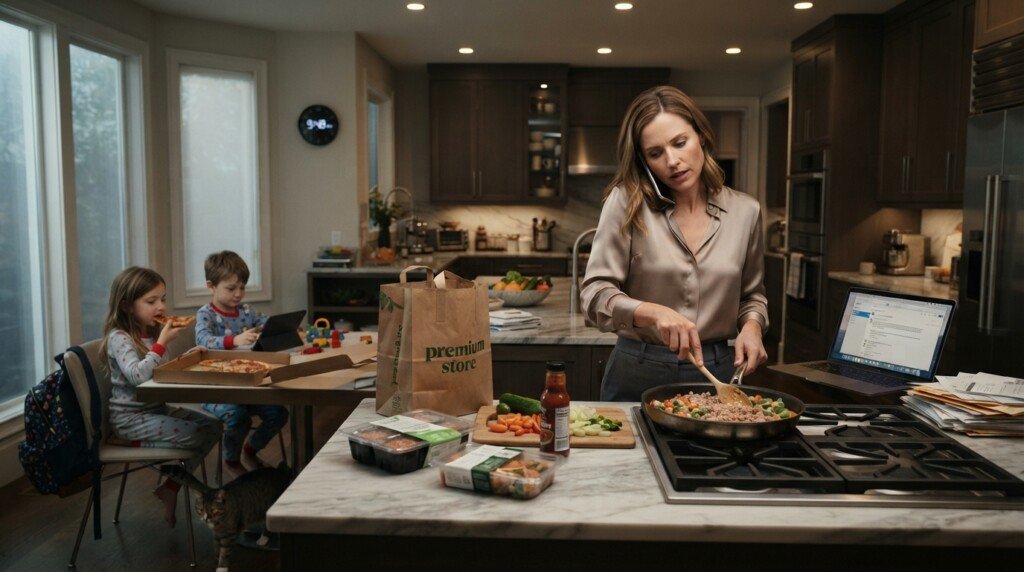
Portion control happens in real life, not inside textbooks.
Everyday life introduces distractions that nutrition charts cannot predict.
Busy schedules reduce planning.
Restaurants normalize oversized meals.
Social events encourage generosity.
Emotions influence appetite.
Habits guide decisions long before conscious thinking begins.
These influences often overlap.
Someone arriving home exhausted after skipping lunch is not responding only to hunger. Fatigue, convenience, emotions, environment, and biology may all be influencing the meal that follows.
Recognizing these overlapping factors is one of the most helpful steps toward understanding why portion control sometimes feels surprisingly difficult even when motivation remains strong.
What Psychological Factors Make Portion Control Challenging?
Human eating behavior is remarkably automatic.
Most meals involve hundreds of tiny decisions that happen with very little conscious thought.
Which plate to choose.
How much rice to scoop.
Whether to refill a drink.
Whether to finish everything served.
These actions often occur from habit rather than careful planning.
Habits develop because the brain prefers efficiency.
Repeated behaviors eventually require very little mental effort.
If someone has routinely filled a dinner plate a certain way for years, changing that routine naturally feels uncomfortable at first.
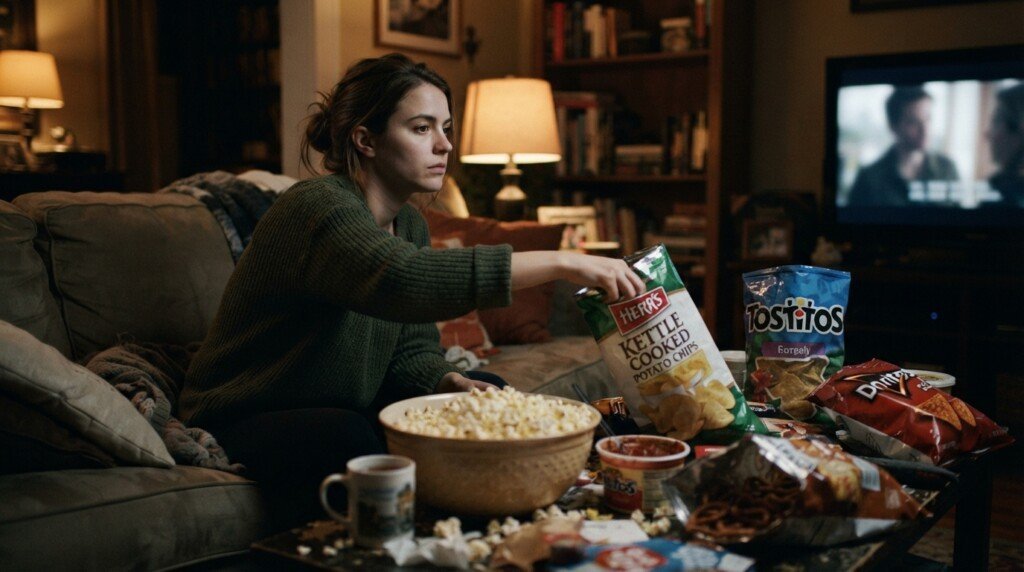
Another important factor is decision fatigue.
Every day requires countless decisions involving work, family, finances, transportation, and responsibilities.
As mental energy decreases, people become more likely to rely on familiar habits rather than intentional choices.
Food is no exception.
After an exhausting day, convenience often wins over careful portion awareness.
The brain also responds strongly to rewarding foods.
Meals high in sugar, fat, salt, or combinations of these ingredients activate reward pathways that encourage continued eating.
This does not mean these foods are inherently harmful.
It simply explains why stopping after one serving sometimes feels more difficult than expected.
Expectation also influences eating.
Large plates encourage larger servings.
Bigger packages encourage larger portions.
Seeing abundant food signals that eating more is acceptable.
These environmental cues often operate below conscious awareness.
Understanding these psychological influences helps replace self-blame with realistic expectations.
Portion control feels difficult not because the brain is broken, but because the brain naturally responds to habits, rewards, and environmental signals.
What Physiological or Hormonal Barriers Affect Appetite Regulation?
Psychology explains only part of the picture.
Our bodies also regulate hunger through complex biological systems that constantly respond to energy needs.
Two hormones often discussed in appetite regulation are ghrelin and leptin.
Ghrelin generally rises before meals and contributes to feelings of hunger.
Leptin helps communicate longer-term energy availability and fullness.
Together with many other hormones, they influence when we feel hungry, satisfied, or ready to eat again.
Sleep, physical activity, illness, stress, and everyday routines can all influence these signals.
For example, someone sleeping poorly for several nights may notice stronger hunger even when meal patterns remain unchanged.
Similarly, highly active individuals often require more food than someone with lower daily energy expenditure.
The important point is that appetite is not controlled by willpower alone.
It is regulated through an ongoing conversation between the brain and the body.
Because hormone science is a complex topic on its own, the detailed explanation of appetite regulation, including ghrelin, leptin, and other hunger hormones, is explored separately in Hunger Hormones.
Understanding that biology contributes to appetite often reduces unnecessary guilt.
Feeling hungry does not automatically indicate a lack of discipline.
It may simply reflect the body’s natural regulatory systems responding to its current needs.
How Can Understanding Cravings and Emotional Eating Help Manage Portions?
Not every desire to eat begins with physical hunger.
Sometimes food is connected to comfort.
Sometimes to celebration.
Sometimes to boredom.
Sometimes simply because eating has become part of a familiar routine.
Recognizing this distinction often makes portion control feel less confusing.
When someone understands that a craving may reflect emotion rather than physical hunger, they are more likely to pause before automatically serving additional food.
This does not mean cravings should always be ignored.
Nor does it mean emotional eating is unusual.
It simply highlights that appetite is influenced by far more than stomach fullness.
Because emotional eating and cravings involve their own complex psychological patterns, they deserve separate discussions rather than a brief explanation here.
If you notice emotions repeatedly influencing your portions, Emotional Eating Triggers explores those patterns in much greater depth and explains why they occur.
Similarly, if restaurant meals consistently make balanced portions difficult, understanding Restaurant Portion Sizes helps explain why oversized servings so strongly influence eating behavior.
Learning why cravings occur does not eliminate them overnight.
However, it often transforms confusion into understanding, making balanced portion awareness much easier to maintain over time.
How Do Social Situations Sabotage Portion Control Efforts?
If maintaining balanced portions feels relatively easy at home but much harder around other people, you’re experiencing something completely normal.
Food has always been about more than nutrition. It brings families together, celebrates achievements, strengthens friendships, and creates traditions that people remember for years. Because eating is such a deeply social activity, portion control is influenced by far more than personal hunger.
Think about a typical celebration.
The table is full.
People encourage second helpings.
Desserts are shared.
Someone insists you “have just a little more.”

Very few of these moments come from bad intentions. Most are expressions of generosity and hospitality.
The challenge is that social environments often encourage eating according to the occasion rather than according to hunger.
Unlike eating alone, social meals introduce additional influences.
Conversation distracts us from fullness signals.
Large serving dishes remain visible throughout the meal.
Everyone else continues eating.
Refills appear without being requested.
The pace of eating often extends far longer than an ordinary meal.
These situations make portion awareness considerably more difficult because attention shifts from internal cues toward the surrounding environment.
Understanding these influences is important because it explains why many people find portion control inconsistent rather than impossible.
The goal is not perfection at every gathering.
It is recognizing which situations naturally make balanced eating more challenging.
What Are Common Social Triggers That Lead to Overeating?
Most social overeating begins long before the first bite.
The environment itself quietly shapes eating behavior.
One of the strongest triggers is abundance.
Buffets, holiday tables, family-style dinners, and celebrations often present far more food than anyone could realistically need.
Simply seeing numerous options encourages people to sample multiple dishes even when hunger has already begun to fade.
Another common trigger is eating for the occasion instead of hunger.
Birthdays.
Wedding receptions.
Sporting events.
Office parties.
Weekend gatherings.
Food becomes part of the experience itself.
People often continue eating because everyone else is enjoying themselves rather than because additional food is physically satisfying.
Distraction also plays a significant role.
Conversations naturally shift attention away from eating.
People may finish entire plates while barely remembering individual bites because their focus remains on social interaction.
Meal timing can contribute as well.
Many celebrations occur after long workdays or involve delayed meals. Arriving genuinely hungry makes oversized portions even more appealing before fullness has enough time to develop.
Alcohol may influence portion awareness for some adults by reducing attention to internal fullness signals while simultaneously increasing appetite.
Another subtle trigger is the desire to avoid waste.
Large restaurant servings or generous family meals often create pressure to finish everything simply because food has already been served.
This is one reason understanding Restaurant Portion Sizes becomes especially valuable before frequent dining out.
Recognizing these situations does not mean avoiding them.
Instead, it helps explain why balanced portions often feel easier in quiet everyday meals than during highly stimulating social events.
How Does Peer Pressure Influence Portions in Social Settings?
Peer pressure around food is rarely obvious.
Very few people directly tell someone to overeat.
Instead, it usually appears through small comments and shared expectations.
“Have another slice.”
“You hardly ate anything.”
“Come on, it’s a celebration.”
“You can start your healthy eating tomorrow.”
These remarks are typically meant to be friendly.
Yet they can make balanced choices feel surprisingly uncomfortable.
Humans naturally seek belonging.
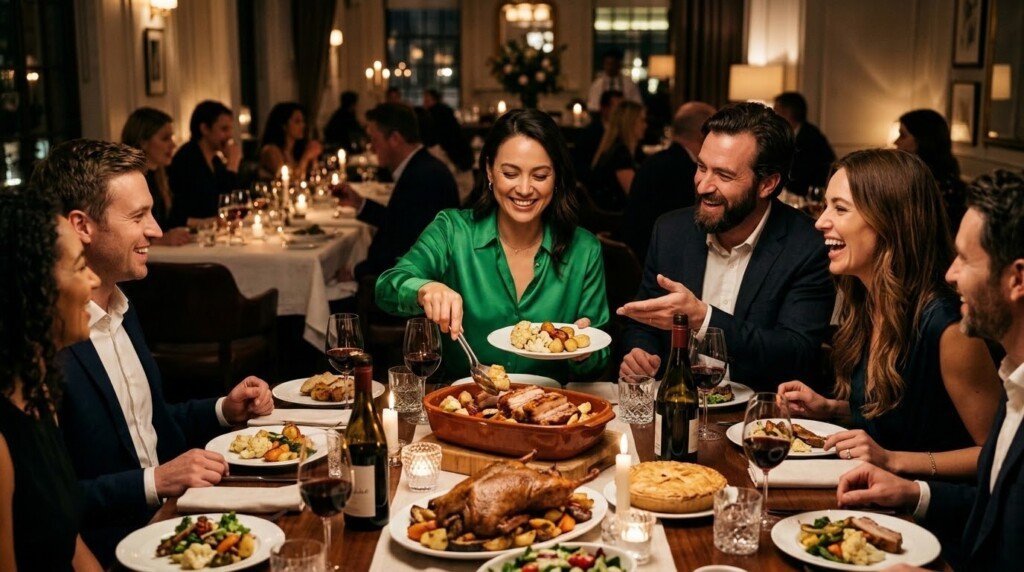
Eating similar amounts to the people around us often happens automatically because matching group behavior creates social comfort.
This phenomenon is well documented across many aspects of human behavior.
When everyone at the table orders appetizers, dessert, and large entrées, choosing differently may feel awkward even if no one openly criticizes the decision.
Families also shape expectations.
Many people grow up hearing messages such as:
“Finish everything on your plate.”
“Don’t waste food.”
“Take seconds.”
These habits often continue into adulthood long after nutritional needs have changed.
Workplace culture creates similar challenges.
Celebration cakes.
Shared snacks.
Team lunches.
Free food during meetings.
Repeated exposure to these situations makes portion awareness more difficult because eating becomes tied to participation rather than hunger.
Importantly, maintaining balanced portions does not require refusing every social meal.
Most people respond positively when choices are made confidently without apology.
Simple decisions made quietly often receive far less attention than we imagine.
Confidence frequently reduces perceived social pressure.
How Can I Maintain Portion Control at Holidays and Celebrations Without Feeling Deprived?
Many people approach holidays believing they must choose between two extremes.
Either eat everything without limits.
Or avoid favorite foods completely.
Neither approach is particularly satisfying.
Celebrations are meant to be enjoyed.
The goal is finding balance rather than creating unnecessary rules.
One helpful mindset is deciding that special meals deserve enjoyment, but not discomfort.
There is a meaningful difference between feeling pleasantly satisfied and feeling painfully overfull.
Slowing down naturally supports this distinction.
Holiday meals often last for several hours.
There is rarely a need to rush.

Eating more slowly provides greater opportunity for fullness signals to develop before returning for additional servings.
Surveying the entire table before filling a plate can also make a surprising difference.
Instead of automatically taking everything available, many people enjoy celebrations more when choosing the foods that genuinely matter most to them.
Another practical strategy involves remembering that celebrations create memories through people rather than portions.
Conversations.
Family traditions.
Shared laughter.
Stories.
These experiences remain meaningful regardless of whether every available dish appears on the plate.
If leftovers are available, reminding yourself that favorite foods can be enjoyed again tomorrow often reduces the feeling that every bite must be eaten immediately.
Most importantly, avoid viewing one celebration as evidence of success or failure.
Balanced eating develops over months and years.
One holiday meal does not define your overall health any more than one balanced lunch guarantees lifelong nutrition.
Approaching celebrations with flexibility rather than rigid rules often leads to a much healthier relationship with food while still allowing special occasions to remain exactly that: special.
Key Takeaways
Understanding why is portion control hard changes the conversation from blame to awareness. Portion control is influenced by habits, environment, appetite, emotions, restaurants, and social situations, all of which shape eating behavior long before conscious decisions are made. Recognizing these influences helps explain why maintaining balanced portions often feels difficult despite good intentions.
The encouraging news is that struggling with portions is not evidence of weak willpower. It reflects the complex interaction between biology, psychology, and everyday life. By understanding these challenges and approaching them with flexibility rather than perfection, balanced eating becomes far more realistic and sustainable over the long term.
Frequently Asked Questions
1. Why can’t I stick to portion control?
Most people struggle because eating is influenced by habits, emotions, social situations, oversized portions, and appetite regulation rather than willpower alone. Recognizing these influences makes it easier to build realistic long-term habits.
2. Does stress make portion control harder?
Yes. Stress can increase the desire for comforting foods while making thoughtful decision-making more difficult. It may also influence appetite through hormonal pathways, although those mechanisms are discussed in greater detail in the Hunger Hormones article.
3. How do I handle portion control at parties?
Focus on enjoying the occasion rather than trying to eat perfectly. Eat slowly, choose the foods you genuinely want most, and remember that conversation and connection are just as important as the meal itself.
4. Why do restaurants make portion control difficult?
Restaurants often serve meals that are much larger than recommended serving sizes because generous portions increase customers’ perception of value. These oversized portions naturally encourage people to eat more than they originally intended.
5. Is struggling with portion control normal?
Absolutely. Modern food environments, social expectations, emotional influences, and biological appetite regulation all make portion control more challenging than many people realize. Struggling occasionally is a common human experience, not a personal failure.
Conclusion
If you’ve ever wondered why is portion control hard, the answer is far more reassuring than many people expect. The challenge rarely comes from a lack of motivation or discipline. Instead, it reflects the combined influence of lifelong habits, social environments, oversized restaurant meals, emotional experiences, and the body’s own appetite regulation systems. Understanding these influences replaces frustration with perspective and helps explain why balanced eating can feel easier in some situations than in others.
Rather than expecting perfect consistency, aim for steady awareness. Every meal offers another opportunity to make thoughtful choices without judging yourself for previous ones. Over time, recognizing the situations that make portion control more difficult allows you to prepare for them, respond with greater confidence, and build eating habits that remain realistic through everyday life, celebrations, restaurants, and everything in between.
Disclaimer:
This post may contain affiliate links. If you purchase through them, we may earn a small commission at no extra cost to you. Also, this content is for informational purposes only and does not substitute professional medical advice.
Ready to Start Your Journey?
Use our free 7-in-1 Weight Loss Toolkit to calculate your numbers and build your plan in minutes.
Open Free Tools →