
Can You Lose Weight During Perimenopause? A Practical Guide
Many women are surprised when weight begins creeping up in their forties, even though their eating habits and exercise routines have not changed much. Clothes become tighter around the waist, energy levels seem lower, and losing a few pounds suddenly requires much more effort than it did a decade earlier. For many, these changes begin long before menopause itself.
This stage is called perimenopause.
Perimenopause is the transitional period leading up to menopause, during which hormone levels fluctuate rather than decline in a straight line. Estrogen and progesterone rise and fall unpredictably, menstrual cycles become less regular, and symptoms such as sleep disturbances, mood changes, and fatigue often begin to appear. These hormonal shifts can influence appetite, body composition, and metabolism, making weight management feel increasingly difficult.
However, difficulty does not mean impossibility.
One of the biggest myths surrounding Perimenopause Weight Loss is that women cannot lose weight until menopause is over. Scientific research does not support this belief. While hormonal changes certainly create new challenges, healthy nutrition, resistance training, adequate protein intake, quality sleep, and consistent physical activity continue to be highly effective for improving body composition.
Understanding what changes during perimenopause allows you to adjust your strategy instead of becoming discouraged. Rather than relying on restrictive diets or excessive exercise, focusing on sustainable habits can help preserve muscle, reduce body fat, and support long-term metabolic health.
In this article, you’ll learn what perimenopause actually is, why weight gain often begins during this stage, whether losing weight is still possible, which foods and exercises provide the greatest benefits, which daily habits support success, and when weight changes should be discussed with a healthcare professional.
What Is Perimenopause?
Perimenopause is the natural transition leading up to menopause.
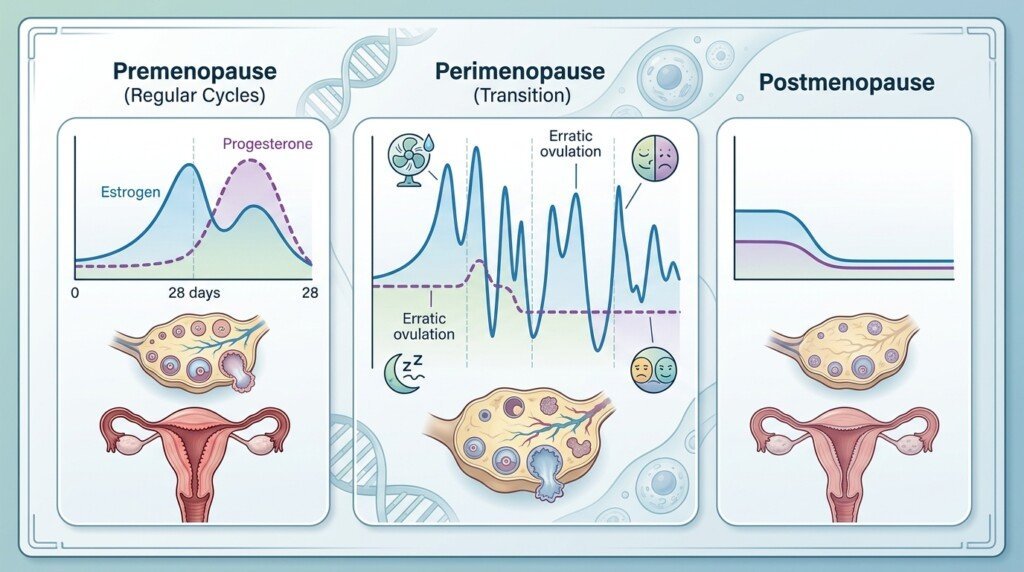
During this time, the ovaries gradually begin producing hormones less consistently. Hormone levels fluctuate from month to month, and menstrual cycles often become irregular before eventually stopping altogether.
This transition may begin several years before menopause and varies greatly from one woman to another.
Perimenopause Is Different From Menopause
Many people use the two terms interchangeably, but they are not the same.
Perimenopause refers to the years leading up to menopause.
Menopause is officially reached after twelve consecutive months without a menstrual period.
Understanding this distinction helps explain why symptoms may begin long before menopause itself.
Hormones Become Less Predictable
During perimenopause, estrogen and progesterone no longer follow their previous monthly patterns.
Instead, hormone levels fluctuate considerably.
These changes may influence:
- Appetite
- Energy levels
- Sleep
- Mood
- Body composition
Because hormone levels vary from month to month, symptoms often come and go as well.
Menstrual Changes Often Appear First
Many women first notice perimenopause because their menstrual cycles become less predictable.
Changes may include:
- Longer cycles
- Shorter cycles
- Heavier bleeding
- Lighter bleeding
- Skipped periods
These changes are a normal part of the transition for many women.
Body Composition Begins to Change
Perimenopause affects more than reproductive hormones.
Many women also notice gradual changes in:
- Muscle mass
- Fat distribution
- Waist circumference
- Recovery after exercise
These changes often begin before significant weight gain becomes noticeable.
Every Woman Experiences Perimenopause Differently
Some women experience only mild symptoms.
Others notice more substantial changes affecting daily life.
Factors such as genetics, lifestyle, sleep, nutrition, and physical activity all influence how the transition feels.
Why Does Weight Gain Start During Perimenopause?
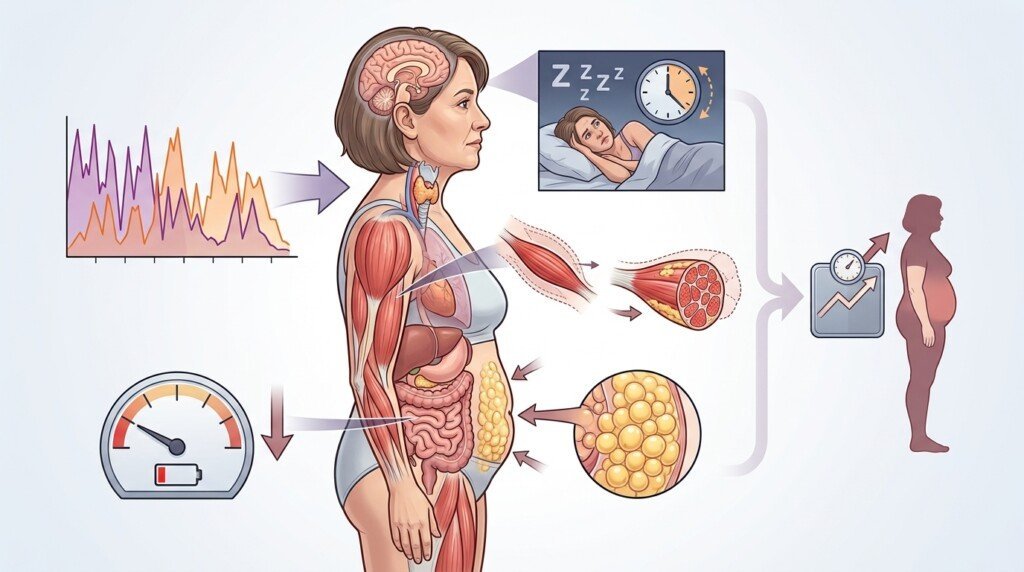
Weight gain during perimenopause rarely has a single cause.
Instead, several biological and lifestyle factors gradually combine over time.
Understanding these changes makes it easier to develop realistic expectations.
Estrogen Begins to Fluctuate
One of the biggest changes during perimenopause is fluctuating estrogen.
Rather than steadily declining, estrogen may rise and fall unpredictably.
These fluctuations can influence:
- Appetite
- Fat distribution
- Muscle maintenance
- Energy balance
Many women notice that fat gradually shifts toward the abdomen during this stage.
Progesterone Also Changes
Progesterone levels gradually become less predictable as well.
Although progesterone is not directly responsible for body fat, changes may influence:
- Sleep quality
- Fluid retention
- Mood
- Overall well-being
These indirect effects sometimes make maintaining healthy habits more challenging.
Muscle Mass Gradually Declines
Age-related muscle loss often begins before menopause.
Without regular resistance training, women gradually lose lean muscle over time.
Because muscle burns more calories than body fat, this reduction lowers daily energy needs.
If calorie intake remains unchanged, gradual weight gain becomes more likely.
Sleep May Become Less Restorative
Sleep disturbances become increasingly common during perimenopause.
Poor sleep may contribute to:
- Greater hunger
- Increased cravings
- Lower energy
- Reduced motivation to exercise
- Slower recovery
These changes indirectly affect body weight over time.
Daily Activity Often Changes
Busy careers, family responsibilities, and fatigue may reduce everyday movement.
Even modest reductions in daily activity lower total calorie expenditure over several years.
Combined with hormonal changes, this contributes to gradual weight gain.
Women who have already experienced similar changes after forty often recognize many of these patterns discussed throughout Weight Loss After 40, where aging and lifestyle influences are explored in greater detail.
Can You Lose Weight During Perimenopause?
Yes.
Despite the challenges created by hormonal fluctuations, research consistently shows that women can successfully lose body fat during perimenopause.
The key is adjusting your strategy rather than relying on approaches that worked years earlier.

Weight Loss May Be Slower
Many women notice that progress becomes more gradual.
Instead of expecting rapid changes, aim for steady improvements over several months.
Slow progress is often more sustainable than aggressive dieting.
Focus on Body Composition
Body composition becomes increasingly important during perimenopause.
Rather than measuring success only by body weight, also monitor:
- Waist circumference
- Clothing fit
- Strength gains
- Progress photos
- Energy levels
These measurements often show progress before the scale changes dramatically.
A Moderate Calorie Deficit Still Works
Hormonal changes do not eliminate the importance of energy balance.
Creating a moderate calorie deficit while preserving muscle remains one of the most effective ways to reduce body fat.
Severely restricting calories often makes long-term adherence much more difficult.
Muscle Preservation Should Be a Priority
Maintaining lean muscle helps support:
- Healthy metabolism
- Strength
- Physical function
- Daily energy expenditure
This is why resistance training becomes increasingly valuable during perimenopause.
Many of these principles continue throughout Menopause Weight Loss, where preserving muscle and improving body composition remain central strategies.
Consistency Matters More Than Perfection
Perimenopause rewards sustainable habits rather than short periods of extreme effort.
Balanced nutrition, regular exercise, adequate sleep, and stress management consistently outperform restrictive diets over the long term.
Which Foods Support Perimenopause Weight Loss?
Nutrition becomes increasingly important during perimenopause because your body’s energy needs gradually change.
The goal is not eliminating entire food groups but building meals that support muscle maintenance, fullness, and long-term metabolic health.

Eat Enough Protein
Protein supports:
- Lean muscle
- Recovery
- Satiety
- Healthy body composition
Excellent choices include:
- Fish
- Chicken
- Turkey
- Eggs
- Greek yogurt
- Cottage cheese
- Beans
- Lentils
- Tofu
Including protein at every meal also helps reduce hunger between meals.
A protein-rich morning meal can make this easier, which is why many women benefit from the balanced meal ideas discussed throughout Best Breakfast for Weight Loss.
Choose High-Fiber Foods
Fiber supports fullness while helping regulate digestion.
Excellent sources include:
- Vegetables
- Fruits
- Beans
- Lentils
- Oats
- Whole grains
- Seeds
High-fiber meals naturally make calorie control easier.
Include Healthy Fats
Healthy fats contribute to meal satisfaction and overall nutrition.
Choose foods such as:
- Olive oil
- Avocados
- Nuts
- Seeds
- Fatty fish
Portion awareness remains important because fats are calorie dense.
Prefer Whole Foods
Build most meals around minimally processed foods.
A balanced plate containing lean protein, vegetables, whole grains, and healthy fats supports long-term consistency far better than restrictive eating plans.
Which Exercises Are Most Effective?
Exercise becomes even more valuable during perimenopause because it helps preserve lean muscle, supports metabolism, and improves body composition. Rather than searching for one “best” workout, aim for a balanced routine that combines strength training, cardiovascular exercise, and daily movement.
The goal is not simply to burn calories. It is to build a stronger body that supports healthy weight management throughout the menopausal transition.

Make Strength Training Your Priority
Resistance training is one of the most effective forms of exercise during perimenopause.
As estrogen fluctuates, maintaining muscle becomes increasingly important because muscle naturally declines with age if it is not challenged.
Strength training helps:
- Preserve lean muscle
- Improve body composition
- Increase strength
- Support bone health
- Improve functional fitness
- Maintain daily calorie expenditure
Exercises may include:
- Squats
- Lunges
- Rows
- Push-ups
- Deadlifts
- Resistance band exercises
- Dumbbell workouts
Aim for two or three full-body sessions each week.
Many women notice improvements in both strength and body composition after consistently following the principles discussed throughout Strength Training for Fat Loss.
Walk More Every Day
Walking remains one of the simplest and most sustainable forms of exercise.
Regular walking supports:
- Heart health
- Daily calorie expenditure
- Stress reduction
- Blood sugar management
- Long-term consistency
Even adding several short walks throughout the day can significantly increase overall activity.
Include Cardiovascular Exercise
Aerobic exercise supports cardiovascular health while increasing overall energy expenditure.
Examples include:
- Cycling
- Swimming
- Brisk walking
- Dancing
- Hiking
- Elliptical training
Choose activities you enjoy because consistency is far more important than intensity alone.
Improve Flexibility and Balance
Perimenopause is also a good time to prioritize mobility.
Activities such as stretching, yoga, and balance exercises help maintain:
- Joint mobility
- Coordination
- Posture
- Recovery
These improvements support an active lifestyle for years to come.
Recovery Is Essential
Your body becomes stronger during recovery, not during the workout itself.
Support recovery by:
- Sleeping enough
- Eating adequate protein
- Drinking plenty of water
- Taking planned rest days
Consistent recovery helps you continue exercising without unnecessary fatigue.
Which Daily Habits Improve Results?
Successful Perimenopause Weight Loss depends on everyday habits far more than occasional bursts of motivation.
Small behaviors repeated consistently often produce the greatest long-term improvements.

Prioritize Quality Sleep
Hormonal fluctuations frequently affect sleep during perimenopause.
Poor sleep may contribute to:
- Increased hunger
- Stronger cravings
- Lower energy
- Reduced exercise performance
- Slower recovery
Helpful sleep habits include:
- Going to bed at the same time each night
- Keeping your bedroom cool
- Limiting screens before bedtime
- Reducing caffeine later in the day
Better sleep often improves appetite regulation and makes healthy decisions easier.
Learn to Manage Stress
Perimenopause often coincides with demanding careers, family responsibilities, and other life changes.
Long-term stress can make healthy habits more difficult by increasing emotional eating and reducing motivation to exercise.
Helpful stress management strategies include:
- Walking outdoors
- Meditation
- Deep breathing
- Reading
- Yoga
- Spending time with family and friends
These habits support both physical and emotional well-being.
Many of these strategies complement the ideas discussed throughout Stress and Weight Loss, where chronic stress and eating behaviors are explored in greater detail.
Plan Meals Ahead
Planning meals reduces impulsive food choices during busy days.
Preparing healthy foods in advance helps you stay consistent even when your schedule becomes hectic.
Simple meal planning often removes unnecessary decision-making.
Stay Hydrated
Proper hydration supports:
- Digestion
- Physical performance
- Appetite regulation
- Overall health
Many people mistake mild dehydration for hunger.
Drinking water consistently throughout the day supports healthier eating patterns.
Focus on Long-Term Habits
Avoid chasing perfection.
Instead, aim for routines you can maintain throughout perimenopause and beyond.
Healthy nutrition, regular movement, strength training, quality sleep, and stress management work best when they become part of your lifestyle rather than temporary projects.
When Should You Talk to Your Doctor?
Weight changes are common during perimenopause, but there are situations where professional advice is appropriate.
Seeking medical guidance helps ensure your symptoms receive proper evaluation while supporting your long-term health.
Weight Changes Are Sudden
Gradual weight gain is common during perimenopause.
However, rapid unexplained weight gain or weight loss deserves professional evaluation.
Symptoms Significantly Affect Daily Life
If symptoms regularly interfere with:
- Sleep
- Exercise
- Eating habits
- Work
- Overall quality of life
your healthcare provider can help determine appropriate next steps.
Healthy Habits Are Not Improving Progress
If you have consistently followed balanced nutrition, regular exercise, strength training, and healthy sleep habits for several months without meaningful improvement, personalized medical guidance may help identify additional contributing factors.
You Have Other Concerning Symptoms
Persistent fatigue, unusual weakness, ongoing digestive symptoms, or other unexpected health changes should always be discussed with a healthcare professional.
Avoid assuming hormones explain every symptom.
Individual Guidance Is Valuable
Every woman’s perimenopause experience is unique.
Personalized advice allows you to build a realistic plan that supports both your current health and long-term well-being.

Frequently Asked Questions
1. Can you lose weight during perimenopause?
Yes. Although fluctuating hormones may make weight loss slower, a moderate calorie deficit, resistance training, balanced nutrition, adequate protein, and healthy lifestyle habits remain effective for reducing body fat.
2. Why does weight gain often begin during perimenopause?
Fluctuating estrogen and progesterone, age-related muscle loss, reduced daily energy expenditure, sleep disturbances, and lifestyle changes all contribute to gradual weight gain during this stage.
3. What foods are best for perimenopause weight loss?
Meals built around lean protein, vegetables, fruits, whole grains, legumes, and healthy fats help support fullness, muscle maintenance, and long-term metabolic health.
4. Which exercise is most effective during perimenopause?
A combination of resistance training, walking, cardiovascular exercise, and regular daily movement provides the greatest benefits for preserving muscle and improving body composition.
5. Is weight gain during perimenopause inevitable?
No. Hormonal changes increase the challenge of weight management, but consistent healthy habits can help prevent excessive weight gain and support gradual fat loss.
Final Thoughts
Perimenopause Weight Loss may feel more challenging than it did in earlier years, but it is absolutely achievable. Fluctuating estrogen and progesterone, gradual muscle loss, changes in sleep, reduced daily energy expenditure, and shifting body composition all contribute to the difficulties many women experience during this transition. Understanding these changes helps replace frustration with realistic expectations and effective strategies.
Rather than relying on restrictive diets or excessive exercise, focus on habits that support your changing body. Eating enough protein, choosing nutrient-rich foods, performing regular resistance training, staying physically active, improving sleep quality, and managing stress all help preserve muscle while supporting healthy fat loss. These strategies work together to improve body composition, even when progress is slower than it was in your twenties or thirties.
Most importantly, remember that success is not measured only by the scale. Improvements in strength, waist circumference, energy levels, fitness, and overall health are equally meaningful signs of progress. By building sustainable habits that fit your lifestyle, you can successfully navigate perimenopause while supporting your long-term health, confidence, and quality of life.
Disclaimer:
This post may contain affiliate links. If you purchase through them, we may earn a small commission at no extra cost to you. Also, this content is for informational purposes only and does not substitute professional medical advice.
Ready to Start Your Journey?
Use our free 7-in-1 Weight Loss Toolkit to calculate your numbers and build your plan in minutes.
Open Free Tools →