Common Portion Size Mistakes (And How to Avoid Them)
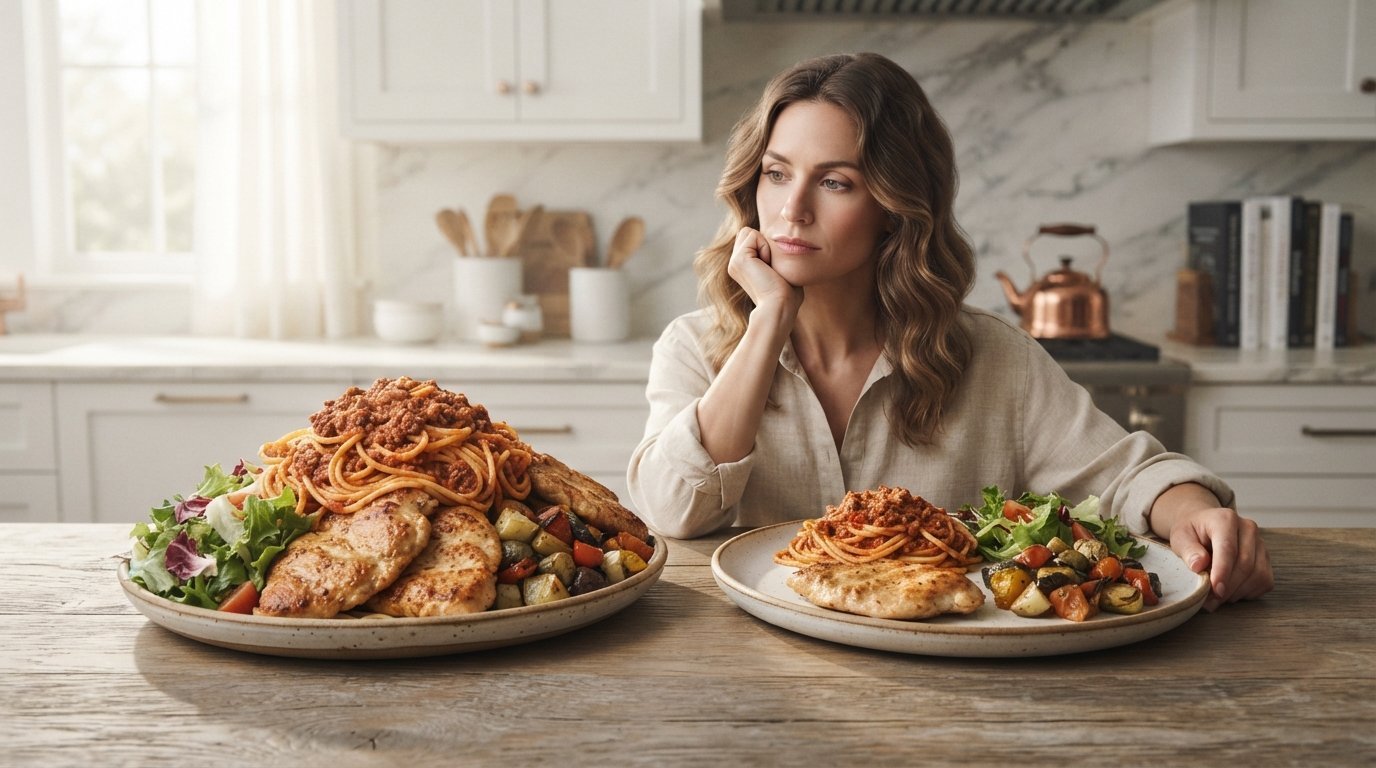
Have you ever looked at your dinner plate and thought, “This doesn’t seem like that much food,” only to discover later that you had eaten two or three servings without realizing it?
You’re not alone.
One of the biggest challenges in healthy eating isn’t choosing nutritious foods. It’s accurately recognizing how much we’re actually eating. Portion sizes have gradually increased over the years, restaurant meals have become dramatically larger, and food packaging often makes serving sizes difficult to interpret. As a result, many people consistently eat more than they intend to without feeling like they are overeating.
These common portion size mistakes rarely happen because someone lacks discipline. More often, they happen because our brains rely on visual shortcuts, environmental cues, and habits that no longer reflect realistic serving sizes. A bowl appears normal because it’s the bowl we always use. A restaurant meal feels like one serving because it arrives on one plate. A snack package looks like a single portion even though the nutrition label says otherwise.
Fortunately, these mistakes are surprisingly easy to correct once you recognize them.
This article explores the most common portion size mistakes people make, explains why they happen, and offers practical ways to avoid them without obsessively weighing every meal or counting every calorie.
Quick Answer
The most common portion size mistakes include estimating portions by eye, treating restaurant meals as single servings, misunderstanding nutrition labels, relying on oversized plates and bowls, and underestimating calorie-dense foods like oils, nuts, cereals, and nut butters. Becoming aware of these patterns can help you make more accurate portion decisions without relying on strict dieting.
What Are the Most Common Portion Size Mistakes People Make?
Most portion size mistakes don’t happen because people intentionally choose larger meals. They happen because our perception gradually changes over time.
The brain constantly uses comparison rather than absolute measurement. If restaurant meals become larger, those portions eventually feel normal. If cereal bowls become bigger, the amount poured into them begins to seem appropriate. If family members regularly serve large portions, those serving sizes quietly become the new standard.
Understanding these patterns is important because correcting them does not require perfection. It simply requires recognizing where our perception has drifted away from realistic portions.

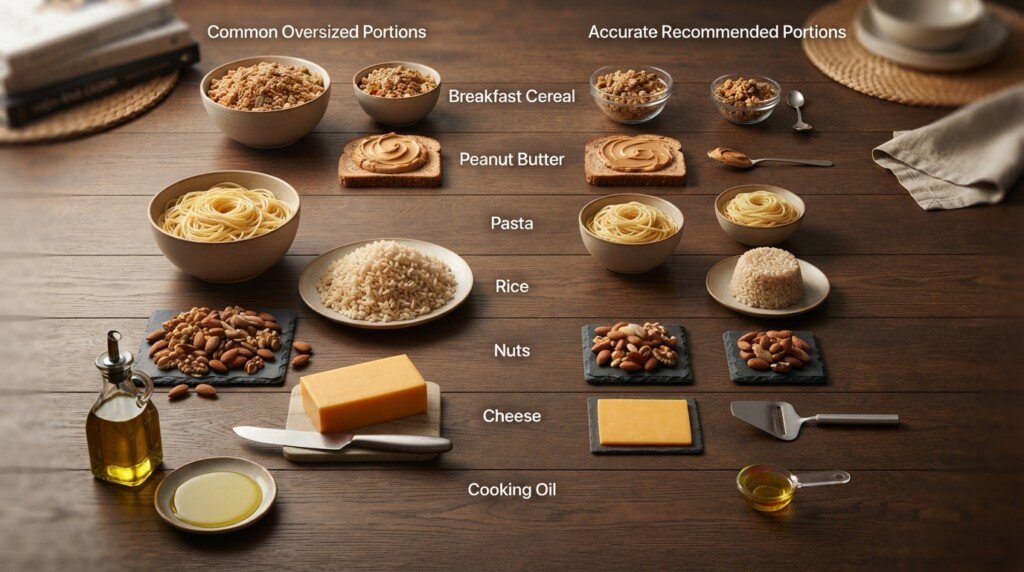
One of the most common mistakes is eyeballing portions without any reference point. While estimating becomes easier with experience, many people unintentionally underestimate foods such as rice, pasta, peanut butter, cooking oil, cheese, nuts, breakfast cereal, and salad dressing because these foods look smaller than the calories they contain.
Another frequent mistake involves assuming every package contains one serving. A bottle of juice, a bag of chips, a container of yogurt, or even a protein bar may contain more than one serving despite appearing to be an individual snack.
Restaurant meals create another challenge. Many restaurants intentionally serve portions that exceed typical dietary recommendations because larger meals are often perceived as better value. Over time, these larger portions gradually reshape expectations of what a normal meal should look like.
People also tend to eat according to the size of the container rather than their actual hunger. Larger bowls encourage larger servings. Larger plates make average portions appear small, encouraging people to add more food before eating even begins.
Finally, many individuals assume healthy foods can be eaten without paying attention to quantity. While foods such as nuts, avocado, olive oil, granola, dried fruit, and natural nut butters provide valuable nutrients, they are also energy-dense. Small serving differences can significantly increase total calorie intake without creating much additional fullness.
Understanding these common errors is not about becoming fearful of food. It is about recognizing how easily everyday environments influence portion perception.
What Are the Health Consequences of Consistently Overeating Due to Portion Errors?
Occasionally eating a large meal is completely normal. Birthdays, holidays, vacations, and celebrations are part of life and rarely determine long-term health.
The greater concern comes from consistently eating slightly larger portions day after day without realizing it.
Unlike dramatic overeating, chronic portion errors often go unnoticed because each individual meal seems reasonable. An extra spoonful of rice here, another handful of nuts there, slightly more cereal every morning, or finishing oversized restaurant portions several times each week may not feel significant in isolation. However, these small differences can gradually accumulate over months and years.
One of the most obvious consequences is unintended weight gain. Because portion sizes influence total calorie intake, regularly consuming more food than the body requires may slowly increase body weight even when the food itself is considered healthy.
Larger portions may also reduce awareness of natural hunger and fullness signals. When oversized meals become routine, comfortably satisfied begins to feel unusually small while overly full starts feeling normal. This shift makes it increasingly difficult to recognize the body’s natural stopping point.
Digestive comfort may also be affected. Frequently eating beyond comfortable fullness can leave people feeling sluggish, overly full, or uncomfortable after meals, reducing enjoyment of eating itself.
There are also psychological effects. Many individuals become frustrated because they believe they are eating reasonably while seeing little progress toward their health goals. The problem may not be food quality at all, but rather portion perception.
Recognizing these gradual changes helps explain why improving portion awareness often feels easier than adopting another restrictive eating plan. Rather than eliminating favorite foods, many people simply become more accurate in how much they serve.
Are Certain Food Groups More Prone to Portion Size Mistakes Than Others?
Yes, and interestingly, they are not always the foods people expect.
Foods that combine high energy density with relatively small physical volume are particularly easy to underestimate.
Cooking oils are one of the clearest examples. A quick pour into a pan often exceeds the intended amount because liquid spreads thinly across the surface. What appears to be a small drizzle may actually equal several tablespoons.
Nut butters create similar challenges. A spoonful prepared casually is often much larger than a standard serving because thick spreads naturally mound above the spoon.
Breakfast cereals frequently cause confusion because bowl size strongly influences how much people pour. Few individuals intentionally measure cereal each morning, making portions gradually increase over time.
Rice and pasta are also commonly underestimated after cooking because their increased volume makes serving sizes difficult to judge by appearance alone.
Nuts and trail mixes deserve special attention as well. They are highly nutritious but surprisingly easy to overconsume because small handfuls vary dramatically depending on hand size and serving habits.
Cheese presents another example. Thin slices, grated cheese, or cubes added throughout the day often contribute more than people realize because each addition seems insignificant.
Restaurant appetizers and shared foods create another hidden source of portion errors. Because these foods are eaten gradually while socializing, many people lose track of how much they have actually consumed.
If estimating food visually feels difficult, the detailed strategies are covered separately in How to Visually Estimate Portion Sizes, where practical visual reference methods are explained more thoroughly.
How Do Restaurant Portions Distort Our Sense of a “Normal” Serving?
Restaurants rarely design meals around typical nutritional recommendations.
Instead, portions are often influenced by customer expectations, perceived value, and competition within the food industry.
Over time, this creates what researchers sometimes describe as portion normalization.
When large restaurant meals become familiar, they gradually redefine what people consider appropriate at home.
A plate of pasta served at a restaurant may contain two or three servings.
A large burger meal with fries may provide enough food for multiple meals.
Even beverages have grown substantially larger than previous generations considered standard.
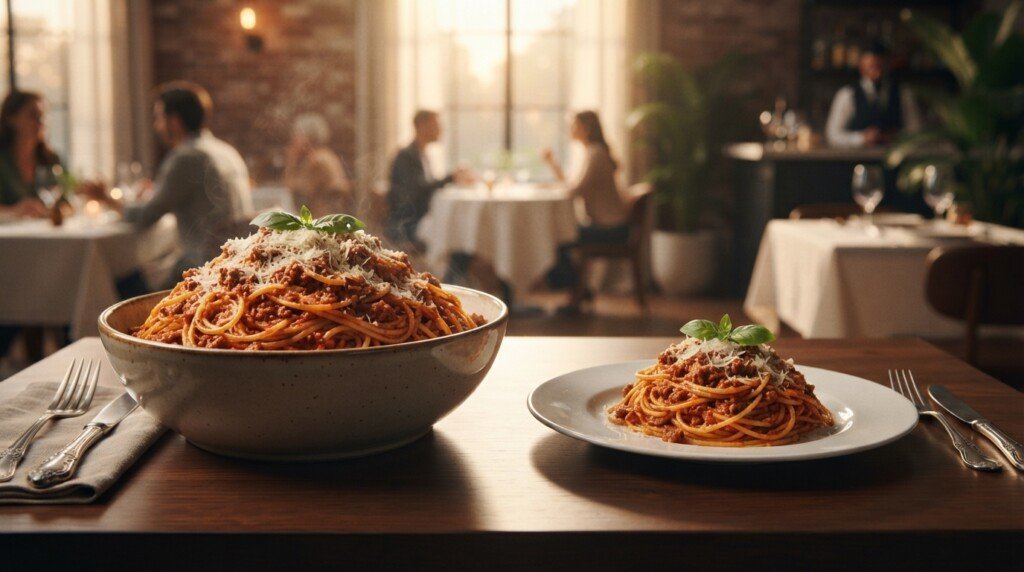
Because restaurant meals arrive as complete plates, many people naturally assume the appropriate response is to finish everything served.
This habit often continues at home, where similar plate sizes begin influencing portion decisions despite different nutritional needs.
Restaurant meals also tend to combine several characteristics that encourage overeating.
Large plates.
Highly palatable foods.
Fast eating.
Social distractions.
Unlimited drink refills.
Shared appetizers.
Desserts offered immediately after finishing.
Together, these factors make recognizing fullness considerably more difficult.
This does not mean restaurant dining should be avoided.
Instead, becoming aware that restaurant portions frequently exceed normal serving sizes allows you to make more intentional decisions without feeling deprived.
Why Are Standard Serving Sizes So Confusing?
Walk through any grocery store and you’ll notice that almost every packaged food displays a serving size on the nutrition label. Many people naturally assume this number represents the amount they should eat.
That assumption is one of the biggest reasons portion confusion continues.
A serving size printed on a package is not necessarily a recommendation. In most countries, it is primarily a standardized reference used to present nutritional information consistently. Unfortunately, that distinction is rarely obvious when people glance quickly at a label while shopping or eating.
This misunderstanding creates an interesting problem.
Someone compares two cereals and notices one contains fewer calories per serving. Without looking more closely, they may assume it is automatically the lighter option. However, if one cereal defines a serving as 30 grams and another uses 45 grams, the comparison is no longer equal.
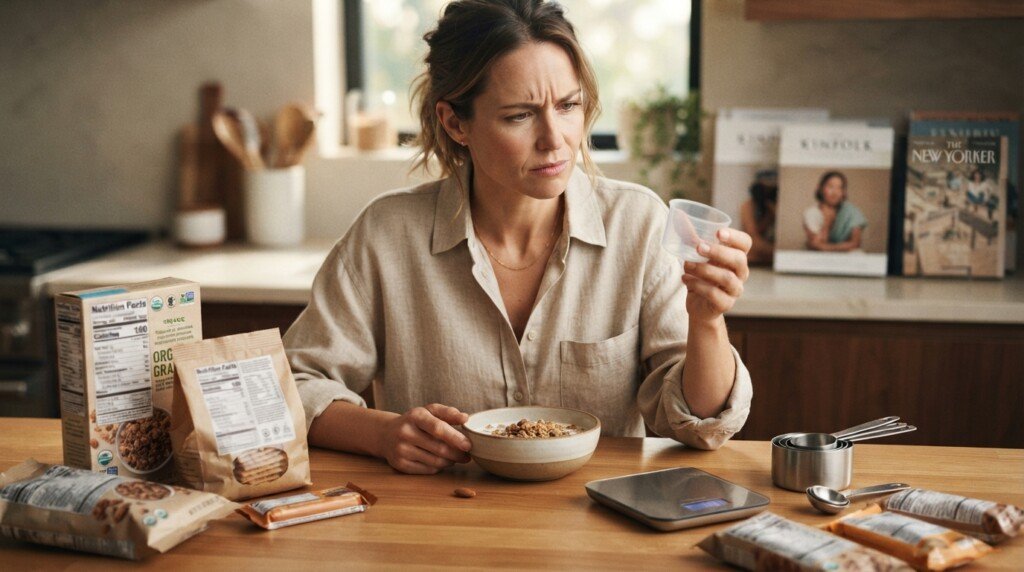
The same confusion appears with beverages.
A bottle may look like one drink but contain two or even three servings.
A bag of chips may appear designed for one person even though the label lists several servings.
Ice cream containers often provide nutritional information for half a cup despite most people serving significantly more.
None of this is intended to deceive consumers outright, but it does require paying closer attention than many people realize.
Understanding how serving sizes are created makes nutrition labels far easier to interpret and much less frustrating.
How Do Food Manufacturers Actually Determine Serving Sizes on Labels?
Many people believe food companies simply choose serving sizes that make their products appear healthier.
The reality is more nuanced.
In many countries, serving sizes are based on regulatory guidance and consumer eating data collected from national nutrition surveys. These surveys estimate how much people typically consume during one eating occasion, and manufacturers use those reference amounts when preparing nutrition labels.
This means the serving size often reflects what people commonly eat, not necessarily what nutrition experts recommend for optimal health.
That distinction matters.
A serving size is essentially a reporting unit.
It allows calories, fat, carbohydrates, protein, vitamins, and minerals to be displayed consistently across similar products.
It is not a personalized recommendation for every individual.
Different people have different nutritional needs depending on age, activity level, body size, health conditions, and overall eating patterns.
Another source of confusion is that products within the same category sometimes use slightly different serving sizes.
One breakfast cereal may list a serving as 30 grams.
Another uses 40 grams.
One yogurt container represents one serving.
Another similar-looking container may contain one and a half servings.
Without comparing these details carefully, shoppers can easily assume the numbers represent equal portions when they do not.
Rather than focusing exclusively on calories listed on the front of the package, it helps to first identify exactly how much food those calories actually represent.
That single habit often prevents many of the misunderstandings people experience while reading nutrition labels.
What Psychological and Marketing Reasons Keep Serving Sizes Ambiguous?
Portion confusion is not created by nutrition labels alone.
Human psychology plays an equally important role.
Our brains naturally rely on visual shortcuts because estimating exact quantities throughout the day would require enormous mental effort.
Instead of measuring every serving, we ask ourselves simple questions.
Does this bowl look full?
Does this plate seem normal?
Does this package appear to be one serving?
Most of the time, these shortcuts work reasonably well.
However, modern food environments often exploit these automatic judgments without us realizing it.
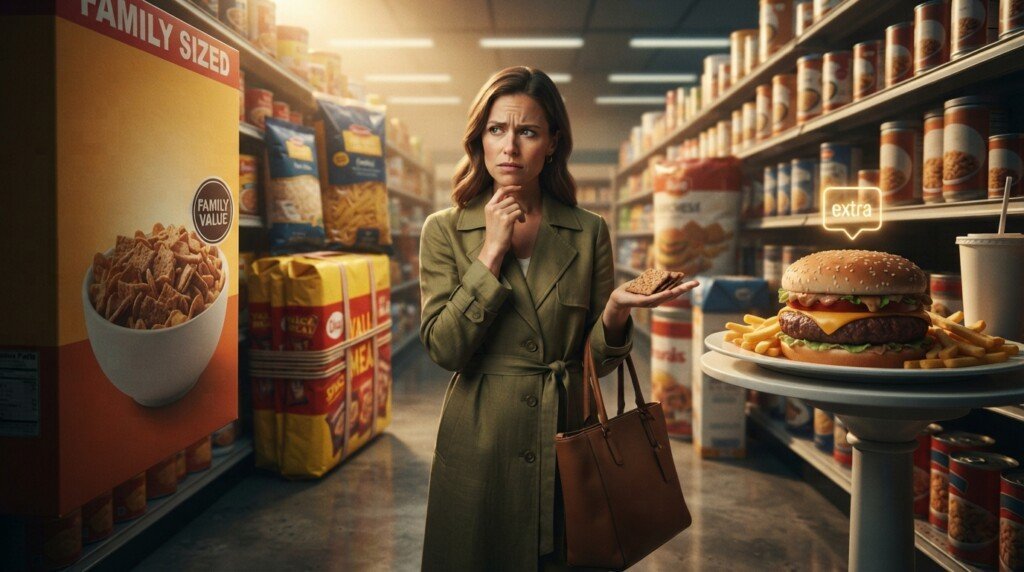
Package size creates one example.
When a snack comes in an individual bag, many people assume it contains one serving even when the label indicates two or three.
Plate size creates another.
Research has consistently shown that larger plates make identical portions appear smaller. People often compensate by serving themselves more food before they even begin eating.
Restaurants use similar psychological effects.
Large dinner plates, oversized glasses, unlimited refills, family-style serving dishes, and combination meals all influence what people perceive as reasonable portions.
Marketing also contributes indirectly.
Words such as “family size,” “value meal,” “jumbo,” or “share pack” influence expectations without clearly defining what an appropriate serving actually looks like.
Health-focused packaging can create another subtle bias.
Foods labeled as organic, natural, protein-rich, whole grain, or gluten-free are sometimes perceived as foods that require less attention to quantity. While these products may offer nutritional benefits, larger portions still provide more calories than smaller portions.
Understanding these influences is empowering because it reminds us that portion errors are not simply personal failures.
They are predictable responses to environments specifically designed to shape perception.
How Can I Read a Nutrition Label Correctly Despite This Confusion?
Fortunately, avoiding common portion mistakes does not require becoming an expert in nutrition science.
A few simple habits make labels much easier to understand.
The first step is always checking the serving size before looking at anything else.
Many people immediately scan calories or protein while completely overlooking how much food those numbers represent.
Next, compare the serving size with the amount you actually expect to eat.
If the package contains two servings but you plan to eat the entire package, doubling the nutritional values provides a much more realistic picture of your intake.
It is also helpful to compare products using equal serving amounts whenever possible.
If two cereals use different serving sizes, comparing calories alone may produce misleading conclusions. Looking at calories per 100 grams or carefully adjusting for serving size creates a fairer comparison.
Remember that serving sizes are reference tools rather than instructions.

Some meals naturally require larger portions because of higher activity levels or individual nutritional needs. Others may require less.
The nutrition label provides information.
Your body’s hunger and fullness signals help determine how much food is appropriate for you.
If understanding recommended portions feels confusing after reading nutrition labels, the practical guidance in Recommended Portion Sizes by Food Group provides useful context for balancing different foods within everyday meals.
Similarly, if your goal involves managing calorie intake without overly restrictive dieting, Portion Control for Weight Loss explains broader strategies without relying solely on serving sizes printed on packages.
Key Takeaways
Most common portion size mistakes happen because modern eating environments quietly reshape our perception of what a normal serving looks like. Oversized restaurant meals, large dinnerware, misleading package sizes, and misunderstood nutrition labels all contribute to eating larger portions than intended. These habits usually develop gradually, making them difficult to notice without deliberate awareness.
Fortunately, correcting portion mistakes rarely requires extreme measures. Simply recognizing common patterns such as eyeballing portions, assuming every package contains one serving, overlooking serving sizes on labels, or treating restaurant portions as normal can significantly improve portion awareness. Rather than focusing on strict restriction, the goal is developing a more accurate understanding of what is actually on your plate.
| Common Mistake | Practical Fix |
|---|---|
| Estimating portions by eye | Occasionally compare estimates with measured servings to recalibrate. |
| Finishing oversized restaurant meals | Consider sharing, saving half, or boxing part before eating. |
| Ignoring serving sizes on labels | Read the serving size before checking calories or nutrients. |
| Assuming healthy foods cannot be overeaten | Pay attention to portions of calorie-dense foods like oils, nuts, and nut butters. |
| Letting large plates determine portions | Serve meals intentionally instead of filling available space. |
Frequently Asked Questions
1. What is the most common portion size mistake?
The most common mistake is estimating portions by eye. Many people unintentionally serve larger amounts than they realize, especially with foods such as pasta, rice, cereal, oils, nuts, and peanut butter.
2. Why are serving sizes on labels so confusing?
Serving sizes on nutrition labels are reference amounts used for nutritional information rather than personalized recommendations. They often differ from the amount people actually eat in one sitting.
3. Why do restaurant portions seem normal now?
Restaurant serving sizes have gradually increased over time. Frequent exposure to these larger meals can shift our perception of what an average portion should look like.
4. Are healthy foods exempt from portion awareness?
No. Nutritious foods remain important, but calorie-dense options such as nuts, seeds, avocado, olive oil, and dried fruit can still contribute substantial energy when portions become much larger than intended.
5. Do I need to measure every meal forever?
Not at all. Most people only need occasional reference points to improve portion awareness. Over time, experience makes estimating portions much more accurate without constant measuring.
Conclusion
Recognizing common portion size mistakes is less about limiting food and more about understanding how modern eating environments influence our decisions. Oversized restaurant meals, confusing nutrition labels, larger dinnerware, and visual estimation errors can gradually reshape our perception of what a reasonable serving looks like without us ever noticing the change.
The encouraging news is that these habits are highly adjustable. Small changes such as checking serving sizes before reading nutrition labels, questioning restaurant portions, and becoming more aware of calorie-dense foods often produce meaningful improvements without requiring complicated diets or constant food weighing. By understanding why portion mistakes happen in the first place, you can make more informed decisions that support long-term health while still enjoying food with confidence and flexibility.
Disclaimer:
This post may contain affiliate links. If you purchase through them, we may earn a small commission at no extra cost to you. Also, this content is for informational purposes only and does not substitute professional medical advice.
Fuel Your Body Right
Use our free Nutrition Toolkit to find your protein target, fasting window, and net carbs in minutes.
Open Free Tools →