10 Metabolism Myths You Should Stop Believing
You’ve probably heard advice like “eat every two hours to keep your metabolism burning,” “coffee melts fat,” or “one cheat meal can ruin your metabolism.” These statements are repeated so often that many people accept them as facts without ever questioning the evidence.
The problem is that metabolism is one of the most misunderstood topics in health and nutrition.
Many Metabolism Myths begin with a small piece of scientific truth that becomes exaggerated over time. A food that slightly increases calorie burning suddenly becomes a “fat-burning miracle.” A temporary metabolic change becomes a permanent transformation. Before long, marketing replaces science, leaving people frustrated when the promised results never appear.
The good news is that modern research has answered many of these questions. Scientists now understand far more about metabolic rate, thermogenesis, muscle, genetics, hormones, and energy expenditure than they did even a decade ago.
This article separates fact from fiction by examining some of the most common metabolism myths and explaining what current evidence actually says.
Quick Answer
Most Metabolism Myths contain a small amount of truth but greatly exaggerate its importance. Research shows that metabolism is influenced by factors such as age, body size, muscle mass, hormones, physical activity, and genetics. No single food, drink, eating schedule, or shortcut permanently transforms metabolism, but healthy daily habits can support long-term metabolic health.
Why Are There So Many Metabolism Myths?
Metabolism affects nearly every function inside the body, yet most people never actually learn how it works.
That knowledge gap allows myths to spread easily.


Why Metabolism Is Easy to Misunderstand
Unlike blood pressure or heart rate, metabolism cannot be seen or felt directly.
If someone loses weight quickly, people often assume they have a “fast metabolism.”
If another person struggles to lose weight, they are frequently told they have a “slow metabolism.”
Reality is much more complicated.
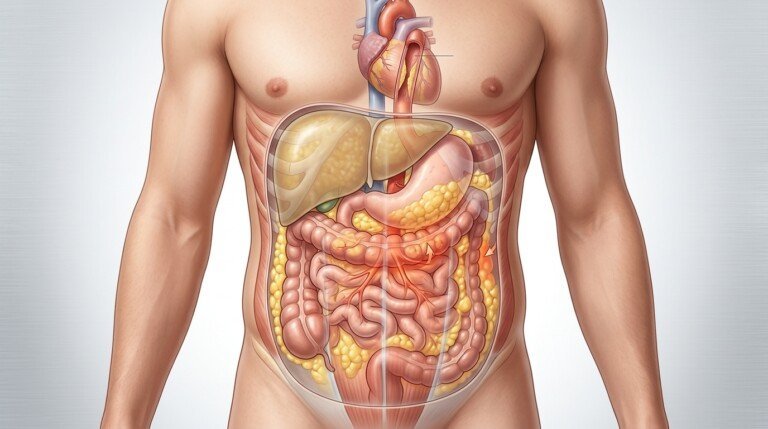
Metabolism includes thousands of chemical reactions occurring every second throughout the body.
These reactions help:
- Produce energy.
- Repair tissues.
- Maintain body temperature.
- Support brain function.
- Build muscle.
- Digest food.
Body weight is only one small part of that picture.
Readers who want a complete overview can also explore Metabolism, which explains these processes in greater detail.
Social Media Makes Simple Answers Look Attractive
Quick fixes spread much faster than complex explanations.
It is easier to believe:
- One food boosts metabolism.
- One drink burns fat.
- One trick resets metabolism.
than to accept that long-term health usually depends on consistent habits.
This is why metabolism myths continue circulating despite decades of scientific research.
Myth #1: Eating Every Few Hours Boosts Your Metabolism
Perhaps no metabolism myth has lasted longer than this one.
Many people still believe eating every two or three hours keeps the metabolic “fire” burning.
Why People Believe It
The idea sounds logical.
Every time you eat, digestion requires energy.
This process is called the thermic effect of food.
People assumed that eating more often would repeatedly activate this process and dramatically increase calorie burning.
What Research Actually Shows
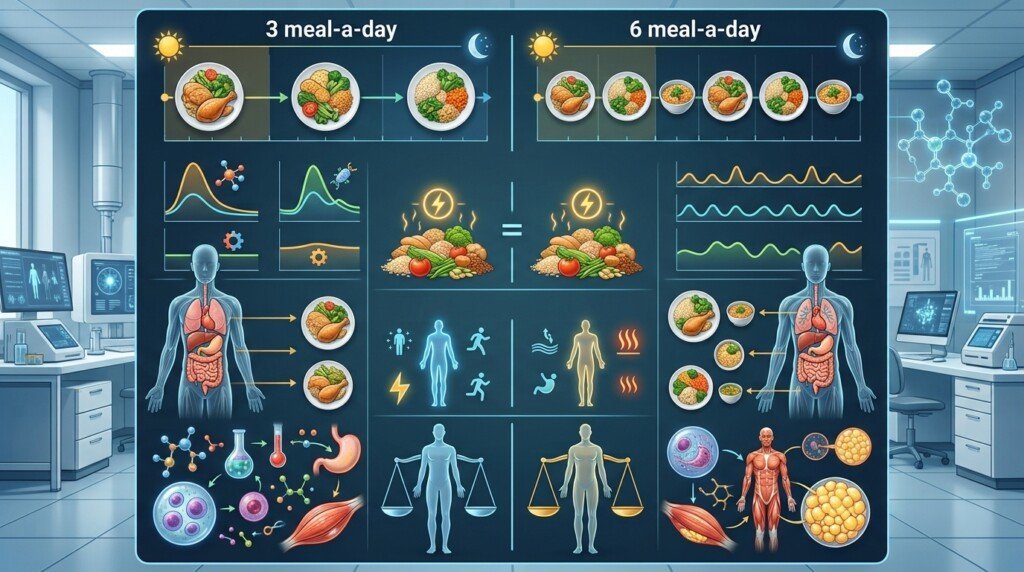
The thermic effect of food depends primarily on how much food you eat, not how frequently you eat it.
For example:
- Three meals totaling 2,100 calories.
- Six meals totaling 2,100 calories.
produce very similar total energy expenditure across the day.
Eating more often does not create extra calories burned out of nowhere.
Meal frequency may help some individuals manage hunger, but it does not significantly increase metabolic rate.
Future readers interested in this topic can continue with Meal Timing and Metabolism, where meal frequency is discussed in much greater detail.
Practical Takeaway
Choose a meal schedule that fits your lifestyle rather than trying to “keep metabolism running.”
Consistency matters more than eating every few hours.
Myth #2: Certain Foods Permanently Speed Up Metabolism
Many foods have been marketed as natural metabolism boosters.
Coffee.
Green tea.
Chili peppers.
Apple cider vinegar.
Countless others.
Why This Myth Exists
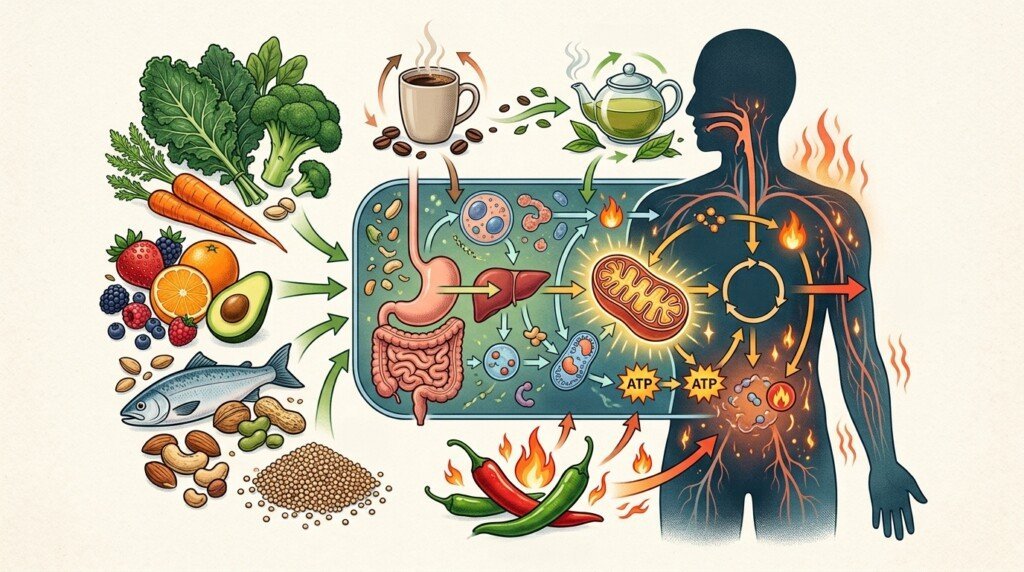
Scientific studies have shown that some foods can temporarily increase thermogenesis or energy expenditure.
Marketing often transforms these modest findings into dramatic promises.
What Research Actually Shows
Some foods can produce small, temporary metabolic effects.
For example:
- Caffeine may modestly increase energy expenditure.
- Green tea contains catechins that may slightly support fat oxidation.
- Capsaicin can temporarily increase thermogenesis.
However, none permanently changes metabolic rate.
The body quickly adapts, and these effects remain relatively small.
Readers interested in individual ingredients can also explore Coffee and Metabolism, Green Tea and Metabolism, and Thermogenesis for more detailed explanations.
Practical Takeaway
Healthy foods support overall nutrition.
They should not be viewed as permanent metabolism boosters.
Myth #3: A Slow Metabolism Is the Main Reason People Gain Weight
Many people blame metabolism whenever weight increases.
While metabolism certainly influences energy balance, it is rarely the only explanation.
Why This Myth Is So Popular
Weight gain often feels mysterious.
When people cannot identify an obvious cause, metabolism becomes an easy explanation.
What Research Actually Shows
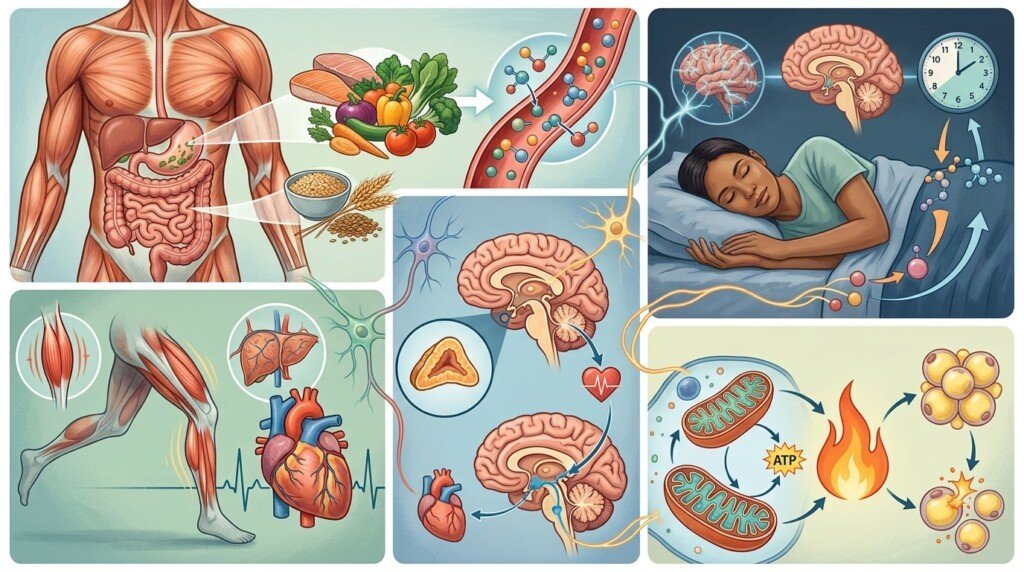
Body weight is influenced by numerous interacting factors, including:
- Calorie intake.
- Physical activity.
- Muscle mass.
- Genetics.
- Hormones.
- Sleep.
- Stress.
- Certain medical conditions.
Metabolism contributes to this picture, but it rarely acts alone.
For most healthy adults, lifestyle habits explain far more of long-term weight changes than dramatic differences in metabolic rate.
Medical conditions affecting metabolism certainly exist, but they are much less common than popular media often suggests.
Practical Takeaway
Instead of assuming metabolism is entirely responsible for weight gain, consider the broader combination of eating habits, movement, sleep, stress, and overall health.
Myth vs Reality
| Common Myth | Research Shows |
|---|---|
| Eating every few hours speeds metabolism. | Meal frequency has little effect on total calorie burning. |
| Certain foods permanently boost metabolism. | Some foods have small temporary effects only. |
| Slow metabolism causes most weight gain. | Body weight is influenced by many interacting factors. |
Myth #4: Muscle Burns Huge Amounts of Calories
One of the most common fitness claims is that building muscle transforms your body into a calorie-burning machine, allowing you to eat almost anything without gaining weight.
While muscle does increase energy expenditure, the reality is much less dramatic.
Why People Believe It
Muscle tissue is metabolically active.
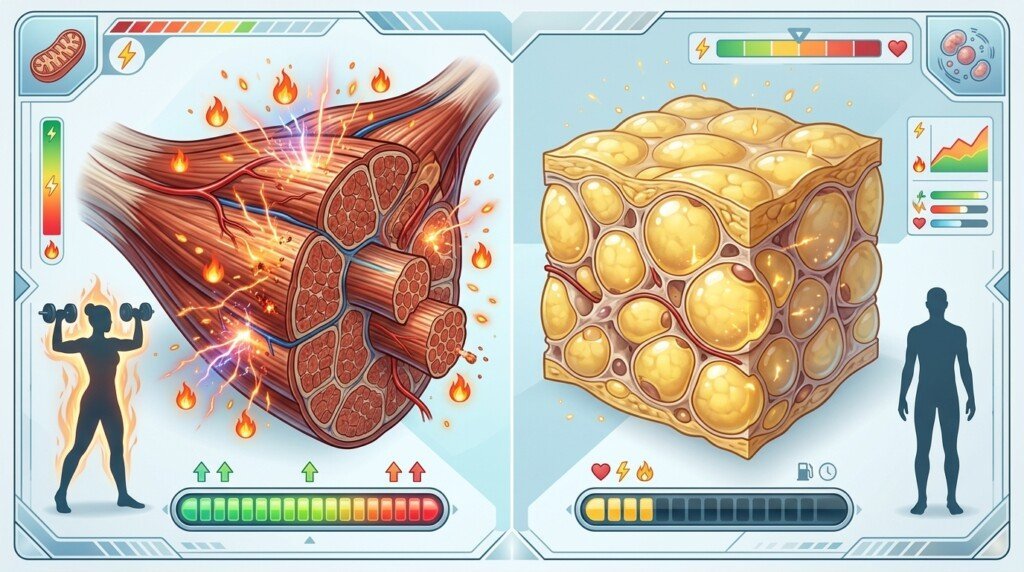
Unlike fat tissue, muscle requires energy to maintain itself, even while you’re resting.
This fact gradually evolved into the exaggerated claim that adding a few pounds of muscle dramatically changes metabolism.
What Research Actually Shows
Muscle does burn more calories than fat tissue.
However, the difference is relatively modest.
Building additional lean muscle can increase resting energy expenditure over time, but it will not double your metabolism or eliminate the need for balanced eating habits.
The greatest benefit of muscle may actually come from supporting strength, mobility, healthy aging, and improved body composition rather than dramatically increasing calorie burning.
Readers interested in this topic can continue with Muscle and Metabolism, where the relationship is explored in much greater detail.
Practical Takeaway
Build muscle because it supports long-term health, not because you expect it to create massive increases in calorie expenditure.
Myth #5: You Can Permanently Damage Your Metabolism
Many people worry that dieting, skipping meals, or losing weight has permanently “broken” their metabolism.
This fear has become increasingly common online.
Why This Myth Exists
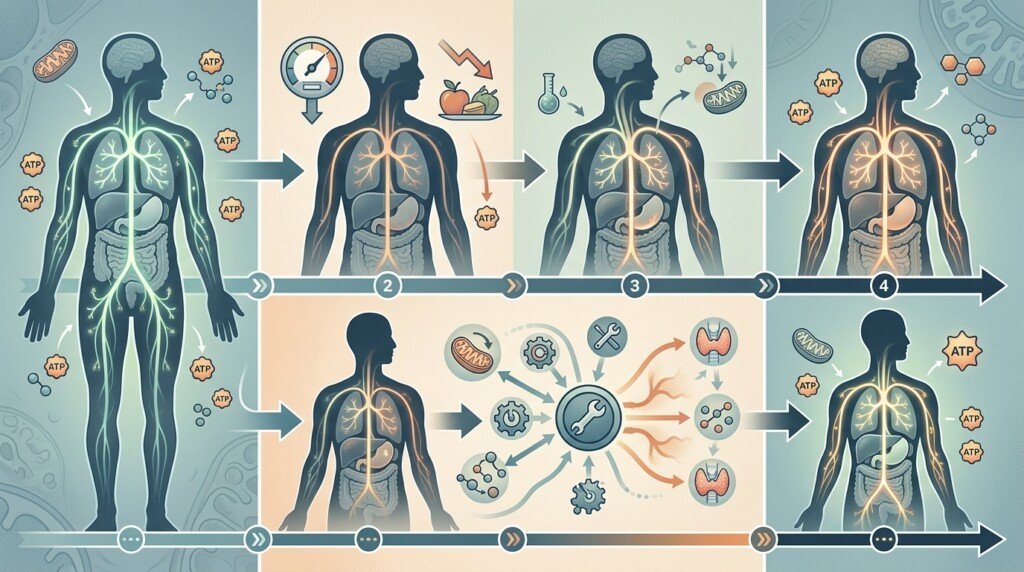
Researchers have observed that metabolism sometimes slows during prolonged calorie restriction.
This natural response helps conserve energy when food intake decreases.
Some people mistakenly interpret this temporary adaptation as permanent damage.
What Research Actually Shows
The body is remarkably adaptable.
Metabolic rate changes in response to body weight, muscle mass, calorie intake, and activity levels.
While prolonged dieting may temporarily reduce energy expenditure, this does not mean metabolism is permanently damaged.
Many metabolic changes improve as healthy eating habits, physical activity, and body composition stabilize over time.
Readers who want a broader discussion of recovery can explore How to Reset Your Metabolism, which explains these adaptations in greater detail.
Practical Takeaway
Think of metabolism as adaptable rather than fragile.
Healthy habits influence metabolism far more than isolated dieting periods.
Myth #6: Coffee Instantly Turns Your Body Into a Fat-Burning Machine
Coffee has earned a reputation as one of the world’s most popular metabolism boosters.
Although caffeine affects metabolism, many claims go far beyond the available evidence.
Why People Believe It
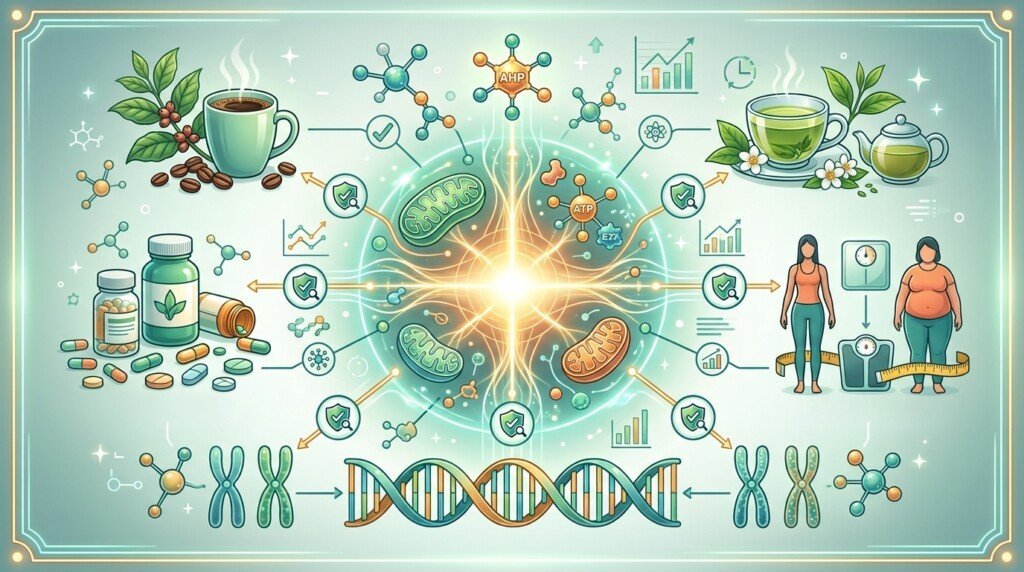
Coffee increases alertness and may temporarily increase thermogenesis.
These effects are measurable.
Unfortunately, they are often exaggerated into promises of rapid fat loss.
What Research Actually Shows
Caffeine can temporarily increase energy expenditure and fat oxidation in some individuals.
However:
- The effects are modest.
- Tolerance often develops.
- Coffee alone does not create meaningful weight loss.
Healthy habits remain far more important than any beverage.
Readers wanting a detailed discussion can continue with Coffee and Metabolism.
Practical Takeaway
Enjoy coffee because you like it, not because you expect dramatic metabolic changes.
Myth #7: Green Tea Melts Fat Away
Green tea has become one of the most heavily marketed natural metabolism boosters.
Its reputation comes largely from compounds called catechins and EGCG.
Why This Myth Exists
Research has shown that green tea may slightly increase thermogenesis and fat oxidation.
Marketing transformed these modest findings into promises of effortless fat loss.
What Research Actually Shows
Green tea may provide a small metabolic benefit for some people.
However:
- Effects remain modest.
- Results vary considerably.
- Long-term lifestyle habits matter much more.
No beverage can replace balanced nutrition and regular physical activity.
Readers interested in the evidence can explore Green Tea and Metabolism.
Practical Takeaway
Green tea may complement a healthy lifestyle, but it is not a fat-burning solution.
Myth #8: Thin People Always Have Fast Metabolisms
Many people assume naturally thin individuals must have unusually fast metabolisms.
Reality is often more complicated.
Why This Myth Persists
Body size is easy to observe.
Metabolism is not.
People frequently confuse naturally lean body weight with unusually high metabolic rate.
What Research Actually Shows
Body weight reflects numerous factors, including:
- Eating habits.
- Physical activity.
- Genetics.
- Muscle mass.
- Appetite regulation.
- Lifestyle.
Some lean individuals have average metabolic rates.
Some larger individuals have relatively high metabolic rates because they have larger bodies requiring more energy.
Practical Takeaway
Body size alone tells you very little about someone’s metabolism.
Myth #9: Genetics Completely Determine Your Metabolism
Another common belief is that metabolism is entirely inherited and cannot be influenced.
Why People Believe It
Genetics certainly affect metabolism.
Some people naturally burn more or fewer calories than others.
However, genetics represent only part of the picture.
What Research Actually Shows
Genes influence metabolism, but they interact continuously with:
- Physical activity.
- Nutrition.
- Sleep.
- Age.
- Muscle mass.
- Environment.
Healthy habits can still support metabolic health regardless of inherited tendencies.
Practical Takeaway
Genetics influence your starting point, not your final outcome.
Myth #10: Metabolism Boosters Are the Secret to Weight Loss
Many advertisements promise pills, powders, or “metabolism boosters” that supposedly transform fat burning.
These claims remain among the biggest metabolism myths.
Why This Myth Sells
People naturally look for simple solutions.
Products promising faster metabolism are easy to market because they appear to solve a complex problem.
What Research Actually Shows
Most products marketed as metabolism boosters produce little or no meaningful long-term impact.
Even when ingredients temporarily increase energy expenditure, the effects are generally too small to replace:
- Balanced nutrition.
- Regular exercise.
- Adequate sleep.
- Consistent healthy habits.
Practical Takeaway
If something promises effortless metabolism changes, skepticism is usually justified.
What Does Research Actually Show About Metabolism?
After decades of research, scientists agree on several important principles.
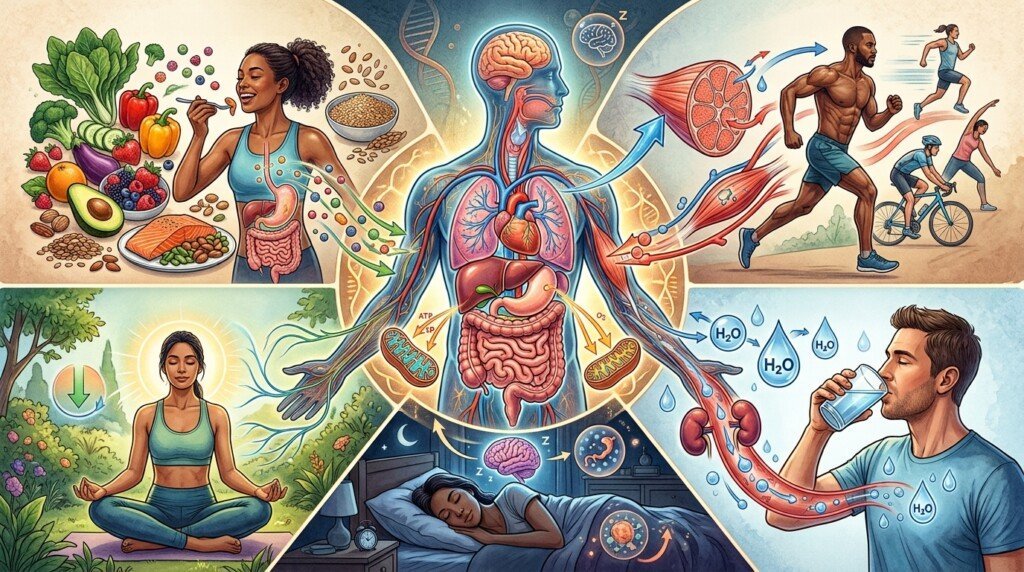
Metabolism Is Complex
There is no single metabolism switch.
Metabolism depends on many interacting systems working together.
Healthy Habits Matter Most
The strongest influences on metabolic health include:
- Regular physical activity.
- Adequate protein intake.
- Balanced nutrition.
- Healthy sleep.
- Stress management.
- Consistent daily habits.
There Are No Magic Shortcuts
Coffee.
Green tea.
Meal timing.
Cold exposure.
Capsaicin.
Each may have small effects on metabolism, but none dramatically changes long-term metabolic health on its own.
Metabolism Myths at a Glance
| Myth | Reality |
|---|---|
| Eat every few hours to boost metabolism. | Meal frequency has little effect on calorie burning. |
| Certain foods permanently increase metabolism. | Effects are temporary and modest. |
| Slow metabolism causes most weight gain. | Weight is influenced by many factors. |
| Muscle burns huge amounts of calories. | Muscle helps, but the increase is modest. |
| Dieting permanently damages metabolism. | Metabolism adapts and remains flexible. |
| Coffee melts fat. | Coffee has modest temporary effects. |
| Green tea dramatically boosts metabolism. | Benefits are relatively small. |
| Thin people always have fast metabolisms. | Body size alone tells little about metabolism. |
| Genetics determine everything. | Lifestyle still matters greatly. |
| Metabolism boosters are the secret. | Healthy habits consistently outperform shortcuts. |
The easiest way to remember this article is:
Most metabolism myths exaggerate small scientific findings into big promises. Lasting metabolic health comes from consistent habits, not quick fixes.

Frequently Asked Questions
1. Is metabolism mostly genetic?
Genetics influence metabolism, but lifestyle, body composition, age, and activity levels also play major roles.
2. Can you permanently speed up metabolism?
There is no evidence that any single food, drink, or habit permanently transforms metabolic rate.
3. Do metabolism boosters work?
Most marketed metabolism boosters provide little or no meaningful long-term benefit.
4. What’s the biggest metabolism myth?
One of the biggest myths is that eating every few hours dramatically increases metabolism.
5. Does muscle increase metabolism?
Yes, but the increase is much smaller than many people expect.
6. Does coffee burn fat?
Coffee may slightly increase calorie expenditure temporarily, but it is not a fat-burning solution.
7. Can green tea permanently speed up metabolism?
No. Green tea may have modest temporary effects, but they are not permanent.
8. Is a slow metabolism always responsible for weight gain?
No. Weight changes usually involve multiple lifestyle and biological factors.
9. Can healthy habits improve metabolism?
Yes. Regular activity, balanced nutrition, muscle maintenance, and healthy sleep all support metabolic health.
10. Should you believe metabolism hacks online?
Approach them carefully. Claims that sound too good to be true usually oversimplify how metabolism actually works.
Final Thoughts
Believing Metabolism Myths can make healthy living feel far more confusing than it really is. Many popular claims begin with a small scientific observation, then grow into unrealistic promises through advertising, social media, and word of mouth. While coffee, green tea, meal timing, muscle, thermogenesis, and genetics all influence metabolism to some degree, none of them acts as a magic switch that permanently transforms how your body burns calories.
The strongest evidence points in a much simpler direction. A balanced diet, regular physical activity, adequate protein, quality sleep, and sustainable daily habits consistently have a greater impact on long-term metabolic health than any trending shortcut. Understanding the difference between myths and evidence allows you to focus your energy on habits that truly matter instead of chasing promises that rarely deliver lasting results.
Disclaimer:
This post may contain affiliate links. If you purchase through them, we may earn a small commission at no extra cost to you. Also, this content is for informational purposes only and does not substitute professional medical advice.
Ready to Start Your Journey?
Use our free 7-in-1 Weight Loss Toolkit to calculate your numbers and build your plan in minutes.
Open Free Tools →