


Why Am I Hungry All the Time? 12 Common Causes and What to Do
Feeling hungry before meals is completely normal. Hunger is your body’s natural way of telling you that it needs energy to support essential functions like breathing, thinking, moving, and repairing tissues. But if you find yourself constantly asking, “Why am I hungry all the time?”, even after eating balanced meals, it may be a sign that something is affecting your appetite regulation.
Persistent hunger does not always mean you need more food. Your appetite is influenced by a combination of biological, behavioral, and lifestyle factors. Hormones that regulate hunger and fullness, the quality of your meals, your sleep habits, stress levels, hydration, physical activity, and even emotional health all work together to determine how hungry you feel throughout the day.
For example, eating a breakfast that is low in protein may leave you searching for snacks before lunchtime. Poor sleep can make your body produce stronger hunger signals the following day. Chronic stress may encourage emotional eating even when your body does not truly need additional calories. Drinking too little water can sometimes make thirst feel like hunger, while highly restrictive diets often increase appetite as your body tries to protect its energy stores.
Fortunately, many of these causes can be addressed with practical lifestyle changes. Choosing more filling foods, maintaining consistent meal patterns, improving sleep quality, and managing stress often help restore healthier appetite regulation over time.
It is also important to recognize that hunger itself is not the enemy. Your goal should not be to eliminate hunger completely but to understand why it occurs and how to respond to it in a healthy way.
In this article, you’ll learn why you may feel Hungry All the Time, how hunger hormones influence appetite, whether eating too little can increase hunger, why sleep and stress matter, which foods help you stay full longer, and when ongoing hunger should be evaluated by a healthcare professional.
What Does It Mean If You Feel Hungry All the Time?
Everyone experiences hunger several times throughout the day. Under normal circumstances, hunger gradually develops before meals and decreases after eating. When hunger returns much sooner than expected or never seems to disappear, it may indicate that one or more factors are affecting your body’s appetite regulation.
Feeling hungry frequently does not automatically mean something is wrong. Sometimes your body genuinely needs more energy because of increased physical activity or changes in daily routine. In other situations, lifestyle habits may be sending mixed signals that make appetite harder to regulate.
Understanding these influences helps you respond to hunger more effectively instead of simply trying to ignore it.


Hunger Is Your Body’s Energy Signal
Your body constantly monitors how much energy it has available.
When energy stores begin to decline, the brain receives signals that encourage eating.
This process helps ensure your body has enough fuel to support:
- Brain function
- Physical activity
- Digestion
- Body temperature
- Cell repair
- Hormone production
Without these natural hunger signals, maintaining adequate nutrition would be difficult.
Appetite Is Controlled by More Than Your Stomach
Many people believe hunger begins only when the stomach becomes empty.
In reality, appetite is influenced by several body systems working together.
These include:
- Hunger hormones
- Blood sugar regulation
- Sleep
- Stress
- Hydration
- Meal composition
- Previous calorie intake
This explains why two people can eat similar meals yet experience very different hunger levels afterward.
Your Lifestyle Shapes Daily Hunger Patterns
Daily routines strongly influence appetite.
For example, you may notice greater hunger after:
- Sleeping poorly
- Skipping breakfast
- Exercising more than usual
- Working long hours
- Experiencing emotional stress
These situations affect both your body’s energy needs and the hormones that regulate appetite.
Constant Hunger Is Different From Occasional Cravings
It is important to distinguish between physical hunger and cravings.
Physical hunger usually:
- Develops gradually
- Can be satisfied by many different foods
- Improves after eating
Cravings are often more specific.
You may suddenly want chocolate, chips, or another favorite food even when you recently finished a meal.
Recognizing the difference helps you respond more appropriately to your body’s signals.
Persistent Hunger Has Many Possible Causes
Feeling Hungry All the Time rarely has one single explanation.
Instead, it often reflects several overlapping influences such as:
- Meal quality
- Hunger hormones
- Sleep habits
- Stress
- Activity level
- Hydration
- Emotional eating patterns
Identifying these contributors is usually more helpful than focusing on just one possible cause.
Can Hunger Hormones Make You Feel Hungry More Often?
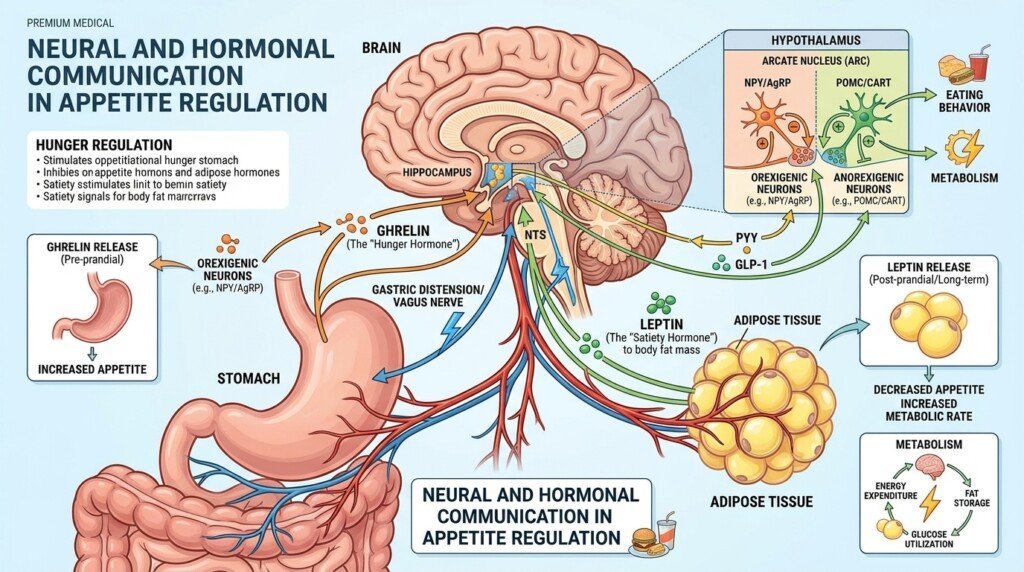
Your appetite is controlled by a sophisticated communication system involving the stomach, digestive tract, fat tissue, brain, and several hormones.
These hormones continuously monitor your body’s energy needs and help determine when you feel hungry and when you feel satisfied.
When this system functions normally, hunger develops gradually before meals and decreases after eating.
When hormone signaling is disrupted, appetite may become much harder to regulate.
Ghrelin Encourages Hunger
One of the best-known appetite hormones is Ghrelin.
Produced mainly in the stomach, ghrelin rises before meals and signals the brain that it is time to eat.
After eating, ghrelin normally decreases, allowing hunger to subside.
However, factors such as:
- Skipping meals
- Restrictive dieting
- Poor sleep
may increase ghrelin, making hunger stronger than usual.
The role of this hormone is explained in greater detail in Ghrelin, where its effects on appetite and meal timing are explored further.
Leptin Helps Regulate Fullness
Another important hormone involved in appetite regulation is Leptin.
Unlike ghrelin, leptin helps your brain recognize when enough energy has been stored.
Healthy leptin signaling supports normal feelings of fullness after eating.
When this communication becomes less effective, appetite regulation may become more challenging.
Hunger Hormones Work Together
Appetite is not controlled by one hormone alone.
Instead, your body relies on a network of hormones that constantly exchange information with the brain.
These hormones respond to:
- Recent meals
- Body fat stores
- Sleep
- Physical activity
- Stress
- Overall energy balance
This interaction explains why hunger often changes from one day to the next.
The broader relationship between these hormones is discussed throughout Hunger Hormones, where the complete appetite regulation system is explained.
Lifestyle Habits Influence Hormone Signals
Although hormone production is automatic, many daily habits influence how effectively these signals work.
Healthy routines that support appetite regulation include:
- Regular meals
- Balanced nutrition
- Quality sleep
- Daily movement
- Stress management
These habits help create more stable hunger patterns over time.
Does Eating Too Little Increase Hunger?
Many people believe eating as little as possible will speed up weight loss.
Ironically, eating too little often has the opposite effect.
When calorie intake remains very low for extended periods, the body responds by increasing hunger in an effort to restore energy balance.

Your Body Protects Its Energy Stores
Throughout history, humans survived periods of food scarcity by developing biological systems that encouraged eating whenever energy became limited.
Today, these same protective mechanisms remain active.
When your body senses prolonged calorie restriction, it may respond by:
- Increasing appetite
- Making food more appealing
- Encouraging larger meals
- Reducing feelings of fullness
These responses are normal and help explain why very restrictive diets are difficult to maintain.
Skipping Meals Can Increase Appetite Later
Skipping breakfast or delaying meals does not always cause problems, but consistently going long hours without eating may lead to stronger hunger later in the day.
Some people then compensate by eating larger portions or choosing foods that provide quick energy.
Starting the day with balanced meals similar to those discussed in Best Breakfast for Weight Loss often helps create steadier hunger patterns throughout the morning.
Meal Quality Matters More Than Calories Alone
A meal containing mostly refined carbohydrates may leave you hungry much sooner than a balanced meal with:
- Protein
- Fiber
- Healthy fats
- Vegetables
The number of calories matters, but the quality of those calories also influences how satisfied you feel afterward.
Moderate Calorie Deficits Are Easier to Maintain
Gradual weight loss usually produces more sustainable results than aggressive calorie restriction.
Balanced eating patterns help reduce excessive hunger while supporting long-term consistency.
Learning How to Reduce Ghrelin Naturally also helps explain why moderate dietary approaches often feel much easier to maintain than extreme diets.
Can Poor Sleep Make You Hungrier?
Sleep is one of the most overlooked factors affecting appetite.
Even one night of inadequate sleep may change how hungry you feel the following day.
Researchers have found that poor sleep influences several hormones involved in appetite regulation while also affecting food choices and eating behavior.

Sleep Changes Hunger Hormones
Insufficient sleep has been associated with changes in hormones that regulate hunger and fullness.
Many people notice:
- Increased appetite
- More frequent snacking
- Larger portion sizes
- Stronger cravings
after sleeping poorly.
These biological responses are one reason healthy eating often feels more difficult when you are tired.
Fatigue Encourages Quick Energy Foods
Sleep deprivation affects more than physical hunger.
It also increases the appeal of foods that provide fast energy, including sugary snacks, desserts, refined carbohydrates, and highly processed convenience foods.
Choosing balanced meals becomes more difficult when your brain is fatigued.
Better Sleep Supports Better Appetite Control
Most healthy adults benefit from seven to nine hours of quality sleep each night.
Simple habits such as maintaining a consistent bedtime, limiting screens before sleep, and creating a comfortable sleep environment support healthier appetite regulation.
Sleep also improves energy, mood, concentration, and overall well-being, making healthy habits easier to maintain.
Does Stress Increase Hunger?
Stress affects much more than your mood. It can influence your appetite, food choices, eating habits, and overall relationship with food. While some people lose their appetite during stressful periods, many experience the opposite effect and find themselves eating more often or craving highly satisfying foods.
This happens because stress activates several biological and psychological processes that can make hunger feel stronger or make emotional eating more likely.

Stress Can Increase Appetite for Some People
When you experience ongoing stress, your body releases hormones that help you respond to challenging situations.
Short-term stress may temporarily reduce appetite, but chronic stress often has a different effect.
Many people notice:
- More frequent hunger
- Increased snacking
- Stronger cravings
- Larger portion sizes
- More emotional eating
These responses vary from person to person, but they are common during prolonged periods of stress.
Emotional Hunger Feels Different From Physical Hunger
One useful skill is learning to recognize the difference between physical hunger and emotional hunger.
Physical hunger usually:
- Builds gradually
- Can be satisfied with many different foods
- Improves after eating a balanced meal
Emotional hunger often:
- Appears suddenly
- Focuses on specific comfort foods
- Continues even after feeling physically full
- Is triggered by emotions rather than energy needs
Recognizing these patterns helps you respond more intentionally instead of automatically reaching for food.
The connection between emotions and eating behaviors is explored further in Psychology of Weight Loss, where everyday habits and mindset are discussed alongside biological influences.
Stress May Affect Food Choices
Stress does not simply influence how much you eat. It can also affect what you want to eat.
Many people find themselves choosing:
- Sweet desserts
- Salty snacks
- Fried foods
- Fast food
- Sugary drinks
These foods often provide immediate comfort but usually do not keep you satisfied for long.
Building balanced meals throughout the day can make these cravings easier to manage.
Healthy Stress Management Supports Appetite
Managing stress does not require complicated routines.
Simple daily habits can make a meaningful difference, including:
- Walking outdoors
- Deep breathing exercises
- Meditation
- Stretching
- Journaling
- Spending time with family or friends
- Enjoying hobbies
Reducing stress supports healthier eating behaviors while also benefiting overall health.
Many of these strategies are discussed throughout Stress and Weight Loss, where chronic stress and its effects on weight management are explained in greater detail.
Which Foods Help You Stay Full Longer?
One of the best ways to avoid feeling Hungry All the Time is choosing foods that naturally promote fullness.
Rather than focusing on eating less, concentrate on building meals that satisfy you for longer.
Foods that combine protein, fiber, healthy fats, and minimally processed ingredients generally provide the greatest satiety.

Prioritize Protein at Every Meal
Protein is one of the most satisfying nutrients.
Including protein regularly helps slow digestion while supporting muscle maintenance and longer-lasting fullness.
Healthy protein sources include:
- Eggs
- Greek yogurt
- Chicken
- Turkey
- Fish
- Beans
- Lentils
- Tofu
- Cottage cheese
Balanced breakfast ideas featuring these foods can be found in Best Breakfast for Weight Loss, where meal quality is emphasized over calorie restriction.
Fill Half Your Plate With Fiber-Rich Foods
Fiber helps slow digestion and supports steady energy throughout the day.
Excellent choices include:
- Vegetables
- Fruits
- Oats
- Whole grains
- Beans
- Lentils
- Chia seeds
- Flaxseeds
Meals rich in fiber often reduce the desire to snack shortly afterward.
Include Healthy Fats
Healthy fats also contribute to meal satisfaction.
Good options include:
- Avocados
- Olive oil
- Almonds
- Walnuts
- Pumpkin seeds
Combined with protein and fiber, healthy fats help create balanced meals that keep hunger under control.
Choose Smart Snacks
If you genuinely become hungry between meals, choosing nutritious snacks can help prevent overeating later.
Examples include:
- Greek yogurt with berries
- Apple slices with peanut butter
- Cottage cheese and fruit
- Mixed nuts
- Hummus with vegetables
- Boiled eggs
Many additional snack ideas are available in Healthy Snacks for Weight Loss, where satisfying options are designed to fit healthy eating patterns.
Build Meals Around Whole Foods
Whole foods generally digest more slowly than highly processed foods.
Meals based on vegetables, fruits, whole grains, legumes, lean protein, and healthy fats usually provide longer-lasting fullness while supporting overall nutrition.
When Should Constant Hunger Be Evaluated by a Doctor?
Feeling hungry after physical activity or during periods of increased energy needs is completely normal.
However, persistent hunger that continues despite balanced meals and healthy habits deserves medical attention.
Healthcare professionals can determine whether additional evaluation is appropriate.
Hunger Persists Despite Healthy Eating
If you regularly eat balanced meals containing adequate protein, fiber, and healthy fats but still feel constantly hungry, discussing your symptoms with a healthcare provider is appropriate.
Several medical conditions may influence appetite and require professional assessment.
Unexplained Weight Changes
Unexpected weight gain or weight loss without intentional lifestyle changes should always be evaluated.
Healthcare providers can review your medical history, eating habits, and overall health before deciding whether additional testing is needed.
Appetite Changes With Other Symptoms
Seek medical advice if frequent hunger occurs alongside symptoms such as:
- Persistent fatigue
- Frequent thirst
- Ongoing weakness
- Digestive problems
- Significant changes in appetite
These symptoms may indicate underlying health concerns that require further investigation.
Don’t Ignore Long-Term Changes
Occasional increases in appetite are completely normal.
However, if your eating habits or hunger levels have changed significantly for several weeks without an obvious reason, scheduling a medical appointment is a sensible step.
Early evaluation often helps identify potential health issues before they become more serious.

Frequently Asked Questions
1. Why am I hungry all the time even after eating?
You may feel Hungry All the Time because of meal composition, insufficient protein or fiber, poor sleep, chronic stress, dehydration, eating too few calories, or changes in hunger hormones. Persistent hunger should be evaluated by a healthcare professional.
2. Can eating too little make you hungrier?
Yes. Prolonged calorie restriction may increase appetite as your body attempts to protect its energy stores. This is one reason extremely restrictive diets are often difficult to maintain.
3. Does poor sleep increase hunger?
Research suggests that inadequate sleep may influence appetite-regulating hormones, making you feel hungrier and increasing cravings for highly processed foods.
4. Which foods help you stay full longer?
Meals containing lean protein, fiber-rich vegetables, fruits, whole grains, legumes, and healthy fats generally provide the greatest satiety and help reduce frequent hunger.
5. When should I see a doctor about constant hunger?
You should seek medical advice if persistent hunger continues despite healthy eating habits, is accompanied by unexplained weight changes, or occurs with symptoms such as fatigue, frequent thirst, weakness, or digestive problems.
Final Thoughts
Feeling Hungry All the Time is not always a sign that you simply need more food. In many cases, your appetite reflects a combination of hunger hormones, meal quality, sleep, stress, hydration, activity level, and overall lifestyle. Understanding these influences allows you to respond to hunger more effectively instead of viewing it as a lack of willpower.
The most effective long-term approach is to build habits that naturally support healthy appetite regulation. Eating balanced meals rich in protein and fiber, drinking enough water, getting quality sleep, managing stress, staying physically active, and avoiding overly restrictive diets all help create steadier hunger patterns throughout the day.
Most importantly, remember that hunger is a normal biological signal. The goal is not to eliminate it but to understand what your body is telling you. If frequent hunger persists despite healthy lifestyle habits or is accompanied by other concerning symptoms, seeking medical advice is the best way to identify any underlying issues and receive appropriate guidance.
Disclaimer:
This post may contain affiliate links. If you purchase through them, we may earn a small commission at no extra cost to you. Also, this content is for informational purposes only and does not substitute professional medical advice.
Ready to Start Your Journey?
Use our free 7-in-1 Weight Loss Toolkit to calculate your numbers and build your plan in minutes.
Open Free Tools →