

How Can You Stop Sugar Cravings Naturally? 15 Science-Backed Tips
Sugar cravings can appear at almost any time of the day. You may feel completely satisfied after lunch, only to find yourself searching for chocolate an hour later. Others experience an intense desire for cookies or ice cream every evening, even when they are not physically hungry. If you’ve ever wondered How to Stop Sugar Cravings, you are certainly not alone.
Craving something sweet does not automatically mean you lack self-control. Sugar cravings develop through a combination of biological, psychological, and environmental factors. Hunger hormones, blood sugar fluctuations, sleep quality, stress levels, eating habits, and even daily routines all influence how strongly you crave sugary foods.
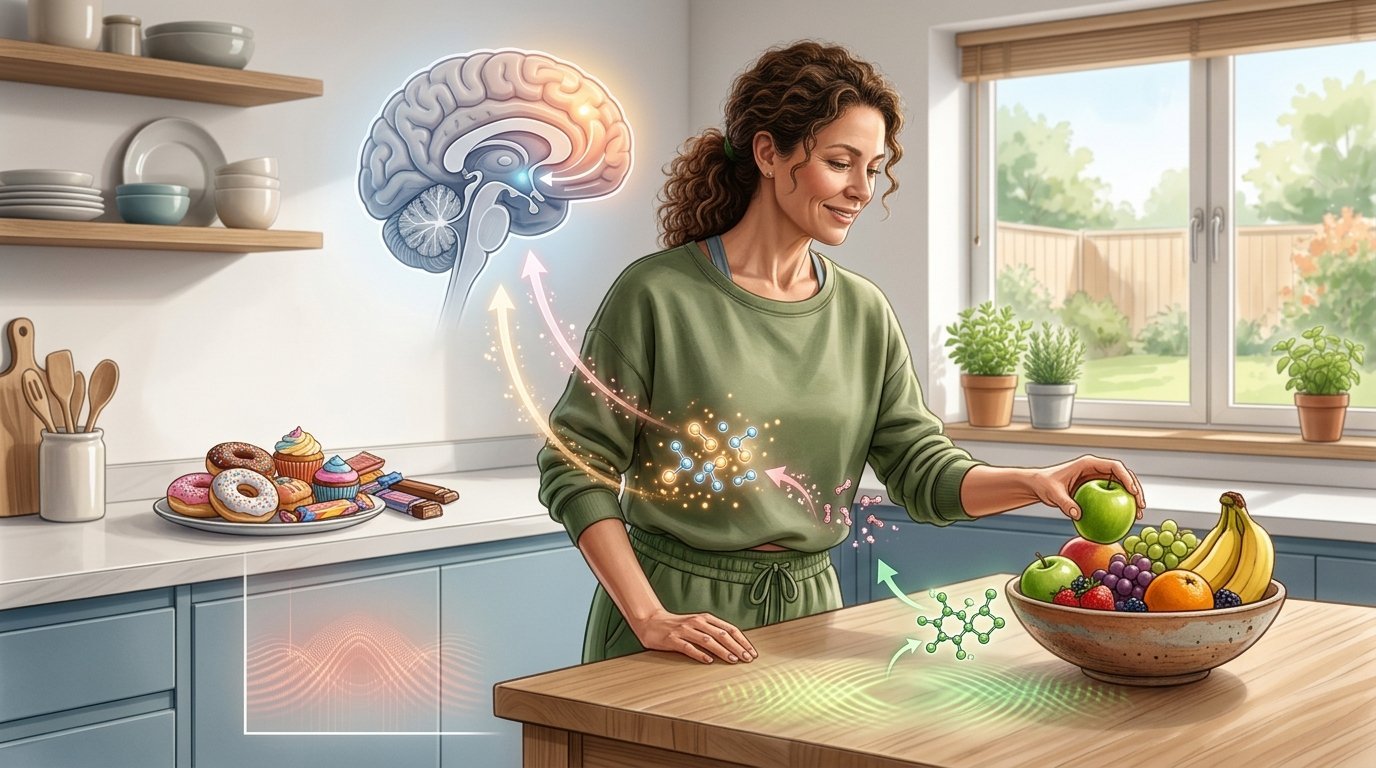
The brain also plays an important role. Sweet foods activate reward pathways that release dopamine, a neurotransmitter associated with pleasure and motivation. This does not mean sugar is addictive in the same way as drugs, but repeated exposure to highly sweet foods can strengthen habits that make cravings feel automatic in certain situations.
Fortunately, cravings can often be managed through practical lifestyle strategies rather than extreme restriction. Eating balanced meals, choosing satisfying foods, maintaining stable blood sugar, improving sleep, reducing stress, and building healthier daily routines all help reduce the frequency and intensity of sugar cravings over time.
It is also important to understand that occasional cravings are completely normal. The goal is not to eliminate every desire for sweets but to prevent cravings from controlling your food choices every day.
In this article, you’ll learn How to Stop Sugar Cravings naturally, why they happen, how blood sugar affects cravings, which foods help reduce them, why protein matters, how sleep and stress influence sweet cravings, and which daily habits support healthier eating patterns.
Why Do We Crave Sugar So Often?
Most people experience sugar cravings from time to time.
Some occur because your body genuinely needs energy, while others develop from habit, emotions, or environmental cues. Understanding why cravings happen is the first step toward managing them more effectively.
Rather than blaming yourself for wanting something sweet, it helps to recognize that cravings often reflect a combination of biological and behavioral factors.

Your Brain Enjoys Sweet Foods
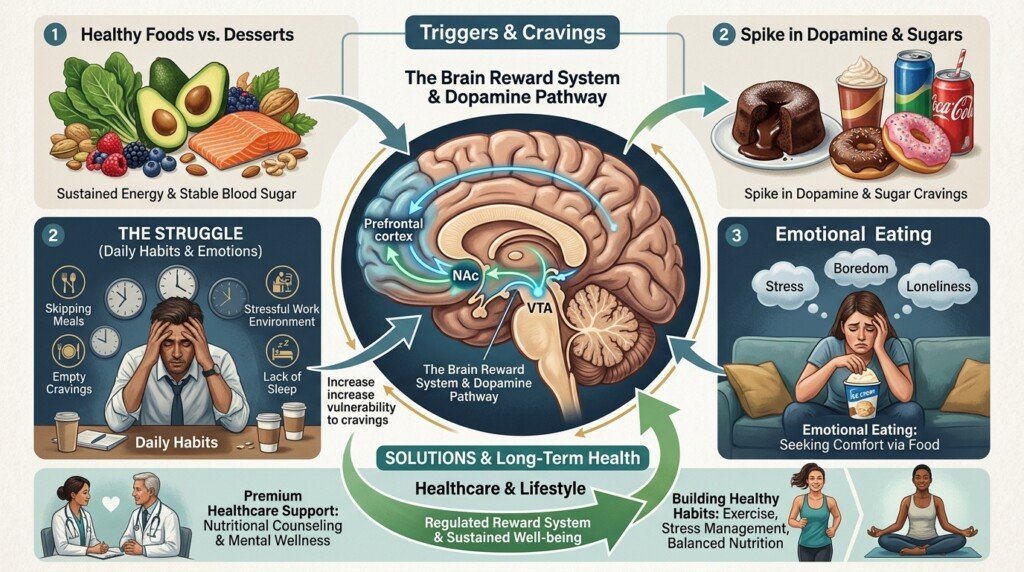
Sweet foods naturally activate the brain’s reward system.
When you eat something sugary, dopamine is released in areas of the brain involved in pleasure and motivation.
This creates positive feelings that encourage repeating the behavior.
Over time, your brain begins associating certain situations with sweet foods.
Examples include:
- Watching television
- Celebrating special occasions
- Feeling stressed
- Taking work breaks
- Eating dessert after dinner
Eventually, these situations may trigger cravings even when your body does not actually need additional energy.
Habits Can Become Powerful Triggers
Many cravings develop through repetition.
For example, if you eat chocolate every evening while watching a movie, your brain gradually links those two activities together.
Eventually, sitting down to watch television alone may trigger the desire for chocolate.
These learned habits often explain why cravings appear at similar times each day.
Changing routines can gradually weaken these associations.
Hunger Makes Sweet Foods More Appealing
When you become very hungry, your brain naturally looks for foods that provide energy quickly.
Highly sweet foods often become especially attractive because they are rapidly digested and easy to eat.
This is one reason skipping meals or waiting too long between meals may increase sugar cravings later in the day.
Keeping hunger under control is an important strategy discussed throughout Hungry All the Time, where appetite regulation and meal quality are explored in greater detail.
Emotional Eating Plays a Role
Not every craving begins in the stomach.
Stress, boredom, loneliness, frustration, and even happiness may encourage eating for comfort rather than physical hunger.
Emotional eating is a normal human experience, but when it becomes frequent, it may contribute to higher sugar intake.
Understanding emotional triggers makes it easier to develop healthier coping strategies.
Highly Processed Foods Encourage More Cravings
Foods high in added sugar are often designed to be extremely enjoyable.
Because they digest quickly and provide only short-term satisfaction, they may leave you wanting more shortly afterward.
Building meals around whole, minimally processed foods helps create steadier energy and fewer cravings over time.
Can Blood Sugar Swings Increase Sugar Cravings?
One of the most common reasons people crave sweets is fluctuating blood sugar.
Although everyone experiences natural changes in blood sugar throughout the day, large swings may contribute to stronger hunger and increased desire for sugary foods.
Maintaining more stable energy levels often helps reduce these cravings naturally.
Refined Carbohydrates Digest Quickly
Foods such as:
- Candy
- Sugary drinks
- White bread
- Pastries
- Sweet cereals
are digested rapidly.
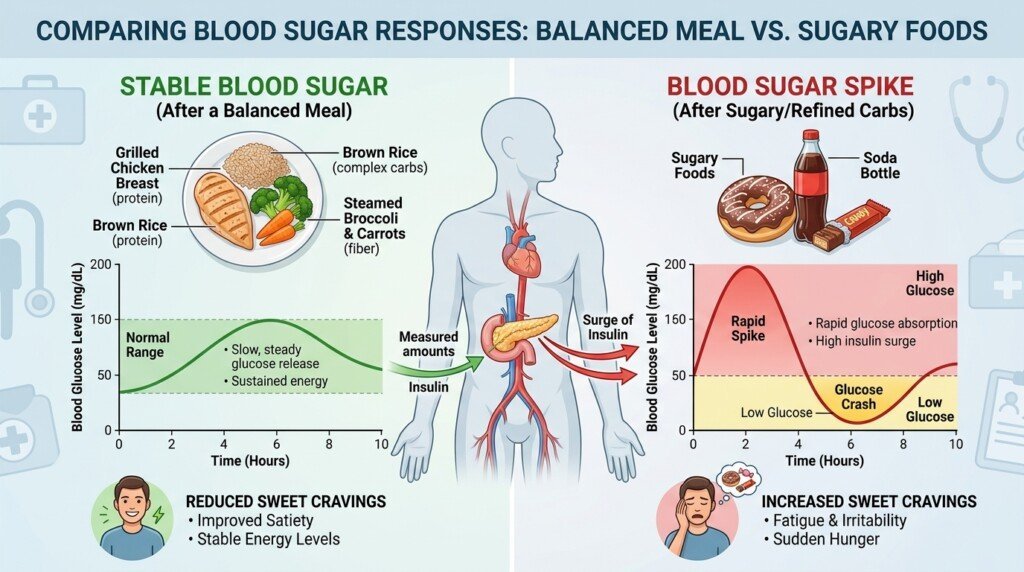
This often produces a quick rise in blood sugar followed by a faster decline than meals containing more protein and fiber.
When energy levels drop, cravings for additional sugar may increase.
Balanced Meals Support Steadier Energy
Meals containing a combination of:
- Protein
- Fiber
- Healthy fats
- Whole-food carbohydrates
digest more gradually than meals made mostly of refined carbohydrates.
This slower digestion helps provide more consistent energy throughout the day.
Rather than creating dramatic highs and lows, balanced meals support steadier appetite and fewer cravings.
Skipping Meals Can Intensify Cravings
Waiting too long between meals often makes people much hungrier.
When hunger becomes intense, sugary foods may seem especially appealing because they provide quick energy.
Eating regular, balanced meals may help reduce this effect.
Breakfast Can Influence the Entire Day
The first meal of the day often affects appetite for several hours afterward.
A breakfast rich in protein and fiber generally provides longer-lasting satisfaction than one based mainly on refined carbohydrates.
Healthy breakfast ideas are discussed in Best Breakfast for Weight Loss, where meal quality is emphasized as much as calorie content.
Which Foods Help Reduce Sugar Cravings?
There is no single food that completely eliminates sugar cravings.
Instead, choosing foods that promote fullness while providing steady energy is the most effective long-term strategy.
The goal is to reduce situations where intense hunger makes sugary foods difficult to resist.

Protein-Rich Foods
Protein helps meals remain satisfying for longer.
Good choices include:
- Eggs
- Greek yogurt
- Chicken
- Fish
- Cottage cheese
- Beans
- Lentils
- Tofu
Protein-rich meals often reduce the desire to snack shortly afterward.
High-Fiber Foods
Fiber slows digestion while supporting digestive health.
Excellent sources include:
- Vegetables
- Fruits
- Oats
- Legumes
- Whole grains
- Chia seeds
- Flaxseeds
These foods help create steady energy throughout the day.
Naturally Sweet Whole Fruits
When you’re craving sweets, fruit can often satisfy that desire while providing vitamins, minerals, fiber, and water.
Examples include:
- Apples
- Berries
- Oranges
- Pears
- Grapes
- Kiwi
Many nutritious fruit options are highlighted in Best Fruits for Weight Loss, where naturally sweet foods are incorporated into balanced eating patterns.
Healthy Snacks Prevent Extreme Hunger
Waiting until you become extremely hungry often makes sugary foods harder to resist.
Balanced snacks such as:
- Greek yogurt with berries
- Apple slices with peanut butter
- Cottage cheese
- Mixed nuts
- Hummus with vegetables
help reduce this problem.
Many practical snack combinations are included in Healthy Snacks for Weight Loss, where satisfaction and balanced nutrition are prioritized.
Does Protein Reduce Sugar Cravings?
Protein is one of the most effective nutrients for improving satiety.
Although it does not completely eliminate cravings, it often reduces the intensity of sugar cravings by helping you stay full longer.

Protein Slows Digestion
Compared with meals made mostly of refined carbohydrates, protein-rich meals digest more slowly.
This supports steadier energy while delaying the return of hunger.
As a result, many people experience fewer cravings between meals.
Protein Supports Stable Eating Patterns
When meals remain satisfying for longer, it becomes easier to:
- Avoid unnecessary snacking
- Reduce evening cravings
- Maintain balanced portions
- Follow healthier routines
Rather than relying entirely on willpower, protein helps make healthy eating feel more natural.
Protein Works Best With Other Nutritious Foods
The most satisfying meals combine protein with:
- Vegetables
- Whole grains
- Healthy fats
- Fiber-rich carbohydrates
This combination supports fullness while providing balanced nutrition.
Can Poor Sleep Increase Sugar Cravings?
Sleep is one of the most overlooked factors affecting food choices. Most people know that poor sleep causes fatigue, but fewer realize that it can also make sugary foods much harder to resist. After even one night of inadequate sleep, many people notice stronger cravings for sweets, desserts, and highly processed snacks.
This happens because sleep influences several hormones involved in appetite regulation while also affecting the brain’s reward system. When you are tired, your body naturally looks for quick sources of energy, and sugary foods often seem especially appealing.
Improving sleep is not only beneficial for recovery and mental performance but also for maintaining healthier eating habits.

Sleep Can Increase Appetite
Research has shown that inadequate sleep may increase hunger while reducing feelings of fullness.
As a result, people often experience:
- More frequent hunger
- Larger portion sizes
- Increased snacking
- Stronger cravings for sweets
- More evening eating
These effects can make it difficult to follow healthy nutrition habits, even when your motivation remains high.
Fatigue Encourages Quick Energy Foods
When energy levels are low, your brain naturally seeks foods that provide fast fuel.
Common cravings after poor sleep include:
- Chocolate
- Candy
- Cookies
- Sweet pastries
- Sugary coffee drinks
- Soft drinks
Although these foods may provide a temporary energy boost, they rarely keep you satisfied for long and are often followed by another energy slump.
Better Sleep Supports Better Food Choices
Most healthy adults benefit from seven to nine hours of quality sleep each night.
Simple habits that support healthy sleep include:
- Going to bed at a consistent time
- Waking at the same time each morning
- Limiting screen use before bed
- Keeping the bedroom cool and dark
- Avoiding large meals immediately before bedtime
These routines support healthy hormone regulation and make balanced food choices feel easier throughout the following day.
Sleep Is Part of a Healthy Lifestyle
Sleep should not be viewed separately from nutrition.
Quality sleep, balanced meals, regular movement, and stress management all work together to support healthier appetite regulation.
When these habits improve together, sugar cravings often become less frequent.
Does Stress Trigger Sugar Cravings?
Stress is another major contributor to sweet cravings.
Many people notice that they reach for chocolate, ice cream, or other comfort foods during difficult days, even when they are not physically hungry.
This response is very common and reflects both biological and emotional influences.
Understanding your stress triggers can make cravings much easier to manage.

Emotional Eating Is Common
Food is often connected to comfort, celebration, relaxation, and reward.
During stressful situations, eating sweet foods may temporarily improve mood or provide distraction.
This pattern becomes stronger when repeated frequently.
Eventually, stress itself may become a trigger for sugar cravings.
Chronic Stress Can Change Eating Habits
Long-term stress affects more than emotions.
It may also lead to:
- Frequent snacking
- Larger meal portions
- Evening cravings
- Less mindful eating
- Preference for highly processed foods
These changes often occur gradually and may go unnoticed until they become daily habits.
The relationship between emotional stress and eating behavior is explored in Stress and Weight Loss, where practical stress-management strategies are discussed in greater detail.
Learn to Identify Emotional Triggers
One helpful question to ask yourself before eating is:
“Am I physically hungry, or am I trying to change how I feel?”
If the answer is emotional rather than physical, consider another activity first, such as:
- Taking a short walk
- Calling a friend
- Reading
- Stretching
- Deep breathing
- Journaling
Even waiting ten minutes before deciding to eat can reduce many emotional cravings.
Healthy Coping Habits Reduce Cravings
Stress cannot always be avoided, but healthy coping strategies help reduce the likelihood of turning to food for comfort.
Helpful habits include:
- Daily physical activity
- Meditation
- Spending time outdoors
- Listening to music
- Practicing gratitude
- Maintaining social connections
Replacing emotional eating with healthier routines becomes easier through consistent practice.
The behavioral side of cravings is also discussed in Psychology of Weight Loss, where thoughts, emotions, and habits are explored alongside nutrition.
Which Daily Habits Help Prevent Sugar Cravings?
Although occasional cravings are completely normal, everyday habits largely determine how often they occur.
Rather than searching for one miracle solution, focus on building routines that naturally support balanced appetite and steady energy.
Small improvements practiced consistently often produce the greatest long-term results.
Eat Regular Balanced Meals
Skipping meals frequently can make hunger much stronger later in the day.
Aim to include:
- Lean protein
- High-fiber carbohydrates
- Healthy fats
- Plenty of vegetables
at each meal.
Balanced meals help maintain steady energy while reducing sudden cravings.
Keep Healthy Snacks Available
Planning ahead prevents many impulsive food choices.
Nutritious options include:
- Fresh fruit
- Greek yogurt
- Mixed nuts
- Cottage cheese
- Hummus with vegetables
Having healthy choices available makes it easier to satisfy hunger before cravings become overwhelming.
Stay Hydrated
Mild dehydration sometimes feels similar to hunger.
Drinking water consistently throughout the day supports overall health and may reduce unnecessary snacking caused by confusing thirst with hunger.
Reduce Added Sugar Gradually
Trying to eliminate all sugary foods overnight often backfires.
Instead, gradually reduce added sugar by:
- Choosing unsweetened beverages
- Reading food labels
- Replacing desserts with fruit more often
- Cooking more meals at home
Small changes are usually easier to maintain than extreme restrictions.
Improve Your Food Environment
Your surroundings strongly influence eating habits.
Helpful strategies include:
- Keeping fruit visible
- Storing treats out of sight
- Planning grocery shopping with a list
- Avoiding shopping while hungry
- Preparing healthy snacks in advance
Making healthy choices convenient often reduces reliance on willpower.
Support Gut Health
Researchers continue studying how the gut microbiome influences appetite and food preferences.
Eating a variety of fiber-rich plant foods may help support a healthier gut environment.
Foods such as vegetables, fruits, legumes, oats, and fermented foods contribute to overall digestive health.
The relationship between nutrition and digestion is explored further in Gut Health and Weight Loss, where gut health is discussed as part of long-term wellness.

Frequently Asked Questions
1. Why do I crave sugar even after eating?
Sugar cravings after meals may occur because of habit, emotional triggers, poor sleep, blood sugar fluctuations, or meals that lack enough protein and fiber.
2. Can protein reduce sugar cravings?
Yes. Protein helps increase fullness and slows digestion, making it easier to stay satisfied between meals and reducing the likelihood of craving sweets.
3. Does poor sleep cause sugar cravings?
Research suggests that inadequate sleep may increase appetite and make sweet, high-calorie foods more appealing the following day.
4. Which foods help reduce sugar cravings?
Protein-rich foods, fiber-rich vegetables, fruits, whole grains, legumes, healthy fats, and balanced snacks help provide steady energy and reduce cravings.
5. How can I stop sugar cravings naturally?
Eating balanced meals, improving sleep, managing stress, staying hydrated, planning healthy snacks, and gradually reducing added sugar are among the most effective natural strategies.
Final Thoughts
Learning How to Stop Sugar Cravings is not about avoiding every sweet food forever. Cravings are a normal part of human behavior and are influenced by many factors, including hunger hormones, blood sugar, sleep, stress, emotions, and daily habits.
The most effective approach is to build a lifestyle that naturally reduces the situations where cravings become overwhelming. Balanced meals rich in protein and fiber, quality sleep, regular hydration, stress management, nutritious snacks, and mindful eating all help create steadier energy and healthier appetite regulation.
Remember that lasting progress comes from consistency rather than perfection. Occasional cravings are completely normal, and enjoying sweet foods from time to time can still fit within a healthy lifestyle. By focusing on sustainable habits instead of strict restriction, you can reduce sugar cravings naturally while supporting long-term health, better nutrition, and a healthier relationship with food.
Disclaimer:
This post may contain affiliate links. If you purchase through them, we may earn a small commission at no extra cost to you. Also, this content is for informational purposes only and does not substitute professional medical advice.
Ready to Start Your Journey?
Use our free 7-in-1 Weight Loss Toolkit to calculate your numbers and build your plan in minutes.
Open Free Tools →