

How Long Does a Weight Loss Plateau Last? Here’s What to Expect
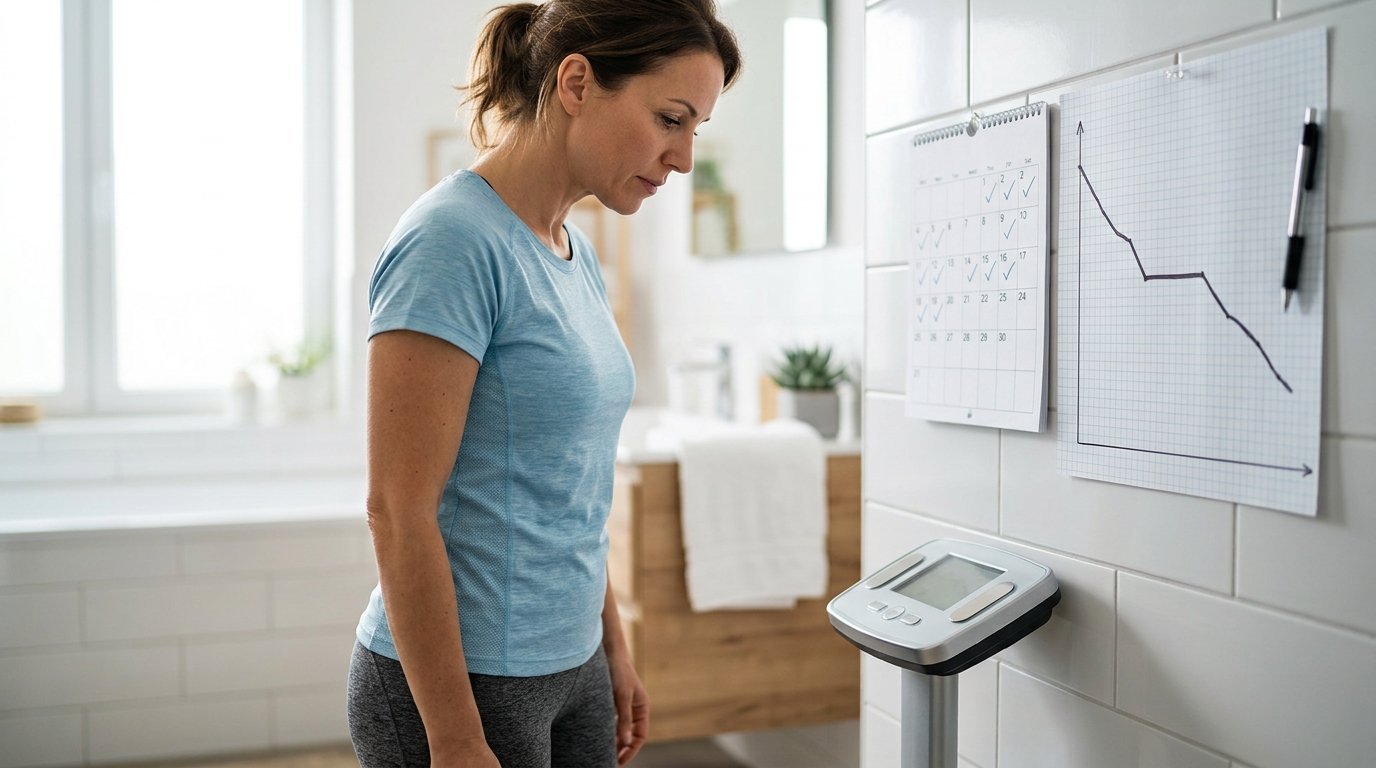
You stepped on the scale expecting another small victory, but the number hasn’t changed. A few more days pass, then another week, and still nothing. Naturally, one question starts to dominate your thoughts: How Long Does a Weight Loss Plateau Last?
Experiencing a plateau is one of the most common parts of a successful weight loss journey. Almost everyone who loses a meaningful amount of weight eventually reaches a period where progress slows or temporarily stops. While it can feel discouraging, a plateau does not mean your body has stopped burning fat forever or that your efforts have been wasted.
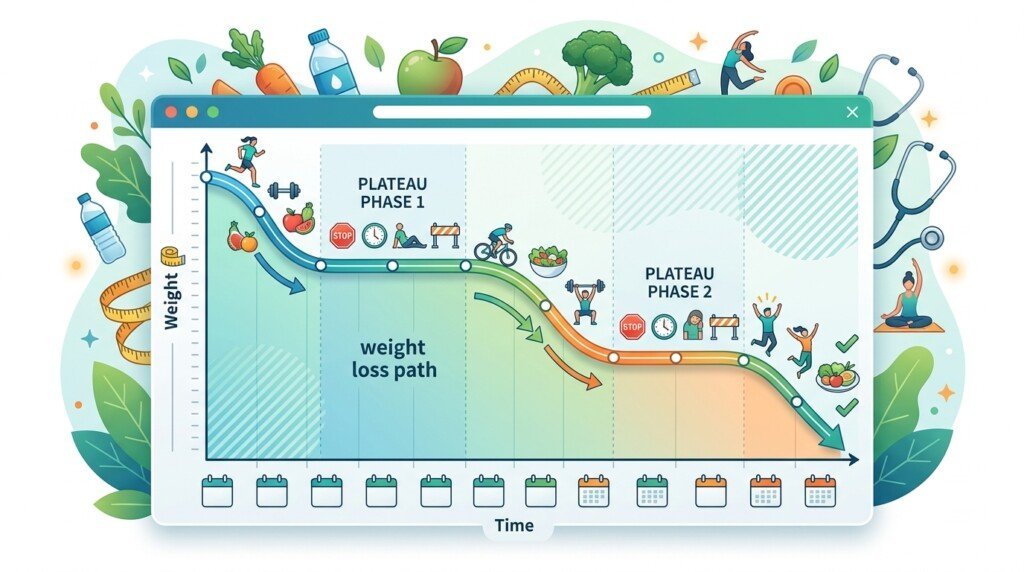
Weight loss is not a straight line. As your body changes, so do your calorie needs, metabolism, daily energy expenditure, and body composition. Temporary water retention, changes in physical activity, recovery from exercise, and natural biological adaptation can all make the scale appear stuck, even while positive changes continue inside your body.
The length of a plateau varies from person to person. Some last only a couple of weeks, while others continue for several months depending on lifestyle habits, consistency, and whether adjustments are needed. Understanding what influences plateau length helps you avoid making unnecessary changes too quickly.
Perhaps most importantly, the scale is only one way to measure progress. During a plateau, you may still be losing body fat, gaining strength, improving endurance, or reducing your waist circumference without seeing immediate movement on the scale.
In this article, you’ll learn How Long Does a Weight Loss Plateau Last, why plateaus happen, which factors influence how long they last, whether they can resolve without changing your diet, the best ways to measure progress, and when it makes sense to adjust your routine.
How Long Does a Weight Loss Plateau Last?
There is no single timeline that applies to everyone.
The duration of a weight loss plateau depends on your body, your habits, your level of consistency, and what is causing the slowdown in the first place.
For some people, progress resumes after only a week or two. For others, a plateau may continue for several weeks before meaningful changes appear again.
The important thing is understanding the difference between a temporary slowdown and a true plateau.

A Few Days Is Usually Not a Plateau
Daily weight naturally changes because of several normal factors, including:
- Hydration
- Sodium intake
- Meal timing
- Digestion
- Hormonal fluctuations
- Exercise recovery
Because of these natural changes, several days without weight loss should not immediately be considered a plateau.
Short-term fluctuations are part of normal body function.
Two to Four Weeks Is More Common
Many experts consider a plateau to be a period of approximately two to four weeks where body weight remains relatively unchanged despite consistent eating and activity habits.
During this time, it is often better to continue following your routine while monitoring long-term trends instead of reacting to daily weigh-ins.
Patience is frequently the most effective strategy during these early stages.
Some Plateaus Last Longer
Longer plateaus may occur when:
- Calorie intake gradually increases
- Daily movement decreases
- Exercise routines become easier
- Weight loss has been ongoing for several months
- Recovery and sleep decline
In these situations, small adjustments are often needed before progress resumes.
Plateaus Are a Normal Stage of Weight Loss
A plateau should not be viewed as failure.
Instead, think of it as a checkpoint.
Your body has adapted to your previous routine, and it may simply be time to evaluate your habits and determine whether small improvements are appropriate.
This normal process is discussed more broadly throughout Weight Loss Plateau, where the biology behind stalled progress is explained in greater detail.
Why Does a Plateau Happen?
Understanding why plateaus occur makes it much easier to stay patient.
Rather than assuming something is wrong, you can recognize that your body is responding normally to long-term weight loss.
Your Body Needs Less Energy
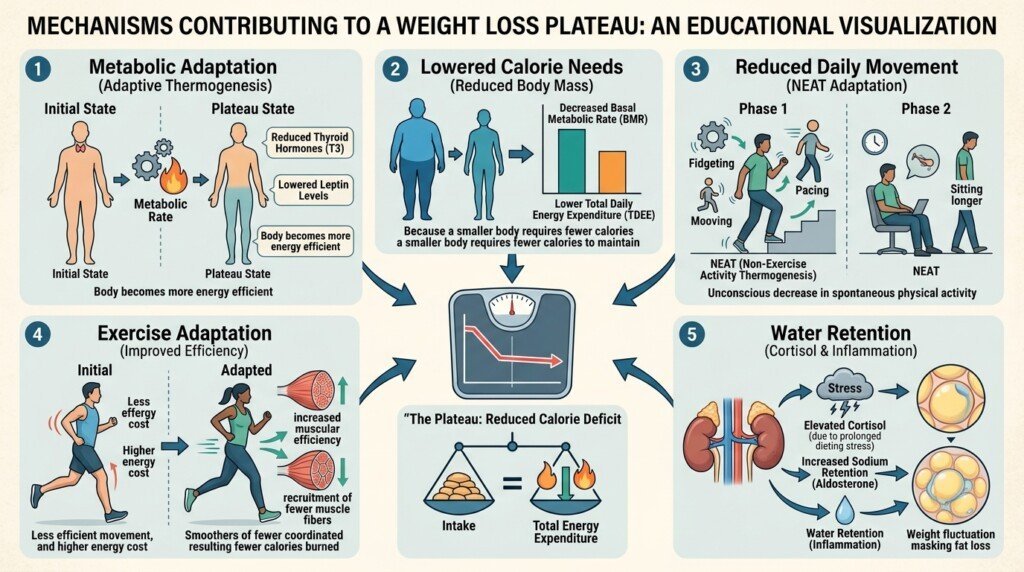
One of the biggest reasons plateaus occur is simple mathematics.
As body weight decreases, your body requires fewer calories to perform everyday tasks.
Walking, climbing stairs, exercising, and even resting all require slightly less energy than before.
Without realizing it, your original calorie deficit gradually becomes smaller.
Metabolic Adaptation Occurs Naturally
Your metabolism does not suddenly stop working.
However, it becomes more efficient over time.
Researchers often describe this process as metabolic adaptation.
Your body naturally attempts to conserve energy during prolonged calorie restriction.
This adaptation is completely normal and does not mean continued fat loss is impossible.
Daily Movement Often Declines
Many people unknowingly become less active after losing weight.
You may:
- Walk less
- Sit more often
- Stand less frequently
- Move less around the house
- Burn fewer calories outside formal exercise
These small reductions in movement accumulate over weeks and months.
Exercise Feels Easier
Improved fitness is excellent news.
However, as your body adapts to familiar workouts, those workouts require less effort than when you first started.
This means calorie expenditure during exercise gradually decreases unless the challenge increases.
Temporary Water Retention Can Hide Fat Loss
Exercise recovery often causes muscles to retain extra water.
Higher sodium intake, hormonal fluctuations, and changes in carbohydrate intake can also increase temporary water retention.
This may hide ongoing fat loss for several days or weeks.
Consistency Naturally Changes
Few people maintain identical habits month after month.
Over time, you may notice:
- Slightly larger portions
- More snacks
- Extra restaurant meals
- Less food tracking
- Fewer daily steps
Individually these changes seem small.
Together they may reduce your calorie deficit enough to slow progress.
What Factors Affect Plateau Length?
Some plateaus resolve quickly.
Others require more time.
Several important factors influence how long they last.

Overall Consistency
People who maintain consistent eating habits, physical activity, and sleep routines often move through plateaus more quickly than those whose routines vary significantly.
Consistency remains one of the strongest predictors of long-term success.
Body Composition Changes
The scale measures total body weight.
It cannot distinguish between:
- Body fat
- Muscle
- Water
- Bone
- Digestive contents
Someone beginning resistance training may lose fat while gaining muscle at the same time.
This can keep scale weight stable even though body composition continues improving.
Exercise Recovery
More intense training often increases temporary muscle inflammation.
During recovery, muscles naturally store additional water.
Although this can temporarily delay visible weight changes, it is usually a sign that your body is adapting positively.
Nutrition Quality
Balanced meals containing:
- Lean protein
- Vegetables
- Whole grains
- Healthy fats
- Fiber
support appetite control and make consistency easier.
Nutrition quality often influences long-term adherence even when calorie balance remains the primary driver of fat loss.
Stress and Sleep
Poor sleep and chronic stress rarely cause a plateau directly.
However, they often influence:
- Hunger
- Cravings
- Recovery
- Exercise motivation
- Food choices
Addressing these lifestyle factors frequently improves overall consistency.
Expectations
Perhaps the biggest factor influencing frustration is unrealistic expectations.
Many people expect weight loss every single week.
In reality, healthy progress naturally includes periods where the scale remains unchanged.
Viewing plateaus as a normal part of the process helps reduce unnecessary anxiety.
Can Plateaus End Without Changing Your Diet?
One of the most common questions people ask during stalled progress is whether they need to immediately reduce calories or completely change the foods they eat.
The answer is not always.
In many cases, a plateau resolves on its own because the body is temporarily holding extra water or adapting to recent changes in exercise and routine. Making drastic dietary changes too quickly can sometimes create unnecessary stress and make healthy habits harder to maintain.
Before changing your nutrition plan, it helps to understand why the scale may not be telling the whole story.

Temporary Water Weight Can Disappear Naturally
Your body constantly adjusts its fluid balance.
Several factors can increase water retention for a short period, including:
- Hard workouts
- Higher sodium intake
- Hormonal fluctuations
- Increased carbohydrate intake
- Poor sleep
When these temporary changes settle, the scale often begins moving again without any adjustment to calorie intake.
Consistency Often Solves Short Plateaus
If you’ve been following your nutrition plan consistently for only a week or two, patience may be more effective than making immediate changes.
Many people abandon a successful routine simply because they expected faster results.
Continuing your healthy habits allows your body time to respond.
Body Composition Can Improve While Weight Stays the Same
If you’re combining balanced nutrition with resistance training, you may lose fat while maintaining or increasing lean muscle.
Because muscle is denser than fat, the scale may remain stable even though your body shape continues changing.
This is one reason relying only on body weight can create unnecessary frustration.
Focus on Long-Term Trends
Instead of evaluating progress based on a single weigh-in, compare trends over several weeks.
Looking at averages rather than daily fluctuations provides a much more accurate picture of your progress.
This long-term perspective is one of the foundations of Sustainable Weight Loss, where gradual progress is valued over rapid changes.
How Should You Measure Progress?
The scale is a useful tool, but it should never be the only way you evaluate success.
A weight loss plateau often becomes much less discouraging when you recognize improvements happening in other areas.
Take Body Measurements
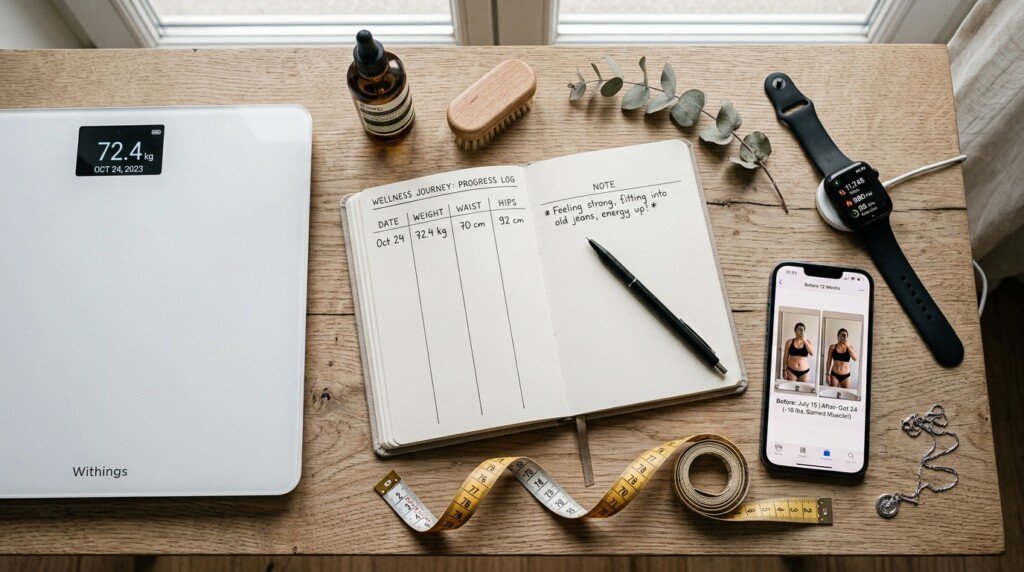
Measurements often reveal progress that the scale cannot.
Consider tracking:
- Waist circumference
- Hip circumference
- Chest
- Thighs
- Upper arms
Even small reductions over time indicate positive body composition changes.
Use Progress Photos
Photos taken every few weeks under similar lighting and clothing conditions often show gradual improvements that are difficult to notice in the mirror each day.
Many people are surprised by how much their body changes despite relatively small differences on the scale.
Notice How Your Clothes Fit
One of the simplest ways to monitor progress is paying attention to clothing.
Looser waistbands, shirts that fit more comfortably, or improved confidence in your appearance all represent meaningful improvements.
Track Strength and Fitness
Weight management is not only about losing pounds.
Ask yourself:
- Can I lift heavier weights?
- Can I walk farther?
- Do stairs feel easier?
- Am I recovering more quickly?
- Is my energy improving?
Positive answers indicate that your body continues adapting in healthy ways.
Monitor Healthy Habits
Sometimes the greatest success is consistency itself.
Celebrate habits such as:
- Preparing meals regularly
- Walking every day
- Sleeping consistently
- Drinking enough water
- Completing workouts
- Managing stress effectively
These behaviors support long-term success regardless of what the scale shows this week.
Developing these routines is one reason Weight Loss Habits focuses on sustainable behavior rather than short-term perfection.
When Should You Adjust Your Routine?
Although patience is important, there are times when making thoughtful adjustments becomes appropriate.
The goal is not to constantly change your plan but to respond strategically when progress genuinely stalls.

Give Your Current Plan Enough Time
Avoid changing your routine after only a few days without weight loss.
Most temporary stalls resolve naturally.
A true plateau generally involves several weeks of consistent habits with little measurable progress.
Review Your Nutrition Honestly
Before making major changes, ask yourself:
- Am I still measuring portions accurately?
- Have snacks increased?
- Am I eating out more often?
- Have beverages added extra calories?
- Has meal planning become less consistent?
Small improvements often restart progress.
Evaluate Your Activity Level
Daily movement frequently decreases without people noticing.
Consider whether you are:
- Walking as much as before
- Completing strength workouts consistently
- Taking movement breaks
- Remaining active outside the gym
Increasing overall movement often provides greater benefits than dramatically increasing workout intensity.
If your plateau continues despite consistent habits, the practical strategies discussed in How to Break a Weight Loss Plateau provide an organized approach for making gradual adjustments.
Make One Change at a Time
Changing everything simultaneously makes it impossible to know what actually helped.
Instead, choose one adjustment such as:
- Increasing daily steps
- Improving protein intake
- Measuring portions more carefully
- Adding one extra strength session each week
Evaluate the results before introducing another change.
Stay Patient
Perhaps the most valuable adjustment is your mindset.
Healthy weight loss is measured over months and years, not days.
Trusting the process while remaining consistent often produces better long-term results than constantly searching for a new strategy.

Frequently Asked Questions
1. How long does a weight loss plateau usually last?
A weight loss plateau commonly lasts between two and four weeks, although some may continue longer depending on calorie intake, physical activity, recovery, consistency, and individual body changes.
2. Can a weight loss plateau end on its own?
Yes. Some plateaus resolve naturally as temporary water retention decreases or the body finishes adapting to recent changes in exercise and nutrition.
3. Should I change my diet immediately during a plateau?
Not usually. If you’ve been consistent for only a short time, patience is often the best approach. Review your habits carefully before making major dietary adjustments.
4. How can I tell if I’m still losing fat during a plateau?
Look beyond the scale by monitoring waist measurements, progress photos, clothing fit, strength improvements, and overall fitness. These indicators often reveal continued progress.
5. When should I adjust my weight loss routine?
Consider making gradual adjustments after several weeks of consistent habits with little or no measurable progress. Focus on one change at a time rather than overhauling your entire plan.
Final Thoughts
If you’ve been wondering How Long Does a Weight Loss Plateau Last, the most important thing to remember is that there is no universal timeline. Some plateaus resolve within a couple of weeks, while others take longer depending on your body’s natural adaptation, consistency, activity level, and overall lifestyle.
Rather than viewing a plateau as failure, think of it as a normal checkpoint in your weight loss journey. It is an opportunity to evaluate your habits, recognize progress beyond the scale, and make thoughtful adjustments only when necessary. Often, staying consistent is more effective than making dramatic changes.
Successful weight management is built through patience, realistic expectations, and sustainable habits. By focusing on long-term progress instead of short-term fluctuations, you’ll be better prepared to move through temporary plateaus and continue making meaningful improvements in your health and body composition.
Disclaimer:
This post may contain affiliate links. If you purchase through them, we may earn a small commission at no extra cost to you. Also, this content is for informational purposes only and does not substitute professional medical advice.
Ready to Start Your Journey?
Use our free 7-in-1 Weight Loss Toolkit to calculate your numbers and build your plan in minutes.
Open Free Tools →