


How to Take Creatine for Weight Loss: Dosage, Timing, and Cycling Explained
If you’re thinking about adding creatine to your routine, you’ve probably come across dozens of conflicting recommendations. Some people say you need a loading phase. Others insist timing is everything. You’ll also find advice telling you to cycle creatine, avoid taking it on rest days, or combine it with certain foods.
With so much information available, it’s easy to wonder which advice actually matters.
Understanding How to Take Creatine for Weight Loss isn’t about chasing complicated routines. It’s about following practical, evidence-based habits that help you stay consistent. Creatine is one of the most researched sports nutrition supplements available, and despite the myths surrounding it, using it correctly is surprisingly simple.
Rather than focusing on complicated supplement schedules, most people benefit from building a routine they can maintain over the long term. Consistency generally matters more than perfection.
This article explains How to Take Creatine for Weight Loss, including dosage, loading, cycling, and the practical decisions that often confuse beginners. By the end, you’ll understand how to use creatine effectively without overcomplicating the process.
Quick Answer
How to Take Creatine for Weight Loss begins with consistency. Most healthy adults use creatine monohydrate daily, regardless of whether it is a workout day or a rest day. While some people choose to begin with a loading phase, many simply take a regular maintenance amount from the start. Timing appears to be far less important than taking creatine consistently over time.
What Is the Best Creatine Dosage?
One of the first questions beginners ask is how much creatine they actually need.
Fortunately, the answer is much simpler than many supplement advertisements make it appear.
Most scientific organizations and sports nutrition researchers recommend creatine monohydrate because it has been studied extensively and consistently demonstrates effectiveness.

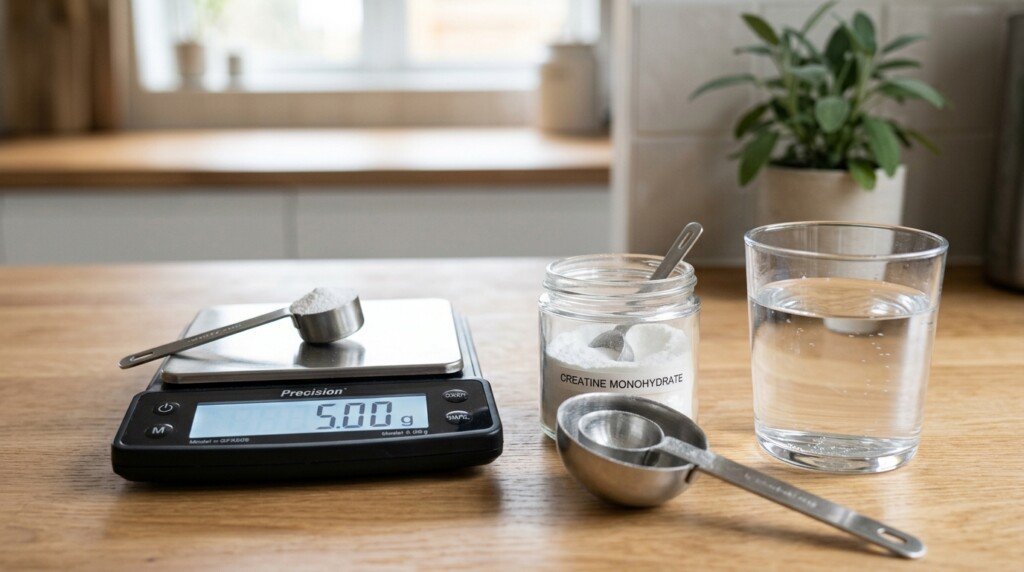
The Standard Maintenance Dose
For most healthy adults, the commonly recommended maintenance amount is:
3 to 5 grams per day
This recommendation has remained remarkably consistent across decades of scientific research.
Taking more than this does not necessarily provide greater benefits once muscle creatine stores have reached normal levels.
Instead of assuming higher doses produce better results, most experts recommend following the established maintenance range.
Does Body Size Matter?
Although individual needs can vary slightly, the standard maintenance recommendation works well for the majority of adults.
People with significantly larger body size or exceptional muscle mass may occasionally receive individualized recommendations from sports nutrition professionals.
However, for recreational exercisers, 3 to 5 grams daily is generally considered appropriate.
Why Consistency Matters More Than Quantity
Many beginners spend too much time worrying about finding the “perfect” dosage.
In reality, missing doses repeatedly has a much greater impact than choosing between four grams and five grams.
Creatine works by gradually maintaining adequate muscle creatine stores.
That process depends on regular intake rather than constantly changing the amount consumed.
Building a simple daily habit is often far more valuable than trying to optimize every small detail.
Should You Measure Carefully?
Using a measuring scoop supplied with the product usually provides sufficient accuracy for everyday use.
Those who prefer greater precision may choose to weigh their creatine using a digital kitchen scale.
The goal is consistency rather than absolute perfection.
Choosing a high-quality product is equally important, which is why many people compare different Best Creatine Supplements before establishing a long-term routine.
Should You Use a Loading Phase?
Few creatine topics generate as much discussion as the loading phase.
Some people consider it essential.
Others skip it completely.
The truth is that both approaches can be appropriate depending on individual preferences.
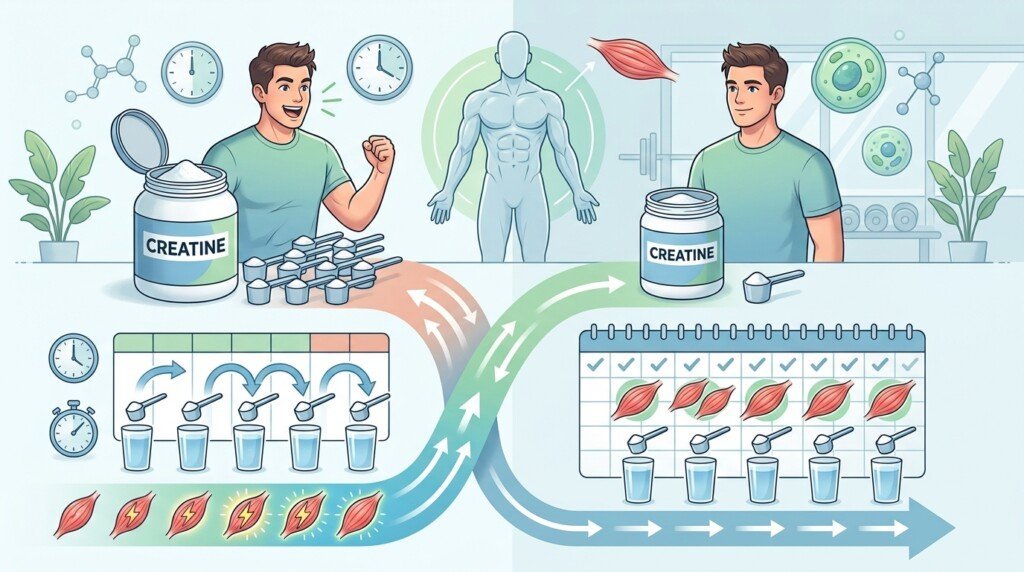
What Is a Loading Phase?
A loading phase refers to taking a larger amount of creatine each day for a short period before switching to the regular maintenance amount.
The purpose is simple.
It helps saturate muscle creatine stores more quickly.
Without loading, muscle creatine levels still increase.
The process simply takes longer.
Is Loading Required?
No.
One of the biggest misconceptions surrounding creatine is that everyone must complete a loading phase.
Current evidence indicates that this is not necessary for creatine to be effective.
Many people choose to begin immediately with the standard maintenance amount and still achieve the same long-term muscle creatine saturation.
The primary difference is how quickly saturation occurs.
Why Some People Still Choose Loading
Individuals preparing for athletic competition or beginning a structured training program sometimes prefer faster saturation.
Others simply appreciate reaching steady muscle creatine levels sooner.
For recreational exercisers focused on long-term consistency, skipping the loading phase often simplifies the process.
Neither approach is considered wrong.
Practical Considerations
A loading phase is a matter of convenience rather than necessity.
If following a simple routine encourages long-term consistency, beginning with a maintenance amount may be easier to sustain.
The most effective routine is often the one you can comfortably maintain month after month.
Should You Cycle Creatine?
Another question that appears frequently online is whether creatine should be cycled.
Some supplement routines involve periods of use followed by periods without supplementation.
This practice has contributed to confusion about whether creatine requires the same approach.
What Does Cycling Mean?
Cycling refers to intentionally stopping creatine after using it for a certain period before eventually starting again.
Supporters of cycling often claim it prevents the body from becoming dependent on creatine or losing responsiveness.
Current evidence does not strongly support these concerns in healthy adults.
Does the Body Stop Responding?
Research has not demonstrated that healthy muscles become resistant to creatine simply because supplementation continues over time.
Instead, muscle creatine stores remain elevated while supplementation continues consistently.
If supplementation stops, creatine stores gradually return toward normal baseline levels over time.
This represents a normal physiological adjustment rather than dependence.
Why Some People Choose to Cycle Anyway
Although scientific necessity remains limited, some individuals still choose to cycle creatine for personal reasons.
These may include:
- Simplifying supplement routines
- Athletic season planning
- Personal preference
- Budget considerations
Choosing to cycle does not necessarily create problems.
Likewise, remaining consistent year-round is also a common approach among healthy adults.
Focus on Long-Term Habits
Rather than worrying about complicated cycling schedules, most people benefit more from developing consistent nutrition and exercise habits.
Creatine supports training, but it should always be viewed as one component of a broader lifestyle that includes regular Strength Training, balanced nutrition, and, for individuals pursuing fat loss, a sustainable Calorie Deficit.
Understanding these larger habits often has a greater impact than deciding whether to stop and restart creatine at predetermined intervals.
When Is the Best Time to Take Creatine?
One of the most debated questions about creatine has nothing to do with how much to take. Instead, people want to know exactly when they should take it.
Should it be before a workout?
After training?
With breakfast?
Before bed?
The good news is that the answer is much simpler than many supplement advertisements suggest.
Current research indicates that consistency plays a much larger role than precise timing.

Does Taking Creatine Before a Workout Improve Results?
Many people prefer taking creatine before exercise because it becomes part of their pre-workout routine.
From a practical standpoint, this approach can help build consistency.
However, current evidence does not show that taking creatine immediately before training dramatically improves its effectiveness compared with other times of the day.
Unlike caffeine, creatine does not produce immediate performance effects after a single serving.
Instead, it works by gradually increasing and maintaining creatine stores inside your muscles.
Is After Your Workout a Better Choice?
Some athletes prefer taking creatine after resistance training because it fits naturally into their post-workout nutrition routine.
Combining creatine with a meal after exercise also makes it easier for many people to remember their daily serving.
Although some studies have explored whether post-workout supplementation offers small advantages, overall research has not produced a clear winner between taking creatine before or after training.
The differences appear minimal compared with simply taking it consistently every day.
The Best Time Is the Time You’ll Remember
For most people, the ideal schedule is the one they can follow without missing doses.
That may be:
- With breakfast
- Before training
- After training
- With dinner
- At another consistent time each day
Missing creatine several times each week because you’re waiting for the “perfect” moment is far less effective than taking it regularly at a convenient time.
Building a habit usually matters more than chasing perfect timing.
Should You Take Creatine on Rest Days?
Another common misunderstanding is that creatine should only be taken on workout days.
Because creatine supports exercise performance, some people assume it becomes unnecessary whenever they skip the gym.
Research suggests otherwise.
Creatine Works Through Muscle Saturation
Creatine is different from supplements that provide immediate stimulation.
Its effectiveness depends on maintaining adequate creatine stores inside your muscles.
Those stores gradually decline if supplementation stops completely.
Continuing your regular routine on rest days helps maintain consistent muscle creatine levels.
Recovery Continues Even When You Aren’t Training
Your body does not stop adapting simply because you’re taking a day away from the gym.
Recovery processes continue between workouts.
Muscles repair, rebuild, and prepare for future training sessions.
Maintaining consistent creatine intake supports these ongoing physiological processes without requiring complicated schedules.
Keep Your Routine Simple
Many people find it easier to associate creatine with another daily habit rather than with exercise alone.
Examples include taking creatine:
- With breakfast every morning
- Alongside lunch
- With an evening meal
Linking supplementation to an everyday habit often improves consistency more effectively than tying it exclusively to workout sessions.
Which Type of Creatine Is Best?
Walk into any supplement store and you’ll find numerous forms of creatine.
The variety can make it seem as though newer or more expensive versions automatically provide superior results.
Current evidence suggests otherwise.

Creatine Monohydrate Remains the Gold Standard
Among all available forms, creatine monohydrate has received by far the greatest amount of scientific research.
It has consistently demonstrated effectiveness across decades of studies involving athletes, recreational exercisers, and healthy adults.
Because of this extensive evidence, creatine monohydrate remains the form most commonly recommended by sports nutrition professionals.
Newer Forms Often Cost More
Manufacturers frequently promote alternative forms of creatine using claims of better absorption, faster results, or reduced side effects.
While these claims may sound appealing, many newer formulations have significantly less scientific evidence supporting them.
Higher prices do not automatically translate into better outcomes.
For most people, choosing a reputable creatine monohydrate product remains the simplest and most evidence-supported option.
Quality Matters More Than Marketing
Regardless of the specific product you choose, purchasing supplements from reputable manufacturers helps improve confidence in product quality and ingredient accuracy.
Independent testing and transparent manufacturing practices are valuable considerations when comparing different creatine products.
Common Creatine Mistakes to Avoid
Using creatine is relatively straightforward, but several common mistakes can reduce consistency or create unnecessary confusion.
Fortunately, these mistakes are easy to avoid.
Expecting Immediate Results
Some beginners assume creatine should produce noticeable changes within a day or two.
Creatine works gradually.
Its benefits develop as muscle creatine stores become adequately maintained through consistent supplementation.
Patience is part of the process.
Constantly Changing Products
Switching between different creatine products every few weeks rarely provides additional benefits.
Instead of chasing marketing claims, focus on selecting a high-quality product and using it consistently.
Skipping Rest Days
Taking creatine only on workout days interrupts the consistent routine that helps maintain muscle creatine stores.
Daily supplementation provides a much more reliable approach.
Overcomplicating Timing
Many people spend unnecessary time trying to identify the perfect minute to take creatine.
Current evidence suggests that consistency matters much more than precise timing.
Keeping supplementation simple usually produces better long-term adherence.
Forgetting That Supplements Support Good Habits
Creatine is exactly what its name suggests.
A supplement.
It works best when combined with:
- Regular resistance training
- Balanced nutrition
- Adequate protein intake
- Consistent physical activity
Supplements should support healthy habits, not replace them.
Key Takeaways
| Topic | Key Point |
|---|---|
| Daily dosage | Most healthy adults use 3 to 5 grams of creatine monohydrate daily. |
| Loading phase | Loading is optional and simply saturates muscle stores more quickly. |
| Cycling | Current evidence does not require routine creatine cycling for healthy adults. |
| Timing | Consistency is generally more important than taking creatine before or after workouts. |
| Rest days | Continue taking creatine on non-training days to maintain muscle creatine stores. |
| Best type | Creatine monohydrate remains the most researched and widely recommended form. |
| Success | Long-term consistency matters far more than complicated supplement schedules. |

Frequently Asked Questions
1. How to Take Creatine for Weight Loss?
The simplest approach is to take 3 to 5 grams of creatine monohydrate every day, maintain consistency, and combine it with regular strength training and a healthy eating plan.
2. Do I need a creatine loading phase?
No. A loading phase is optional. It helps increase muscle creatine stores more quickly, but taking a regular maintenance amount daily also reaches the same long-term result.
3. Should I take creatine before or after my workout?
Current research has not shown a meaningful difference between taking creatine before or after exercise. The best time is whichever fits your daily routine and helps you stay consistent.
4. Should I take creatine on rest days?
Yes. Taking creatine every day, including rest days, helps maintain stable muscle creatine stores.
5. Which form of creatine should beginners choose?
Creatine monohydrate is generally considered the best choice because it has the strongest scientific evidence supporting its effectiveness, quality, and long-term use.
Conclusion
Understanding How to Take Creatine for Weight Loss does not require complicated routines or constantly changing supplement strategies. Most healthy adults can keep the process simple by choosing a quality creatine monohydrate product, taking a consistent daily maintenance amount, and making it part of an established routine. Whether you take it before a workout, after training, or with a meal is far less important than taking it regularly. Loading phases and cycling are optional rather than essential, allowing you to choose the approach that best fits your lifestyle.
The greatest benefits come from consistency rather than perfection. Creatine is designed to support your overall fitness routine, not replace it. When combined with regular strength training, balanced nutrition, and long-term healthy habits, it becomes an easy addition to a sustainable weight-loss plan. By focusing on practical habits instead of unnecessary complexity, you can use creatine confidently and make it a reliable part of your daily routine.
Disclaimer:
This post may contain affiliate links. If you purchase through them, we may earn a small commission at no extra cost to you. Also, this content is for informational purposes only and does not substitute professional medical advice.