

Does Menopause Slow Your Metabolism? Here’s What Really Happens
Many women notice that maintaining their weight becomes more challenging after menopause. Meals that once fit comfortably into their routine suddenly seem to lead to gradual weight gain, especially around the waist. Even women who stay active often feel like their metabolism has slowed dramatically.
This experience raises an important question.
Does menopause actually slow your metabolism, or is something else happening?
The answer is more nuanced than many people realize.
While menopause does influence body composition through hormonal changes, research suggests that metabolism does not suddenly shut down because estrogen levels decline. Instead, several factors begin working together. Muscle mass gradually decreases with age, physical activity often changes, hormone fluctuations affect where fat is stored, and daily calorie needs slowly decline over time. These combined changes can make weight management feel much more difficult than it did in earlier decades.
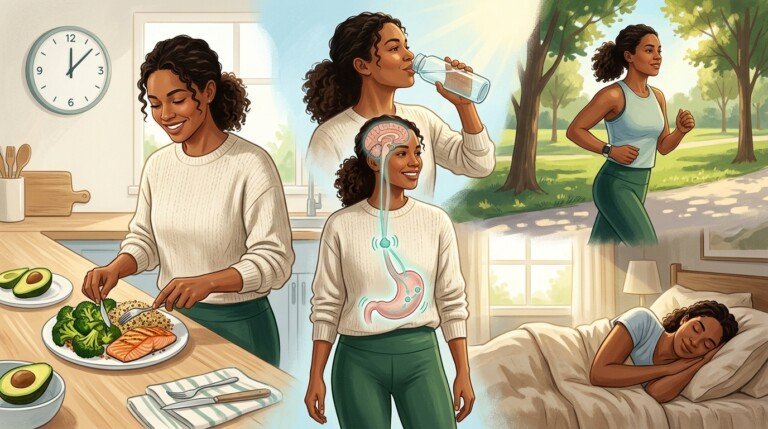
Another common misconception is that there is nothing you can do about these changes. Fortunately, that is not true. Lifestyle habits such as resistance training, adequate protein intake, regular movement, quality sleep, and balanced nutrition continue to play a powerful role in supporting metabolic health throughout menopause.
Understanding how menopause affects metabolism helps replace frustration with realistic expectations. Rather than searching for miracle metabolism boosters, you can focus on evidence-based strategies that preserve muscle, improve body composition, and support healthy aging.
In this article, you’ll learn whether Menopause Metabolism really slows, how aging and menopause differ, why muscle preservation matters, whether you can support your metabolism naturally, which daily habits make the biggest difference, common myths about menopause and metabolism, and when ongoing changes deserve medical attention.
Does Menopause Slow Your Metabolism?
The simple answer is yes, but not in the dramatic way many people imagine.
Menopause contributes to gradual metabolic changes, but these changes occur alongside aging, shifts in body composition, and lifestyle factors rather than because of menopause alone.
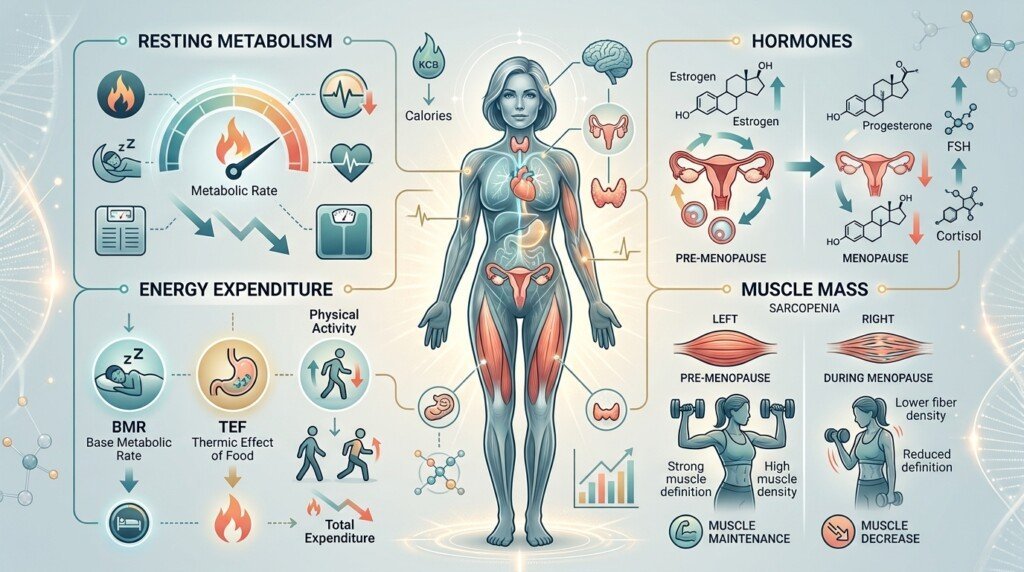
Your metabolism is influenced by many systems working together, including hormones, muscle mass, physical activity, and overall health.

Metabolism Is More Than Calories Burned
Many people think metabolism only refers to how quickly the body burns calories.
In reality, metabolism includes every chemical process that keeps you alive, including:
- Breathing
- Digestion
- Circulation
- Tissue repair
- Hormone production
- Temperature regulation
The largest portion of daily calorie use comes from your resting metabolic rate, which represents the energy your body needs simply to function.
Estrogen Plays an Important Role
Estrogen influences more than reproductive health.
It also affects:
- Fat distribution
- Muscle maintenance
- Appetite regulation
- Insulin sensitivity
- Energy balance
As estrogen levels decline during menopause, many women notice that fat gradually shifts toward the abdomen while maintaining muscle becomes more difficult.
These hormonal changes are explained in greater detail throughout Estrogen and Weight Gain, where the relationship between estrogen and body composition is explored more fully.
Body Composition Changes Matter
Many women assume the metabolism itself suddenly becomes slow.
In reality, one of the biggest contributors is changing body composition.
As lean muscle gradually declines, daily calorie needs also decrease because muscle requires more energy than body fat.
This helps explain why eating patterns that once maintained weight may eventually lead to gradual weight gain.
Physical Activity Often Changes
Life also changes during midlife.
Busy careers, caregiving responsibilities, fatigue, and reduced exercise often decrease total daily movement.
Lower physical activity reduces overall energy expenditure, contributing to gradual increases in body fat over time.
Menopause Is Only One Piece of the Puzzle
Rather than viewing menopause as the sole cause of weight gain, it is more accurate to think of it as one factor interacting with:
- Aging
- Muscle loss
- Nutrition
- Sleep
- Stress
- Physical activity
Looking at the whole picture leads to more effective long-term strategies.
Does Aging or Menopause Have a Bigger Effect?
This question often surprises people because aging itself has a significant influence on metabolism.
While menopause contributes to body composition changes, many metabolic shifts actually begin years before menopause occurs.
Aging Gradually Changes Energy Needs
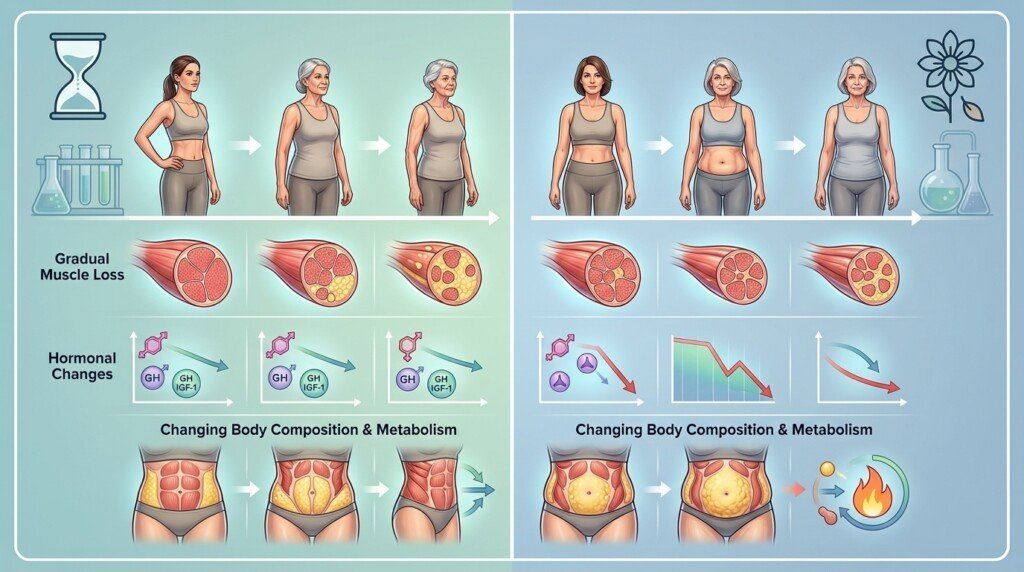
As adults grow older, daily calorie needs slowly decrease.
This happens because of:
- Muscle loss
- Reduced activity
- Changes in body composition
These changes occur in both women and men.
Menopause Accelerates Certain Changes
Although aging affects everyone, menopause adds additional hormonal changes that may accelerate:
- Fat redistribution
- Muscle decline
- Visceral fat accumulation
These changes make weight management feel more challenging than aging alone.
Lifestyle Becomes Increasingly Important
One encouraging finding from research is that lifestyle choices become even more valuable during midlife.
Women who remain physically active, preserve muscle, and maintain balanced eating habits often experience healthier body composition despite hormonal changes.
Many of these age-related strategies are also discussed throughout Weight Loss After 40, where long-term healthy aging is examined in greater detail.
Genetics Influence Individual Experiences
Some women notice only minor metabolic changes.
Others experience more noticeable weight gain.
Differences in genetics, physical activity, muscle mass, sleep quality, and nutrition all contribute to these individual experiences.
Focus on What You Can Control
You cannot change your age or hormonal transition.
You can influence:
- Strength
- Physical activity
- Nutrition
- Sleep
- Recovery
- Daily habits
These areas provide the greatest opportunity for improving metabolic health.
Why Does Muscle Loss Matter?
Muscle preservation is one of the most overlooked aspects of menopause metabolism.
Yet it plays a central role in maintaining healthy body composition.

Muscle Supports Resting Metabolism
Lean muscle requires energy to maintain.
Although muscle does not burn enormous numbers of calories, preserving it helps support resting metabolic rate over time.
Small differences accumulate over many years.
Muscle Supports Healthy Aging
Strong muscles improve far more than metabolism.
They also help maintain:
- Balance
- Mobility
- Bone strength
- Independence
- Everyday function
These benefits become increasingly important during healthy aging.
Muscle Helps Regulate Blood Sugar
Muscle tissue plays an important role in using glucose for energy.
Maintaining muscle through regular resistance exercise supports healthier metabolic function while complementing other healthy lifestyle habits.
Muscle Makes Weight Maintenance Easier
People with greater lean muscle often find maintaining weight more manageable because they generally expend more energy throughout the day.
This does not replace healthy eating but works alongside balanced nutrition.
Strength Training Helps Preserve Muscle
Resistance training remains one of the most effective ways to maintain lean tissue throughout menopause.
Exercises using:
- Dumbbells
- Resistance bands
- Body weight
- Machines
all help stimulate muscles when performed consistently.
Many women incorporate these exercises using the principles discussed throughout Strength Training for Fat Loss, where progressive resistance training is explained in greater detail.
Can You Boost Your Metabolism During Menopause?
The word “boost” is often misunderstood.
There is no scientifically proven way to dramatically increase metabolism overnight.
However, you can absolutely support a healthier metabolism through consistent lifestyle habits.

Preserve Muscle With Resistance Training
Strength training remains one of the most effective ways to support metabolism because it helps maintain lean muscle.
Aim for two or three full-body resistance sessions each week.
Eat Enough Protein
Protein supports:
- Muscle maintenance
- Recovery
- Satiety
- Healthy body composition
Including protein at every meal makes preserving muscle easier during menopause.
Stay Physically Active
Daily movement contributes significantly to overall energy expenditure.
Walking, cycling, gardening, household activities, and recreational sports all contribute toward healthier metabolism.
The practical ways to increase everyday movement are explored further throughout Active Lifestyle Tips for Weight Loss, where simple strategies for staying active are discussed.
Avoid Extremely Restrictive Diets
Eating far too little may increase fatigue while making muscle preservation more difficult.
A moderate calorie deficit combined with balanced nutrition is generally easier to maintain over the long term.
Prioritize Quality Sleep
Poor sleep affects appetite regulation, recovery, and exercise performance.
Consistently improving sleep quality supports many aspects of metabolic health simultaneously.
Which Daily Habits Support Metabolic Health?
Your metabolism is influenced by what you do every day, not just by your age or hormone levels. While menopause brings natural changes, your daily habits continue to play a major role in determining how efficiently your body uses energy and maintains muscle.
The goal is not to chase a faster metabolism. Instead, it is to create habits that support long-term metabolic health and make weight management more sustainable.

Stay Active Throughout the Day
Many people focus only on scheduled workouts.
However, everyday movement contributes significantly to total daily energy expenditure.
Simple ways to move more include:
- Walking after meals
- Taking the stairs
- Standing regularly while working
- Gardening
- Household chores
- Playing with children or grandchildren
These activities may seem small, but together they make a meaningful difference over time.
Eat Enough Protein at Every Meal
Protein becomes increasingly important after menopause because it supports lean muscle.
Rather than eating most of your protein at dinner, spread it throughout the day.
Balanced meals that include protein may also help improve satiety, making it easier to avoid unnecessary snacking.
Examples include:
- Greek yogurt with berries
- Eggs with whole grain toast
- Grilled chicken salad
- Lentil soup
- Salmon with vegetables
Maintain a Healthy Sleep Routine
Sleep is often overlooked when discussing metabolism.
Poor sleep may contribute to:
- Increased appetite
- Greater cravings
- Lower physical activity
- Reduced exercise recovery
- More fatigue
Helpful sleep habits include:
- Going to bed at the same time each night
- Keeping your bedroom cool and dark
- Limiting screen time before bed
- Avoiding excessive caffeine late in the day
Improving sleep often makes healthy eating and exercise easier to maintain.
Manage Stress Consistently
Long-term stress does not automatically damage your metabolism, but it can influence behaviors that make weight management more difficult.
For example, stress may lead to:
- Emotional eating
- Reduced motivation to exercise
- Poor sleep
- Less meal planning
Helpful stress management strategies include:
- Walking outdoors
- Meditation
- Reading
- Gentle yoga
- Deep breathing
- Spending time with family and friends
Supporting emotional well-being often supports metabolic health as well.
Build Sustainable Eating Habits
Healthy metabolism is supported by consistent nutrition rather than restrictive dieting.
Aim to include:
- Lean protein
- Vegetables
- Fruits
- Whole grains
- Healthy fats
- Adequate hydration
Building meals around these foods provides nutrients while helping preserve muscle and maintain energy.
Many of these nutrition principles also support overall Metabolic Health, where balanced eating patterns are discussed in greater detail.
What Are the Biggest Myths About Menopause and Metabolism?
Misunderstandings about menopause often leave women feeling discouraged before they even begin making healthy changes.
Separating myths from evidence allows you to focus on strategies that truly matter.
Myth 1: Menopause Completely Destroys Your Metabolism
This is one of the most common misconceptions.
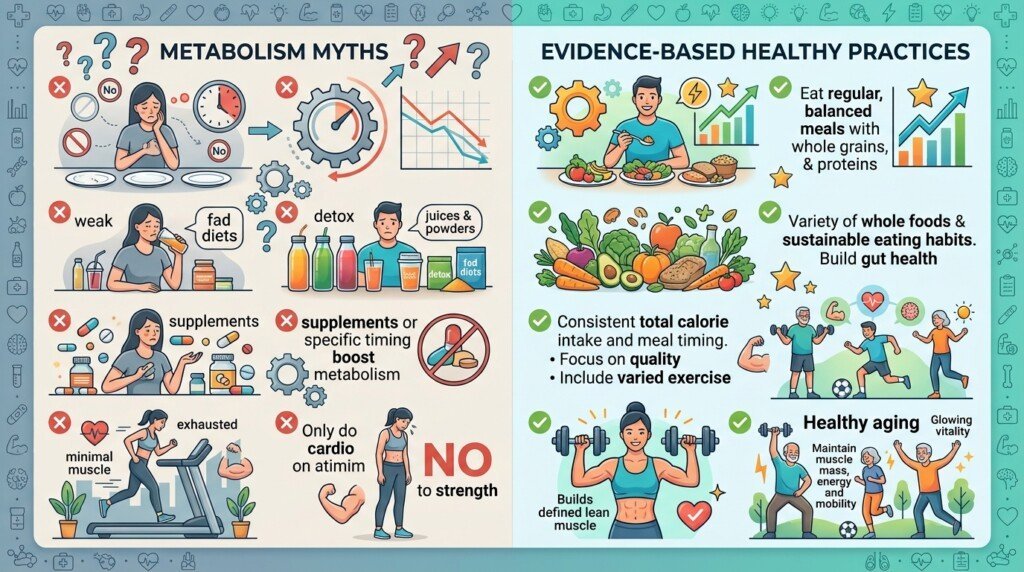
Metabolism changes gradually rather than suddenly.
Weight gain usually reflects several factors working together, including muscle loss, aging, physical activity, nutrition, and hormonal changes.
Myth 2: Weight Gain Is Unavoidable
Many women believe gaining abdominal fat is inevitable after menopause.
Although maintaining weight may require greater consistency, healthy lifestyle habits remain highly effective for improving body composition.
Myth 3: Cardio Is the Only Answer
Hours of cardiovascular exercise alone rarely provide the best results.
Resistance training becomes increasingly valuable because it helps preserve muscle while supporting long-term metabolism.
Combining strength training with regular movement generally produces better outcomes than relying only on cardio.
Myth 4: Eating Less Always Works Better
Extremely restrictive diets often backfire.
Eating too little may increase hunger while making muscle preservation more difficult.
A balanced eating pattern with adequate protein is generally more sustainable.
Myth 5: Certain Foods Instantly Boost Metabolism
No individual food dramatically speeds up metabolism.
Healthy metabolism develops through consistent habits rather than single ingredients.
Long-term nutrition quality matters far more than so-called metabolism-boosting foods.
Myth 6: It Is Too Late to Improve Your Health
Research consistently shows that women can improve:
- Muscle strength
- Fitness
- Body composition
- Metabolic health
- Bone health
at almost any age.
Healthy habits continue providing benefits throughout menopause and beyond.
When Should You Seek Medical Advice?
Gradual metabolic changes are a normal part of aging and menopause.
However, some situations deserve professional evaluation.
Seeking medical advice helps identify whether other factors may be contributing to unexpected changes.
Weight Changes Are Sudden
If your body weight changes rapidly without obvious changes in eating or physical activity, discuss these changes with your healthcare professional.
Fatigue Persists Despite Healthy Habits
Persistent fatigue that does not improve with adequate sleep, balanced nutrition, and regular exercise deserves medical attention.
Symptoms Affect Everyday Life
If changes regularly interfere with:
- Sleep
- Physical activity
- Daily functioning
- Overall quality of life
professional guidance may help identify appropriate next steps.
Healthy Habits Are Not Improving Progress
If you have consistently followed balanced nutrition, regular exercise, strength training, and healthy sleep habits for several months without noticeable improvement, personalized evaluation may be appropriate.
Focus on Overall Health
Remember that improving metabolism is not only about losing weight.
The larger goals include:
- Maintaining muscle
- Supporting heart health
- Preserving mobility
- Staying independent
- Improving quality of life
These outcomes remain valuable regardless of the number on the scale.

Frequently Asked Questions
1. Does menopause slow your metabolism?
Yes, but the effect is gradual rather than dramatic. Menopause, aging, muscle loss, reduced physical activity, and changes in body composition all contribute to lower daily energy expenditure.
2. Is aging or menopause more responsible for metabolic changes?
Both play important roles. Aging gradually reduces energy needs, while menopause contributes additional hormonal changes that affect muscle preservation and fat distribution.
3. Can you improve your metabolism during menopause?
You cannot dramatically increase metabolism overnight, but resistance training, adequate protein, regular physical activity, quality sleep, and balanced nutrition all support healthy metabolic function.
4. Why is muscle important for metabolism?
Lean muscle requires energy to maintain and supports resting metabolic rate. Preserving muscle also improves strength, mobility, balance, and healthy aging.
5. Are metabolism-boosting foods effective?
No single food significantly boosts metabolism. Long-term healthy eating patterns and consistent lifestyle habits have a much greater impact than individual foods.
Final Thoughts
Changes in Menopause Metabolism are real, but they are often misunderstood. Menopause does not suddenly switch off your metabolism. Instead, hormonal changes combine with aging, gradual muscle loss, reduced physical activity, and shifting body composition to influence how your body uses energy. Understanding this bigger picture makes it easier to focus on strategies that are supported by scientific evidence rather than marketing claims.
The most effective way to support your metabolism during menopause is by preserving lean muscle and maintaining an active lifestyle. Regular resistance training, adequate protein intake, balanced nutrition, quality sleep, stress management, and consistent daily movement all work together to improve metabolic health while supporting healthy aging. These habits may not produce dramatic overnight changes, but they create lasting improvements that continue to benefit your body for years.
Perhaps the most encouraging message is that menopause does not mean losing control over your health. While your body is changing, there is still a great deal you can influence through sustainable lifestyle choices. By focusing on strength, nutrition, movement, recovery, and consistency instead of quick fixes, you can support a healthier metabolism, improve body composition, and maintain an active, confident lifestyle throughout menopause and beyond.
Disclaimer:
This post may contain affiliate links. If you purchase through them, we may earn a small commission at no extra cost to you. Also, this content is for informational purposes only and does not substitute professional medical advice.
Ready to Start Your Journey?
Use our free 7-in-1 Weight Loss Toolkit to calculate your numbers and build your plan in minutes.
Open Free Tools →