

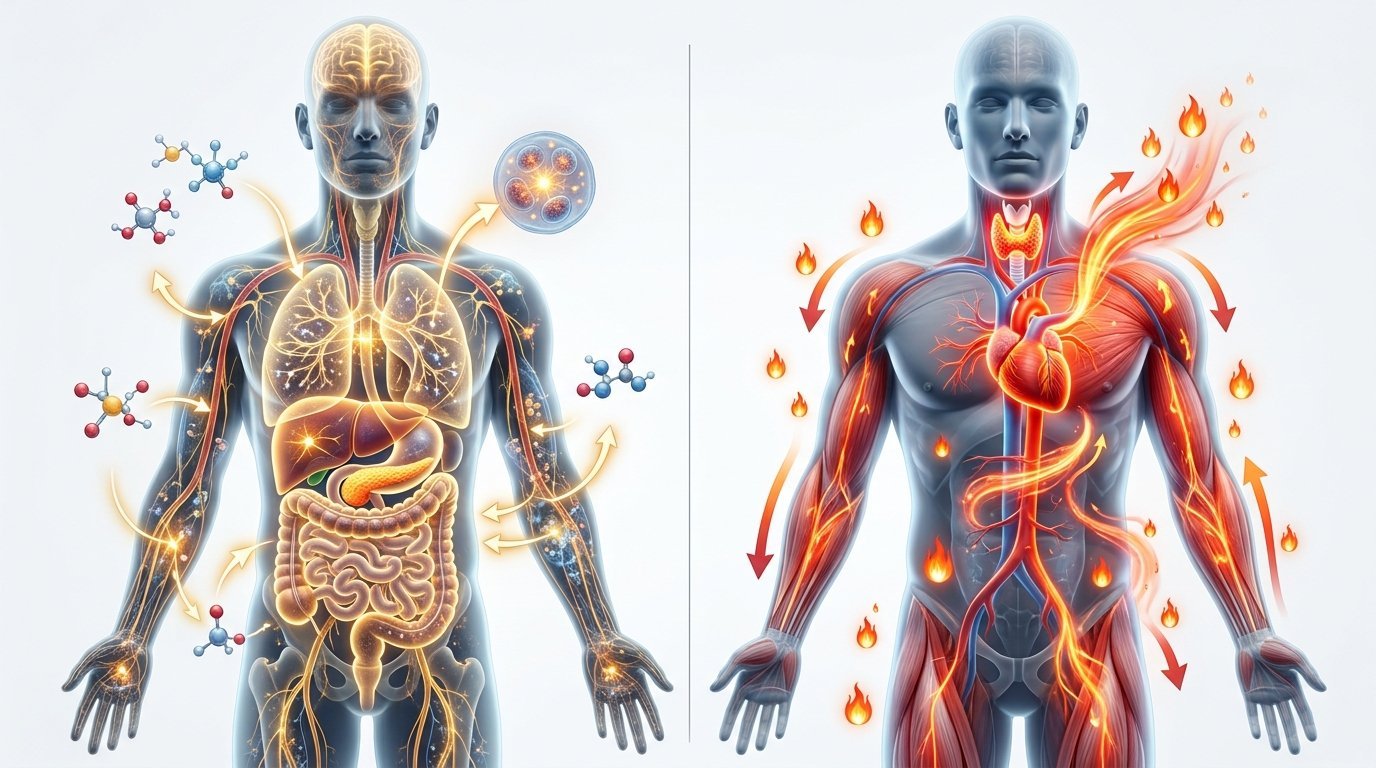
Metabolism vs Metabolic Rate: What’s the Difference?
If you’ve ever searched for ways to lose weight or improve your health, you’ve probably come across the terms metabolism and metabolic rate. Many articles, videos, and even healthcare discussions use these terms interchangeably, making it easy to assume they mean exactly the same thing.
They do not.
Understanding Metabolism vs Metabolic Rate is important because each term describes a different aspect of how your body uses energy. Metabolism refers to the thousands of chemical reactions that keep you alive, while metabolic rate describes how much energy those processes require over a given period. In simple terms, metabolism is the system, and metabolic rate is the speed at which that system uses energy.
Knowing the difference helps you better understand topics such as calorie burning, weight management, and overall metabolic health. It also prevents many of the common misconceptions that lead people to believe their metabolism is “broken” when another explanation is more accurate.
In this article, we’ll compare metabolism and metabolic rate side by side, explain why people confuse the two, and show why understanding the distinction matters for anyone interested in improving their health.
Quick Answer
Metabolism vs Metabolic Rate comes down to one simple difference. Metabolism is the collection of chemical processes that keep your body functioning, while metabolic rate is the amount of energy your body uses to carry out those processes. Your metabolism is the system, and your metabolic rate measures how quickly that system consumes energy.
What Is Metabolism vs Metabolic Rate?
Although these terms are closely related, they are not interchangeable.
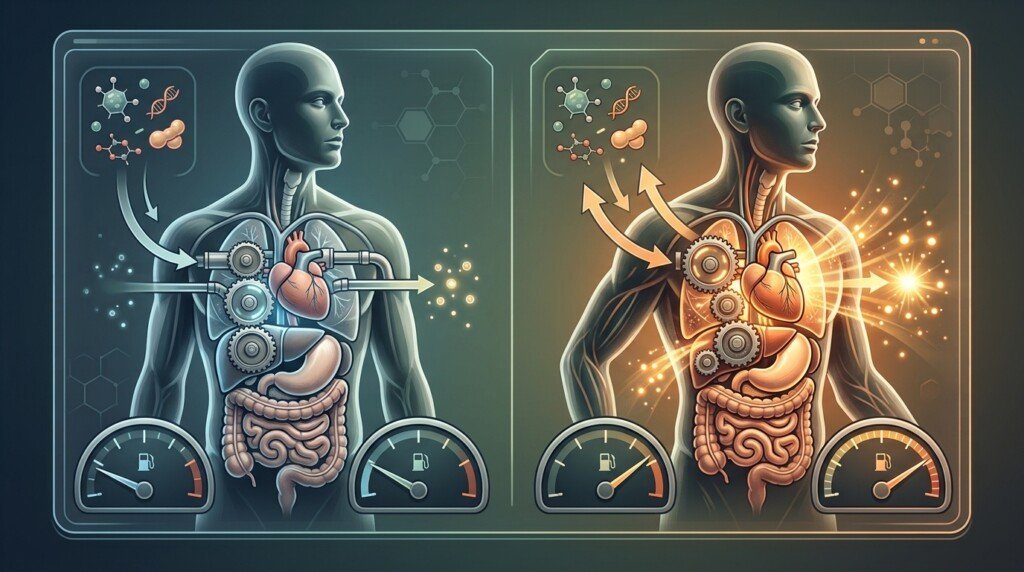
A simple analogy makes the difference easier to understand.
Imagine your body is a car.
- The engine represents your metabolism.
- The fuel consumption represents your metabolic rate.
The engine performs the work.
Fuel consumption tells you how much fuel the engine uses.
Your body works in much the same way.

Both Terms Describe Energy Use
Metabolism and metabolic rate are both connected to energy.
However, they answer different questions.
Metabolism answers:
“What processes keep the body alive?”
Metabolic rate answers:
“How much energy do those processes require?”
Understanding this distinction helps make sense of many health discussions.
Why This Difference Matters
People often say they have a “slow metabolism.”
In many cases, what they actually mean is they believe their metabolic rate is lower than average.
Using the correct terminology improves communication and helps avoid unnecessary confusion.
Readers looking for a broader explanation of the body’s energy system may also find Metabolism useful before exploring these differences in greater detail.
What Is Metabolism?
Metabolism refers to every chemical reaction taking place inside your body that allows you to stay alive.
These reactions never stop.
They continue every minute of every day, even while you sleep.

Metabolism Supports Every Organ
Your metabolism allows your body to:
- Produce energy
- Repair damaged tissues
- Build new cells
- Maintain body temperature
- Regulate hormones
- Support brain function
- Digest food
- Remove waste products
Without metabolism, none of these essential functions could occur.
Metabolism Has Two Main Components
Scientists often divide metabolism into two broad categories.
Anabolism
Anabolism involves building and repairing.
Examples include:
- Building muscle
- Repairing tissues
- Producing hormones
- Creating new cells
These processes require energy.
Catabolism
Catabolism involves breaking substances down.
Examples include:
- Digesting food
- Breaking down stored fat
- Converting carbohydrates into usable energy
- Releasing stored fuel
These reactions release energy the body can use.
Together, these two processes create the continuous cycle known as metabolism.
Metabolism Never Stops
Many people think metabolism only becomes active after eating or exercising.
In reality, metabolism continues 24 hours a day because your organs constantly require energy to function.
What Is Metabolic Rate?
If metabolism is the body’s engine, metabolic rate measures how much fuel that engine uses.
In other words, metabolic rate describes the amount of energy your body expends over a specific period.

Metabolic Rate Measures Energy Use
Your body uses calories for many reasons.
Examples include:
- Breathing
- Circulating blood
- Maintaining body temperature
- Digesting food
- Physical movement
- Repairing tissues
Metabolic rate reflects the total energy required for all of these activities.
Metabolic Rate Varies Between Individuals
No two people have identical metabolic rates.
Daily energy expenditure differs depending on factors such as:
- Body size
- Lean muscle mass
- Age
- Sex
- Hormonal influences
- Physical activity
These differences explain why calorie needs vary from person to person.
Metabolic Rate Changes Over Time
Metabolic rate is not fixed.
It gradually changes throughout life as body composition and daily activity evolve.
For readers interested in resting calorie expenditure specifically, Resting Metabolic Rate explains one important part of overall metabolic rate in greater detail.
How Are Metabolism and Metabolic Rate Different?
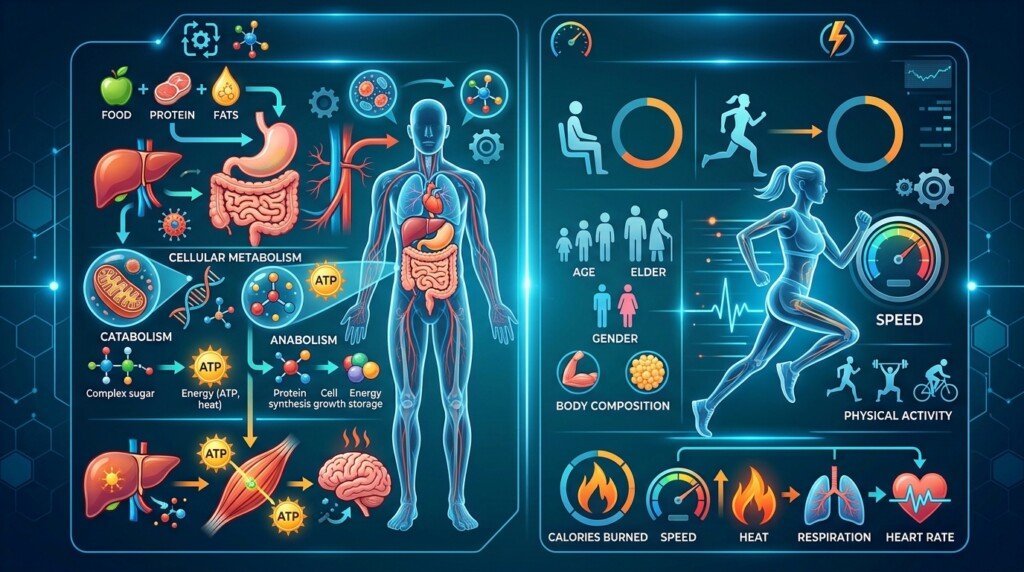
The easiest way to remember the difference is to think about process versus measurement.
Metabolism describes what your body does.
Metabolic rate describes how much energy those processes require.
Side-by-Side Comparison
| Metabolism | Metabolic Rate |
|---|---|
| A collection of chemical reactions | A measurement of energy expenditure |
| Keeps the body alive | Measures calories used |
| Includes every metabolic process | Describes the speed of energy use |
| Happens continuously | Changes based on body and lifestyle |
| Cannot be separated from life | Can increase or decrease over time |
A Practical Example
Imagine two people who both eat the same lunch.
Both digest the food using the same metabolic processes.
However, one person may use more calories during the day because they have:
- More lean muscle
- Greater daily movement
- Higher overall energy needs
Their metabolism works similarly.
Their metabolic rate differs.
Why People Mix Them Up
Because metabolism and metabolic rate are so closely connected, people naturally combine them into one idea.
The distinction becomes important when discussing calorie needs, weight management, or long-term metabolic health.
Why Do People Confuse These Two Terms?
If metabolism and metabolic rate mean different things, why are they so often used as though they are identical?
The answer is simple. The two concepts are closely connected, and everyday conversations rarely distinguish between them.
Even health articles, television programs, and social media posts frequently replace one term with the other. Over time, this has created unnecessary confusion.

The Words Sound Almost Identical
The terms share the same root word, making them seem interchangeable.
Someone hearing “metabolism” often assumes it automatically refers to how many calories the body burns.
In reality, calorie burning is only one part of metabolism.
Weight Loss Discussions Simplify the Topic
People commonly say things such as:
- “My metabolism is slow.”
- “I need to boost my metabolism.”
- “She has a fast metabolism.”
Most of the time, they are actually talking about metabolic rate, not metabolism itself.
Using shorter language makes conversations easier, but it also creates misunderstandings.
Marketing Has Added More Confusion
Fitness advertisements often promise to:
- Boost your metabolism
- Supercharge metabolism
- Repair metabolism
Many of these claims actually refer to increasing calorie expenditure rather than changing the body’s entire metabolic system.
Understanding the correct terminology makes it easier to evaluate these claims realistically.
Everyday Language Is Different From Scientific Language
Scientists use very specific definitions.
General conversations usually do not.
Neither approach is necessarily wrong, but knowing the scientific distinction helps you better understand research and health information.
Which One Affects Weight Loss More?
This is one of the most common questions people ask.
The answer may surprise you.

Weight Loss Depends on Both
Metabolism and metabolic rate work together.
Without metabolism, your body could not convert food into usable energy.
Without metabolic rate, there would be no way to measure how much energy your body uses.
Both are essential.
Metabolic Rate Has the More Direct Role
When discussing calorie balance, metabolic rate has the most direct influence.
It determines approximately how many calories your body uses throughout the day.
However, that does not mean it acts alone.
Weight Change Is About Energy Balance
Body weight changes over time because of the relationship between:
- Calories consumed
- Calories expended
Metabolic rate influences the second part of that equation.
Many other factors contribute as well, including:
- Daily movement
- Digestion
- Physical activity
- Body composition
Metabolism Supports Every Process
Although metabolic rate receives more attention in weight-loss discussions, metabolism remains the foundation that allows every energy-related process to occur.
Without metabolism, there would be no calorie expenditure to measure.
Readers exploring long-term body weight regulation may also find Weight Loss Guide helpful because it explains how calorie balance works alongside healthy lifestyle habits.
Can You Change Your Metabolic Rate?
Many people assume metabolic rate is fixed for life.
Fortunately, that is not true.
Although some factors remain relatively stable, others change naturally over time.

Muscle Mass Influences Energy Use
Lean muscle requires energy to maintain.
People with more muscle generally use more calories throughout the day than people with less muscle.
This is one reason body composition affects metabolic rate.
Daily Activity Makes a Difference
Moving more during the day increases total energy expenditure.
Even routine activities contribute to overall calorie use.
Future discussions about NEAT explain how ordinary daily movement supports total energy expenditure beyond formal exercise.
Age Gradually Changes Metabolic Rate
As people grow older, several changes may influence calorie needs, including:
- Reduced muscle mass
- Changes in activity
- Normal physiological aging
These changes usually happen gradually rather than suddenly.
Healthy Habits Support Normal Metabolic Function
While dramatic increases in metabolic rate are uncommon, consistent healthy habits help maintain efficient metabolic function over the long term.
Readers interested in evidence-based lifestyle approaches may continue with Can You Speed Up Your Metabolism Naturally, which explains realistic expectations without relying on exaggerated claims.
Why Does Understanding the Difference Matter?
Understanding the difference between metabolism and metabolic rate is more than a vocabulary lesson.
It changes how you interpret health information.
It Prevents Common Misunderstandings
Many people blame every weight-related challenge on a “slow metabolism.”
In reality, the explanation often involves multiple factors working together.
Using accurate terminology encourages more informed discussions.
It Helps You Evaluate Health Claims
Knowing the difference makes it easier to recognize misleading marketing.
If a product claims to “change your metabolism,” ask whether it actually refers to metabolism itself or simply calorie expenditure.
It Improves Conversations With Healthcare Professionals
Using the correct terms allows clearer communication when discussing:
- Weight management
- Nutrition
- Energy needs
- Metabolic health
It Encourages Realistic Expectations
Understanding metabolism helps shift attention away from quick fixes toward sustainable habits that support overall health.
Knowledge leads to better long-term decisions.
Metabolism vs Metabolic Rate: Key Differences at a Glance
| Metabolism | Metabolic Rate |
|---|---|
| Refers to every chemical reaction in the body | Refers to the amount of energy the body uses |
| Includes building and breaking down substances | Measures calorie expenditure |
| Essential for life | Describes the speed of energy use |
| Happens continuously | Varies between individuals |
| Supports every organ and body system | Influenced by body composition, age, and activity |
| Cannot be measured as one single number | Can be estimated using established methods |
The easiest way to remember the difference is this:
Metabolism is the process.
Metabolic rate is the measurement.

Frequently Asked Questions
1. Is metabolic rate the same as metabolism?
No. Metabolism refers to all the chemical reactions that keep your body alive, while metabolic rate measures how much energy those reactions require.
2. Which matters more for weight loss?
Both matter, but metabolic rate has the more direct role because it influences how many calories your body uses each day.
3. Can metabolism change without metabolic rate changing?
Many metabolic processes continue normally even when daily energy expenditure changes very little. The two concepts are closely related but not identical.
4. Why is metabolic rate important?
It helps estimate daily calorie requirements and provides a better understanding of energy expenditure.
5. Does everyone have the same metabolism?
Yes, everyone relies on metabolism to stay alive, but metabolic rate varies from person to person.
6. Can two people have similar metabolism but different metabolic rates?
Yes. Their bodies perform the same essential metabolic processes, but differences in body composition and activity may result in different calorie expenditure.
7. Is metabolism active while sleeping?
Yes. Your metabolism continues working around the clock to support breathing, circulation, temperature regulation, and organ function.
8. Does body size affect metabolic rate?
Generally, larger bodies require more energy to maintain, although body composition also plays an important role.
9. Why do people often confuse these terms?
Because everyday conversations and marketing frequently use “metabolism” when they actually mean “metabolic rate.”
10. Why should I understand the difference?
Knowing the difference helps you better interpret health advice, avoid common myths, and understand how your body uses energy.
Final Thoughts
Understanding Metabolism vs Metabolic Rate removes much of the confusion surrounding how the body uses energy. Although the terms are closely related, they describe different concepts. Metabolism is the complete network of chemical reactions that keeps you alive, while metabolic rate measures how much energy those reactions require. Thinking of metabolism as the body’s engine and metabolic rate as the amount of fuel that engine uses is a simple way to remember the distinction.
This difference becomes especially important when discussing weight management, calorie needs, and metabolic health. Many popular myths arise because these terms are used interchangeably, even though they answer different questions. By understanding what each one actually means, you can better evaluate health information, avoid misleading claims, and make more informed decisions about your long-term wellbeing. As this metabolism series continues, future articles covering BMR vs RMR, Thermogenesis, NEAT, and Metabolism Test will build on these concepts and provide an even clearer picture of how your body manages energy every day.
Disclaimer:
This post may contain affiliate links. If you purchase through them, we may earn a small commission at no extra cost to you. Also, this content is for informational purposes only and does not substitute professional medical advice.
Ready to Start Your Journey?
Use our free 7-in-1 Weight Loss Toolkit to calculate your numbers and build your plan in minutes.
Open Free Tools →