
How Mindful Eating Reduces Stress and Anxiety Around Food
For many people, food is no longer just food. It becomes something to calculate, question, earn, avoid, or feel guilty about. A simple meal can trigger dozens of thoughts before the first bite is even taken.
“Should I eat this?”
“Is this too much?”
“I’ll have to make up for this later.”
“I already ruined today.”
These thoughts often become so normal that people forget eating was never meant to feel like a constant mental negotiation.
This is where mindful eating for food anxiety offers a different perspective. Rather than adding more food rules or stricter plans, mindful eating helps shift attention away from fear and back toward awareness. It encourages people to notice what is happening physically and emotionally without immediately judging every choice they make.
That does not mean mindful eating magically removes anxiety overnight. Food anxiety often develops over months or years through dieting, restrictive eating, perfectionism, social pressure, or difficult experiences around food. Rebuilding a healthier relationship takes time. However, mindfulness provides practical tools that can reduce the constant mental tension surrounding eating and gradually replace fear with curiosity.
This article explores how mindful eating can reduce food-related stress, why anxiety around eating develops, and how rebuilding trust in your body’s signals may help create a calmer relationship with food.
Quick Answer
Mindful eating for food anxiety helps reduce stress by shifting attention away from rigid food rules and toward present-moment awareness. Instead of judging every eating decision, mindful eating encourages recognizing hunger, fullness, satisfaction, and emotions without criticism, helping many people develop a healthier and less stressful relationship with food.
How Can Mindful Eating Reduce Food-Related Anxiety?
Food anxiety rarely begins because of food itself.
More often, it develops from the meaning attached to food.
Meals become tests of self-control.
Desserts become symbols of failure.
Restaurants become situations to fear rather than enjoy.
Eating becomes something that constantly requires making the “right” decision.
Over time, the relationship with food becomes increasingly driven by worry instead of nourishment.


Mindful eating approaches this problem differently.
Rather than trying to eliminate anxiety by creating even stricter rules, it encourages observing thoughts without immediately reacting to them. Instead of asking whether today’s meals were perfect, attention shifts toward understanding what the body is communicating right now.
This change may seem small, but it gradually weakens the automatic cycle of fear, restriction, guilt, and compensation that many people experience around eating.
The objective is not perfect eating.
The objective is creating enough mental space that food no longer dominates every decision throughout the day.
How Does Paying Attention to Hunger and Fullness Cues Help With Food Anxiety?
One reason food anxiety becomes so exhausting is because eating decisions are often based almost entirely on external rules.
Some people eat only when the clock says it is time.
Others wait until they have “earned” food through exercise.
Some avoid eating despite obvious hunger because they fear consuming too many calories.
Others continue eating beyond comfort because they worry they will not be allowed to eat later.
In each situation, the body’s natural communication gradually becomes less important than external rules.
Mindful eating encourages reversing this process by paying attention to hunger and fullness cues instead of relying exclusively on rigid expectations.

When people begin noticing genuine physical hunger, eating decisions become less dependent on fear and more responsive to actual biological needs. Likewise, recognizing comfortable fullness often reduces the pressure to finish everything simply because it is available.
This shift does not happen immediately.
Someone who has spent years ignoring hunger may initially find those signals confusing or inconsistent. Others may struggle to recognize fullness until long after becoming uncomfortable. These experiences are entirely normal because internal awareness often becomes quieter after long periods of dieting or restrictive eating.
Gradually rebuilding trust in the body’s communication creates a different relationship with food.
Instead of asking, “Am I allowed to eat?”
The question slowly becomes, “What is my body telling me right now?”
That single change often reduces anxiety because eating decisions begin feeling less like passing an exam and more like responding to natural biological needs.
What Common Triggers for Food-Related Anxiety Can Mindfulness Address?
Food anxiety rarely exists in isolation.
It is often connected to thoughts, situations, or expectations that repeatedly activate worry around eating.
One common trigger is perfectionism.
Many people believe every meal must be nutritionally ideal. One unplanned snack or restaurant meal quickly becomes evidence that the entire day has failed. Mindfulness helps interrupt this thinking by encouraging observation rather than immediate judgment. Instead of labeling meals as successes or failures, attention returns to the actual eating experience.
Another frequent trigger involves food rules.
Statements such as “I should never eat carbohydrates,” “Dessert is bad,” or “I cannot eat after a certain time” create constant mental pressure. Whenever these rules are broken, guilt often follows. Mindful eating encourages becoming aware of these internal rules without automatically accepting them as unquestionable truths.
Social situations also create anxiety for many people.
Family celebrations, holidays, work lunches, vacations, and restaurants frequently produce worry because eating becomes visible to other people. Thoughts about portion sizes, food choices, or perceived judgment often distract from the meal itself. Returning attention to the present moment helps reduce some of the mental energy spent anticipating what others may think.
Body image concerns represent another powerful trigger.
Someone dissatisfied with their appearance may evaluate every meal according to how it might influence body weight or shape rather than whether it satisfies hunger or provides nourishment. Mindful eating gently shifts focus away from appearance-based evaluation toward internal experience.
Stress itself can also intensify food anxiety.
Periods of high stress often increase rigid thinking, making food decisions feel even more emotionally charged. While mindful eating cannot eliminate life’s stressors, creating calmer eating experiences may reduce one source of daily mental tension.
Finally, constant exposure to nutrition advice through social media contributes to confusion for many people. Contradictory recommendations, trending diets, and fear-based messaging often create the impression that eating correctly is almost impossible. Mindfulness encourages stepping back from information overload and paying closer attention to personal experience rather than constantly searching for another rule to follow.
Can Mindful Eating Help Overcome Restrictive Eating Patterns Associated With Anxiety?
Restrictive eating often begins with positive intentions.
Someone wants to improve health.
Lose weight.
Eat “cleaner.”
Develop better habits.
Over time, however, these goals sometimes evolve into increasingly rigid rules. Entire food groups become forbidden. Social meals become stressful. Hunger is ignored. Eating becomes controlled by fear rather than flexibility.
Mindful eating does not encourage abandoning healthy nutrition.
Instead, it encourages examining whether eating decisions are motivated by genuine care for the body or by anxiety.

This distinction matters because restriction driven by fear rarely creates long-term peace around food.
Instead, it often increases preoccupation with eating.
Foods become more tempting precisely because they have been labeled off-limits.
Guilt becomes stronger whenever rules are broken.
The cycle continues.
Mindfulness introduces curiosity into this pattern.
Rather than immediately acting on restrictive thoughts, people learn to notice them first.
“Why does this food feel frightening?”
“What rule am I following right now?”
“Is this decision coming from self-care or fear?”
These questions reduce automatic reactions while encouraging greater flexibility over time.
This process should not be confused with ignoring medical dietary requirements or prescribed nutrition plans. Individuals managing allergies, gastrointestinal diseases, diabetes, or other medical conditions should continue following professional healthcare guidance.
Mindful eating simply helps distinguish medically necessary eating decisions from unnecessary fear-based food rules that gradually increase anxiety.
When Is Mindful Eating Most Effective for Easing Food-Related Stress?
Food-related anxiety does not affect every meal in the same way. There are certain situations where anxious thoughts become louder, food rules become stricter, and eating feels more emotionally exhausting. Recognizing these moments is valuable because they often provide the greatest opportunity to practice mindful eating for food anxiety.
Mindful eating is not reserved for peaceful breakfasts on quiet weekends. In fact, it is often most beneficial during the meals that feel emotionally difficult. Those are the moments when slowing down, checking in with your body, and observing your thoughts without immediately reacting to them can begin changing your relationship with food.
The goal is not to eliminate every anxious thought. Rather, it is to prevent those thoughts from automatically controlling every eating decision.
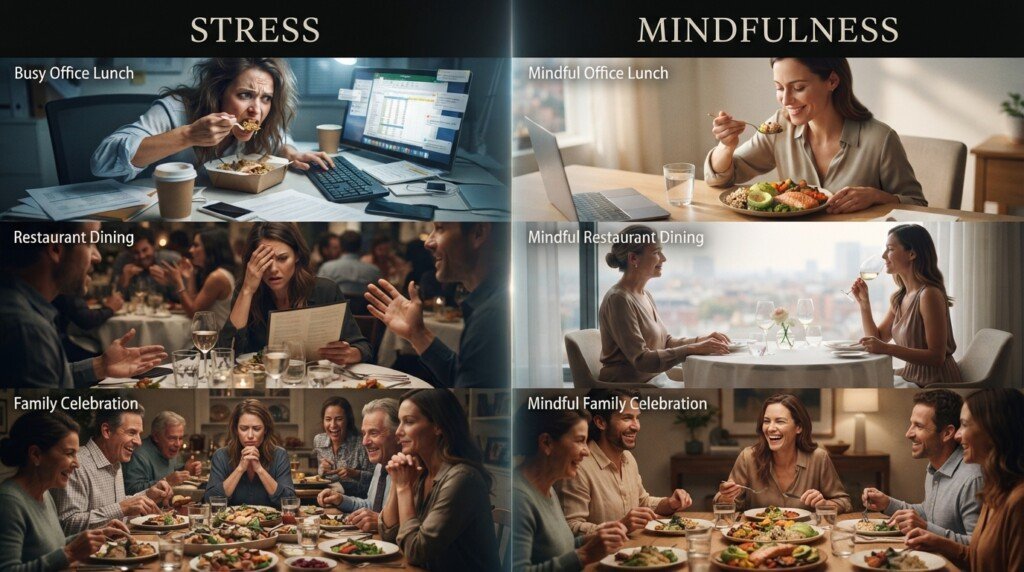
What Specific Situations or Times of Day Benefit Most From Mindful Eating Practice?
Although mindful eating can be practiced during any meal, certain situations tend to create much higher levels of food-related stress. These moments often become ideal opportunities to reconnect with the body’s internal signals instead of allowing anxiety to take control.
One common situation is eating after a long day at work. Mental fatigue reduces decision-making capacity, making it easier for stress and food rules to dominate. Some people become overly restrictive because they feel they “didn’t deserve” dinner after sitting all day. Others swing in the opposite direction, feeling they have lost control because they are exhausted. Taking even a brief pause before eating helps interrupt this automatic response and brings attention back to physical hunger rather than emotional pressure.
Restaurant meals also create anxiety for many people. Menus often feel like tests instead of opportunities to enjoy food. Thoughts about calories, ingredients, or choosing the “healthiest” option can overshadow the social experience entirely. Mindful eating encourages shifting attention away from finding the perfect menu item and toward recognizing hunger, satisfaction, and enjoyment throughout the meal.
Family gatherings and celebrations represent another challenging situation. Holidays, birthdays, weddings, and vacations frequently involve foods that people have labeled as “bad” or “off limits.” Anxiety often begins long before the event itself, leading to unnecessary restriction beforehand or guilt afterward. Mindful eating helps reduce this all-or-nothing thinking by encouraging flexibility instead of perfection.
Busy lunches deserve attention as well. Many people eat while answering emails, driving, or moving between meetings. In these situations, anxiety is often less about food itself and more about time pressure. Simply giving the meal a few minutes of undivided attention can reduce mental tension and create a calmer eating experience.
Even grocery shopping can trigger food anxiety. Walking through aisles filled with conflicting nutrition messages and social media trends sometimes leads people to question every purchase. Becoming aware of these anxious thought patterns without immediately believing them is another practical application of mindfulness outside the dining table.
Ultimately, the situations that benefit most from mindful eating are those where fear, guilt, or perfectionism begin replacing simple awareness.
What Common Challenges Come Up When Using Mindful Eating for Food Stress?
Many people expect mindful eating to feel immediately calming. When anxious thoughts continue appearing during meals, they assume they are practicing incorrectly.
In reality, noticing anxious thoughts is often evidence that mindfulness is working.
For the first time, those thoughts are becoming visible instead of operating automatically in the background.
One common challenge is impatience.
Someone may practice mindful eating for several meals and expect years of food anxiety to disappear immediately. When that does not happen, frustration develops. Like any long-standing habit, changing the relationship with food requires consistent repetition rather than quick solutions.

Another challenge involves perfectionism itself.
Ironically, some individuals try to become “perfect” at mindful eating. They criticize themselves for forgetting to slow down, eating too quickly, or becoming distracted. This creates a new set of rules that produces additional pressure.
Mindful eating was never intended to become another performance.
Its purpose is awareness, not perfection.
Fear of losing control also worries many people.
Those who have relied on strict food rules sometimes believe relaxing those rules will automatically lead to overeating. Initially, this concern can feel very convincing. However, rebuilding trust in hunger and fullness cues happens gradually, allowing eating decisions to become increasingly balanced over time instead of swinging between restriction and overeating.
External influences create another obstacle.
Friends, family members, social media, and diet culture often reinforce rigid beliefs about food. Even when someone begins developing a healthier relationship with eating, constant exposure to conflicting advice may trigger old fears again. This is one reason why understanding the common misconceptions about mindful eating can be helpful, as it separates mindfulness from myths suggesting it means ignoring nutrition or abandoning healthy habits.
Some people also struggle because they expect anxiety to disappear before they eat differently. More often, confidence develops by repeatedly practicing new behaviors despite occasional anxious thoughts. Waiting until anxiety completely disappears may delay meaningful progress indefinitely.
Finally, deeply rooted food anxiety sometimes reflects experiences that extend beyond eating itself. Trauma, long-term dieting, body image concerns, or diagnosed anxiety disorders may require professional support alongside mindful eating. In those situations, mindfulness becomes one valuable tool within a broader treatment plan rather than the entire solution.
Can Mindful Eating Help With Specific Stress Patterns Like Emotional or Binge Eating?
Mindful eating may support greater awareness of emotional eating and binge eating patterns by helping people recognize thoughts, emotions, and physical sensations before automatic eating occurs. However, these topics involve their own unique behavioral patterns and deserve much deeper discussion. The complete relationship between mindfulness and emotional eating is explored separately in Mindful Eating for Emotional Eating, where these situations are addressed in detail.
Key Takeaways
Food anxiety often develops when eating becomes controlled by fear, perfectionism, and rigid food rules instead of physical needs. Mindful eating for food anxiety encourages replacing automatic judgment with present-moment awareness, allowing people to reconnect with hunger, fullness, and satisfaction without constantly evaluating every eating decision. Rather than demanding perfect food choices, mindfulness helps create a calmer and more flexible relationship with eating.
This shift takes time. Thoughts shaped by years of dieting, restrictive eating, or food-related stress rarely disappear overnight. However, practicing awareness consistently during everyday situations such as restaurant meals, busy lunches, family gatherings, and stressful days can gradually reduce mental tension around food. When anxiety significantly interferes with eating or daily life, mindful eating can complement professional support as part of a broader recovery process.
| Situation | How Mindful Eating Helps |
|---|---|
| Restaurant meals | Reduces pressure to make the “perfect” food choice. |
| Busy workdays | Encourages reconnecting with hunger instead of eating automatically. |
| Family celebrations | Supports flexibility instead of guilt around enjoyable foods. |
| Restrictive eating patterns | Helps replace rigid food rules with body awareness. |
| Food-related anxiety | Promotes observation without immediate self-judgment. |
Frequently Asked Questions
1. Can mindful eating reduce anxiety around food?
Yes. Mindful eating helps many people reduce food-related anxiety by encouraging awareness of hunger, fullness, and eating experiences rather than focusing entirely on restrictive food rules or guilt.
2. Does mindful eating help with restrictive eating patterns?
It can. Mindful eating encourages examining whether food choices are based on genuine physical needs or anxiety-driven rules. It does not replace medical nutrition advice but may help reduce unnecessary restriction.
3. Is mindful eating meant to eliminate anxious thoughts completely?
No. The goal is not to stop every anxious thought but to respond to those thoughts with greater awareness rather than allowing them to automatically control eating decisions.
4. When is mindful eating most helpful for food anxiety?
Many people find it especially useful during restaurant meals, family gatherings, stressful workdays, vacations, or any situation where food rules and anxiety become especially strong.
5. Should I seek professional help if food anxiety affects my daily life?
Yes. If anxiety around food causes significant distress, frequent restriction, binge eating, or interferes with physical health and daily functioning, speaking with a qualified healthcare professional, therapist, or registered dietitian is recommended.
Conclusion
Developing mindful eating for food anxiety is not about creating another list of eating rules. It is about gradually replacing fear, perfectionism, and constant self-judgment with curiosity and awareness. By paying attention to your body’s signals instead of allowing anxious thoughts to make every decision, eating can begin to feel less like a daily test and more like a natural act of self-care.
This process does not happen overnight, and setbacks are completely normal. Every meal provides another opportunity to notice thoughts without automatically believing them, respond to hunger with greater confidence, and build a healthier relationship with food over time. Combined with appropriate professional support when needed, mindful eating offers a sustainable path toward reducing food-related stress while restoring trust in your body’s ability to guide you.
Disclaimer:
This post may contain affiliate links. If you purchase through them, we may earn a small commission at no extra cost to you. Also, this content is for informational purposes only and does not substitute professional medical advice.
Ready to Start Your Journey?
Use our free 7-in-1 Weight Loss Toolkit to calculate your numbers and build your plan in minutes.
Open Free Tools →