


How to Tune Into Your Body’s Hunger and Fullness Cues
Most people are taught what to eat long before they are taught how to listen to their bodies. From childhood onward, eating is often guided by schedules, portion sizes, family routines, calorie goals, or the expectation to clean the plate. Over time, these external rules can become so familiar that the body’s own signals begin to fade into the background.
That is why many people eventually ask questions like, “Am I actually hungry?” or “Why do I only realize I’m full after I’ve eaten too much?” These experiences are more common than most people realize. Recognizing hunger and fullness cues is a skill, not something everyone naturally maintains throughout life.
The encouraging news is that these internal signals rarely disappear completely. They often become quieter after years of dieting, distracted eating, irregular meal schedules, or constantly overriding hunger. With patience and consistent awareness, most people can gradually reconnect with them.
This article focuses specifically on understanding the body’s physical hunger and fullness signals. Rather than discussing diets or meal plans, it explores how to recognize what your body is already communicating. Learning these cues forms one of the most important foundations of mindful eating because every eating decision begins with understanding whether your body is asking for food in the first place.
Quick Answer
Hunger and fullness cues are the body’s natural signals that indicate when it needs food and when it has had enough. Hunger may appear as stomach sensations, reduced energy, difficulty concentrating, or increasing thoughts about food, while fullness develops gradually through physical comfort, reduced appetite, and growing satisfaction. Learning to recognize these cues takes practice, especially after years of relying on external eating rules.
What Are the Physical Signs of Hunger?
Many people associate hunger with a growling stomach, but the body communicates hunger in many different ways. In fact, stomach growling is only one possible signal, and some individuals rarely experience it at all.
The body begins preparing for food long before intense hunger develops. These early messages are often subtle, making them easy to overlook during busy days. If ignored repeatedly, the body usually responds with stronger signals until eating becomes much harder to postpone.
Recognizing these gradual changes helps prevent the cycle of eating only after becoming extremely hungry, which often makes mindful eating much more difficult.
Instead of viewing hunger as an emergency, it becomes easier to see it as ongoing communication between the body and the brain.


What Are the Most Common Physical Signs of Hunger?
Physical hunger usually develops progressively rather than appearing all at once. Paying attention to this progression allows people to respond before hunger becomes overwhelming.
One of the earliest signs is a gentle feeling of emptiness in the stomach. It may not feel uncomfortable or urgent. Instead, there is simply a growing awareness that the stomach is becoming less full than it was after the previous meal.
Another common signal is gradually increasing interest in food. Meals begin sounding more appealing, food smells become more noticeable, and thoughts naturally drift toward what to eat next. This differs from cravings because the interest generally extends to many different foods rather than one highly specific item.
Energy levels may also begin changing. Some individuals notice a slight drop in physical energy or mental alertness. Tasks requiring concentration may feel more difficult, and motivation can decrease until the body receives nourishment.
Mood sometimes shifts as well. Hunger may contribute to irritability, impatience, or feeling less emotionally resilient than usual. Although mood changes alone should never be used to determine hunger, they often appear alongside other physical signals.
The important point is that hunger rarely depends on one symptom alone. Most people experience several subtle changes that gradually become stronger if food continues to be delayed.
Recognizing these earlier signals often allows meals to begin before intense hunger makes thoughtful eating much more challenging.
Besides a Growling Stomach, What Other Physical Sensations Indicate Hunger?
Because stomach growling receives so much attention, many people mistakenly believe they are not truly hungry unless their stomach makes noise.
In reality, hunger can appear in many other ways.
Some individuals experience a hollow sensation rather than actual growling. Others notice gentle stomach contractions or mild discomfort that increases gradually over time. These sensations often feel very different from stomach pain because they improve naturally after eating.
Warmth or slight emptiness beneath the ribs is another common experience. Some people describe hunger as feeling “light” inside the stomach rather than noisy.
Reduced physical energy frequently accompanies these sensations. Simple activities may feel slightly more tiring, and concentration often becomes more difficult as hunger increases.
Some people notice saliva production increasing when food is nearby. Others become more aware of food aromas that previously went unnoticed. These subtle physiological responses help prepare the body for eating.
Hand tremors or shakiness can occur in some individuals when meals have been delayed for an extended period, particularly if several other hunger signals have already been ignored. However, these stronger symptoms usually indicate that hunger has progressed well beyond its earliest stages.
Headaches may occasionally accompany prolonged hunger, although they can also have many other causes such as dehydration, lack of sleep, or stress. They should therefore be interpreted alongside other hunger signals rather than independently.
It is also worth remembering that everyone experiences hunger differently.
One person may consistently notice stomach sensations first.
Another may recognize reduced concentration before any stomach discomfort appears.
Someone else may primarily experience declining energy levels.
There is no single “correct” hunger signal. Mindful awareness involves learning your own body’s unique communication patterns rather than comparing them with someone else’s experience.
What Physiological Changes Occur in the Body When Experiencing Hunger?
Although hunger often feels like a simple sensation, it actually reflects a remarkably coordinated conversation between the brain, digestive system, hormones, and nervous system.
When the body begins requiring energy, several systems start communicating with one another. The stomach gradually empties following the previous meal, digestive activity changes, and the brain receives information indicating that energy stores are declining.
Hormones also contribute to this communication.
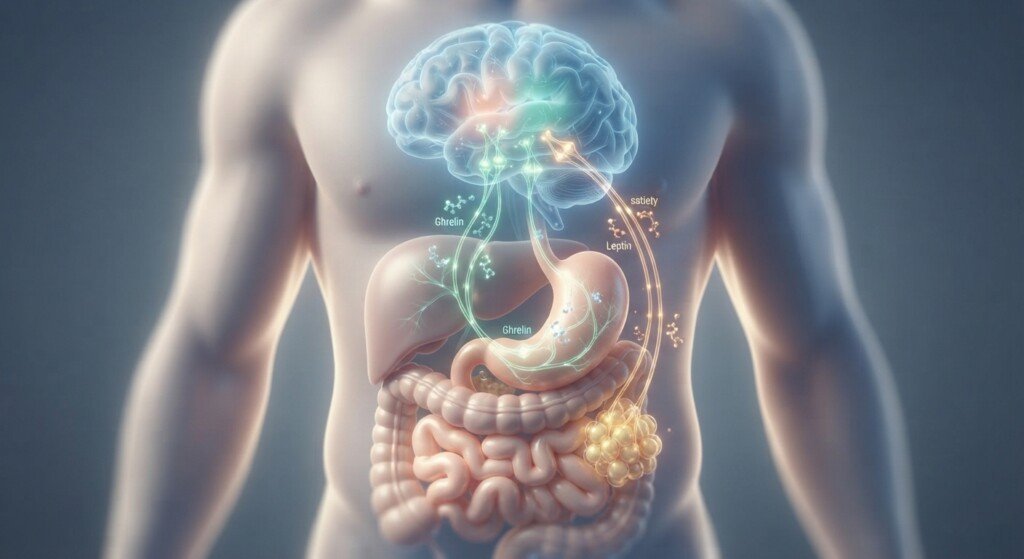
One hormone commonly associated with hunger is ghrelin, sometimes referred to as the hunger hormone. Ghrelin levels generally rise before meals and decrease after eating. Rather than forcing someone to eat, ghrelin helps signal that the body may be ready for nourishment.
Another important hormone is leptin, which plays a role in longer-term energy balance and helps communicate information related to satiety and energy stores. Unlike ghrelin, leptin is not responsible for creating immediate meal-to-meal hunger but contributes to broader regulation of appetite over time.
These hormonal signals work together with information from the stomach, intestines, brain, and nervous system to create the experience we recognize as hunger.
Importantly, these systems do not operate in isolation.
Sleep, stress, illness, medications, physical activity, meal timing, and overall health can all influence how clearly hunger signals are perceived. This explains why some days hunger feels obvious while other days it appears delayed or unusually strong.
Rather than trying to analyze hormone levels directly, mindful eating encourages paying attention to the body’s practical signals. Hunger itself becomes the information worth noticing, while hormones simply help explain why those signals exist.
How Can I Start Recognizing and Honoring My Hunger Cues?
Reconnecting with hunger and fullness cues is rarely about learning something completely new. More often, it is about noticing signals that have been overshadowed by years of busy schedules, dieting, emotional eating, or eating according to the clock instead of the body. Many people discover that their hunger cues have not disappeared at all. They have simply become quieter because they have been ignored for so long.
The process of rebuilding this awareness requires patience rather than perfection. Some days your body will communicate clearly. On other days, stress, poor sleep, travel, illness, or an unpredictable schedule may make those signals more difficult to recognize. That variability is normal.
The goal is not to respond perfectly every time. It is to become increasingly familiar with the body’s language so that eating decisions are guided more by internal awareness than external rules.

What Techniques Help Me Slow Down and Tune Into My Body’s Signals?
One of the simplest ways to strengthen awareness of hunger and fullness cues is by creating small pauses throughout the eating experience. These pauses allow the brain to catch up with the body instead of letting meals pass by automatically.
A helpful place to begin is before the meal even starts. Before taking the first bite, spend a few seconds checking in with yourself. Rather than asking whether it is time to eat, ask how your body actually feels. Are you noticing stomach emptiness, reduced energy, increasing interest in food, or are you eating because food is simply available? There is no need to assign a numerical score or follow a complicated hunger scale. A brief moment of honest observation is often enough.
As the meal continues, periodically shift attention away from the plate and toward your body. Notice whether your hunger is gradually decreasing. Observe how satisfied you feel rather than waiting until you become overly full. These check-ins are not intended to interrupt enjoyment of the meal. Instead, they gently reconnect attention with the body’s ongoing feedback.
Another valuable technique is slowing the pace of eating. Meals that disappear in just a few minutes often leave little opportunity for fullness to become noticeable until after eating has finished. Practical strategies for slowing down, including the first-bite pause and reducing distractions, are explored in How to Practice Mindful Eating, but even brief pauses between bites can improve awareness.

Reducing distractions also plays an important role. Watching television, scrolling through a phone, or working while eating divides attention between the meal and everything else competing for mental space. When distractions decrease, the body’s signals become much easier to recognize because they no longer have to compete with constant external stimulation.
Finally, practice observing without judgment. Some meals will end with eating past comfortable fullness. Others may begin before physical hunger fully develops because of work schedules or family commitments. These situations do not represent failure. They simply provide information that helps you understand your own patterns more clearly.
How Can I Differentiate Between True Hunger and a Craving?
Physical hunger usually develops gradually and can be satisfied by a variety of foods, whereas cravings often appear suddenly and focus on a very specific food or eating experience. The complete distinction between emotional hunger, physical hunger, and cravings is covered in Emotional Hunger vs Physical Hunger, where these differences are explored in much greater depth.
Why Do Some People Struggle to Recognize Their Hunger and Fullness Cues?
Many people assume they simply are not good at listening to their bodies. In reality, there are understandable reasons why hunger and fullness cues become difficult to recognize over time.
One of the most common influences is diet culture. Years of following strict meal plans, calorie targets, fasting schedules, or food rules can teach people to rely on external instructions instead of internal signals. Hunger becomes something to ignore, and fullness may be overlooked in favor of finishing a planned portion. After repeating this pattern for months or years, natural body cues often become much less obvious.
Busy lifestyles create similar challenges. Many professionals, students, parents, and caregivers postpone meals until work is finished or children are fed. Repeatedly delaying eating teaches the brain to ignore early hunger messages until they become much stronger. Eventually, eating may happen only when hunger becomes overwhelming.

Distracted eating also weakens awareness. If meals consistently occur while driving, working, watching television, or scrolling through a phone, attention remains focused on external activities instead of internal sensations. The body continues communicating, but those messages receive very little attention.
Stress can make recognition even more difficult. During periods of ongoing stress, many people either lose awareness of hunger entirely or experience unpredictable eating patterns. Although the body’s communication has not stopped, other physiological and emotional demands compete for attention.
Past dieting experiences may also contribute to confusion. Individuals who have repeatedly labeled foods as forbidden or earned meals through exercise sometimes find it difficult to separate genuine physical hunger from learned eating rules. Rebuilding trust in internal signals often takes time because the body and mind need opportunities to reconnect.
It is important to remember that losing touch with hunger and fullness cues is not a personal failure. It is often the predictable result of living in environments that reward speed, distraction, and external control over eating. With consistent practice, awareness usually becomes stronger and more reliable.
Key Takeaways
Learning to recognize hunger and fullness cues is one of the most valuable skills within mindful eating because it shifts attention from external food rules to the body’s own communication. Hunger develops gradually through physical sensations such as stomach emptiness, declining energy, increased interest in food, and hormonal signals, while fullness emerges progressively through comfort, satisfaction, and decreasing desire to continue eating. Becoming familiar with these signals helps create more intentional eating habits without relying solely on schedules or portion sizes.
Rebuilding this awareness requires patience. Years of dieting, distracted eating, busy routines, and emotional stress can temporarily weaken body awareness, but these signals are often recoverable through regular practice. By slowing down, reducing distractions, and checking in with your body before and during meals, you gradually strengthen your ability to respond to physical needs rather than automatic habits.
| Skill | Why It Matters |
|---|---|
| Recognizing early hunger | Helps prevent becoming overly hungry before meals. |
| Noticing fullness | Encourages stopping when comfortably satisfied instead of overly full. |
| Reducing distractions | Makes body signals easier to recognize during meals. |
| Understanding ghrelin and leptin | Explains how the body naturally regulates appetite. |
| Practicing body awareness | Strengthens trust in internal signals over external food rules. |
Frequently Asked Questions
1. What are the physical signs of hunger?
Physical hunger often begins with stomach emptiness, increasing interest in food, lower energy, reduced concentration, and gradual stomach sensations that become stronger if eating is delayed.
2. How do I know when I’m actually full?
Fullness usually develops gradually through physical comfort, reduced appetite, growing satisfaction, and a natural decline in interest in continuing the meal rather than appearing suddenly.
3. Why can’t I tell when I’m hungry anymore?
Years of dieting, distracted eating, busy schedules, emotional stress, and consistently ignoring hunger can make natural body signals more difficult to recognize. With regular practice, these cues often become clearer again.
4. Are hunger hormones the only thing controlling appetite?
No. Hormones such as ghrelin and leptin play important roles, but appetite is also influenced by sleep, stress, activity level, eating habits, emotions, medications, and overall health.
5. Can I rebuild my hunger and fullness awareness?
Yes. Most people can gradually improve awareness by slowing down during meals, reducing distractions, paying attention to physical sensations, and consistently practicing mindful eating.
Conclusion
Understanding hunger and fullness cues is less about following another eating rule and more about rebuilding trust in the body’s natural ability to communicate its needs. Every meal offers an opportunity to notice subtle signals that often become overlooked in a fast-paced, distraction-filled world. Rather than waiting until hunger becomes overwhelming or fullness becomes uncomfortable, greater awareness allows eating decisions to feel more balanced, responsive, and intentional.
Like any skill, recognizing these internal cues becomes easier with consistent practice. The goal is not perfect awareness at every meal but developing a stronger connection with your body’s signals over time. As that connection grows, eating becomes guided less by external rules and more by an understanding of what your body is genuinely asking for, creating a more confident and sustainable relationship with food.
Disclaimer:
This post may contain affiliate links. If you purchase through them, we may earn a small commission at no extra cost to you. Also, this content is for informational purposes only and does not substitute professional medical advice.
Fuel Your Body Right
Use our free Nutrition Toolkit to find your protein target, fasting window, and net carbs in minutes.
Open Free Tools →