


How Can You Prevent Weight Gain During Menopause? 15 Practical Tips
Many women notice gradual weight gain during menopause even though their eating habits have not changed very much. Clothes begin to fit differently, especially around the waist, energy levels may decrease, and maintaining a healthy weight often feels more difficult than it did in earlier years.
These changes can be frustrating, but they are not inevitable.
Menopause creates hormonal shifts that influence body composition, muscle mass, fat distribution, appetite, and metabolism. At the same time, natural aging, busy schedules, poor sleep, and reduced physical activity also contribute to gradual weight gain. The combination of these factors explains why many women find it harder to maintain their weight during midlife.
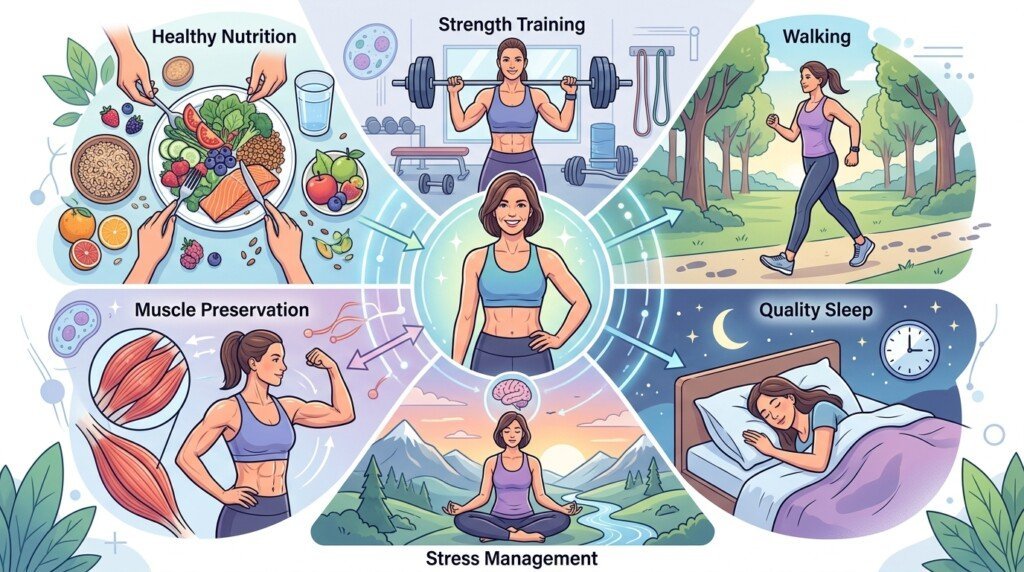
The encouraging news is that prevention is often easier than trying to reverse weight gain after it occurs. Small, consistent lifestyle habits practiced every day have a much greater impact than short-term diets or extreme exercise programs. Preserving muscle, staying physically active, eating balanced meals, managing stress, and sleeping well all work together to support a healthy body weight throughout menopause.
The goal is not perfection. Instead, it is building sustainable routines that fit into everyday life while supporting long-term health.
In this article, you’ll learn how to Prevent Menopause Weight Gain using evidence-based strategies, which daily habits make the biggest difference, why strength training deserves a central role, which foods support healthy body composition, how sleep affects weight management, practical ways to stay consistent, and when ongoing weight changes deserve professional evaluation.
Can You Prevent Weight Gain During Menopause?
Yes.
Although menopause increases the likelihood of weight gain, it does not make it unavoidable.
Many women successfully maintain a healthy weight by adapting their lifestyle to the natural changes that occur during midlife.
The goal is not preventing every small weight fluctuation. Instead, focus on preserving muscle, limiting excess body fat, and maintaining healthy habits over the long term.

Hormonal Changes Influence Weight
As estrogen levels decline, the body becomes more likely to store fat around the abdomen.
This shift does not happen overnight, but gradual hormonal changes can influence where body fat is stored.
These changes are one reason many women notice an increase in waist circumference during menopause.
Muscle Preservation Becomes More Important
Lean muscle naturally decreases with age.
Because muscle supports daily energy expenditure, preserving it becomes one of the most effective ways to maintain a healthy body composition.
Regular resistance exercise combined with adequate protein intake helps reduce muscle loss.
Lifestyle Has a Powerful Impact
Hormones matter, but daily habits still play the biggest role in long-term health.
Women who consistently:
- Stay physically active
- Eat balanced meals
- Sleep well
- Manage stress
- Preserve muscle
often maintain healthier body composition throughout menopause.
Prevention Works Better Than Restriction
Crash diets and overly restrictive eating plans are rarely sustainable.
Instead, gradual healthy habits create lasting improvements while supporting overall health.
This balanced approach also aligns with the long-term strategies discussed throughout Menopause Weight Loss, where sustainable lifestyle changes remain the foundation of success.
Which Daily Habits Make the Biggest Difference?
Small habits repeated every day usually produce greater results than occasional bursts of motivation.
The following habits consistently support healthy weight maintenance during menopause.

Prioritize Daily Movement
Exercise sessions are important, but everyday movement matters just as much.
Simple activities include:
- Walking after meals
- Taking the stairs
- Gardening
- Housework
- Standing regularly
- Playing with grandchildren
These movements increase total daily energy expenditure.
Eat Balanced Meals
Each meal should ideally include:
- Lean protein
- Vegetables
- Healthy fats
- Whole grains
- High-fiber carbohydrates
Balanced meals improve fullness while supporting stable energy throughout the day.
Watch Portion Sizes
Healthy foods still contain calories.
Learning appropriate portion sizes helps maintain calorie balance without eliminating favorite foods.
Mindful eating also reduces unnecessary overeating.
Many practical strategies are explored further throughout Portion Control for Weight Loss.
Stay Hydrated
Drinking enough water supports:
- Digestion
- Physical performance
- Appetite awareness
- Overall health
Sometimes thirst is mistaken for hunger.
Keeping water available throughout the day encourages consistent hydration.
Plan Ahead
Busy schedules often lead to convenience foods.
Planning meals, grocery shopping, and healthy snacks ahead of time makes nutritious choices easier during busy weeks.
Reduce Sedentary Time
Even if you exercise regularly, sitting for many uninterrupted hours is not ideal.
Aim to stand, stretch, or walk briefly every hour whenever possible.
Does Strength Training Help Prevent Weight Gain?
Absolutely.
Strength training is one of the most effective forms of exercise for maintaining a healthy body composition during menopause.
Its benefits extend far beyond building stronger muscles.

Strength Training Preserves Muscle
Maintaining muscle helps support resting energy expenditure while improving overall strength.
Exercises may include:
- Dumbbells
- Resistance bands
- Bodyweight movements
- Machines
- Free weights
Consistency matters far more than lifting heavy weights.
Muscle Supports Healthy Aging
Strength training also improves:
- Balance
- Mobility
- Bone strength
- Functional fitness
- Independence
These benefits become increasingly valuable during menopause.
Better Body Composition
The number on the scale does not tell the whole story.
Strength training often improves body composition by increasing lean muscle while reducing body fat.
Women frequently notice clothes fitting better even when body weight changes only slightly.
Combine Strength With Walking
Resistance exercise works especially well when combined with regular walking or other moderate cardiovascular activities.
This balanced approach supports both fitness and long-term health.
Many women successfully combine these strategies using the principles discussed throughout Exercise for Menopause Weight Loss, where weekly workout planning is covered in detail.
Women who are new to resistance exercise may also find practical guidance in Strength Training for Fat Loss, which explains progressive training for beginners.
Which Foods Help Maintain a Healthy Weight?
No individual food prevents menopause weight gain.
Instead, healthy eating patterns provide the greatest benefit.

Prioritize Protein
Protein supports:
- Muscle maintenance
- Recovery
- Satiety
- Healthy aging
Include protein at every meal whenever possible.
Examples include:
- Fish
- Chicken
- Eggs
- Greek yogurt
- Beans
- Lentils
- Tofu
Eat Plenty of Vegetables
Vegetables provide:
- Fiber
- Vitamins
- Minerals
- Water
They increase meal volume while naturally supporting fullness.
Aim to include vegetables with both lunch and dinner.
Choose Whole Grains
Whole grains digest more slowly than refined carbohydrates.
Healthy options include:
- Oats
- Brown rice
- Quinoa
- Whole wheat bread
- Barley
These foods provide lasting energy while supporting appetite control.
Include Healthy Fats
Healthy fats contribute to meal satisfaction.
Choose foods such as:
- Olive oil
- Avocados
- Nuts
- Seeds
- Salmon
Moderation remains important because healthy fats are calorie dense.
Start the Day With a Balanced Breakfast
A breakfast containing both protein and fiber often helps reduce hunger later in the day.
Many practical meal ideas can be found throughout Best Breakfast for Weight Loss, where balanced morning meals are discussed in greater detail.
Avoid Highly Processed Foods Most of the Time
Highly processed foods often provide large amounts of calories with relatively little satiety.
Choosing minimally processed foods more frequently supports long-term calorie balance while making healthy eating easier to maintain.
Many of these nutrition principles are also explored throughout Best Diet for Menopause Weight Loss, where balanced eating patterns for menopause are discussed in depth.
Does Sleep Affect Menopause Weight Gain?
Sleep is often overlooked when discussing weight management, yet it plays a major role in maintaining a healthy body weight during menopause. While poor sleep does not directly cause weight gain, it influences many of the behaviors and biological processes that affect body composition over time.
Getting enough high-quality sleep supports better decision-making, healthier appetite regulation, consistent exercise, and improved recovery. These factors work together to help prevent gradual weight gain.

Poor Sleep Can Increase Hunger
After a restless night, many women notice they feel hungrier than usual.
Sleep affects hormones that help regulate appetite, making it easier to overeat when you are tired.
This may lead to:
- Larger portion sizes
- More frequent snacking
- Increased cravings for highly processed foods
- Eating even when not physically hungry
Improving sleep quality often makes healthy eating feel less like a struggle.
Better Sleep Supports Recovery
Exercise places healthy stress on your muscles.
Recovery happens largely during sleep.
Good sleep supports:
- Muscle repair
- Exercise performance
- Physical recovery
- Energy for future workouts
Women who sleep well are often better able to maintain consistent exercise routines.
Fatigue Reduces Daily Activity
Poor sleep frequently leads to lower energy levels.
When you feel exhausted, you may be less likely to:
- Go for a walk
- Complete a workout
- Prepare balanced meals
- Stay active throughout the day
Even small reductions in daily movement can accumulate over weeks and months.
Healthy Sleep Supports Metabolic Function
Sleep works alongside nutrition and exercise to support healthy metabolism.
Rather than trying to compensate for poor sleep with stricter dieting, improving sleep quality often makes every other healthy habit easier to maintain.
Many of these relationships are explained throughout Metabolic Health, where sleep, nutrition, and physical activity are discussed together.
How Can You Stay Consistent Long Term?
Consistency is the biggest predictor of long-term success.
Most women do not gain weight because they occasionally enjoy dessert or miss a workout. Weight gain usually develops when healthy habits gradually disappear over months or years.
Building realistic routines is far more effective than chasing perfection.

Set Realistic Goals
Choose goals that fit your lifestyle.
Examples include:
- Walking most days
- Strength training twice each week
- Eating vegetables with lunch and dinner
- Drinking more water
- Sleeping on a consistent schedule
Small goals are easier to maintain than dramatic lifestyle changes.
Focus on Habits Instead of Motivation
Motivation naturally comes and goes.
Habits continue even when motivation is low.
Try attaching healthy behaviors to existing routines.
For example:
- Walk after dinner.
- Prepare tomorrow’s lunch while cleaning the kitchen.
- Stretch before brushing your teeth at night.
These routines eventually become automatic.
Expect Occasional Setbacks
Vacations, holidays, illness, and stressful weeks happen.
Missing a few workouts or enjoying special meals does not erase months of healthy habits.
The key is returning to your normal routine as soon as possible instead of waiting for the “perfect” Monday.
Track More Than Your Weight
The scale provides only one measurement.
Also pay attention to:
- Waist circumference
- Energy levels
- Strength improvements
- Clothing fit
- Daily activity
- Sleep quality
These changes often improve before significant weight changes become noticeable.
Build an Environment That Supports Healthy Choices
Your surroundings influence your decisions.
Helpful ideas include:
- Keeping healthy snacks visible
- Preparing meals ahead of time
- Scheduling exercise on your calendar
- Keeping walking shoes near the door
- Having resistance bands available at home
Making healthy choices convenient increases the likelihood that they become regular habits.
Celebrate Consistency
Success during menopause is measured over months and years, not days.
The women who maintain healthy body weight are usually those who repeat simple habits consistently rather than searching for perfect diets or workouts.
These long-term strategies closely match the principles discussed throughout Weight Loss Habits and Sustainable Weight Loss, where sustainable behavior change takes priority over short-term results.
When Should You Seek Professional Advice?
Some weight changes are expected during menopause.
However, certain situations deserve medical evaluation.
Weight Changes Happen Very Quickly
Gradual changes are common.
Sudden or unexplained weight gain over a short period should be discussed with your healthcare professional.
Healthy Habits Are Not Improving Progress
If you consistently follow balanced nutrition, regular exercise, healthy sleep habits, and stress management for several months without improvement, individualized guidance may be helpful.
Symptoms Affect Daily Life
Professional evaluation is appropriate if menopause symptoms regularly interfere with:
- Sleep
- Physical activity
- Work
- Daily responsibilities
- Overall quality of life
You Have Questions About Your Individual Needs
Every woman experiences menopause differently.
Age, medical history, activity level, and overall health all influence the best long-term approach.
Personalized advice can help you develop realistic goals that fit your situation.
Focus on Long-Term Health
Remember that preventing menopause weight gain is about much more than appearance.
The larger goals include:
- Preserving muscle
- Supporting heart health
- Maintaining mobility
- Protecting bone health
- Improving energy
- Supporting healthy aging
These benefits remain valuable regardless of the number on the scale.

Frequently Asked Questions
1. Can you prevent menopause weight gain?
Yes. Although hormonal changes make weight management more challenging, balanced nutrition, regular physical activity, strength training, quality sleep, and consistent healthy habits can significantly reduce the risk of weight gain.
2. What is the best exercise to prevent menopause weight gain?
A combination of resistance training, walking, and moderate cardiovascular exercise provides the greatest long-term benefits by preserving muscle while supporting overall energy expenditure.
3. Which foods help prevent menopause weight gain?
Meals built around lean protein, vegetables, fruits, whole grains, legumes, and healthy fats support fullness, muscle maintenance, and healthy body composition.
4. Does sleep affect menopause weight gain?
Yes. Poor sleep may increase hunger, reduce physical activity, impair recovery, and make healthy eating more difficult, all of which can contribute to gradual weight gain over time.
5. Is menopause weight gain unavoidable?
No. While hormonal changes influence metabolism and fat distribution, many women successfully maintain a healthy weight by consistently following sustainable nutrition, exercise, sleep, and lifestyle habits.
Final Thoughts
Learning how to Prevent Menopause Weight Gain is not about fighting your body or following restrictive diets. Menopause brings natural hormonal and metabolic changes, but these do not remove your ability to maintain a healthy weight. The most effective approach is to focus on habits that preserve muscle, support metabolism, encourage daily movement, and promote balanced nutrition. Small choices made consistently often have a greater impact than dramatic lifestyle changes that are difficult to sustain.
Strength training, regular walking, protein-rich meals, portion awareness, quality sleep, and stress management all work together to support healthy body composition during menopause. Rather than chasing quick results, aim to create routines that fit comfortably into your daily life. These habits not only help reduce the likelihood of unwanted weight gain but also improve strength, mobility, energy, bone health, and overall well-being.
Perhaps the most encouraging message is that prevention remains within your control. You cannot stop the natural aging process or hormonal changes, but you can influence how your body adapts to them. By building sustainable habits and staying consistent over time, you can maintain a healthier weight, protect your long-term health, and approach menopause with greater confidence and resilience.
Disclaimer:
This post may contain affiliate links. If you purchase through them, we may earn a small commission at no extra cost to you. Also, this content is for informational purposes only and does not substitute professional medical advice.
Ready to Start Your Journey?
Use our free 7-in-1 Weight Loss Toolkit to calculate your numbers and build your plan in minutes.
Open Free Tools →