


Can Sleeping Less Slow Your Metabolism? Here’s What Happens
Sleep and Metabolism are closely connected, yet many people overlook this relationship when trying to improve their health or lose weight. You may count your calories, stick to your workout routine, and avoid late-night snacks, but your progress can still feel slower than expected. It’s easy to assume your metabolism is simply “slow,” but one overlooked factor could be influencing how efficiently your body uses energy every day.
That factor is sleep.
Sleep is far more than a time when your body shuts down for the night. While you’re sleeping, countless biological processes continue working behind the scenes. Hormones are regulated, tissues recover, energy stores are balanced, and metabolic functions prepare your body for the following day. When sleep becomes consistently shorter or lower in quality, these processes may no longer work as efficiently.
Many people ask whether sleeping less actually slows metabolism. The answer is more complicated than a simple yes or no. Sleep deprivation does not suddenly switch your metabolism into a permanently slower mode overnight. Instead, insufficient sleep influences several systems that work together to regulate energy expenditure, appetite, recovery, insulin sensitivity, and body composition. Over time, these small effects can make maintaining a healthy weight much more challenging.
Research continues to show that healthy sleep supports many aspects of metabolic health. People who regularly get enough high-quality sleep often have better energy levels, improved recovery after exercise, healthier appetite regulation, and greater consistency with physical activity. In contrast, chronic sleep deprivation may increase fatigue, reduce daily movement, encourage cravings, and influence several hormones involved in metabolism.
Understanding the relationship between Sleep and Metabolism helps explain why improving your sleep is not simply about feeling rested. It is about giving your body the best possible environment to support long-term health and sustainable weight management.
In this article, you’ll learn whether sleeping less can slow your metabolism, how sleep influences energy expenditure, whether poor sleep affects fat burning, how sleep interacts with insulin sensitivity, which habits help protect your metabolism, and when persistent sleep problems deserve professional attention.
Quick Answer
Yes, sleeping less can influence several processes involved in metabolism. Although poor sleep does not instantly create a permanently slow metabolism, research suggests that chronic sleep deprivation may affect energy expenditure, hormone balance, insulin sensitivity, recovery, appetite regulation, and daily physical activity. Consistently getting enough high-quality sleep helps support healthy metabolic function alongside balanced nutrition and regular exercise.
Can Sleeping Less Slow Your Metabolism?
Many people think metabolism works like a simple on-and-off switch.
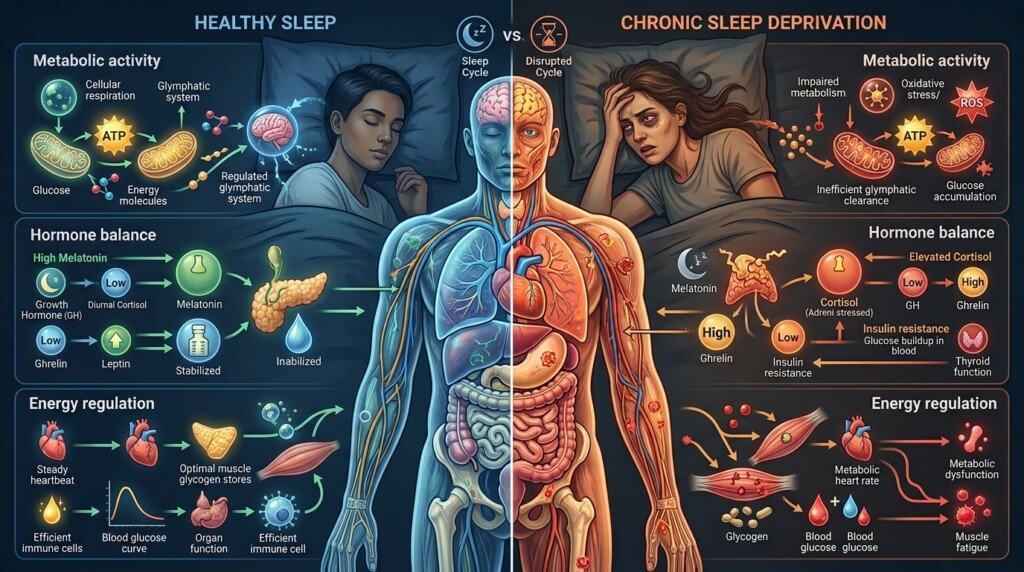
In reality, metabolism is a collection of thousands of biological reactions occurring continuously throughout the body. Sleep supports many of these reactions by allowing normal hormone regulation, tissue repair, and energy balance to occur overnight.
When sleep becomes consistently inadequate, several aspects of metabolism may become less efficient.

Metabolism Is More Than Burning Calories
Metabolism includes every chemical process required to keep your body alive.
These processes include:
- Energy production
- Hormone regulation
- Tissue repair
- Nutrient processing
- Temperature regulation
Healthy sleep helps support all of these essential functions.
Sleep Supports Normal Hormone Activity
Several hormones involved in metabolism follow natural daily rhythms.
Consistent sleep helps maintain these rhythms, allowing the body to coordinate energy use more effectively.
Disrupted sleep may interfere with this natural balance.
Sleep Deprivation Creates Multiple Small Effects
Poor sleep rarely causes one dramatic metabolic change.
Instead, it produces several smaller changes that may include:
- Reduced recovery
- Lower daily energy
- Increased hunger
- Reduced physical activity
- Altered appetite regulation
Together, these effects may gradually influence long-term weight management.
Daily Habits Become Harder to Maintain
People who sleep poorly often find healthy routines more difficult.
Fatigue may reduce motivation to:
- Exercise
- Prepare balanced meals
- Stay physically active
- Manage stress effectively
These behavioral changes may influence metabolism over time.
Healthy Sleep Supports Long-Term Metabolic Health
Rather than acting as a shortcut for weight loss, healthy sleep strengthens the habits that support metabolism throughout life.
The broader relationship between healthy sleep and body weight is discussed throughout Sleep and Weight Loss, where appetite, recovery, and metabolism are explored together.
How Does Sleep Affect Energy Expenditure?
Energy expenditure refers to the total amount of energy your body uses each day.
Sleep influences several components of this process directly and indirectly.
Your Body Uses Energy Even While Sleeping
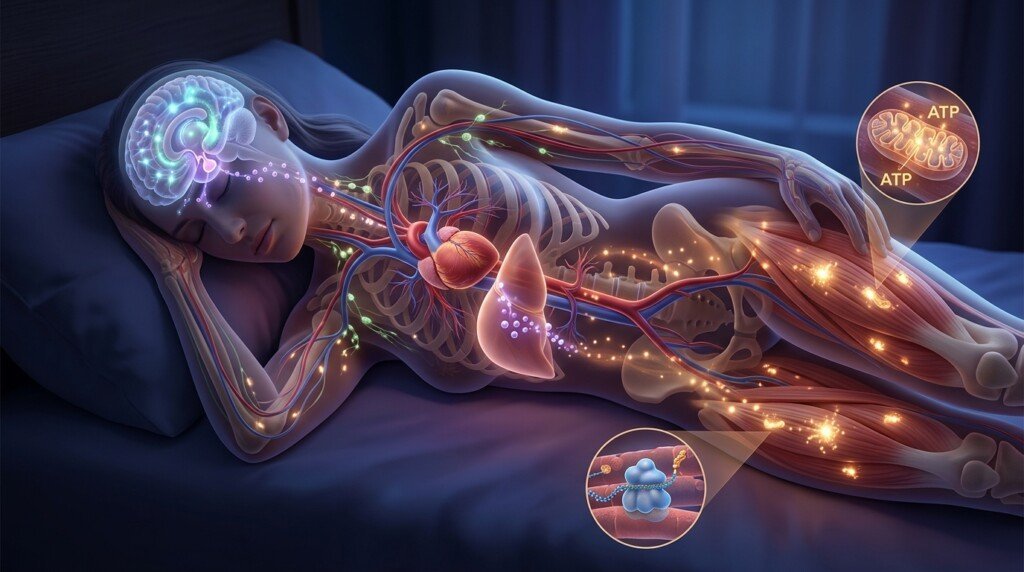
Sleep is an active biological state.
During the night, your body continues using energy for:
- Brain function
- Breathing
- Circulation
- Tissue repair
- Hormone regulation
Although physical activity decreases during sleep, many essential metabolic processes continue working.
Recovery Supports Future Activity
Quality sleep helps prepare your body for movement the following day.
Well-rested individuals often have:
- More energy
- Better endurance
- Improved coordination
- Greater motivation
These benefits support higher overall daily energy expenditure.
Fatigue May Reduce Everyday Movement
Poor sleep often decreases spontaneous physical activity.
People may unknowingly:
- Walk less
- Sit more often
- Skip exercise
- Avoid physically demanding tasks
These small reductions in movement can accumulate over time.
Sleep Helps Maintain Circadian Rhythm
Your internal body clock influences many aspects of energy regulation.
Regular sleep schedules help synchronize circadian rhythms that support healthy metabolic function throughout the day.
Energy Expenditure Depends on Many Factors
Sleep is only one contributor.
Overall energy expenditure is also influenced by:
- Muscle mass
- Physical activity
- Nutrition
- Age
- Genetics
- General health
Healthy sleep helps these systems function more efficiently rather than replacing them.
Does Poor Sleep Affect Fat Burning?
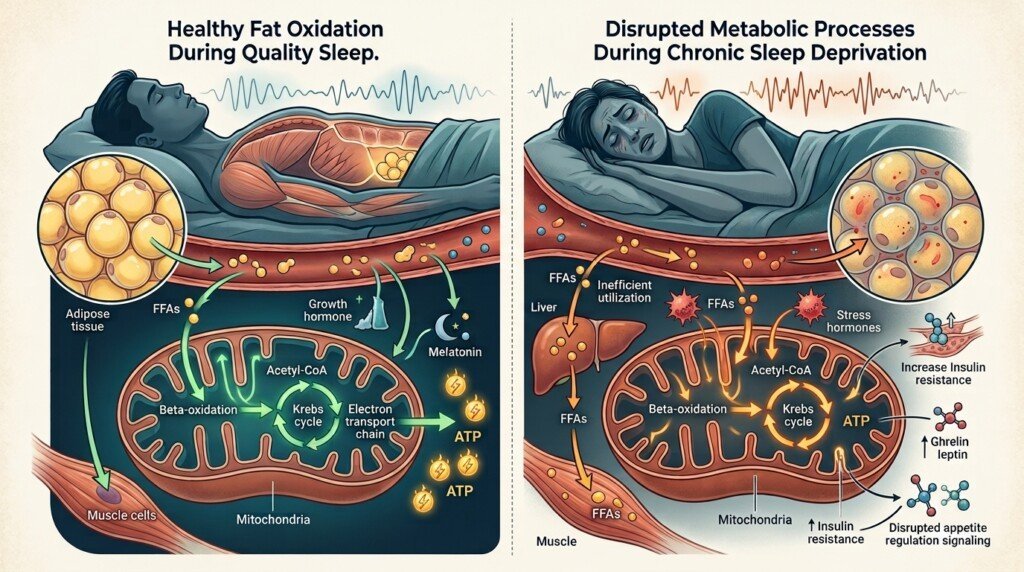
Poor sleep does not stop fat burning completely.
Your body continues using fat as an energy source throughout the day and night.
However, insufficient sleep may influence several factors involved in long-term fat metabolism.
Fat Burning Depends on Energy Balance
Fat oxidation occurs whenever the body needs stored energy.
This process depends primarily on long-term energy balance rather than one night’s sleep.
Healthy sleep supports this process indirectly.
Recovery Supports Exercise Performance
Exercise plays an important role in improving body composition.
Poor recovery caused by insufficient sleep may reduce:
- Workout quality
- Training consistency
- Physical performance
These effects may gradually influence fat loss over time.
Appetite May Become Harder to Control
Poor sleep has been associated with changes in hormones involved in hunger regulation.
Increased appetite may make maintaining a healthy calorie intake more difficult.
The relationship between appetite hormones is explored further throughout Hunger Hormones.
Healthy Sleep Supports Better Daily Choices
People who sleep well often report:
- Better concentration
- More stable energy
- Improved motivation
- Better meal planning
These behaviors indirectly support healthier body composition.
Fat Loss Requires Multiple Healthy Habits
No single factor determines fat burning.
Healthy sleep works alongside balanced nutrition, physical activity, recovery, and consistency to support long-term fat loss.
Can Sleep Loss Affect Insulin Sensitivity?
Yes.
Research suggests that chronic sleep deprivation may influence insulin sensitivity, making this one of the most important links between sleep and metabolic health.
Insulin Helps Regulate Blood Sugar
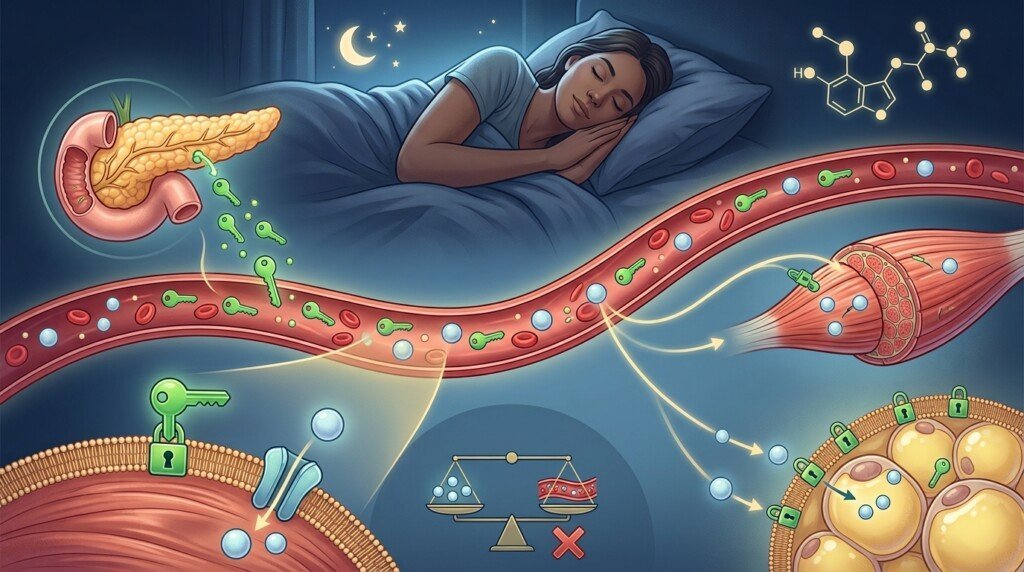
Insulin allows glucose to move from the bloodstream into body cells where it can be used for energy.
Healthy insulin function supports normal energy metabolism.
Sleep Supports Healthy Insulin Function
Quality sleep appears to help maintain normal insulin sensitivity.
Repeated sleep deprivation may reduce this sensitivity over time, although many factors also influence this process.
Metabolic Health Depends on Multiple Habits
Insulin sensitivity is affected by:
- Physical activity
- Nutrition
- Body composition
- Stress
- Sleep
Improving one area often supports improvements in others.
More about this relationship is discussed throughout Insulin Resistance.
Recovery Helps Maintain Hormone Balance
Sleep provides the recovery time needed for healthy hormone regulation.
Consistent recovery supports many biological systems involved in metabolism.
Healthy Sleep Is Part of the Bigger Picture
Sleep should not be viewed in isolation.
Instead, it forms one pillar of overall Metabolic Health, working together with balanced nutrition, regular movement, stress management, and sustainable lifestyle habits.
Which Habits Protect Your Metabolism?
Supporting your metabolism does not require complicated routines or expensive products. In fact, many of the most effective habits are also some of the simplest. Consistent sleep, balanced nutrition, regular movement, and stress management all work together to help your body regulate energy efficiently.
Rather than searching for ways to “boost” your metabolism overnight, focus on protecting the natural metabolic processes your body already performs every day.

Make Sleep a Daily Priority
One of the most effective ways to support metabolism is getting enough quality sleep consistently.
Healthy sleep allows your body to:
- Recover from daily activity
- Regulate hormones
- Maintain appetite balance
- Support normal energy use
Going to bed and waking up at similar times each day also strengthens your circadian rhythm.
Stay Physically Active
Movement supports metabolic health in many ways.
Regular physical activity helps maintain lean muscle mass while increasing daily energy expenditure.
Aim to include activities such as:
- Walking
- Strength training
- Cycling
- Swimming
- Recreational sports
Consistency matters far more than perfection.
Eat Balanced Meals
Healthy metabolism depends on adequate nutrition rather than restrictive eating.
Try to include:
- Lean protein
- Whole grains
- Vegetables
- Fruits
- Healthy fats
Balanced meals help support steady energy levels throughout the day.
Manage Daily Stress
Chronic stress may influence hormone regulation and overall well-being.
Simple stress-management habits include:
- Deep breathing
- Meditation
- Walking outdoors
- Reading
- Spending time with family
- Relaxing hobbies
Many of these habits also contribute to better sleep quality.
Maintain Lean Muscle
Muscle tissue uses energy continuously.
Strength training helps preserve lean muscle during weight management while supporting long-term metabolic health.
Build Sustainable Habits
Healthy metabolism develops from repeated daily behaviors.
Rather than looking for dramatic changes, focus on habits you can realistically maintain for years.
Can Better Sleep Improve Weight Loss?
Better sleep does not directly burn body fat.
Instead, it improves many of the conditions that make healthy weight management easier over time.

Sleep Supports Better Appetite Control
Healthy sleep helps regulate the hormones involved in hunger and fullness.
When appetite feels easier to manage, maintaining balanced eating habits often becomes less challenging.
Recovery Improves Exercise Performance
Exercise becomes more effective when your body has recovered properly.
Quality sleep supports:
- Muscle repair
- Physical performance
- Endurance
- Consistency
These improvements encourage long-term adherence to physical activity.
Better Energy Encourages Movement
People who wake feeling refreshed often move more throughout the day.
This includes both planned exercise and everyday activities such as:
- Walking
- Household chores
- Climbing stairs
- Recreational activities
These small movements contribute meaningfully to overall energy expenditure.
Sleep Supports Healthy Hormone Balance
Many hormones involved in metabolism follow natural daily rhythms.
Consistent sleep helps support this balance while improving recovery and appetite regulation.
Long-Term Consistency Produces Results
Healthy sleep works alongside balanced nutrition and regular exercise.
When all three become consistent habits, sustainable weight management becomes much easier to maintain.
The broader relationship between healthy sleep and body weight is explored throughout Sleep and Weight Loss, where the role of appetite, recovery, and metabolism is explained in greater detail.
When Should You Seek Help?
Occasional poor sleep is part of normal life.
Stressful events, travel, illness, or temporary schedule changes can interrupt sleep from time to time.
However, ongoing sleep problems deserve attention.
Sleep Problems Last Several Weeks
If you regularly struggle to fall asleep or stay asleep despite following healthy sleep habits, consider discussing your symptoms with a healthcare professional.
Persistent sleep difficulties should not be ignored.
Daytime Fatigue Affects Daily Life
Feeling constantly tired despite spending enough time in bed may interfere with:
- Work
- Driving
- Physical activity
- Concentration
- Daily responsibilities
Persistent fatigue deserves professional evaluation.
Sleep Continues to Affect Your Health
If poor sleep consistently affects your:
- Mood
- Memory
- Productivity
- Exercise performance
- Overall quality of life
professional guidance may help identify contributing factors.
Weight Management Remains Difficult
If you consistently practice healthy eating, regular exercise, and good sleep habits but continue struggling with unexpected weight changes, a healthcare professional can help evaluate whether additional factors should be considered.
Seeking Help Supports Long-Term Health
Asking for professional advice is not a sign of failure.
Addressing ongoing sleep problems early may improve both sleep quality and overall health.
Practical Daily Action Plan
Supporting your metabolism through better sleep does not require a complete lifestyle overhaul.
Start with these simple habits:
- Aim for 7 to 9 hours of quality sleep each night.
- Go to bed and wake up at similar times every day.
- Stay physically active throughout the week.
- Include protein, vegetables, whole grains, and healthy fats in balanced meals.
- Manage daily stress with relaxing activities.
- Limit bright screen exposure before bedtime.
- Create a cool, quiet, and comfortable sleep environment.
- Stay consistent rather than aiming for perfection.
Small improvements practiced every day often create meaningful long-term health benefits.

Frequently Asked Questions
1. Can sleeping less slow your metabolism?
Sleeping less does not instantly create a permanently slow metabolism, but research suggests chronic sleep deprivation may influence hormone balance, energy expenditure, recovery, and appetite regulation, making healthy weight management more difficult.
2. Does sleep affect energy expenditure?
Yes. Sleep supports recovery, physical performance, and daily energy levels. Poor sleep may reduce spontaneous movement and exercise consistency, which can gradually influence total daily energy expenditure.
3. Can poor sleep reduce fat burning?
Poor sleep does not stop fat burning, but it may affect appetite, recovery, exercise performance, and long-term energy balance, making sustainable fat loss more challenging.
4. Does sleep influence insulin sensitivity?
Research suggests that chronic sleep deprivation may reduce insulin sensitivity over time. Healthy sleep supports normal metabolic function alongside balanced nutrition and regular physical activity.
5. What habits best support metabolism?
Getting enough quality sleep, staying physically active, maintaining lean muscle through strength training, eating balanced meals, managing stress, and following consistent daily routines all help support healthy metabolism.
Final Thoughts
The relationship between Sleep and Metabolism is more complex than simply asking whether sleeping less slows your metabolism. Sleep does not control metabolism through a single switch. Instead, it influences a network of biological processes that include hormone regulation, energy expenditure, recovery, appetite, insulin sensitivity, and daily physical activity. When sleep becomes consistently inadequate, these systems may become less efficient, making long-term weight management more challenging.
Fortunately, healthy metabolism is supported by habits that are entirely within your control. Prioritizing quality sleep, staying physically active, eating balanced meals, managing stress, and maintaining consistent daily routines all help create an environment where your body can regulate energy more effectively. Sleep should not be viewed as a replacement for healthy eating or exercise, but as one of the essential pillars that allows those habits to deliver their full benefits.
Rather than searching for quick fixes or miracle metabolism boosters, focus on building sustainable routines that support your body’s natural processes. Over time, consistent sleep combined with balanced nutrition and regular movement can strengthen Metabolic Health, improve recovery, support healthier body composition, and make long-term weight management more achievable.
Disclaimer:
This post may contain affiliate links. If you purchase through them, we may earn a small commission at no extra cost to you. Also, this content is for informational purposes only and does not substitute professional medical advice.
Ready to Start Your Journey?
Use our free 7-in-1 Weight Loss Toolkit to calculate your numbers and build your plan in minutes.
Open Free Tools →