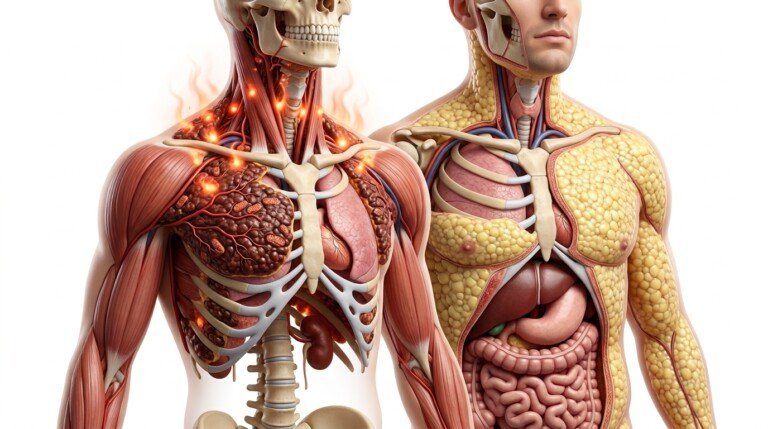
When most people think about body fat, they picture the soft tissue that stores extra calories around the waist, hips, or thighs. However, body fat is far more complex than many people realize. Scientists have discovered that the human body contains several different types of fat, each with unique structures, functions, and effects on health.
The two best-known types are brown fat and white fat. Although both are forms of adipose tissue, they behave very differently. White fat serves primarily as the body’s long-term energy reserve, storing excess calories for future use. Brown fat, on the other hand, is metabolically active and specializes in producing heat to help regulate body temperature.
Researchers have become increasingly interested in brown fat because of its unique ability to burn calories through a process called thermogenesis. Unlike white fat, which stores energy, brown fat consumes energy to generate heat. This discovery has sparked numerous headlines suggesting that activating brown fat could dramatically increase fat burning and solve obesity. While the science is promising, the reality is much more nuanced.
Adults do possess brown fat, but usually in much smaller amounts than infants. Scientists continue studying how brown fat functions throughout adulthood, how lifestyle factors influence its activity, and whether it can meaningfully contribute to long-term metabolic health.
Understanding Brown Fat vs White Fat helps explain why not all body fat is harmful. It also demonstrates that healthy body fat performs essential biological functions far beyond energy storage. Rather than trying to eliminate all body fat, the goal is maintaining a healthy balance that supports metabolism, hormone regulation, temperature control, and overall well-being.
In this article, you’ll learn what brown fat is, how it differs from white fat, the role of beige fat, whether brown fat actually burns calories, how brown fat changes throughout life, which habits may support its activity, and the biggest myths surrounding this fascinating type of body fat.
What Is Brown Fat?
Brown fat, also called brown adipose tissue (BAT), is a specialized type of body fat that helps generate heat instead of storing large amounts of energy.
Its primary role is protecting the body from cold by producing heat through a process known as thermogenesis.
Unlike white fat, brown fat contains large numbers of mitochondria, giving it its distinctive brown color.
Brown Fat Produces Heat
Brown fat becomes active when the body is exposed to colder temperatures.
Instead of storing calories, it burns energy to generate warmth.
This process helps maintain a stable body temperature without requiring muscle activity such as shivering.
Brown Fat Contains Many Mitochondria
One of the defining features of brown fat is its exceptionally high number of mitochondria.
Mitochondria are often called the powerhouses of cells because they convert nutrients into usable energy.
In brown fat, these mitochondria specialize in producing heat rather than maximizing energy storage.
Infants Have More Brown Fat
Newborn babies have much larger amounts of brown fat than adults.
Because infants cannot regulate body temperature as efficiently, brown fat helps protect them from excessive heat loss during the first months of life.
Adults Still Have Brown Fat
For many years, scientists believed adults lost nearly all brown fat after childhood.
Modern imaging studies have shown that healthy adults retain small amounts of brown fat, particularly around the:
- Neck
- Collarbone
- Upper chest
- Spine
Although the quantity is much smaller than in infants, this tissue remains metabolically active.
Brown Fat Supports Normal Physiology
Brown fat is a completely normal part of human biology.
Its primary function is helping regulate body temperature rather than serving as a weight-loss mechanism.
Understanding its role helps place recent scientific discoveries into proper perspective.
What Is White Fat?
White fat, also called white adipose tissue (WAT), is the most common type of body fat found in adults.
Unlike brown fat, its primary purpose is storing excess energy for future use.
White fat also performs several important functions that support overall health.
White Fat Stores Energy
Whenever you consume more calories than your body immediately needs, much of the excess energy is stored inside white fat cells as triglycerides.
These energy reserves become available later when calorie intake decreases or energy demand increases.
White Fat Protects the Body
White fat cushions internal organs and provides physical protection against injury.
It also acts as insulation, helping reduce heat loss.
Without adequate white fat, many normal biological functions would be compromised.
White Fat Produces Hormones
White fat is far more than a passive storage site.
It functions as an active endocrine organ by releasing hormones involved in:
- Appetite regulation
- Energy balance
- Inflammation
- Metabolism
This explains why healthy amounts of body fat remain essential throughout life.
Most Body Fat Is White Fat
The vast majority of body fat in adults consists of white adipose tissue.
It is commonly found beneath the skin as subcutaneous fat and around internal organs as visceral fat.
The different roles of these fat depots are discussed throughout Body Fat, where adipose tissue is explained in greater detail.
White Fat Is Not Always Harmful
White fat often receives negative attention because excessive amounts may contribute to health problems.
However, healthy amounts of white fat are necessary for:
- Hormone production
- Energy storage
- Vitamin absorption
- Organ protection
- Healthy metabolism
Problems arise from excess body fat rather than the existence of white fat itself.
How Are Brown Fat and White Fat Different?
Although both belong to the adipose tissue family, brown fat and white fat perform almost opposite functions.
Understanding these differences helps explain why scientists study both types so closely.
Their Main Roles Are Different
The primary role of white fat is storing energy.
The primary role of brown fat is producing heat.
One stores calories.
The other uses calories.
Their Cells Look Different
Brown fat cells contain:
- Many mitochondria
- Smaller fat droplets
- Rich blood supply
White fat cells typically contain:
- One large fat droplet
- Fewer mitochondria
- Larger overall cell size
These structural differences explain their unique biological functions.
Brown Fat Uses More Energy
Brown fat is metabolically more active than white fat.
When activated, it consumes calories to produce heat.
However, the total amount of brown fat found in most adults remains relatively small.
White Fat Dominates Adult Body Composition
Although brown fat receives considerable scientific attention, white fat represents the overwhelming majority of adipose tissue in healthy adults.
This makes white fat the primary determinant of overall body fat percentage.
Your Body Fat Percentage largely reflects the amount of white adipose tissue stored throughout the body.
Beige Fat Shares Characteristics of Both
Scientists have also identified beige fat.
Beige fat develops within white fat tissue under certain biological conditions.
It shares some characteristics with brown fat, including the ability to produce heat, although researchers continue studying its exact role in humans.
Can Brown Fat Help Burn Calories?
Yes, but its overall effect should be understood realistically.
Brown fat burns calories through thermogenesis, but it is not a shortcut for rapid fat loss.
Brown Fat Uses Energy to Produce Heat
Unlike white fat, brown fat consumes stored nutrients to generate heat.
This increases energy expenditure while helping maintain body temperature.
Thermogenesis Is a Natural Process
Thermogenesis occurs naturally whenever brown fat becomes active.
This process is part of normal human physiology and is not unique to people trying to lose weight.
Adults Usually Have Limited Amounts
Although adults possess brown fat, the total amount is generally small.
Because of this, brown fat alone is unlikely to create large changes in body weight.
Its contribution to overall calorie expenditure remains modest.
Brown Fat Supports Metabolic Research
Researchers continue studying whether healthier brown fat activity may contribute to better Metabolic Health over the long term.
Current evidence is encouraging, but many questions remain unanswered.
Brown Fat Is Not a Weight-Loss Solution
The presence of brown fat should not be viewed as a replacement for healthy lifestyle habits.
Balanced nutrition, regular physical activity, and sustainable body composition management remain far more important for long-term health than attempting to rely on brown fat activity alone.
Can Adults Increase Brown Fat?
This question has attracted significant scientific attention over the past decade. Researchers have discovered that adults retain small amounts of brown fat, leading to growing interest in whether its activity can be influenced through lifestyle.
Current evidence suggests that certain factors may support brown fat activity, but expectations should remain realistic.
Brown fat is only one small part of human metabolism, and healthy lifestyle habits remain far more important for long-term body composition.
Brown Fat Naturally Varies Between People
Not everyone has the same amount of brown fat.
Its activity appears to differ based on several factors, including:
- Age
- Genetics
- Body composition
- Overall health
Scientists are still studying why these differences exist.
Cold Exposure May Activate Existing Brown Fat
Research shows that exposure to cooler temperatures can stimulate existing brown fat to produce heat.
This is a normal biological response designed to help maintain body temperature.
However, scientists continue investigating how meaningful this effect is for long-term energy expenditure.
Current evidence does not support using cold exposure alone as a weight management strategy.
Regular Physical Activity Supports Overall Metabolism
Exercise does not directly create large amounts of brown fat.
However, regular physical activity supports:
- Healthy metabolism
- Improved insulin sensitivity
- Better body composition
- Greater energy expenditure
These benefits remain much more important than attempting to increase brown fat alone.
The relationship between physical activity and fat metabolism is discussed further throughout How Fat Burning Works.
Healthy Body Composition May Support Brown Fat Function
Researchers have observed that individuals with healthier body composition sometimes demonstrate greater brown fat activity.
Whether this relationship is causal remains under investigation.
It is likely that overall metabolic health influences brown fat rather than brown fat alone determining metabolic health.
More Research Is Still Needed
Although brown fat is one of the most exciting areas of obesity research, scientists continue studying:
- Long-term brown fat activity
- Individual variation
- Health effects
- Practical applications
Many questions remain unanswered.
Which Lifestyle Habits Support Brown Fat Activity?
Rather than searching for ways to dramatically increase brown fat, it is more helpful to focus on habits that support healthy metabolism overall.
These lifestyle habits benefit your entire body regardless of the amount of brown fat you naturally possess.
Stay Physically Active
Regular movement supports efficient energy metabolism.
Helpful activities include:
- Walking
- Cycling
- Swimming
- Resistance training
- Recreational sports
Exercise improves overall health even if its direct effect on brown fat is relatively modest.
Maintain Healthy Body Composition
Reducing excess body fat while preserving lean muscle supports numerous aspects of metabolic health.
Healthy body composition influences:
- Blood sugar regulation
- Cardiovascular health
- Mobility
- Physical function
These benefits extend far beyond brown fat alone.
Eat a Balanced Diet
Nutritious eating patterns support healthy metabolism by providing:
- Lean protein
- Fruits
- Vegetables
- Whole grains
- Healthy fats
Balanced nutrition supplies the energy and nutrients needed for normal body function.
Prioritize Sleep
Quality sleep supports hormone regulation and healthy metabolism.
Consistent sleep also contributes to:
- Recovery
- Appetite regulation
- Energy levels
- Exercise performance
These factors indirectly support healthy body composition.
Manage Stress
Long-term stress may influence eating habits, sleep quality, and physical activity.
Healthy stress management strategies include:
- Walking outdoors
- Meditation
- Reading
- Deep breathing
- Spending time with loved ones
Supporting emotional well-being also helps maintain healthy daily routines.
Think About Overall Health
Brown fat represents only one small component of metabolism.
Healthy habits improve countless biological systems simultaneously, making them far more valuable than focusing on one specific tissue.
What Are the Biggest Myths About Brown Fat?
As research on brown fat has become more popular, misinformation has spread just as quickly.
Understanding what current science actually says helps separate evidence from exaggerated claims.
Myth 1: Brown Fat Can Melt Away Body Fat
Brown fat does burn calories.
However, the amount of brown fat found in most adults is relatively small.
Current evidence does not support the idea that brown fat alone causes major weight loss.
Myth 2: White Fat Is Always Bad
White fat performs many essential functions.
Healthy amounts of white adipose tissue support:
- Hormone production
- Organ protection
- Energy storage
- Vitamin absorption
Only excessive white fat becomes a health concern.
Myth 3: Adults Do Not Have Brown Fat
For many years this was believed to be true.
Modern imaging techniques have confirmed that most adults retain small amounts of metabolically active brown fat.
Myth 4: Brown Fat Replaces Exercise
Brown fat contributes only a small amount to total energy expenditure.
Regular physical activity remains one of the most effective ways to support healthy body composition and long-term health.
Myth 5: Brown Fat Can Be Activated Overnight
There is no proven method that dramatically increases brown fat activity in a short period.
Current research continues to explore how lifestyle, genetics, and environmental factors influence brown fat over time.
Myth 6: More Brown Fat Means You Cannot Gain Weight
Body weight depends on many interacting factors, including:
- Energy balance
- Nutrition
- Physical activity
- Genetics
- Hormones
- Sleep
Brown fat represents only one small piece of a much larger metabolic system.
Frequently Asked Questions
1. What is the difference between brown fat and white fat?
Brown fat primarily burns calories to generate heat through thermogenesis, while white fat mainly stores excess energy as triglycerides and supports hormone production, organ protection, and energy storage.
2. Do adults have brown fat?
Yes. Adults retain small amounts of brown adipose tissue, most commonly around the neck, collarbone, upper chest, and spine. The amount varies considerably between individuals.
3. Can brown fat help with weight loss?
Brown fat burns calories, but its overall contribution to energy expenditure in most adults is relatively small. Healthy eating, regular physical activity, and sustainable lifestyle habits remain much more important for long-term weight management.
4. What is beige fat?
Beige fat is a type of adipose tissue that develops within white fat under certain biological conditions. It shares some characteristics with brown fat and remains an active area of scientific research.
5. Which habits support healthy brown fat activity?
Regular physical activity, balanced nutrition, quality sleep, maintaining a healthy body composition, and managing stress all support overall metabolic health, which may also help maintain normal brown fat function.
Final Thoughts
Understanding Brown Fat vs White Fat shows that body fat is far more complex than simply storing excess calories. White fat serves essential roles in energy storage, hormone production, organ protection, and overall health, while brown fat specializes in producing heat through thermogenesis. Both types of adipose tissue are normal parts of human biology and contribute to keeping the body functioning properly.
Although brown fat has attracted considerable scientific interest because of its ability to burn calories, current research suggests that its contribution to overall energy expenditure in adults is relatively modest. Healthy body composition is influenced much more by long-term lifestyle habits than by the amount of brown fat a person naturally possesses. Regular physical activity, balanced nutrition, quality sleep, stress management, and maintaining lean muscle remain the foundation of healthy metabolism.
Perhaps the most important takeaway is that not all body fat is harmful. Different types of fat perform different functions, and each plays a role in maintaining normal physiology. By understanding how brown fat, white fat, and beige fat work together, you can better appreciate the complexity of human metabolism and focus on sustainable habits that support long-term health instead of chasing myths or expecting one type of fat to transform your body.
Disclaimer:
This post may contain affiliate links. If you purchase through them, we may earn a small commission at no extra cost to you. Also, this content is for informational purposes only and does not substitute professional medical advice.