
How to Track Your Healthy Eating Progress (Beyond the Scale)
When people decide to improve their nutrition, the first thing they often monitor is their weight. They step onto the scale every morning hoping for reassurance that their efforts are working. If the number drops, motivation rises. If it stays the same or increases slightly, discouragement quickly follows.
The problem is that body weight tells only a small part of the story.
Healthy eating influences far more than the number on a scale. Better energy throughout the day, improved digestion, more stable moods, healthier food choices, greater consistency, and improved confidence around meals are all signs of meaningful progress. Yet these improvements often appear long before noticeable changes in body weight.
This is why learning how to track healthy eating progress effectively can completely change your relationship with nutrition. Instead of measuring success by a single number, you begin recognizing dozens of improvements that reflect healthier habits and a more sustainable lifestyle.
Tracking should not become another stressful task. Its purpose is not to judge every meal or search for perfection. Instead, it provides useful feedback that helps you notice patterns, celebrate progress, and make small adjustments before unhealthy habits quietly return.
Think of tracking as a conversation with yourself rather than a report card. It answers questions such as:
“How have I been feeling lately?”
“Am I becoming more consistent?”
“Which habits are helping me most?”
“Where am I struggling?”
These answers create a much clearer picture of your overall health than body weight alone ever could.
In this article, you’ll learn practical ways to track healthy eating progress using habits, energy levels, food awareness, and everyday well-being instead of relying entirely on the scale.
Quick Answer
The best way to track healthy eating progress is by monitoring consistent habits rather than body weight alone. Keeping a food diary, observing energy levels, tracking mood, noticing digestive comfort, celebrating non-scale victories, and maintaining healthy routines provide a much more complete picture of nutritional progress than the scale by itself.
What Makes Tracking Your Healthy Eating Progress Worth the Effort?
Many healthy habits produce benefits so gradually that they are easy to overlook.
Imagine someone who begins preparing balanced lunches instead of buying fast food every afternoon.
After two weeks they may notice fewer afternoon energy crashes.
After one month they may sleep slightly better.
Several months later grocery shopping feels easier because healthier foods have become familiar.
These improvements rarely happen overnight.
Without paying attention, many people forget how much has actually changed.
Tracking solves this problem.

Instead of relying on memory, it creates a record of progress that would otherwise remain invisible.
This is particularly valuable because healthy eating rarely improves every area of life at the same pace.
Energy may improve before digestion.
Consistency may improve before confidence.
Food choices may improve before physical appearance changes.
Tracking helps recognize these early victories.
Another important benefit is awareness.
Many eating decisions happen automatically.
People snack while working.
Skip meals during busy days.
Eat larger dinners after stressful afternoons.
Without reflection, these habits often continue unnoticed.
Tracking gently brings these patterns into awareness without requiring perfection.
The goal is not recording every bite forever.
The goal is learning enough about your own routines to make healthier decisions naturally.
Progress also becomes easier to maintain.
Seeing several weeks of consistent habits encourages continued effort because improvement feels visible rather than imaginary.
Healthy eating stops feeling like endless work and begins feeling like meaningful progress.
What Are the Key Benefits of Monitoring Your Dietary Intake?
Monitoring your eating habits provides much more than nutritional information.
It creates self-awareness.
Many people believe they know how they eat until they begin paying closer attention.
Breakfast skipped.
Afternoon snacks forgotten.
Late-night eating overlooked.
Restaurant meals more frequent than expected.
These discoveries are not failures.
They are useful observations.
Understanding current habits is the first step toward improving them.
Tracking also reveals positive behaviors that deserve recognition.
Perhaps vegetables now appear with dinner most evenings.
Maybe water has replaced sugary drinks during the workday.
Perhaps cooking at home has become more frequent than ordering takeaway.
These successes deserve attention because confidence grows when progress becomes visible.
Monitoring also reduces guesswork.
Instead of asking,
“Why do I feel tired today?”
You might notice several days of irregular meals.
Instead of wondering why afternoon cravings appear every weekday, tracking may reveal consistently skipped lunches.
These connections often remain hidden without written records.
Another benefit involves accountability.
Writing down habits encourages intentional choices without requiring rigid food rules.
Simply knowing you will reflect on your eating later often increases awareness during meals.
Importantly, accountability should never become self-criticism.
Tracking works best when observations remain curious rather than judgmental.
Instead of labeling meals as good or bad, focus on understanding what happened and what small improvement might help next time.
Over time, these observations create valuable insight into your own eating patterns that no generic nutrition advice could ever provide.
How Does Tracking Help Identify Unhealthy Eating Patterns?
Habits often develop quietly.
No one suddenly decides to skip breakfast every day.
Or snack every evening while watching television.
Or rely on takeaway meals four nights each week.
These behaviors usually emerge gradually until they begin feeling completely normal.
Tracking makes these invisible patterns visible again.
For example, someone may believe they eat vegetables regularly.
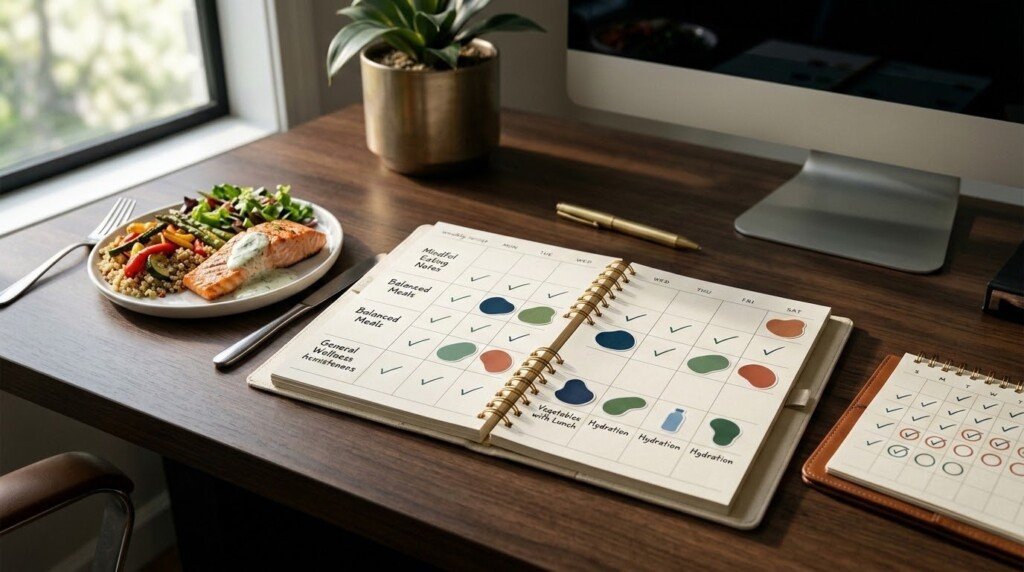
After reviewing several weeks of meals, they realize vegetables appear only two or three times each week.
Another person may discover that stress consistently leads to late-evening snacking.
Someone else notices weekends include far fewer balanced meals than weekdays.
None of these observations are reasons for guilt.
They are opportunities for understanding.
Patterns are particularly useful because they shift attention away from isolated meals.
Healthy eating is never determined by one lunch or one dessert.
It is shaped by repeated behaviors.
Tracking helps answer questions like:
Do I regularly skip meals?
Am I eating enough variety?
Which days feel easiest?
Which situations consistently challenge my healthy routines?
When do cravings usually appear?
Answering these questions allows improvements to target the actual problem instead of guessing.
Over time, unhealthy patterns become easier to recognize before they become established habits.
This awareness is one of the greatest advantages of tracking because prevention is often much easier than correction.
What Are the Psychological Effects of Consistently Tracking Your Diet?
The relationship between tracking and psychology depends largely on how tracking is approached.
When used thoughtfully, tracking often increases confidence.
People begin noticing positive behaviors they previously ignored.
Cooking more often.
Eating breakfast consistently.
Choosing fruit instead of highly processed snacks.
Drinking more water.
These achievements reinforce motivation because progress becomes visible.
Tracking also shifts attention away from perfection.
Instead of judging one difficult day, people begin evaluating broader weekly patterns.
This perspective reduces unnecessary frustration because occasional setbacks no longer define overall success.
Reflection also strengthens mindfulness.
Simply recording meals encourages greater awareness before eating.
People often pause to consider hunger, satisfaction, and meal quality more naturally.
However, balance remains essential.
Tracking should support healthy eating rather than dominate it.
If recording every meal creates significant stress or anxiety, simplifying the process is often more helpful than increasing detail.
Many people benefit from tracking habits rather than individual foods.
Examples include:
Did I include vegetables today?
Did I prepare meals at home?
Did I drink enough water?
Did I eat regular meals?
These simple questions often provide valuable insight without turning nutrition into constant mathematics.
Healthy tracking supports healthier decisions.
It should never become another source of pressure.
What Are the Best Methods for Tracking Progress Beyond Calories?
Many people assume that tracking progress automatically means counting calories or stepping on a scale every morning. While those methods may provide useful information in certain situations, they represent only a small part of what healthy eating looks like.
The most meaningful improvements often happen in areas that cannot be measured by body weight alone.

Think about how your daily life changes after several months of eating more consistently.
You may wake up feeling more refreshed.
Afternoon energy may remain steady instead of crashing.
Cooking healthy meals may start feeling normal instead of difficult.
Your grocery shopping becomes more intentional.
You may spend less time thinking about food because healthier choices have become routine.
These changes are genuine progress, even though they never appear on a bathroom scale.
This is why successful long-term tracking focuses on behaviors before outcomes.
Outcomes are influenced by many factors outside your control.
Habits are within your influence every day.
One practical method is keeping a simple food diary.
Unlike detailed calorie logs, a food diary focuses on observations rather than calculations.
You might record:
- Meals eaten
- Hunger before eating
- Satisfaction afterward
- Energy throughout the day
- Mood
- Water intake
- Any digestive discomfort
- Situations that made healthy eating easier or harder
After several weeks, valuable patterns usually begin to appear.
Another effective approach involves habit tracking.
Instead of measuring food itself, track behaviors that support healthy eating.
Examples include:
- Ate vegetables today
- Prepared meals at home
- Drank enough water
- Ate breakfast
- Included fruit
- Planned tomorrow’s meals
Watching these habits become more consistent often provides stronger motivation than watching body weight fluctuate.
Consistency streaks can also be surprisingly encouraging.
Marking healthy habits on a calendar shifts attention toward showing up every day rather than trying to be perfect.
Even if one day does not go as planned, the focus becomes restarting the habit rather than giving up entirely.
Many people also benefit from weekly reflections.
Instead of asking whether they ate perfectly, they ask:
“What went well this week?”
“What challenged me?”
“What one improvement will I focus on next week?”
This simple habit encourages continuous improvement without creating unnecessary pressure.
Technology can support these methods as well.
Many healthy eating apps allow users to track habits, water intake, meals, or daily reflections without requiring detailed calorie counting.
The goal is choosing a system that feels helpful rather than overwhelming.
Tracking should simplify healthy eating, not make it more complicated.
How Can I Measure Success Beyond Just Weight Loss?
One of the biggest mistakes people make is assuming that weight is the only meaningful measure of progress.
Body weight naturally changes from day to day because of hydration, sodium intake, meal timing, hormonal changes, physical activity, and many other normal physiological factors.
If success depends entirely on the scale, motivation becomes equally unstable.
Fortunately, healthy eating creates many improvements that deserve equal attention.
Energy is one of the earliest signs.
Many people notice they no longer experience dramatic afternoon fatigue after consistently eating balanced meals.
Mood may improve as well.

Regular meals often support steadier energy throughout the day, making it easier to concentrate and manage everyday responsibilities.
Sleep quality sometimes improves.
People frequently report waking up feeling more refreshed after establishing consistent eating routines, particularly when late-night overeating becomes less common.
Digestive comfort offers another valuable measure.
Reduced bloating.
More regular digestion.
Feeling comfortably satisfied after meals.
These changes often reflect healthier eating patterns long before visible physical changes appear.
Consistency itself is also a success marker.
Ask yourself questions such as:
Am I cooking at home more often?
Do I include vegetables more consistently?
Am I drinking enough water most days?
Do I feel more confident grocery shopping?
Has healthy eating become easier than it was three months ago?
These are examples of non-scale victories.
They represent meaningful progress because they reflect lasting behavior change rather than temporary outcomes.
Confidence deserves attention too.
Many people eventually realize they spend less time worrying about food.
Meals become more routine.
Restaurants become less stressful.
Healthy decisions require less mental effort.
These improvements are signs that habits are becoming established.
That is exactly what long-term healthy eating aims to achieve.
What Are Common Pitfalls in Tracking Healthy Eating, and How Do I Avoid Them?
Tracking can be incredibly helpful, but it becomes less useful when it shifts from awareness to obsession.
One of the most common mistakes is trying to record every tiny detail.
People often begin with good intentions.
Soon they feel obligated to document every ingredient, every snack, every condiment, and every beverage.
Instead of supporting healthy eating, tracking becomes another demanding task.
Keeping the process simple usually produces better long-term consistency.
Another common mistake is treating one difficult day as failure.
Healthy eating is never defined by one restaurant meal, one celebration, or one weekend.
Progress is measured across months, not individual days.
When setbacks occur, record them honestly, learn from them, and continue with the next meal.
Comparison creates another unnecessary obstacle.

Many people compare their progress with friends, family members, or social media.
Healthy eating is highly individual.
Different lifestyles, health conditions, schedules, and preferences all influence progress.
The most useful comparison is between your current habits and where you started.
Ignoring positive improvements is another frequent mistake.
People often notice every imperfect meal while overlooking weeks of consistent progress.
Celebrating small wins keeps motivation strong.
Preparing lunch three days this week instead of one.
Cooking dinner more often.
Choosing water consistently.
Feeling more energetic during the afternoon.
These achievements deserve recognition because they represent real behavior change.
Finally, avoid allowing tracking to replace listening to your body.
Healthy eating should encourage awareness, not disconnect you from hunger, fullness, enjoyment, or flexibility.
Tracking is a tool.
It should support your habits rather than control them.
How Do I Track Calorie or Macro Intake Specifically?
If your goal requires monitoring calories or macronutrients in greater detail, dedicated tracking methods and calculators can be useful.
Because calorie and macro calculations involve estimating energy needs, food composition, and nutritional targets, that topic is covered separately in Calorie Deficit Calculator Guide rather than in this article.
Key Takeaways
Learning to track healthy eating progress is about much more than monitoring body weight. Meaningful progress appears in improved energy, better consistency, healthier routines, balanced meals, digestive comfort, confidence, and everyday well-being. By paying attention to these non-scale victories, you gain a far more accurate understanding of how your eating habits are improving over time.
The most effective tracking methods are also the simplest. Food journals, habit trackers, weekly reflections, and observations about mood, energy, and daily routines provide valuable insight without making nutrition feel overwhelming. Tracking should encourage awareness and steady improvement rather than perfection or unnecessary pressure.
Frequently Asked Questions
1. Why should I track my healthy eating?
Tracking helps you recognize positive habits, identify areas that need improvement, and stay consistent over time. It also makes progress visible in ways that the scale cannot measure.
2. What’s a good way to track progress besides the scale?
Food journals, habit trackers, energy levels, mood, digestion, sleep quality, consistency streaks, and other non-scale victories all provide meaningful ways to monitor healthy eating progress.
3. What are common tracking mistakes?
Common mistakes include trying to track every detail, becoming overly focused on perfection, comparing yourself with others, and overlooking small improvements that represent genuine progress.
4. Do I need a food diary every day?
Not necessarily. Some people benefit from daily tracking, while others find that recording habits several times a week provides enough insight without becoming burdensome.
5. Can healthy eating apps help me stay consistent?
Yes. Many apps allow you to record habits, meals, water intake, or daily reflections. The best app is the one that supports your routine without making healthy eating feel complicated.
Conclusion
When you track healthy eating progress, the goal is not to chase perfect numbers or judge every meal. The real purpose is to notice how your habits, energy, confidence, and overall well-being evolve over time. These improvements often begin long before dramatic physical changes appear, making them valuable reminders that healthy eating is working even when the scale remains unchanged.
Perhaps the greatest benefit of tracking is the perspective it provides. Instead of allowing one difficult day to define your progress, you begin seeing the larger pattern of healthier choices that accumulate week after week. Whether you use a simple notebook, a habit tracker, or a mobile app, the most effective system is the one you can maintain consistently. Over time, those small observations become powerful evidence that lasting healthy eating is not built through perfection but through steady, sustainable habits that fit naturally into everyday life.
Disclaimer:
This post may contain affiliate links. If you purchase through them, we may earn a small commission at no extra cost to you. Also, this content is for informational purposes only and does not substitute professional medical advice.
Fuel Your Body Right
Use our free Nutrition Toolkit to find your protein target, fasting window, and net carbs in minutes.
Open Free Tools →