

What Is the Best Vitamin for Belly Fat Reduction?
Vitamins for belly fat have become a popular topic among people searching for natural ways to support weight loss and improve their health. Many people spend months trying different diets, workout programs, and supplements, only to find that belly fat remains stubbornly resistant.
It’s easy to understand why.
Abdominal fat is often the last place where noticeable changes occur. Even when the scale moves in the right direction, the waistline may seem slow to respond.
This leads many people to ask an important question:
Could a vitamin deficiency be making belly fat harder to lose?
The answer is more complicated than most headlines suggest.
No vitamin directly burns belly fat.
There is no nutrient capable of targeting abdominal fat while leaving the rest of the body untouched.
However, vitamins and minerals play essential roles in the systems that influence metabolism, energy production, blood sugar regulation, sleep quality, recovery, and overall body composition.
When deficiencies develop, these systems may not function as efficiently as they should.
Over time, that can make maintaining a healthy weight more challenging.
Understanding which nutrients are involved and how they support metabolic health can help you make more informed decisions about your nutrition and overall wellness strategy.
How Vitamins for Belly Fat May Support Weight Management?
The human body depends on vitamins and minerals to perform thousands of biochemical processes every day.
These nutrients help regulate:
- Energy production
- Hormone activity
- Muscle function
- Nervous system communication
- Blood sugar balance
- Sleep and recovery
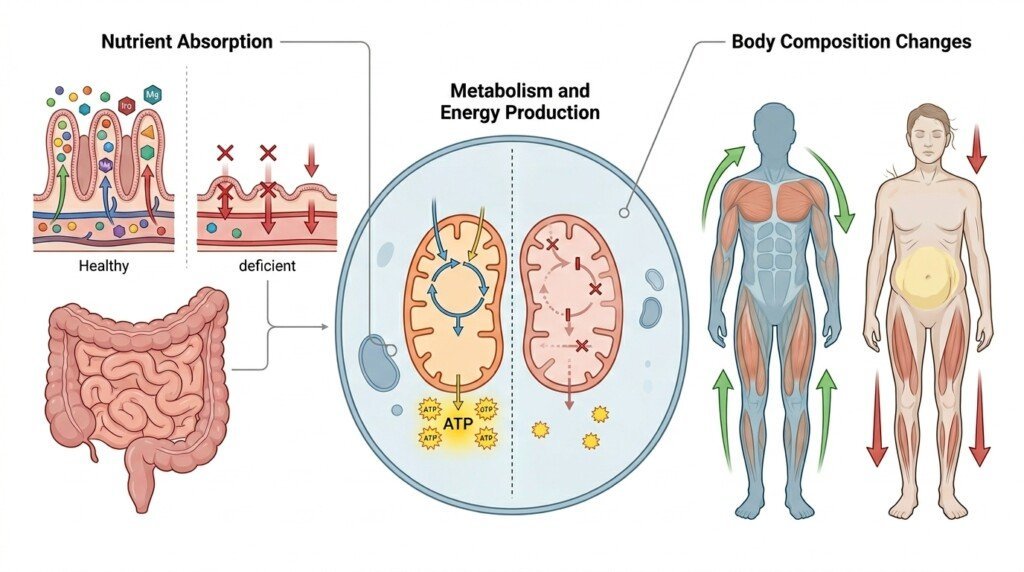
When nutrient levels become too low, the body often adapts by prioritizing essential survival functions.
While this adaptation helps keep you alive, it may also contribute to lower energy levels, reduced physical activity, poor recovery, and less efficient metabolic function.
Researchers have observed associations between certain nutrient deficiencies and:
- Increased waist circumference
- Higher body fat percentages
- Reduced insulin sensitivity
- Greater fatigue
- Poor sleep quality
It’s important to understand the difference between association and causation.
A vitamin deficiency does not automatically cause belly fat.
However, a deficiency may create conditions that make healthy weight management more difficult.
This is why correcting nutritional gaps can sometimes support overall health and body composition goals.
Why Nutrients Matter More Than Many People Realize
Most discussions about weight loss focus on calories.
Calories certainly matter.
But calories are only one piece of the equation.
Your body must also efficiently process food, regulate hormones, produce energy, recover from exercise, and maintain healthy metabolic function.
These processes depend heavily on nutrient availability.
Imagine trying to build a house without enough tools.
The work can still be completed, but progress becomes slower and more difficult.
The same principle applies to the human body.
Without adequate vitamins and minerals, many systems simply cannot perform at their best.
This is one reason nutrient status has become an increasingly important topic within modern health research.
Vitamin D and Belly Fat
Vitamin D is one of the most commonly discussed nutrients in weight management conversations.
Often called the sunshine vitamin, it is produced when the skin is exposed to sunlight.
Unfortunately, vitamin D deficiency has become extremely common.
Many people spend most of their day indoors.
Others live in regions where sunlight exposure is limited during parts of the year.
As a result, vitamin D levels can gradually decline.

Why Vitamin D Matters
Vitamin D influences several important functions within the body.
These include:
- Immune regulation
- Bone health
- Muscle function
- Hormonal activity
- Metabolic processes
Researchers have repeatedly observed that individuals carrying excess abdominal fat often have lower vitamin D levels compared to those with healthier body compositions.
This does not prove that low vitamin D causes belly fat.
However, the relationship is significant enough that researchers continue to investigate it.
Vitamin D and Metabolic Health
Some studies suggest that adequate vitamin D levels may support healthier metabolic function.
Healthy metabolism influences how efficiently the body uses energy and regulates body weight.
When vitamin D levels are low, these processes may not operate as effectively as they should.
Who Is Most Likely to Be Deficient?
Vitamin D deficiency is more common among:
- Older adults
- Individuals with limited sun exposure
- People with darker skin tones
- Individuals carrying excess body weight
- Those who spend most of the day indoors
Natural Sources of Vitamin D
Food sources include:
- Salmon
- Sardines
- Egg yolks
- Fortified dairy products
- Fortified cereals
Regular sunlight exposure may also help support healthy vitamin D levels when appropriate and safe.
Magnesium and Belly Fat
Magnesium may be one of the most underrated nutrients involved in overall health.
This essential mineral participates in hundreds of biochemical reactions throughout the body.
Despite its importance, many adults fail to consume enough magnesium on a regular basis.

Why Magnesium Is Important
Magnesium helps support:
- Energy production
- Muscle function
- Sleep quality
- Blood sugar regulation
- Nervous system balance
Each of these areas may indirectly influence body composition and weight management.
Magnesium and Sleep Quality
Sleep is often overlooked during weight loss discussions.
Yet poor sleep has been associated with:
- Increased hunger
- Stronger cravings
- Reduced energy levels
- Higher calorie intake
Magnesium plays a role in relaxation and may support healthy sleep patterns.
Better sleep can make healthy eating habits easier to maintain over time.
Magnesium and Stress
Chronic stress can affect eating behaviors and lifestyle choices.
Many people eat differently when stressed.
They may consume more convenience foods, snack more frequently, or struggle with portion control.
Magnesium helps support healthy nervous system function and stress management.
Magnesium and Blood Sugar
Researchers have also explored magnesium’s role in glucose metabolism and insulin sensitivity.
Healthy blood sugar regulation may contribute to more stable energy levels and fewer extreme hunger fluctuations.
For readers interested in a deeper examination of this topic, our guide on magnesium for weight loss explores the research in greater detail.
Natural Sources of Magnesium
Excellent food sources include:
- Pumpkin seeds
- Almonds
- Cashews
- Spinach
- Black beans
- Dark chocolate
B Vitamins and Weight Management
The B-vitamin family is often referred to as the body’s energy support system.
These vitamins help convert food into usable energy.
Without adequate levels, the body may struggle to efficiently process nutrients.

Key B Vitamins
Important members of the B-vitamin family include:
- Vitamin B1 (Thiamine)
- Vitamin B2 (Riboflavin)
- Vitamin B3 (Niacin)
- Vitamin B6
- Vitamin B12
- Folate
Each performs unique functions, but together they support energy metabolism.
B Vitamins and Energy Production
When people experience persistent fatigue, they often become less physically active.
Lower activity levels can make maintaining a healthy body composition more challenging.
Because B vitamins help support energy production, adequate intake remains important for overall wellness.
Vitamin B12 and Weight Management
Vitamin B12 receives particular attention because deficiency can contribute to fatigue and low energy levels.
People following vegetarian or vegan diets may be at increased risk because B12 is found primarily in animal products.
Folate and Metabolic Health
Folate supports cellular function and DNA synthesis.
Like other B vitamins, it contributes to overall metabolic processes rather than directly targeting fat loss.
Food Sources of B Vitamins
Good sources include:
- Lean meats
- Eggs
- Fish
- Dairy products
- Legumes
- Whole grains
- Leafy green vegetables
Zinc and Metabolism
Zinc is another nutrient that often receives less attention than it deserves.
Although only small amounts are required, zinc supports numerous biological functions.
Roles of Zinc
Zinc contributes to:
- Immune health
- Cellular repair
- Hormone production
- Metabolic regulation
These functions help support overall health and wellness.
Zinc and Body Composition
Researchers continue studying the relationship between zinc status and metabolic health.
While zinc should not be viewed as a belly fat solution, maintaining adequate levels may help support healthy bodily function.
Food Sources of Zinc
Foods rich in zinc include:
- Oysters
- Beef
- Pumpkin seeds
- Chickpeas
- Lentils
- Cashews
Can Taking More Vitamins Speed Up Fat Loss?
One of the biggest misconceptions in the nutrition world is the belief that if a little is good, more must be better.
This is rarely true.
Vitamins help correct deficiencies.
They do not override biology.
Taking excessive amounts of vitamins does not automatically lead to greater fat loss.
In some cases, excessive supplementation may even create health concerns.
The goal should always be achieving adequate nutrient intake rather than chasing megadoses.
Healthy nutrition focuses on balance, not extremes.
How to Get These Nutrients Naturally
Whole foods remain the best foundation for nutritional health.
A balanced eating pattern provides vitamins, minerals, fiber, antioxidants, and countless beneficial compounds working together.
Focus on including:
- Vegetables
- Fruits
- Lean proteins
- Whole grains
- Nuts and seeds
- Legumes
These foods help provide the nutrients discussed throughout this article while supporting overall health.
Although supplements can be useful in certain situations, they should not replace a nutrient-rich diet.
For those exploring additional strategies beyond vitamins alone, our guide to the best supplement for belly fat discusses other ingredients commonly associated with abdominal fat support.

Final Thoughts
There is no single vitamin responsible for belly fat reduction.
No nutrient can selectively target abdominal fat and make it disappear.
However, vitamins play critical roles in the systems that influence metabolism, energy production, sleep quality, blood sugar regulation, recovery, and overall health.
Vitamin D, magnesium, B vitamins, and zinc are among the most important nutrients commonly discussed in relation to weight management.
If deficiencies exist, correcting them may help remove obstacles that make healthy fat loss more difficult.
The most effective approach is not searching for a miracle vitamin.
It is creating an environment where your body has everything it needs to function at its best through proper nutrition, healthy habits, regular activity, and long-term consistency.
FAQ
1. What is the best vitamin for belly fat?
There is no single best vitamin for belly fat. However, vitamin D, magnesium, B vitamins, and zinc are commonly studied because they support metabolism, energy production, blood sugar regulation, and overall health.
2. Can vitamin deficiencies make belly fat harder to lose?
Potentially. Nutrient deficiencies may affect energy levels, sleep quality, metabolic health, and physical activity, all of which can influence weight management and body composition.
3. Does vitamin D help reduce belly fat?
Vitamin D does not directly burn belly fat. However, maintaining healthy vitamin D levels may support metabolic health and overall wellness, which can contribute to long-term weight management.
4. Is magnesium good for weight loss?
Magnesium supports several processes related to weight management, including sleep quality, stress regulation, and blood sugar balance. These factors may indirectly support healthy fat loss efforts.
5. Should I take vitamin supplements to lose belly fat?
Supplements may help if you have a nutrient deficiency, but they should not replace a balanced diet, regular exercise, and healthy lifestyle habits. It’s best to focus on meeting nutrient needs through food whenever possible.
6. What foods naturally provide these vitamins and minerals?
Foods such as fatty fish, eggs, leafy greens, legumes, nuts, seeds, whole grains, and lean proteins provide many of the nutrients discussed in this article.
7. Can taking more vitamins speed up fat loss?
No. Taking excessive amounts of vitamins does not increase fat loss and may even cause health problems. The goal is adequate intake, not megadosing.
Disclaimer:
This post may contain affiliate links. If you purchase through them, we may earn a small commission at no extra cost to you. Also, this content is for informational purposes only and does not substitute professional medical advice.