How to Measure Visceral Fat at Home? 7 Practical Methods
How to measure visceral fat is one of the most common questions people ask after learning about the health risks of internal belly fat. Unlike the fat you can pinch beneath your skin, visceral fat is hidden deep inside your abdomen, surrounding important organs such as the liver, stomach, and intestines. Because it isn’t visible, many people wonder whether there’s a reliable way to estimate their visceral fat level without expensive medical tests.
The good news is that while no home method can measure visceral fat with complete accuracy, several practical tools can help you estimate your risk. Simple measurements like your waist circumference, waist-to-height ratio, and body composition can provide valuable clues about whether you may be carrying excess visceral fat. These methods are inexpensive, easy to perform, and useful for tracking changes over time.
Medical imaging techniques such as MRI and CT scans remain the gold standard for measuring visceral fat, but they are rarely necessary for routine health monitoring. For most people, combining a few simple home measurements provides enough information to understand their overall risk and determine whether further evaluation may be helpful.
In this guide, you’ll learn how to measure visceral fat at home using seven practical methods, understand the advantages and limitations of each approach, discover which medical tests provide the most accurate results, and learn when professional testing may be worth considering.
What Is Visceral Fat?
Before learning how to measure visceral fat, it’s important to understand what makes it different from other types of body fat.
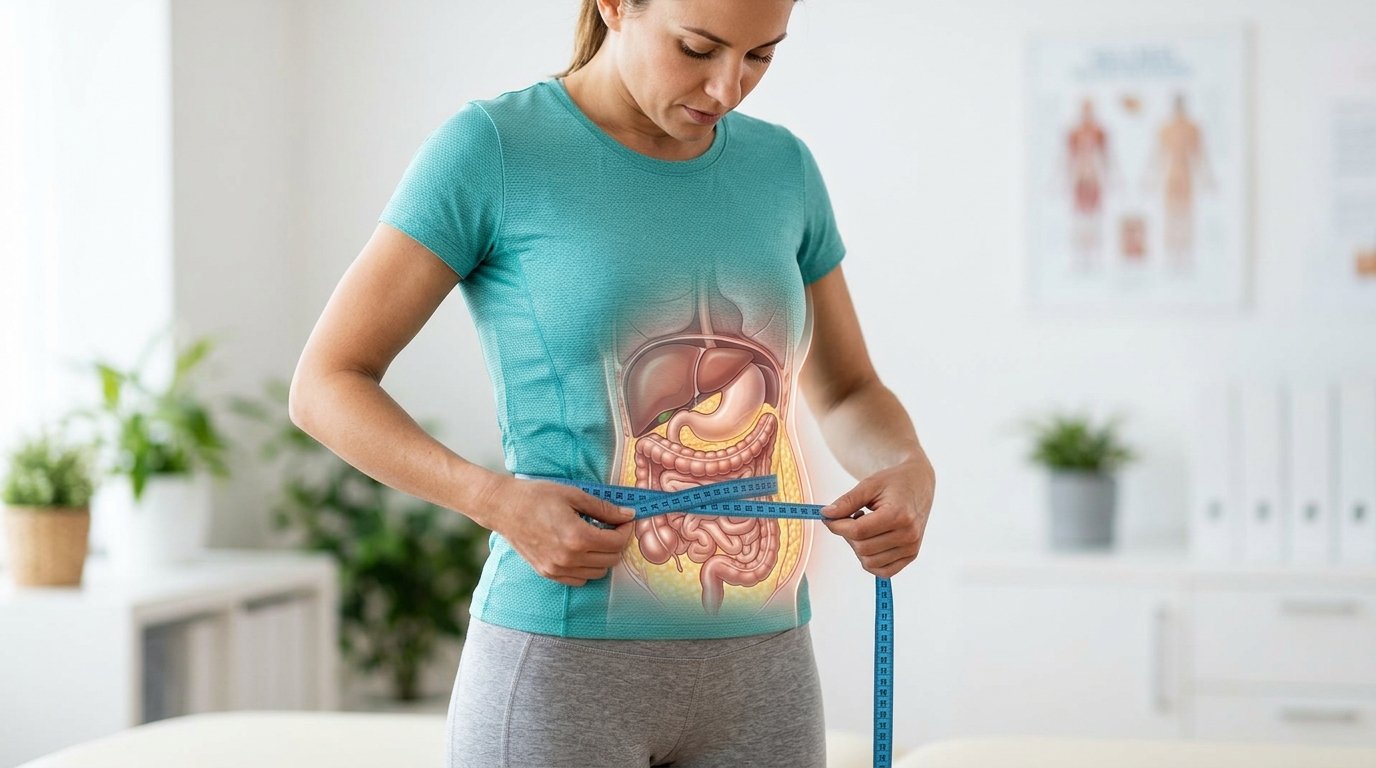
Visceral fat is stored deep inside the abdominal cavity, where it surrounds organs such as the liver, pancreas, stomach, and intestines. Unlike subcutaneous fat, which sits directly beneath the skin, visceral fat cannot be pinched or seen from the outside.
A small amount of visceral fat is completely normal. It cushions your organs and helps protect them from physical impact. Problems begin when visceral fat accumulates beyond healthy levels.
Excess visceral fat is associated with several health conditions because it is metabolically active. It releases hormones and inflammatory substances that may influence blood sugar regulation, cholesterol levels, blood pressure, and overall metabolic health.
One challenge is that visceral fat often develops gradually without causing obvious symptoms. Some people have relatively flat stomachs but still carry unhealthy amounts of internal fat. Others may have larger waistlines due primarily to subcutaneous fat rather than visceral fat.
Understanding your visceral fat level provides more useful health information than relying on body weight alone.
For a complete explanation of why this type of fat matters, see our guide on Visceral Fat.
Why Should You Measure Visceral Fat?
Many people monitor their weight regularly but never think about where their body stores fat.
Two people may weigh exactly the same and have the same Body Mass Index (BMI), yet one may carry significantly more visceral fat than the other. This difference can affect long-term health more than body weight alone.
Measuring visceral fat can help you:
- Estimate your overall metabolic health
- Identify potential health risks earlier
- Track changes over time
- Monitor improvements in body composition
- Have more informed discussions with your healthcare provider
Unlike the bathroom scale, visceral fat measurements focus on fat distribution rather than total body weight.
This is particularly important because abdominal fat is more closely linked with health risks than fat stored in other parts of the body.
Rather than obsessing over daily weight fluctuations, monitoring your waist size and body composition often provides a clearer picture of your overall progress.
If you’re working toward healthier long-term habits, our article on Weight Loss Habits explains why tracking meaningful health markers often produces better results than focusing only on the number on the scale.
Can You Measure Visceral Fat at Home?
The simple answer is yes, but only indirectly.
There is currently no home device that can directly measure visceral fat with the same precision as medical imaging.
Instead, home methods estimate your likelihood of carrying excess visceral fat by evaluating measurements that are strongly associated with internal fat accumulation.
Using several methods together generally provides a better picture than relying on a single measurement.
Method 1: Measure Your Waist Circumference
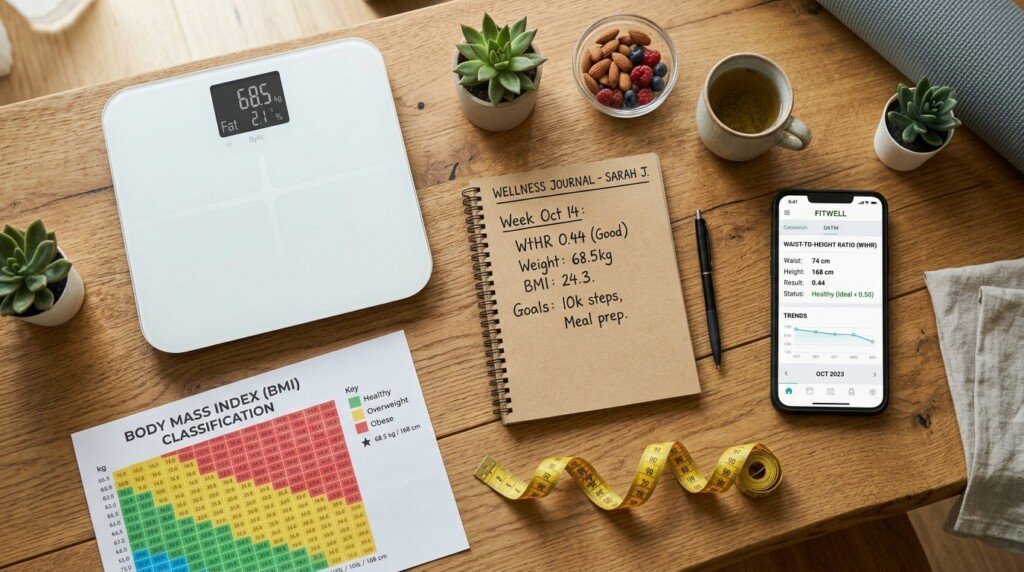
Waist circumference is one of the simplest and most widely recommended ways to estimate abdominal fat.
To measure correctly:
- Stand upright.
- Relax your stomach.
- Place a flexible measuring tape just above your hip bones.
- Breathe out normally.
- Record the measurement without pulling the tape tightly.
A larger waist circumference generally indicates a higher likelihood of carrying excess visceral fat.
The advantage of this method is its simplicity. It requires only a measuring tape and takes less than a minute.
However, waist circumference cannot distinguish between visceral fat and subcutaneous fat. It should be viewed as an estimate rather than a diagnosis.
Method 2: Calculate Your Waist-to-Height Ratio
Many researchers believe waist-to-height ratio offers a more meaningful assessment than waist circumference alone.
The calculation is simple:
Waist circumference ÷ Height
A commonly recommended guideline is to keep your waist measurement below half of your height.
For example:
- Height: 170 cm
- Waist: 82 cm
- Ratio: 0.48
This method accounts for differences in body size and is often considered more informative than waist circumference by itself.
Method 3: Check Your Body Mass Index (BMI)
Body Mass Index compares your height and weight to estimate whether your body weight falls within a healthy range.
Although BMI cannot measure visceral fat directly, higher BMI values often increase the likelihood of excess abdominal fat.
BMI works well for population studies but has important limitations.
For example, muscular individuals may have elevated BMI despite having low body fat.
Similarly, some people with normal BMI still carry unhealthy amounts of visceral fat.
Because of these limitations, BMI should always be interpreted alongside other measurements.
Method 4: Use Smart Scales
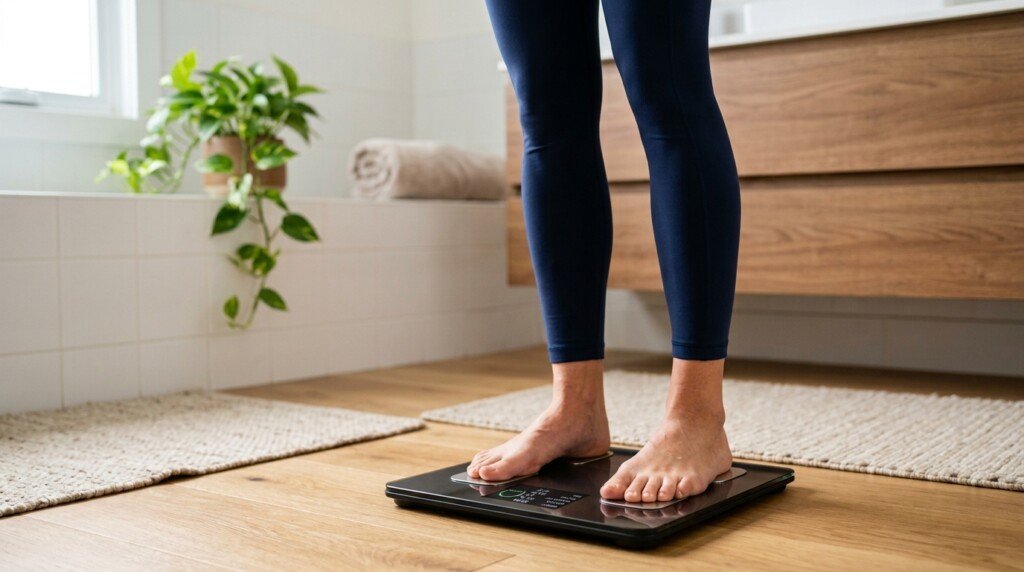
Many modern smart scales estimate body composition using bioelectrical impedance analysis.
Some devices even provide a “visceral fat score.”
These scales work by sending a very small electrical current through the body and estimating body composition based on electrical resistance.
Although convenient, their visceral fat estimates are only approximations.
Results may vary depending on:
- Hydration
- Recent meals
- Exercise
- Time of day
Smart scales are generally more useful for tracking long-term trends than determining your exact visceral fat level.
Method 5: Use an Online Visceral Fat Calculator
Another practical way to estimate visceral fat at home is by using a visceral fat calculator. These tools typically ask for information such as your age, sex, height, weight, and waist circumference to estimate your level of abdominal fat.
While they cannot directly measure visceral fat, calculators combine several body measurements that are associated with fat distribution.
The biggest advantage of these calculators is convenience. They are free, easy to use, and can provide a general estimate within minutes.
However, it’s important to understand their limitations.
A calculator cannot account for factors such as muscle mass, genetics, body composition, or where your body naturally stores fat. Because of this, the results should be viewed as an estimate rather than a medical diagnosis.
If you use a visceral fat calculator, use the same measurements each time so you can track changes consistently.
Method 6: Monitor Your Waist Size Over Time
One measurement rarely tells the whole story.
A much better approach is to monitor your waist size every few weeks under the same conditions.
For the most consistent results:
- Measure at the same time of day.
- Measure before eating if possible.
- Use the same measuring tape.
- Measure in the same location around your waist.
- Record your measurements in a notebook or health app.
Tracking trends over several months provides far more useful information than comparing measurements taken only once.
Even a gradual reduction in waist circumference can indicate that your body composition is improving.
This method is especially useful because it focuses on long-term progress instead of daily fluctuations.
If you’re building healthier long-term habits, our guide on Sustainable Weight Loss explains why consistency matters far more than rapid changes.
Method 7: Combine Multiple Measurements
The most reliable home assessment comes from combining several methods instead of relying on just one.
For example, you might monitor:
- Waist circumference
- Waist-to-height ratio
- BMI
- Smart scale measurements
- Body weight
- Progress photos
- Clothing fit
Looking at these measurements together provides a more complete picture of your body composition.
This approach reduces the chance of drawing incorrect conclusions from a single number.
How Accurate Are Smart Scales for Visceral Fat?
Smart scales have become increasingly popular because they estimate several body composition measurements in just a few seconds.
Many models display:
- Body fat percentage
- Muscle mass
- Water percentage
- Bone mass
- Visceral fat level
Although these features appear impressive, it is important to understand how the technology works.
Most smart scales use bioelectrical impedance analysis (BIA).
A weak electrical current travels through your body. Because fat, muscle, and water conduct electricity differently, the device estimates body composition using prediction algorithms.
This means smart scales do not actually see or measure visceral fat.
Instead, they estimate visceral fat based on statistical models developed from large groups of people.
What Affects Smart Scale Accuracy?
Several factors can influence your results.
These include:
- Hydration level
- Recent food intake
- Exercise
- Alcohol consumption
- Time of day
- Menstrual cycle
- Skin temperature
Because these factors change throughout the day, your visceral fat score may also fluctuate.
For the most consistent results:
- Measure first thing in the morning.
- Use the scale before breakfast.
- Measure under similar conditions each time.
Should You Trust the Number?
Smart scales should not be viewed as diagnostic tools.
Instead, they work best for monitoring long-term trends.
If your estimated visceral fat score gradually decreases over several months while your waist circumference also declines, this likely reflects positive changes in body composition.
However, a single reading should never be interpreted as proof that you have too much or too little visceral fat.
What Waist Measurement Indicates High Visceral Fat?
Waist circumference is one of the simplest indicators healthcare professionals use when assessing abdominal obesity.
Although it cannot directly measure visceral fat, larger waist measurements are associated with a higher likelihood of internal fat accumulation.
General guidelines often suggest increased health risk when waist circumference exceeds:
- Men: More than 40 inches (102 cm)
- Women: More than 35 inches (88 cm)
These values are commonly used for many adult populations, although recommended cutoffs may differ slightly depending on ethnicity and healthcare guidelines.
Remember that waist circumference should always be interpreted alongside other health measurements.
A person with a waist below these values may still have elevated visceral fat, while someone above them may carry a larger proportion of subcutaneous fat.
This is why waist circumference should be viewed as a screening tool rather than a diagnosis.
Why Waist-to-Height Ratio May Be Better
Many researchers now recommend paying attention to waist-to-height ratio because it considers overall body size.
A simple rule many healthcare professionals use is:
Keep your waist circumference below half your height.
For example:
| Height | Recommended Waist Below |
|---|---|
| 160 cm | 80 cm |
| 170 cm | 85 cm |
| 180 cm | 90 cm |
Although this approach is not perfect, it provides a useful estimate for many adults.
Which Medical Tests Measure Visceral Fat?
Home measurements provide estimates, but medical imaging offers much greater accuracy.
Several clinical tests can measure visceral fat directly.
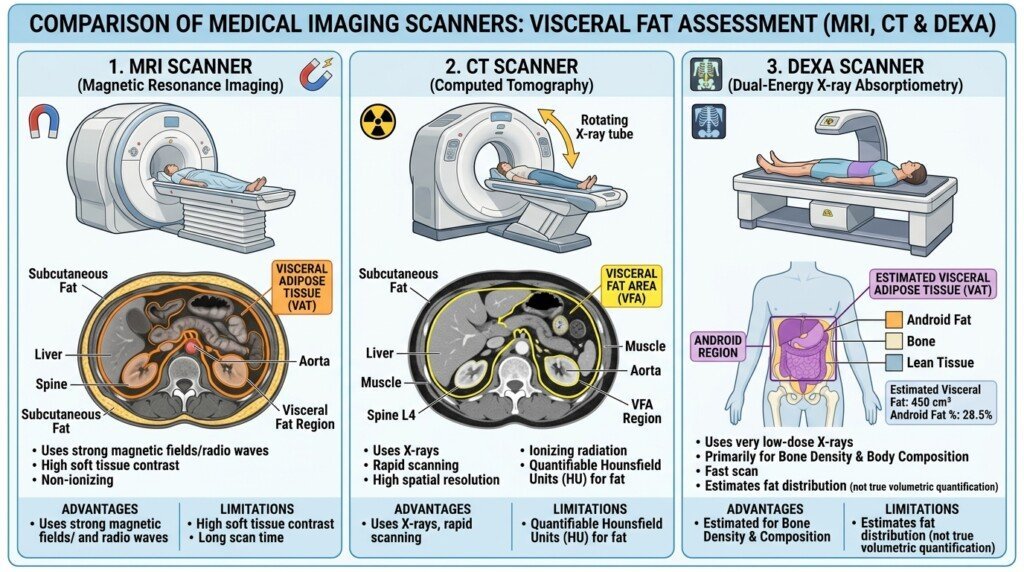
CT Scan
A CT scan uses X-rays to create detailed cross-sectional images of the body.
Because the images clearly distinguish fat from other tissues, CT scans provide one of the most accurate measurements of visceral fat.
However, CT scans involve radiation exposure and are generally reserved for medical evaluation rather than routine screening.
MRI
Magnetic Resonance Imaging uses magnetic fields instead of radiation.
MRI provides extremely detailed images and accurately measures visceral fat without exposing patients to X-rays.
The main disadvantages are cost and availability.
MRI is considered one of the best methods for measuring visceral fat, but it is usually unnecessary for healthy individuals simply trying to monitor their progress.
DEXA Scan
DEXA scans were originally developed to assess bone density.
Many modern DEXA systems also provide detailed body composition analysis.
They estimate:
- Total body fat
- Lean muscle mass
- Fat distribution
Although DEXA does not measure visceral fat as directly as CT or MRI, it provides valuable information about overall body composition and abdominal fat.
Because of its relatively low radiation exposure and detailed analysis, DEXA has become increasingly popular in sports medicine and preventive healthcare.
When Should You Get Professional Testing?
Most people do not need advanced imaging to estimate visceral fat.
Simple home measurements are usually sufficient for monitoring overall health.
However, professional testing may be appropriate if:
- Your healthcare provider recommends further evaluation.
- You have multiple cardiovascular risk factors.
- You have unexplained metabolic abnormalities.
- You require detailed body composition analysis for medical reasons.
- You are participating in clinical research or specialized treatment programs.
For most healthy adults, regularly monitoring waist circumference and maintaining healthy lifestyle habits is far more practical than scheduling advanced imaging tests.

Frequently Asked Questions
1. Can you measure visceral fat without a scan?
Yes. While only imaging tests can measure visceral fat directly, waist circumference, waist-to-height ratio, BMI, and smart scales can estimate your risk at home.
2. Are smart scales accurate for visceral fat?
They provide estimates rather than direct measurements. They are best used to monitor long-term trends instead of diagnosing visceral fat levels.
3. Is waist circumference better than BMI?
Waist circumference often provides more useful information about abdominal fat, especially when combined with BMI and waist-to-height ratio.
4. Which medical test is the most accurate?
MRI and CT scans are generally considered the most accurate methods for measuring visceral fat.
5. How often should you measure visceral fat?
For most people, checking waist circumference and other home measurements every four to eight weeks is sufficient to monitor meaningful changes.
Final Thoughts
Learning how to measure visceral fat does not require expensive equipment or complicated medical testing. Although no home method can directly measure the fat surrounding your organs, practical tools such as waist circumference, waist-to-height ratio, BMI, smart scales, and visceral fat calculators can provide valuable insights into your overall health.
The key is to focus on long-term trends rather than a single measurement. Combining several methods gives you a clearer picture of your body composition and helps you monitor changes more effectively over time.
If your measurements consistently indicate a higher risk of excess visceral fat or if you have additional health concerns, discussing the results with your healthcare provider can help determine whether professional testing is appropriate. For most people, consistent monitoring and healthy lifestyle habits remain the most practical approach to protecting long-term metabolic health.
Disclaimer:
This post may contain affiliate links. If you purchase through them, we may earn a small commission at no extra cost to you. Also, this content is for informational purposes only and does not substitute professional medical advice.
Ready to Start Your Journey?
Use our free 7-in-1 Weight Loss Toolkit to calculate your numbers and build your plan in minutes.
Open Free Tools →