
Does Insulin Resistance Cause Belly Fat? Here’s What the Research Says
Insulin Resistance Belly Fat is one of the most searched topics by people who struggle with stubborn weight around the waist. Many wonder whether insulin resistance causes belly fat, whether excess abdominal fat leads to insulin resistance, or whether both conditions develop together. The answer is more complex than a simple yes or no.
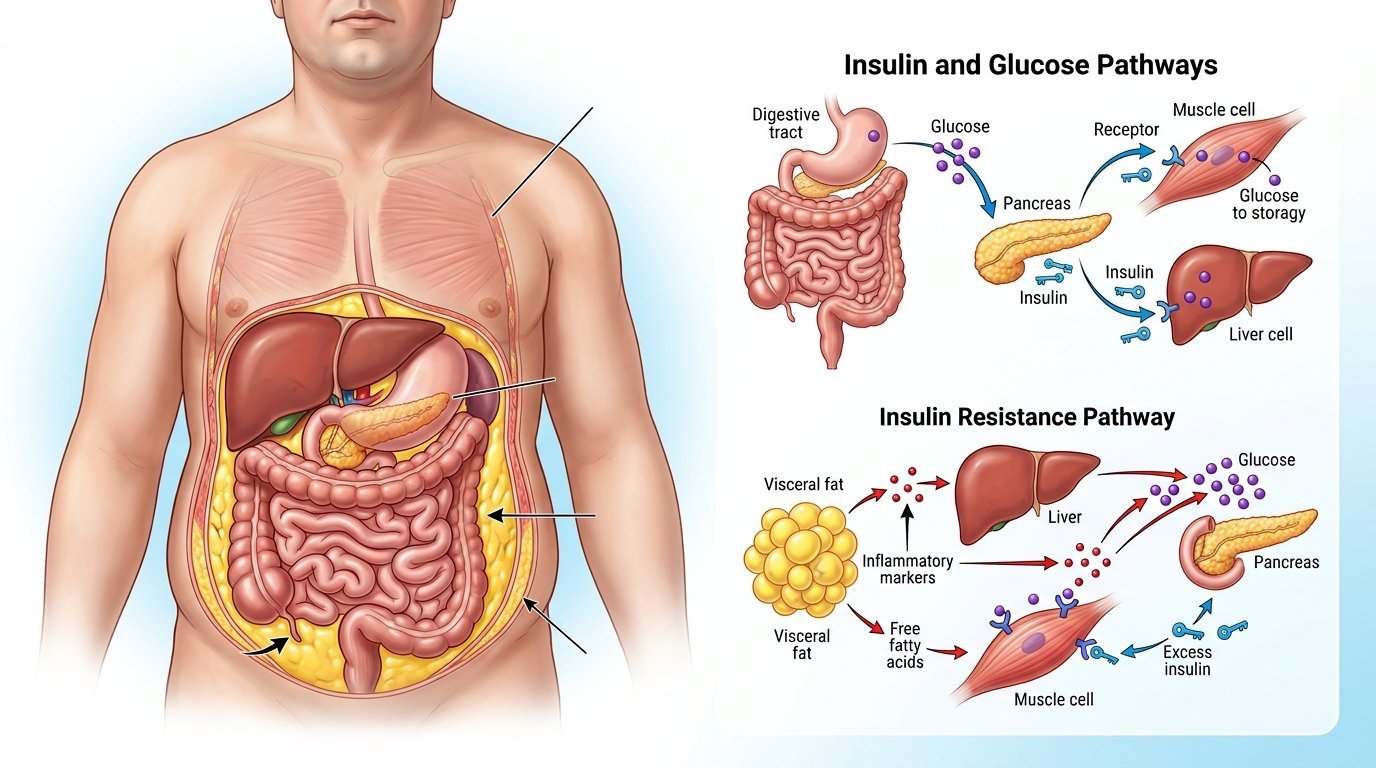
Insulin is a hormone produced by the pancreas that helps move glucose from your bloodstream into your body’s cells, where it is used for energy. When those cells become less responsive to insulin, the pancreas produces more of the hormone to compensate. This condition, known as insulin resistance, can affect the way your body stores and uses energy over time.
Research shows a strong relationship between insulin resistance and abdominal obesity, particularly the accumulation of visceral fat. Unlike the fat just beneath your skin, visceral fat surrounds important organs such as the liver, pancreas, and intestines. This type of fat is metabolically active and has been linked to inflammation, metabolic syndrome, and a higher risk of developing type 2 diabetes and cardiovascular disease.
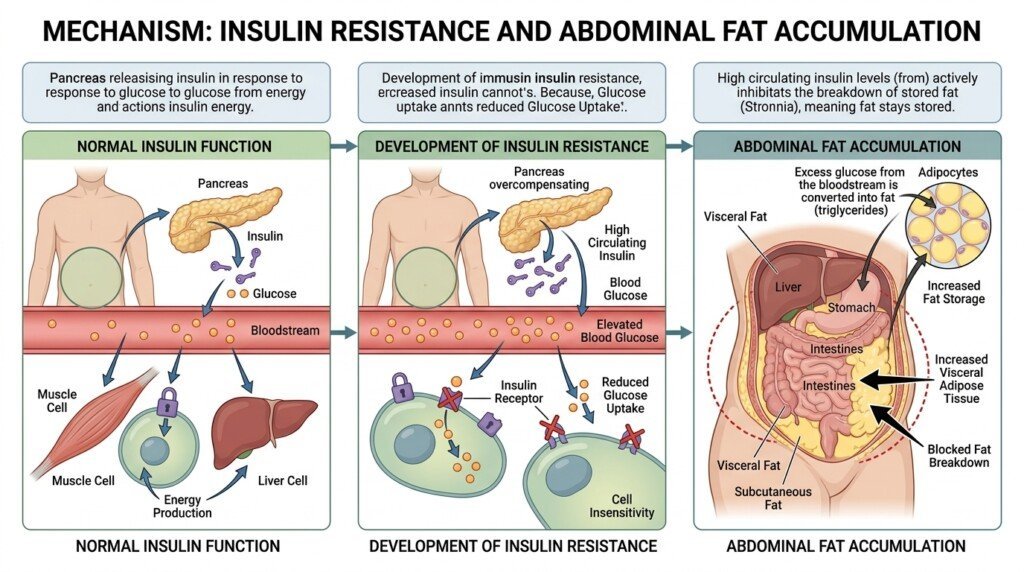
One of the reasons this topic causes confusion is that insulin resistance and belly fat often reinforce one another. Excess visceral fat can reduce insulin sensitivity, while elevated insulin levels may encourage additional fat storage around the abdomen. Instead of one condition always causing the other, they often develop together in a cycle that gradually worsens if healthy lifestyle habits are not maintained.
The encouraging news is that this cycle can often be improved. Healthy eating, regular physical activity, quality sleep, stress management, and gradual reductions in visceral fat have all been shown to support better insulin sensitivity.
In this article, you’ll learn what research says about insulin resistance belly fat, why insulin influences fat storage, whether belly fat is always a sign of insulin resistance, and which lifestyle habits help improve both conditions naturally.
Does Insulin Resistance Cause Belly Fat?
The short answer is yes, but not by itself.
Insulin resistance is one of several factors that may contribute to increased fat storage around the abdomen. Genetics, age, physical activity, sleep, stress, overall calorie intake, and body composition also influence where your body stores fat.
To understand this relationship, it helps to know how insulin normally works.
After you eat carbohydrates, your digestive system breaks them down into glucose. As glucose enters your bloodstream, your pancreas releases insulin. Insulin allows glucose to move into your cells where it can be used for energy or stored for later use.
When your cells become resistant to insulin, your pancreas responds by producing larger amounts of the hormone.
For many years, blood sugar may remain relatively normal because your pancreas is working harder.
However, consistently elevated insulin levels may influence how your body stores excess energy.
This is one reason researchers continue studying the connection between insulin resistance and abdominal obesity.
Is Insulin Resistance the Only Cause of Belly Fat?
No.
Many people develop belly fat without significant insulin resistance.
Likewise, some people have insulin resistance despite appearing relatively lean.
Belly fat develops because of multiple interacting factors, including:
- Genetics
- Aging
- Hormones
- Physical inactivity
- Long-term calorie surplus
- Poor sleep
- Chronic stress
- Excess visceral fat
- Insulin resistance
Rather than searching for one single cause, healthcare professionals usually evaluate a person’s overall metabolic health.
Understanding Causes of Insulin Resistance helps explain why abdominal fat and insulin resistance frequently occur together.
Why Does Insulin Promote Fat Storage?
Insulin is often misunderstood as a “fat storage hormone.”
In reality, insulin performs many essential functions that keep your body alive.
Its primary job is to regulate blood sugar by helping glucose move into cells.
Without insulin, glucose would remain in the bloodstream instead of providing energy.
Insulin Helps Store Energy
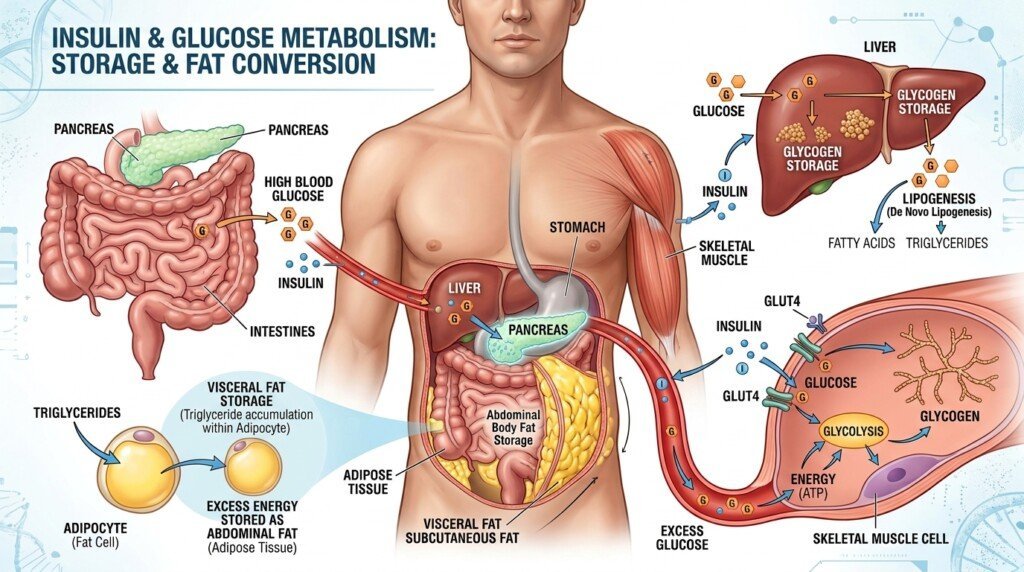
Whenever you consume more energy than your body immediately needs, insulin helps store that excess energy.
Some glucose becomes glycogen inside the liver and muscles.
When glycogen stores become full, additional energy may eventually be stored as body fat.
This process is completely normal.
Problems develop when insulin levels remain elevated for long periods because the body has become resistant to insulin.
High Insulin Levels and Fat Storage
Researchers believe chronically elevated insulin may make fat storage more likely while making stored fat slightly more difficult to mobilize.
This does not mean insulin alone causes obesity.
Body fat still depends largely on long-term energy balance together with genetics, hormones, physical activity, and other lifestyle factors.
However, elevated insulin may contribute to an environment where abdominal fat becomes more likely to accumulate.
Why the Abdomen?
Many people with insulin resistance notice that fat accumulates around their waist rather than being distributed evenly throughout the body.
Several reasons may explain this pattern.
Abdominal fat contains many insulin-sensitive fat cells.
Hormonal changes associated with insulin resistance may also influence where fat is stored.
In addition, visceral fat itself produces inflammatory compounds that further reduce insulin sensitivity.
This creates a cycle where insulin resistance and abdominal fat continue reinforcing one another.
Because visceral fat surrounds important organs rather than sitting beneath the skin, it has a much greater influence on metabolic health.
Understanding Visceral Fat helps explain why healthcare professionals pay close attention to waist circumference when assessing metabolic risk.
Can This Cycle Be Broken?
Fortunately, yes.
Research consistently shows that healthy lifestyle changes can gradually reduce visceral fat while improving insulin sensitivity.
Small improvements repeated consistently over time often produce meaningful long-term benefits.
Rather than trying to lower insulin through extreme diets or quick fixes, the evidence supports building sustainable habits that improve overall metabolic health.
Is Belly Fat a Sign of Insulin Resistance?
Belly fat is one of the most common physical changes associated with insulin resistance, but it should not be viewed as proof that someone has the condition.
Many people naturally carry more fat around their abdomen because of genetics, age, sex, or hormonal changes. Others may develop insulin resistance before any obvious increase in waist size occurs.
Instead of asking whether belly fat always means insulin resistance, it is more accurate to ask whether abdominal fat increases the likelihood of metabolic problems.
The answer is yes.
Healthcare professionals often pay close attention to waist circumference because it provides valuable information about overall metabolic health.
Not All Belly Fat Is the Same
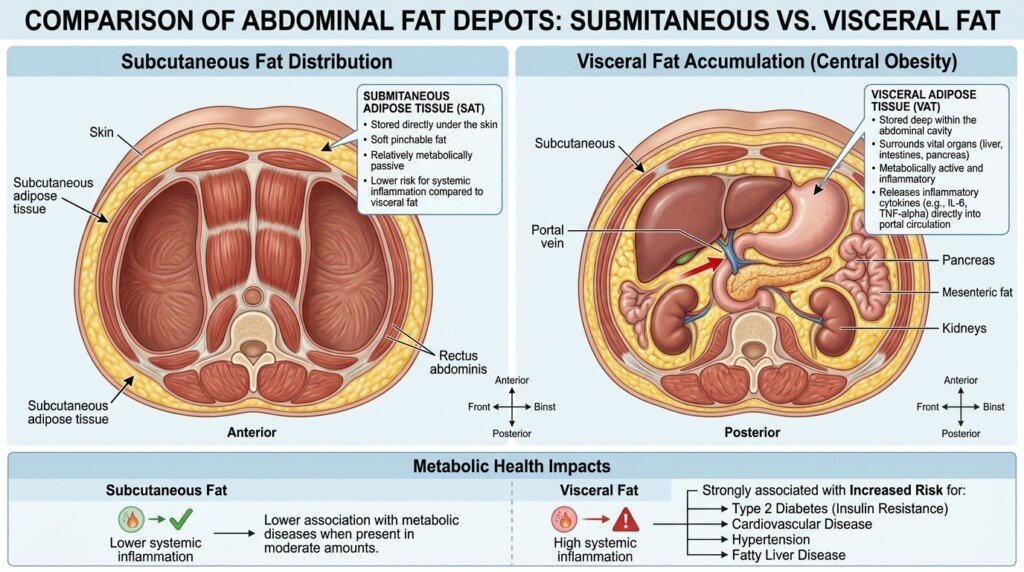
There are two main types of abdominal fat.
Subcutaneous fat sits directly beneath the skin and can usually be pinched with your fingers.
Visceral fat is stored much deeper inside the abdomen, surrounding organs such as the liver, pancreas, stomach, and intestines.
Although both contribute to waist size, visceral fat has a much stronger relationship with insulin resistance and metabolic syndrome.
Someone with a relatively small waist may still carry unhealthy amounts of visceral fat, while another person with a larger waist may have proportionally more subcutaneous fat.
This is why waist size alone cannot diagnose insulin resistance.
Other Signs Often Appear Together
When insulin resistance develops, belly fat often occurs alongside other warning signs such as:
- Increasing waist circumference
- Difficulty losing weight
- Fatigue
- Frequent hunger
- Sugar cravings
- Elevated fasting blood sugar
- Higher triglycerides
- High blood pressure
The more of these factors that appear together, the greater the reason to discuss metabolic health with a healthcare professional.
Why Waist Circumference Matters
Many doctors routinely measure waist circumference because it often reflects changes in visceral fat more accurately than body weight alone.
Two people may weigh exactly the same while carrying very different amounts of abdominal fat.
A gradually increasing waistline is often one of the earliest visible signs that metabolic health deserves closer attention.
This relationship between abdominal fat and blood sugar regulation is also discussed in Diabetic Belly Fat, where abdominal obesity is explained in the context of metabolic disease.
Can Reducing Belly Fat Improve Insulin Sensitivity?
For many people, yes.
Research consistently shows that reducing excess abdominal fat, particularly visceral fat, is associated with improved insulin sensitivity.
This does not mean you must achieve an ideal body weight before seeing benefits.
Even modest improvements in body composition may positively affect metabolic health.
Why Visceral Fat Matters Most
Visceral fat is metabolically active.
Unlike fat stored beneath the skin, it releases inflammatory compounds and hormones that may interfere with normal insulin signaling.
As visceral fat decreases, many people experience improvements in:
- Fasting blood glucose
- HbA1c
- Blood pressure
- Triglycerides
- HDL cholesterol
- Waist circumference
These improvements often occur gradually rather than all at once.
Improvement Happens Inside the Body First
Many people become discouraged because they expect dramatic physical changes within a few weeks.
However, metabolic improvements often begin long before they become obvious in the mirror.
For example, someone may experience:
- Better energy
- Improved exercise performance
- Healthier blood sugar
- Lower blood pressure
while their appearance changes only slightly.
This is one reason relying only on body weight can be misleading.
Focus on Progress, Not Perfection
Reducing visceral fat does not require perfection.
Healthy improvements accumulate through consistent daily habits repeated over months.
Small reductions in waist circumference often represent meaningful improvements in metabolic health even before large amounts of weight are lost.
Which Lifestyle Changes Help?
Although insulin resistance and belly fat are closely connected, neither condition is improved by a single solution.
The strongest scientific evidence supports combining several sustainable lifestyle habits rather than relying on quick fixes.

Stay Physically Active
Regular movement helps muscles use glucose more efficiently while supporting healthy body composition.
Helpful activities include:
- Walking
- Cycling
- Swimming
- Resistance training
- Recreational sports
The most effective exercise is the one you can continue consistently.
Daily movement is often just as important as structured workouts.
Build Balanced Meals
Meals that include vegetables, lean protein, whole grains, legumes, fruits, and healthy fats provide the nutrients needed to support overall metabolic health.
Rather than eliminating entire food groups, focus on improving the overall quality of your eating pattern.
Balanced meals also help maintain steady energy throughout the day.
Prioritize Sleep
Adults generally benefit from seven to nine hours of quality sleep each night.
Poor sleep may influence:
- Appetite
- Hunger hormones
- Recovery
- Daily activity
- Blood sugar regulation
Improving sleep quality supports healthier lifestyle habits across many areas.
Manage Long-Term Stress
Although stress alone does not directly cause belly fat, chronic stress often influences behaviors that contribute to metabolic problems.
People experiencing prolonged stress may:
- Exercise less
- Sleep poorly
- Eat more highly processed foods
- Experience emotional eating
Healthy stress management supports better long-term habits.
If stress has become a regular part of your routine, Cortisol Belly Fat explains how stress hormones influence abdominal fat accumulation without oversimplifying the relationship.
Preserve Muscle Mass
Resistance training helps maintain lean muscle tissue.
Healthy muscle improves glucose use throughout the body and supports better insulin sensitivity over time.
Maintaining muscle also becomes increasingly important with age.
Be Consistent
The biggest improvements rarely come from dramatic short-term changes.
They come from small habits practiced consistently over months and years.
Long-term consistency remains one of the strongest predictors of improved metabolic health.
When Should You Be Tested?
Because insulin resistance often develops silently, many people do not discover they have it until routine blood work reveals changes in blood sugar or other metabolic markers.
Waiting until obvious symptoms appear is not always the best approach.
Early testing allows metabolic changes to be identified before they progress to prediabetes or type 2 diabetes.
You Should Consider Testing If You Have Multiple Risk Factors
Healthcare professionals may recommend evaluating your metabolic health if you have several of the following:
- Increasing waist circumference
- Excess visceral fat
- A family history of type 2 diabetes
- High blood pressure
- High triglycerides
- Low HDL cholesterol
- Prediabetes
- Persistent fatigue
- Frequent hunger
- Difficulty losing weight
Having one risk factor does not automatically mean you have insulin resistance.
However, several occurring together deserve medical attention.
Common Tests Used to Evaluate Insulin Resistance
There is no single test that diagnoses insulin resistance in every situation.
Instead, healthcare providers evaluate several pieces of information together.
Common assessments include:
- Fasting blood glucose
- HbA1c
- Lipid profile
- Blood pressure
- Waist circumference
- Body weight
- Medical history
- Family history
In some situations, fasting insulin levels or additional laboratory tests may also be recommended.
Early Detection Makes a Difference
Many people feel completely healthy while insulin resistance gradually develops.
Routine health screenings provide an opportunity to identify metabolic changes before they become more serious.
Earlier awareness also allows healthy lifestyle changes to begin sooner, often leading to better long-term outcomes.

Frequently Asked Questions
1. Does insulin resistance cause belly fat?
Insulin resistance can contribute to belly fat, particularly visceral fat, but it is rarely the only cause. Genetics, physical activity, diet, sleep, stress, hormones, and overall calorie balance also influence abdominal fat storage.
2. Is belly fat always a sign of insulin resistance?
No. Some people naturally store more fat around the abdomen without having insulin resistance. However, increasing waist circumference together with fatigue, elevated blood sugar, or abnormal cholesterol levels may indicate an increased risk of metabolic problems.
3. Can reducing belly fat improve insulin sensitivity?
Yes. Research shows that reducing excess visceral fat is associated with better insulin sensitivity, healthier blood sugar regulation, and improvements in several markers of metabolic health.
4. What lifestyle habits help reduce insulin resistance and belly fat?
The strongest evidence supports combining regular physical activity, balanced nutrition, quality sleep, stress management, maintaining muscle mass, and long-term consistency rather than relying on quick fixes.
5. When should I talk to my doctor?
You should consider speaking with a healthcare professional if you notice increasing abdominal fat together with persistent fatigue, frequent hunger, elevated blood sugar, high blood pressure, abnormal cholesterol, or if you have a family history of type 2 diabetes.
Final Thoughts
The relationship between insulin resistance belly fat is more connected than many people realize. Research suggests that insulin resistance can encourage abdominal fat storage, while excess visceral fat can further reduce insulin sensitivity. Rather than one condition always causing the other, they often reinforce each other in a cycle that gradually affects metabolic health.
The encouraging news is that this cycle is not permanent for many people. Regular physical activity, balanced nutrition, quality sleep, stress management, and gradual reductions in visceral fat can all help improve insulin sensitivity over time. These changes may also support healthier blood sugar levels, improved energy, and a smaller waist circumference.
Most importantly, avoid focusing on quick solutions. Lasting improvements usually come from consistent habits practiced over months rather than dramatic changes made for only a few weeks. By understanding how insulin resistance and belly fat are connected, you can make informed decisions that support better metabolic health for years to come.
Disclaimer:
This post may contain affiliate links. If you purchase through them, we may earn a small commission at no extra cost to you. Also, this content is for informational purposes only and does not substitute professional medical advice.
Ready to Start Your Journey?
Use our free 7-in-1 Weight Loss Toolkit to calculate your numbers and build your plan in minutes.
Open Free Tools →