

Testosterone Injections and Size: What the Science Says
Type the question does testosterone injection increase size into any search engine, and you’ll quickly find videos, advertisements, and online discussions claiming testosterone injections can dramatically increase penis size. Some people describe life-changing results, while others say nothing happened at all. With so much conflicting information, it’s easy to see why many men are unsure what to believe.
The truth is that testosterone plays a critical role in male development, but its effects depend heavily on when it acts and why treatment is being used.
Testosterone is the primary male sex hormone. It influences puberty, muscle development, bone density, libido, mood, sperm production, and many other functions throughout life. However, the hormone does not affect the body in exactly the same way during adulthood as it does during adolescence.
That difference is where most misconceptions begin.
Many people confuse natural hormone-driven development during puberty with testosterone replacement therapy (TRT) prescribed to adults with medically confirmed low testosterone levels. Although both involve testosterone, they serve very different biological purposes.
If you’re wondering whether adult growth is naturally possible, Can Penis Size Increase Naturally After Puberty? explains why normal developmental growth follows a different timeline. Likewise, if concerns are actually related to normal anatomy rather than hormones, Average Penis Size Explained: What’s Actually Normal provides useful perspective before assuming hormone therapy is the answer.
In this article, we’ll separate common myths from current medical understanding by explaining what testosterone injections can and cannot do, why some men think testosterone changes penis size, and what healthcare professionals consider before prescribing TRT.
Does injecting testosterone make you bigger?
The answer depends entirely on what you mean by “bigger.”
If the question is whether testosterone injections permanently increase penis size in healthy adult men, current evidence does not support that conclusion.
If the question is whether testosterone can increase muscle mass, improve libido, or change body composition in men with clinically low testosterone, the answer is very different.
Understanding that distinction is essential.


Testosterone has different effects at different stages of life
During puberty, testosterone helps trigger major physical changes throughout the body.
These include:
- Voice deepening
- Muscle development
- Facial and body hair growth
- Enlargement of the penis and testicles
- Sexual maturation
These changes occur because the body is still developing.
Once development is complete, testosterone’s role changes.
Rather than creating entirely new growth, testosterone primarily helps maintain normal bodily functions such as muscle strength, bone health, sexual desire, and reproductive health.
That is why adult testosterone therapy should not be viewed as restarting puberty.
TRT is designed to restore, not enhance
Testosterone replacement therapy is prescribed to men diagnosed with hypogonadism, a medical condition in which the body does not produce enough testosterone.
The purpose of treatment is to restore hormone levels into the normal physiological range.
Doctors prescribe TRT to improve symptoms such as:
- Low libido
- Fatigue
- Reduced muscle strength
- Low energy
- Mood changes
- Reduced bone density
The goal is not cosmetic enlargement.
When testosterone therapy is medically appropriate, treatment focuses on improving health and quality of life rather than increasing penis size.
Why social media creates unrealistic expectations
Videos showing dramatic “before and after” transformations often combine several changes together.
Someone beginning TRT may simultaneously:
- Start exercising regularly
- Lose body fat
- Gain muscle
- Improve sleep
- Eat a healthier diet
As overall body composition improves, confidence often increases as well.
These changes may lead someone to believe testosterone itself enlarged the penis when the visible improvements actually involve body weight, circulation, posture, or stronger erections rather than structural growth.
Why is my penis getting bigger. Is it testosterone?
This question appears surprisingly often, especially among men who have recently started hormone therapy.
The answer depends on what is actually changing.
Better erections can create the impression of increased size
One of testosterone’s recognized effects in men with clinically low hormone levels is improving sexual desire and, in some cases, erectile function.
When erections become firmer because libido and sexual function improve, the penis may appear:
- Fuller
- Firmer
- Longer during erection
- Slightly thicker during erection
This represents improved erectile quality rather than new tissue growth.
The underlying anatomy has generally not changed.
Weight loss may reveal more of the shaft
Some men beginning TRT become more physically active and improve their eating habits.
If body fat decreases around the lower abdomen and pubic area, more of the penile shaft becomes visible.
Again, this is not enlargement.
It is simply more of the existing anatomy becoming visible.
Questions about this visual effect are explored separately in Does Penis Size Change or Shrink With Age?, where body composition is discussed as one of the most common reasons men perceive changes in size.
Temporary changes should not be confused with permanent growth
Improved circulation, stronger erections, and changes in body composition can all influence appearance.
These effects should not be interpreted as evidence that testosterone injections permanently increase penile tissue in healthy adults.
That misunderstanding is responsible for many exaggerated claims shared online.
Which hormone is responsible for growth?
Many people assume testosterone alone controls every aspect of male growth.
Human development is actually much more complex.
Testosterone is the primary driver during puberty
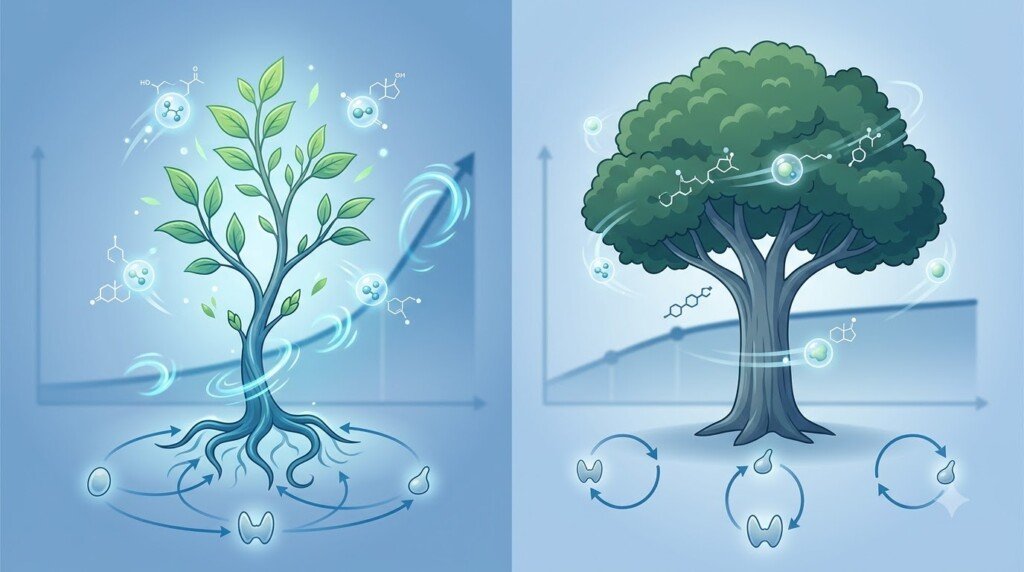
During adolescence, testosterone works together with several other hormones to coordinate physical development.
These hormones help regulate:
- Bone growth
- Muscle development
- Sexual maturation
- Reproductive organ development
Because puberty is a unique developmental stage, tissues remain responsive to hormonal signals in ways that are no longer possible after normal development has finished.
That biological window explains why testosterone contributes to penile growth during puberty but does not produce the same effect decades later.
Growth hormone has a different role
Another common misconception involves growth hormone.
Growth hormone supports normal childhood growth, metabolism, and tissue repair.
It is not responsible for enlarging the adult penis.
Each hormone has its own specific role within the endocrine system.
Assuming one hormone can reproduce every aspect of puberty oversimplifies how the human body actually develops.
Hormones work together
The endocrine system functions as an interconnected network.
Testosterone interacts with signals from the brain, pituitary gland, testes, thyroid, adrenal glands, and many other organs.
This is one reason doctors evaluate hormone disorders carefully rather than prescribing testosterone based on symptoms alone.
Low energy, fatigue, decreased libido, and reduced muscle strength can result from several medical conditions besides low testosterone.
Proper diagnosis helps ensure the underlying cause is treated appropriately.
Why self-diagnosis can be misleading
Online symptom checklists often encourage people to assume they have low testosterone after experiencing common problems such as tiredness or reduced motivation.
These symptoms are not unique to hormone deficiency.
They may also result from:
- Poor sleep
- Chronic stress
- Depression
- Obesity
- Diabetes
- Thyroid disorders
- Certain medications
Because hormone balance is complex, healthcare professionals rely on medical history, physical examination, and laboratory testing before diagnosing hypogonadism or considering TRT.
What does TRT actually change in the body?
One of the biggest misconceptions about testosterone replacement therapy is that it transforms every aspect of the male body in the same way puberty once did.
That is not how TRT works.
For men with medically confirmed low testosterone, the goal of treatment is to restore hormone levels to a healthy range. It is designed to improve symptoms caused by testosterone deficiency, not to recreate adolescent development.
Understanding what TRT is intended to change can help set realistic expectations before treatment begins.
Muscle mass and body composition
One of the most noticeable effects of testosterone is its influence on muscle protein synthesis.
Men with low testosterone may experience:
- Reduced muscle strength
- Difficulty maintaining lean muscle
- Increased body fat
- Slower recovery after exercise
When testosterone deficiency is properly treated under medical supervision, many men notice gradual improvements in muscle mass and physical performance, particularly when combined with resistance training and good nutrition.
These changes reflect healthier hormone levels rather than an artificial enhancement.
Libido and sexual function
Testosterone plays an important role in sexual desire.
Men with hypogonadism often report:
- Reduced interest in sex
- Lower sexual motivation
- Fewer spontaneous erections
- Reduced overall sexual satisfaction
Restoring testosterone to an appropriate range may improve libido and, in some individuals, support better erectile function.
However, it is important to understand that improved erections are different from permanent penile enlargement.
A stronger erection may make the penis appear fuller, but this should not be mistaken for structural growth.
Mood, energy, and overall well-being
Low testosterone can also affect emotional health.
Some men experience:
- Persistent fatigue
- Low motivation
- Difficulty concentrating
- Irritability
- Depressed mood
For individuals whose symptoms are directly related to testosterone deficiency, properly managed TRT may improve energy levels and overall quality of life.
That does not mean testosterone is a treatment for every case of fatigue or depression. Many other medical and psychological conditions can produce similar symptoms.
This is why physicians evaluate the whole person rather than focusing on a single symptom.
Bone health
Although it receives less attention than muscle growth, testosterone also supports healthy bones.
Long-term testosterone deficiency may contribute to reduced bone mineral density, increasing the risk of osteoporosis and fractures later in life.
Maintaining appropriate hormone levels can help support skeletal health as part of a broader treatment plan.
Does testosterone shrink testicles instead?
Ironically, while many people search for does testosterone injection increase size, one of the best-known medical effects of TRT involves a different part of the reproductive system.
Testosterone replacement therapy can cause the testicles to become smaller in some men.

Why does this happen?
The body carefully regulates testosterone production through communication between the brain and the testes.
When testosterone is supplied from an outside source, known as exogenous testosterone, the brain detects that adequate hormone levels are already present.
As a result, it sends fewer signals telling the testicles to produce testosterone naturally.
Because the testicles become less active, they may gradually decrease in size over time.
This process is known as testicular atrophy.
Does everyone experience testicular atrophy?
No.
The degree of change varies from person to person.
Some men notice little difference, while others experience more noticeable shrinkage during long-term therapy.
The likelihood depends on several individual factors, including the underlying medical condition and the specific treatment plan determined by a healthcare professional.
TRT can affect fertility
Another important consideration is fertility.
Natural testosterone production is closely linked to sperm production.
When the body reduces its own testosterone production during TRT, sperm production may also decrease.
For men hoping to have children, this is an important topic to discuss before beginning hormone therapy.
Future content covering Fertility and Hormone Therapy will explore how testosterone therapy may influence reproductive planning and what options are available for preserving fertility.
Who should consider talking to a doctor about TRT?
Testosterone replacement therapy is a medical treatment, not a lifestyle upgrade.
It should never be started simply because someone hopes it will increase penis size or improve athletic performance.
Instead, treatment begins with identifying whether a genuine testosterone deficiency exists.

Symptoms alone are not enough
Many symptoms commonly blamed on low testosterone can result from other health conditions.
Examples include:
- Poor sleep
- Chronic stress
- Obesity
- Diabetes
- Depression
- Thyroid disorders
- Certain medications
This is why physicians do not diagnose hypogonadism based solely on internet symptom checklists.
Proper evaluation comes first
If low testosterone is suspected, a healthcare professional may recommend:
- Reviewing your medical history
- Performing a physical examination
- Ordering laboratory testing
- Assessing symptoms alongside hormone levels
An endocrinologist or another qualified healthcare professional can determine whether TRT is appropriate and whether another condition better explains the symptoms.
Avoid self-treatment
Online testosterone products and advice shared through social media often ignore important medical risks.
Using testosterone without proper supervision may increase the likelihood of unwanted side effects while delaying diagnosis of the real underlying problem.
Professional guidance helps ensure treatment decisions are based on evidence rather than marketing claims.
Final thoughts
The question does testosterone injection increase size is understandable, but it often oversimplifies how testosterone actually works.
During puberty, testosterone plays a major role in normal male development, including growth of the reproductive organs. In adulthood, however, testosterone replacement therapy serves a different purpose. It is designed to restore healthy hormone levels in men with medically confirmed testosterone deficiency, not to restart puberty or permanently enlarge the penis.
TRT may improve muscle mass, libido, mood, energy levels, and bone health when prescribed appropriately, but those benefits should not be confused with structural changes in penile size. Likewise, treatment carries potential risks, including testicular atrophy and reduced fertility, making professional medical supervision essential.
If your concern is whether your size falls within the typical range, Average Penis Size Explained: What’s Actually Normal provides useful context. Questions about natural growth after adolescence are addressed separately in Can Penis Size Increase Naturally After Puberty?, while age-related physical changes are discussed in Does Penis Size Change or Shrink With Age?. Broader hormonal and physical changes later in life are also covered in Do Men’s Bodies Change After 30?
The most reliable path forward is to make decisions based on an accurate diagnosis, evidence-based medical advice, and realistic expectations rather than internet myths or exaggerated promises.
Frequently Asked Questions
1. Does injecting testosterone make you bigger?
Testosterone injections may improve muscle mass, libido, and erectile quality in men with medically confirmed low testosterone, but current evidence does not show that they permanently increase penis size in healthy adults.
2. How does testosterone make you big?
Testosterone supports muscle growth, bone strength, and normal male sexual function. During puberty it contributes to normal physical development, while in adulthood TRT mainly restores hormone levels rather than creating new anatomical growth.
3. Which hormone increases pennis size?
Testosterone is the primary hormone involved in penile development during puberty. After normal development is complete, increasing testosterone levels in adulthood does not appear to restart penile growth.
4. How small do balls get on TRT?
Testosterone replacement therapy may cause testicular atrophy because the body reduces its own testosterone production. The degree of shrinkage varies among individuals, and anyone considering TRT should discuss this potential side effect with an endocrinologist or other qualified healthcare professional before starting treatment.
Disclaimer:
This post may contain affiliate links. If you purchase through them, we may earn a small commission at no extra cost to you. Also, this content is for informational purposes only and does not substitute professional medical advice.
Know Your Body Better
Use our free tools to track your cycle, find your fertile window, estimate your due date, and more.
Open Free Tools →