


How to Fix a Damaged Metabolism: What Science Says and What Actually Works
If you’ve been searching for how to fix a damaged metabolism, you’ve probably come across alarming claims online. Some articles suggest that years of dieting permanently ruin your metabolism, while others promise to repair it in just a few days with a special diet, detox, or supplement.
The reality is much more encouraging.
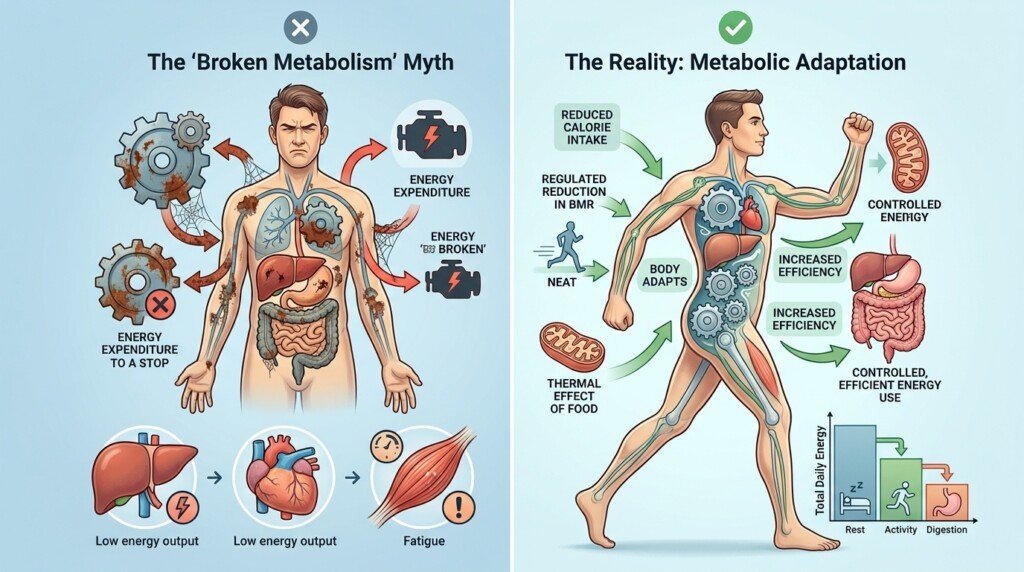
Current research shows that what many people call a “damaged metabolism” is usually metabolic adaptation, a normal biological response that helps your body conserve energy during prolonged calorie restriction or significant weight loss. Your metabolism is designed to adapt, not to fail. Understanding this difference is the first step toward building realistic expectations and choosing strategies that genuinely support long-term metabolic health.
That does not mean progress always comes easily. After months or years of restrictive dieting, your body may burn fewer calories than before, preserve energy more efficiently, and make further weight loss feel increasingly difficult. These changes can be frustrating, but they are often reversible through consistent lifestyle habits rather than extreme interventions.
This article explains what science says about metabolic damage, why chronic dieting influences metabolism, and what evidence supports recovery. Instead of chasing quick fixes, you’ll learn how to support healthy metabolic function through sustainable habits that respect your body’s natural ability to adapt.
Quick Answer
Most people do not have a permanently damaged metabolism. What is often described as metabolic damage is usually metabolic adaptation, a normal response to long-term calorie restriction and weight loss. Recovery focuses on rebuilding healthy habits, preserving muscle, maintaining appropriate calorie intake, managing stress, and allowing your metabolism to gradually adjust over time.
Can Your Metabolism Actually Become Damaged?
The phrase “damaged metabolism” has become one of the most searched terms in the health and fitness world.
Although it sounds convincing, it does not accurately describe what usually happens inside the body.
For most people, metabolism adapts rather than becoming permanently broken.

Your Body Is Designed to Adapt
Metabolism constantly adjusts according to your body’s needs.
These adjustments help you survive changes such as:
- Reduced calorie intake
- Weight loss
- Increased physical activity
- Illness
- Recovery
- Changes in body composition
Rather than failing, your metabolism responds intelligently to changing conditions.
Metabolic Adaptation Is a Protective Response
When calorie intake remains low for extended periods, your body becomes more efficient with energy.
This process is known as metabolic adaptation.
It developed through evolution to help humans survive periods of food scarcity.
Today, the same protective mechanism often appears during prolonged dieting.
Adaptation Is Not Permanent Damage
One of the biggest misconceptions is believing that adaptation means irreversible harm.
Current evidence suggests otherwise.
In many cases, metabolism gradually adjusts again when healthy habits are restored.
The detailed biological mechanisms behind this process are explored separately throughout Metabolic Adaptation.
Social Media Often Confuses the Two
Many online discussions use “damaged metabolism” and “metabolic adaptation” as though they mean the same thing.
They do not.
Using accurate terminology helps create realistic expectations and prevents unnecessary fear.
Recovery Is Usually Possible
Although recovery takes time, your metabolism continues responding to changes in:
- Physical activity
- Muscle mass
- Energy balance
- Recovery
- Long-term lifestyle habits
This adaptability is one of the body’s greatest strengths.
What Causes a Damaged Metabolism?
A more accurate question is:
What causes metabolic adaptation that people mistake for a damaged metabolism?
Several long-term habits can encourage your body to conserve energy more efficiently.
Chronic Calorie Restriction
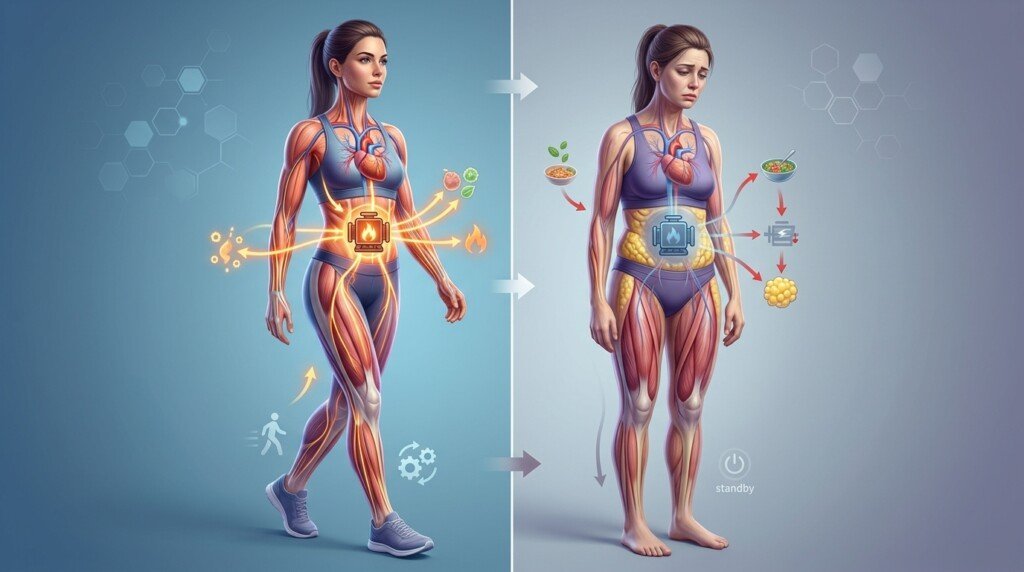
The most common trigger is prolonged calorie restriction.
When your body repeatedly receives less energy than it needs, it gradually adjusts by reducing overall energy expenditure.
This response helps preserve essential functions during periods of limited energy availability.
Repeated Crash Dieting
Many people cycle between:
- Severe dieting
- Rapid weight loss
- Weight regain
- Another restrictive diet
Repeated cycles make maintaining consistent progress much more difficult.
The body repeatedly adapts to changing energy intake rather than settling into stable routines.
Muscle Loss During Weight Loss
Weight loss does not always involve body fat alone.
Without preserving lean muscle, some weight loss comes from muscle tissue.
Since muscle contributes to overall energy expenditure, losing muscle may reduce daily calorie needs.
Maintaining muscle is one reason Strength Training for Fat Loss remains such an important part of sustainable weight management.
Reduced Daily Movement
People eating fewer calories often become less active without realizing it.
Examples include:
- Walking less
- Sitting more
- Lower exercise intensity
- Reduced spontaneous movement
These gradual reductions decrease overall energy expenditure.
Psychological Fatigue
Long-term dieting also affects motivation.
Many individuals experience mental fatigue after months of restriction.
This often leads to reduced consistency with healthy habits rather than any permanent metabolic problem.
Healthy long-term approaches discussed throughout Sustainable Weight Loss help reduce these repeated cycles.
Is Metabolic Damage Permanent?
This question creates enormous anxiety for many people.
Fortunately, current evidence suggests that permanent metabolic damage is uncommon in healthy individuals.
The Body Continues Adapting
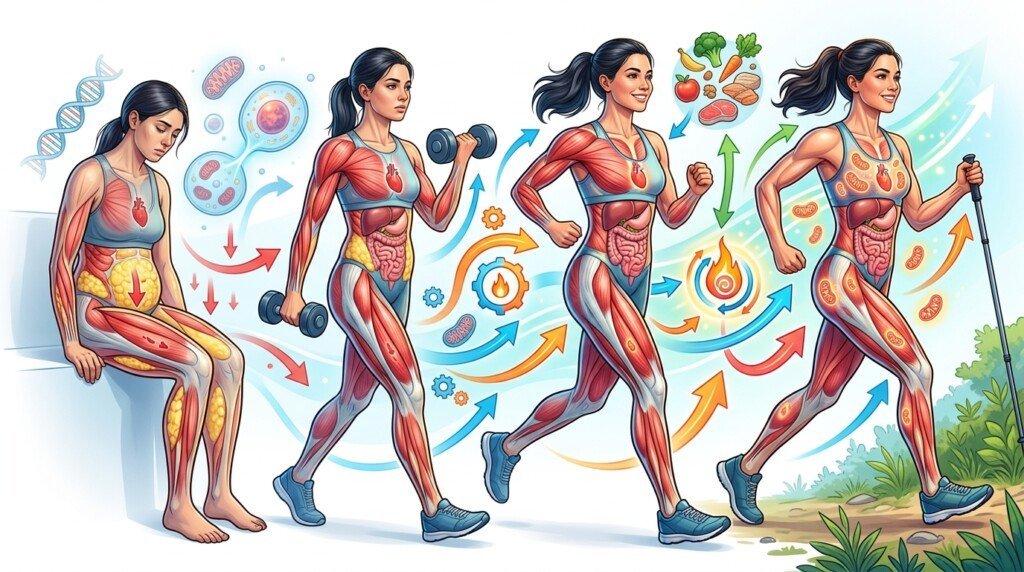
Just as metabolism adapts to lower calorie intake, it can also adjust when healthier conditions return.
Recovery does not happen overnight.
Instead, it develops gradually through consistent habits.
Recovery Depends on Several Factors
The speed of improvement varies according to:
- Body composition
- Muscle mass
- Physical activity
- Previous dieting history
- Overall health
- Recovery habits
Every individual responds differently.
There Is No Instant Repair
Because metabolism changes gradually, recovery also occurs gradually.
Promises of fixing metabolism within days are not supported by scientific evidence.
Progress Should Be Measured Realistically
Instead of asking,
“Is my metabolism fixed yet?”
a more helpful question becomes,
“Am I consistently building habits that support healthy metabolism?”
Long-term consistency produces much more meaningful changes than temporary interventions.
Patience Is Part of Recovery
Many people abandon healthy routines because improvements seem slower than expected.
However, metabolism responds to repeated behaviors practiced over months rather than isolated actions.
How Can You Recover From Chronic Dieting?
Recovering from years of restrictive dieting requires a shift in mindset.
The objective is no longer to lose weight as quickly as possible.
Instead, the goal becomes rebuilding healthy metabolic function while supporting long-term physical and mental health.

Stop Chasing Rapid Results
Many people continue repeating the same restrictive strategies expecting different outcomes.
Recovery often begins by replacing short-term thinking with sustainable habits.
Restore Consistency
Healthy metabolism responds best to predictable routines.
Consistency matters in areas such as:
- Physical activity
- Sleep
- Meal timing
- Recovery
- Daily movement
Perfect days are unnecessary.
Consistent weeks and months create lasting progress.
Preserve Lean Muscle
Supporting muscle during recovery remains one of the most valuable priorities.
Maintaining muscle helps preserve overall energy expenditure while improving physical function.
Resistance exercise plays an important role in this process.
Support Long-Term Energy Balance
Recovery is not about eating without limits.
It involves gradually supporting healthy energy balance while avoiding repeated cycles of severe restriction.
Many people benefit from moving toward maintenance calories before attempting further fat loss.
Focus on Sustainable Behaviors
Healthy routines discussed throughout Weight Loss Habits often contribute more to long-term recovery than dramatic short-term interventions.
Small behaviors repeated consistently produce the greatest long-term improvements.
Does Eating More Help Repair Metabolism?
This is one of the most misunderstood questions surrounding metabolism.
The answer depends entirely on the situation.
Simply eating more without considering overall energy balance does not automatically improve metabolic health.
More Calories Are Not Always Better
Increasing calorie intake far beyond your body’s needs does not “switch on” metabolism.
Instead, recovery focuses on providing appropriate energy while supporting healthy body composition.
Maintenance Calories May Support Recovery
For some individuals following prolonged calorie restriction, spending time near maintenance calorie intake allows the body to stabilize before continuing weight management efforts.
This strategy is often discussed alongside concepts such as reverse dieting.
Recovery Requires More Than Calories
Improving metabolism involves much more than food intake alone.
Other important factors include:
- Muscle preservation
- Physical activity
- Stress management
- Recovery
- Consistent routines
These systems work together rather than independently.
Avoid Extreme Swings
Alternating between severe restriction and overeating creates unnecessary instability.
Steady, sustainable progress generally supports healthier long-term metabolic function.
Think Beyond the Scale
Successful recovery is measured by improvements in overall metabolic health rather than daily changes in body weight alone.
Can Strength Training Improve Metabolism?
Among all the lifestyle habits that support metabolic health, strength training consistently stands out as one of the most effective. That does not mean lifting weights instantly repairs metabolism or dramatically increases calorie burning overnight. Instead, resistance training helps preserve one of your body’s most metabolically active tissues, lean muscle.
When muscle is maintained during weight loss or after long periods of dieting, your body is better equipped to support healthy energy expenditure and physical function.

Muscle Helps Maintain Energy Expenditure
Lean muscle is active tissue that requires continuous maintenance.
Every day your body uses energy to repair muscle fibers, replace damaged proteins, and support normal muscle function. Although muscle does not burn an enormous number of calories at rest as often claimed online, maintaining healthy muscle still contributes meaningfully to overall energy expenditure.
Preserving muscle also makes long-term weight management easier than repeatedly losing both fat and muscle through restrictive dieting.
Resistance Training Supports Recovery
One of the biggest challenges after chronic dieting is rebuilding confidence in movement.
Strength training encourages gradual improvements in:
- Physical strength
- Mobility
- Balance
- Functional fitness
- Daily activity
These improvements often increase confidence, making it easier to remain active throughout the day.
More Muscle Supports Better Body Composition
Recovery is not simply about body weight.
Improving body composition by preserving or gradually increasing lean muscle creates a healthier metabolic environment over time.
This is why Strength Training for Fat Loss remains valuable even for people whose primary goal is weight management rather than bodybuilding.
Progress Comes From Consistency
Two or three well-planned resistance training sessions each week often provide greater long-term benefits than occasional periods of intense exercise followed by inactivity.
Like every other aspect of metabolism recovery, consistency matters more than perfection.
How Long Does Metabolism Recovery Take?
This is one of the first questions people ask after months or years of restrictive dieting.
Unfortunately, there is no universal timeline.
Recovery depends on the habits you build and the condition of your body when you begin.
Recovery Happens Gradually
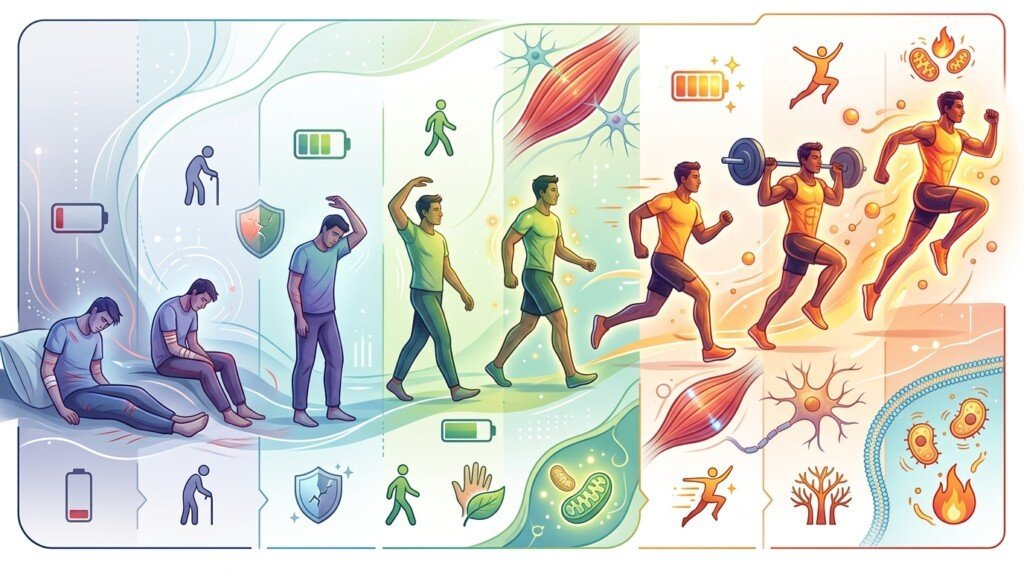
Your metabolism adapts over weeks, months, and sometimes years.
Recovery follows the same principle.
Some positive changes may occur relatively quickly, while others develop much more gradually.
Examples include:
- Improved energy during daily activities
- Better workout performance
- Greater consistency with healthy habits
- Improved recovery between exercise sessions
These changes often appear before noticeable changes in body composition.
Everyone Starts From a Different Place
Recovery varies according to several factors, including:
- Previous dieting history
- Lean muscle mass
- Activity level
- Overall health
- Body composition
- Consistency of healthy habits
Comparing timelines with someone else rarely provides useful expectations.
Long-Term Thinking Produces Better Results
Many people become discouraged because they expect complete recovery within a few weeks.
Healthy metabolism is not restored through one successful month.
Instead, it reflects months of sustainable habits that gradually encourage your body to adapt in a healthier direction.
Focus on Progress Rather Than Speed
Instead of asking how fast recovery will happen, ask whether your daily habits consistently support long-term metabolic health.
This mindset usually produces better results than constantly searching for faster solutions.
Which Mistakes Slow Metabolism Recovery?
Recovery often stalls not because the body cannot improve, but because certain habits continue sending mixed signals.
Avoiding these common mistakes helps create a more stable environment for long-term metabolic health.

Returning to Extreme Dieting
Many people panic when progress slows.
Instead of staying consistent, they immediately reduce calories again.
Repeated restrictive dieting often recreates the same conditions that encouraged metabolic adaptation in the first place.
Ignoring Muscle Preservation
Focusing only on body weight while neglecting lean muscle can reduce long-term progress.
Healthy body composition matters more than rapid weight loss.
Expecting Daily Changes
Recovery rarely follows a straight line.
Some weeks feel highly productive.
Others seem slower.
Looking for daily improvements often creates unnecessary frustration.
Doing Too Much Too Soon
Some individuals attempt to completely transform every aspect of their lifestyle at once.
Large changes become difficult to maintain.
Small improvements practiced consistently usually produce better long-term outcomes.
Constantly Changing Strategies
Jumping from one popular diet to another prevents consistency.
Your metabolism responds to repeated healthy behaviors rather than constantly changing routines.
Neglecting Recovery
Exercise is valuable.
Recovery is equally important.
Allowing your body adequate time to adapt supports healthier long-term progress.
When Should You Speak With a Healthcare Professional?
Most people experiencing metabolic adaptation after dieting improve through sustainable lifestyle changes.
However, some situations deserve professional medical evaluation.
Progress Stops Despite Consistent Habits
If healthy routines have been followed consistently for an extended period without improvement, discussing your concerns with a healthcare professional is reasonable.
Symptoms Suggest Another Health Condition
Although this article focuses on metabolism recovery rather than symptoms, unexplained health changes deserve proper evaluation rather than self-diagnosis.
Several medical conditions can influence metabolism and energy balance.
Previous Medical Conditions Exist
People with existing endocrine, metabolic, or chronic health conditions should work closely with qualified healthcare professionals before making major dietary or exercise changes.
Professional Guidance Builds Confidence
Healthcare professionals can help distinguish between:
- Normal metabolic adaptation
- Lifestyle-related challenges
- Underlying medical conditions
Accurate guidance prevents unnecessary worry while supporting appropriate treatment when needed.
Future discussions on Resting Metabolic Rate explain one way metabolism may be evaluated in clinical settings without replacing professional medical assessment.
Your Metabolism Recovery Roadmap
Recovering from chronic dieting is not about finding a shortcut. It is about creating conditions that allow your body to function efficiently again.
Follow these evidence-based principles.
Step 1. Accept that adaptation is normal.
Your metabolism is responding, not failing.
Step 2. Stop repeating crash diets.
Choose sustainable approaches instead of repeated restriction.
Step 3. Preserve lean muscle.
Prioritize resistance training and muscle maintenance.
Step 4. Support appropriate energy intake.
Avoid unnecessary extremes while working toward healthy energy balance.
Step 5. Stay physically active.
Increase both structured exercise and everyday movement.
Step 6. Recover consistently.
Allow time for muscles and the nervous system to adapt.
Step 7. Manage long-term stress.
Healthy stress management supports overall well-being and consistency.
Step 8. Be patient.
Meaningful recovery develops over months, not days.

Frequently Asked Questions
1. Can a metabolism really become damaged?
In most healthy individuals, what people call metabolic damage is actually metabolic adaptation, a normal response to prolonged calorie restriction.
2. Is metabolic adaptation permanent?
No. Current evidence suggests that metabolism continues adapting as healthy lifestyle habits improve over time.
3. Does chronic dieting affect metabolism?
Yes. Long-term calorie restriction may reduce overall energy expenditure as the body adapts to conserve energy.
4. Can eating more repair metabolism?
Eating more alone is not the solution. Recovery depends on appropriate energy balance combined with healthy lifestyle habits.
5. Does strength training help metabolism recovery?
Yes. Maintaining lean muscle supports healthy metabolic function and improves long-term body composition.
6. How long does recovery usually take?
Recovery timelines vary considerably depending on previous dieting history, body composition, activity levels, and overall health.
7. Can reverse dieting fix metabolism?
Reverse dieting may help some individuals gradually transition toward maintenance calorie intake, but it is not a guaranteed method for restoring metabolism. Consistent healthy habits remain the most important factor.
8. Should I stop trying to lose weight during recovery?
Some individuals benefit from temporarily focusing on maintenance before continuing fat loss, depending on their circumstances and long-term goals.
9. Can stress affect metabolism recovery?
Yes. Long-term stress may make consistency more difficult and influence several biological systems involved in metabolic health.
10. What is the most effective long-term strategy?
Maintaining muscle, staying physically active, avoiding repeated crash diets, supporting appropriate energy intake, managing stress, and following sustainable habits provide the strongest foundation for long-term metabolism recovery.
Final Thoughts
Understanding how to fix a damaged metabolism begins with recognizing that, for most people, the issue is not permanent damage but normal metabolic adaptation. Your body is designed to protect itself during long periods of calorie restriction by becoming more efficient with energy. While this adaptation can make progress feel slower, it does not mean your metabolism is broken or beyond recovery. With patience and consistent lifestyle changes, your body can continue adapting in a healthier direction.
Recovery is not built on extreme diets, miracle products, or short-term fixes. It comes from preserving lean muscle, staying physically active, supporting appropriate energy intake, managing stress, and following sustainable habits that your body can maintain for years rather than weeks. As you continue through this metabolism series, you’ll also explore How to Reset Your Metabolism, Metabolic Adaptation, Resting Metabolic Rate, Can You Speed Up Your Metabolism Naturally, and Foods That Slow Metabolism, helping you build a complete, evidence-based understanding of long-term metabolic health.
Disclaimer:
This post may contain affiliate links. If you purchase through them, we may earn a small commission at no extra cost to you. Also, this content is for informational purposes only and does not substitute professional medical advice.
Ready to Start Your Journey?
Use our free 7-in-1 Weight Loss Toolkit to calculate your numbers and build your plan in minutes.
Open Free Tools →