


What Are the Early Signs of Insulin Resistance? 10 Symptoms You Shouldn’t Ignore
Signs of Insulin Resistance often appear long before someone is diagnosed with prediabetes or type 2 diabetes. The challenge is that these early symptoms are usually mild, develop gradually, and are easy to mistake for the effects of stress, aging, lack of sleep, or a busy lifestyle. As a result, many people live with insulin resistance for years without realizing their metabolism is changing.
Insulin is a hormone made by the pancreas that allows glucose to move from your bloodstream into your body’s cells, where it is used for energy. When your cells stop responding efficiently to insulin, the pancreas produces more of it to compensate. This condition is known as insulin resistance. Over time, consistently high insulin levels can affect your appetite, energy, body weight, blood sugar, and overall metabolic health.
Although insulin resistance often develops silently, your body may begin sending subtle warning signs. Feeling unusually tired after meals, gaining weight around the waist, craving sugary foods, feeling hungry more often, or noticing changes in your skin are examples of symptoms that deserve attention. These signs do not automatically mean you have insulin resistance, but they can indicate that your body is becoming less efficient at regulating blood sugar.
Recognizing these symptoms early gives you an opportunity to speak with a healthcare professional before more serious metabolic problems develop. Early awareness also helps explain why regular health checkups and routine blood tests are so valuable, even if you generally feel healthy.
In this guide, you’ll learn the most common signs of insulin resistance, why they happen, which symptoms are easy to overlook, what blood tests help confirm the condition, and when it’s time to seek medical advice.
What Are the First Signs of Insulin Resistance?
One reason insulin resistance often goes undiagnosed is that there isn’t one symptom that clearly identifies the condition.
Instead, several small changes may gradually appear over months or even years.
Many people dismiss these symptoms because they seem unrelated or develop so slowly that they become part of everyday life.
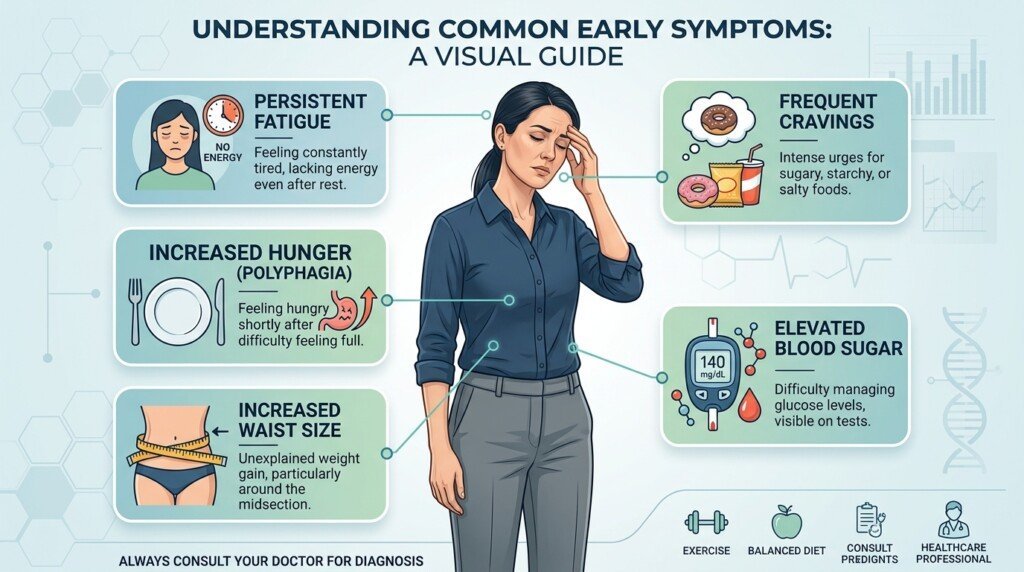
Some of the earliest signs of insulin resistance include:
- Feeling tired after meals
- Frequent hunger
- Strong cravings for sugary foods
- Gradual weight gain around the waist
- Difficulty losing weight
- Increased waist circumference
- Dark patches of skin
- Elevated blood sugar on routine blood tests
- Higher blood pressure
- Abnormal cholesterol or triglyceride levels
Not everyone experiences every symptom.
Some individuals may notice only one or two warning signs, while others experience several at the same time.
These symptoms also vary in severity.
For some people, the first indication is simply that their annual blood work shows elevated fasting glucose or HbA1c.
Others notice physical changes before laboratory results become abnormal.
Because many of these symptoms overlap with other health conditions, they should never be used to diagnose insulin resistance on their own.
Instead, they serve as signals that further medical evaluation may be worthwhile.
If you’re unfamiliar with the condition itself, our complete guide on Insulin Resistance explains how insulin works and why cells gradually become less responsive to it.

Why Does Insulin Resistance Cause Fatigue?
Feeling tired throughout the day is one of the most commonly reported symptoms associated with insulin resistance.
Although fatigue has many possible causes, changes in blood sugar regulation may contribute in some individuals.
To understand why, it helps to remember insulin’s primary job.
Normally, insulin helps move glucose from your bloodstream into your body’s cells, where it is converted into energy.
When cells become resistant to insulin, this process becomes less efficient.
Even though glucose remains in the bloodstream, your cells may not receive energy as effectively as they should.
This mismatch may contribute to feelings of low energy.
Fatigue After Meals
Some people notice that they become especially sleepy after eating meals rich in refined carbohydrates or added sugars.
Meals such as pastries, sugary drinks, white bread, or desserts may lead to larger fluctuations in blood sugar and insulin levels.
Not everyone experiences this response, but persistent fatigue after eating is worth discussing with a healthcare professional.
Fatigue Throughout the Day
Other people describe feeling:
- Sluggish in the morning
- Low energy during the afternoon
- Mentally exhausted despite adequate sleep
- Less motivated to exercise
These symptoms often develop gradually rather than appearing suddenly.
Because fatigue is extremely common and has many potential causes, including poor sleep, stress, anemia, thyroid disorders, and other medical conditions, it should never be viewed as proof of insulin resistance.
However, when fatigue occurs together with other metabolic symptoms, it may warrant further evaluation.
Can Insulin Resistance Cause Belly Fat?
Yes.
One of the most noticeable physical signs of insulin resistance is gradual fat accumulation around the abdomen.
Many people first become concerned because their waistline continues to increase even though the rest of their body changes very little.
Insulin plays an important role in how your body stores energy.
When insulin levels remain elevated for long periods, your body may become more likely to store excess calories rather than use them immediately for energy.
Over time, this can contribute to increased abdominal fat.
Why Belly Fat Matters
Not all belly fat is the same.
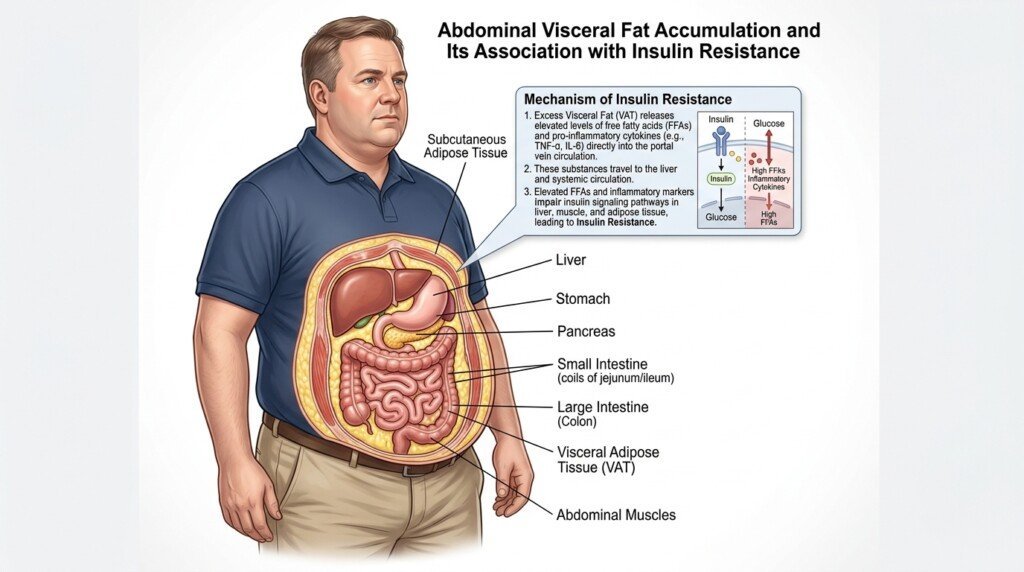
Subcutaneous fat sits beneath the skin and can usually be pinched with your fingers.
Visceral fat, however, is stored deep inside the abdomen around organs such as the liver, pancreas, and intestines.
Research shows that insulin resistance and visceral fat often reinforce one another.
Higher levels of visceral fat may worsen insulin resistance, while insulin resistance can make abdominal fat accumulation more likely.
This creates a cycle that becomes increasingly difficult to break without healthy lifestyle changes.
If you’d like to understand this relationship in greater detail, our guide on Visceral Fat explains why internal belly fat is considered more harmful than fat stored beneath the skin.
Why Losing Belly Fat May Feel Difficult
Many people with insulin resistance report that abdominal fat seems particularly stubborn.
Although fat loss is influenced by overall calorie balance and many other factors, insulin resistance may make weight management feel more challenging for some individuals.
This often leads to frustration when healthy habits don’t produce immediate visible changes.
Our article on Diabetic Belly Fat explores the close connection between abdominal fat and blood sugar regulation in more detail.
It’s important to remember that increasing waist circumference does not automatically mean someone has insulin resistance.
However, when abdominal weight gain occurs alongside fatigue, increased hunger, sugar cravings, or abnormal blood tests, it may be one of several warning signs worth discussing with a healthcare professional.
Does Insulin Resistance Increase Sugar Cravings?
Yes, it can.
Many people with insulin resistance report stronger cravings for sugary foods or refined carbohydrates, particularly in the afternoon or evening. While cravings can occur for many reasons, changes in blood sugar regulation may make them more frequent for some individuals.
To understand why this happens, it helps to look at how blood sugar and insulin work together.
After eating carbohydrate-rich foods, blood sugar rises and insulin is released to help move glucose into your cells. When cells become resistant to insulin, your pancreas often produces more insulin to compensate.
Over time, these changes may contribute to fluctuations in blood sugar that leave some people feeling hungry again sooner than expected.
Cravings Often Follow Highly Processed Meals
Many people notice stronger cravings after eating foods such as:
- Sugary drinks
- Candy
- Cookies
- Cakes
- White bread
- Sweet breakfast cereals
- Pastries
These foods are often digested quickly, leading to faster changes in blood sugar compared with meals that contain more protein, fiber, and healthy fats.
Although cravings are common, they should not automatically be blamed on insulin resistance.
Poor sleep, chronic stress, emotional eating, dehydration, and certain medications may also increase food cravings.
Cravings Are Usually Part of a Bigger Picture
Sugar cravings become more meaningful when they occur alongside other signs of insulin resistance, such as:
- Increased waist circumference
- Persistent fatigue
- Frequent hunger
- Difficulty losing weight
- Elevated fasting blood sugar
One symptom alone rarely tells the whole story.
Healthcare professionals look at the overall pattern rather than relying on a single complaint.
Can Skin Changes Be a Sign of Insulin Resistance?
Yes.
One of the most recognizable physical signs associated with insulin resistance is a skin condition called acanthosis nigricans.
This condition causes areas of skin to become:
- Darker
- Thicker
- Velvety in texture
These changes most commonly appear on:
- The back of the neck
- Under the arms
- The groin
- Elbows
- Knees
For some people, these skin changes develop gradually over several years.
Others may never experience them at all.

Why Do These Skin Changes Happen?
Researchers believe higher insulin levels may stimulate the growth of certain skin cells, leading to thickened, darker patches.
Although acanthosis nigricans is often associated with insulin resistance, it is not exclusive to this condition.
Other medical problems and certain medications may also cause similar skin changes.
That is why any persistent or unexplained skin changes should be evaluated by a healthcare professional rather than self-diagnosed.
Skin Tags
Some research has also found an association between insulin resistance and multiple skin tags.
Skin tags are small, soft growths that commonly appear around:
- The neck
- Underarms
- Eyelids
- Groin
Like darkened skin patches, skin tags alone do not confirm insulin resistance.
However, when they occur alongside other metabolic symptoms, they may provide another clue that further medical evaluation is appropriate.
Which Blood Tests Confirm Insulin Resistance?
Symptoms alone cannot diagnose insulin resistance.
Because many warning signs overlap with other health conditions, laboratory testing plays an important role in evaluating metabolic health.
Healthcare providers typically combine blood tests with your medical history, waist circumference, blood pressure, and other health information.
Fasting Blood Glucose
A fasting blood glucose test measures the amount of glucose in your blood after fasting for several hours.
Higher-than-normal results may indicate impaired glucose regulation.
However, fasting glucose may still appear normal during the early stages of insulin resistance.
HbA1c
HbA1c measures your average blood sugar over approximately the previous two to three months.
This test helps identify:
- Normal blood sugar
- Prediabetes
- Type 2 diabetes
Because it reflects long-term glucose control rather than a single measurement, HbA1c provides valuable information about metabolic health.
Fasting Insulin
Some healthcare providers may measure fasting insulin levels.
Elevated fasting insulin can sometimes indicate that the pancreas is producing extra insulin to compensate for insulin resistance.
This test is not routinely performed for everyone, and interpretation depends on the clinical situation.
Lipid Profile
A cholesterol test often includes measurements of:
- HDL cholesterol
- LDL cholesterol
- Triglycerides
Higher triglycerides together with lower HDL cholesterol are commonly seen in people with insulin resistance.
Blood Pressure
Although not a blood test, blood pressure measurement is an important part of evaluating metabolic health.
Elevated blood pressure frequently occurs alongside insulin resistance as part of metabolic syndrome.
Looking at the Complete Picture
No single blood test provides a complete diagnosis on its own.
Healthcare professionals evaluate several findings together, including:
- Symptoms
- Family history
- Waist circumference
- Blood pressure
- Blood sugar
- HbA1c
- Cholesterol
- Triglycerides
This comprehensive approach provides a much more accurate understanding of metabolic health.
When Should You See a Doctor?
Many people ignore the early signs of insulin resistance because they seem mild or unrelated.
However, seeking medical advice early allows potential problems to be identified before they progress.
You should consider scheduling an appointment if you notice several symptoms occurring together, especially if they persist for weeks or months.
Examples include:
- Increasing waist circumference
- Persistent fatigue
- Frequent hunger
- Strong sugar cravings
- Darkened skin around the neck or underarms
- Elevated blood pressure
- Abnormal blood sugar results
- A family history of type 2 diabetes
Routine health screenings are especially valuable if you have multiple risk factors, even if you feel generally well.
Early evaluation gives you the opportunity to understand your metabolic health and discuss appropriate next steps with your healthcare provider.

Frequently Asked Questions
1. What are the earliest signs of insulin resistance?
The earliest signs may include fatigue, increased hunger, sugar cravings, gradual belly fat gain, difficulty losing weight, darkened skin patches, elevated blood sugar, and increasing waist circumference.
2. Can insulin resistance make you tired?
Yes. Some people experience persistent fatigue or feel unusually sleepy after meals, although fatigue has many possible causes and should be medically evaluated.
3. Does insulin resistance always cause belly fat?
No. While abdominal weight gain is common, not everyone with insulin resistance develops noticeable belly fat.
4. Can dark skin on the neck indicate insulin resistance?
It can. Acanthosis nigricans, which causes darker, velvety skin patches, is commonly associated with insulin resistance, but it may also have other causes.
5. What blood tests check for insulin resistance?
Healthcare providers commonly evaluate fasting blood glucose, HbA1c, fasting insulin when appropriate, cholesterol, triglycerides, and other metabolic markers alongside your medical history and physical examination.
Final Thoughts
Recognizing the signs of insulin resistance early gives you the opportunity to understand what may be happening inside your body before more serious metabolic conditions develop. Symptoms such as persistent fatigue, increasing belly fat, frequent hunger, sugar cravings, darkened skin patches, and abnormal blood test results should never be ignored, especially when several occur together.
It’s also important to remember that these symptoms are not unique to insulin resistance. Many other health conditions can produce similar changes, which is why professional evaluation and appropriate laboratory testing are essential.
Rather than trying to diagnose yourself based on symptoms alone, pay attention to changes in your body, attend routine health checkups, and discuss any concerns with your healthcare provider. Early awareness is one of the most valuable tools for protecting your long-term metabolic health.
Disclaimer:
This post may contain affiliate links. If you purchase through them, we may earn a small commission at no extra cost to you. Also, this content is for informational purposes only and does not substitute professional medical advice.
Ready to Start Your Journey?
Use our free 7-in-1 Weight Loss Toolkit to calculate your numbers and build your plan in minutes.
Open Free Tools →