10 Amazing Acro Yoga Poses for Beginners You’ll Love Trying

What Is Acro Yoga?

Acro yoga poses are a unique blend of yoga, acrobatics, and partner balancing a practice that doesn’t just test your flexibility, but also builds trust, communication, and connection between partners. Unlike traditional yoga, where the focus is often inward, acro yoga invites you to engage outward to fly, balance, and support someone else as they do the same for you.

Whether you’re a couple looking to deepen your bond or two friends trying something fun and fitness-oriented, acro yoga is a rewarding gateway to build strength, improve posture, and boost emotional connection. Many beginners start exploring yoga poses for 2 people because partner yoga builds trust and balance while keeping the practice playful.

But don’t let the stunning poses on Instagram intimidate you. Beginner-friendly acro yoga poses exist and they’re just as exhilarating. No, you don’t need to be a gymnast or circus performer. All you need is an open mind, a patient partner, and a willingness to play.

In this post, we’ll guide you through 10 beginner acro yoga poses complete with tips, safety notes, and benefits. These poses are ideal even if you’re new to yoga altogether.

Let’s fly!

Getting Started: Acro Yoga Basics

Before jumping into the poses, let’s clear up some key roles in acro yoga:

  • Base: The person on the ground, offering support.
  • Flyer: The person being lifted, balanced, or suspended.
  • Spotter: Optional but recommended someone watching to help prevent falls and guide posture.

Tip: Always warm up with some light partner yoga stretches. Communication is key. Make sure both partners understand each movement before attempting it. If you are completely new to yoga practice, it helps to first understand the fundamentals of posture, breathing, and alignment explained in this complete yoga guide for beginners.


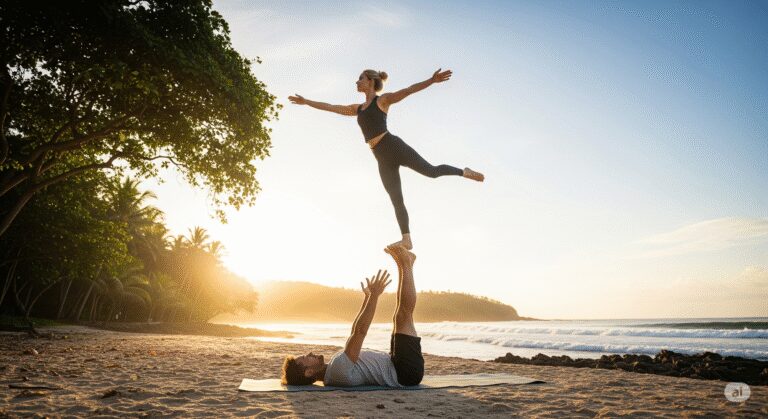
1. Front Bird Pose (Base of Acro Yoga)

Also called “Superman pose” in acro yoga, the Front Bird is often the first pose beginners learn. It’s a foundational posture that teaches balance, alignment, and trust.

How to Do It:

  1. Base lies flat on their back with knees bent, feet raised.
  2. Flyer stands in front, facing the base, and places their hips on the base’s feet.
  3. Base straightens legs slowly while holding the flyer’s shoulders or hands.
  4. Flyer extends arms out (like Superman) and balances with a strong core.

Key Points:

  • Engage your core muscles to stay steady.
  • Communicate constantly: small shifts in weight matter.
  • Start with a spotter if you’re new.

Benefits:

  • Strengthens core and leg muscles (for both).
  • Improves posture and body awareness.
  • Builds trust and team coordination.

2. Throne Pose (Fun and Stable Acro Pose for Beginners)

The Throne Pose is playful and confidence-boosting the flyer gets to “sit” like royalty while the base provides a solid seat. It’s great for building comfort in acro yoga without much risk of falling.

How to Do It:

  1. Base lies on their back with knees bent and feet flat.
  2. The Flyer steps up onto the base’s feet one at a time.
  3. The base places their feet under the flyer’s buttocks, lifting them while holding their ankles.
  4. The flyer sits upright, placing their hands on the base’s knees for support.
  5. Both partners hold the posture, keeping the flyer’s core active.

Key Points:

  • Base’s legs should remain perpendicular to the floor.
  • The flyer must sit upright with spine tall, avoiding leaning backward.
  • Engage your glutes and thighs to help balance.

Benefits:

  • Strengthens leg and ankle stability for the base.
  • Improves posture and core control for the flyer.
  • Great confidence-builder for beginners.

Pro Tip: Smile and hold hands for photos it looks royal and makes for a perfect Instagram acro moment!


[Banner Ad Placement #2 “Try This Lightweight Travel-Friendly Acro Yoga Mat” (Insert banner)]


3. Back Bird Pose (The Flying Heart Opener)

Ready for a deeper trust fall? The Back Bird Pose flips the flyer over so they’re facing up creating a heart-opening, flying posture that’s incredibly therapeutic.

How to Do It:

  1. Base lies on the floor with legs up.
  2. The Flyer turns their back to the base and gently lowers their hips onto the base’s feet.
  3. As the base pushes upward, the flyer leans back, spreading arms open.
  4. Both partners adjust to find balance the flyer should open the chest and arch the back slightly.

Key Points:

  • The base must keep legs strong and feet flat against flyer’s sacrum (not lower back).
  • The flyer should engage core and avoid collapsing into the lower back.
  • Keep it gentle and slow it’s more about openness than height.

Benefits:

  • Stretches chest, shoulders, and spine.
  • Builds deep emotional trust (flyer has no visual control!).
  • Great for improving flexibility and counteracting desk posture.

Emotional Note: This pose feels symbolic you’re literally “letting go” and allowing someone else to support your heart. It’s a favorite in acro healing workshops.


4. Whale Pose (Gentle Therapeutic Stretch)

Whale Pose is a flying heart opener with a deep supported backbend. Ideal for couples or partners who want to include therapeutic elements in their acro yoga practice.

How to Do It:

  1. The Base lies down and places feet on the flyer’s shoulder blades (angled slightly downward).
  2. The Flyer stands facing away, leans backward, and places arms overhead (into the base’s hands).
  3. As the flyer bends back, the base lifts with the legs, slowly arching the flyer into a supported backbend.
  4. Hold position gently, ensuring neck and shoulders are not strained.

Key Points:

  • Base’s legs should provide slow, controlled lift.
  • Flyer’s arms can be outstretched or held behind back depending on comfort.
  • Use a yoga bolster or folded towel under base’s hips for extra support.

Benefits:

  • Deep chest and shoulder opening for the flyer.
  • Relieves tension in back and neck.
  • Therapeutic, calming, and ideal after long hours of sitting.

Healing Tip: Whale Pose is often used in partner yoga therapy sessions for emotional release and stress relief. You can even play soothing music in the background.


5. Flying Paschimottanasana (Flying Forward Fold)

Flying Paschi is the flying version of the seated forward fold an energizing stretch that deeply opens the hamstrings for the flyer and strengthens the base’s legs. It’s calm, quiet, and incredibly grounding.

How to Do It:

  1. Base lies down and lifts legs straight up at a 90° angle.
  2. Flyer stands facing the base, holding hands and leaning forward into a forward fold.
  3. The base places their feet on the flyer’s hip bones, then slowly lifts them while guiding the flyer’s hips upward.
  4. Once in position, the flyer releases hands and stretches forward, letting arms dangle or hold ankles.

Key Points:

  • The flyer should keep legs straight and core engaged.
  • The base must align feet properly to avoid tipping.
  • This is a passive pose focus on lengthening, not pulling.

Benefits:

  • Stretches hamstrings, calves, and spine for the flyer.
  • Enhances balance and coordination for both.
  • Calms the nervous system great for winding down.

Mind-Body Tip: Practice deep breathing together while holding this pose. It activates the parasympathetic nervous system and invites calm.


6. Shoulder Stand on Base (Supported Inversion)

This pose is slightly more advanced but still accessible for adventurous beginners. The flyer stacks vertically in a shoulder stand, fully supported by the base’s arms and legs making it a safer intro to inversions.

How to Do It:

  1. The Base lies on their back and places their feet on the flyer’s lower back or hips.
  2. Flyer begins in a plank or tuck position, then lifts legs upward into a straight line.
  3. The base uses hands to support flyer’s shoulders or upper back, creating a stable base.
  4. The flyer keeps core tight, legs straight, and chin tucked slightly.

Key Points:

  • Communication is crucial move slowly and deliberately.
  • The flyer should engage inner thighs and abs.
  • Start near a wall for safety if needed.

Benefits:

  • Safe and effective way to practice inversions.
  • Builds core strength, balance, and body awareness.
  • Encourages circulation and spinal alignment.

Balance Tip: This pose might feel intimidating at first, but once mastered, it’s incredibly empowering and opens the door to advanced acro inversions.


7. Folded Leaf Pose (Restorative Flow Pose)

The Folded Leaf Pose is a relaxing and therapeutic position the flyer hangs over the base’s legs in a passive forward bend. It’s often used between more intense poses to reset and reconnect.

How to Do It:

  1. Base lies down and lifts legs to 90°.
  2. The Flyer places hips on the base’s feet (as in Front Plank), then folds forward from the hips.
  3. Arms dangle loosely or rest beside the base’s shins.
  4. The base can hold the flyer’s shoulders or hips for added stability.

Key Points:

  • The flyer’s spine should be long and relaxed.
  • Keep breathing slow and steady.
  • Let gravity do the work don’t pull or resist.

Benefits:

  • Gently stretches spine, shoulders, and back.
  • Helps release emotional tension and anxiety.
  • Allows for deep connection and shared mindfulness.

Emotional Release Insight: Many people experience unexpected emotions in this pose due to its vulnerability and surrender. It’s a perfect acro move for healing-based yoga.

8. Star Pose (Side Star)

Star Pose is one of the most striking beginner-friendly poses in acro yoga. It builds serious strength and trust while making you look like a sky-bound superhero.

How to Do It:

  1. The base lies flat, legs at 90°, and places one foot on the flyer’s inner thigh, the other on the opposite hip.
  2. The flyer starts in a sideways plank position (side body down), leaning weight into the base’s feet.
  3. On a count, the base presses upward, lifting the flyer who opens into a side star shape one arm up, one down.
  4. Flyer keeps body strong, core and glutes activated, and arms extended in opposite directions.

Key Points:

  • Start low and slow. The base should adjust foot positions carefully.
  • Flyer must engage side-body muscles to hold line.
  • Keep eyes on each other for extra balance cues.

Benefits:

  • Boosts shoulder and side-body strength.
  • Improves communication and proprioception.
  • Makes a fun, impressive photo-worthy move.

Pro Tip: This one is Instagram gold. Choose a nature backdrop or sunset for your Star Pose practice!


9. Straddle Throne (Wide-Legged Seated Pose)

This is a playful, seated position perfect for selfies and fun the flyer sits upright on the base’s feet, legs in a wide straddle, making a classic “throne.”

How to Do It:

  1. The base lies on their back and lifts feet parallel, toes pointing up.
  2. The flyer steps onto the base’s feet and sits down carefully.
  3. Once secure, the flyer opens the legs into a straddle (V-shape), keeping arms extended or on hips.
  4. The base maintains firm feet under the flyer’s sit bones, supporting with hands if needed.

Key Points:

  • Flyer should keep spine tall and hips grounded.
  • Great for beginners to practice balance before transitioning to flows.
  • Use a spotter in early attempts.

Benefits:

  • Stretches inner thighs and hips.
  • Builds confidence in upright balancing.
  • Looks fun, friendly, and social.

Fun Variation: Try adding “namaste” hands or silly expressions. Straddle Throne is made for joy!


10. Super Yogi (Superman Flow Variant)

The Super Yogi is a variation of Front Plank with arms extended like Superman it challenges balance, strength, and playfulness all in one.

How to Do It:

  1. Start in basic Front Plank (flyer flying horizontally, base lying flat with legs up).
  2. Flyer extends arms forward, legs straight back, engaging core and glutes like flying!
  3. Base supports hips or thighs and makes minor foot adjustments to maintain lift.

Key Points:

  • Great core challenge for the flyer.
  • Base must stay grounded and keep toes active.
  • Arms stretched = more difficulty. Modify with bent elbows if needed.

Benefits:

  • Strengthens back, core, shoulders.
  • Teaches spatial awareness and control.
  • Perfect transition pose for flows and creative sequences.

Inspiration Tip: Name your pose! “Super Michael” or “Flying Serenity” give it personal meaning.


1. Partner Prep: Building Trust Before You Fly

Before you jump into flying poses, the most important foundation isn’t physical it’s emotional trust.

Acro yoga isn’t just about strength and balance. It’s about feeling safe enough to let go physically and mentally. So here’s how to prep with your partner:

1. Eye Contact is Everything

Before lifting off, spend a few seconds looking into each other’s eyes. This simple act sets a tone of presence and connection.

2. Establish Clear Signals

Have a system:

  • “Up” = ready to fly
  • “Down” = lower me now
  • Tap twice = discomfort or real pain

This helps prevent injury and builds confidence.

3. Do Trust-Building Warm-Ups

  • Try mirror yoga: Copy each other’s movements in sync.
  • Try lean-backs while holding hands feeling one another’s weight.

These practices prime your nervous system to relax into the connection, which is key for balance.

4. Respect Each Other’s Limits

Your partner may feel nervous or hesitant at first don’t push it. Instead, stay playful and positive. Progress in acro yoga comes faster with patience.

Healing Insight: If you’ve ever had trust issues or control struggles in relationships, acro yoga might bring those patterns up. Use that as a space for emotional growth and reflection.


2. Is Acro Yoga Safe for Beginners?

Yes but only if approached with care, communication, and support. Here’s your beginner safety checklist:

1. Always Warm Up First

Start with 10–15 minutes of dynamic stretches:

  • Cat-Cow
  • Downward Dog
  • Hamstring stretches
  • Hip openers (Lizard, Pigeon)

This prepares your joints and fascia for balancing movements.

2. Use a Spotter

In early attempts, always have a third person to assist especially for moves like Front Plank, Star Pose, or Throne.

A good spotter can prevent:

  • Twists and awkward landings
  • Slipping or panicking
  • Shoulder or lower back strain

3. Stay on Soft Surfaces

Practice over:

  • Yoga mats (double layer is better)
  • Grass
  • Padded flooring

Avoid hard tiles or concrete even for seated poses.

4. Breathe Together

If either of you holds your breath, it can signal tension. Practice synchronized breathing before and during the poses. It:

  • Improves timing
  • Helps relax the nervous system
  • Keeps the vibe calm

Emotional Note: Let your breath be the bridge. When one partner exhales, the other can match this creates a subtle yet powerful bond of presence.


3. What Should I Wear for Acro Yoga?

Beginner mistake? Wearing loose clothes that bunch up or slip.

Best Outfit Tips:

  • Tops: Fitted tank or sports tee (no zippers)
  • Bottoms: High-rise yoga leggings or fitted shorts
  • Avoid: Jewelry, baggy pants, lotions on hands/legs

If you’re the base, grip matters bare feet and dry skin give more control.

For flyers, choose lightweight clothing that won’t slide off the base’s feet or hands.

Pro Tip: Carry a small towel. Sweat can make gripping difficult especially during warm-ups or in humid areas.


4. Emotional Healing Through Acro Yoga

(A Hidden Power Nobody Talks About)

For many, acro yoga becomes more than just movement it’s a mirror for deep emotional patterns.

1. Letting Go of Control

As a flyer, you’re forced to release control and surrender to your partner’s support. This can bring up fear, resistance, or even childhood trauma related to trust and safety.

If you’ve ever felt “I can’t rely on anyone,” acro yoga can help rewrite that story slowly and safely.

2. Rebuilding Body Confidence

Many beginners (especially women) fear being “too heavy” to fly. But acro yoga teaches you:

  • Every body is liftable
  • Your weight is not a problem it’s just physics and leverage
  • You’re worthy of support, no matter your size or shape

As you feel yourself lifted and held, your nervous system registers a new experience of worthiness.

3. Repairing Relationship Wounds

Couples who practice together often notice:

  • Arguments reduce
  • Communication improves
  • They laugh more and fight less

That’s because play is healing. And acro yoga is deep play rooted in mutual care.

4. Soothing Anxiety Through Movement

The rhythmic flow of partner balancing calms the vagus nerve, which regulates your stress response.

Especially helpful for:

  • Anxiety-prone individuals
  • Overthinkers
  • People recovering from trauma or burnout

Healing Insight: Many yoga paths work with the mind. Acro yoga goes through the body to reach the heart.


5. Can I Practice Acro Yoga Alone?

Yes and you should. Solo practice helps build strength and flexibility for partnered poses.

Here are 3 great solo acro prep moves:

1. Boat Pose (Navasana)

Strengthens core and hip flexors.

  • Sit on your mat
  • Lift legs up and extend arms forward
  • Hold for 30–60 seconds

2. Wall L-Sits

Mimics the base’s leg position for flying poses.

  • Lie on your back
  • Place feet on wall at 90°
  • Engage thighs and press into the wall for 1 minute sets

3. Bridge Pose (Setu Bandhasana)

Opens the chest and hips vital for both roles.

Practicing these builds confidence, awareness, and readiness so you feel grounded even before a partner lifts you.


6. Ideal Playlist for Acro Yoga Flow

The right music transforms the practice from “exercise” to soulful connection.

Here’s a beginner-friendly acro yoga playlist vibe:

TrackArtistMood
“Weightless”Marconi UnionDeep calm
“Lotus Flower”Radiohead (instrumental)Floaty
“Breathe”TélépopmusikRhythmic flow
“Awake”TychoLight & dreamy
“Sun Will Set”Zoë KeatingEmotional release

Use low-BPM tracks without strong lyrics this keeps attention on the body and breath.

🎧 Spotify Tip: Search “Acro Yoga Flow” or “Partner Yoga Chill” for curated soundtracks.


7. Common Mistakes Beginners Make in Acro Yoga

Even though acro yoga looks playful and light, beginners often fall into a few traps. Sometimes those mistakes even turn into unexpectedly hilarious moments, which is why many people share their bloopers and balance fails while trying different funny yoga poses during practice. Knowing these in advance saves injury, embarrassment, and frustration.

1. Skipping the Warm-Up

You must warm up both your body and connection. Cold muscles and misaligned communication = the #1 cause of partner yoga injuries.

Fix: Do a 5–10 minute warm-up of sun salutations, hip openers, and joint mobility together.

2. Forcing the Pose

This isn’t gymnastics. Acro yoga isn’t about “nailing the move” it’s about being present and fluid.

Fix: Focus on small adjustments, breath sync, and finding the joy not perfection.

3. Poor Communication

Saying nothing mid-pose? That’s a recipe for disaster. Saying too much? Also a mess.

Fix: Use short, clear cues:

  • “Lower a bit”
  • “Engage core”
  • “Let’s come down”

4. Ignoring Spotting

Even seasoned duos can fall. Without a spotter, you risk head/neck injuries.

Fix: Always have a third person to guide, catch, or correct. Even in casual play.


8. How to Make Acro Yoga Part of Your Wellness Routine

You don’t need a full-blown class to enjoy the benefits of partner yoga. Just a 15–30 minute weekly flow can uplift your mood, muscles, and mindset.

Weekly Acro Flow Plan (for Beginners)

DayActivity
MondaySolo strength training (core + legs)
WednesdayPractice 2–3 beginner poses (Bird, Throne) with a partner
FridayFlow + stretch + cool-down
SundayWatch tutorials, journal on connection/trust progress

Pro Tip: Record your flows weekly you’ll notice confidence and trust visibly grow.


Best Gear for Acro Yoga at Home

You don’t need much, but these tools elevate the experience:

  • Thick yoga mat (≥6mm) – Prevent wrist and hip bruising
  • Yoga blocks – Great for support when learning base roles
  • Knee sleeves or cushions – Especially useful for flyers practicing sits or backbends
  • Essential oils (e.g., lavender or peppermint) – Calm nerves and improve focus

FAQ

1. Is acro yoga safe for beginners?

Yes, when practiced with communication, consent, and a spotter, acro yoga is beginner-friendly and low-risk. Start with foundational poses and don’t push beyond comfort.

2. Can I do acro yoga without a partner?

You can train solo to improve core strength, flexibility, and balance. But true acro yoga requires a partner. Apps, local studios, or online communities can help you connect with others.

3. What if I’m not flexible or strong enough?

That’s totally okay. Many beginners think acro yoga needs elite fitness but it’s more about technique, breath, and trust than brute strength or bendiness.

4. How often should I practice acro yoga?

2–3 times per week is ideal for beginners. Focus on quality over quantity, ensuring each session includes warm-ups, 2–3 poses, cooldown, and open conversation.

5. What’s the difference between acro yoga and regular yoga?

Acro yoga combines yoga, acrobatics, and Thai massage, while regular yoga is a solo mat practice. Acro adds a layer of connection, balance, and trust-building that’s unique.


Disclaimer:

Important: The content on this page is for informational and educational purposes only. Acro Yoga involves physical movement that may pose a risk of injury if not performed correctly. Always consult your physician before starting any new fitness activity. Practice with a trained partner and under the guidance of a certified yoga instructor.

Affiliate Disclosure: This post may contain affiliate links. This means we may earn a small commission at no extra cost to you if you make a purchase through our links. We only recommend products, retreats, or training programs we genuinely believe in. Your support helps keep ThriveInSerenity.com running and focused on sharing healing tools with the world.

7 Fun Yoga Poses for 2 People That Build Trust & Connection

Yoga poses for 2 people are more than just playful stretches they’re an opportunity to deepen trust, communication, and emotional connection. Whether you’re practicing with a partner, friend, or even a child, these partner yoga poses help you sync your breath, share your balance, and strengthen your bond both physically and spiritually. In this post, we’ll explore 7 fun, beginner-friendly yoga poses designed to create laughter, release tension, and bring two hearts closer, one breath at a time. Whether you’re looking for couples yoga to reignite intimacy or simply want to try acro yoga for fun, this guide will inspire connection on the mat and beyond.

The Magic of Yoga for Two

Yoga is often practiced solo a deeply personal ritual of breath, awareness, and movement. If you’re new to the practice and want to understand the fundamentals before trying partner movements, exploring a complete yoga guide can help you build a safe and mindful foundation. But there’s a lesser-known side to this ancient practice that can be just as powerful: yoga poses for 2 people.

Whether it’s with your partner, a close friend, or even your child, partner yoga opens up an entirely new layer of emotional and physical connection. It transforms yoga from a personal journey into a shared exploration of trust, communication, and presence.

Here’s why it matters:

  • Trust and Vulnerability: Partner poses often require one person to support the other, both physically and emotionally.
  • Deep Listening: You must listen not only to your own body, but also to your partner’s breath, energy, and comfort level.
  • Playfulness and Fun: Laughter is guaranteed. Some poses may be awkward at first but that shared discomfort often turns into connection.
  • Emotional Intimacy: Moving in sync fosters a subtle yet powerful emotional bonding, especially for couples or close friends.

Imagine starting your morning with a shared breathing ritual that grounds you both. Or ending the day with a supported backbend that melts away tension while your partner holds space for your release.

In this blog, we’ll walk you through 7 carefully chosen yoga poses for 2 people that are suitable for beginners and deeply rewarding for the soul. These aren’t acrobatic circus acts they’re accessible, beautiful, and designed to build real-life trust and emotional alignment.

Whether you’re a couple looking to rekindle connection, or two friends seeking a unique bonding activity, this guide is your blueprint.


What You’ll Discover:

  • Beginner-friendly partner poses (no experience needed)
  • Emotional and physical benefits of yoga for two
  • Safety tips and communication guidelines
  • Beautiful rituals for building trust and intimacy
  • Bonus: 5 FAQs about couples yoga and acro yoga

Let’s begin this journey of connection one mindful pose at a time.

Understanding Partner Yoga, Acro Yoga & Couples Yoga

Before jumping into the poses, it’s important to understand the different forms of yoga with two people. Many beginners wonder: What’s the difference between partner yoga, acro yoga, and couples yoga? Let’s break it down so you know exactly what you’re practicing.

What Is Partner Yoga?

Partner yoga is a style where two individuals work together to deepen stretches, improve balance, and support each other physically and emotionally.

It’s not about being perfectly flexible or acrobatic the focus is on:

  • Communication
  • Cooperation
  • Mindful touch
  • Mutual support

Some poses involve synchronized breathing while sitting back-to-back. Others involve one person assisting another into a deeper stretch.

🔹 Think of partner yoga as a gentle invitation to explore how two bodies can create harmony through movement.


What Is Acro Yoga?

Acro yoga combines:

  • Yoga
  • Acrobatics
  • Thai massage elements

It typically involves two roles:

  • The base (lying or standing)
  • The flyer (lifted off the ground)

If you’re curious about trying beginner-friendly lifts and balance techniques, exploring different acro yoga poses can help you safely progress into more dynamic partner practice. You might see poses where one partner balances the other on their feet or hands in the air.

While some acro poses require strength and skill, many beginner-friendly ones are surprisingly accessible with proper communication and safety. We’ll include one fun acro-inspired pose in this guide!

Benefits of Acro Yoga:

  • Builds deep trust and teamwork
  • Enhances body awareness and balance
  • Requires complete presence and communication

What Is Couples Yoga?

Couples yoga is essentially partner yoga with emotional intimacy at the forefront. While the poses can be similar to any partner yoga sequence, the intention shifts more toward:

  • Emotional bonding
  • Relationship healing
  • Non-verbal communication
  • Mindful touch and affection

You don’t need to be in a romantic relationship to enjoy this but when done with a partner or spouse, it can become a beautiful tool for:

  • Rebuilding connection
  • Deepening empathy
  • Creating sacred time together

Summary: Key Differences

TypeFocusSuitable ForTypical Poses
Partner YogaSupport, flexibility, balanceFriends, family, couplesBack-to-back poses, assisted folds
Acro YogaStrength, balance, trustConfident beginners upLifts, flying poses, dynamic holds
Couples YogaEmotional connection, bondingRomantic partnersHeart openers, eye-gazing, tandem breath

Who Can Try Yoga for Two?

Absolutely anyone. These practices are:

  • Gender-neutral
  • Age-inclusive
  • Perfect for beginners

All you need is a willing partner, a soft surface, and an open mind.

Tip: If you’re shy or nervous, start with simple back-to-back seated breathing (explained in Pose 1) to ease into the experience.

Before You Begin – Safety, Setup & Mindset

Now that you understand what partner yoga and acro yoga are, it’s time to prepare your space and your energy. While yoga poses for 2 people can be playful and lighthearted, they also require mutual respect, mindfulness, and communication.

Here’s how to create the perfect setup for a successful session.

1. Choose the Right Space

Find a calm, open area that allows you both to stretch without bumping into furniture or distractions.

Recommended:

  • Soft carpeted floors or yoga mats
  • Outdoor settings (parks, beach, terrace)
  • Quiet rooms with minimal noise

Turn off notifications your phone can wait.

Optional Upgrade: Add ambiance with aromatherapy oils, a salt lamp, or calming music.

2. Wear the Right Clothing

Comfort is key and so is flexibility.

What to wear:

  • Breathable yoga pants or leggings
  • Fitted tops (to avoid sliding during poses)
  • Avoid jewelry, belts, or zippers

Both partners should feel confident and able to move freely.

3. Warm Up Together

Don’t dive directly into deep poses warm up with individual stretches first, then sync up with light partner movements.

Suggested warm-up sequence:

  • Neck rolls
  • Shoulder circles
  • Cat-cow poses (do side-by-side or facing each other)
  • Seated twist
  • Wrist circles

Finish the warm-up by sitting back-to-back, taking 5 deep breaths in unison inhaling peace, exhaling tension.

4. Set a Shared Intention

Before you begin the poses, pause and ask each other:

“What do we want to feel or create in this session?”

Some intentions might include:

  • Connection
  • Playfulness
  • Healing
  • Mindfulness
  • Trust

Speaking your intention aloud creates shared awareness and emotional grounding.

5. Understand the Safety Rules

Even beginner-friendly partner poses involve shared weight and balance so safety is essential.

Golden Rules:

  • Communicate before, during, and after each pose
  • Check in often: “How does this feel?” / “Okay if I lean more?”
  • Never pull or yank a partner into a stretch
  • Stop immediately if there’s discomfort or instability
  • Support each other when coming in/out of poses

Never force a stretch. Every body has its own edge honor that.

6. Establish Physical Cues

Sometimes words aren’t enough physical cues help partners stay in sync.

  • A light squeeze of the hand = “Let’s pause here”
  • A gentle tap = “I’m ready to go deeper”
  • A soft pull = “Please help guide me back up”

These cues become especially important in balancing or inversion poses.

7. Let Go of Performance

This isn’t a competition. It’s not about doing the pose “perfectly.” It’s about:

  • Laughing when you fall
  • Feeling into the connection
  • Staying present together

The yoga happens not in the pose but in the moment shared between the pose.

Trust-building tools, partner yoga video course, or eco-friendly yoga props

Pose 1 to Pose 7 – Starting with Grounding & Connection

Now that you’re physically and mentally prepared, it’s time to dive into the actual poses. These first three are gentle, grounding, and perfect for beginners. They’re designed to help you tune into each other’s breath, posture, and energy while easing into physical support and trust.

1. Seated Back-to-Back Breathing

Best for: Emotional synchronization, calming nerves, beginner partner practice
Type: Grounded / Meditative / Breath Awareness

How to do it:

  1. Sit cross-legged, back-to-back with your partner.
  2. Feel each other’s spine. Try to align your posture evenly.
  3. Close your eyes. Rest your hands on your knees or thighs.
  4. Begin by simply observing your own breath.
  5. After a few rounds, try to sync your inhale and exhale with your partner’s.
  6. Breathe together for 2–5 minutes.

Emotional Benefits:

  • Creates a calm, shared rhythm
  • Fosters non-verbal trust
  • Begins the yoga bonding process in stillness

Tip: Use a calming mantra like “I trust. I support.” silently as you breathe.


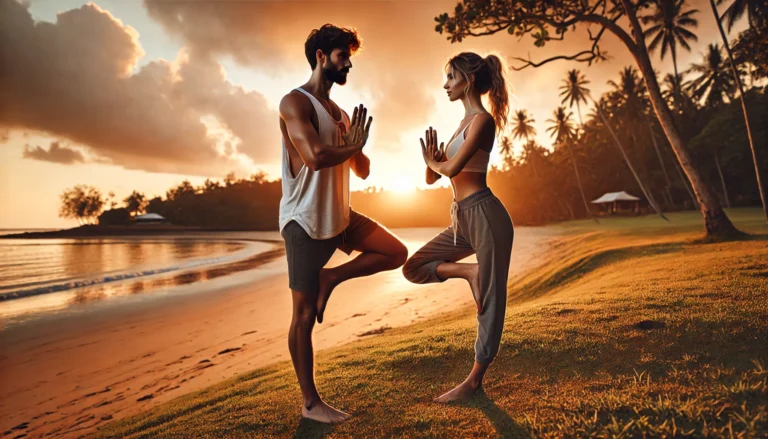
2. Double Tree Pose

Best for: Balance, light challenge, playfulness
Type: Standing / Balancing / Teamwork

How to do it:

  1. Stand side by side, shoulders touching slightly.
  2. Each person lifts their inner leg and places the sole of the foot against their standing thigh or calf (not the knee).
  3. Bring your palms together in front of you or raise your outer arms overhead.
  4. Engage your core, look straight ahead, and balance for 5–10 breaths.

Emotional Benefits:

  • Develops mutual grounding
  • Enhances trust in physical and energetic alignment
  • Encourages shared focus and laughter

Challenge version: Try closing your eyes for a few seconds together. Expect giggles!


3. Seated Forward Fold Pull

Best for: Hamstring stretch, back release, shared flexibility
Type: Seated / Stretching / Trust & Resistance

How to do it:

  1. Sit facing each other, legs extended and wide in a V shape.
  2. Press your feet sole-to-sole (or rest gently against each other’s ankles).
  3. Hold hands firmly.
  4. One partner leans back slightly while gently pulling the other partner into a forward fold.
  5. Stay for 5 breaths, then switch roles.

Emotional Benefits:

  • Builds trust through physical resistance
  • Teaches active listening through body language
  • Deepens flexibility while being supported

Tip: Communicate your limits clearly say “stop” or “a bit deeper” based on how your body feels.

Strength, Lifts, and Playful Acro Trust Builders

The next two poses introduce light acro yoga elements and muscle engagement. Don’t worry you don’t need circus skills. These poses are fully beginner-friendly and designed to build trust, balance, and communication while adding a touch of playful challenge.


4. Double Downward Dog (Partner Pyramid)

Best for: Shoulder strength, trust, alignment
Type: Inversion / Stretch / Light Acro

How to do it:

  1. Partner A starts in traditional downward dog: hands and feet on the mat, hips lifted in an inverted V.
  2. Partner B stands behind and places their hands a few feet in front of Partner A’s.
  3. Partner B places their feet gently on Partner A’s lower back or hips (NOT spine).
  4. Adjust the balance and hold for 3–5 breaths.

Make sure:

  • Partner A feels strong and stable.
  • Partner B doesn’t dump too much weight.
  • Communicate: “Are you okay?” or “Need to come down?”

Emotional Benefits:

  • Requires complete verbal coordination
  • Builds body awareness and mutual trust
  • Fun & rewarding when executed together

Bonus variation: Partner B can gently sway their hips for a shared movement rhythm.


5. Partner Boat Pose (Navasana)

Best for: Core strength, balance, eye contact, fun
Type: Seated / Balance / Core

How to do it:

  1. Sit facing each other with knees bent and toes touching.
  2. Hold hands outside your legs.
  3. Press the soles of your feet together and lift both legs to form a “V” with your bodies.
  4. Engage your core to maintain balance.
  5. Hold for 5–10 breaths and smile at each other!

You can also rock gently back and forth or try singing the alphabet to make it more playful.

Emotional Benefits:

  • Activates playfulness and laughter
  • Engages deep eye contact and coordination
  • Strengthens core connection physically and emotionally

Challenge variation: Try letting go of one hand and reaching up with the other. Then switch.


Core yoga tools, partner strength accessories, resistance bands

The Heart-Opening Camel for Vulnerability & Love

As we move into deeper emotional territory, this next pose is perfect for releasing tension, opening your heart space, and encouraging emotional intimacy.

Whether you’re close friends or romantic partners, this is a gentle yet powerful way to feel emotionally supported.

6. Twin Camel Pose (Back-to-Back Heart Opener)

Best for: Heart opening, emotional vulnerability, posture support
Type: Kneeling / Backbend / Emotional Release

How to do it:

  1. Both partners kneel back-to-back, knees hip-width apart, toes flat or tucked under for support.
  2. Gently reach behind and interlock arms or hold each other’s wrists or forearms.
  3. Slowly arch your backs together leaning into the stretch while supporting each other’s weight.
  4. Let your heads gently tilt back, eyes closed.
  5. Breathe deeply into the chest and belly, holding for 4–6 breaths.

What to focus on:

  • Don’t force the backbend use your partner’s support as a guide, not a crutch.
  • If one partner is more flexible, they can help stabilize the other with gentler support.
  • Let go of tension especially in your jaw, shoulders, and neck.

Emotional Benefits:

  • Deepens trust by opening your most vulnerable physical area the heart.
  • Encourages emotional letting go while being held and supported.
  • Releases blocked emotions (tears are welcome and normal).
  • Fosters a sense of non-verbal intimacy and presence.

Optional Ritual:

After coming out of the pose, remain kneeling and place your hands on your heart. Take a breath and say aloud:

“Thank you for supporting me. I see you. I feel you. I’m here.”

This moment of spoken presence can be incredibly healing especially for couples or those healing emotional wounds.

Safety Tip:

If either of you has lower back pain, go slow and keep the arch minimal. Use folded blankets under your knees for comfort.

Energy Focus: Heart Chakra

This pose is deeply connected to Anahata (heart chakra) the center of compassion, love, and forgiveness. Practicing it with someone you trust can help dissolve walls and improve emotional clarity.

Optional Add-On Tools:

  • Rose quartz crystal between your palms
  • Heart chakra essential oils (e.g., rose, geranium, or jasmine)
  • Soft healing music (e.g., Tibetan bowls or heart mantras)

7. The Trust Fall Stretch (Assisted Standing Forward Fold)

This final pose is a symbolic and physical expression of surrender and support. Often called the “trust fall yoga pose,” it combines a deep forward fold with full reliance on your partner’s strength and care.

It’s a beautiful way to end your partner yoga session, anchoring you both in mutual respect, safety, and emotional release.

Assisted Standing Forward Fold (Trust Fall Stretch)

Best for: Releasing tension, building surrender, restoring trust
Type: Standing / Assisted / Therapeutic

How to do it:

  1. Partner A stands upright in Tadasana (Mountain Pose).
  2. Partner B stands in front, back facing Partner A.
  3. Partner B gently folds forward, relaxing their upper body down like a rag doll.
  4. Partner A reaches under B’s arms and holds their wrists, forearms, or upper arms securely.
  5. Once stable, Partner A lifts gently upward to allow Partner B’s upper body to hang freely.
  6. Stay here for 5–10 breaths, then gently guide B back up, and switch roles.

Key Tips for Safety:

  • The base (Partner A) should engage their core and avoid leaning backward.
  • Make sure Partner B relaxes fully but communicates if there’s discomfort or lightheadedness.
  • The lift should be gentle, not yanking the goal is support, not traction.

Emotional Benefits:

  • Encourages emotional surrender in a supported environment.
  • Builds non-verbal emotional trust especially for those healing from betrayal or anxiety.
  • Physically decompresses the spine, neck, and shoulders.
  • Serves as a symbolic letting go of past heaviness with someone literally “having your back.”

Ritual Add-On:

As Partner B relaxes into the stretch, Partner A can whisper a soft affirmation, like:

“You’re safe. I’ve got you.”
“You don’t have to carry it all alone.”
“Let go. I’m here.”

This turns the pose into a mini healing session for both people.

Final Tip:

This pose can be especially helpful for people who:

  • Struggle to ask for support
  • Feel uncomfortable being vulnerable
  • Are working on rebuilding relationship trust

If tears come up let them. That’s yoga doing its deeper work.

Guided yoga healing tracks, essential oils for relaxation, or trauma-informed yoga resources

Closing the Practice with Intention

After exploring these 7 fun yoga poses for 2 people, it’s essential to ground the energy and seal the experience.

Here’s a simple yet powerful closing ritual:


Seated Eye Gazing + Gratitude Sharing (2–3 minutes)

  1. Sit cross-legged, facing each other.
  2. Close your eyes. Take 3–5 deep breaths together.
  3. Open your eyes and gaze gently into each other’s (no need to force it).
  4. One by one, say one thing you appreciate about the other person in this session.

Examples:

  • “I felt really supported when you held my hips during the plank pose.”
  • “I love how safe I feel around you.”

This part turns your yoga into a soul-deep bonding practice not just physical alignment.


Bonus Tips for Maximum Connection

  1. Set the mood: Use calming music, dim lighting, and even aromatherapy oils.
  2. Turn off phones: This is sacred time be fully present.
  3. Breathe together intentionally: Sync your breath during each pose.
  4. Touch consciously: Every grip, press, or hold can be a form of silent care.
  5. Laugh freely: partner practice can sometimes turn into hilarious moments, especially when trying playful funny yoga poses together.

Call to Action (CTA)

Ready to build deeper bonds, more flexibility, and trust in your relationships all while having fun? To deepen your journey, don’t miss our complete guide on the best yoga poses for every body type and goal it’s packed with tips, visuals, and beginner-friendly routines to help you thrive.

Whether you’re in a romantic relationship, friendship, or parent-child duo, partner yoga brings play, presence, and healing into your connection.


FAQs

1. What are the best yoga poses for 2 people who are beginners?

Start with simple poses like Seated Spinal Twist, Partner Breathing, and Double Child’s Pose. These require minimal flexibility and focus on trust and balance.
Tip: Always communicate clearly and prioritize comfort.

2. Is couples yoga the same as acro yoga?

Not exactly. Couples yoga focuses more on emotional bonding and flexibility, while acro yoga involves acrobatics, strength, and balance with one partner often lifting the other.
Acro yoga is a sub-type of partner yoga but more physically demanding.

3. Can two people do yoga every day?

Absolutely! Daily partner yoga can:
Deepen your emotional connection
Build physical strength and flexibility
Help couples manage stress and arguments better
Start slow and adjust intensity based on energy levels.

4. What should I wear for partner yoga?

Wear breathable, stretchy yoga clothes. Avoid anything slippery or too loose. You’ll be in close contact comfort and modesty both matter.
Fitted tank tops and yoga leggings work great for both partners.

5. Is partner yoga only for romantic couples?

Not at all! Partner yoga can be practiced between:
Friends
Siblings
Parents and kids
Therapy partners
Any relationship can benefit from trust-based, mindful movement.


Final Thoughts

Partner yoga isn’t just about the poses it’s about the connection between the people in them. Whether you’re giggling through a balancing pose or releasing tears in a stretch, it’s all valid and valuable.


Disclaimer

This blog post is for informational purposes only and does not constitute medical advice. Always consult a qualified healthcare provider before starting any supplement or treatment. This article may contain affiliate links, which means we may earn a small commission (at no extra cost to you) if you make a purchase. We only recommend products we personally trust.

Exit mobile version