
Why Do People Turn to Food When They’re Emotional?
Most people have experienced a moment when food seemed to offer more than nourishment. After a disappointing day, a bowl of ice cream somehow feels more comforting than a salad. During celebrations, cake becomes part of the happiness. After heartbreak, familiar comfort foods suddenly seem impossible to resist. These experiences are so common that many people assume they happen simply because certain foods taste good.
The reality is much more interesting.
Food is deeply connected to our emotions, memories, relationships, and even the way our brains process reward. Long before we understand nutrition, we learn that food often accompanies comfort, celebration, safety, and care. A child who receives warm soup while sick or birthday cake during happy family gatherings begins building emotional associations with those experiences. Years later, the brain may continue reaching for similar foods whenever similar emotions appear.
Understanding why do people emotionally eat is not about blaming yourself for making poor choices. It is about recognizing that emotional eating is often the result of learned psychological patterns combined with normal brain processes. Food temporarily changes how we feel, which explains why it becomes such a powerful emotional coping tool for many people.
This article explores why sadness, comfort, happiness, and other emotions influence eating behavior, how the brain connects food with mood, and why certain foods seem uniquely comforting during emotionally difficult moments.
Quick Answer
Why do people emotionally eat? People emotionally eat because food can temporarily influence mood, activate the brain’s reward system, and remind us of comforting memories and experiences. Emotions such as sadness, loneliness, anxiety, boredom, and even happiness may increase the desire for familiar comfort foods. Rather than satisfying physical hunger, emotional eating often serves as a short-term way to seek comfort, distraction, or emotional relief.
Why Do People Eat When They Feel Sad?
Sadness is one of the emotions most commonly associated with emotional eating, but not because sadness automatically creates hunger. Instead, sadness changes the way many people think, feel, and seek comfort. During emotionally difficult moments, the brain naturally looks for experiences that provide familiarity, safety, or temporary relief. Food often becomes one of the quickest and most accessible options.
Interestingly, not everyone responds to sadness in the same way. Some people lose their appetite completely, while others find themselves constantly thinking about favorite foods. These different reactions highlight an important point. Emotional eating is not caused by sadness alone. It develops because the brain gradually learns that certain foods make difficult moments feel a little easier to tolerate.
Over time, those repeated experiences strengthen the connection between emotion and eating. Eventually, the emotion itself becomes enough to trigger cravings, even when physical hunger is absent.


What Are the Psychological Reasons Behind Emotional Eating When Sad?
Human beings naturally look for comfort when facing emotional pain. Throughout life, food often becomes closely linked with that comfort. Family dinners bring people together after difficult days. Favorite desserts appear during celebrations. Warm drinks accompany quiet conversations with loved ones. Even childhood memories often involve meals shared during moments of care and reassurance.
Because of these repeated experiences, the brain begins connecting food with emotional security rather than nutrition alone.
When sadness appears, the mind often searches for something familiar that has previously helped reduce emotional discomfort. Comfort food feels attractive not simply because it tastes good but because it carries emotional meaning. It reminds us of situations where we felt safe, cared for, or temporarily relieved from stress.
Psychologists sometimes describe this as associative learning. The brain remembers that eating certain foods has been paired with pleasant emotional experiences many times before. As a result, similar emotions later reactivate those memories almost automatically.
Another psychological factor involves distraction. Emotional pain naturally draws attention toward difficult thoughts and feelings. Eating provides an immediate activity that shifts focus toward flavors, textures, and physical sensations. Although the underlying emotion usually remains, attention temporarily moves away from it. This brief interruption may explain why emotional eating feels comforting even when it does not solve the original problem.
Sadness can also reduce motivation to engage in activities that normally improve mood, such as exercising, socializing, or pursuing hobbies. Preparing a favorite meal or ordering familiar takeout requires much less emotional effort. In difficult moments, the easiest source of comfort often becomes the most appealing one.
These psychological processes help explain why emotional eating develops gradually rather than appearing overnight. Every time food successfully provides temporary emotional relief, the connection between sadness and eating becomes slightly stronger.
How Does Food Affect Mood and Brain Chemistry?
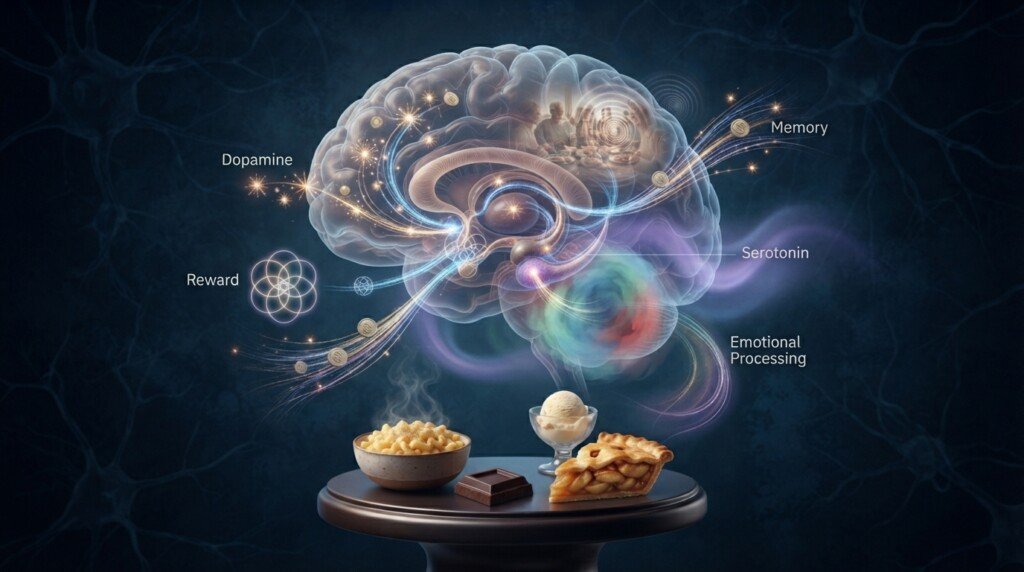
Food influences far more than physical hunger. Eating also activates several brain systems involved in pleasure, reward, learning, and emotional processing. These effects help explain why certain foods feel emotionally satisfying even when the body does not actually need additional energy.
One important part of this process involves dopamine, a neurotransmitter associated with motivation, reward, and reinforcement. When people eat foods they enjoy, dopamine activity increases in parts of the brain involved in reward. This does not mean dopamine creates happiness by itself. Instead, it helps the brain recognize experiences worth remembering and repeating.
If eating chocolate during a stressful evening provides temporary relief, the brain remembers that experience. The next time a similar emotional situation occurs, dopamine-related learning makes chocolate feel like an attractive solution before conscious decision-making has fully begun.
Serotonin also plays an important role in emotional well-being, although its relationship with food is often oversimplified. Serotonin helps regulate mood, sleep, and several other important body functions. Some foods may temporarily influence pathways related to serotonin, but emotional eating is rarely explained by serotonin alone. Instead, mood changes result from a combination of biological responses, psychological expectations, and learned emotional associations.
Another reason food affects mood involves predictability. During emotionally uncertain moments, familiar meals create a sense of stability. Favorite comfort foods rarely surprise us. We know exactly how they taste, how they smell, and how they usually make us feel. That predictability itself can become emotionally reassuring.
The brain therefore responds to comfort food through multiple pathways simultaneously. Pleasant taste, rewarding experiences, familiar memories, and emotional expectations all combine to create the feeling that food is making the situation better. While this relief is often temporary, it can still feel very real in the moment.
What Types of Foods Are Commonly Craved During Sadness?
One interesting aspect of emotional eating is that people rarely crave random foods when they feel sad. Most do not suddenly long for steamed vegetables or plain rice. Instead, sadness tends to increase the appeal of foods that already carry emotional significance.
These foods are commonly referred to as comfort foods because they are associated with positive memories, relaxation, or emotional warmth rather than nutritional value alone.
For some people, comfort foods are sweet. Chocolate, cookies, brownies, cakes, and ice cream often remind them of celebrations, childhood treats, or moments of reward.
Others prefer savory comfort foods such as pizza, macaroni and cheese, mashed potatoes, soup, burgers, or fried foods. These meals frequently evoke memories of family dinners, holidays, or comforting routines established years earlier.
Interestingly, comfort foods differ dramatically between individuals and cultures. Someone raised in one country may associate soup with comfort, while another person immediately thinks of rice dishes, noodles, bread, or homemade desserts. The emotional meaning matters far more than the specific food itself.
Portion size can also change during sadness. Some people simply want one favorite snack, while others feel drawn toward larger meals because eating becomes part of the emotional experience rather than a response to physical hunger.
The important point is that sadness rarely creates completely new preferences. Instead, it usually strengthens the appeal of foods that already hold positive emotional associations.
For readers interested in understanding how different emotions become connected with eating patterns more broadly, Emotional Eating explores how these learned associations gradually develop into recurring behavior over time.

How Do Different Emotions Drive Different Food Choices?
Not all emotions influence eating in the same way. While many discussions about emotional eating focus only on stress or sadness, the reality is far more nuanced. Different emotional states often lead people toward different kinds of foods because each emotion creates a unique psychological need. Some emotions encourage comfort and security, while others encourage celebration, distraction, or reward. Over time, the brain begins connecting those emotional experiences with particular foods that previously satisfied those needs.
This is one reason emotional eating looks different from person to person. Two individuals may experience the same emotion but crave entirely different meals because their personal memories, family traditions, and life experiences have shaped different emotional associations with food. Someone who grew up celebrating with homemade desserts may immediately think of cake during happy occasions, while another person may associate comfort with a bowl of soup prepared by a parent during childhood illness.
Recognizing that emotions influence food preferences differently helps explain why emotional eating cannot be reduced to a single cause. The emotion matters, but so does the personal meaning attached to the food itself.

Why Do People Crave Comfort Foods Specifically When Feeling Down?
The phrase “comfort food” exists for a reason. These foods rarely become comforting because of their nutritional value. Instead, they become comforting because they are repeatedly linked with positive emotional experiences throughout life. Every pleasant memory involving a favorite meal strengthens that emotional connection, making the food feel reassuring during future periods of sadness or emotional discomfort.
When people feel emotionally vulnerable, the brain naturally searches for familiarity. Familiar experiences require less mental effort and often create a greater sense of safety. Comfort foods satisfy this need remarkably well because they are predictable. Their taste, smell, texture, and emotional significance remain consistent, even when other parts of life feel uncertain.
This explains why many comfort foods are rich, warm, or familiar rather than adventurous or unfamiliar. A difficult day rarely inspires someone to experiment with a completely new recipe. Instead, they usually return to foods they already know well because those meals have repeatedly provided positive emotional experiences in the past.
Another important factor is expectation. If someone genuinely believes a favorite meal will make them feel better, that expectation itself contributes to the experience. The brain does not separate psychological expectations from physical experiences as neatly as people often imagine. Anticipating comfort can become part of the comfort itself.
Cultural traditions also influence which foods become emotionally meaningful. Around the world, different societies have their own versions of comfort food. Although the specific dishes vary, they often share one characteristic. They are deeply connected with family, care, celebration, or childhood memories. This suggests that emotional comfort comes less from the food itself and more from what the food represents.
Comfort foods therefore act as emotional symbols. They remind people of belonging, security, love, or happier periods of life. That symbolic meaning helps explain why emotional eating often involves the same familiar meals again and again rather than constantly changing food choices.
What Role Does Memory and Association Play in Choosing Comfort Foods?
Memory is one of the strongest influences on emotional eating. Every meal carries more than calories. It also carries experiences, relationships, traditions, and emotions that become stored alongside the taste of the food itself. Years later, those memories can quietly shape eating decisions without people consciously realizing it.
Imagine someone who always received warm soup from a parent while recovering from childhood illness. The soup becomes associated with care, protection, and comfort. Decades later, preparing that same soup during stressful periods may create a subtle feeling of emotional safety, even if the person cannot immediately explain why it feels comforting.
The same process occurs with celebration foods. Birthday cakes, holiday meals, family recipes, and favorite restaurant dinners gradually become linked with positive emotions through repeated experiences. Eventually, seeing or smelling those foods may automatically reactivate memories of happiness and connection.
Psychologists often describe this process as associative learning. The brain continuously links experiences that occur together. If comfort repeatedly occurs alongside certain foods, those foods gradually become emotional cues for comfort. Likewise, if celebrations repeatedly involve desserts, desserts become symbols of reward and achievement.
These learned associations are highly individual. Two people may enjoy completely different comfort foods because their life experiences have been different. Someone raised in a household where homemade bread was served every Sunday may find bread deeply comforting, while another person may feel the same emotional connection toward noodles, rice dishes, or a particular dessert.
Importantly, these memories are not necessarily conscious. Many people simply notice that a certain food “feels right” during emotional moments without realizing that years of emotional experiences shaped that preference. Understanding these hidden associations helps explain why emotional eating is often driven by personal history rather than nutrition alone.
Readers interested in understanding how these emotional associations eventually develop into recurring eating habits can continue with Emotional Eating, where the broader behavioral pattern is explored in greater detail.

How Do Positive Emotions Like Happiness Influence Food Choices Differently?
Emotional eating is often discussed as though it happens only during sadness or stress, but positive emotions also influence eating behavior in meaningful ways. Happiness, excitement, pride, and celebration frequently encourage eating, although the motivation behind those choices is usually very different.
When people feel happy, food often becomes part of sharing the experience with others. Birthdays, weddings, holidays, promotions, graduations, and family gatherings are all examples where eating strengthens social connection rather than reducing emotional discomfort. The food becomes a symbol of celebration rather than a way of escaping difficult feelings.
Positive emotions also reinforce reward-based learning. Someone who celebrates every personal achievement with dessert or restaurant meals gradually teaches the brain to expect food whenever success occurs. Over time, accomplishments and indulgent meals become closely connected. There is nothing inherently unhealthy about celebrating with food, but when every positive experience depends on eating, food gradually becomes the default reward for nearly every achievement.
Excitement can also influence appetite in different ways. Some people eat more because celebrations naturally involve abundant food, while others become so energized that they temporarily lose interest in eating altogether. These individual differences highlight once again that emotions influence appetite differently depending on personal habits and experiences.
Unlike sadness, where food often serves as emotional comfort, happiness usually encourages eating because food enhances an already positive experience. The emotional direction is different. One seeks relief, while the other extends enjoyment. Yet both reinforce the connection between emotions and food through repeated repetition.
Understanding this distinction helps explain why emotional eating cannot simply be described as eating during negative emotions. Food accompanies nearly every important emotional event throughout life, whether joyful or difficult. The brain gradually learns these patterns and begins expecting food whenever similar emotions appear again.
It is also worth remembering that not every emotional eating episode signals a problem. Sharing meals during celebrations, enjoying desserts on holidays, or marking important milestones with favorite foods are normal parts of many cultures. Emotional eating becomes more concerning when food consistently replaces healthier ways of responding to emotional distress rather than simply accompanying meaningful life experiences.
Key Takeaways
Understanding why do people emotionally eat begins with recognizing that food influences far more than hunger. Through years of repeated experiences, the brain learns to connect certain foods with comfort, safety, celebration, and emotional relief. These learned associations explain why familiar meals often become so appealing during emotionally significant moments.
Different emotions also influence food choices in different ways. Sadness may increase the desire for comforting meals that provide familiarity and reassurance, while happiness often encourages celebratory eating that strengthens positive experiences with friends and family. Neither response happens randomly. Both reflect the brain’s remarkable ability to connect emotions, memories, and eating into long-term behavioral patterns.
Recognizing these psychological and biological influences does not mean emotional eating is unavoidable. Instead, it provides a deeper understanding of why food often becomes an emotional tool and why those patterns can feel so automatic after years of repetition.
| Topic | Main Insight |
|---|---|
| Emotional eating | Food often becomes a source of comfort, reward, or distraction rather than a response to physical hunger. |
| Brain chemistry | Reward pathways involving dopamine and other neurotransmitters help reinforce emotionally meaningful eating experiences. |
| Comfort foods | Familiar foods are emotionally significant because they are connected with memories, safety, and positive experiences. |
| Memory | Childhood experiences, family traditions, and repeated emotional associations strongly influence food preferences. |
| Positive emotions | Happiness and celebration also shape eating habits by linking food with rewarding social experiences. |
Frequently Asked Questions
1. Why do people eat when they’re sad?
Many people turn to food during sadness because familiar meals can provide temporary comfort, distraction, and emotional reassurance. Over time, repeated experiences strengthen the connection between sadness and certain comfort foods.
2. Does happiness affect food cravings too?
Yes. Positive emotions often influence food choices differently from sadness. Celebrations, achievements, and happy social occasions frequently encourage indulgent meals because food becomes part of the rewarding experience.
3. Why do specific emotions link to specific foods?
The brain forms emotional associations through repeated experiences. Foods connected with comfort, family traditions, celebrations, or childhood memories gradually become linked with particular emotions, making them more appealing when similar feelings return.
4. Is emotional eating only about brain chemistry?
No. Brain chemistry plays an important role, but emotional eating also involves personal memories, learned behaviors, cultural traditions, and psychological expectations. These factors work together rather than acting independently.
5. Can emotional food preferences change over time?
Yes. Because emotional food associations are learned through experience, they can gradually evolve as new habits, routines, and emotional experiences develop throughout life.
Conclusion
Asking why do people emotionally eat reveals that the answer goes far beyond hunger. Food is closely connected to memory, emotion, reward, and human relationships, making it one of the most powerful emotional symbols in everyday life. Whether someone reaches for comfort food during sadness or celebrates success with a favorite meal, those choices are often shaped by years of learned experiences rather than simple appetite alone.
Recognizing these connections encourages a more compassionate understanding of emotional eating. Instead of viewing it as a failure of self-control, it becomes easier to see it as a natural response shaped by psychology, brain function, and personal history. That awareness provides the foundation for understanding emotional eating more deeply and for building a healthier relationship with food over time.
Disclaimer:
This post may contain affiliate links. If you purchase through them, we may earn a small commission at no extra cost to you. Also, this content is for informational purposes only and does not substitute professional medical advice.
Ready to Start Your Journey?
Use our free 7-in-1 Weight Loss Toolkit to calculate your numbers and build your plan in minutes.
Open Free Tools →