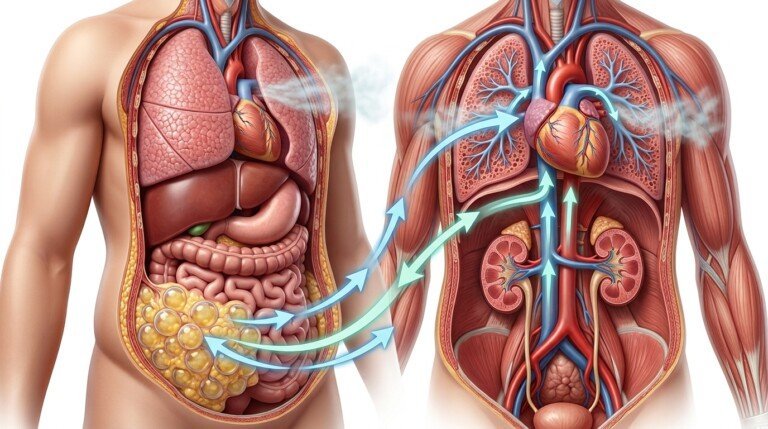

Is Metabolism Different Between Men and Women? What Science Really Says
It is common to hear people say that men have “fast metabolisms” while women naturally burn fewer calories. This belief has existed for decades and often leads to frustration, especially when two people follow similar eating habits but experience different results.
The reality is more interesting than that simple explanation.
The relationship between Male vs Female Metabolism involves differences in body composition, hormones, muscle mass, and resting energy expenditure rather than biological sex alone. On average, men tend to burn more calories at rest because they usually have more lean muscle mass and larger bodies. However, this does not mean every man has a faster metabolism than every woman.
Research shows there is considerable overlap. A physically active woman with higher lean body mass may have a faster metabolism than a sedentary man. Individual lifestyle, age, genetics, and health status often play a much larger role than sex alone.
In this article, we’ll compare male and female metabolism side by side, explain how hormones influence energy expenditure, examine what happens during menopause, and explore why muscle mass often explains more than biological sex itself.
Quick Answer
Male vs Female Metabolism differs primarily because men generally have more lean muscle mass and larger body size, leading to higher resting calorie expenditure on average. Hormones such as testosterone and estrogen also influence body composition and metabolic function. However, metabolism varies greatly between individuals, meaning many women naturally have faster metabolisms than many men.
Is Male vs Female Metabolism Really Different?
The short answer is yes.
The more accurate answer is yes, but not for the reasons many people assume.
Biological sex influences metabolism, but it is only one part of a much larger picture.
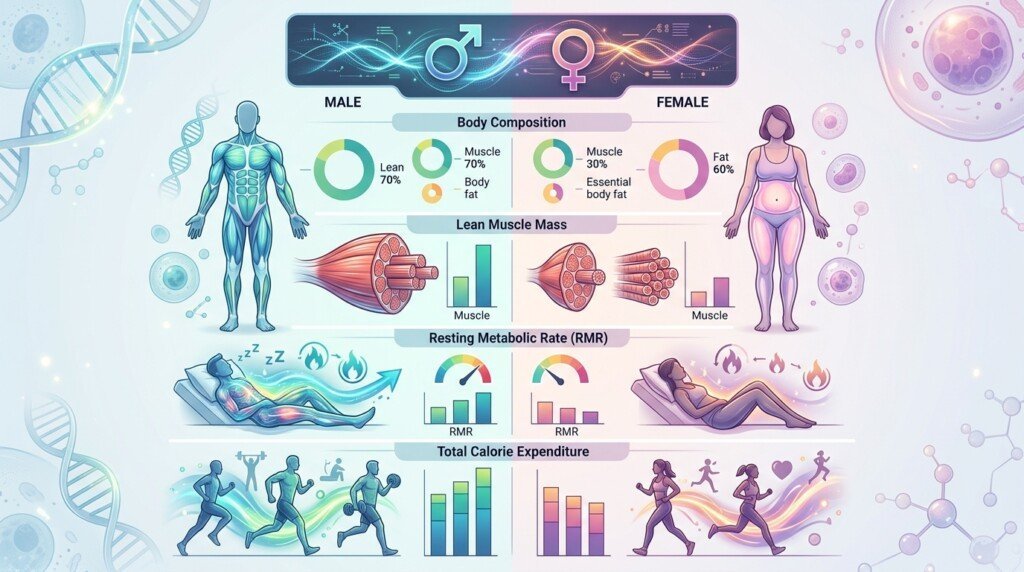
A Quick Comparison
| Factor | Men | Women |
|---|---|---|
| Average muscle mass | Higher | Lower |
| Average body fat percentage | Lower | Higher |
| Average resting calorie expenditure | Higher | Lower |
| Testosterone levels | Higher | Lower |
| Estrogen levels | Lower | Higher |
| Individual variation | Very high | Very high |
These averages help explain population trends, but they should never be used to predict an individual’s metabolism.
Why These Differences Exist
Metabolism depends largely on how much energy the body requires to maintain its tissues.
Muscle requires more energy than fat tissue.
Because men generally carry more lean muscle mass, they often burn more calories even while resting.
However, this relationship is based on body composition rather than biological sex alone.
Readers looking for a broader understanding of metabolic processes may also find Metabolism helpful for explaining how the body converts food into usable energy.
Why Body Composition Matters More Than Body Size
Many people assume larger bodies automatically have faster metabolisms.
Body size certainly influences energy expenditure, but body composition often matters even more.
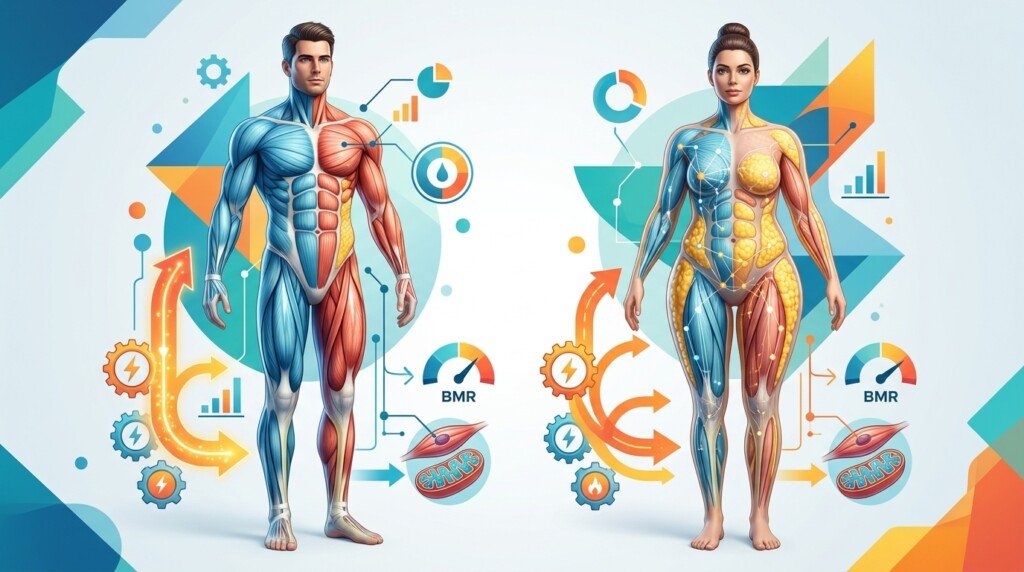
Lean Tissue Requires Energy
Every pound of muscle requires energy for maintenance.
Although the amount is modest, individuals with more lean body mass generally have higher resting energy expenditure.
This explains why two people of similar height and weight may burn different numbers of calories each day.
Fat Tissue Also Uses Energy
Fat tissue is not metabolically inactive.
It also requires energy for maintenance.
However, compared with muscle, its energy demands are lower.
This difference helps explain why body composition influences metabolism more than body weight alone.
Why Do Men Generally Burn More Calories?
This is perhaps the most frequently asked question about metabolism differences.
The answer has much less to do with being male and much more to do with body composition.
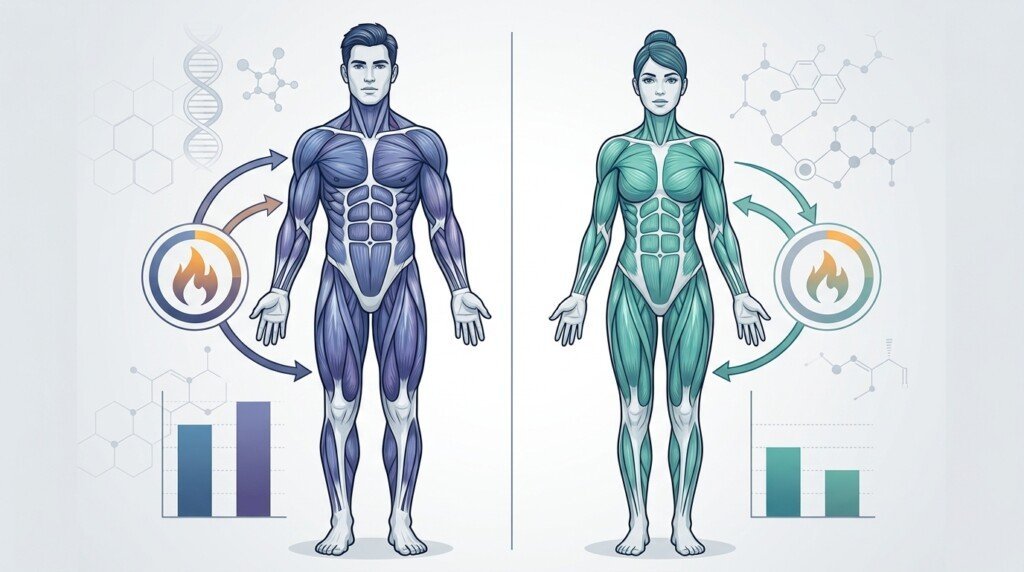
Lean Muscle Mass Plays the Biggest Role
On average, men naturally develop greater amounts of lean muscle because testosterone supports muscle growth during puberty and adulthood.
More muscle generally means:
- Higher resting energy expenditure.
- Greater calorie needs.
- Increased daily energy requirements.
This relationship explains much of the average metabolic difference between men and women.
Resting Metabolic Rate Reflects Tissue Maintenance
Most calories burned each day support basic life functions such as:
- Breathing.
- Blood circulation.
- Brain activity.
- Body temperature regulation.
- Cell repair.
Collectively these processes are reflected in resting metabolic rate.
Individuals with greater lean body mass typically have higher resting metabolic rates because more tissue requires maintenance.
Readers interested in this measurement can also explore Resting Metabolic Rate, where it is explained in much greater detail.
Does Body Size Explain Everything?
Not entirely.
Larger bodies generally require more energy regardless of sex.
However, body composition still remains one of the strongest influences.
For example:
- A smaller man with low muscle mass may burn fewer calories than a larger athletic woman.
- An active woman with substantial lean muscle may have a higher resting metabolic rate than many sedentary men.
This illustrates why biological sex should never be viewed as the only explanation for metabolism.
How Do Hormones Influence Metabolism?
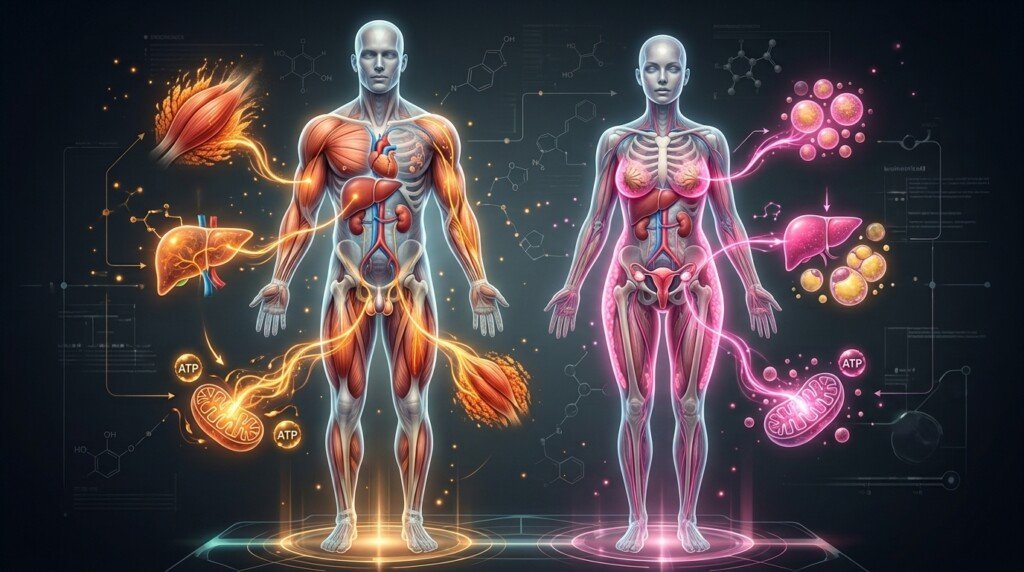
Hormones help regulate many aspects of metabolism, including body composition, appetite, fat distribution, and energy balance.
Their effects are important but often misunderstood.
Testosterone and Metabolism
Testosterone supports the development and maintenance of lean muscle mass.
Because muscle requires energy, testosterone indirectly contributes to higher average calorie expenditure in men.
Testosterone Influences More Than Muscle
Researchers have found testosterone also affects:
- Protein synthesis.
- Bone health.
- Body composition.
- Fat distribution.
- Physical performance.
These factors collectively influence metabolic function throughout adulthood.
However, testosterone alone does not determine metabolism.
Lifestyle habits remain critically important.
Estrogen and Metabolism
Estrogen plays equally important but different roles.
Rather than simply increasing or decreasing metabolism, estrogen helps regulate:
- Fat distribution.
- Glucose metabolism.
- Appetite.
- Reproductive function.
- Bone health.
Its influence changes naturally across different stages of life.
Hormonal Balance Matters More Than Individual Hormones
Both testosterone and estrogen interact continuously with many other hormones involved in metabolism.
Healthy metabolic function depends on this overall hormonal balance rather than on any single hormone acting independently.
Does Menopause Affect Female Metabolism?
Many women notice changes in body weight and body composition during midlife and naturally wonder whether menopause is responsible.
The answer is partly yes, but it is only one piece of a much larger picture.
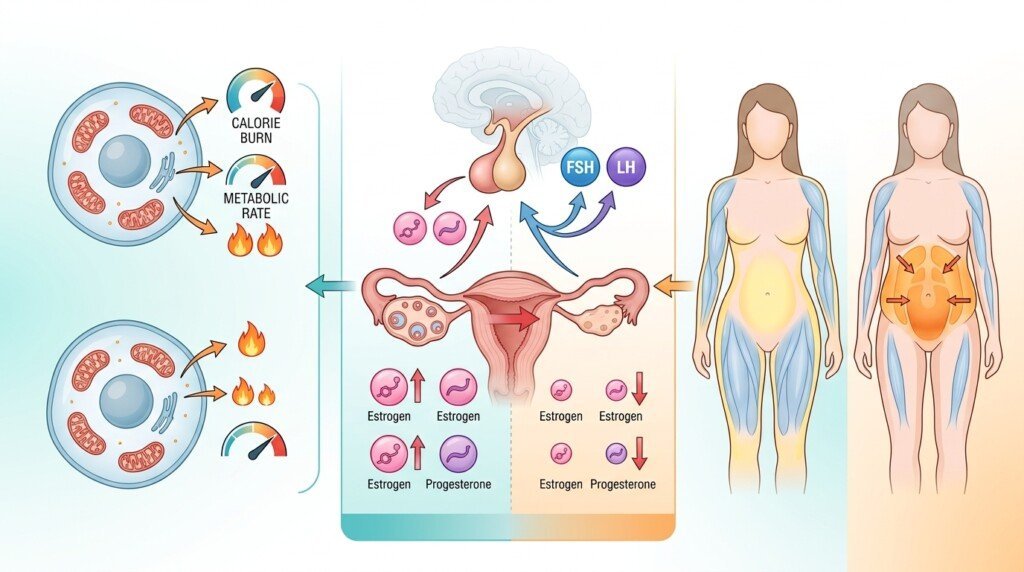
Menopause is associated with hormonal changes that can influence metabolism, yet aging, declining muscle mass, physical activity, and lifestyle habits also contribute significantly.
Estrogen Changes Affect More Than Reproductive Health
During menopause, estrogen levels decline.
This hormonal shift influences several metabolic processes, including:
- Fat distribution.
- Insulin sensitivity.
- Appetite regulation.
- Body composition.
- Energy balance.
Many women begin storing a greater proportion of body fat around the abdomen rather than around the hips and thighs.
These changes can occur even when body weight remains relatively stable.
Aging Happens Alongside Menopause
One reason menopause is difficult to study is that it occurs during the same period when age-related metabolic changes naturally begin.
Researchers have found that several factors often occur together:
- Gradual loss of muscle mass.
- Reduced physical activity.
- Hormonal changes.
- Lower daily energy expenditure.
Because these changes overlap, menopause alone rarely explains every metabolic change.
Readers interested in this life stage can also explore Menopause Metabolism, where these hormonal changes are discussed in greater detail.
Does Menopause Permanently Slow Metabolism?
Many women worry that menopause permanently damages metabolism.
Current evidence suggests a more balanced perspective.
Metabolism may gradually decline with age because lean muscle mass often decreases over time.
However, this process is influenced by much more than menopause itself.
Healthy habits continue supporting metabolic health throughout adulthood.
Does Muscle Mass Explain Most Metabolism Differences?
If researchers had to choose one factor that explains the average metabolic difference between men and women, muscle mass would likely be near the top of the list.
Muscle Is One of the Strongest Predictors
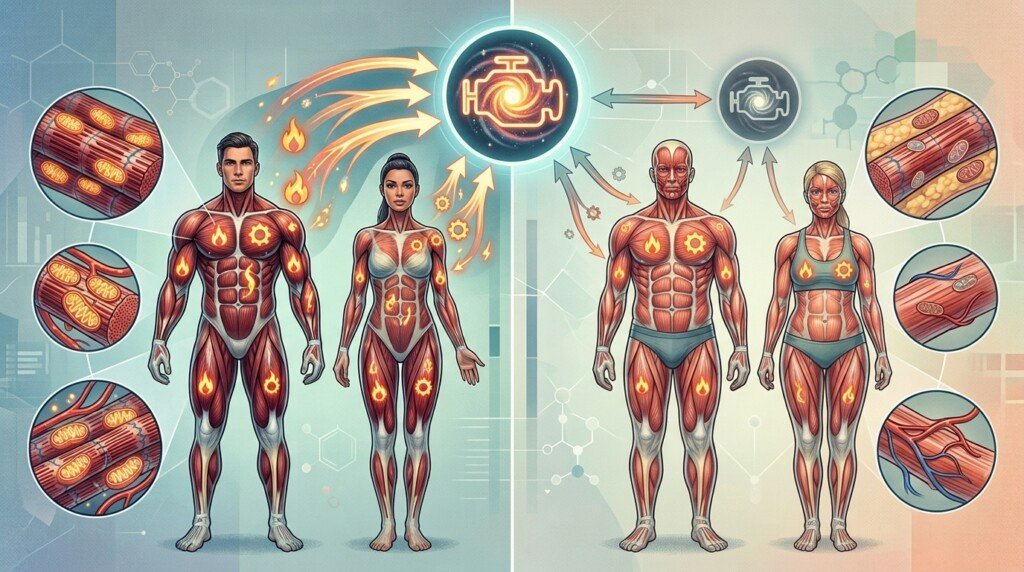
Lean body mass consistently predicts resting energy expenditure across many populations.
This relationship applies regardless of biological sex.
Two individuals with similar amounts of lean muscle often have remarkably similar metabolic rates, even if one is male and the other is female.
Strength Matters Beyond Calorie Burning
Maintaining muscle contributes to:
- Healthy aging.
- Mobility.
- Bone strength.
- Glucose regulation.
- Physical function.
The benefits extend well beyond metabolism alone.
Future readers interested in this topic can continue with Muscle and Metabolism, which explains the relationship in much greater detail.
Body Composition Explains More Than Labels
Instead of asking whether men or women have faster metabolisms, researchers increasingly ask:
“How much lean body mass does this individual have?”
That question often provides a much more meaningful answer.
Can Women Have a Faster Metabolism Than Men?
Absolutely.
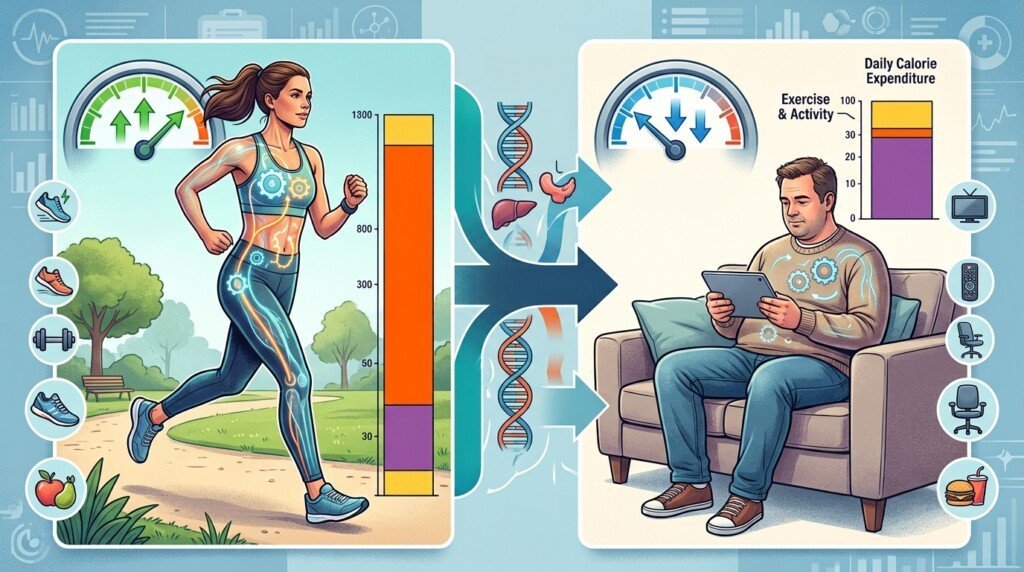
This surprises many people because population averages often receive more attention than individual variation.
Individual Differences Are Larger Than Many Expect
Consider these examples:
- A highly active woman with substantial lean muscle may burn more calories than a sedentary man.
- A younger athletic woman may have a higher resting metabolic rate than an older man.
- Larger women often require more daily energy than smaller men.
These examples demonstrate why averages should never be mistaken for universal rules.
Lifestyle Still Plays a Major Role
Daily movement, physical activity, muscle maintenance, nutrition, sleep, and overall health all influence metabolism.
These lifestyle factors frequently explain more variation than biological sex alone.
Readers interested in age-related changes may also enjoy Metabolism by Age, which explains how metabolism evolves throughout adulthood.
What Matters More Than Biological Sex?
Biological sex certainly influences metabolism.
However, it is only one variable among many.
Research consistently shows that long-term metabolic health depends on the interaction of numerous factors.
Muscle Mass
Lean muscle remains one of the strongest predictors of resting calorie expenditure.
Age
Metabolism changes gradually throughout life, largely because body composition also changes.
Genetics
Inherited traits influence metabolic rate, appetite, and body composition, but they do not determine outcomes on their own.
Future readers interested in heredity can explore Genetics and Metabolism for a detailed discussion.
Overall Health
Hormones, medical conditions, medications, and body composition all influence metabolism.
No single factor explains every difference between individuals.
Daily Habits
Healthy eating patterns, regular movement, adequate protein intake, and consistent physical activity continue supporting metabolic health regardless of biological sex.
Readers navigating midlife changes may also find Weight Loss After 40 helpful for understanding age-related changes beyond metabolism.
Male vs Female Metabolism at a Glance
| Question | Evidence-Based Answer |
|---|---|
| Do men usually burn more calories? | Yes, on average. |
| Why? | Greater lean muscle mass and larger body size. |
| Do hormones affect metabolism? | Yes. |
| Can women have faster metabolisms than men? | Absolutely. |
| Does menopause influence metabolism? | Yes, but it is only one factor. |
| What matters most? | Body composition, muscle mass, age, health, and lifestyle. |
The simplest way to understand this topic is:
Men generally burn more calories because they typically have more lean muscle mass, but individual differences are so large that biological sex alone never tells the whole story.

Frequently Asked Questions
1. Do women naturally have a slower metabolism?
On average, women have slightly lower resting calorie expenditure because they generally have less lean muscle mass. However, many women naturally have faster metabolisms than many men.
2. Does testosterone increase metabolism?
Testosterone supports muscle maintenance and body composition, which can indirectly contribute to higher energy expenditure.
3. Does menopause permanently slow metabolism?
Menopause may contribute to metabolic changes, but aging, muscle loss, and lifestyle habits also play major roles.
4. Can women increase metabolism naturally?
Healthy habits such as maintaining muscle, staying physically active, and eating a balanced diet help support metabolic health regardless of sex.
5. Is metabolism determined by biological sex alone?
No. Muscle mass, age, genetics, hormones, body size, and lifestyle all influence metabolism.
6. Why do men often need more calories?
Men usually have larger bodies and more lean muscle, increasing daily energy requirements.
7. Do hormones completely control metabolism?
No. Hormones influence metabolism, but they work alongside many other biological and lifestyle factors.
8. Does muscle explain most metabolism differences?
Muscle mass explains a significant portion of the average difference between men and women.
9. Can body composition matter more than sex?
Yes. Lean body mass is often a stronger predictor of resting metabolic rate than biological sex alone.
10. What has the greatest influence on long-term metabolic health?
Consistent healthy habits, maintaining muscle mass, staying physically active, balanced nutrition, and overall health have the greatest long-term influence.
Final Thoughts
The discussion around Male vs Female Metabolism often becomes oversimplified, leading many people to believe that biology alone determines how many calories they burn. While men generally have higher resting calorie expenditure because they tend to have more lean muscle mass and larger body size, these are population averages rather than fixed rules. Hormones such as testosterone and estrogen influence metabolism, but they are only part of a much larger system that also includes age, body composition, genetics, and lifestyle.
Perhaps the most important takeaway is that individual variation matters far more than stereotypes. A physically active woman with greater lean muscle can easily have a higher metabolic rate than a sedentary man. Instead of comparing metabolism based on biological sex, focus on the factors you can influence over time. Maintaining muscle mass, staying active, eating a balanced diet, and supporting overall health provide far greater benefits than worrying about whether men or women naturally burn more calories.
Disclaimer:
This post may contain affiliate links. If you purchase through them, we may earn a small commission at no extra cost to you. Also, this content is for informational purposes only and does not substitute professional medical advice.
Ready to Start Your Journey?
Use our free 7-in-1 Weight Loss Toolkit to calculate your numbers and build your plan in minutes.
Open Free Tools →