What Are Fat Cells? What Happens to Fat Cells After Weight Loss?

When people begin losing weight, one of the most common questions they ask is, “Where does the fat actually go?” Closely related to that question is another fascinating one: What happens to fat cells after weight loss?

Many people imagine that fat cells disappear as the number on the scale goes down. Others believe exercise destroys fat cells or that they permanently vanish once enough weight has been lost. These ideas are understandable, but they do not accurately reflect how the human body works.

Fat cells, also known as adipocytes, are highly specialized cells that store excess energy for future use. They are far more than passive storage containers. Fat cells help regulate metabolism, produce hormones, insulate the body, protect internal organs, and play an important role in overall energy balance.

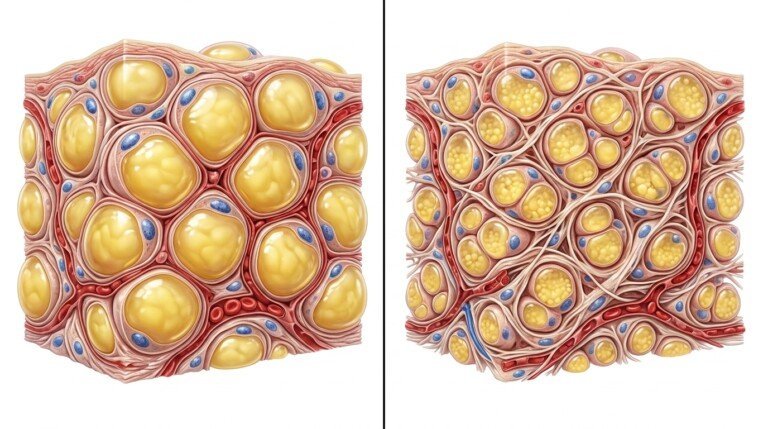
During weight loss, something remarkable happens. Instead of disappearing, most fat cells simply become smaller as they release stored triglycerides through a process called lipolysis. Those released fatty acids are later used to produce energy through fat oxidation. The cells themselves usually remain in place, ready to store energy again if calorie intake consistently exceeds energy needs.

Understanding Fat Cells helps explain why maintaining weight loss often requires long-term healthy habits rather than short-term dieting. It also explains why people can regain weight after losing it and why sustainable lifestyle changes remain the most effective approach to improving body composition.

In this article, you’ll learn what fat cells are, whether they disappear after weight loss, why they shrink instead of vanishing, when new fat cells can form, what happens during weight regain, whether exercise reduces fat cells, and which daily habits help prevent fat cell expansion.


What Are Fat Cells?

Fat cells are specialized cells designed to store excess energy and help regulate many important biological processes.

Scientifically known as adipocytes, these cells make up adipose tissue, which is commonly referred to as body fat.

Although fat cells are often viewed negatively, they perform several essential functions that keep the body healthy.

Fat Cells Store Energy

The primary role of fat cells is storing excess calories.

When you eat more energy than your body immediately requires, much of that surplus is converted into triglycerides and stored inside adipocytes.

Later, when energy demand increases, these stored triglycerides become available for use.

Fat Cells Protect the Body

Fat tissue cushions internal organs from physical impact.

It also provides insulation that helps maintain body temperature.

Without adequate body fat, many normal biological functions would become more difficult.

Fat Cells Produce Hormones

Fat cells are biologically active.

They release hormones involved in:

  • Appetite regulation
  • Energy balance
  • Metabolism
  • Inflammation

This is one reason why body fat is considered an endocrine organ rather than simply stored energy.

Fat Cells Continuously Change

Fat cells are not static.

Throughout life they constantly respond to changes in:

  • Calorie intake
  • Physical activity
  • Hormones
  • Energy balance

They can become larger, become smaller, or in some situations increase in number.

Fat Cells Support Healthy Body Composition

Healthy amounts of body fat are essential.

Problems develop primarily when fat cells become excessively enlarged or when excessive amounts of body fat accumulate over time.

The role of adipose tissue within overall body composition is explored further throughout Body Fat, where different types of body fat are discussed in greater detail.


Do Fat Cells Disappear After Weight Loss?

This is one of the biggest misconceptions about weight loss.

For most adults, fat cells do not disappear after losing weight.

Instead, they become significantly smaller.

Weight Loss Reduces Fat Cell Size

During a calorie deficit, stored triglycerides leave fat cells through lipolysis.

As energy reserves decrease, fat cells gradually shrink.

This reduction in cell size is responsible for much of the visible change people notice during successful weight loss.

Most Fat Cells Remain

Scientific research suggests that most adults maintain roughly the same number of fat cells after reaching adulthood.

What changes most dramatically is their size.

Smaller fat cells occupy less space, making the body appear leaner.

Shrinking Fat Cells Improve Body Composition

Although the cells remain, reducing their size can greatly improve:

These improvements occur without eliminating the cells themselves.

Fat Loss Is Different From Fat Cell Loss

Body fat decreases because stored triglycerides are removed.

The cells themselves usually remain available for future energy storage if needed.

This important distinction helps explain why maintaining healthy habits after weight loss is so valuable.

Fat Cells Are Part of Normal Biology

Fat cells should not be viewed as enemies.

Healthy amounts of adipose tissue support normal hormone production, energy storage, and numerous other physiological functions.

The science behind fat loss is explored further throughout How Fat Burning Works, where lipolysis and fat oxidation are explained step by step.


Why Do Fat Cells Shrink Instead of Vanishing?

Understanding why fat cells shrink instead of disappearing helps explain how the body efficiently manages energy throughout life.

Fat cells function as long-term energy storage units.

Removing them entirely would make storing future energy much more difficult.

Triglycerides Leave the Cell

During weight loss, triglycerides stored inside fat cells are broken into:

  • Fatty acids
  • Glycerol

These molecules leave the fat cell and enter the bloodstream.

The remaining fat cell becomes progressively smaller.

The Cell Structure Remains

Although most stored fat leaves the cell, the cell itself remains alive.

It continues monitoring energy balance and stays ready to store energy again when necessary.

Fat Cells Support Future Energy Storage

Human biology evolved during periods when food availability was often unpredictable.

Keeping fat cells available allowed the body to store energy efficiently whenever food became plentiful again.

This survival mechanism remains active today.

Fat Cells Continuously Respond to Lifestyle

The size of fat cells changes according to:

  • Daily calorie intake
  • Physical activity
  • Hormonal signals
  • Overall energy balance

Healthy habits gradually reduce fat cell size, while long-term calorie surplus causes them to enlarge.

Smaller Fat Cells Often Function Better

Research suggests that reducing excessive fat cell enlargement may support healthier metabolism and improve insulin sensitivity.

This is one reason why gradual fat loss often produces health benefits beyond simply lowering body weight.


Can New Fat Cells Form?

Yes.

Although most adults maintain a relatively stable number of fat cells, new fat cells can develop under certain conditions.

This process is known as adipogenesis.

Existing Fat Cells Expand First

When calorie intake consistently exceeds energy needs, existing fat cells usually enlarge before new fat cells develop.

The body attempts to store additional triglycerides inside its current fat cells whenever possible.

New Fat Cells May Develop During Long-Term Weight Gain

If existing fat cells become very large, the body may produce additional adipocytes to safely store excess energy.

Creating new fat cells helps distribute stored fat across more cells instead of overfilling existing ones.

Childhood and Adolescence Matter

The total number of fat cells often increases during childhood and adolescence as the body grows.

By early adulthood, fat cell numbers generally become much more stable.

Genetics Also Influence Fat Cell Development

Some people naturally have a greater tendency to develop additional fat cells than others.

Genetics influences:

Lifestyle still plays a major role, but inherited biology contributes to these individual differences.

Healthy Habits Help Limit Excess Fat Storage

Maintaining balanced eating habits and regular physical activity reduces the likelihood of prolonged calorie surplus that encourages continued fat cell expansion.


Does Weight Regain Refill Existing Fat Cells?

One of the biggest challenges after successful weight loss is maintaining the results. Many people notice that regaining weight can happen faster than losing it, leading them to wonder whether fat cells somehow “remember” being larger.

Scientific research shows that, in most adults, weight regain primarily occurs because existing fat cells refill with stored triglycerides. Instead of creating entirely new fat cells immediately, the body first enlarges the adipocytes that became smaller during weight loss.

Understanding this process highlights why long-term healthy habits are essential for maintaining body composition.

Existing Fat Cells Store Energy Again

When calorie intake consistently exceeds energy needs, existing fat cells begin storing triglycerides once more.

As these energy reserves increase, the fat cells gradually expand.

This process happens naturally because fat cells are designed to store excess energy whenever it is available.

Weight Regain Usually Happens Gradually

Weight regain rarely occurs overnight.

Instead, repeated periods of consuming more calories than the body uses allow fat cells to slowly refill over weeks or months.

Small daily calorie surpluses can eventually produce noticeable changes in body composition.

Fat Cells Remain Responsive

Even after significant weight loss, fat cells remain biologically active.

They continue responding to changes in:

  • Energy intake
  • Physical activity
  • Hormonal signals
  • Overall metabolism

This flexibility allows them to shrink during fat loss and expand again during prolonged calorie surplus.

Healthy Habits Help Maintain Smaller Fat Cells

Maintaining a stable body weight depends on continuing the habits that supported weight loss.

Regular movement, balanced eating, and consistent sleep patterns help reduce the likelihood of fat cells becoming enlarged again.

This is one reason why Sustainable Weight Loss focuses on long-term lifestyle changes rather than temporary dieting.

Weight Regain Does Not Mean Failure

Body weight naturally fluctuates throughout life.

Short-term increases on the scale often reflect changes in:

  • Water balance
  • Glycogen stores
  • Food volume
  • Normal daily variation

Occasional fluctuations are normal and should not be confused with significant fat regain.


Can Exercise Reduce Fat Cells?

Exercise is one of the most effective ways to improve body composition, but it is important to understand exactly what it changes.

Exercise primarily reduces the size of fat cells rather than permanently removing them.

Exercise Increases Energy Demand

Physical activity raises your body’s energy requirements.

To meet this demand, your body uses a combination of:

  • Stored carbohydrates
  • Stored fat

Over time, this contributes to smaller fat cells.

Exercise Supports Lipolysis

During periods of increased energy demand, hormones stimulate lipolysis.

Stored triglycerides are broken into fatty acids and glycerol, allowing the body to access stored energy.

This process is explained further throughout How the Body Stores Fat.

Exercise Improves Body Composition

Although fat cells remain, exercise can significantly improve:

  • Body fat percentage
  • Waist circumference
  • Lean muscle mass
  • Physical fitness

These changes often become noticeable even before large reductions in body weight occur.

Strength Training Preserves Muscle

Resistance training helps maintain lean muscle during weight loss.

Preserving muscle supports:

  • Healthy metabolism
  • Functional strength
  • Long-term weight management

Improved muscle mass also contributes to a healthier overall body composition.

Consistency Matters More Than Intensity

One workout does not dramatically shrink fat cells.

Instead, regular physical activity performed consistently over time produces gradual improvements.

Walking, cycling, swimming, resistance training, and other enjoyable activities can all support long-term fat loss.


Which Habits Help Prevent Fat Cell Expansion?

Although fat cells remain throughout life, healthy daily habits can help keep them from becoming excessively enlarged.

These habits support long-term metabolic health while reducing the likelihood of repeated weight regain.

Maintain a Balanced Energy Intake

Avoiding long-term calorie surplus helps limit excessive fat storage.

Balanced eating patterns are generally easier to maintain than highly restrictive diets.

Focus on building meals that include:

  • Lean protein
  • Whole grains
  • Vegetables
  • Fruits
  • Healthy fats

Stay Physically Active

Regular movement helps increase daily energy expenditure.

Helpful forms of exercise include:

  • Walking
  • Cycling
  • Swimming
  • Resistance training
  • Recreational activities

Everyday movement also contributes to overall calorie balance.

Protect Your Muscle Mass

Maintaining lean muscle supports healthier body composition.

Strength training combined with adequate protein intake helps preserve muscle while reducing body fat.

Prioritize Sleep

Consistent, restorative sleep supports:

  • Appetite regulation
  • Recovery
  • Hormone balance
  • Daily energy levels

Poor sleep often makes healthy lifestyle habits more difficult to maintain.

Manage Stress

Chronic stress may influence eating behaviors and physical activity.

Healthy stress management strategies include:

  • Walking outdoors
  • Meditation
  • Deep breathing
  • Reading
  • Spending time with family
  • Relaxing hobbies

Focus on Long-Term Consistency

Healthy body composition develops from repeated daily choices.

Rather than searching for rapid results, aim for habits you can realistically maintain for years.

Progress may occasionally slow, and temporary changes in body weight are normal. Even during a Weight Loss Plateau, continuing healthy behaviors supports long-term success more effectively than making drastic changes.

Understanding Where Does Fat Go When You Lose Weight also reinforces why fat loss is a gradual biological process rather than something that happens overnight. Patience and consistency remain your greatest advantages.


Frequently Asked Questions

1. What are fat cells?

Fat cells, also called adipocytes, are specialized cells that store excess energy as triglycerides. They also help regulate hormones, metabolism, energy balance, and protect internal organs.

2. Do fat cells disappear after weight loss?

For most adults, fat cells do not disappear. Instead, they shrink as stored triglycerides are released and used for energy during weight loss.

3. Can new fat cells form?

Yes. New fat cells can develop when existing fat cells become very large during prolonged periods of excess calorie intake. This process is known as adipogenesis.

4. Does exercise remove fat cells?

Exercise does not usually reduce the number of fat cells. Instead, it helps shrink fat cells by increasing energy expenditure and encouraging the use of stored fat.

5. How can you prevent fat cells from getting bigger again?

Maintaining a balanced calorie intake, staying physically active, preserving muscle through strength training, sleeping well, managing stress, and following sustainable lifestyle habits all help reduce the likelihood of fat cell expansion.


Final Thoughts

Understanding Fat Cells helps explain one of the most important principles of weight management. During weight loss, most fat cells do not disappear. Instead, they shrink as stored triglycerides are released through lipolysis and later used for energy through fat oxidation. These smaller fat cells remain part of your body’s normal biology, ready to store energy again if a prolonged calorie surplus occurs.

This knowledge also explains why maintaining weight loss requires more than reaching a target number on the scale. Existing fat cells remain responsive throughout life, expanding and shrinking according to your long-term energy balance. While new fat cells can develop under certain circumstances, especially after prolonged weight gain, healthy daily habits greatly reduce the likelihood of excessive fat cell expansion.

The encouraging news is that improving body composition does not require eliminating fat cells. Regular physical activity, balanced nutrition, quality sleep, stress management, and consistent healthy routines help keep fat cells smaller while preserving lean muscle and supporting metabolic health. By understanding how fat cells function, you can move beyond common myths and focus on sustainable habits that promote long-term health, lasting weight management, and a healthier relationship with your body.


Disclaimer:

This post may contain affiliate links. If you purchase through them, we may earn a small commission at no extra cost to you. Also, this content is for informational purposes only and does not substitute professional medical advice.

Exit mobile version