

Why Is VO2 Max Important? Performance, Heart Health, and Longevity
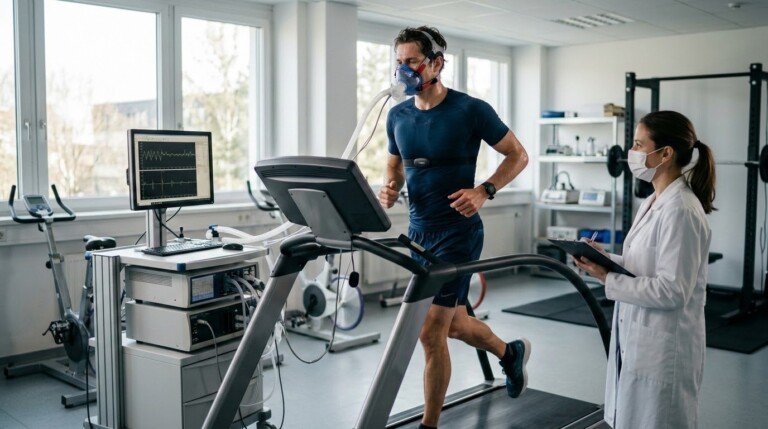
If you have ever wondered why is VO2 max important, the answer goes well beyond running faster or becoming a better athlete. VO2 max gives us a window into how effectively the body can take in oxygen, transport it through the cardiovascular system, and use it inside working muscles. That makes it useful for performance, but it also makes it relevant to people who have never considered themselves athletes.
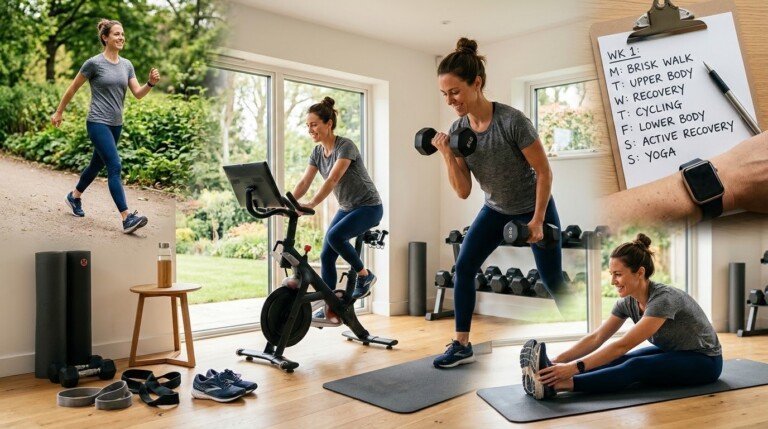
A runner may care about VO2 max because it influences endurance. A cyclist may use it to understand aerobic capacity. Someone who simply wants to remain active as they get older may care because higher aerobic fitness is associated with better cardiovascular health and a lower risk profile for several chronic conditions.
That broader significance is what makes VO2 max different from many ordinary fitness measurements. Your resting heart rate tells you something important about your cardiovascular system. Your pace tells you how quickly you can move. But VO2 max brings several systems together. It reflects the ability of the lungs to make oxygen available, the heart and blood vessels to deliver it, and the muscles to use it during demanding physical activity.
It is also important not to treat VO2 max as a magic number. A higher score does not guarantee perfect health, and a lower score does not automatically mean something is wrong. Age, genetics, training history, body composition, health status, and the sport someone participates in can all influence the result.
What matters is understanding what the number represents and why it can be useful.
Why is VO2 Max crucial for athletic performance?
For athletes, VO2 max is closely connected with the body’s ability to sustain aerobic work. During exercise, muscles need a continuous supply of energy. As exercise becomes harder and lasts longer, the ability to deliver and use oxygen becomes increasingly important.
This is why aerobic capacity matters so much in endurance sports. An athlete with a high VO2 max generally has a greater capacity to consume oxygen during intense exercise than someone with a lower value, although that does not mean VO2 max alone determines who wins a race.
Performance is much more complicated than one measurement.
Two runners can have similar VO2 max values but very different race results because of differences in running economy, lactate threshold, technique, pacing, training history, and psychological tolerance for sustained effort. The same principle applies to cyclists, swimmers, rowers, cross-country skiers, and other endurance athletes.
VO2 max is therefore best understood as part of the performance picture rather than the entire picture.


How does VO2 Max relate to endurance performance across different sports?
The relationship between VO2 max and endurance performance becomes easier to understand when you think about what happens during sustained exercise.
Imagine two people running at the same pace. Their muscles require oxygen to support aerobic energy production. The person who can deliver and use oxygen more effectively has a larger aerobic capacity to draw upon. As exercise intensity rises, that capacity becomes increasingly relevant.
In endurance sports, a high VO2 max provides a larger physiological ceiling. An athlete who can consume a substantial amount of oxygen can potentially sustain higher workloads before reaching the upper limits of their aerobic system.
However, athletes rarely compete at their absolute VO2 max for an entire event. A marathon runner, for example, cannot simply maintain maximal oxygen consumption from the starting line to the finish. Instead, performance depends heavily on how much of their aerobic capacity they can sustain efficiently.
This distinction explains why VO2 max and endurance performance are related without being identical.
A highly trained marathon runner may have an impressive VO2 max, but their ability to maintain a high percentage of that capacity for a long period can be just as important. A cyclist may have excellent oxygen consumption but still lose time because of poor cycling economy. A swimmer’s performance is also influenced by stroke efficiency and technique.
The sport itself changes the context.
For example, endurance athletes in cycling and running can develop very high aerobic capacities because their training places substantial demands on oxygen delivery and utilization. Rowers and cross-country skiers can also reach extremely high values because their sports recruit large amounts of muscle mass while placing significant demands on the cardiovascular system.
This is one reason it is misleading to compare every athlete using exactly the same expectation.
VO2 max is most useful when interpreted alongside the demands of the sport and the athlete’s own training history.
For recreational athletes, the number can still be valuable. You do not need an elite-level score for VO2 max to matter. If your aerobic fitness improves, you may notice that activities such as climbing stairs, walking uphill, cycling, jogging, or playing recreational sports feel easier.
That is the practical side of aerobic capacity.
A stronger aerobic system can give you more room between everyday activity and the point at which exercise feels overwhelmingly difficult.
It is also worth remembering that the number can change with training. Someone who starts exercising after years of inactivity may experience meaningful improvements in aerobic fitness without ever approaching elite athletic levels. That improvement can be much more relevant to the person’s health and daily life than comparison with professional athletes.
If you want to understand the number itself before interpreting it, the foundational explanation of VO2 max provides the necessary context.
What’s the typical VO2 Max range for elite athletes in various disciplines?
Elite athletes tend to have substantially higher VO2 max values than the general population, particularly in sports that demand exceptional aerobic endurance. But there is no single “elite VO2 max” that applies to every sport.
Endurance disciplines generally produce some of the highest recorded values. Elite distance runners, cyclists, rowers, cross-country skiers, and similar athletes can reach exceptionally high levels of aerobic capacity.
Cross-country skiing is particularly notable because the sport combines large muscle recruitment with sustained aerobic demand. Elite cyclists and distance runners can also demonstrate very high values, although the exact range varies considerably between individuals.
This variation is important because athletes are not built from the same physiological blueprint.
An elite marathon runner may have a different physiological profile from an elite sprinter. A professional cyclist may have different strengths from a rower. Even athletes competing in the same event can have different combinations of VO2 max, efficiency, threshold performance, and muscular characteristics.
That means a high VO2 max should not automatically be interpreted as proof of superior overall athletic ability.
In some sports, explosive power, speed, strength, technique, or anaerobic capacity may matter more than maximum oxygen consumption. A professional sprinter does not need the same aerobic profile as a marathon runner because the demands of the event are fundamentally different.
For this reason, VO2 max should always be interpreted in context.
A recreational runner who improves their VO2 max from a relatively low starting point may have achieved a more meaningful physiological improvement than an elite athlete who increases an already exceptional score by a small amount.
The number matters, but the trajectory matters too.
Why is VO2 Max considered such a strong indicator of cardiovascular health?
VO2 max is important for cardiovascular health because it represents more than the performance of one organ.
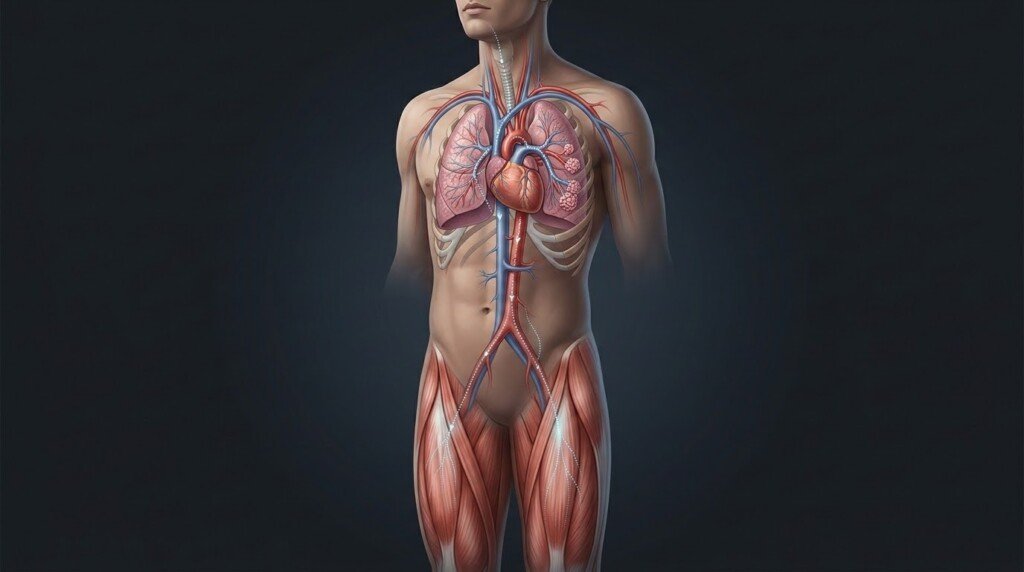
To reach a high oxygen consumption level during exercise, the body has to coordinate several systems at once. The heart needs to pump blood effectively. Blood vessels need to deliver that blood to active tissues. The lungs need to support oxygen exchange. Hemoglobin needs to transport oxygen. Muscles need to extract and use the oxygen being delivered.
In other words, VO2 max provides a functional snapshot of the body’s integrated aerobic system.
This is different from simply measuring one resting value.
A person can have a normal resting heart rate while still having relatively poor aerobic fitness. Likewise, someone can have a higher resting heart rate without necessarily having poor cardiovascular health. Individual measurements have context.
VO2 max adds another dimension because it asks a practical physiological question: how effectively can your entire oxygen transport and utilization system respond when the body’s demand for oxygen rises?
That is one reason researchers have paid considerable attention to cardiorespiratory fitness as a health marker.
Higher levels of cardiorespiratory fitness are generally associated with better health outcomes, while low cardiorespiratory fitness is associated with higher risks for cardiovascular and other chronic diseases. Importantly, these relationships are population-level associations. They do not mean that VO2 max alone causes or prevents a particular disease.
Why does a higher VO2 Max signify better heart function?
The heart plays a central role in determining how much oxygen can ultimately reach working muscles.
During exercise, oxygen demand rises sharply. The cardiovascular system responds by increasing blood flow. The heart beats faster and pumps more blood with each contraction. Blood vessels supplying active muscles also adjust to support the increased demand.
A person with better aerobic fitness can generally deliver and use oxygen more effectively during exercise.
One useful concept here is cardiac output, which represents the amount of blood the heart pumps per minute. It depends on heart rate and stroke volume, meaning the amount of blood pumped with each heartbeat.
As exercise intensity increases, the cardiovascular system has to increase oxygen delivery. The more effectively that system responds, the greater the body’s potential to sustain aerobic work.
This does not mean a high VO2 max is simply a measurement of how strong the heart is.
The heart is only one part of the chain.
Oxygen must first enter the body through the lungs, travel through the bloodstream, reach active tissues, and then be extracted and used by mitochondria inside muscle cells. If any part of that process limits oxygen utilization, overall VO2 max can be affected.
That is precisely why the measurement is so interesting.
It reflects a system rather than a single component.
For someone interested in long-term fitness, this makes VO2 max more useful than thinking only about how fast the heart beats during exercise. A heart that beats quickly is not automatically a heart that delivers oxygen efficiently.
Is VO2 Max linked to a reduced risk of heart disease?
Yes. Higher cardiorespiratory fitness, commonly assessed through VO2 max or closely related measures, is associated with a lower risk of cardiovascular disease and mortality in large populations.
This is one of the most important reasons VO2 max has moved beyond the world of elite sports.
Researchers have repeatedly observed that people with higher cardiorespiratory fitness tend to have better long-term health outcomes than people with very low fitness levels. The relationship is not simply about athletic performance. It reflects the importance of maintaining a body that can respond effectively to physical demands.
However, there is a critical distinction between association and prediction.
VO2 max should not be used by itself to diagnose heart disease or determine an individual’s personal risk. Blood pressure, cholesterol, smoking status, diabetes, family history, physical activity, age, body composition, and many other factors also matter.
Someone with a good VO2 max can still develop cardiovascular disease. Someone with a lower VO2 max can also improve their fitness and reduce some of their overall risk factors.
Think of VO2 max as one important piece of the health puzzle, not the entire puzzle.
This perspective also prevents a common mistake: assuming that you need an elite score for your health to benefit.
You do not.
The difference between being extremely fit and moving from very poor fitness toward moderate fitness is not merely an athletic distinction. Improvements in low cardiorespiratory fitness can be meaningful from a health perspective.
The goal for most people should not be chasing an impressive number simply because it looks good on a fitness tracker. It should be building and maintaining an aerobic capacity that supports an active life.
Why is VO2 Max considered a more comprehensive health marker than heart rate alone?
Heart rate is useful, but it tells only part of the story.
Your heart rate tells you how frequently your heart is beating. It does not directly tell you how much blood is being pumped with each beat, how effectively oxygen is being extracted by your muscles, or how efficiently the respiratory and cardiovascular systems are working together.
VO2 max incorporates more of that picture.
Consider two people who both reach 160 beats per minute during exercise. Their heart rates are identical at that moment, but their physical capacities could be completely different.
One person might be running comfortably at a relatively fast pace. The other might be struggling to maintain a much slower pace. Their hearts are beating at the same frequency, but their bodies are producing very different amounts of external work.
That difference illustrates why heart rate alone cannot fully describe aerobic fitness.
VO2 max provides information about the amount of oxygen being consumed during exercise, which is closely connected to the body’s ability to produce aerobic energy.
It therefore captures several physiological processes simultaneously.
Heart rate remains extremely valuable for training and monitoring exercise intensity. It is also easy to measure, inexpensive, and available through many wearable devices. But it should not be confused with a complete measurement of aerobic capacity.
VO2 max answers a different question.
Instead of asking only, “How fast is your heart beating?” it asks, in effect, “How much oxygen can your body consume when the demand is high?”
That broader physiological perspective is what gives the measurement its significance.
It is also why changes in VO2 max can sometimes reveal improvements that are not obvious from resting heart rate alone.
Why VO2 Max Matters Beyond Athletic Performance
The biggest misunderstanding about VO2 max is that it belongs exclusively to runners, cyclists, and competitive athletes.
It does not.
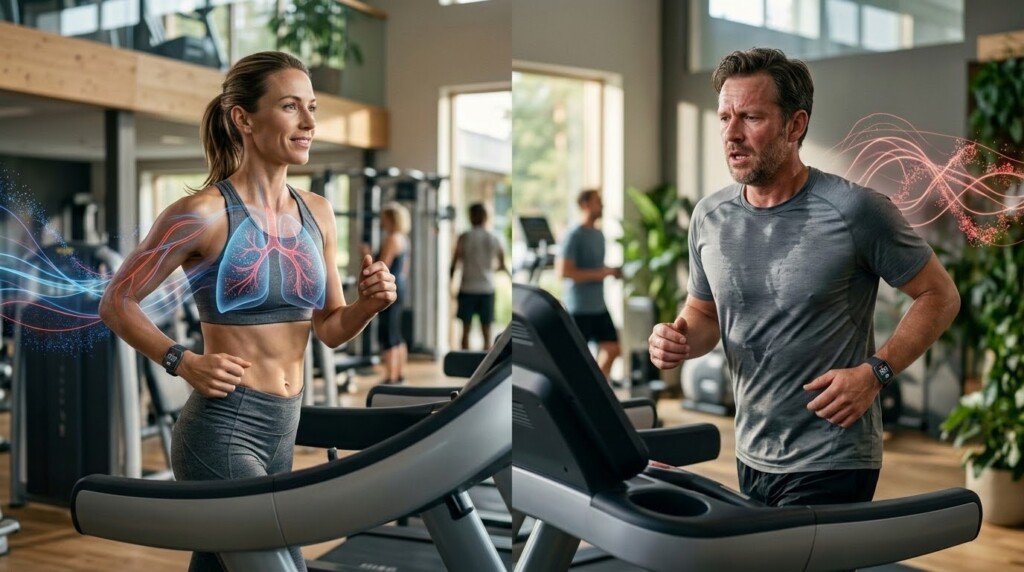
Athletes may care about VO2 max because it helps explain endurance potential. For everyone else, the more important question is what aerobic capacity means for maintaining physical independence, cardiovascular fitness, and the ability to tolerate everyday physical demands.
Think about ordinary activities that become harder when aerobic fitness declines.
Walking uphill becomes uncomfortable. Carrying groceries requires more effort. Climbing several flights of stairs leaves you unusually breathless. A long day involving physical activity becomes exhausting.
These experiences are not determined by VO2 max alone, but aerobic capacity is part of the foundation that supports them.
A person with a stronger aerobic system generally has more physiological capacity available before everyday activity approaches their limits.
That matters more as life becomes less sedentary.
You do not need to become an endurance athlete to benefit from having a capable cardiovascular system. The objective is not to turn every person into a marathon runner. It is to preserve the ability to move, work, exercise, recover, and participate in daily life without physical effort becoming unnecessarily difficult.
This is where the health and performance sides of VO2 max meet.
For an athlete, the question might be, “Can I sustain a faster pace?”
For a non-athlete, the question might be, “Can I keep doing the things I enjoy without losing physical capacity?”
The underlying physiology overlaps.
VO2 max also gives us a useful way to think about fitness as something measurable rather than purely subjective. You may feel that you are “in decent shape,” but objective testing can provide another perspective.
At the same time, no fitness metric should become an obsession.
Wearable estimates can fluctuate. Testing conditions can influence results. Algorithms can produce different estimates from different devices. Hydration, fatigue, illness, recent exercise, environmental conditions, and testing protocol can all affect performance.
A single VO2 max number should therefore never be treated as a verdict.
A pattern over time is usually more informative.
If your estimated or measured VO2 max gradually improves while your endurance improves and exercise feels easier, those pieces of information reinforce each other.
If the number suddenly changes without an obvious change in your fitness, it may simply reflect measurement variability.
This is especially important when using consumer fitness trackers.
The number displayed on a watch can be useful for observing trends, but it is not necessarily equivalent to a laboratory measurement. For a deeper look at what affects VO2 max and why individuals differ, the factors that influence VO2 max can help put those differences into perspective.
Frequently Asked Questions
1. Why is VO2 Max important?
VO2 max is important because it reflects how effectively your body can take in, transport, and use oxygen during demanding exercise. It is closely related to aerobic capacity and endurance performance, and higher cardiorespiratory fitness is generally associated with better long-term cardiovascular and health outcomes.
For athletes, it can help describe aerobic performance potential. For non-athletes, it can provide a useful measure of overall cardiorespiratory fitness.
2. Does VO2 Max predict heart disease risk?
VO2 max and cardiorespiratory fitness are associated with cardiovascular disease risk and long-term mortality in research populations. Generally, lower fitness is associated with a less favorable risk profile.
However, VO2 max does not diagnose heart disease or determine an individual’s personal risk by itself. Blood pressure, cholesterol, diabetes, smoking, family history, age, physical activity, and other factors must also be considered.
3. What’s a good VO2 Max for an elite athlete?
There is no single VO2 max value that defines an elite athlete. Elite endurance athletes often have exceptionally high values, particularly in sports such as distance running, cycling, rowing, and cross-country skiing.
The relevant benchmark depends on the athlete’s sport, sex, age, training background, and physiological characteristics. VO2 max should also be considered alongside factors such as exercise economy, lactate threshold, strength, technique, and race-specific performance.
The Bottom Line
VO2 max matters because it connects two sides of fitness that are often treated separately.
For athletes, it helps explain how much aerobic capacity is available to support sustained performance. For the general population, it provides a useful window into cardiorespiratory fitness and is associated with important long-term health outcomes.
But the number should never become the entire goal.
A high VO2 max does not automatically make someone healthy, and a modest score does not mean someone has failed. What matters is the larger picture and, in many cases, whether your aerobic capacity is moving in a healthier direction over time.
That makes VO2 max worth paying attention to, not because everyone needs an elite score, but because having a capable aerobic system gives the body more room to perform, recover, and handle the physical demands of life.
Disclaimer:
This post may contain affiliate links. If you purchase through them, we may earn a small commission at no extra cost to you. Also, this content is for informational purposes only and does not substitute professional medical advice.
Train Smarter, Not Harder
Use our free Fitness Toolkit to find your heart rate zones and calories burned in minutes.
Open Free Tools →