Which Foods Keep You Full Longer? 18 Foods That Increase Satiety
Feeling hungry shortly after eating can make healthy eating feel frustrating. You finish a meal expecting it to keep you satisfied for hours, but before long you’re searching the kitchen for another snack. If this happens regularly, the problem may not be how much you’re eating, but what you’re eating.
Some foods naturally keep you full longer because they digest more slowly, provide steady energy, and influence the body’s natural hunger and fullness signals. Others are quickly digested, causing hunger to return much sooner. Learning the difference can help you reduce unnecessary snacking, control cravings, and make healthy eating feel much easier.
Satiety, or the feeling of fullness after eating, depends on several factors. Protein, fiber, healthy fats, water content, and even the texture of food all affect how long a meal keeps you satisfied. Whole, minimally processed foods generally provide greater satiety than highly processed foods because they take longer to digest and contain more nutrients that support appetite regulation.
Choosing satisfying foods does not mean eating large portions. In fact, many nutrient-dense foods help people naturally eat less because they remain full for longer periods. This makes them valuable whether your goal is maintaining a healthy weight, improving metabolic health, or simply avoiding constant hunger throughout the day.
In this article, you’ll discover Foods That Keep You Full Longer, why some foods increase satiety more than others, how protein and fiber influence appetite, which healthy fats support fullness, whether drinking water helps reduce hunger, the best snacks for lasting satisfaction, and how to build meals that keep you energized for hours.
Why Do Some Foods Keep You Full Longer Than Others?
Not all calories affect hunger in the same way.
Two meals with identical calorie counts can produce very different levels of satisfaction depending on their nutritional composition.
A meal rich in protein, fiber, and healthy fats often keeps you comfortably full for several hours, while one made mostly of refined carbohydrates may leave you hungry much sooner.
Understanding why this happens makes it easier to build meals that naturally support appetite control.
Protein Takes Longer to Digest
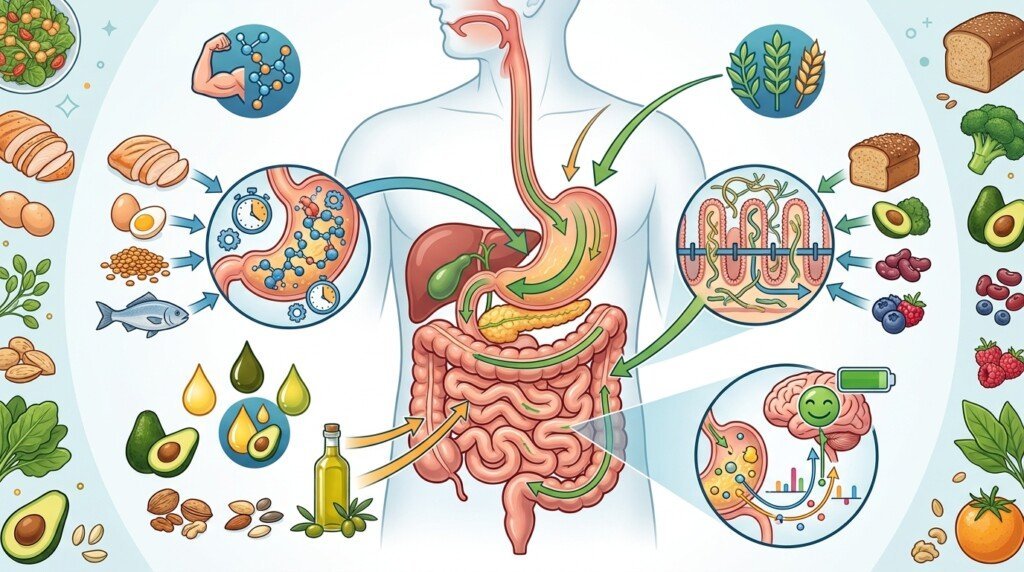
Protein slows digestion compared with many refined carbohydrates.
As food remains in the stomach longer, fullness lasts longer as well.
Protein also supports several hormones involved in appetite regulation, making it one of the most satisfying nutrients you can include in your meals.
Fiber Adds Volume Without Excess Calories
Fiber absorbs water and increases the volume of food in your digestive system.
This helps you feel satisfied without dramatically increasing calorie intake.
Fiber-rich foods also require more chewing, which naturally slows eating and gives your body more time to recognize fullness.
Healthy Fats Slow Digestion
Healthy fats digest more slowly than simple carbohydrates.
Including moderate amounts of foods such as avocados, nuts, seeds, and olive oil helps meals remain satisfying while providing important nutrients.
The combination of protein, fiber, and healthy fats creates some of the most filling meals.
Whole Foods Require More Work to Digest
Whole foods often contain natural fiber, water, and complex carbohydrates that digest gradually.
Highly processed foods are typically easier to eat quickly and digest faster, causing hunger to return sooner.
Choosing minimally processed foods supports steadier energy and more consistent appetite throughout the day.
Satiety Supports Healthy Eating Habits
Feeling satisfied after meals makes it easier to:
- Avoid unnecessary snacking
- Reduce cravings
- Maintain balanced portions
- Eat more consistently
- Support long-term weight management
Many of these benefits also contribute to healthier appetite regulation discussed throughout Hunger Hormones.
Which Foods Keep You Full Longer?
Many foods contribute to lasting fullness, but some consistently rank higher because they combine protein, fiber, water, or healthy fats in ways that naturally increase satiety.
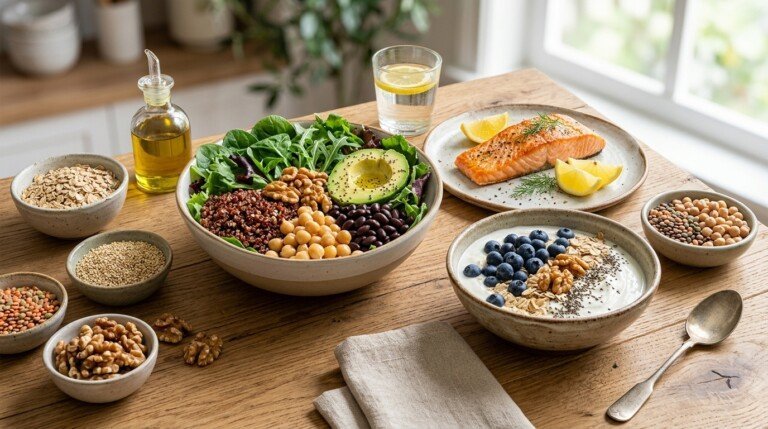
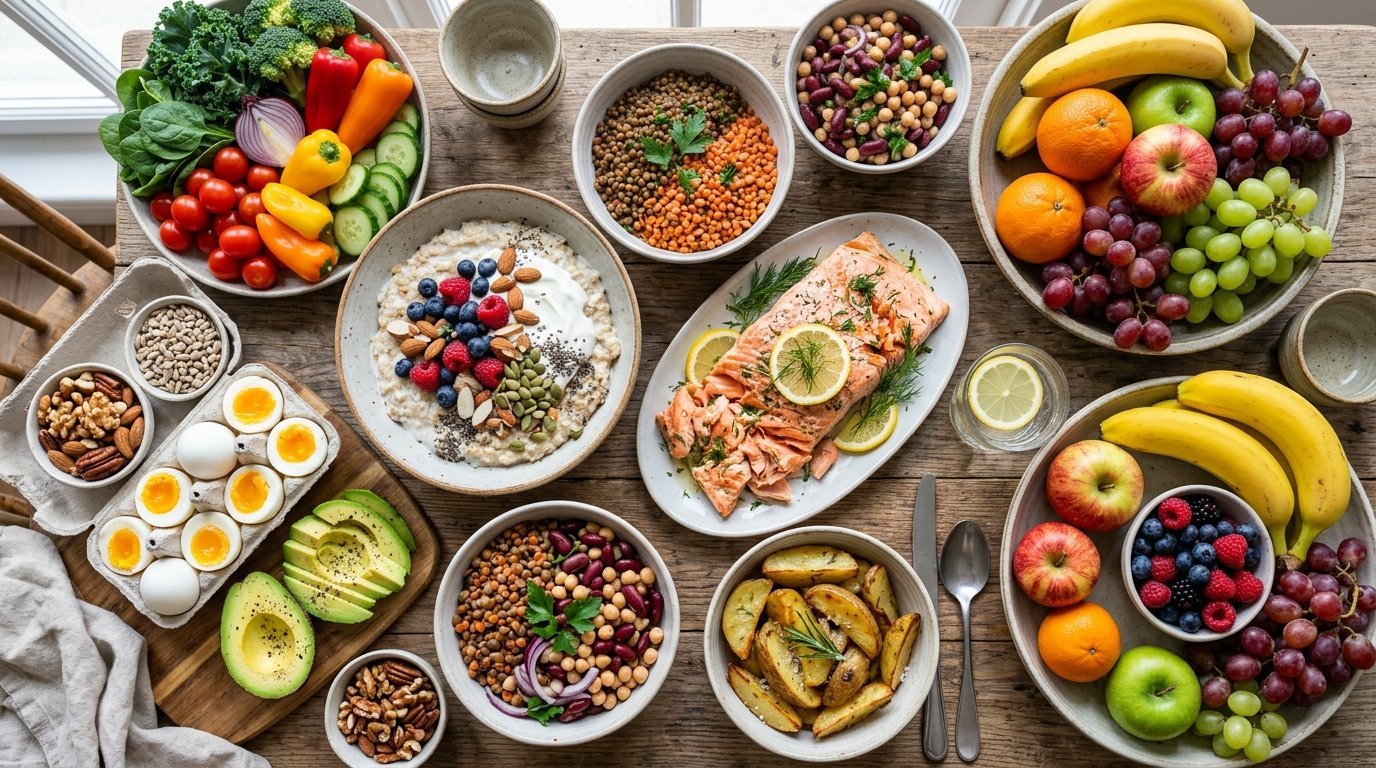
Here are 18 science-backed foods that keep you full longer.
1. Eggs
Eggs provide high-quality protein that helps increase meal satisfaction.
Starting the day with eggs may reduce hunger later in the morning while supporting balanced energy levels.
They also fit well into many breakfast combinations discussed in Best Breakfast for Weight Loss.
2. Greek Yogurt
Greek yogurt contains considerably more protein than many regular yogurts.
Its creamy texture and protein content make it an excellent breakfast or snack that promotes fullness.
Choose plain varieties with minimal added sugar whenever possible.
3. Oats
Oats are rich in soluble fiber, particularly beta-glucan.
This type of fiber slows digestion while helping maintain steady energy throughout the morning.
Adding fruit and nuts makes oatmeal even more satisfying.
4. Lentils
Lentils combine plant protein with large amounts of fiber.
This powerful combination supports fullness while providing vitamins, minerals, and complex carbohydrates.
They work well in soups, salads, and grain bowls.
5. Beans
Black beans, kidney beans, chickpeas, and other legumes provide similar benefits.
Their combination of protein and fiber makes them among the most filling plant-based foods available.
6. Potatoes
Despite their reputation, boiled potatoes consistently rank among the highest foods for satiety.
Their high water content and resistant starch contribute to prolonged fullness when prepared without excessive added fat.
7. Apples
Apples contain fiber and a high percentage of water.
Eating whole apples rather than drinking apple juice helps increase fullness while satisfying sweet cravings naturally.
Additional fruit options are explored in Best Fruits for Weight Loss.
8. Cottage Cheese
Cottage cheese provides slow-digesting protein that supports fullness for several hours.
It works well as either breakfast or a protein-rich afternoon snack.
9. Salmon
Salmon offers both high-quality protein and healthy omega-3 fats.
This combination makes it one of the most satisfying protein sources while supporting overall health.
10. Chia Seeds
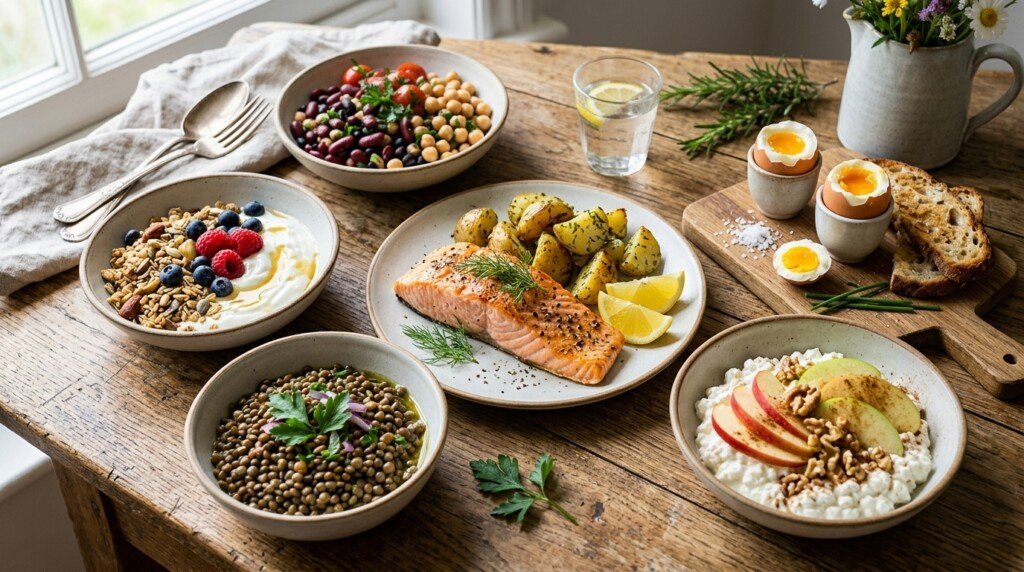
Chia seeds may be tiny, but they provide an impressive combination of fiber, healthy fats, and plant-based protein. When mixed with liquid, they absorb several times their weight in water and form a gel-like texture that slows digestion.
Adding chia seeds to oatmeal, yogurt, smoothies, or overnight oats is a simple way to make meals more filling without adding excessive calories.
11. Flaxseeds
Flaxseeds are another excellent source of fiber and healthy fats. Ground flaxseeds are easier to digest than whole seeds and can be added to smoothies, oatmeal, yogurt, or homemade baked goods.
Their fiber content supports digestion while helping meals remain satisfying for longer.
12. Avocados
Avocados provide heart-healthy monounsaturated fats along with fiber and several important vitamins.
Although they are higher in calories than many fruits, moderate portions fit well into balanced meals because they promote lasting fullness.
Try adding avocado to:
- Whole-grain toast
- Salads
- Sandwiches
- Grain bowls
- Eggs
13. Almonds
Almonds combine healthy fats, protein, and fiber in one convenient snack.
A small handful can help reduce hunger between meals while providing nutrients such as vitamin E and magnesium.
Choosing plain, unsalted almonds is generally the healthiest option.
14. Walnuts
Walnuts contain healthy fats, fiber, and plant protein.
Research suggests they may help improve satiety while supporting heart health as part of an overall balanced diet.
They pair well with fruit, oatmeal, or Greek yogurt.
15. Quinoa
Quinoa is a whole grain that provides more protein than many other grains while also supplying fiber and important minerals.
Its balanced nutritional profile makes it an excellent base for salads, grain bowls, and side dishes that keep you satisfied longer.
16. Brown Rice
Brown rice contains more fiber than white rice because it retains its bran layer.
When combined with lean protein and vegetables, it creates balanced meals that provide slow, steady energy.
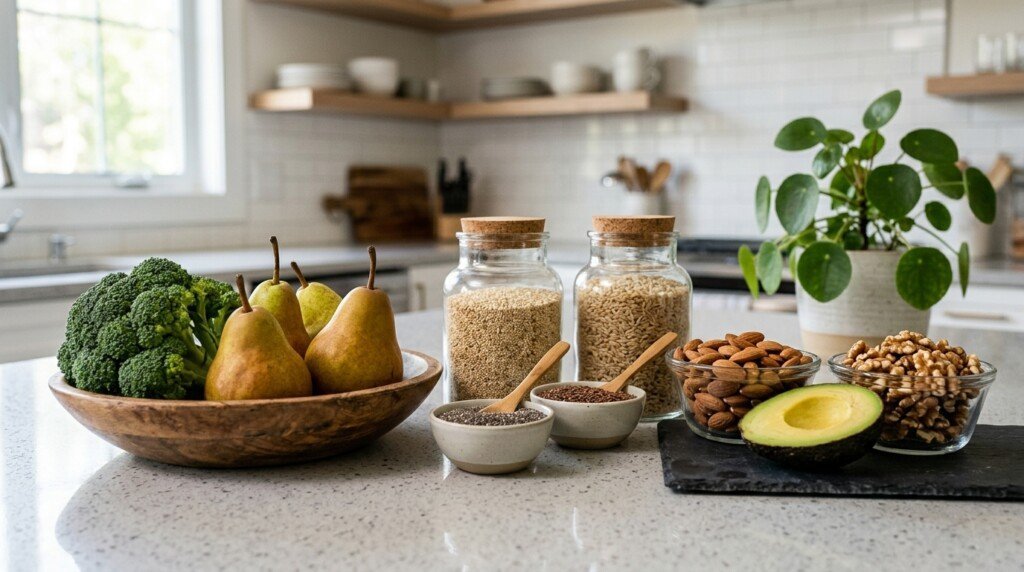
17. Broccoli
Broccoli is low in calories but high in fiber, water, and nutrients.
Its large volume helps fill your plate while supporting fullness.
Other vegetables such as cauliflower, Brussels sprouts, carrots, and leafy greens offer similar benefits.
18. Pears
Like apples, pears contain plenty of water and fiber.
Their natural sweetness also makes them a satisfying alternative when cravings for desserts appear.
Pairing pears with a handful of nuts or Greek yogurt creates an even more filling snack.
Why Does Protein Increase Satiety?
Protein is often described as the most filling nutrient, and research consistently supports this reputation.
Meals that contain adequate protein generally reduce hunger more effectively than meals made primarily of refined carbohydrates.
This does not mean every meal must be extremely high in protein, but including a quality protein source can make a noticeable difference in how long you stay satisfied.
Protein Slows Digestion
Protein requires more time to digest than many processed carbohydrate foods.
As digestion slows, food remains in the stomach longer, delaying the return of hunger.
This steady digestion also supports more stable energy levels throughout the day.
Protein Helps Preserve Lean Muscle
Adequate protein supports muscle maintenance during weight management.
Maintaining muscle contributes to healthy metabolism while encouraging better long-term body composition.
Protein Helps Reduce Snacking
When meals remain satisfying for longer, unnecessary snacking often decreases naturally.
Many people find it easier to maintain healthy eating habits without constantly relying on willpower.
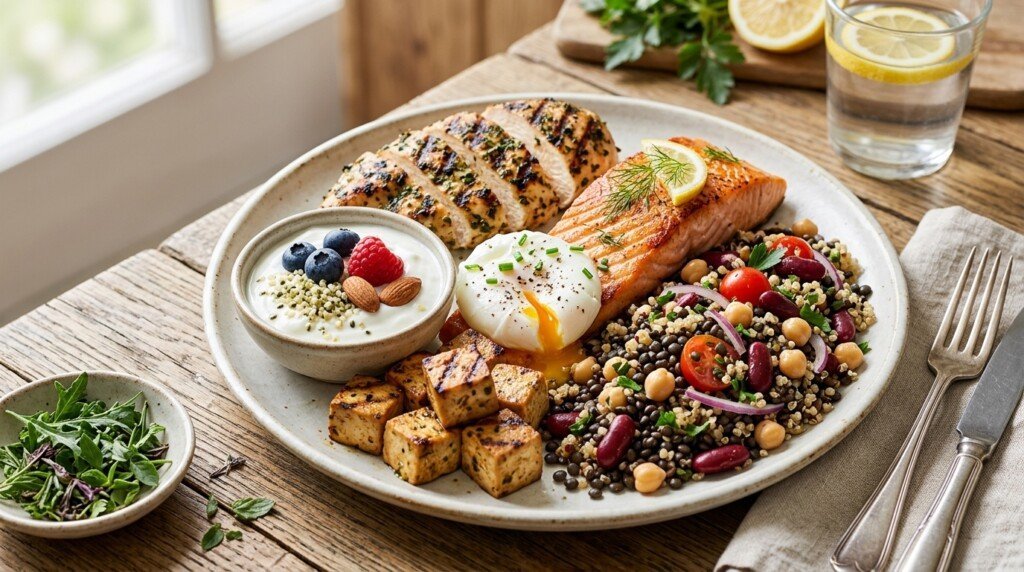
Excellent protein choices include:
- Eggs
- Fish
- Chicken
- Turkey
- Greek yogurt
- Cottage cheese
- Tofu
- Lentils
- Beans
Many additional options are featured in High-Protein Foods That Burn Fat, where protein-rich meals are discussed in greater detail.
Does Fiber Help Control Hunger?
Fiber is another essential nutrient for lasting fullness.
Unlike digestible carbohydrates, fiber passes through the digestive system relatively slowly while supporting digestive health and appetite regulation.
People who regularly consume more fiber often report feeling satisfied for longer after meals.
Fiber Increases Meal Volume
Fiber absorbs water and expands inside the digestive system.
This increases the volume of food without adding many calories.
As a result, meals feel larger and more satisfying.
Fiber Slows Digestion
Slower digestion means nutrients enter the bloodstream more gradually.
This steady release of energy helps reduce sudden hunger while supporting balanced eating patterns.
High-Fiber Foods Promote Fullness
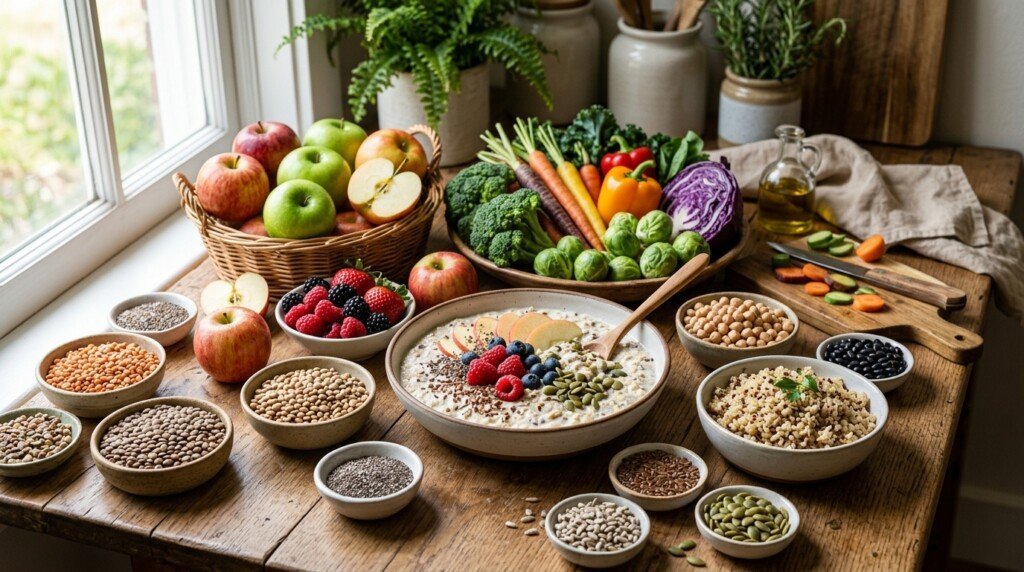
Excellent fiber sources include:
- Vegetables
- Fruits
- Oats
- Beans
- Lentils
- Whole grains
- Chia seeds
- Flaxseeds
Combining these foods with protein creates meals that naturally keep hunger under control for longer.
Which Healthy Fats Improve Fullness?
Healthy fats have sometimes been misunderstood because they contain more calories per gram than protein or carbohydrates.
However, healthy fats play an important role in appetite regulation because they slow digestion and help meals remain satisfying for longer.
The key is choosing nutritious fat sources in appropriate portions.
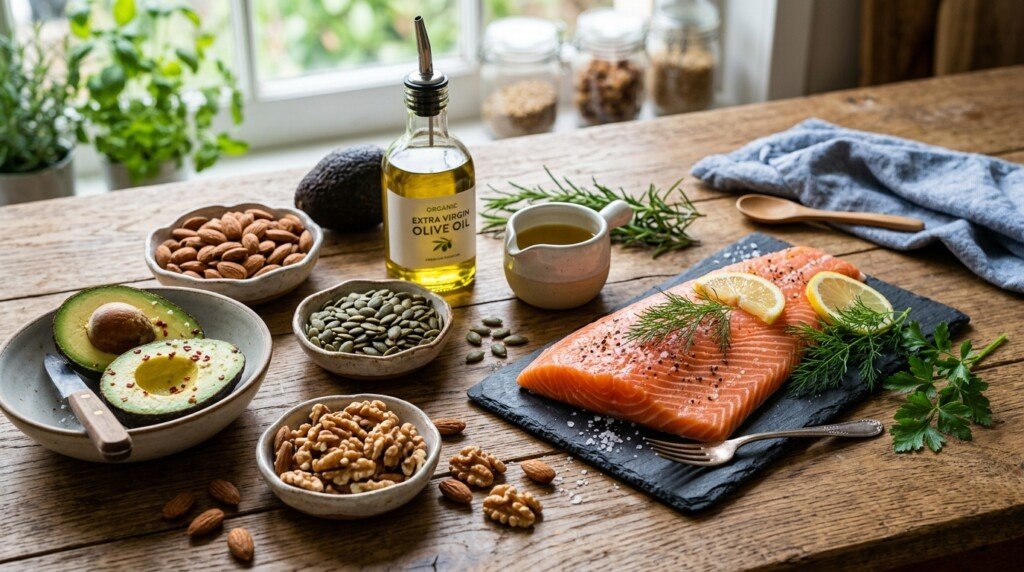
Avocados
Avocados provide:
- Monounsaturated fats
- Fiber
- Potassium
- Folate
Adding sliced avocado to sandwiches, salads, or eggs increases both flavor and satiety.
Olive Oil
Extra virgin olive oil is a cornerstone of the Mediterranean eating pattern.
Using moderate amounts in salads, roasted vegetables, or grain bowls helps improve both taste and meal satisfaction.
Nuts
Almonds, walnuts, pistachios, and cashews provide healthy fats together with protein and fiber.
A small handful often makes an excellent afternoon snack.
Seeds
Chia seeds, flaxseeds, pumpkin seeds, and sunflower seeds offer similar benefits.
Adding seeds to yogurt, oatmeal, or salads is an easy way to increase meal satisfaction.
Fatty Fish
Fish such as salmon, sardines, trout, and mackerel provide healthy omega-3 fats alongside high-quality protein.
This combination makes them among the most filling protein choices available.
Many of these foods also appear in Best Foods for Metabolic Health, where they are discussed for their broader health benefits.
Can Drinking Water Help You Feel Full?
Water alone is not a replacement for food, but proper hydration can influence appetite in several helpful ways.
Many people mistake thirst for hunger because the body’s signals sometimes feel similar.
Mild Dehydration May Feel Like Hunger
Before reaching for a snack, consider whether you have consumed enough fluids during the day.
Drinking a glass of water and waiting a few minutes may help determine whether the sensation is thirst or genuine hunger.
Water Before Meals
Some research suggests drinking water shortly before meals may help certain individuals feel comfortably full sooner while eating.
This approach works best alongside balanced meals rather than instead of them.
High-Water Foods Increase Fullness
Several foods naturally contain large amounts of water, including:
- Cucumbers
- Tomatoes
- Watermelon
- Oranges
- Strawberries
- Soups
- Leafy greens
These foods increase meal volume while keeping calorie density relatively low.
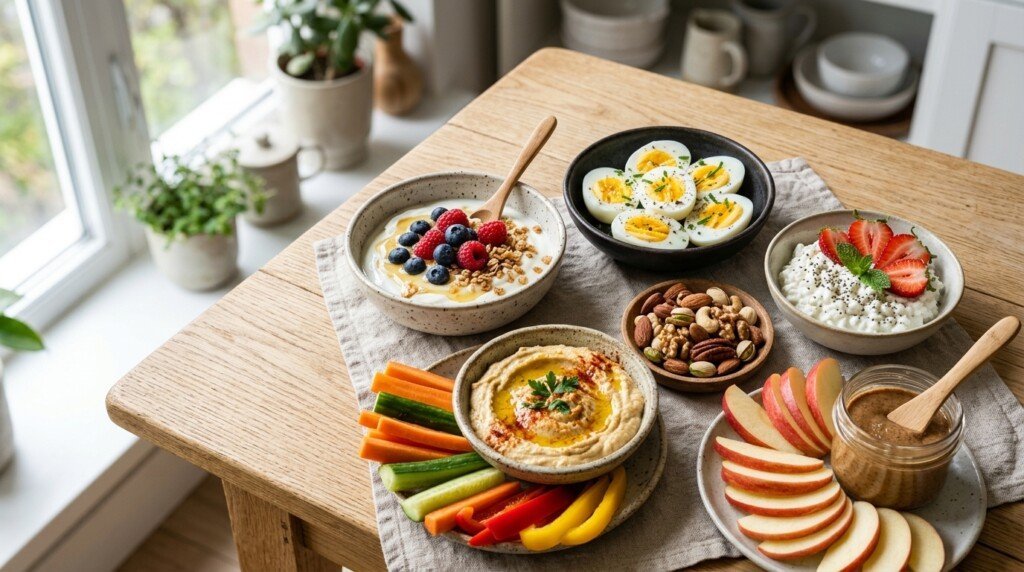
Which Snacks Help Reduce Hunger?
A nutritious snack should bridge the gap between meals rather than replace balanced eating.
The best snacks combine protein, fiber, and healthy fats.
Excellent examples include:
- Greek yogurt with berries
- Apple slices with almond butter
- Cottage cheese with fruit
- Boiled eggs
- Mixed nuts
- Hummus with vegetables
- Roasted chickpeas
- Whole-grain crackers with tuna
Many additional snack ideas can be found in Healthy Snacks for Weight Loss, where convenient, satisfying options are discussed in greater detail.
How Can You Build More Filling Meals?
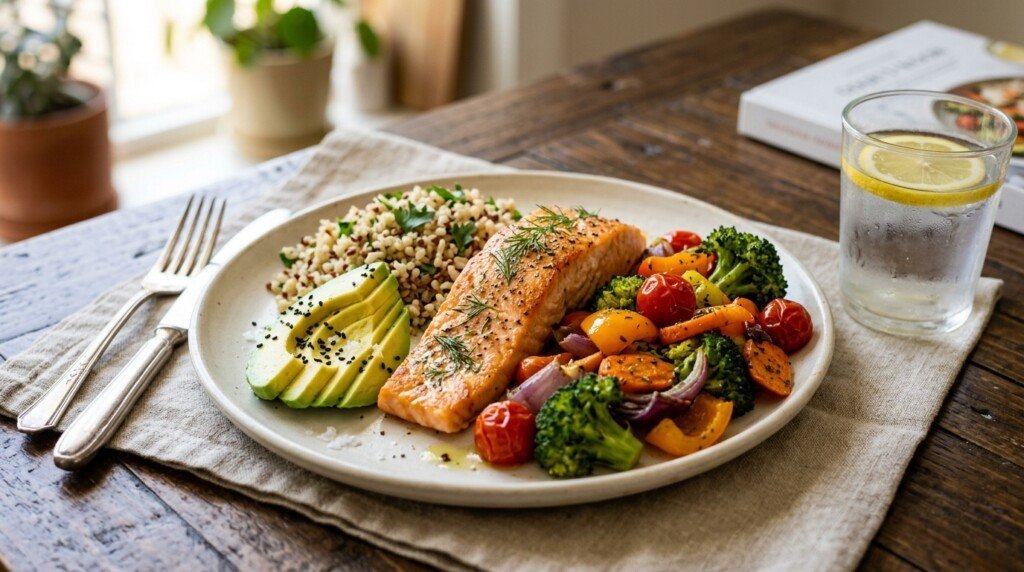
The secret to lasting fullness is not one individual food but how foods are combined.
Meals that include several appetite-supporting nutrients generally keep you satisfied much longer than meals focused on refined carbohydrates alone.
Start With Protein
Include one quality protein source at every meal, such as:
- Eggs
- Chicken
- Fish
- Greek yogurt
- Tofu
- Beans
- Lentils
Add Plenty of Fiber
Fill at least half your plate with vegetables or include whole grains, legumes, or fruit to increase fiber intake.
Include Healthy Fats
Small portions of:
- Avocados
- Nuts
- Seeds
- Olive oil
help improve both satisfaction and flavor.
Choose Whole Foods Most Often
Minimally processed foods generally digest more slowly than highly processed alternatives.
Whole foods also provide more nutrients that support long-term health and appetite regulation.
Eat Mindfully
Slowing down during meals allows your body’s natural fullness signals enough time to develop.
Simple habits such as chewing thoroughly, eating without distractions, and recognizing comfortable fullness support healthier eating patterns.
Many of these strategies also support appetite regulation discussed throughout Natural Appetite Suppressants and How to Reduce Ghrelin Naturally.
Frequently Asked Questions
1. Which foods keep you full the longest?
Foods highest in protein, fiber, and healthy fats generally provide the greatest satiety. Examples include eggs, Greek yogurt, oats, lentils, beans, potatoes, salmon, avocados, nuts, and chia seeds.
2. Does protein help you stay full longer?
Yes. Protein slows digestion and supports appetite-regulating hormones, helping meals remain satisfying for longer than many refined carbohydrate foods.
3. Does fiber reduce hunger?
Fiber absorbs water, increases meal volume, and slows digestion, all of which help increase fullness and reduce hunger between meals.
4. What snacks help reduce hunger?
Balanced snacks such as Greek yogurt with berries, boiled eggs, mixed nuts, cottage cheese, hummus with vegetables, and apple slices with nut butter help keep hunger under control.
5. Can drinking water make you feel full?
Drinking water supports hydration and may help distinguish thirst from hunger. Water before meals may also help some people feel comfortably satisfied sooner while eating.
Final Thoughts
Choosing Foods That Keep You Full Longer is one of the simplest ways to support healthy eating without relying on strict diets or constant willpower. Meals rich in protein, fiber, healthy fats, and whole foods naturally provide greater satiety, helping you stay energized while reducing unnecessary snacking and cravings.
Instead of focusing only on calorie intake, pay attention to the quality of your meals. Building balanced plates with satisfying foods such as eggs, Greek yogurt, legumes, oats, vegetables, fruit, nuts, seeds, and healthy fats makes it easier to maintain consistent eating habits while supporting long-term health.
Remember that no single food controls appetite on its own. Lasting fullness comes from combining nutritious ingredients, staying hydrated, eating mindfully, and following sustainable daily habits. When these practices become part of your routine, healthy eating feels less like a challenge and more like a natural part of everyday life.
Disclaimer:
This post may contain affiliate links. If you purchase through them, we may earn a small commission at no extra cost to you. Also, this content is for informational purposes only and does not substitute professional medical advice.
Fuel Your Body Right
Use our free Nutrition Toolkit to find your protein target, fasting window, and net carbs in minutes.
Open Free Tools →