


How Is Insulin Resistance Diagnosed? Tests, Numbers, and What They Mean
An Insulin Resistance Test is often the first step toward understanding why blood sugar levels are rising or why symptoms such as fatigue, increased hunger, weight gain around the waist, or persistent cravings are becoming more noticeable. Unlike many medical conditions that can be confirmed with a single laboratory result, insulin resistance is usually identified by looking at several health markers together rather than relying on one test alone.
This is because insulin resistance develops gradually. For years, your body may continue producing enough insulin to keep blood glucose within the normal range, even while your cells become less responsive to insulin. During this stage, routine blood sugar tests may still appear normal, making insulin resistance more difficult to recognize without additional evaluation.
Healthcare professionals therefore consider a combination of blood tests, medical history, physical examination, family history, and risk factors before making a diagnosis. Tests such as fasting glucose, fasting insulin, HbA1c, oral glucose tolerance testing, and HOMA-IR each provide different information about how your body regulates glucose and insulin.
It is also important to understand that laboratory numbers should never be interpreted in isolation. Two people with similar blood test results may have very different overall health depending on their age, body composition, activity level, family history, and other metabolic risk factors. For this reason, laboratory testing should always be interpreted by a qualified healthcare professional.
The encouraging news is that identifying insulin resistance early creates an opportunity to make lifestyle changes before more serious metabolic problems develop. Understanding what each test measures can help you have more informed conversations with your healthcare provider and better understand your own health.
In this article, you’ll learn how doctors diagnose insulin resistance, which blood tests are commonly used, what HOMA-IR measures, whether home testing is possible, how to understand common laboratory results, and when repeat testing may be appropriate.
How Do Doctors Diagnose Insulin Resistance?
Diagnosing insulin resistance is rarely as simple as ordering one blood test and receiving a clear yes-or-no answer.
Instead, healthcare professionals evaluate several pieces of information to understand how efficiently your body responds to insulin. Since insulin resistance develops gradually, the earliest changes often occur long before blood sugar rises above the normal range.
For that reason, diagnosis usually combines laboratory testing with an overall assessment of your health.
Your Medical History Matters
The diagnostic process often begins with a discussion about your overall health.
Your healthcare provider may ask about:
- Family history of type 2 diabetes
- Recent weight changes
- Physical activity levels
- Eating habits
- Sleep quality
- Previous blood sugar results
- Pregnancy history, if applicable
- Current medical conditions
These details help identify whether additional testing is appropriate.
Symptoms Can Provide Important Clues
Some people have no obvious symptoms during the early stages of insulin resistance.
Others may experience changes such as:
- Fatigue after meals
- Increased hunger
- Sugar cravings
- Difficulty losing weight
- Increasing waist circumference
- Darkened skin patches around the neck or underarms
- Elevated blood pressure
These symptoms alone cannot diagnose insulin resistance, but they often encourage further investigation.
Many of these warning signs are discussed throughout Signs of Insulin Resistance, where physical symptoms are explained alongside common metabolic risk factors.
Physical Examination Is Part of the Assessment
During an examination, your healthcare provider may evaluate several measurements associated with metabolic health.
These commonly include:
- Body weight
- Height
- Body mass index (BMI)
- Waist circumference
- Blood pressure
Waist circumference is especially useful because excess abdominal fat is closely associated with reduced insulin sensitivity.
People with increased abdominal fat may also notice similar patterns discussed in Diabetic Belly Fat and Visceral Fat, where central fat distribution is linked with metabolic health rather than appearance alone.
Laboratory Tests Complete the Picture
Once symptoms, medical history, and physical findings have been reviewed, laboratory testing provides objective information about how your body manages glucose and insulin.
Different tests answer different questions.
Some measure your current blood sugar.
Others estimate your average blood sugar over several months.
Some evaluate insulin production.
Others assess how efficiently insulin is working inside the body.
Because each test provides different information, healthcare providers often order several together instead of relying on a single laboratory result.
Diagnosis Looks at Patterns, Not One Number
One of the biggest misconceptions is that insulin resistance can always be identified from one laboratory value.
In reality, healthcare professionals look for patterns.
They evaluate:
- Blood glucose
- Insulin levels
- HbA1c
- Body composition
- Blood pressure
- Cholesterol
- Family history
- Lifestyle factors
Looking at these markers together provides a much more accurate understanding of metabolic health than any individual measurement.
Which Blood Tests Can Detect Insulin Resistance?
Several laboratory tests help healthcare providers evaluate insulin sensitivity.
Each measures a different aspect of metabolic health, so understanding what they do can make your results much easier to interpret.

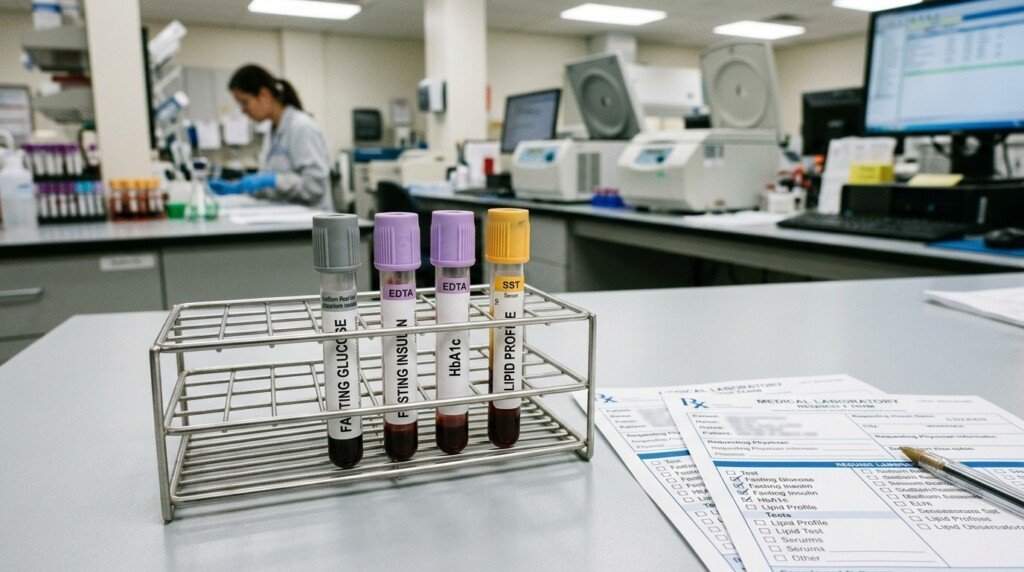
Fasting Blood Glucose
A fasting blood glucose test measures the amount of glucose in your bloodstream after you have not eaten for several hours.
It is one of the most commonly ordered laboratory tests because it is simple, inexpensive, and widely available.
Although fasting glucose helps identify elevated blood sugar, it does not directly measure insulin resistance.
Many people have normal fasting glucose while insulin resistance is already developing.
For that reason, healthcare providers often combine fasting glucose with other tests.
Fasting Insulin Test
A fasting insulin test measures how much insulin your pancreas produces after fasting.
Higher insulin levels may suggest that your body is producing extra insulin to compensate for reduced insulin sensitivity.
Although fasting insulin is not routinely included in every health screening, it can provide valuable information when interpreted alongside fasting glucose.
HbA1c
HbA1c reflects your average blood sugar during approximately the previous two to three months.
Unlike fasting glucose, which captures one moment in time, HbA1c provides a broader picture of long-term glucose regulation.
This makes it particularly useful for monitoring trends over time.
However, HbA1c alone cannot confirm insulin resistance.
Some individuals with insulin resistance continue to have HbA1c values within the normal range.
Oral Glucose Tolerance Test (OGTT)
The oral glucose tolerance test evaluates how your body handles glucose over time.
After measuring fasting blood glucose, you’ll drink a standardized glucose solution.
Additional blood samples are then collected over the following hours to observe how efficiently glucose returns toward normal levels.
This test provides valuable information about glucose metabolism but usually requires more time than routine laboratory testing.
Lipid Profile
Although cholesterol testing does not diagnose insulin resistance, abnormal lipid levels often accompany metabolic dysfunction.
Healthcare providers frequently review:
- HDL cholesterol
- LDL cholesterol
- Total cholesterol
- Triglycerides
Together with blood sugar measurements, these markers help create a more complete picture of metabolic health.
No Single Test Provides Every Answer
Each laboratory test contributes one piece of the overall picture.
Rather than asking which test is “best,” it is more accurate to ask which combination of tests provides the clearest understanding of your metabolic health.
That broader approach allows healthcare professionals to identify insulin resistance earlier and evaluate your results within the context of your overall health rather than relying on one laboratory number alone.
What Is HOMA-IR?
Among the laboratory tools used to evaluate insulin resistance, one of the least familiar is the Homeostatic Model Assessment of Insulin Resistance (HOMA-IR). While fasting blood glucose and HbA1c are commonly included in routine health screenings, HOMA-IR is typically used when healthcare providers want a more detailed picture of how efficiently your body responds to insulin.
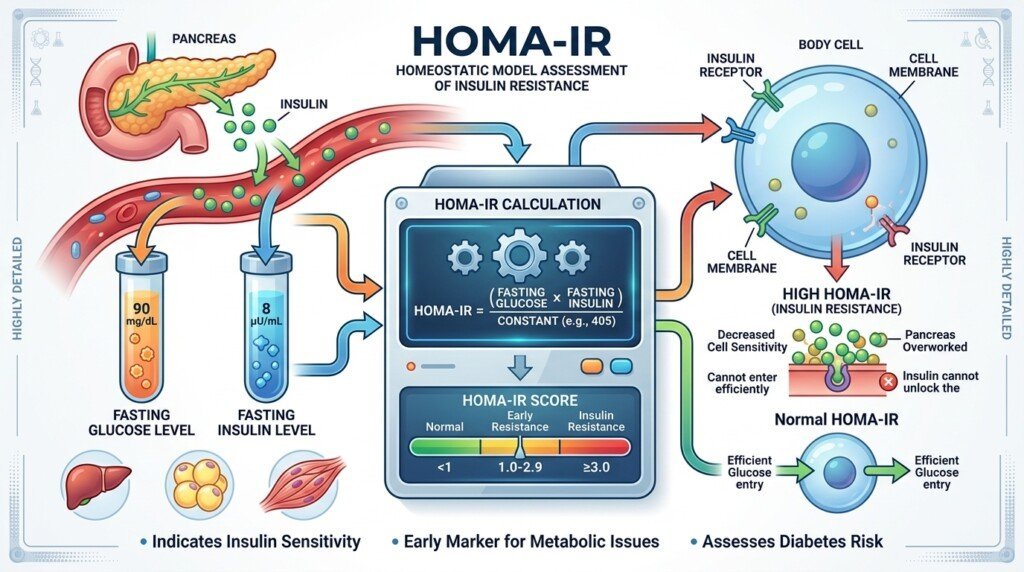
Unlike a single laboratory test, HOMA-IR is a calculated value. It combines your fasting blood glucose and fasting insulin results to estimate how hard your body is working to keep blood sugar within a healthy range. The calculation helps identify situations where the pancreas is producing extra insulin to compensate for reduced insulin sensitivity, even when blood glucose levels still appear normal.
Because insulin resistance often develops years before blood sugar rises above the normal range, HOMA-IR can sometimes provide useful information during these earlier stages of metabolic dysfunction.
How Is HOMA-IR Calculated?
You do not need to calculate HOMA-IR yourself.
The value is determined using a mathematical formula that combines two laboratory measurements:
- Fasting blood glucose
- Fasting insulin
Many laboratories or healthcare providers automatically calculate the result when both values are available.
Although online calculators exist, the number should always be interpreted by a qualified healthcare professional because several factors influence its clinical meaning.
What Does HOMA-IR Tell You?
Rather than measuring blood sugar directly, HOMA-IR estimates how sensitive your body’s cells are to insulin.
A higher value may suggest that your pancreas is producing larger amounts of insulin to keep blood glucose within a normal range. This can indicate reduced insulin sensitivity before more obvious changes appear in fasting glucose or HbA1c.
However, HOMA-IR should never be viewed as a diagnosis by itself. It is simply one piece of a much larger clinical assessment.
Healthcare providers evaluate HOMA-IR alongside:
- Medical history
- Physical examination
- Waist circumference
- Blood pressure
- Lipid profile
- Other laboratory results
Looking at all of these factors together provides a much more accurate understanding of metabolic health.
Is There a “Normal” HOMA-IR Number?
Many people search online hoping to find one universal HOMA-IR cutoff value.
Unfortunately, it isn’t that simple.
Reference ranges may differ between laboratories because of variations in testing methods, populations studied, age, ethnicity, and other clinical factors.
For that reason, your healthcare provider will interpret your result using the laboratory’s reference range while also considering your personal medical history and other risk factors.
Trying to diagnose yourself based on a number found online often creates unnecessary confusion.
Why Isn’t HOMA-IR Used in Every Routine Checkup?
Although HOMA-IR provides useful information, it is not routinely included in standard health screenings.
There are several reasons for this.
First, calculating HOMA-IR requires both fasting glucose and fasting insulin measurements. While fasting glucose is commonly ordered, fasting insulin is not always part of routine laboratory panels.
Second, healthcare providers often begin with simpler screening tests and only request additional testing when symptoms, medical history, or other laboratory findings suggest a greater risk of insulin resistance.
Finally, no single laboratory value can fully describe a person’s metabolic health. Clinical judgment remains just as important as laboratory testing.
Can You Test for Insulin Resistance at Home?
As interest in metabolic health has grown, many people wonder whether they can diagnose insulin resistance without visiting a healthcare provider.
The short answer is that there is currently no reliable home test that can diagnose insulin resistance on its own.
While several devices allow you to monitor aspects of blood sugar, diagnosing insulin resistance requires interpreting multiple clinical findings together. Home testing can provide useful information, but it cannot replace professional medical evaluation.

Home Blood Glucose Meters
Blood glucose meters allow you to measure your blood sugar using a small drop of blood from your fingertip.
These devices are commonly used by people living with diabetes, but some individuals also use them to understand how their blood sugar responds to meals or fasting.
Although home glucose monitoring provides valuable information about blood sugar levels at specific moments, it does not directly measure insulin sensitivity.
A person may have normal home glucose readings while insulin resistance is already developing.
Continuous Glucose Monitors (CGMs)
Continuous glucose monitors have become increasingly popular in recent years.
These wearable devices measure glucose levels throughout the day and night, providing a detailed picture of how blood sugar changes after meals, physical activity, stress, and sleep.
For some people, this information can increase awareness of lifestyle habits that influence blood sugar.
However, a CGM still does not diagnose insulin resistance.
It measures glucose, not how efficiently your body’s cells respond to insulin.
Can Symptoms Tell You?
Some people attempt to diagnose themselves based on symptoms such as fatigue, sugar cravings, increased hunger, or abdominal weight gain.
While these symptoms may be associated with insulin resistance, they are not specific enough to confirm a diagnosis.
Many other medical conditions can cause similar symptoms.
That is why healthcare providers rely on medical history, physical examination, and laboratory testing rather than symptoms alone.
When Is Home Monitoring Helpful?
Although home testing cannot diagnose insulin resistance, it can sometimes support conversations with your healthcare provider.
For example, tracking your:
- Blood glucose readings
- Physical activity
- Sleep habits
- Waist circumference
- Body weight
may help identify patterns that are useful during a medical evaluation.
Lifestyle changes discussed throughout Reverse Insulin Resistance Naturally often encourage this type of long-term habit tracking because progress is rarely reflected by a single measurement alone.
Why Professional Testing Still Matters
The goal of laboratory testing is not simply to obtain numbers but to understand what those numbers mean in the context of your overall health.
Only a healthcare professional can evaluate laboratory results alongside your symptoms, family history, physical examination, and other risk factors.
Professional interpretation helps avoid unnecessary anxiety while ensuring that important metabolic changes are identified as early as possible.
How Should You Understand Your Test Results?
Receiving the results of an Insulin Resistance Test can be confusing, especially if some numbers fall within the normal range while others appear higher or lower than expected. Many people assume that one abnormal value automatically confirms insulin resistance, but interpreting laboratory results is rarely that straightforward.
Healthcare providers look at your results as part of a much larger picture. Your age, medical history, family history, symptoms, body composition, blood pressure, and other laboratory findings all influence how your results are interpreted. Instead of focusing on one number, your healthcare provider evaluates how all the information fits together.
Understanding what your results represent can help you ask better questions during your appointment and avoid unnecessary worry caused by reading isolated numbers online.

Normal Results Do Not Always Rule Out Insulin Resistance
One of the biggest misconceptions is that normal blood sugar means your insulin sensitivity is completely healthy.
In reality, insulin resistance often develops years before fasting blood glucose begins to rise. During these early stages, your pancreas may produce larger amounts of insulin to keep blood sugar within the normal range. As a result, glucose levels can appear normal even though your body is already working harder to maintain them.
This is one reason healthcare providers sometimes order additional tests, such as fasting insulin or HOMA-IR, when insulin resistance is suspected despite normal glucose levels.
Laboratory testing is designed to identify patterns over time, not simply confirm or exclude a condition based on one measurement.
One Abnormal Result Does Not Always Mean Disease
It is also important to remember that laboratory values naturally fluctuate.
Several factors can temporarily influence test results, including:
- Recent illness
- Physical activity
- Sleep quality
- Emotional stress
- Certain medications
- Laboratory variation
- Whether fasting instructions were followed correctly
For this reason, healthcare providers rarely diagnose insulin resistance based on one unexpected result alone.
If a result appears unusual, repeating the test or combining it with additional laboratory findings often provides a clearer understanding of your metabolic health.
Trends Matter More Than Individual Numbers
Perhaps the most valuable part of laboratory testing is tracking changes over time.
Comparing today’s results with previous measurements allows your healthcare provider to identify whether your metabolic health is improving, remaining stable, or gradually changing.
Monitoring long-term trends may include reviewing:
- Fasting blood glucose
- HbA1c
- Fasting insulin
- Blood pressure
- Waist circumference
- Cholesterol
- Triglycerides
Looking at these markers together provides a much more meaningful assessment than focusing on one isolated laboratory value.
Ask Questions During Your Appointment
Laboratory reports often contain medical terminology that can be difficult to understand.
Rather than trying to interpret everything yourself, ask your healthcare provider questions such as:
- What does this result measure?
- Is this value within the expected range for me?
- Should any tests be repeated?
- Are there additional tests I should consider?
- What changes should I continue monitoring?
Understanding your results allows you to participate more confidently in decisions about your health.
Avoid Self-Diagnosing From Online Charts
It is tempting to compare your laboratory values with reference tables found online.
However, many websites use outdated information or present ranges that differ from those used by your laboratory.
Even when numbers appear similar, two people with identical results may have very different overall health depending on their age, body composition, symptoms, and medical history.
For that reason, laboratory reports should always be interpreted within the context of your complete clinical picture rather than as standalone numbers.
When Should You Get Tested Again?
After completing an Insulin Resistance Test, many people immediately wonder when they should repeat it. The answer depends on why the original testing was performed, your current health status, your individual risk factors, and whether your healthcare provider is monitoring changes over time.
There is no universal testing schedule that applies to everyone. Some people require more frequent monitoring because of elevated risk factors, while others may only need periodic screening as part of routine preventive healthcare.
The purpose of repeat testing is not simply to collect more laboratory values. It is to evaluate whether your metabolic health is remaining stable, improving, or showing signs of change.
If Your Results Were Normal
Normal laboratory results are encouraging, but they do not eliminate the importance of maintaining healthy lifestyle habits.
If you have risk factors such as:
- A family history of type 2 diabetes
- Excess abdominal fat
- High blood pressure
- Elevated cholesterol
- Physical inactivity
your healthcare provider may recommend periodic screening to monitor your metabolic health.
Routine monitoring allows potential changes to be identified before symptoms develop.
If Your Results Were Borderline
Sometimes laboratory results are neither clearly normal nor clearly abnormal.
In these situations, your healthcare provider may recommend repeating certain tests after a period of time to determine whether the values remain stable or begin to change.
Borderline results do not necessarily indicate disease, but they often justify closer observation.
If You Have Multiple Risk Factors
People with several metabolic risk factors often benefit from more regular medical follow-up.
Examples include:
- Increasing waist circumference
- Prediabetes
- Elevated blood pressure
- High triglycerides
- Low HDL cholesterol
- Strong family history of diabetes
Regular testing allows healthcare providers to monitor these risk factors together rather than waiting until significant changes occur.
Repeat Testing Helps Monitor Long-Term Progress
Laboratory testing is valuable because it provides objective information over time.
When combined with healthy lifestyle habits, repeat testing can help evaluate long-term changes in:
- Fasting glucose
- HbA1c
- Blood pressure
- Cholesterol
- Waist circumference
Many people who adopt healthier habits notice gradual improvements across several of these measurements rather than dramatic changes in a single test result.
Work With Your Healthcare Provider
The best testing schedule is the one recommended by the healthcare professional who understands your complete medical history.
Rather than requesting laboratory tests at random intervals, work together to develop an appropriate monitoring plan based on your personal risk factors and health goals.
Regular follow-up appointments, combined with consistent lifestyle habits and appropriate laboratory testing, provide the clearest picture of your metabolic health over the long term.

Frequently Asked Questions
1. What is the best test for insulin resistance?
There is no single best Insulin Resistance Test. Healthcare providers usually evaluate a combination of fasting blood glucose, fasting insulin, HbA1c, HOMA-IR, medical history, and physical examination to assess insulin sensitivity.
2. Can fasting blood glucose detect insulin resistance?
Fasting blood glucose provides useful information about blood sugar levels, but it does not directly measure insulin resistance. Many people develop insulin resistance while their fasting glucose remains within the normal range.
3. What does HOMA-IR measure?
HOMA-IR estimates insulin sensitivity by combining fasting glucose and fasting insulin values. It helps healthcare providers understand how hard the pancreas is working to maintain healthy blood sugar levels.
4. Can I test for insulin resistance at home?
Home blood glucose meters and continuous glucose monitors can measure blood sugar, but they cannot diagnose insulin resistance on their own. A proper diagnosis requires laboratory testing and professional medical evaluation.
5. How often should an insulin resistance test be repeated?
The frequency depends on your individual risk factors, symptoms, medical history, and previous laboratory results. Your healthcare provider can recommend an appropriate testing schedule based on your overall health.
Final Thoughts
An Insulin Resistance Test is about much more than obtaining a few laboratory numbers. It provides valuable insight into how your body regulates glucose and insulin, helping healthcare providers identify metabolic changes that may not yet be causing noticeable symptoms.
Because insulin resistance develops gradually, diagnosis usually relies on a combination of laboratory tests, physical examination, medical history, and risk assessment rather than a single result. Understanding what each test measures and how the results fit together can help you make informed decisions about your health without drawing conclusions from isolated numbers.
Most importantly, remember that laboratory values should always be interpreted by a qualified healthcare professional. Looking at long-term trends, rather than focusing on one test result, provides the most accurate picture of your metabolic health and helps identify meaningful changes over time.
Disclaimer:
This post may contain affiliate links. If you purchase through them, we may earn a small commission at no extra cost to you. Also, this content is for informational purposes only and does not substitute professional medical advice.
Ready to Start Your Journey?
Use our free 7-in-1 Weight Loss Toolkit to calculate your numbers and build your plan in minutes.
Open Free Tools →